Balaam Prophesied the Messiah While Trying to Curse Israel
Balak paid for a curse. From the mountain Balaam's mouth opened and he saw David, the star from Jacob, and the King Messiah rising at the end of days.
Table of Contents
 Click for full size
The Prophet for Hire on the Mountain
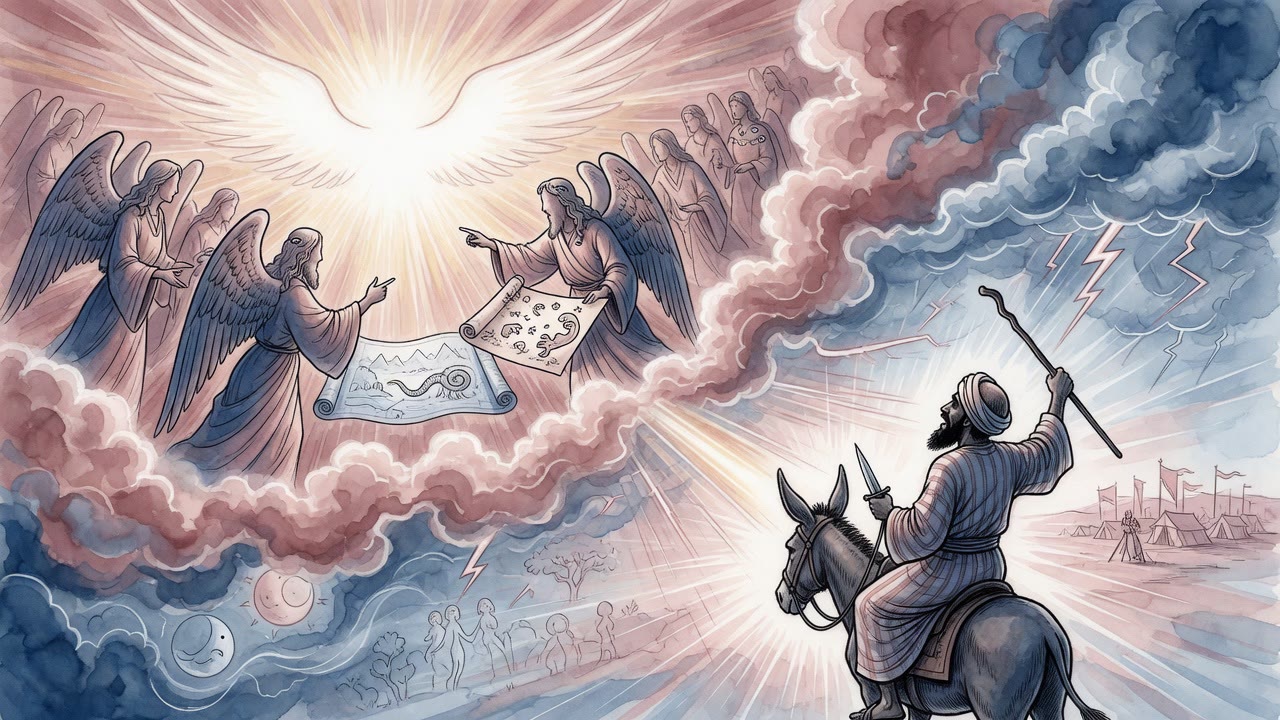
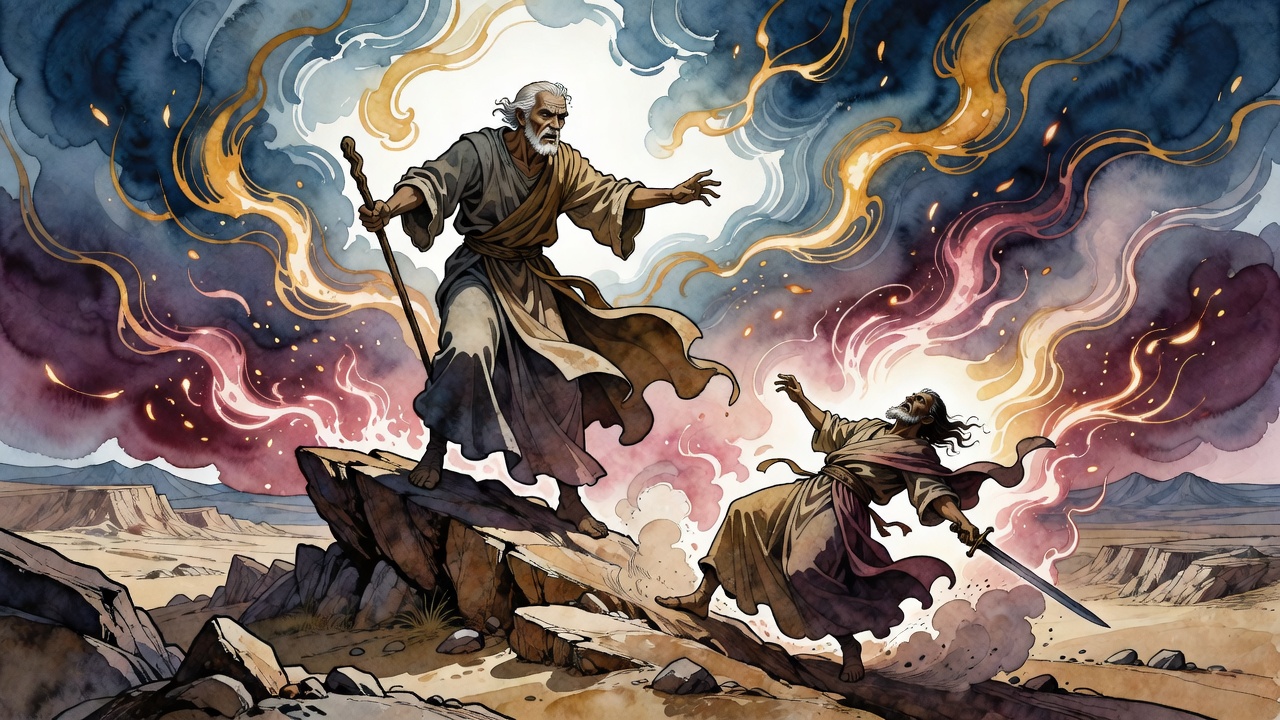
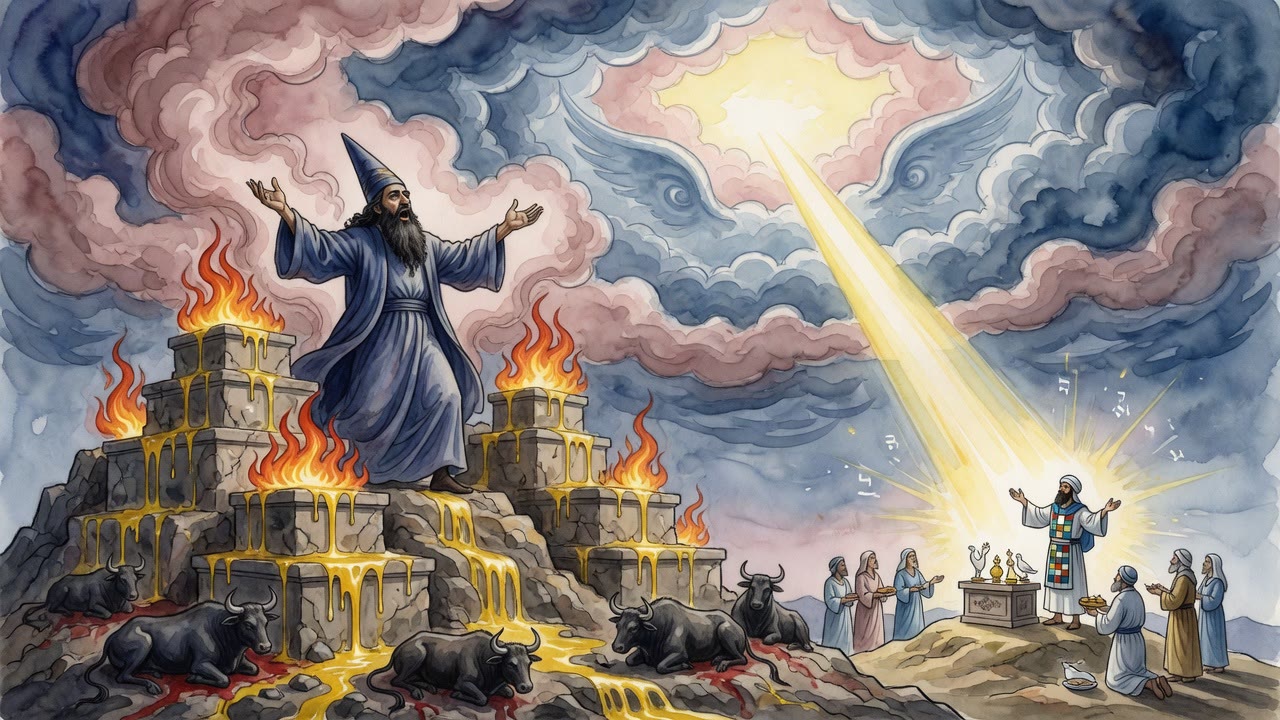
Balak had moved him from ridge to ridge, hoping a new angle of view would produce a different result. Three different high places. Three different setups of seven altars with rams and bulls. Each time Balaam opened his mouth and blessings came out instead of curses.
On the third attempt, from the top of Peor overlooking the wilderness, Balaam stopped trying to find a position from which Israel could be cursed. He let himself see what was actually there. And what he saw extended beyond any horizon Balak had in mind.
The Voice That Reached the Ends of the Earth
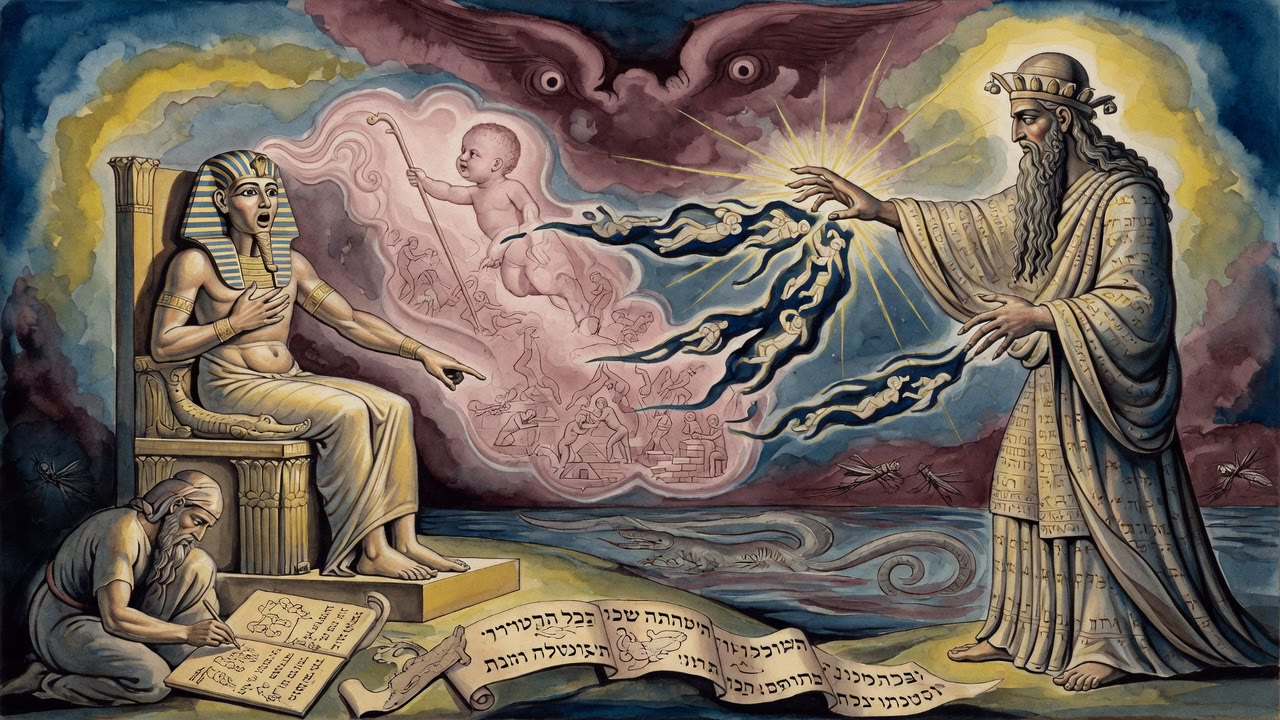
Ginzberg's Legends of the Jews, drawing on midrashic and Talmudic material, preserves the tradition that Balaam's final oracle was amplified beyond normal prophetic range. His voice carried to the ends of the earth. God did this deliberately, because God knew that a certain kind of claim would eventually be made by a man who would call himself divine - someone who would need to be preemptively answered. Balaam said: "God is not a man. The man who calls himself God is lying. Anyone who promises to disappear and return is making a promise he cannot keep." These words, spoken from a Moabite hillside, were sent to the far corners of the world as a record.
But the oracle did not end with the warning. It moved forward. Balaam saw David's reign. He saw the star from Jacob, the scepter from Israel that Numbers 24:17 describes, and Jewish readers from antiquity onward heard in that image not merely David but the King Messiah - the figure whose rise would be announced by a star, the ruler who would complete what David had begun.
What the Tanchuma Saw in the Symmetry
Midrash Tanchuma Balak 1 frames the entire episode through the principle that God's ways are just - specifically, that God would not leave the nations without resources equivalent to what He gave Israel. He raised up kings, prophets, and sages among the nations to match those He raised up among Israel. The nations had Nebuchadnezzar to match Solomon. They had Balaam to match Moses. The comparison was not flattering in every direction - Nebuchadnezzar and Balaam used their gifts toward destruction - but the gifts themselves were genuine and parallel. God did not withhold from the world the same quality of endowment He gave His own people.
Balaam was the nations' Moses. He had the same prophetic access. He received divine communication the same way. What separated him from Moses was not capacity but intention - and, in the end, the specific content of what God put in his mouth regardless of intention.
The Field of Zophim and What He Saw There
Midrash Tanchuma Balak 13 explains why Balak brought Balaam to the Field of Zophim, at the top of Pisgah. This was the mountain from which Moses had been shown the land he would not enter. Moses died in sight of Pisgah. Balak reasoned that if Moses - the man who led Israel through the wilderness, the man who received the Torah - had suffered his greatest defeat at Pisgah, then Pisgah was a place where Israel was vulnerable. He would bring Balaam to the breach.
What Balaam saw instead from that height was that the breach was already sealed. The mountain where Moses died was also the mountain from which Moses had seen the land. It was a place of completion, not defeat. Balaam's divinations told him something different than Balak needed them to tell him.
The Last Words of a Prophet Who Knew
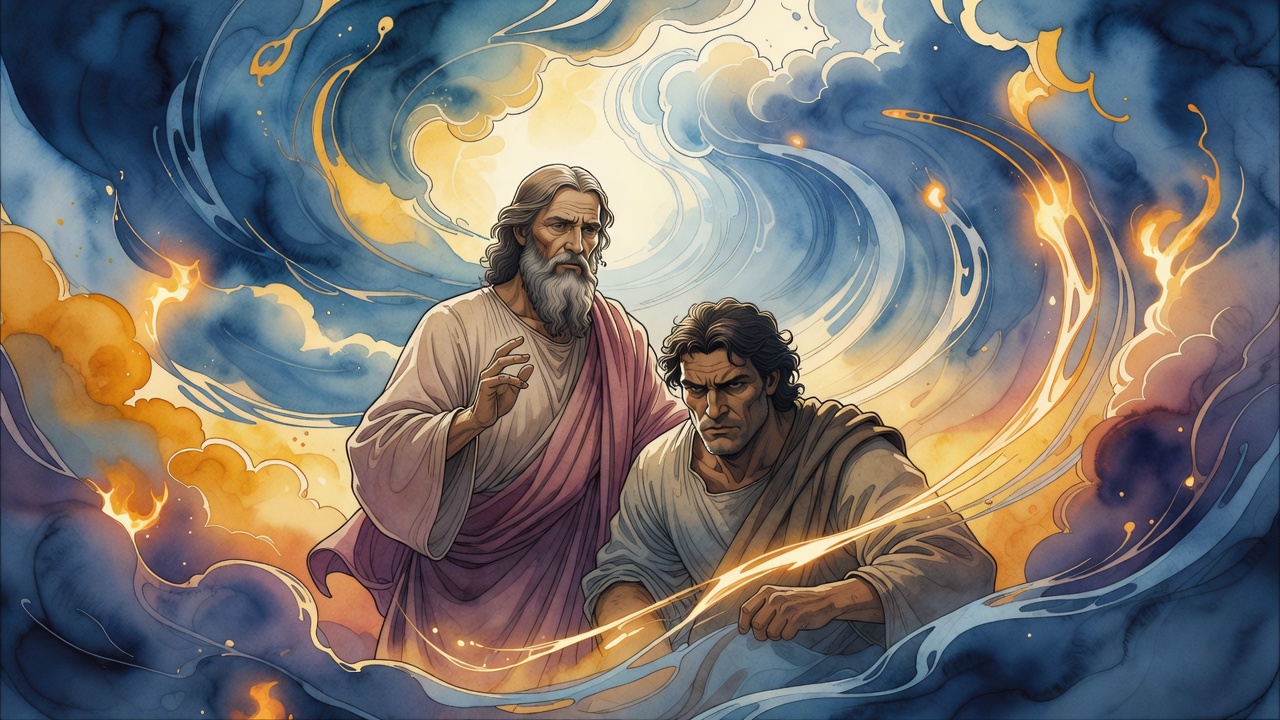
The Legends tradition records Balaam's final statement about his own end: "let me die the death of the righteous, and let my last end be like his." The sages heard in this a longing not just for a peaceful death but for a share in the World to Come. Balaam knew what the righteous had and he knew he did not have it and he wanted it anyway, at the last moment, in the same breath in which he delivered a prophecy he had been paid not to deliver.
Chronicles of Jerahmeel, a twelfth-century Hebrew chronicle drawing on ancient sources, preserves the tradition that repentance was one of the seven things created before the world itself. Before the heavens, before the earth, before light and darkness and chaos, God created the possibility of return. Balaam did not use it. But he named what he lacked, standing on a Moabite hillside with a mouth full of blessings he had not planned to say.
← All myths