Parshat Balak5 min read

Balaam Timed His Curses to God's One Daily Moment of Anger

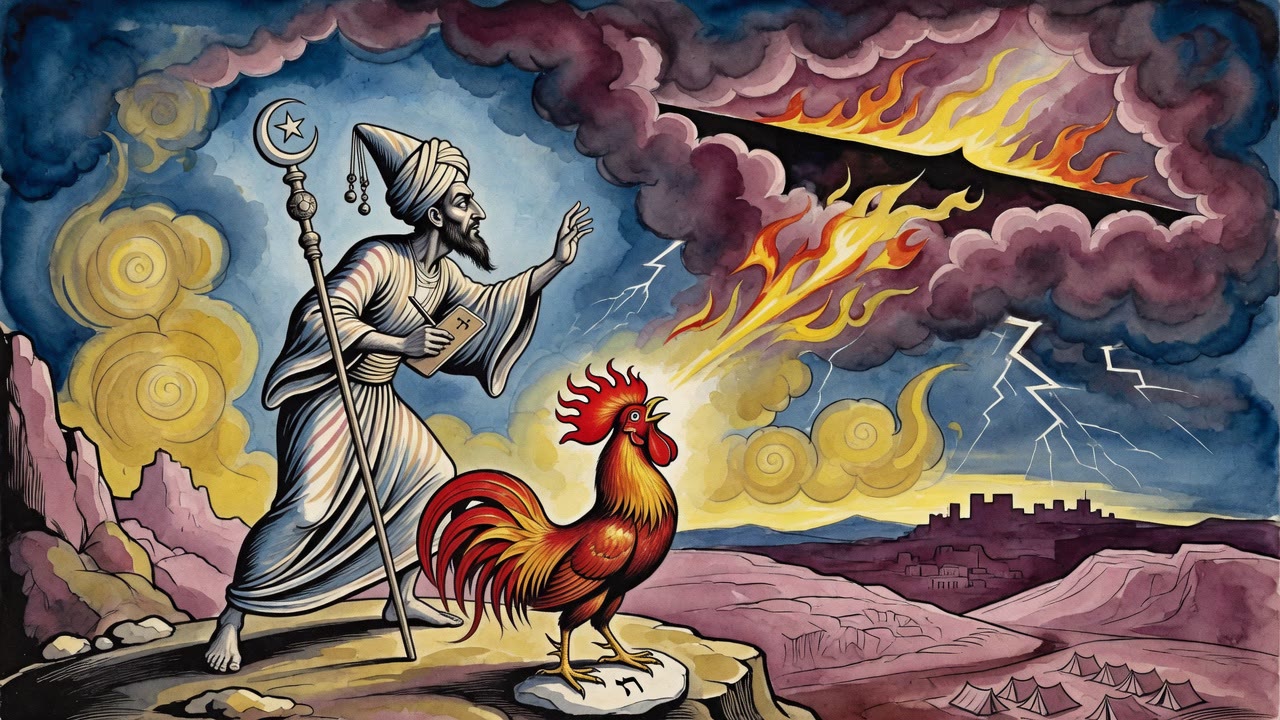
Balaam's rivals could not figure out how he worked. The rabbis said he had learned to read a rooster's comb, and it told him when God was furious.

Curated by Arthur · Told by Maggid ·
Table of Contents
  1. The King Who Knew the Place, the Prophet Who Knew the Moment
  2. The White Rooster Comb and the Moment of Wrath
  3. Balak's Strategy of Place
  4. The Advice That Finally Worked

The King Who Knew the Place, the Prophet Who Knew the Moment

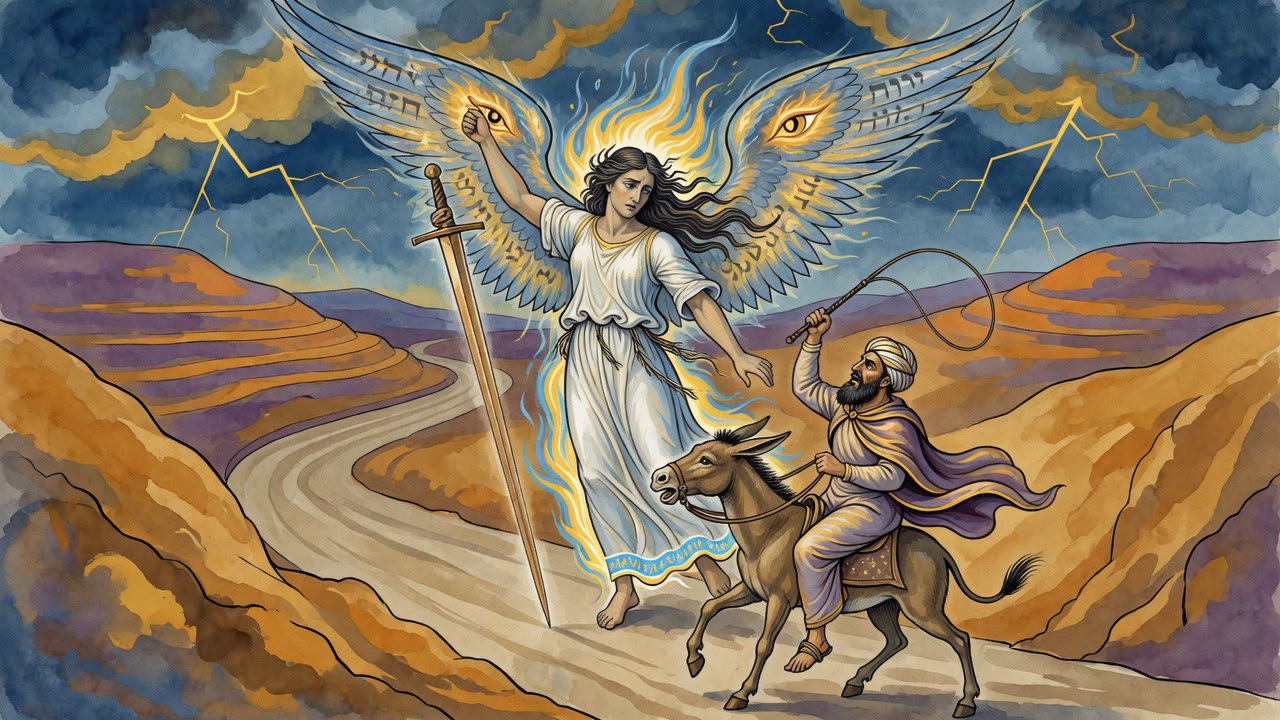
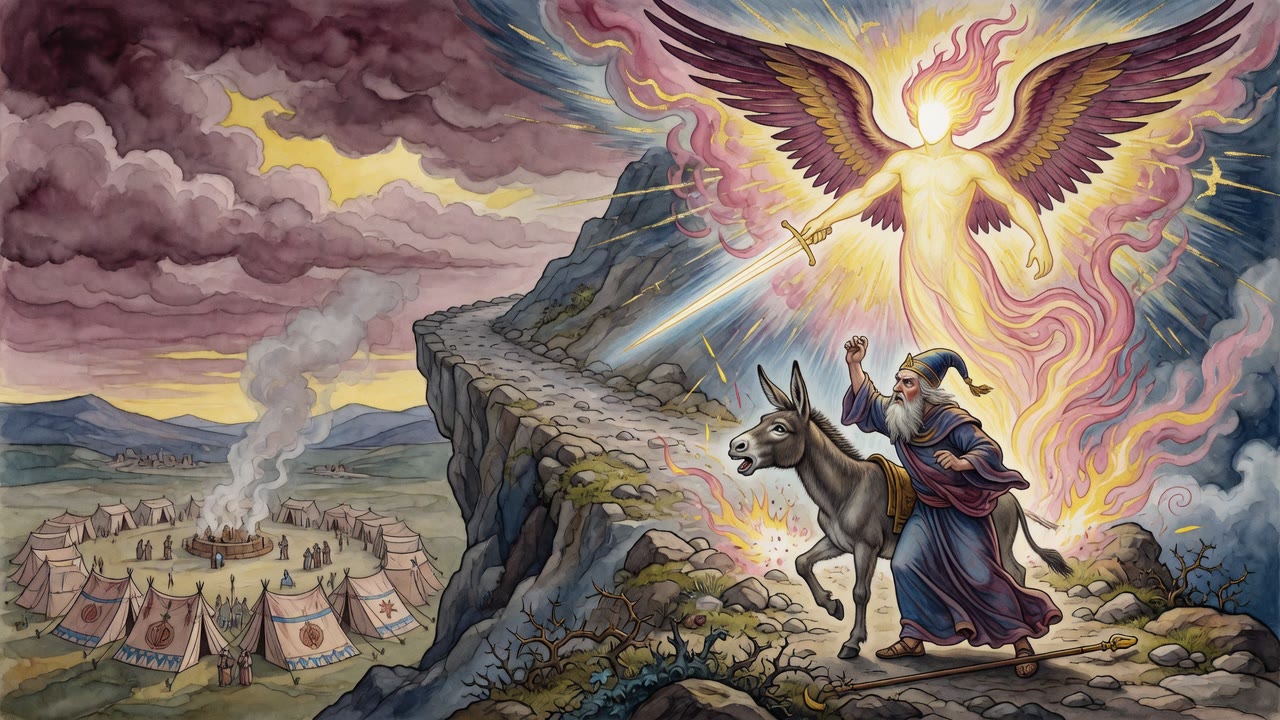
Before dawn on the first morning, Balak king of Moab led Balaam up to the high places of Baal. He walked him the way a man walks a stranger across unfamiliar ground. Balak knew the route. Balaam, for all his reputation, did not.

The rabbis who observed this pairing said the two of them together added up to one complete sorcerer. Separately they were useless. Balak held the knife but did not know where to cut. Balaam knew exactly where to cut and had lost his knife. One man understood the geography of Israel's spiritual vulnerability. The other possessed the technical skill to exploit any vulnerability, provided someone could get him to the right coordinates.

Neither of them was going to be enough. The rabbis said this before the story started, because the ending of the story only makes sense against that prior fact.

The White Rooster Comb and the Moment of Wrath

The specific power Balaam possessed was not general sorcery. Other sorcerers in the ancient world could curse. Balaam's edge was precision. He had learned to identify the exact moment, once each day, when the attribute of divine justice became active. A fraction of a second when the heavens were inclined toward judgment, when a curse launched into the air would land with full force because the timing was perfect.

The Babylonian Talmud, tractate Berakhot, pins the moment to the third hour of the morning, when kings across the ancient world took their crowns off to bow to the sun. In that hour, the tradition says, God is briefly angry at the idolaters. The moment is real but it is short. Almost immeasurably short. Most people cannot find it at all.

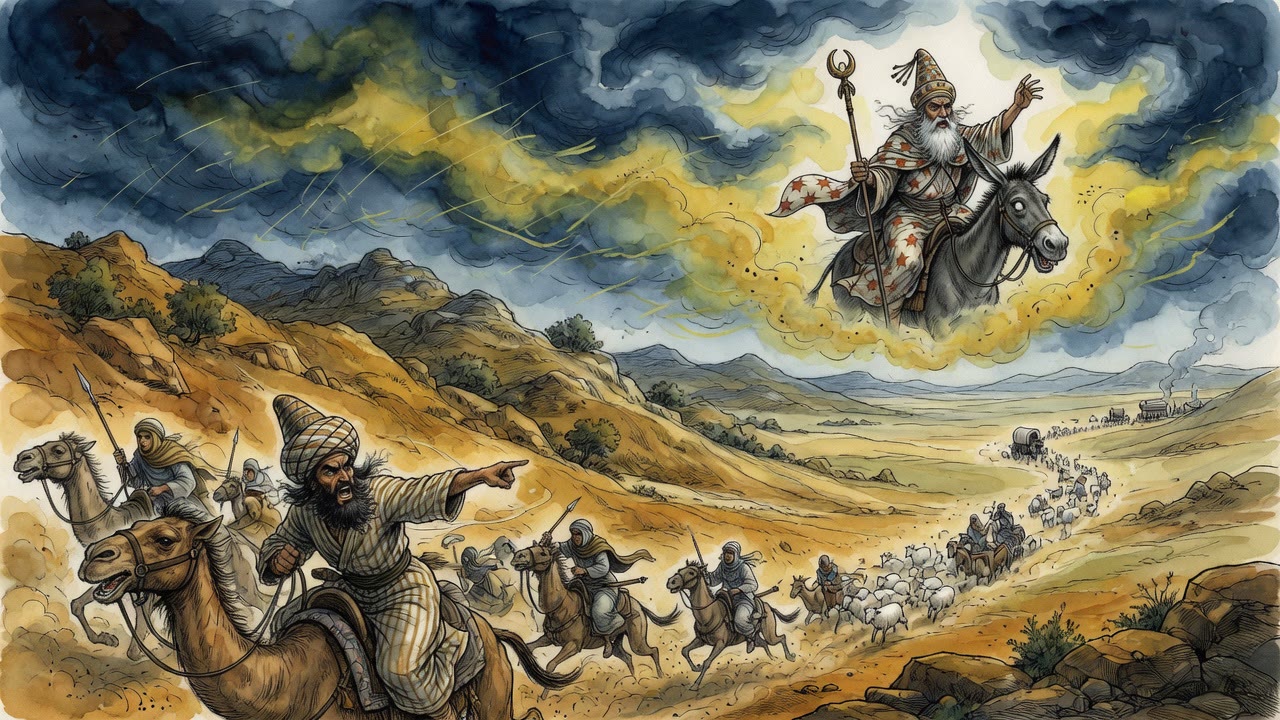
Balaam had learned to find it by reading the comb of a white rooster. At the precise moment God's anger flared, the rooster's comb turned white. Balaam watched the bird every morning and waited. When the comb changed color, he spoke his curse. The curse, launched in that exact moment, entered the judgment of the divine like a letter slipped under a door just as the mail is sorted.

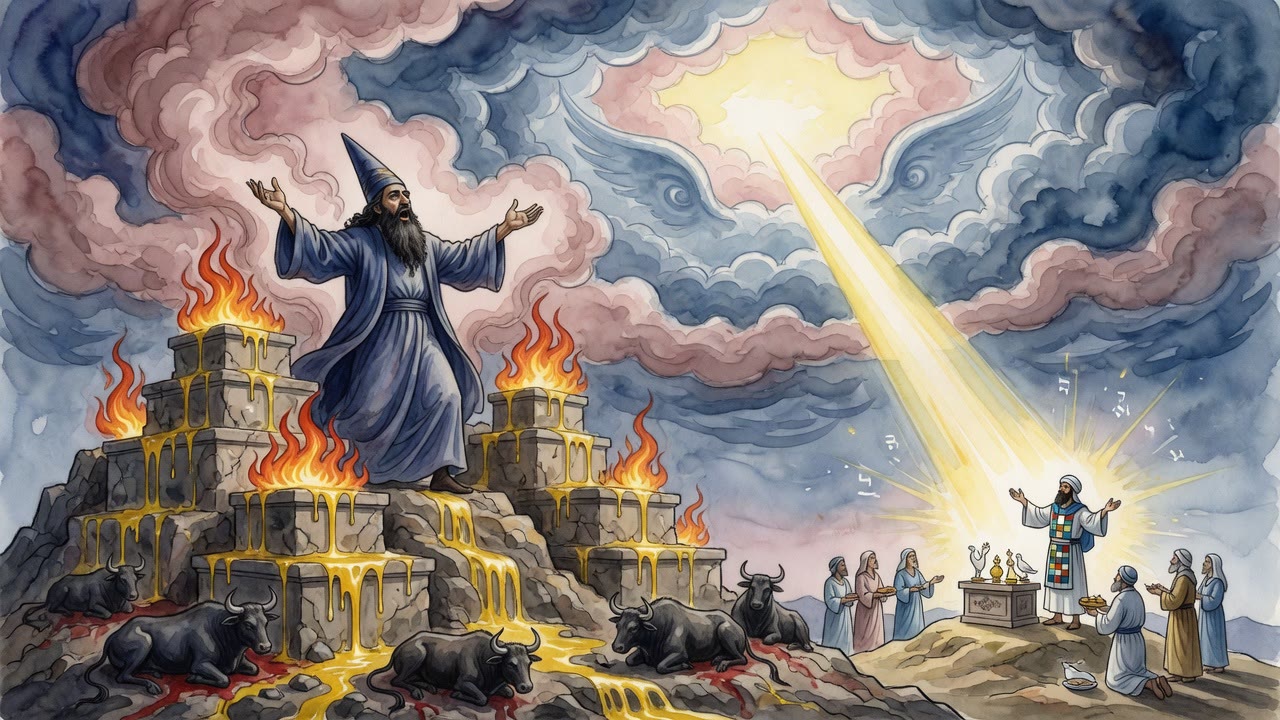
During the three days Balaam spent at Balak's altars, trying three times with seven bulls and seven rams at each new location, God declined to be angry. Not once during those three days did the moment come. The Talmudic tradition records this as a specific mercy: if the moment had arrived, Balaam would have had what he needed, and what he needed would have been enough to finish Israel.

Balak's Strategy of Place

Balak was operating on a different theory. He believed the outcome of a curse depended on geography, that certain high places amplified certain kinds of spiritual force, and that he needed to find the one location where Israel's vulnerability intersected with Balaam's reach.

The rabbis parsed the three sites. The high places of Baal, where the first curse failed. The top of Pisgah, where the second one failed. Mount Peor, where Balak dragged Balaam for a third attempt.

At Peor, Balak's sorcery had told him that a great disaster was going to befall Israel. He read this as an opportunity. He brought Balaam to the exact location of Israel's destined suffering and tried to use the place as a channel for the curse. He had read the disaster correctly. He was wrong about its cause. The catastrophe at Peor was going to be Israel's own transgression with the daughters of Moab, a plan Balaam had already suggested to Balak after the curses failed. Balak had built an altar at the site of a disaster he was going to cause himself.

The Advice That Finally Worked

Balaam could not curse Israel directly. Every time he opened his mouth a blessing came out instead, and by the third attempt the blessing was so lavish, so full of beauty and prophecy, that it became part of the Jewish liturgy: how goodly are your tents, O Jacob, your dwelling places, O Israel.

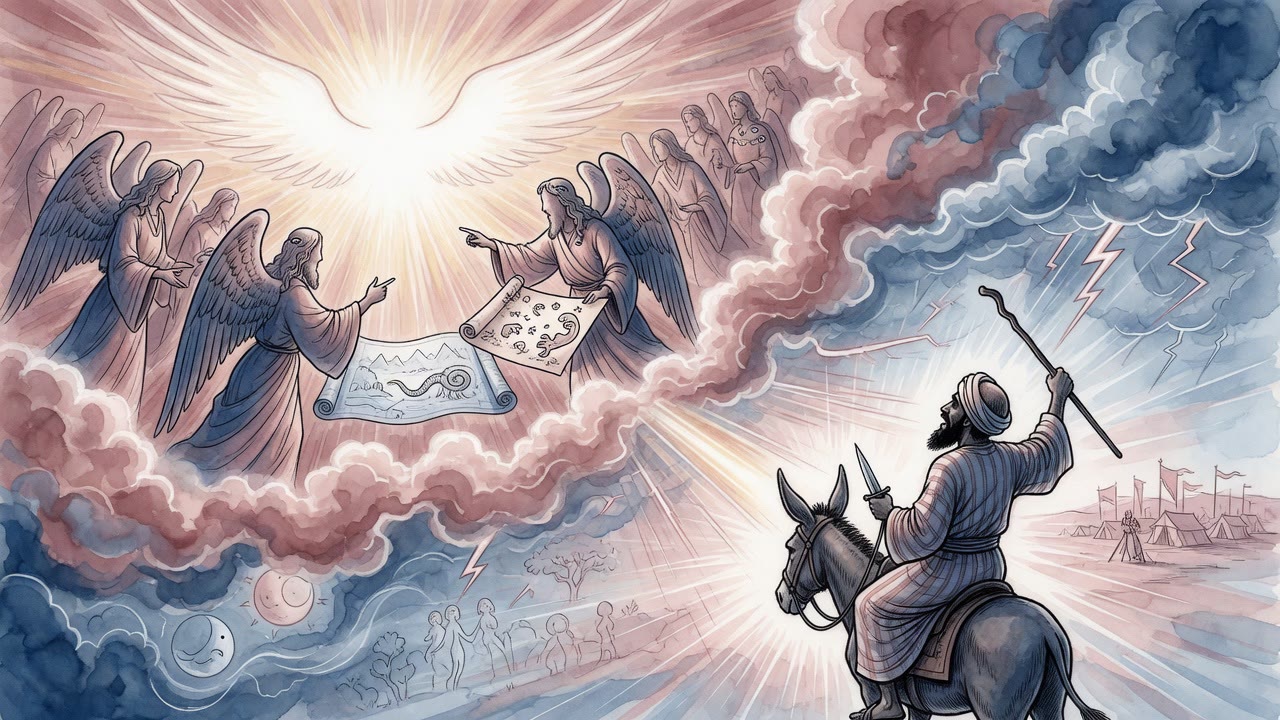
But Balaam had not given up on Balak's money. After the three failed attempts, he pulled Balak aside and told him what would actually work. God's anger at idolaters is the opening. You do not need a curse if you can get Israel to open the door themselves. Send the daughters of Moab to the camp. The God of this people loathes sexual transgression. They are drawn to it. If Israel crosses that line, the divine justice that Balaam had been trying to aim a curse through every morning would activate on its own.

Twenty-four thousand men died at Peor. Not from a curse from the air but from their own choices, exactly as Balaam had predicted. The sorcerer who could not curse Israel from the outside had described the mechanism with perfect accuracy from the inside.


← All myths
From the tradition

Sources

8 sources

The texts this telling draws on, in full. Open a card to read inline, or expand it for a wider, quieter read.

Legends of the Jews 6:34Legends of the Jews

The next morning, after their initial failed attempts to curse the Israelites, Balak, the king of Moab, took Balaam to the high places of Baal. Balak fancied himself quite the magician too – even more so than Balaam! Why there? Well, Balak, through his own magical knowledge, believed that Israel was destined to suffer a great misfortune at Baal-peor. He hoped Balaam's curse would trigger this disaster.

Their relationship was…peculiar. The Midrash (rabbinic interpretive commentary) describes them as two halves of a dangerous whole. One man holds a knife but doesn't know where to strike. The other knows the vulnerable spot but lacks the weapon. Balak knew the place of Israel's potential downfall, but he didn't know how to bring it about. Balaam, on the other hand, knew the art of conjuring evil, but he needed Balak to guide him to the right location.

So what made Balaam so special? What gave him the edge over other magicians? The answer, according to tradition, was his uncanny ability to pinpoint the exact moment when God is wrathful. His curses were effective because he knew precisely when to unleash them – at the very instant of divine anger.

The Talmud (Avodah Zarah 4b) tells us that God is angry for a fleeting moment each day, specifically during the third hour, when kings remove their crowns to worship the sun. But this moment is infinitesimally brief. How brief? Consider this: Eighty-five thousand and eighty-eight such moments make up just one hour! Only Balaam, it was said, could accurately identify that moment.

Tradition states this moment has outward signs. According to Ginzberg's retelling in Legends of the Jews, when it lasts, the comb of a rooster turns completely white, without a single speck of red. Spooky. But here’s where the story takes a beautiful turn. God’s love for Israel is so immense that during the entire time Balaam was preparing his curses, He simply…didn’t get angry. Balaam waited and waited, but the moment of wrath never came. So, Balaam's curse was ineffective, as God's love shielded the Israelites.

What does this all mean? Perhaps it shows us the power of divine protection. Or maybe it highlights the futility of evil when confronted with unwavering love. It certainly reminds us that even the most skilled evildoer can be thwarted by a force greater than themselves. It's a story of magic, curses, and ultimately, the enduring power of love.

Full source
Legends of the Jews 6:44Legends of the Jews

Balak, the King of Moab, certainly believed in the power of place. And he was desperate.

Balak had a problem: the Israelites. A massive, powerful nation camped right on his border. So, what does any self-respecting king do? He hires a sorcerer, of course! Enter Balaam, a man renowned for his powerful curses. (Numbers 22)

Balak's plan backfired spectacularly. Instead of curses, Balaam kept blessing the Israelites! Imagine Balak’s frustration. He's pulling his hair out, thinking, "What am I paying this guy for?!"

So, Balak tries a different tactic. He leads Balaam to the top of Pisgah, a mountain peak. He’s convinced that this place holds the key. Why Pisgah? Balak, using his own sorcery, believed it was a place of misfortune for Israel. He was sure that this time, Balaam would finally utter the curse.

But Balak was wrong. Terribly wrong.

He believed Pisgah held a curse for Israel. And in a way, he was right. But not in the way he imagined. The disaster that awaited Israel at Pisgah wasn’t a sudden defeat or plague. It was something far more poignant: the death of their leader, Moses.

As we find in Midrash Rabbah, God refused to grant Balaam’s wish to curse Israel, even on this spot tinged with sorrow. Pisgah was indeed destined for Israel's sorrow, but not through the mouth of a sorcerer. (Midrash Rabbah, (Numbers 20:2)3)

It makes you think, doesn't it? Balak sought to manipulate fate, to weaponize a place of sorrow. But in the end, even his worst intentions couldn't change God's plan. And sometimes, the places we associate with misfortune aren't curses at all, but rather somber reminders of life's inevitable transitions.

Full source
Legends of the Jews 6:49Legends of the Jews

Legends of the Jews turns to Balak Drags Balaam to Mount Peor for a Third Try.

So, Balak, not one to give up easily, decides a change of scenery is in order. "Maybe," he thinks, "the location is the problem!" He hauls Balaam to the top of Peor. Now, Peor wasn't just any mountain. According to Balak's... shall we say, unconventional research methods (that is, sorcery!), a great disaster was destined to befall Israel there. He figures, "Aha! Maybe I can trick God into letting Balaam curse them from this unlucky spot!"

Here's the thing about prophecies and curses: they aren't always what they seem. Balak thought the disaster on Peor was some kind of cosmic setup, a weakness he could exploit. But he was dead wrong.

The disaster that awaited Israel on Peor? It wasn't a curse from the heavens. It was something far more human, far more… well, sinful. It was Israel's own transgression: their involvement with the daughters of Moab. The Torah tells us that the men of Israel began to commit sexual immorality with the women of Moab (Numbers 25:1). Temptation, idolatry, and a whole heap of trouble. And God's punishment, of course, followed.

So, what can we take away from this little episode? Location matters, sure. But maybe not in the way Balak thought. Sometimes, the real danger isn't some external force or cursed mountaintop, but our own choices and vulnerabilities. We create our own disasters, more often than we like to admit.

Full source
Legends of the Jews 6:54Legends of the Jews

Sometimes, the most dangerous weapons aren't swords or spears, but cunning and temptation.

Let's Remember him? The prophet hired by Balak, king of Moab, to curse the Israelites? (Numbers 22-24). He couldn't directly curse them, of course; God wouldn't allow it. But Balaam was nothing if not resourceful – or, rather, malevolent. He wasn't about to let a good payday slip away.

Even though he failed in his initial mission, Balaam didn't just pack up and leave. Oh no. He offered Balak some… alternative advice. A way to bring ruin to Israel, not through supernatural curses, but through something far more insidious: their own desires.

In Ginzberg's retelling in, Legends of the Jews, Balaam knew exactly what buttons to push. He told Balak, "The God of this people loathes unchastity; but they are very eager to possess linen garments." (Ginzberg, Legends of the Jews, 3:337). It’s a chillingly pragmatic assessment of human weakness.

So, what was the plan? Balaam suggested setting up tents. Not for war, but for commerce. Old women would stand at the entrances, offering fine linen for sale. The Israelites, always eager for a good bargain – and perhaps a little susceptible to the allure of fine fabrics – would be drawn in.

But here’s the truly wicked part: once inside, they wouldn’t just find more linen. Hidden within the tents were young harlots, ready to seduce them. The goal? To lead them into unchastity, to defy God's laws, and to bring divine punishment upon themselves.

Think of it: a carefully orchestrated trap designed to exploit not military weakness, but moral vulnerability. Balaam understood that the greatest threat to a people's strength often comes from within.

It’s a stark reminder that external enemies aren’t always the biggest danger. Sometimes, the battles we fight within ourselves – the temptations we face, the choices we make – are the ones that truly determine our fate. What does this ancient story tell us about our own lives, our own vulnerabilities? Where are we susceptible to subtle forms of manipulation, to temptations that might lead us astray? It's a question worth pondering.

Full source
Legends of the Jews 6:13Legends of the Jews

Legends of the Jews turns to Kingdom of Balaam of Balak.

Balak, the King of Moab, was understandably nervous. A huge Israelite nation was camped nearby, and he wanted them gone. So, he sent messengers to Balaam, known for his powerful curses, with a tempting offer.

Initially, Balaam turned them down, claiming he needed to consult with God. But get this: even when he finally admitted he couldn't defy God’s will, he still tried to sound like he was the one making the choice! As Ginzberg retells it in Legends of the Jews, Balaam wouldn't admit that his decision depended on God. Nope, he insisted he could do whatever he wanted, but chose not to disobey.

Then Balak, desperate, sent an even more impressive delegation with even more tempting offers. Balaam's response? "If Balak would give me his house full of silver and gold, I cannot go beyond the word of the Lord my God."

Now, on the surface, that sounds righteous. But dig a little deeper. Our sages see right through him. This statement, they say, perfectly encapsulates Balaam's three fatal flaws: ayin ra, ruach (spirit) gevah, and nefesh (the vital soul) rechavah – a jealous eye, a haughty spirit, and a greedy soul. (Pirkei Avot 5:19)

His jealousy? He envied the Israelites' good fortune and wanted to curse them out of spite. His haughtiness? He lied to the first messengers, implying that God wouldn't let him go because it was beneath his dignity. Can you imagine?

And the greed? Oh, the greed is the most blatant. In his response to the second embassy, Balaam subtly mentioned Balak's silver and gold, hinting that the king’s initial offer wasn’t nearly enough. In fact, he practically told the messengers that Balak couldn't adequately compensate him for his services! "If Balak were to hire hosts against Israel," he seemed to imply, "his success would still be doubtful, whereas he should be certain of success if he hired me!" (Based on Ginzberg, Legends of the Jews)

Wow. The nerve! It's like he was saying, “Sure, armies might fail, but my curses? Guaranteed victory… for the right price, of course.” It really paints a picture of a man driven by ego and self-interest, doesn't it? Someone more concerned with his own perceived power than with any sense of morality or divine will. What do you think? Was he really trying to impress the messengers, or was he simply blinded by his own greed and ego?

Full source
Midrash Aggadah, Numbers 24:16Midrash Aggadah

"And knows the knowledge of the Most High" (Numbers 24:16). But did he not know the mind of his own beast, yet know the mind of the Holy One, blessed be He? Rather, he was able to determine that hour in which the Holy One, blessed be He, grows angry each day, as it is said, "and a God who is wrathful every day" (Psalms 7:12). And when does He grow angry? In the first three hours, at the hour when He sees the kings sleeping until three hours, and at the hour when they rise from their beds and place their crowns upon their heads and bow down to the sun, immediately He grows angry.

Another interpretation: "And knows the knowledge of the Most High." Our Sages of blessed memory said, "And there arose not a prophet again in Israel like Moses" (Deuteronomy 34:10), in Israel none arose, but among the nations of the world one did arise, and who was he? Balaam. And in three matters Balaam was greater than Moses, they said. For Moses our teacher, peace be upon him, did not know when the Holy One, blessed be He, wished to speak with him, but Balaam knew when the Holy One, blessed be He, wished to speak with him, as it is said, "and knows the knowledge of the Most High." Moses our teacher, peace be upon him, did not gaze upon the Divine Presence, but Balaam gazed, as it is said, "and beholds the vision of Shaddai." With Moses the Divine Presence did not speak whenever he wished, but Balaam knew when the Holy One, blessed be He, wished to speak with him, as it is said, "fallen, yet with eyes uncovered", for he would compose himself before the Divine Presence, and immediately his eyes were uncovered, and he would speak with the Divine Presence. And why all this? So that the nations of the world should not say, "Had we a prophet like Moses, we would have heeded him." Therefore the Holy One, blessed be He, spoke with Balaam. But neither they nor their prophets availed, for there was no remedy for them nor for their prophets.

Full source
Midrash Tanchuma Buber, Balak 15:3Midrash Tanchuma Buber, Balak

(Numbers 22:41:) "So it came to pass in the morning that Balak took Balaam and brought him up to the high places of Baal." Balak was a master of divinations and auguries more than Balaam, for Balaam was dragged along after him like a blind man. To what were the two of them alike? To someone who had a knife in his hand but did not recognize the joints, and his companion recognized the joints but had no knife in his hand. Balak saw the places in which Israel would fall, and "he brought him up to the high places of Baal", this is Baal Peor, for he saw that Israel would fall there.

Full source
Midrash Aggadah, Numbers 22:41Midrash Aggadah

"And he brought him up to Bamoth-baal" (Numbers 22:41). Balak was a master of divinations and enchantments more than Balaam, for Balaam walked after him like a blind man. This was because Balak foresaw the future, that Israel were destined to sin with Baal-peor, so that the Holy One, blessed be He, would remember that iniquity against them, and would also allow them to be cursed.

Full source