Balaam Took Moses's Death as a Breach in Israel's Wall
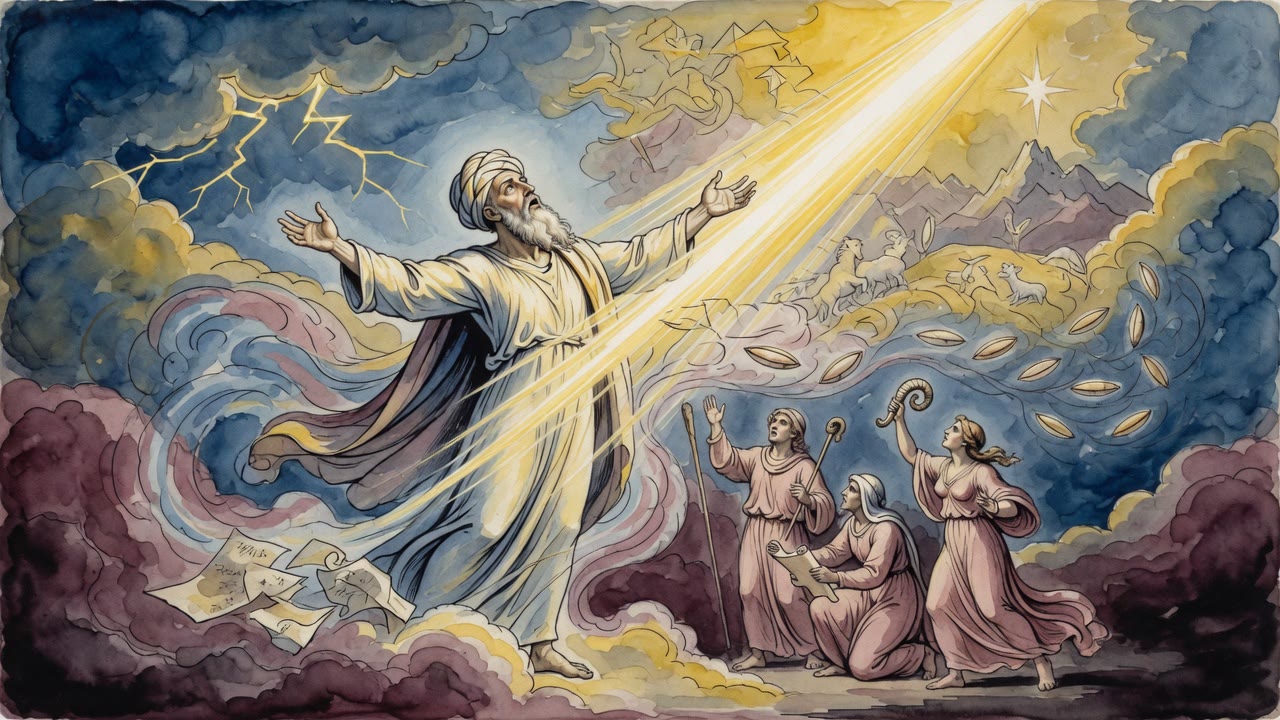
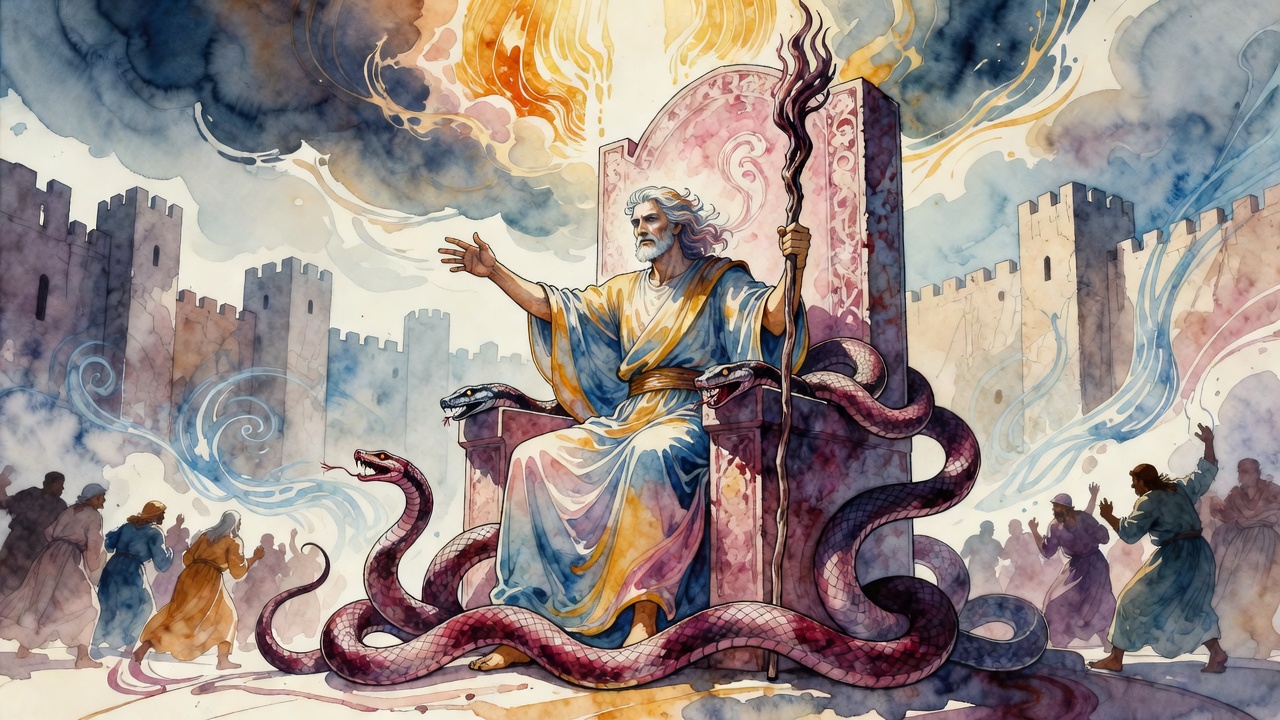
Balaam used divination at Pisgah to find where Moses would die, believing he had finally found the pressure point that three hilltops had not revealed.
Table of Contents
 Click for full size
The Third Location Was Not Random
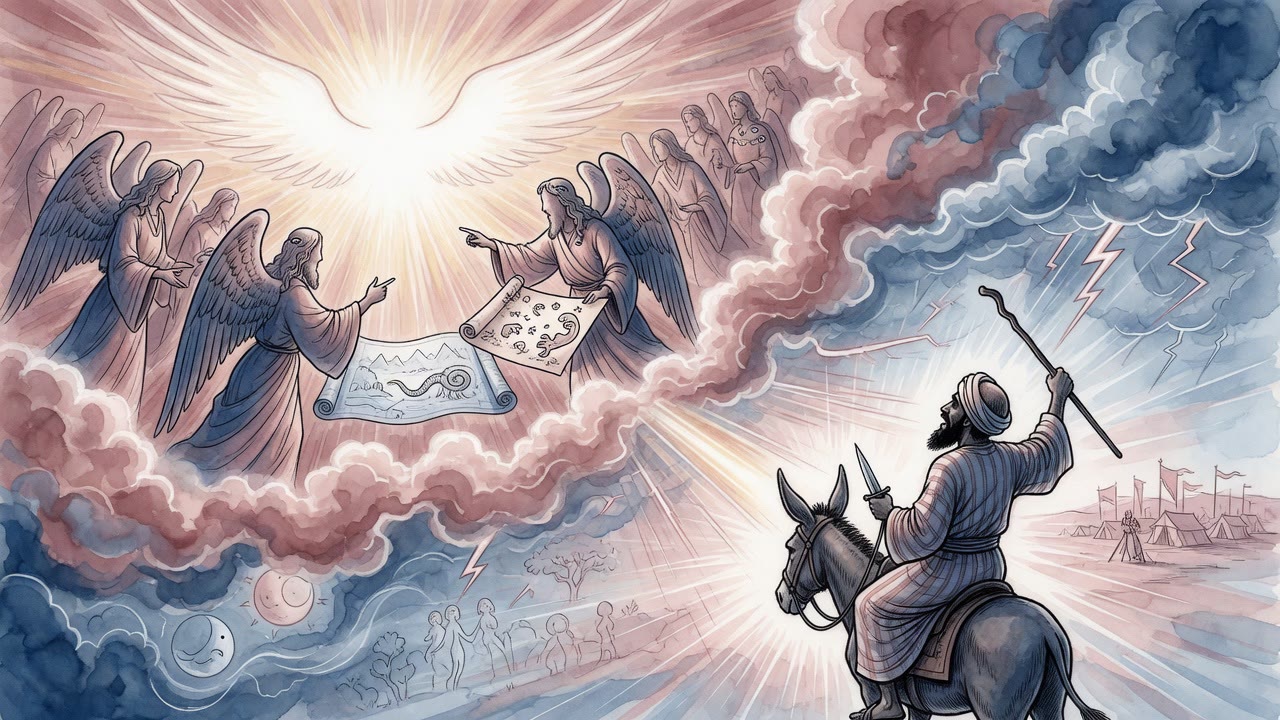
Two hilltops. Two sets of altars. Two prophecies that came out as blessings instead of curses. Balak had not given up, but he had changed his approach. When he dragged Balaam to the Field of Zophim, at the top of Pisgah, it was not because the altitude was better or the view more dramatic. It was because divination had told him something about that particular ridge.
Midrash Tanchuma, Balak 13, explains Balaam's logic. He had perceived, through whatever dark art of prophetic vision he commanded, that this mountaintop carried a specific resonance with the future. It was here that Moses would die. God had already spoken it directly: go up to the top of Pisgah and look toward the west and north and south and east, and see with your eyes, for you shall not cross this Jordan (Deuteronomy 3:27). The greatest leader Israel had ever produced or would ever produce would stop at this exact ridge.
The Question Balaam Asked Himself
The Tanchuma frames Balaam's reasoning as a question he asked internally: is there a breach greater than this? A people whose most powerful protector cannot enter their own land. Who must hand leadership to a successor at the final threshold. Who will stand on the far bank of the Jordan and watch their prophet buried on the eastern side while they cross without him.
Three hilltops of altars had found nothing he could use. God's protection over Israel had been too complete, too consistent, too present in each prophetic vision. But here, finally, at Pisgah, Balaam thought he had located the crack in the wall. The wall was not broken by external enemies. It was breached from inside, by the mortality of Israel's greatest advocate.
The Mistake About What Death Means
Legends of the Jews preserves the tradition about what brought Balak to Mount Peor for the third attempt. He had done his sorcery, and the result had pointed him to Peor as a place where a great disaster awaited Israel. What he did not understand was that the disaster he had found was not the kind he could exploit. The sin at Peor, the whoring after Moabite women and the worship of Baal Peor, was not a weakness in Israel's divine covering. It was a temporary moral failure that God would address directly, through a plague and through the zeal of Phinehas.
Balaam's delusional persistence, his hope that he could eventually find the angle that would let a curse through, is preserved in Legends of the Jews as a character study in what happens when a powerful person reasons correctly about facts and incorrectly about what the facts mean. He found Moses's death. That was accurate. He concluded from it that Israel was vulnerable. That was wrong. Moses's death at Pisgah was part of the covenant structure, not a breach in it. The same God who told Moses he would not cross the Jordan was the same God who was not going to let Balaam curse Israel from Pisgah.
The Altars Were Built Again
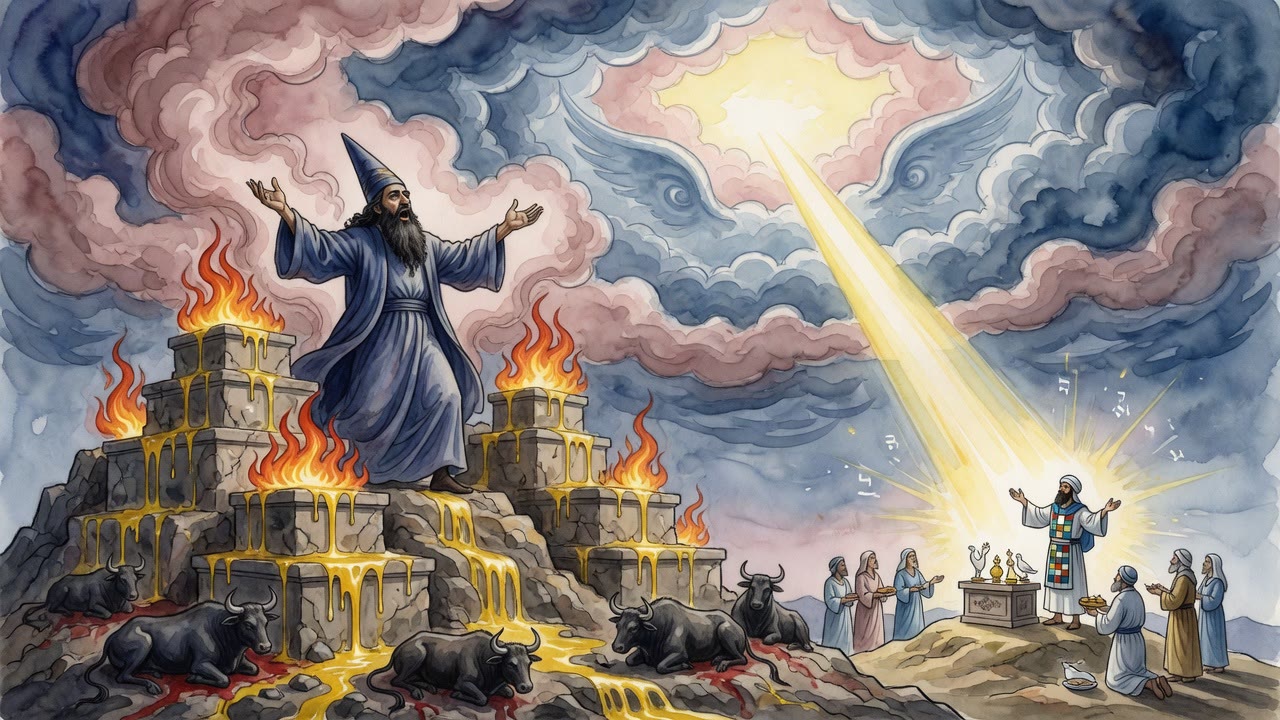
Even at Pisgah, even after two failed attempts, Balak built seven more altars. Balaam stood beside the offerings and went to seek an encounter. The ritual was identical to the previous two attempts. What Balaam had not understood yet, and what the Tanchuma drives toward, was that the number of altars was irrelevant to the outcome. The altars were his argument. God was not persuaded by the argument. The third set of altars produced the most expansive blessing Israel had received yet.
← All myths