Laban Pursued Jacob to Gilead and Came Back as Balaam
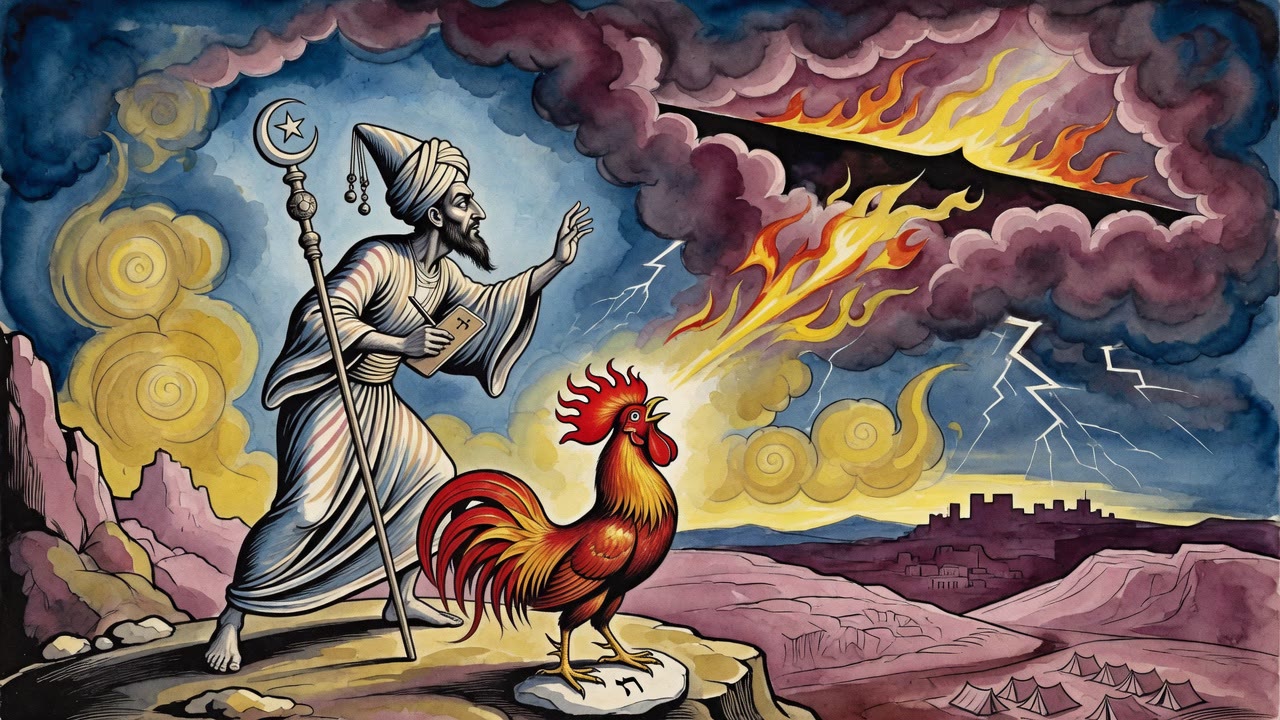
He watched the cock on the ridge above the camp. When the comb went white, God was angry, and a curse could land. The comb stayed red.
Table of Contents
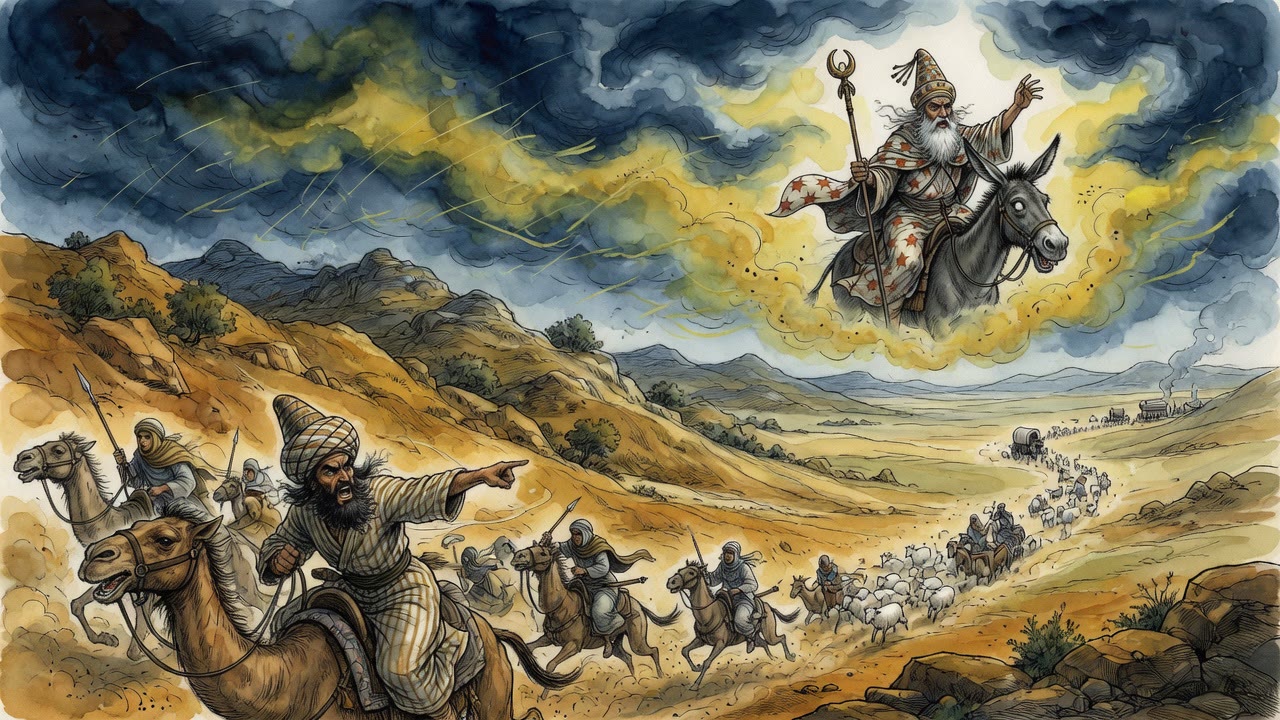
The campfires of Jacob lay below the ridge like a scatter of coals. Laban counted them. His daughters were in those tents. His grandchildren. The flocks he had worked twenty years to keep, changing the wages every time the count went against him. He flexed his fingers on the reins. He had not come to Gilead to kiss anyone.
 Click for full size
He meant to come down in the dark and leave the hill empty by morning.
A Word Stops the Knife
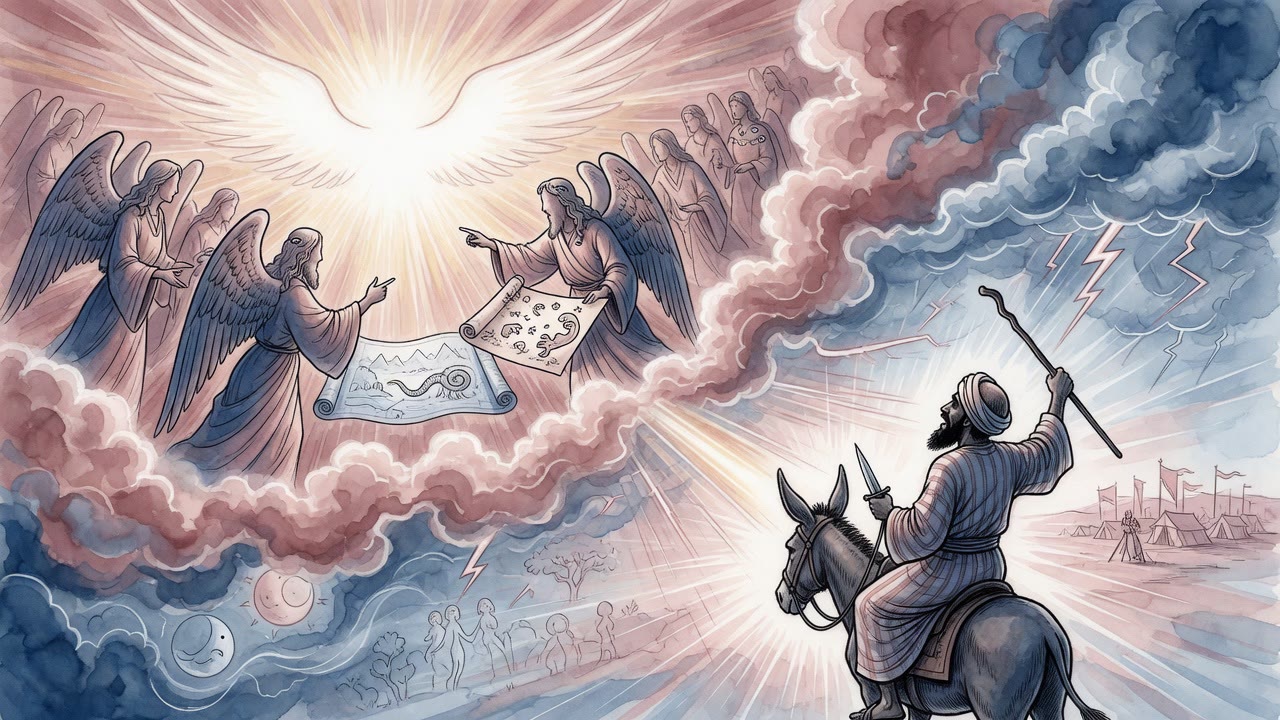
He never reached the first guy-rope. In the night a word found him where he lay and pinned him to the ground. He was not to speak to Jacob, good or bad (Genesis 31:29). The hand that had been opening toward murder closed on air.
Morning made him a different man in front of witnesses. He made speeches. He kissed the children. He piled stones into a heap and called it a border, then he rode home. The watchers thought the quarrel had died on that pile of rocks.
Laban rode east with the warning still in his ears. The hunger under it did not ride home. It waited for another mouth.
Moab Asks Where the Strength Lives
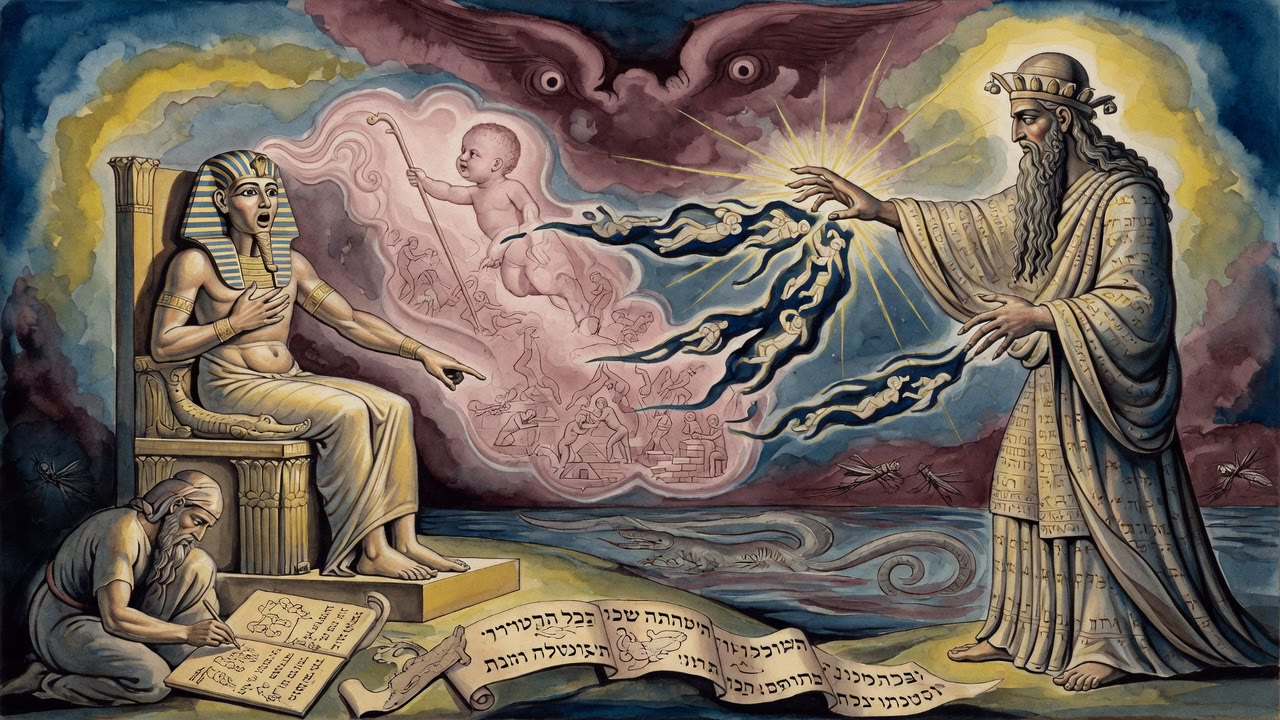
The hunger did not wait politely for a new name. It put a decree in Pharaoh's mouth that drowned the boys in the Nile. It put a sword in Amalek's hand at the rear of the column, where the weak ones walked. When those failed, it looked for a tongue.
The kings of Moab stood on their walls and watched a slave people come up out of the desert. Sihon, who had seemed unbreakable, was broken. Armies folded in front of a multitude that owned no city and no gates. The wall-stones were still warm under their palms when the reports came in.
The elders spoke low. This was not swords. Moses had been raised in Midian. They sent across an old enmity and asked the Midianites what kind of man he was.
The answer came back in one line. "His strength abides in his mouth."
Moab and Midian had hated each other for years. They sat down together anyway. Against a mouth they would set a mouth.
The Price Arrives Sealed
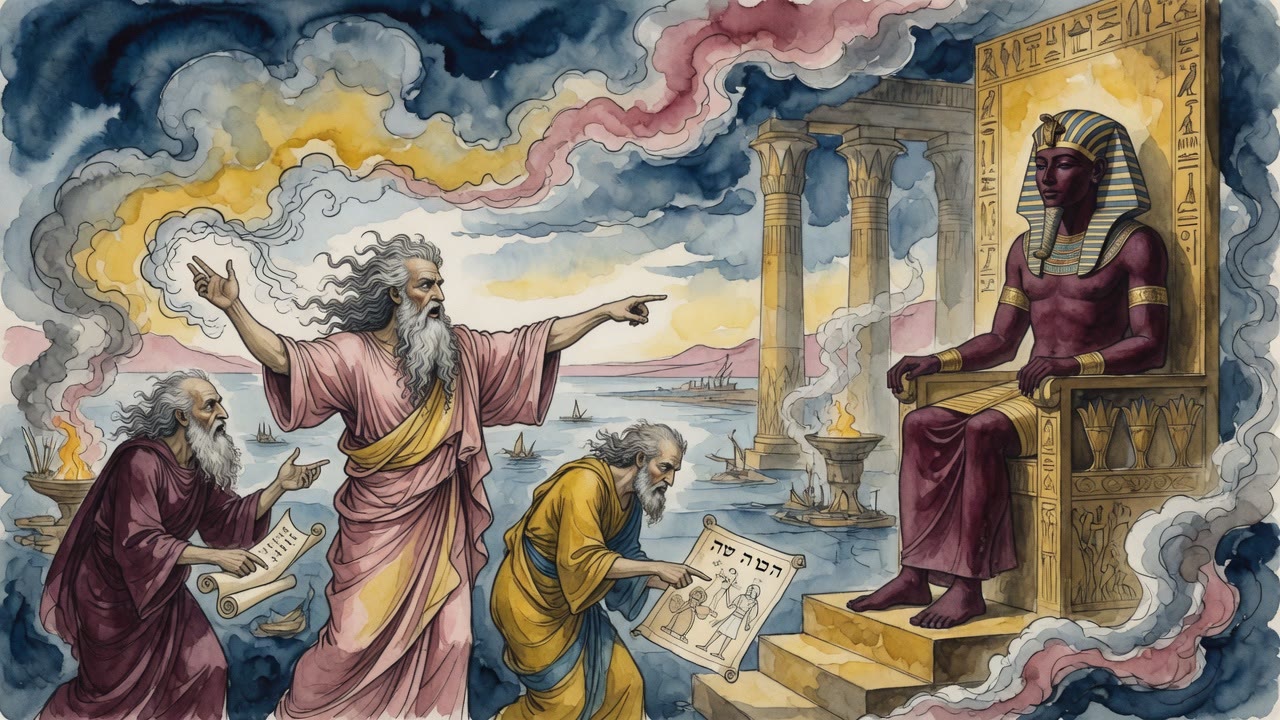
Balak son of Zippor sent messengers north, not to a stranger. He sent them to Laban the Aramean, who lived at Pethor by the river and interpreted dreams, and who now went by another name. They called him Balaam, the Devourer of Nations.
The elders of Moab and of Midian carried the price of divinations sealed in their hands. Balaam was at the height of his work. His curse had already helped Sihon grind Moab, and his word had put Balak on a throne. Kings sent ambassadors to him as if he were a court.
He looked down from the ridge above Israel's camp, and the set of his face was the set of the man who had once counted Jacob's fires. Same hunger. New tents. He had never stopped coming.
Balak Knew the Place
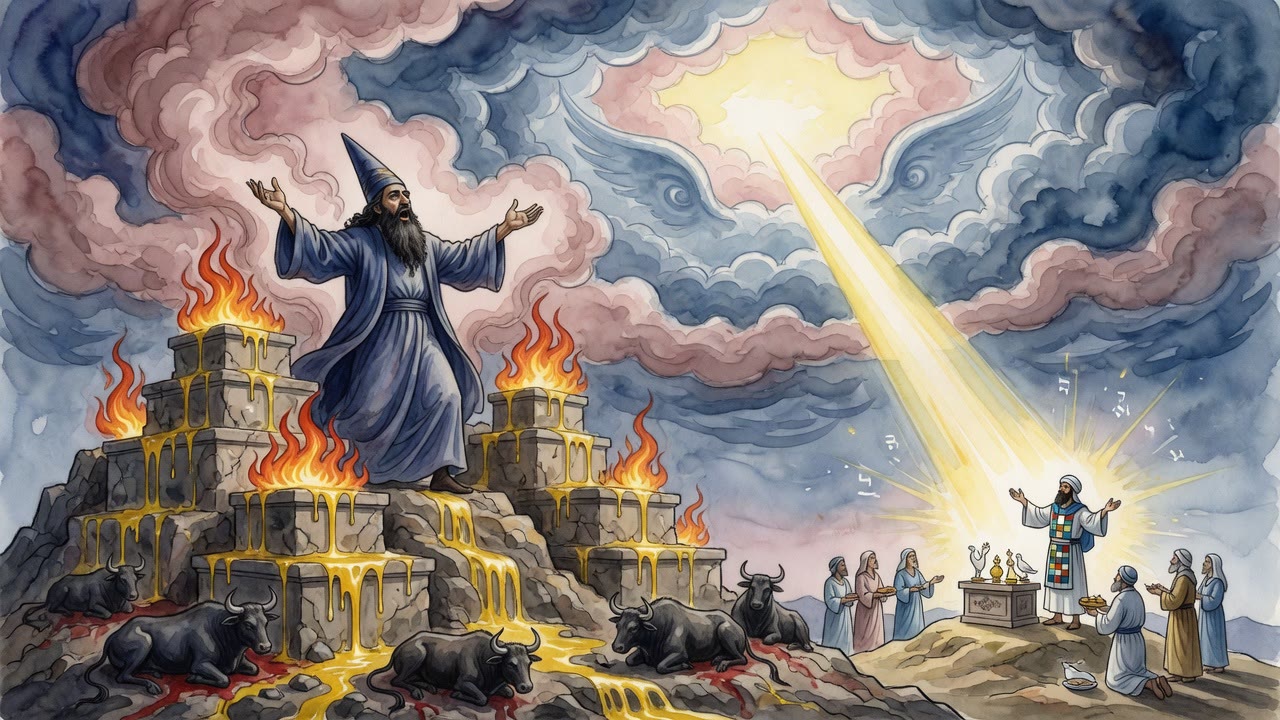
In the morning Balak took him up to the high places of Baal. Balak was the greater magician of the two. He knew that Israel was due a disaster on the heights of Baalpeor. He did not know how to bring it. Balaam knew how to bring a curse. He did not know the ground.
They needed each other the way a man with a knife needs a man who knows the throat.
Balaam's gift was a clock. Once a day, in the third hour, when kings set crowns on their heads and bowed to the sun, God was angry for a single instant. Eighty-five thousand and eighty-eight such instants make an hour. No one else could catch it. While it lasted, a cock's comb went white, without a stripe of red. That was the moment a curse could land.
The Comb Stayed Red
Balaam watched the bird on the ridge. He opened his mouth and waited for the white.
The comb stayed red.
He waited through the third hour. He waited while Balak dragged him to the next high place, and the next, always a little closer to the camp, always with the bird in the corner of his eye. God did not get angry at all. Not for the length of that morning. Not for the length of the day.
The Devourer of Nations stood over the grandchildren of the man he had hunted to Gilead, and the word in his throat turned. What came out was blessing. The mouth Moab had hired to swallow Israel blessed it instead, and the hunter who had chased one family into the hill country learned, on a windy ridge above their tents, that the warning in the dark had never really let him go.
← All myths