36 myths · Page 1 of 2
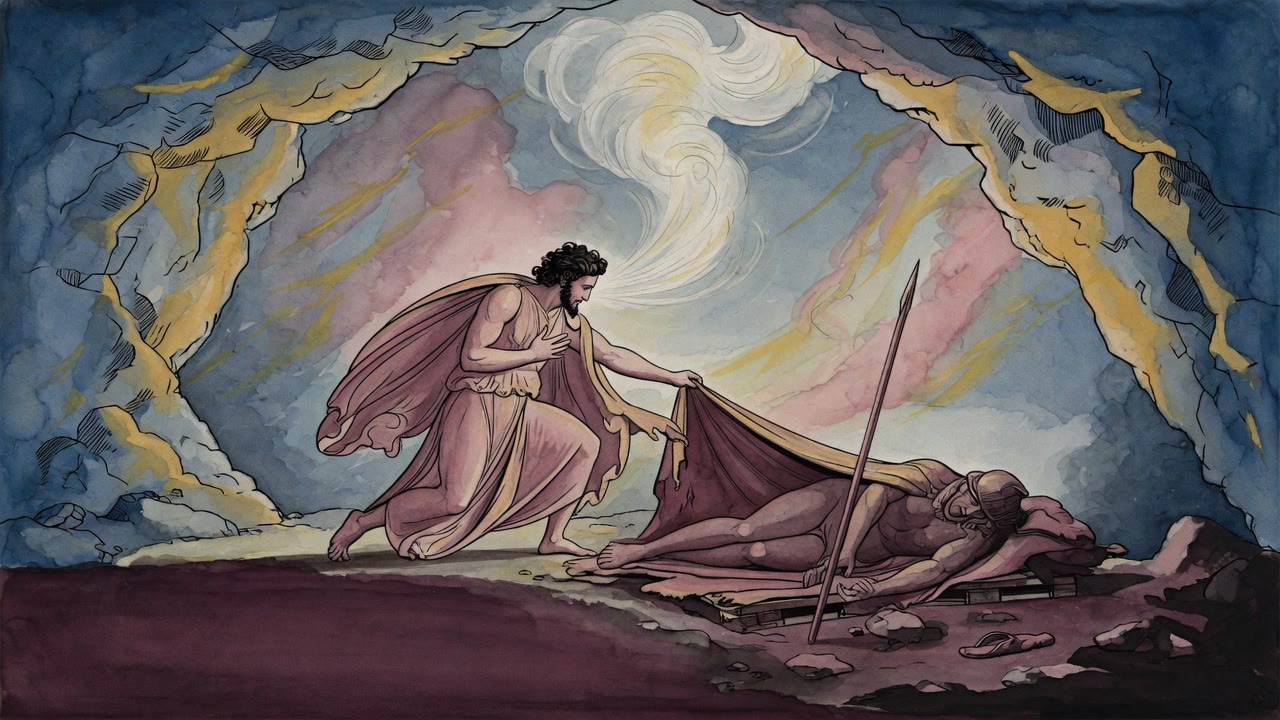
Pressed against the back wall of a cave, knife drawn, Saul within reach, David asked God for two mercies. The second one was the strange one.
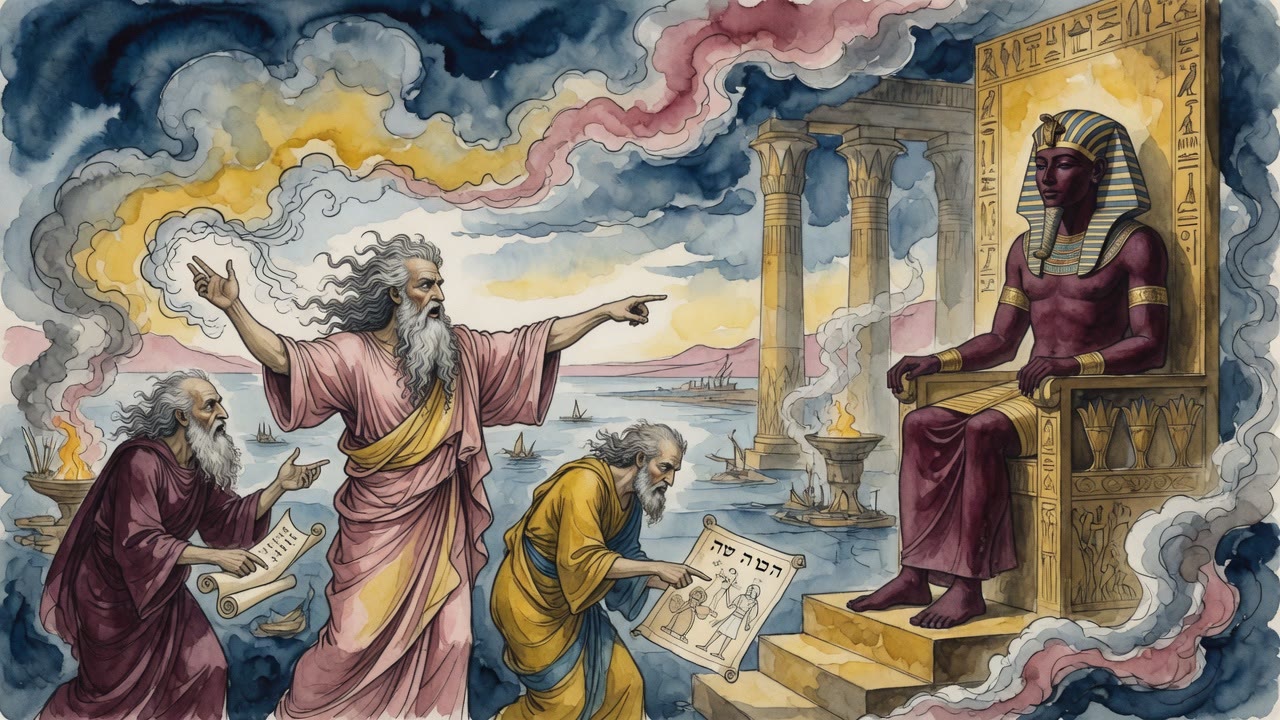
Three advisors stood before Pharaoh. One fled, one stayed silent, and Balaam found the loophole that drowned Hebrew babies in the Nile.
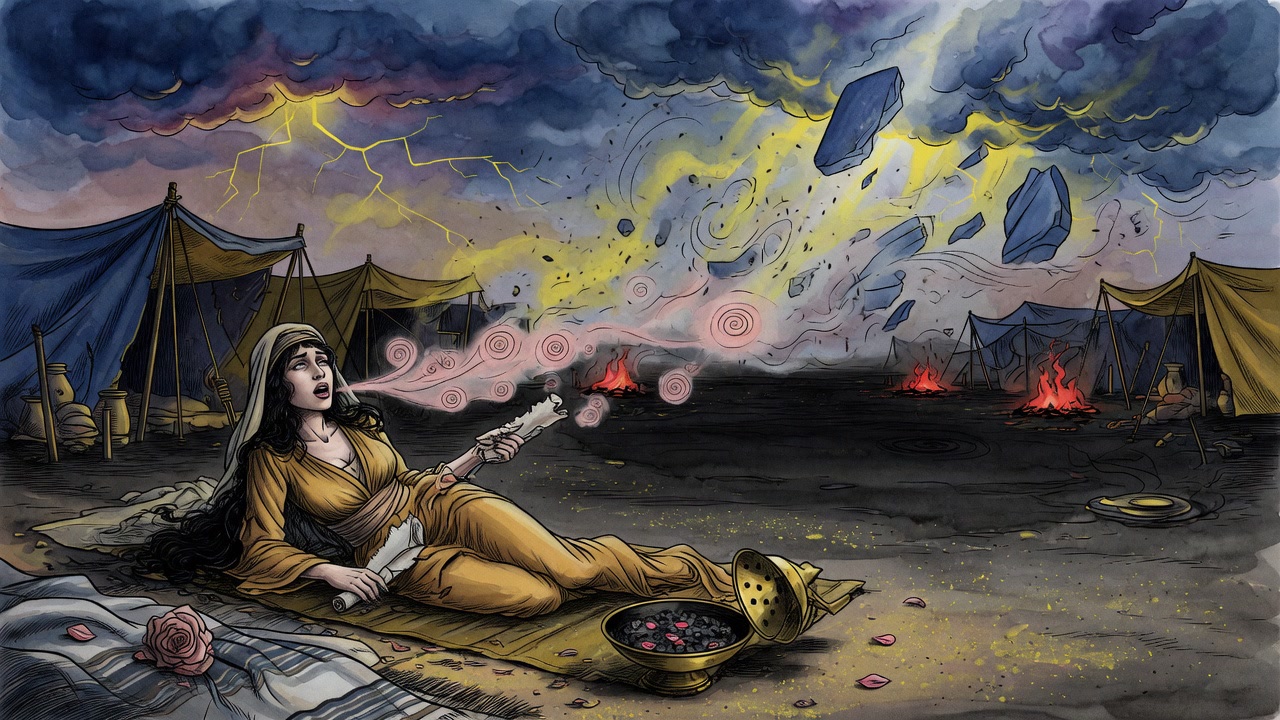
He dropped his voice so the camp would lean in. He told them about a widow and two daughters. The laws were real. The woman was not.
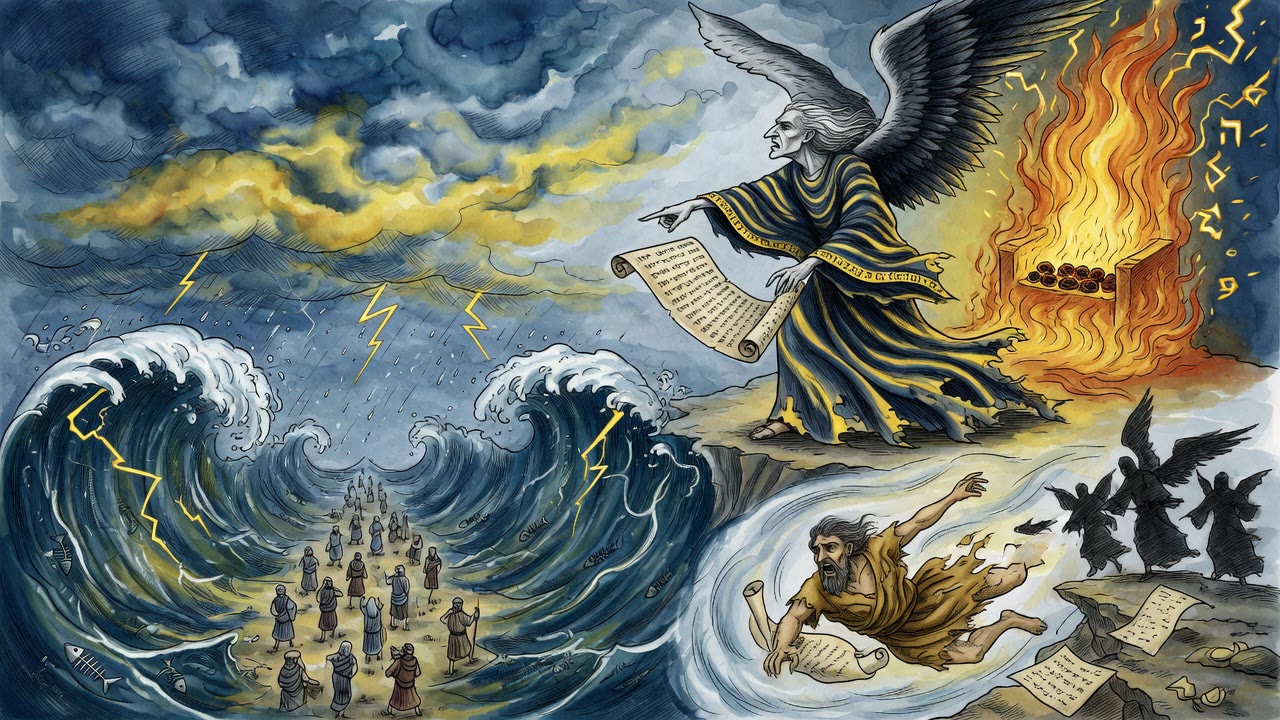
Chariots shook the reeds. In heaven Samael opened a true ledger against Israel. God did not argue. He threw the accuser a ram named Job.
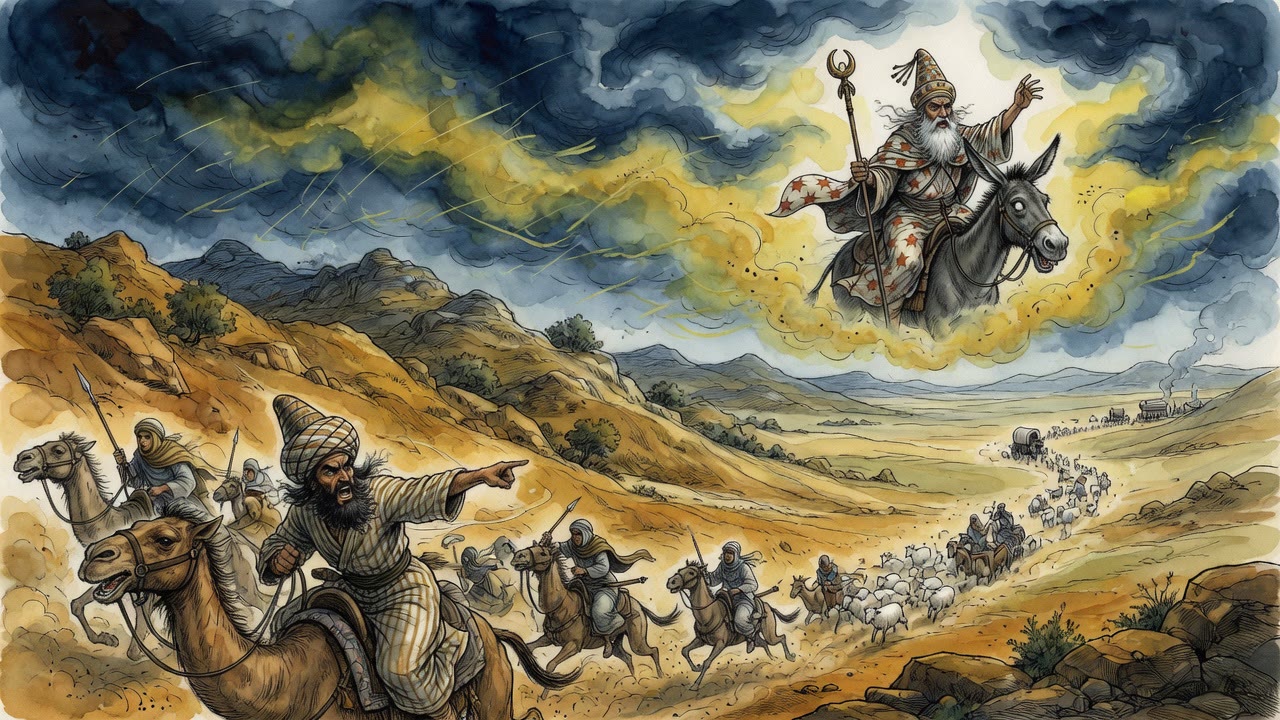
He watched the cock on the ridge above the camp. When the comb went white, God was angry, and a curse could land. The comb stayed red.
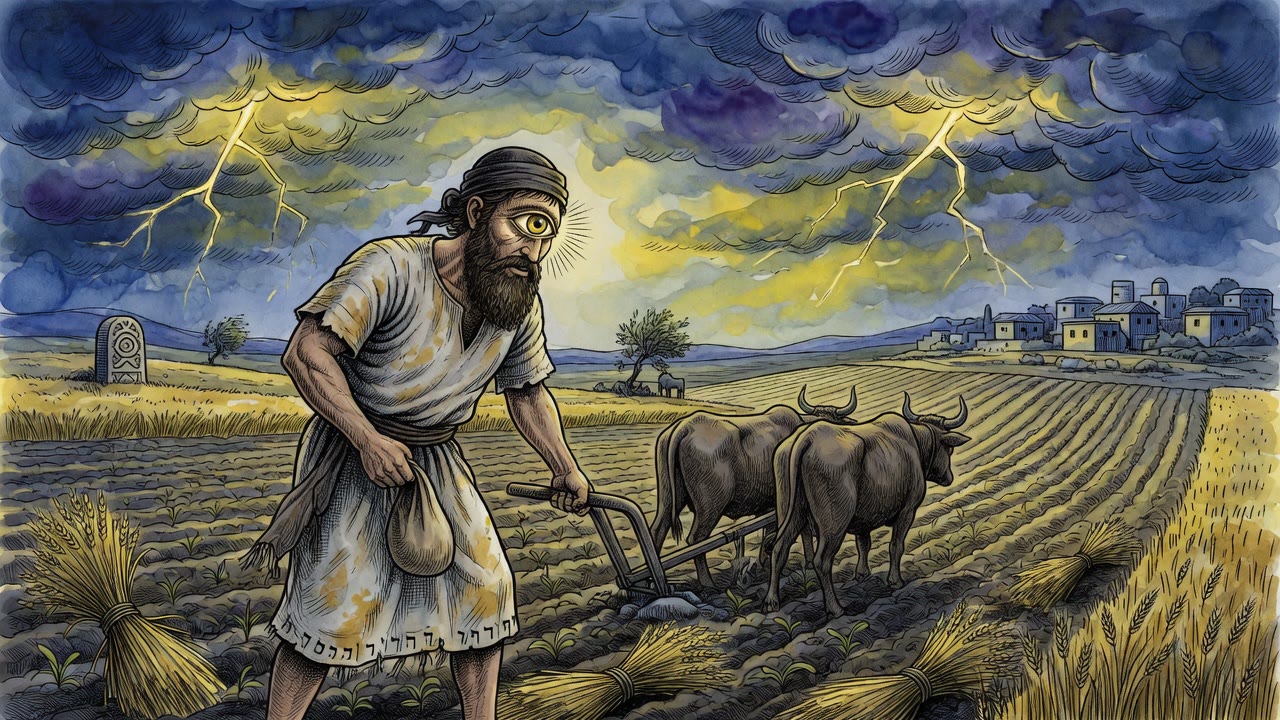
Two sisters argued in a field in Haran over a handful of apples. The price they settled on was one night with their husband, and the child was Issachar.
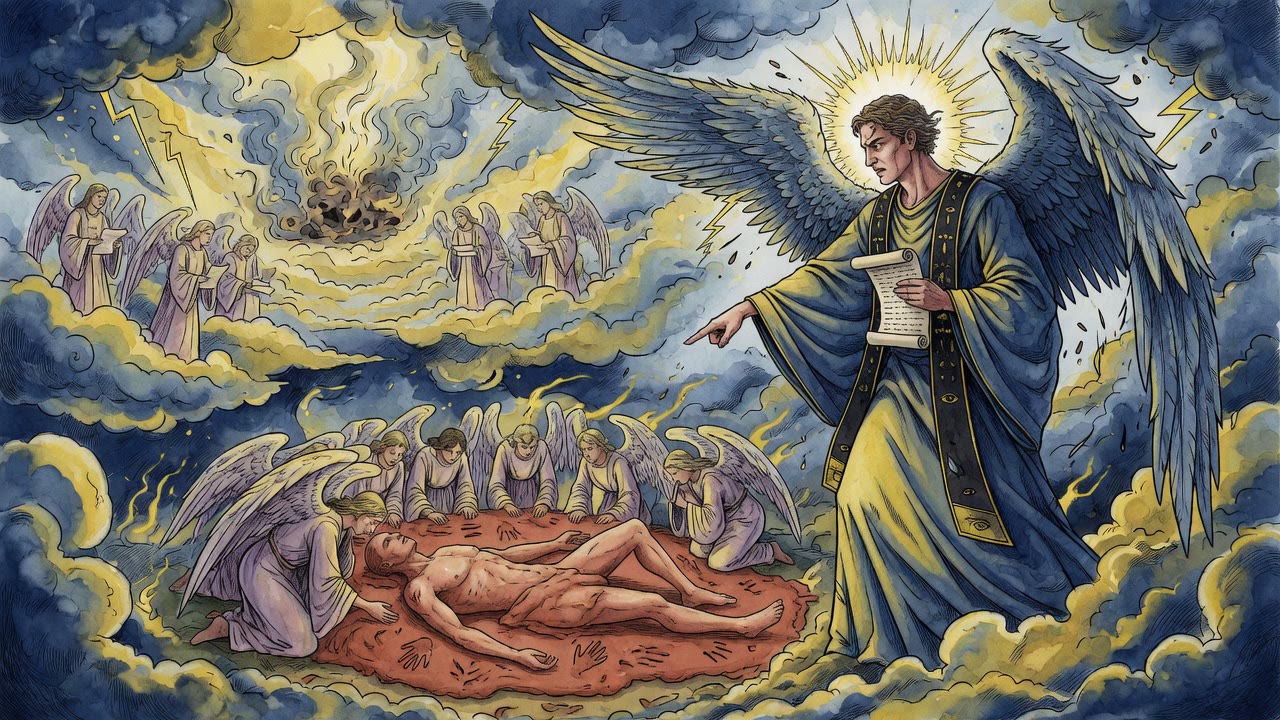
When God formed Adam and commanded the angels to honor him, Ha-Satan, the Accuser, refused. Formed from fire, he would not bow before dust.
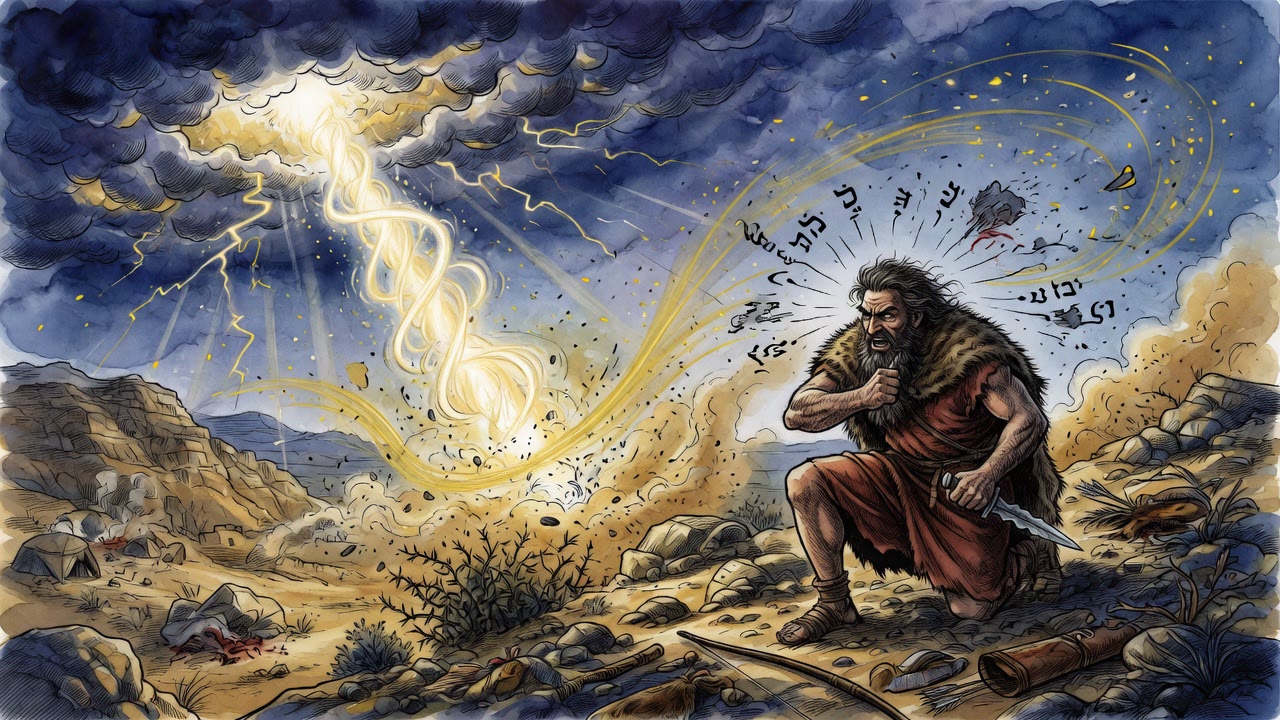
Esau never moved his lips. The murder plot stayed sealed in his heart, three deaths in careful order, until God spoke every word of it aloud.
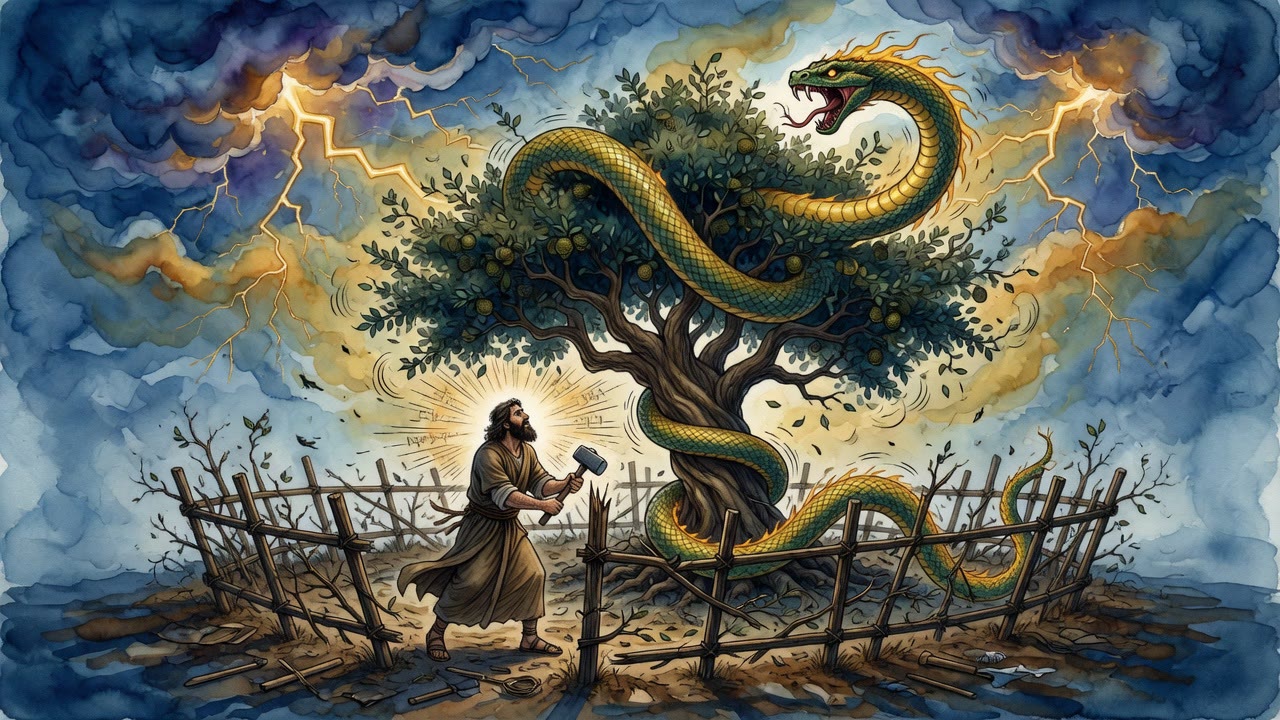
God gave Adam one command about one tree. Adam built a fence around it. Then the serpent shook the trunk, the fruit fell, and nothing died.
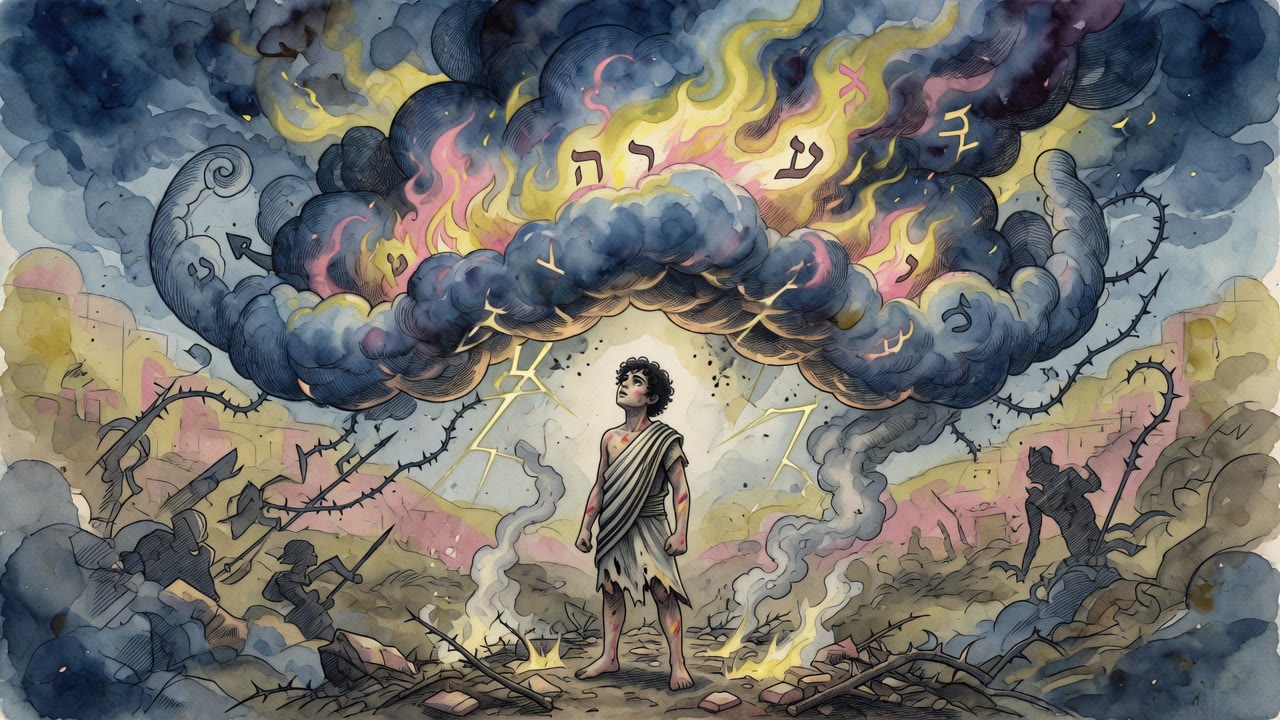
He had crossed the Jordan with nothing but a staff and been given everything after that. Then a king asked his age and got a complaint.
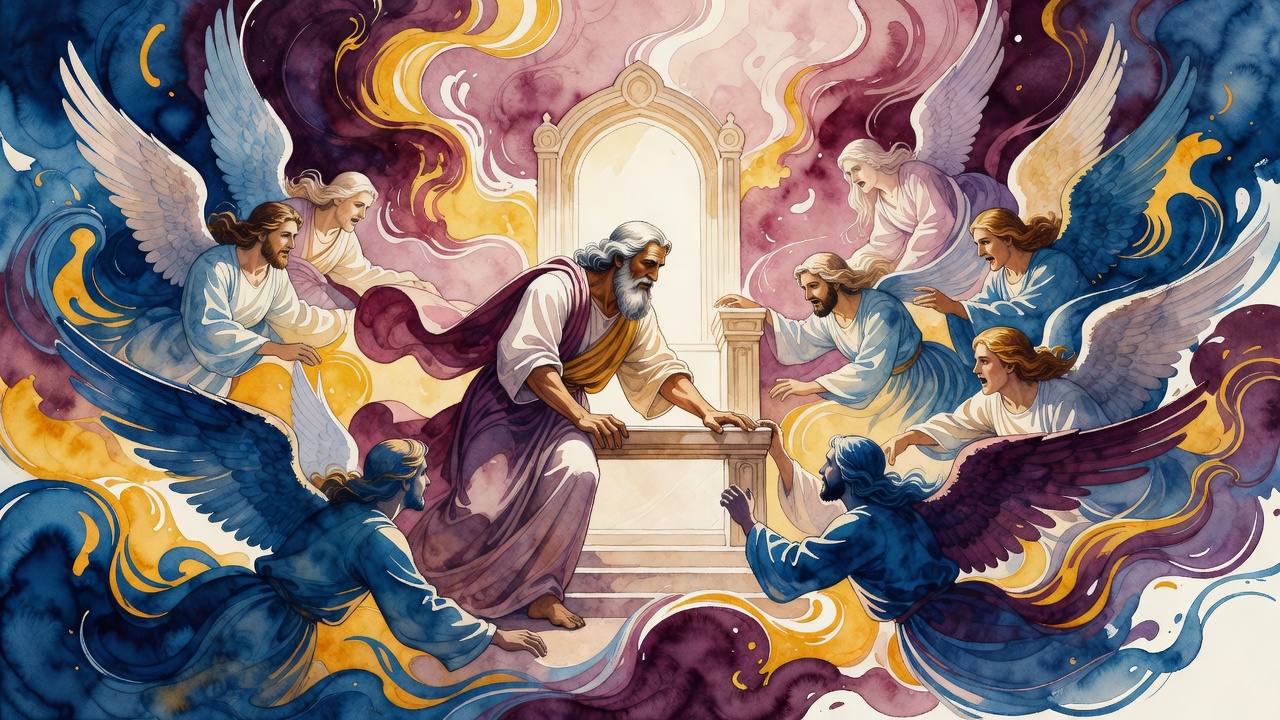
The angels crowded the cloud and asked what flesh was doing in heaven. Moses had forty days with no bread and a case to argue.
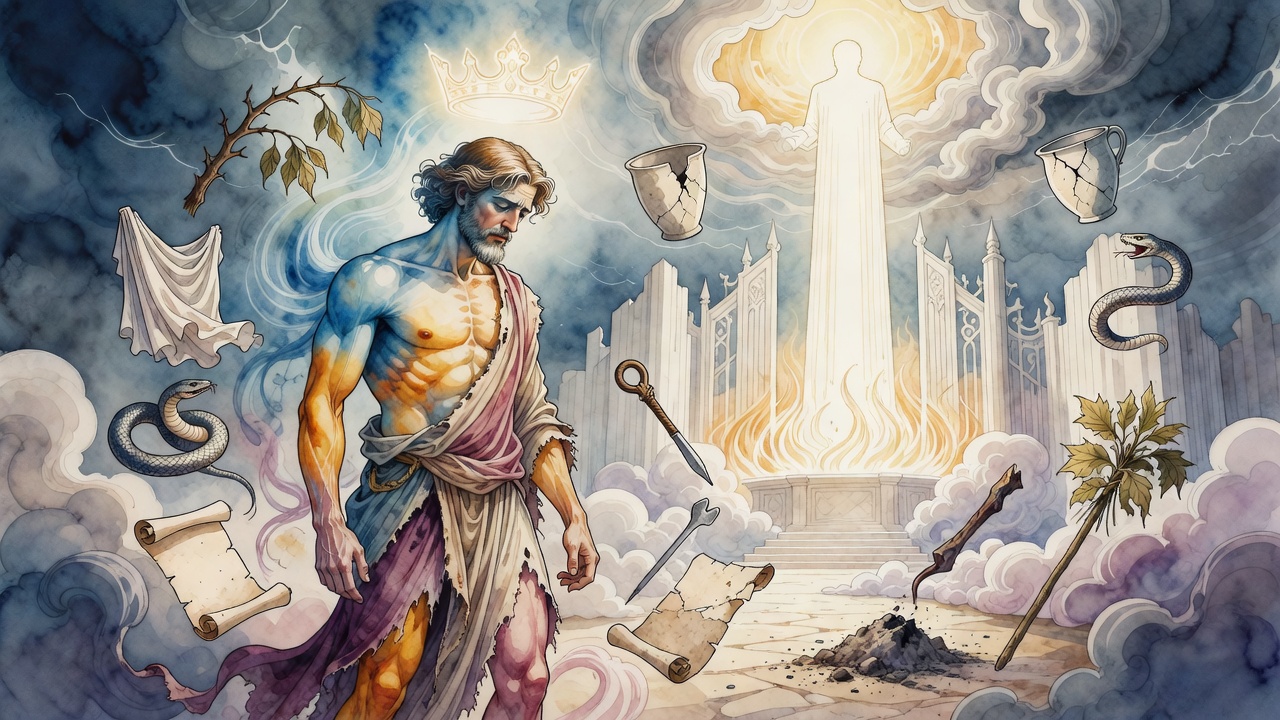
Eve asked to carry half of his dying. He sent her and Seth to the garden gate instead, to beg for oil from the tree.
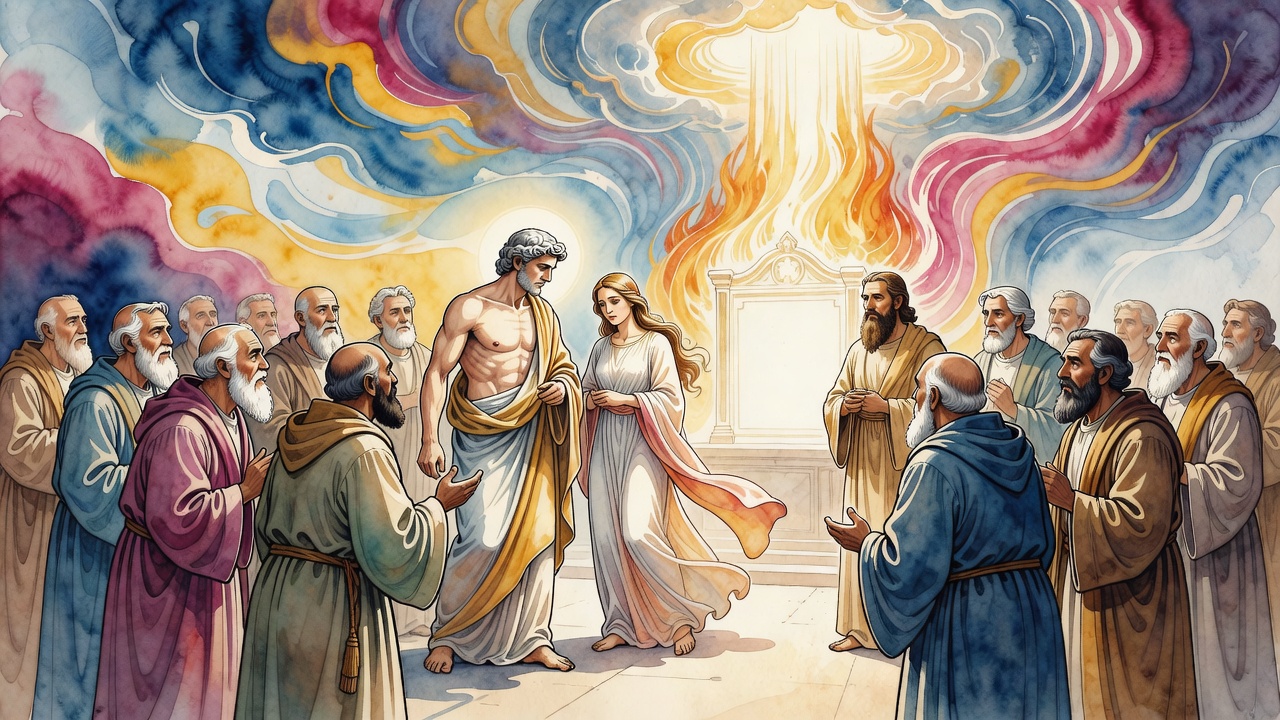
David's sin with Bathsheba was real. The rabbis did not look away. But they also asked why God would allow the most righteous king to fall this far.
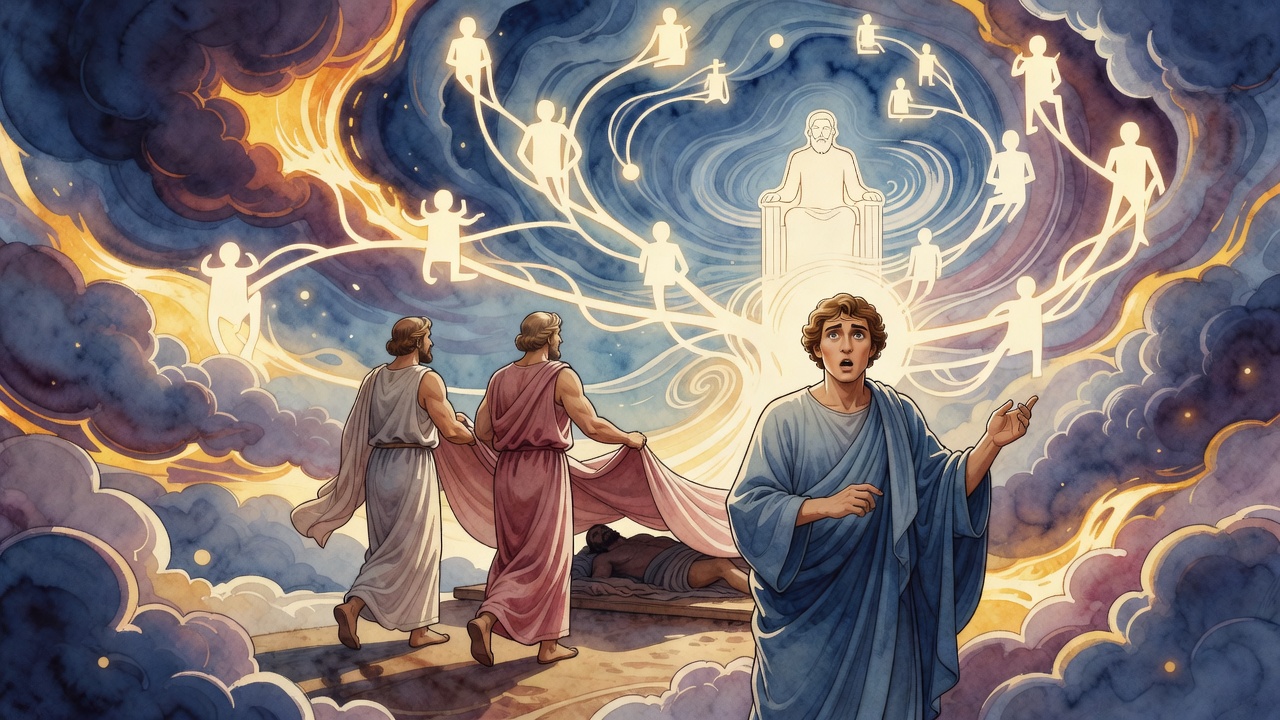
Wine put Noah on the tent floor. Ham looked and went to tell. His brothers walked in backward, a garment across both shoulders.
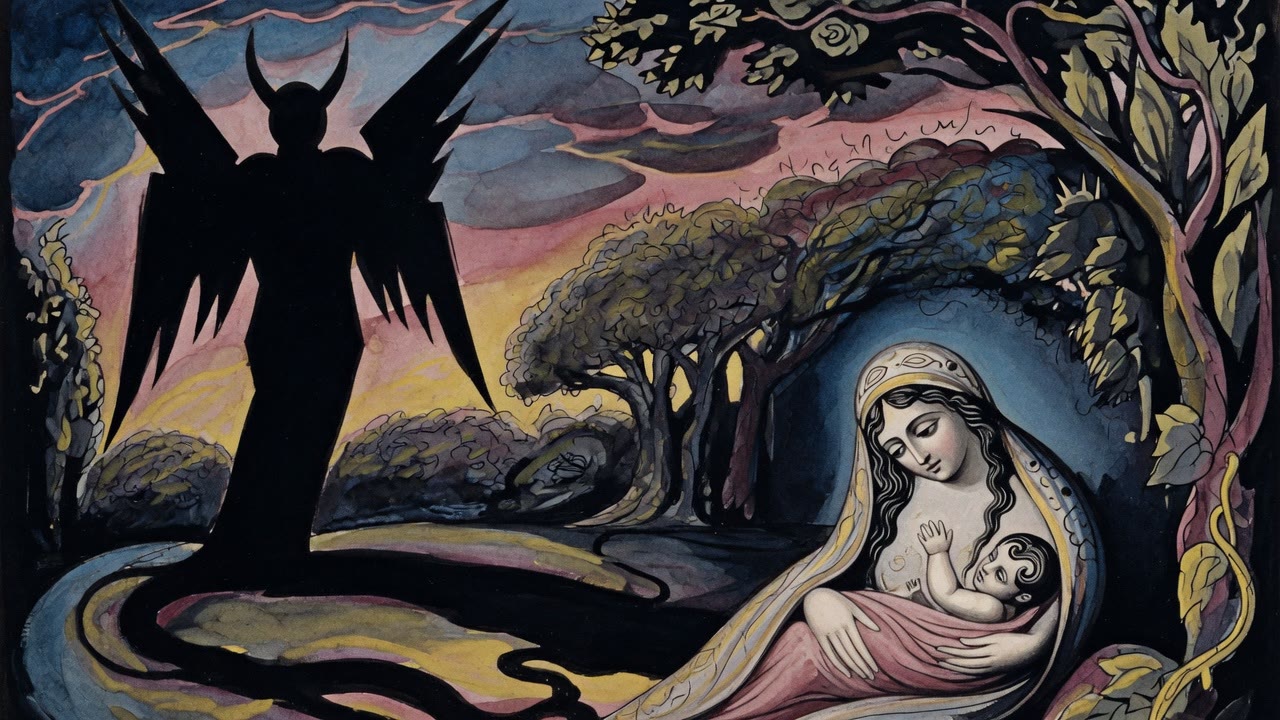
A tradition in Talmud and Kabbalah says Adam was not Cain's father. Samael seduced Eve in the Garden, and the murder of Abel was written into Cain's blood.
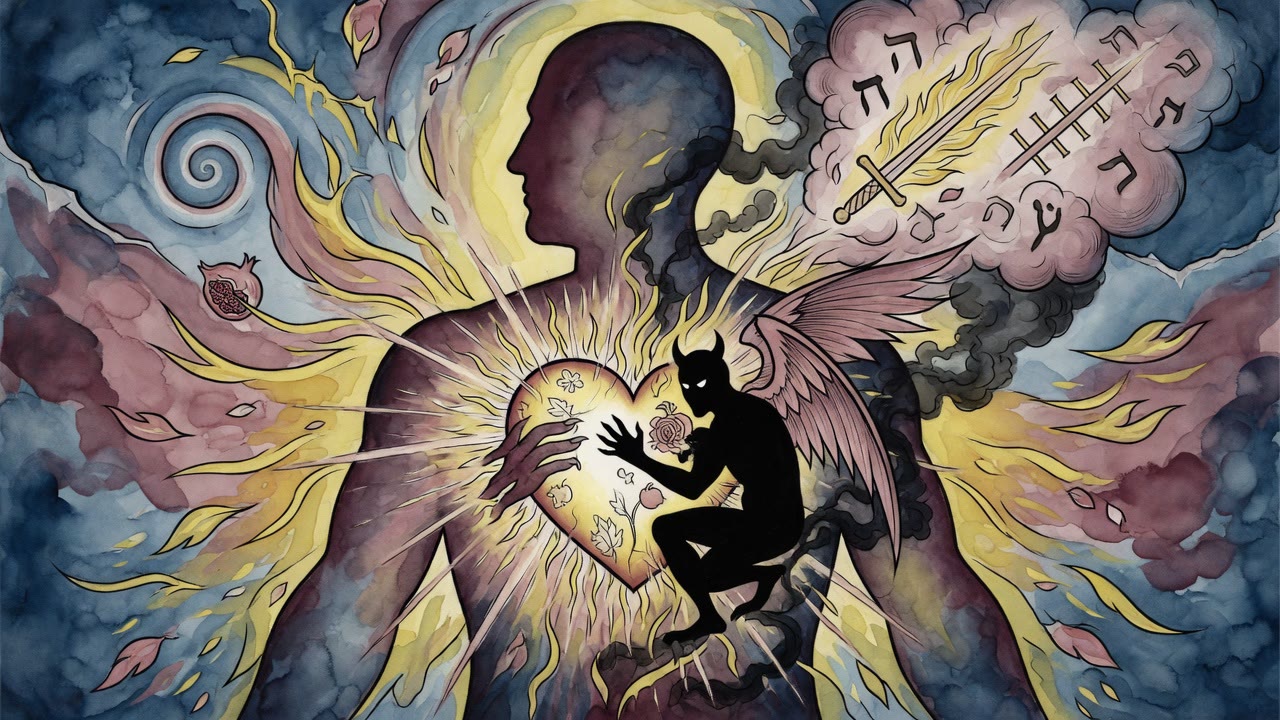
Samael did not tempt from outside the Garden. He entered. A folktale explains how the yetzer hara, the evil inclination, found its home in the human heart.
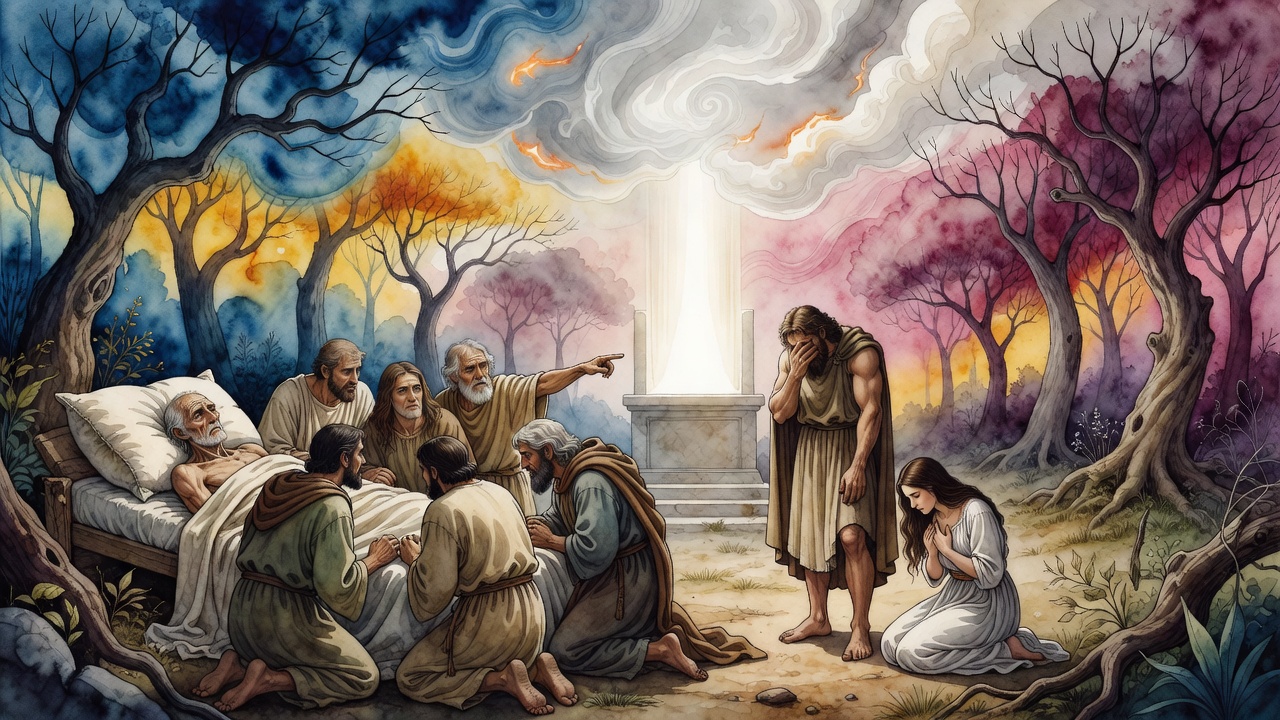
He was a hundred and twenty-five. He kissed his sons, then went back to the tree Eve had looked at until looking became eating.
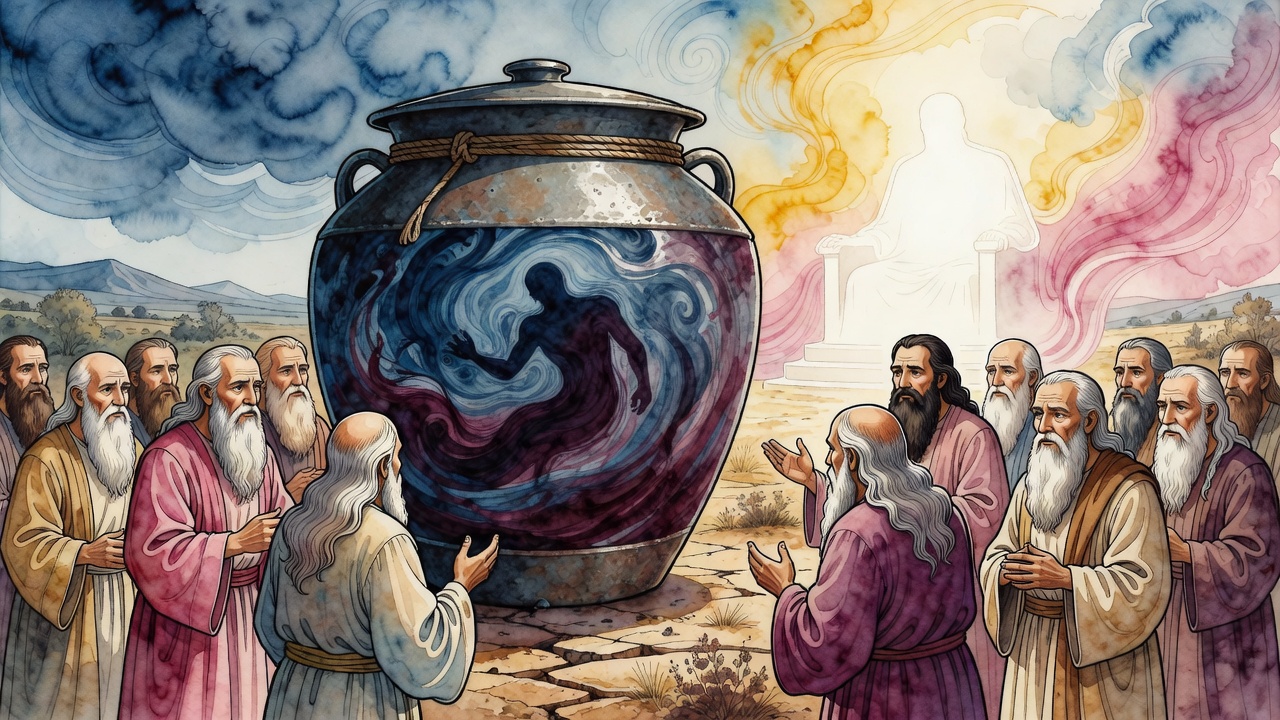
A fiery cub walked out of the ruined Holy of Holies. They sealed its mouth with lead. For three days no hen in the land laid an egg.
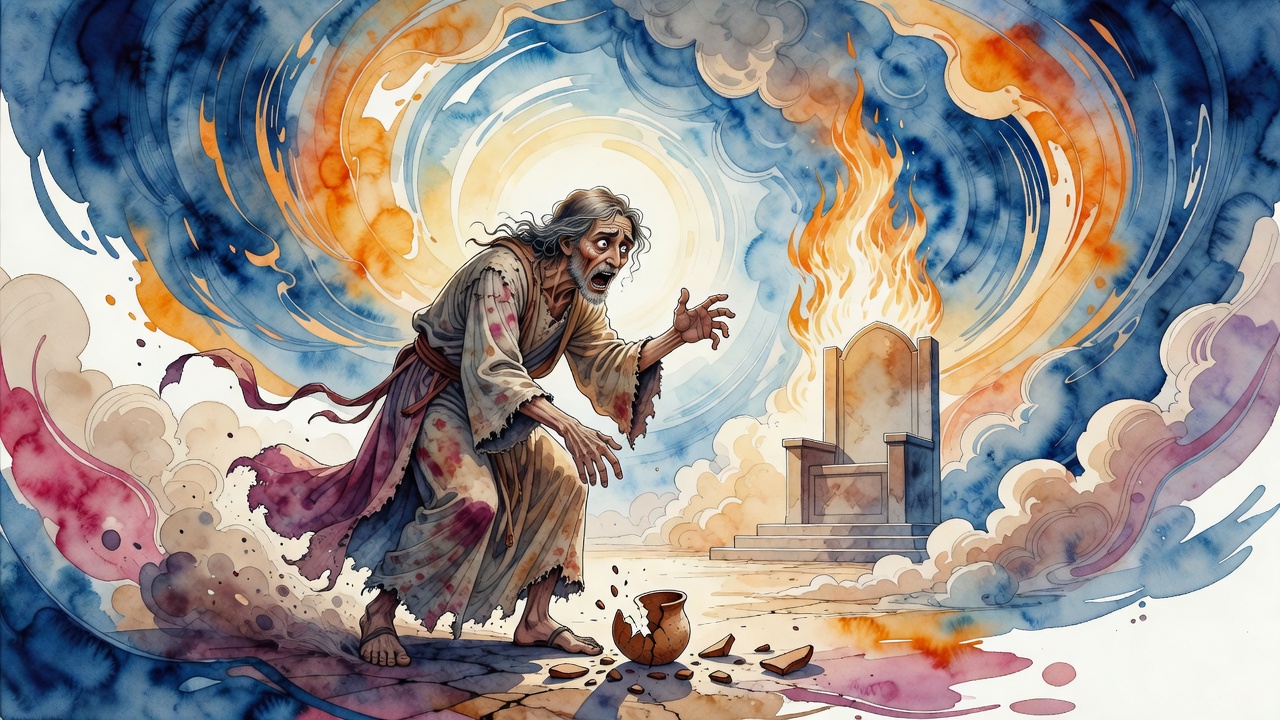
Akiva had watched the ship go down. He came to court so the man's widow could remarry, and the man he had seen drown walked in and stood in front of him.
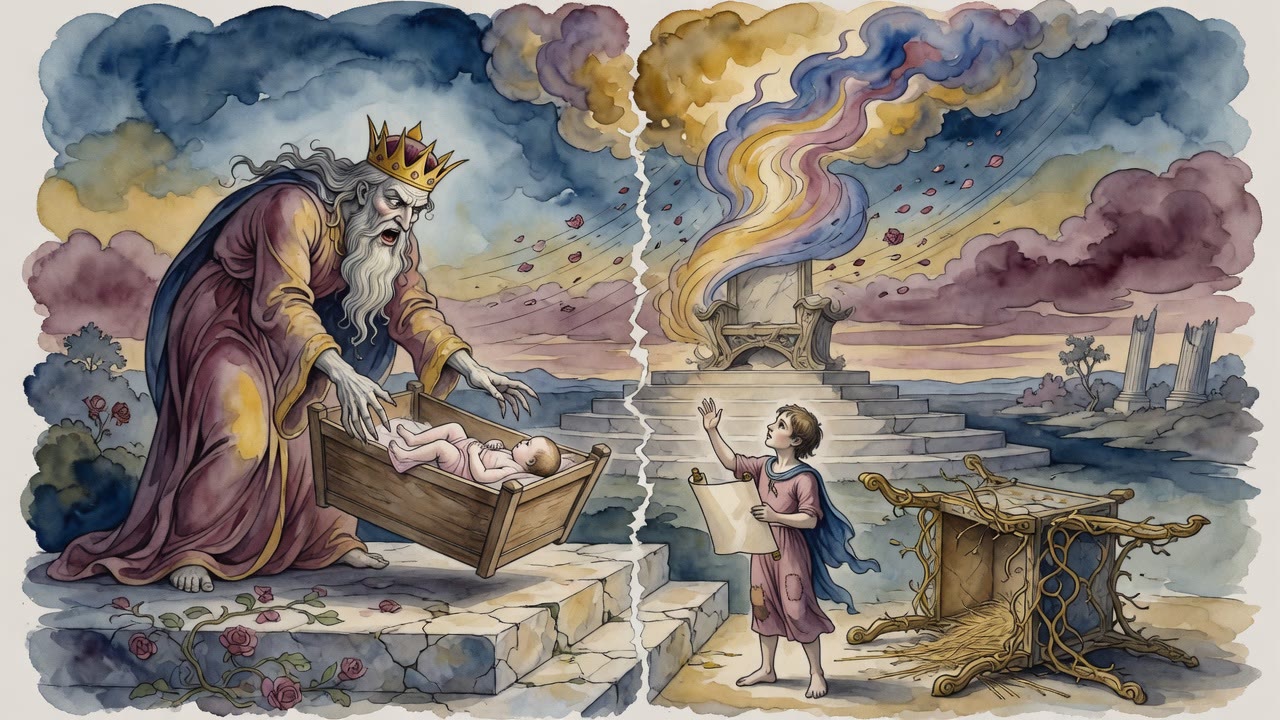
No one crowned him. He took the throne in the first wail and the first grasping fist, and held it thirteen years before a barefoot boy came to the gate.
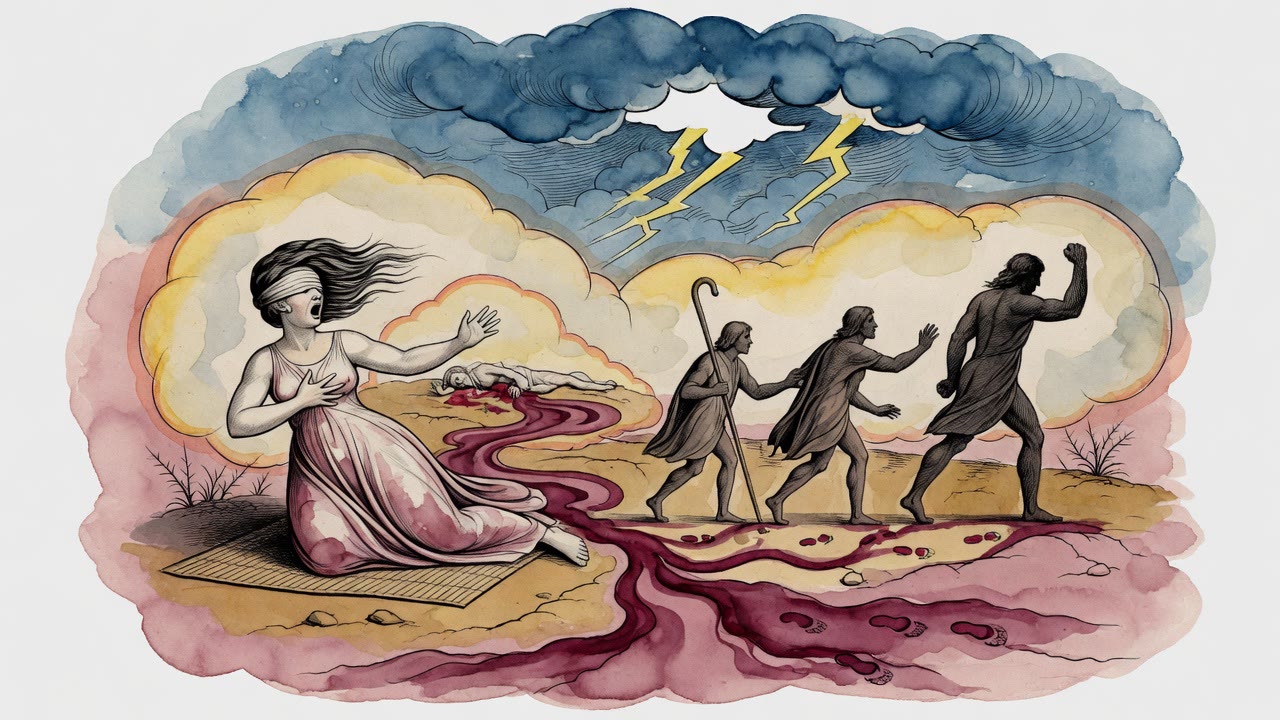
Eve wakes screaming from a dream of Abel's blood, and every step Adam takes to keep his sons apart only walks them toward the first murder.
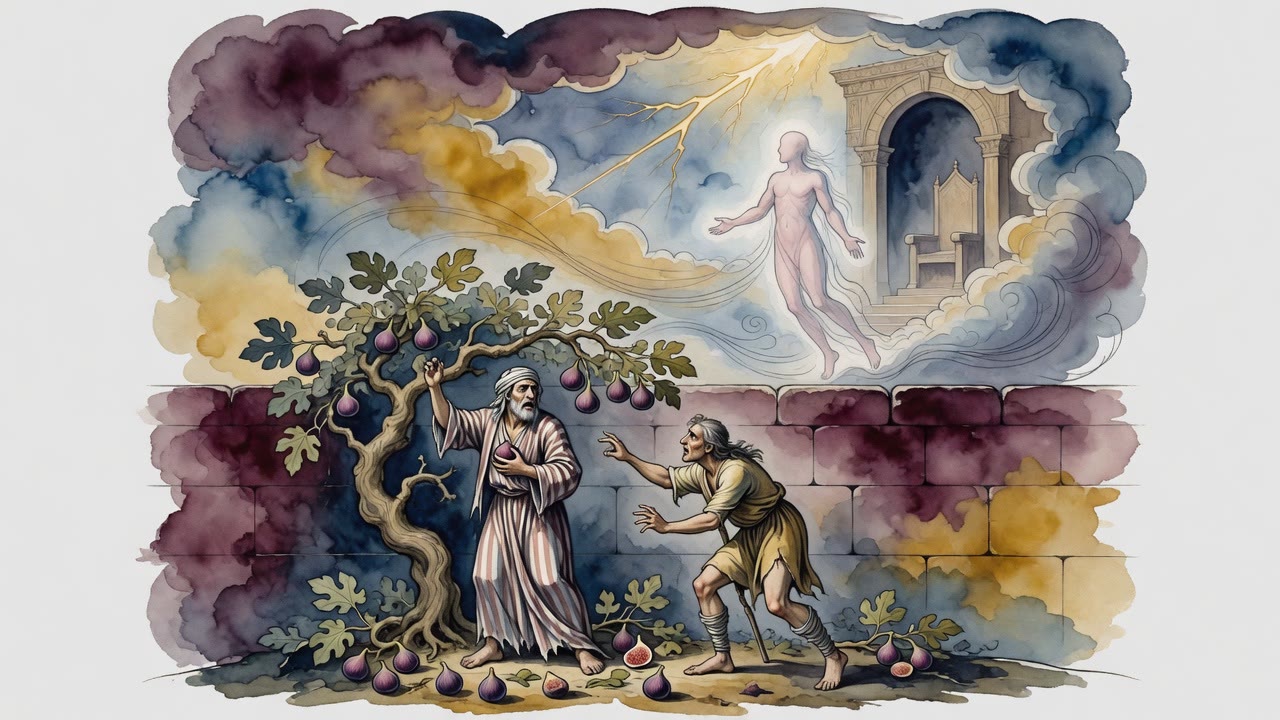
A blind man and a lame man strip the kings figs, then each blames the other. The soul tries the same defense and learns it grew up at court.
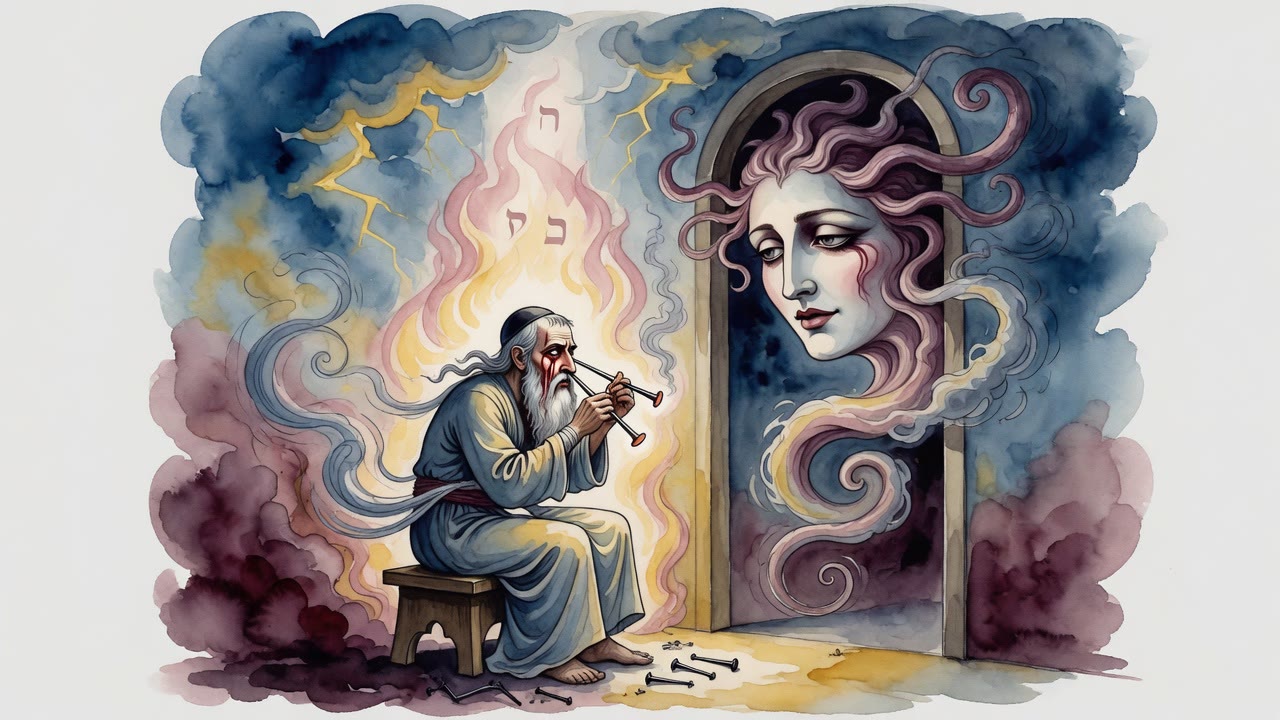
Satan built a face no man could resist and set it in the rabbi's doorway, so Matya took white-hot nails and burned out his own eyes.
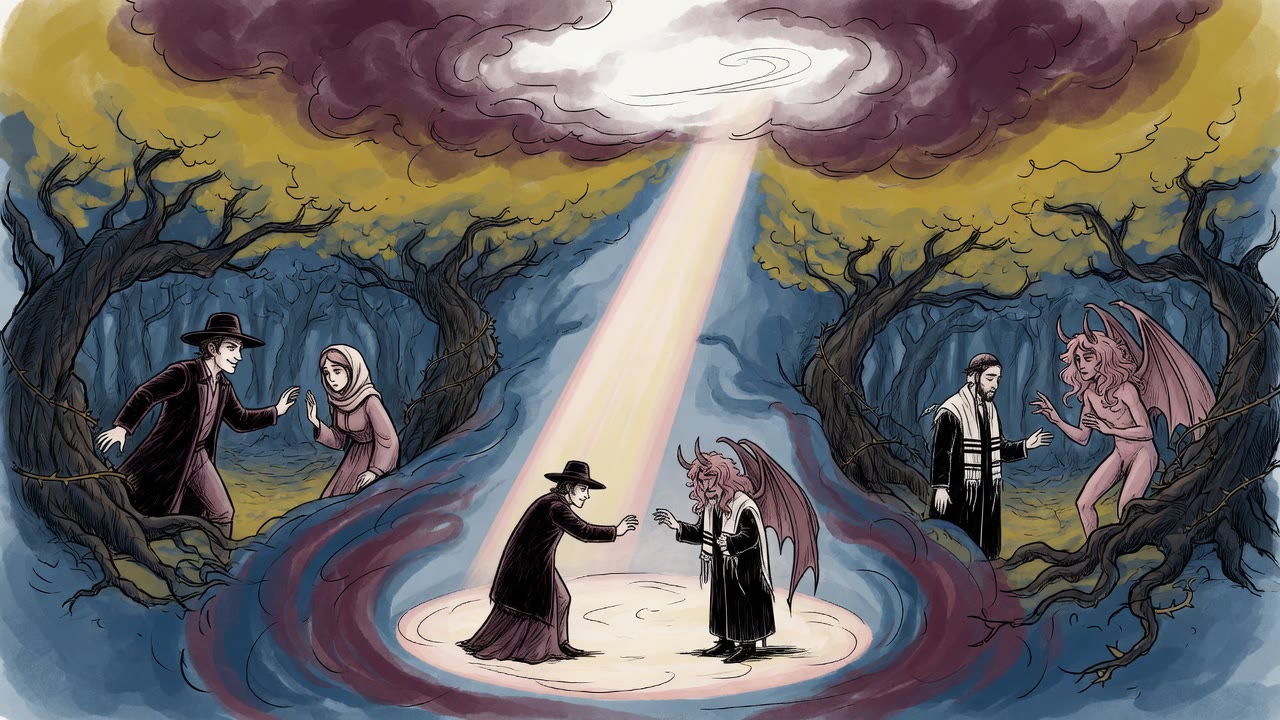
He named a room and an hour as if she had already said yes. She went to his wife instead. The lamp came up on a face he already knew.
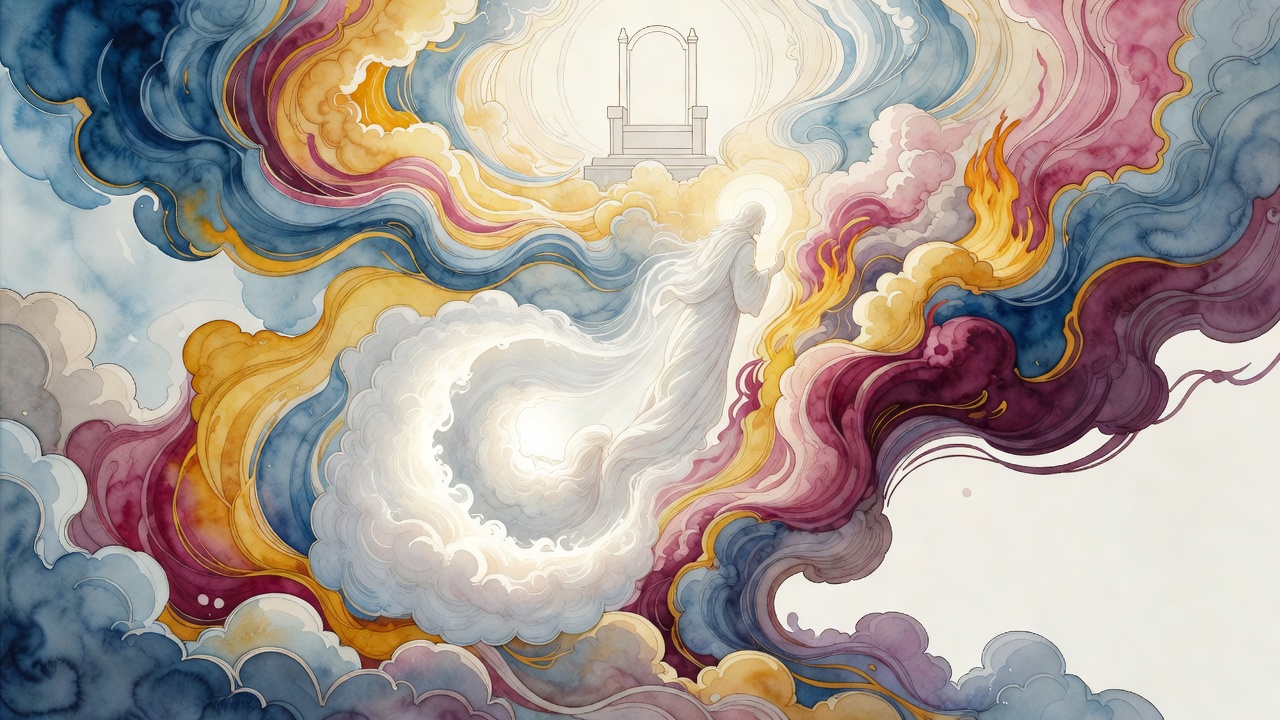
A vast soul is told to diminish like the moon before it can wear a body. Closed inside cloudy flesh, it climbs back by deeds alone.
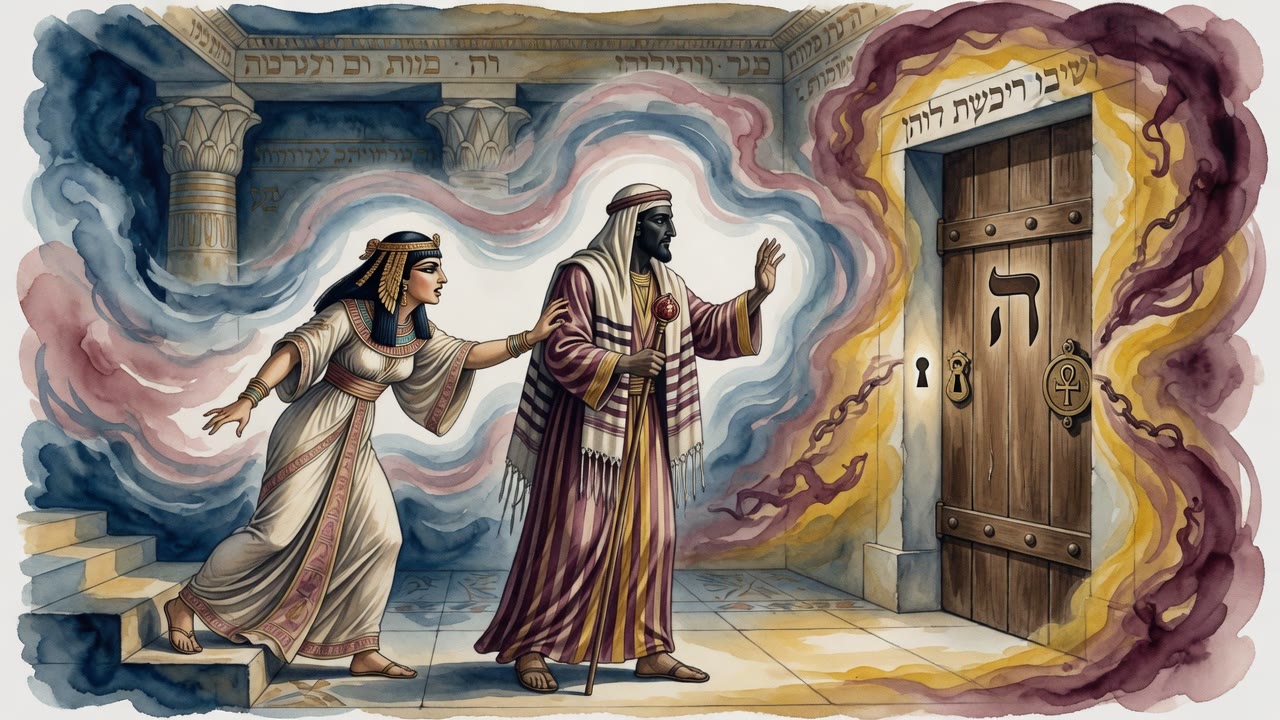
She got a fist into his linen at the shoulder. He twisted. The garment stayed in her hand. He went out with his back bare.
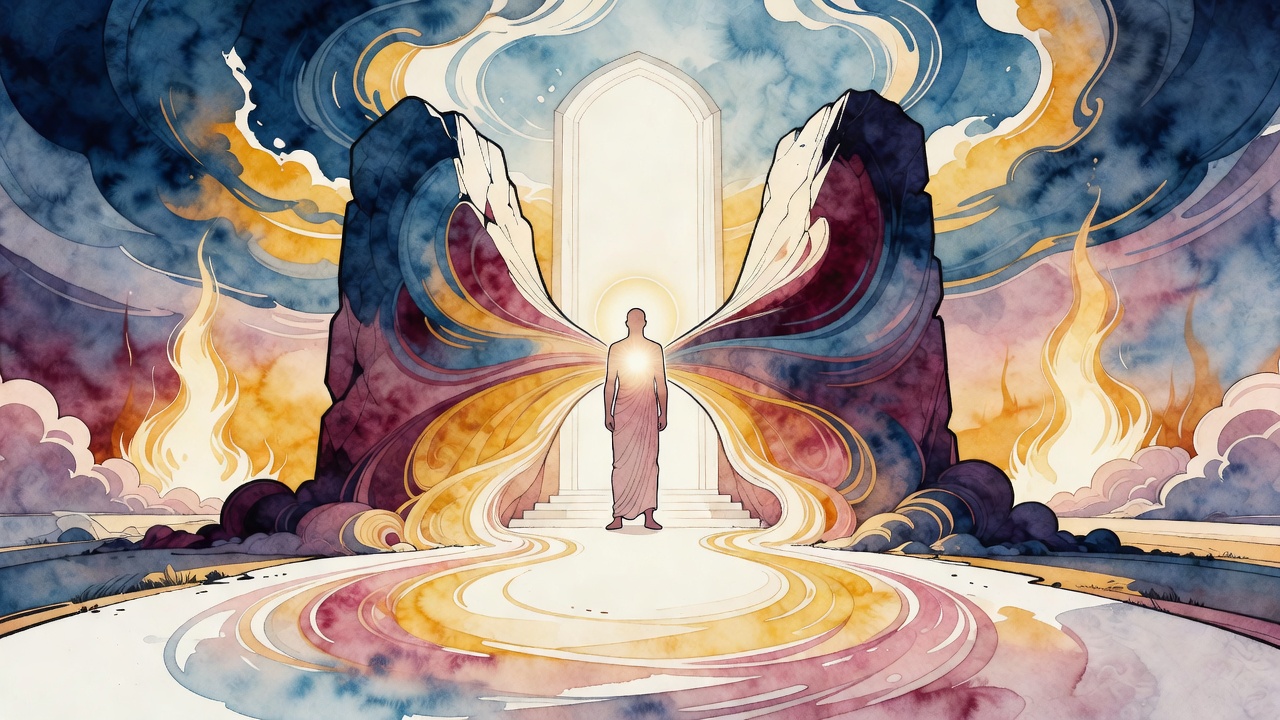
The heretic pointed at Ameimar's belt as if one body could be two kingdoms. Water still had to pass through a single skin.
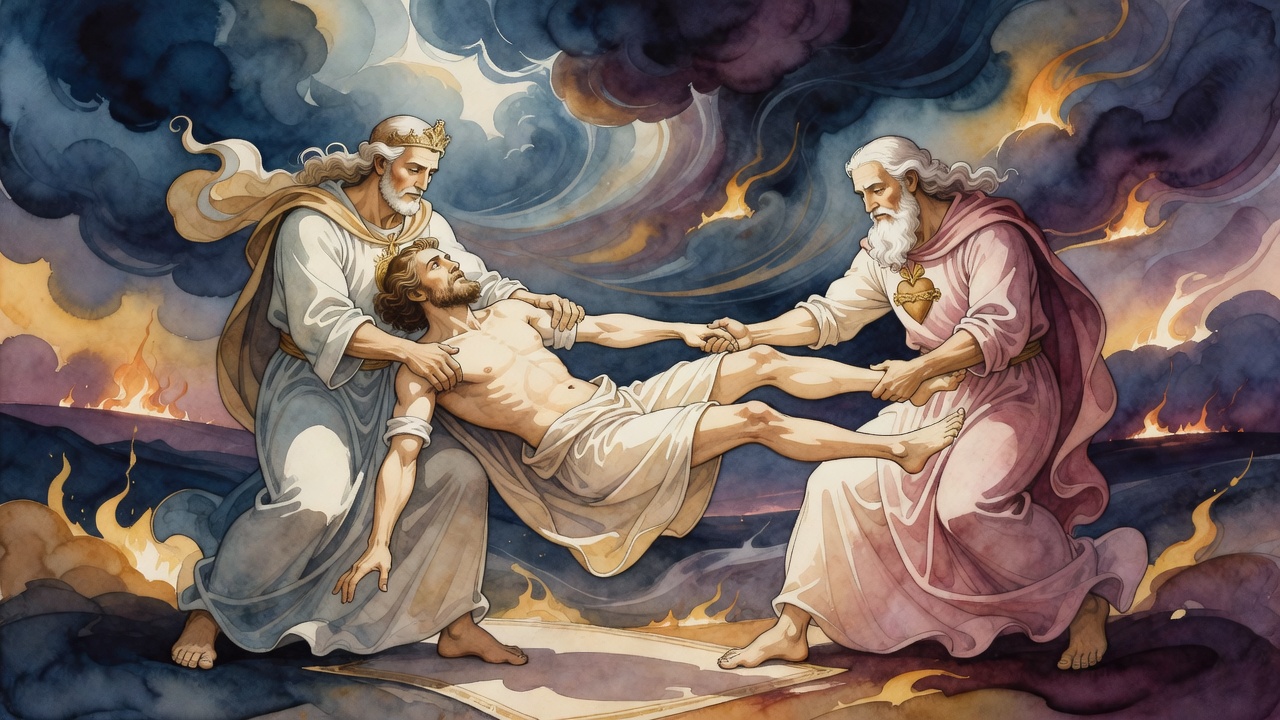
His hand was already on the bread. The left side of his chest pulled harder, and the skull answered with a cold no.
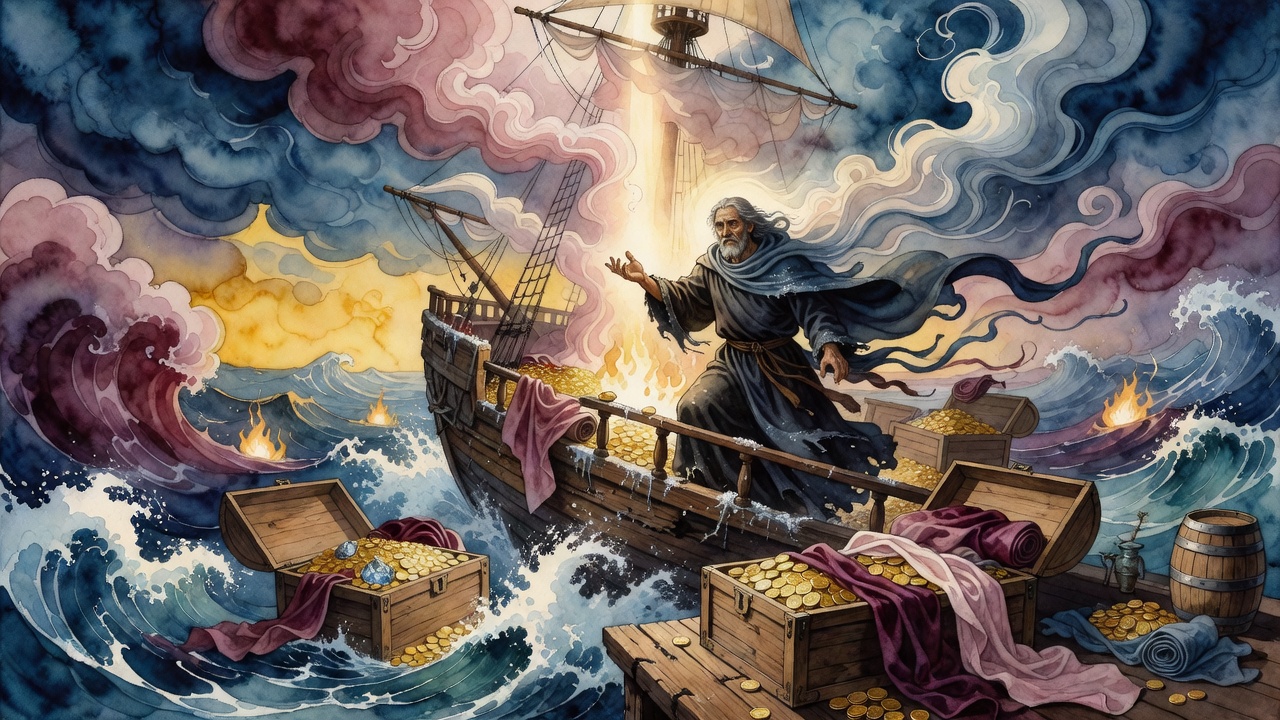
He sailed to bankrupt himself on purpose. Providence filled every box, and the road kept every stone he threw away.
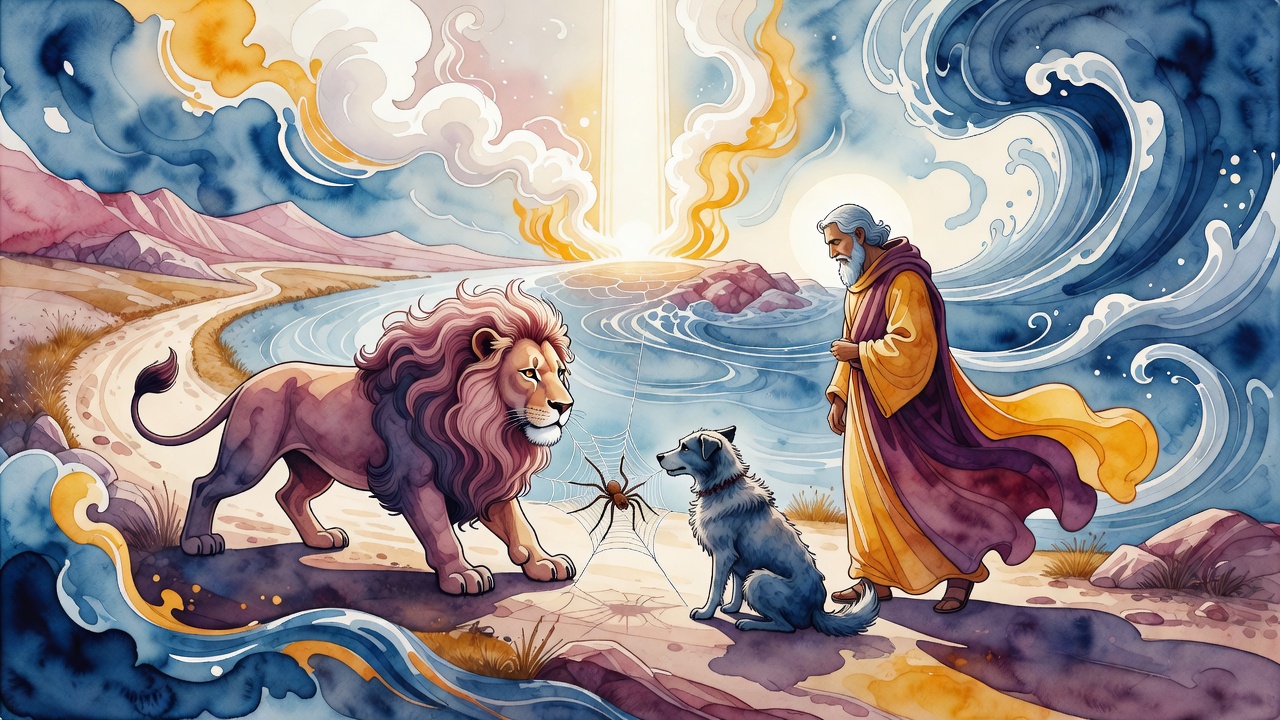
A lion ordered a dog to kill a spider. The spider went to the lion for help, and the lion took its side. Akiva stood in the road and watched it happen.
