Benjamin Called His Sons and Told Them How Eve Looked
He was a hundred and twenty-five. He kissed his sons, then went back to the tree Eve had looked at until looking became eating.
Table of Contents
 Click for full size
He Kissed Them First
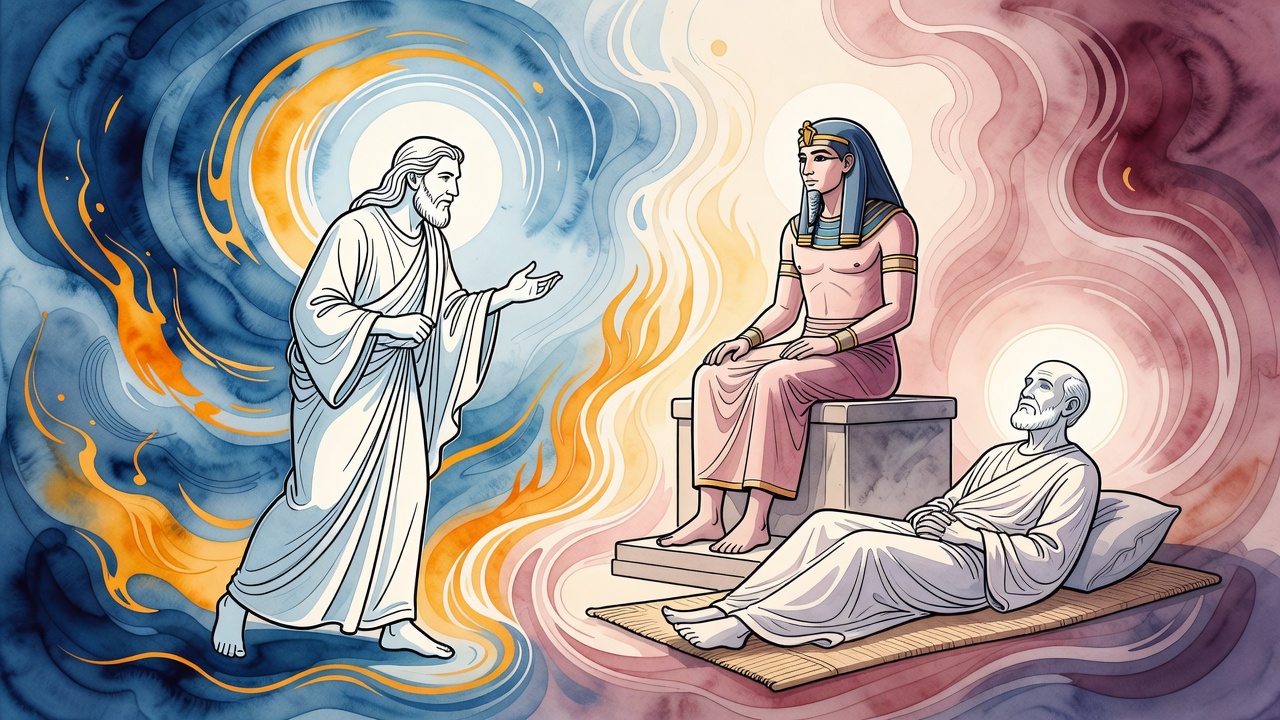
Benjamin was a hundred and twenty-five. He called his children in, and when they stood there he did not begin with a law. He kissed them.
"As Isaac was born unto Abraham in his old age," he said, "so was I born unto Jacob when he was stricken in years. Therefore I was called Benjamin, the son of days."
His mother Rachel had died on the road giving him birth. She had gone twelve years after Joseph with no second child, had prayed, had fasted twelve days, and then conceived him. Jacob had wanted two sons from her. Benjamin got the name and the grief together. Bilhah her handmaid had suckled him. He had never known his mother's milk.
He had lived a long life in that shadow. Now, at the end, he did not talk about Egypt. He took them back to a garden, and to the first look that had undone a world.
Eve Looked Until She Took
The woman in the garden did not begin with a bite. She began with her eyes.
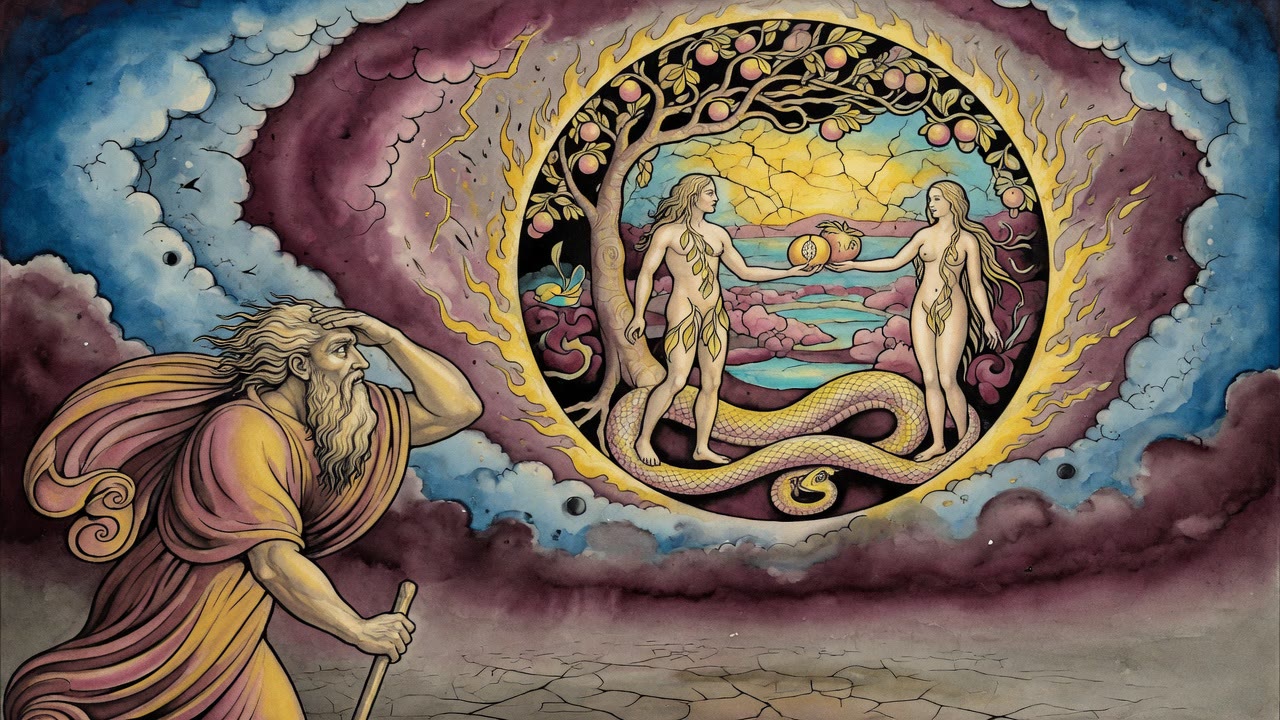
Eve stood at the tree and saw three things in one glance: that it was good for eating, that it was an enticement to the eyes, and that it was desirable as a source of wisdom. She saw. Benjamin wanted his sons to hear that word and not slide past it.
Looking did the work. Desire came after the looking, and the hand came after the desire. She took from its fruit. She did not even hand him a whole fruit. She squeezed grapes and gave Adam what ran out of them.
Adam was with her. He was not off in another row of trees. He stood there while the looking became taking, and he did not put a hand out to stop her.
She Sobbed Until He Ate
After the squeeze she still had to move him. She came at him with talk. "Do you think I will die and another Eve will be created for you? There is nothing new under the sun" (Ecclesiastes 1:9). "Or do you think I will die and you will sit alone? He did not create the world for emptiness."
The other telling is simpler. She began sobbing at him with her voice until the sound filled the space between them. He ate.
She did not stop at her husband. She fed the animals, the beasts, and the birds. They heeded her. They ate. Death entered them the same way it entered him, through a mouth that had been talked or wept into opening.
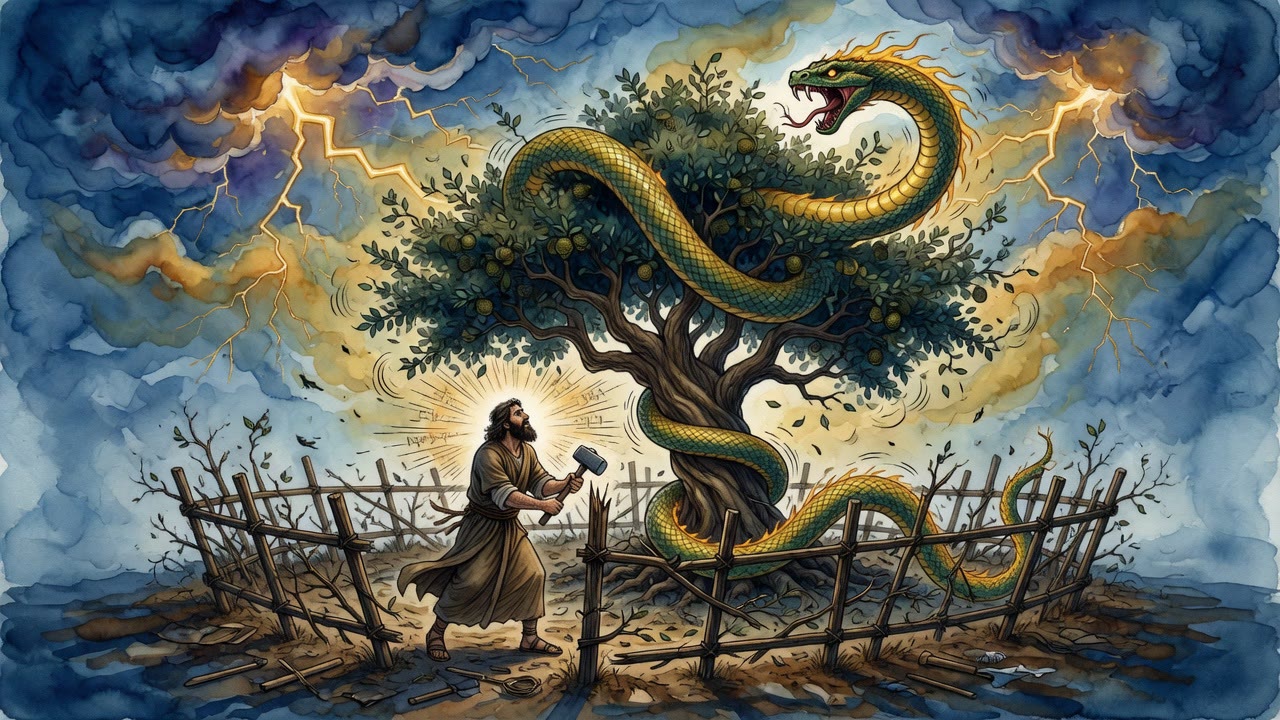
After he ate, the kingship in him did not hold. Nothing in him turned toward Malchut (מלכות), the last point where a human being stands and keeps the world. The Other Side came out of that gap. Benjamin did not name palaces of light. He named a man who had watched his wife look, and had not stopped her, and had opened his own mouth after hers.
The Bird That Would Not Eat
One bird refused her. They called it the hol (חול). The others took the fruit. This one closed its beak.
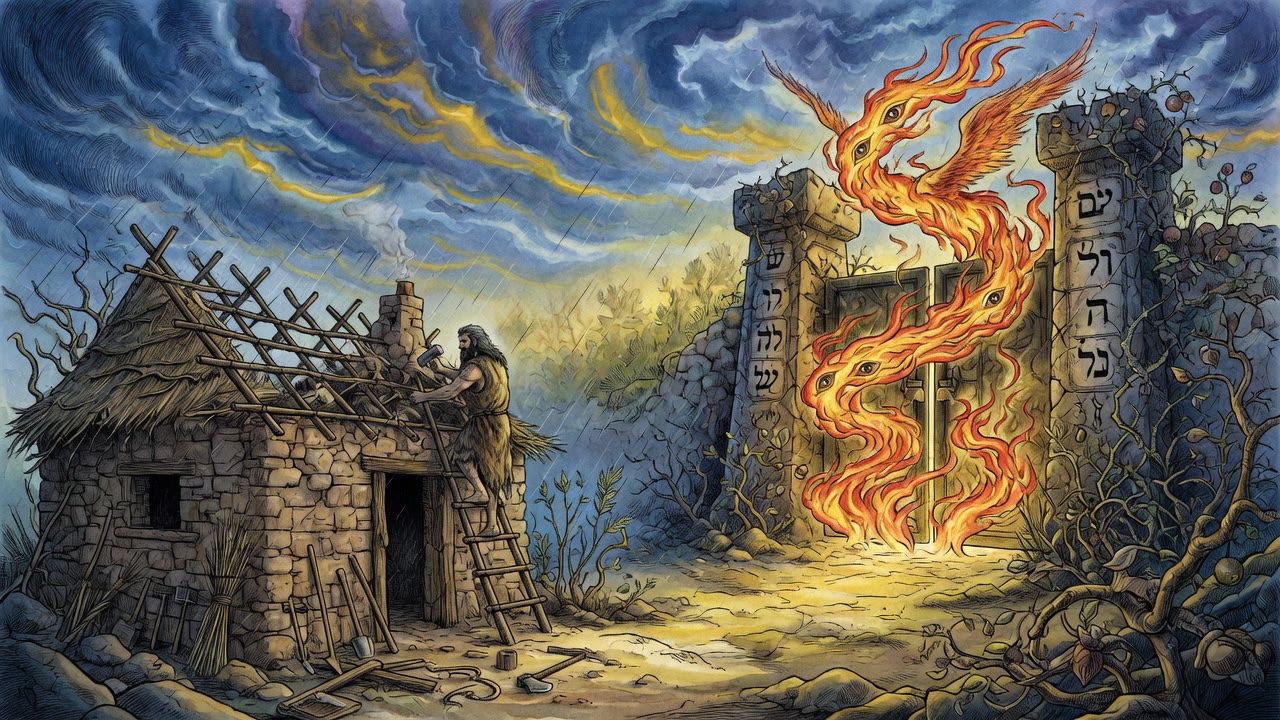
It lives a thousand years. At the end of the thousand a fire comes out of its nest and burns it, and an egg-bulk remains, and it grows limbs and lives again. Another mouth said the body wastes and the wings shed, and still an egg-bulk remains, and it lives again.
Benjamin wanted that bird in the room with his sons. Everything that ate with Eve learned death. The one creature that refused kept a way back.
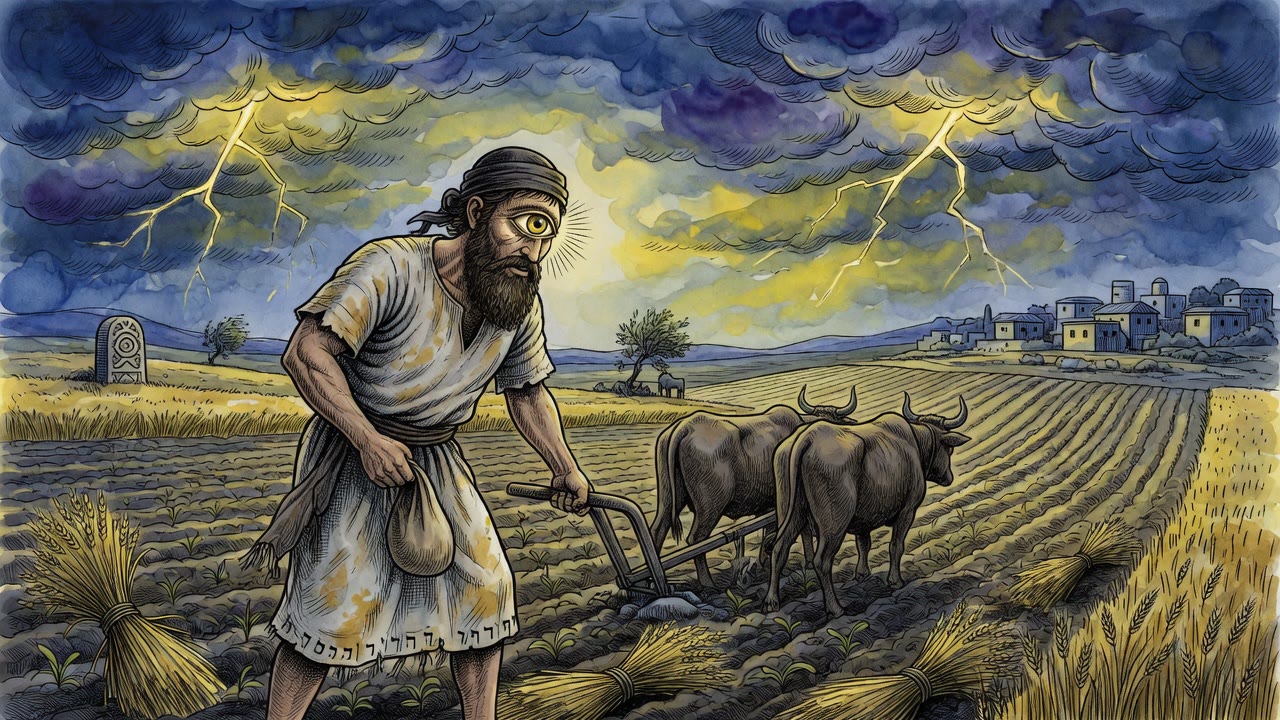
He had watched his own looking for a hundred and twenty-five years. The first gate was the eyes. If a man is careful what he lets himself see, and how long he lets himself look, the rest of the sequence is easier to interrupt. He did not claim a perfect heart. He claimed a method, learned from a garden he had never walked in and a mother he had never seen.
They Carried Him to Hebron
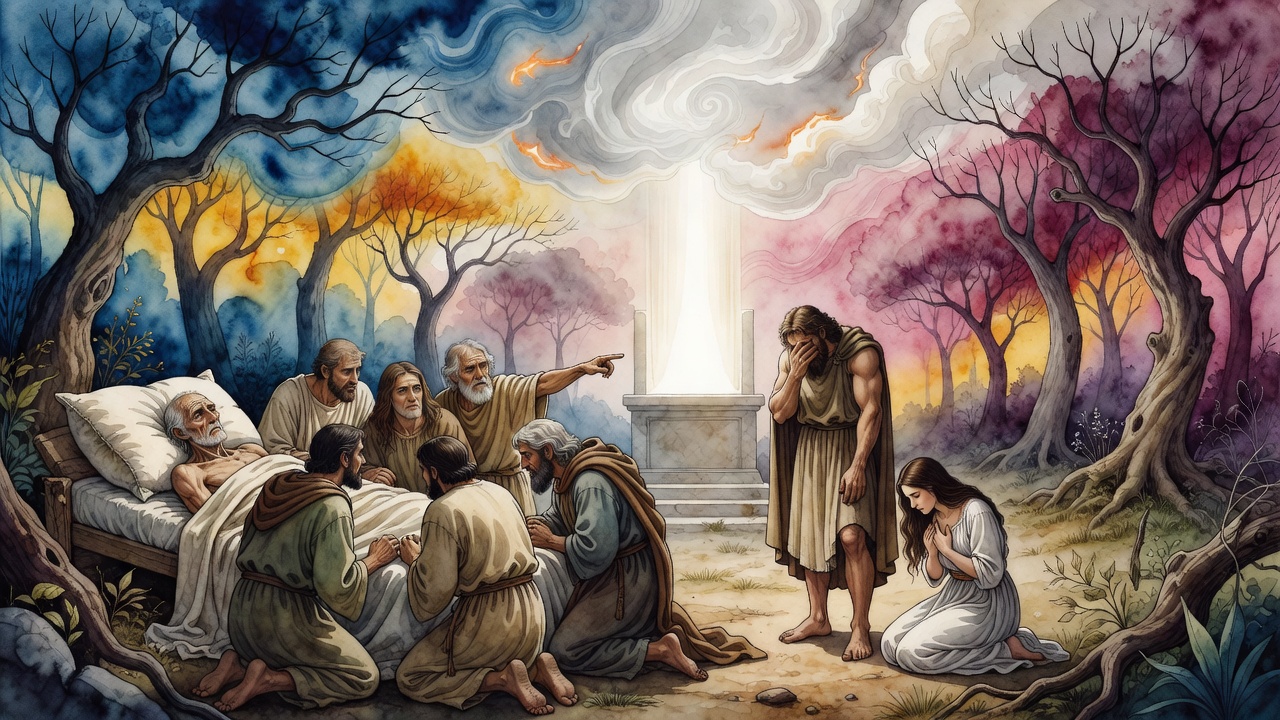
When he had made an end of the words, he commanded them to bury him in Hebron, with his fathers. Then he sank into a sweet sleep and died.
His sons did as he had commanded. They lifted him. They carried him up. They put him in the ground where Abraham and Isaac and Jacob already lay, and where Rachel was not, because she had died on the road the day he arrived.
The garden stayed behind in the telling. Eve looking. Grapes in her hands. Adam eating. One bird that would not open its mouth. A kingship that did not hold. And a man who had never known his mother's milk, kissing his children before he slept.
← All myths