Samael Accuses Israel at the Sea and God Throws Him Job
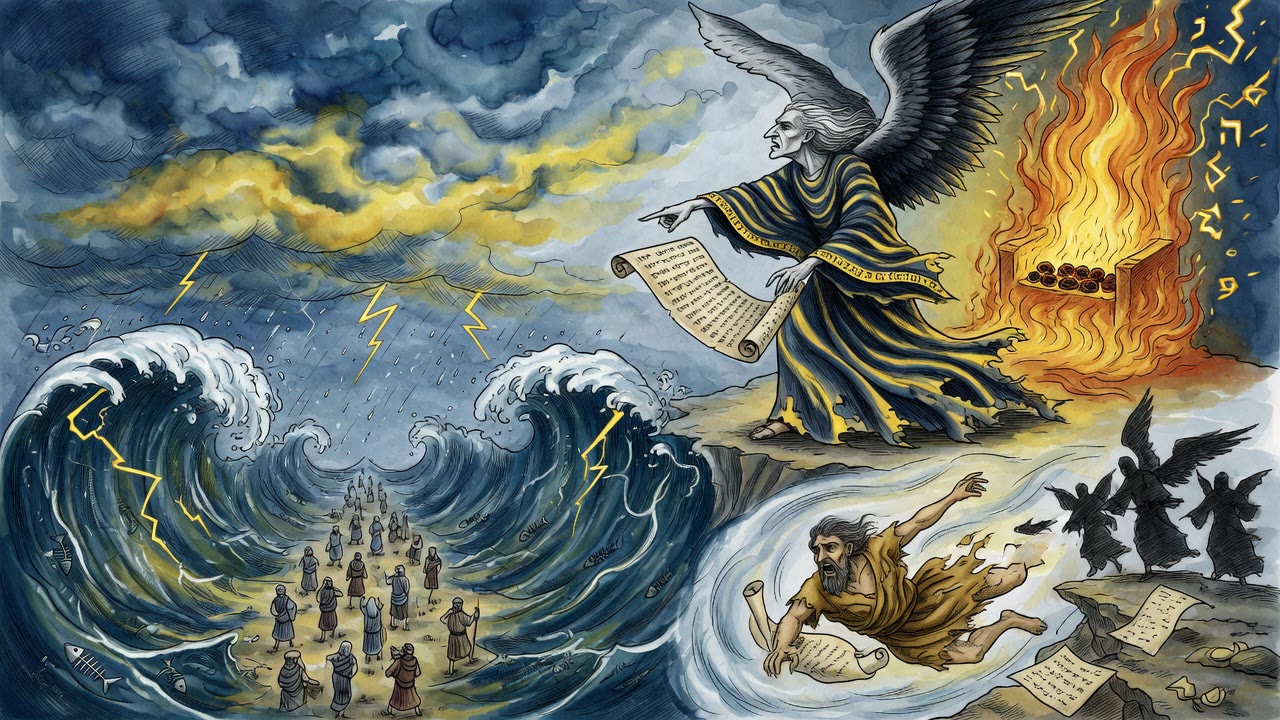
Chariots shook the reeds. In heaven Samael opened a true ledger against Israel. God did not argue. He threw the accuser a ram named Job.
Table of Contents
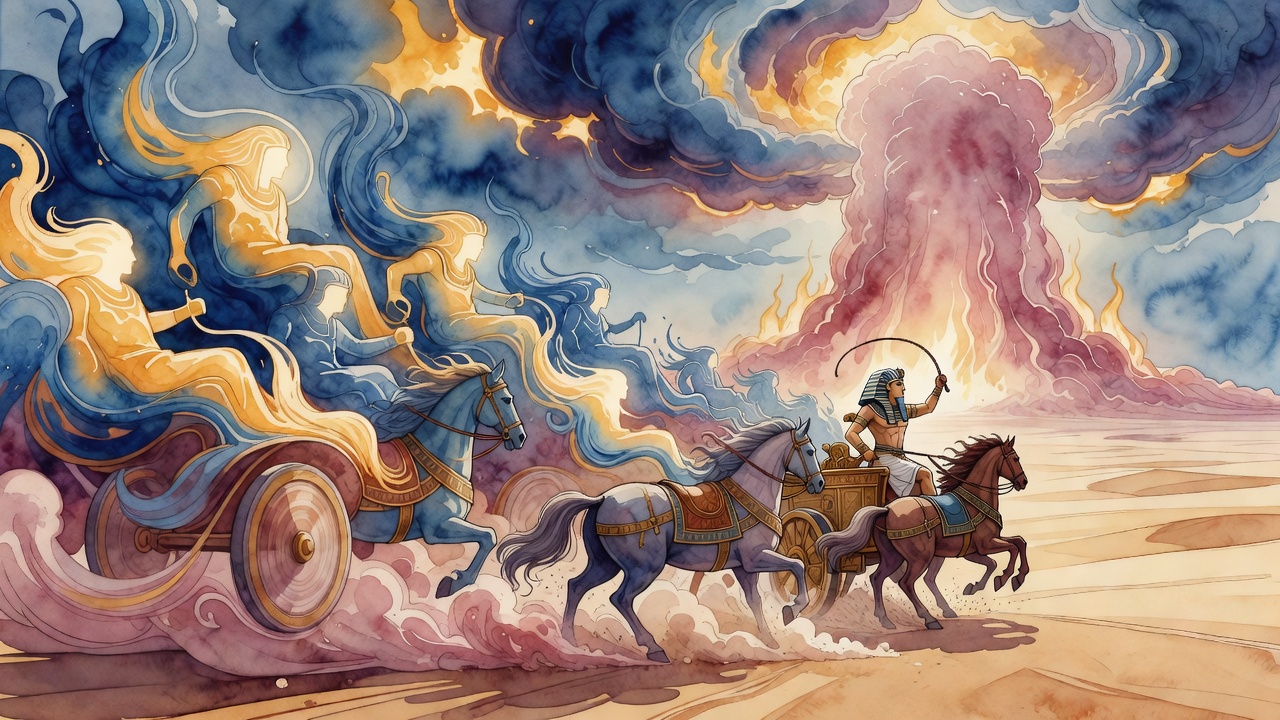
The dust came first. A brown wall of it, rolling low across the reeds, and inside the dust the iron sound of wheels. Six hundred chariots, and behind them all the chariots of Egypt, and the horses screaming, and the whips. The people of Israel stood with their backs to the water and felt the ground shaking under their bare feet, and they began to wail.
 Click for full size
In front of them lay the sea, gray and heaving, deep enough to swallow a nation. Behind them came Pharaoh. To the left, marsh. To the right, marsh. The trap had been sprung with a craftsman's care.
Two Jaws of the Trap
What the people could not see was that the trap had two jaws, and only one of them was made of horses and bronze. The other jaw was in heaven, and it was already closing.
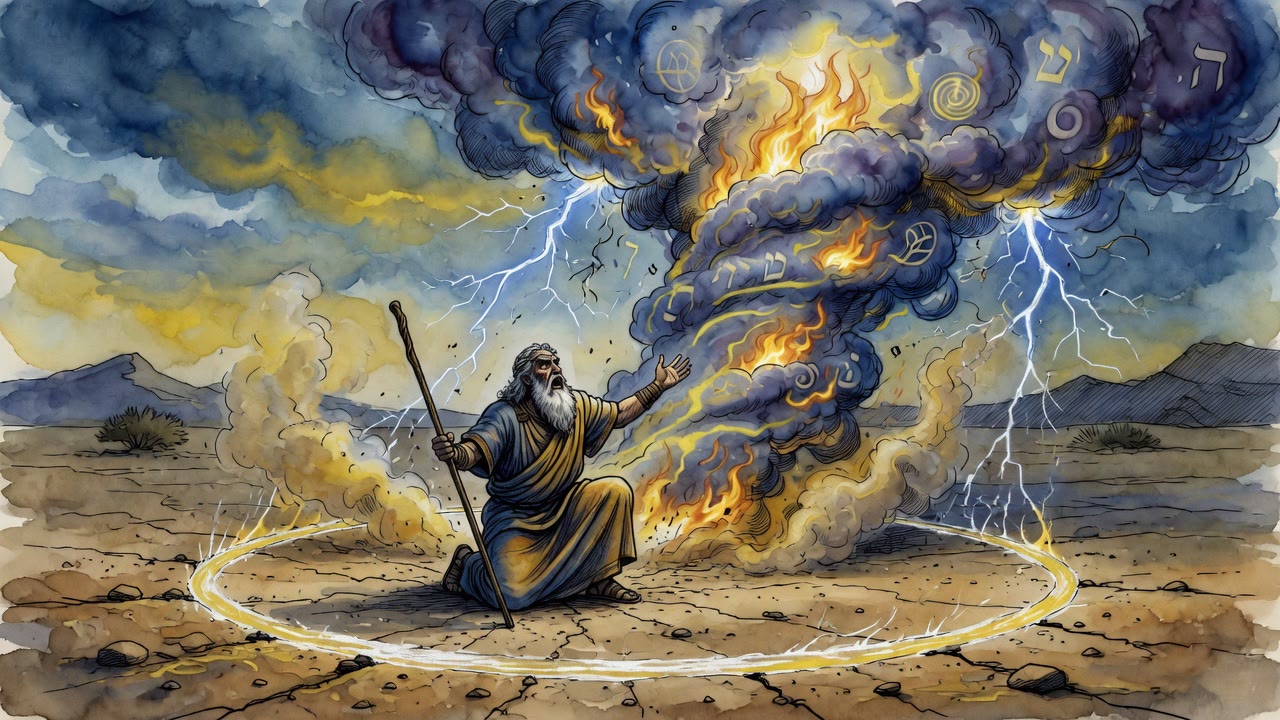
There a figure stood before the throne with a ledger in his memory, and his name was Samael. He was no rebel. He had never lifted a hand against the One who made him. He was the accuser, and accusing was his whole craft, the office he had been given: to stand in the high court and say aloud what mercy would rather forget.
He watched the terrified crowd at the water's edge the way a hungry thing watches a flock. He leaned toward the throne. He opened his case.
The Ledger That Was True
"You mean to split the sea for these," Samael said. His voice was not a snarl. It was the dry, patient voice of someone who has the documents. "Look at them. In Egypt they bowed to Egypt's gods. They burned what the Egyptians burned and bowed where the Egyptians bowed. They defiled themselves with idols and did not cast away the abominations of their eyes" (Ezekiel 20:8). "Idolaters. And now You will tear open the deep so idolaters can walk through dry?"
None of it was a lie. Samael invented nothing. He had no need to. Slaves ground down through generations had bent the knee to the things their masters worshipped, and the memory of it hung on them still like the smell of the brick-pits. The accuser was not slandering Israel. He was reading the record, and the record was real, and at that exact moment the chariots were perhaps four bowshots from the rear of the camp.
On the shore Moses stood between the wailing and the water. He had been chosen for this hour long before the dust rose.
A Voice Like a Father's
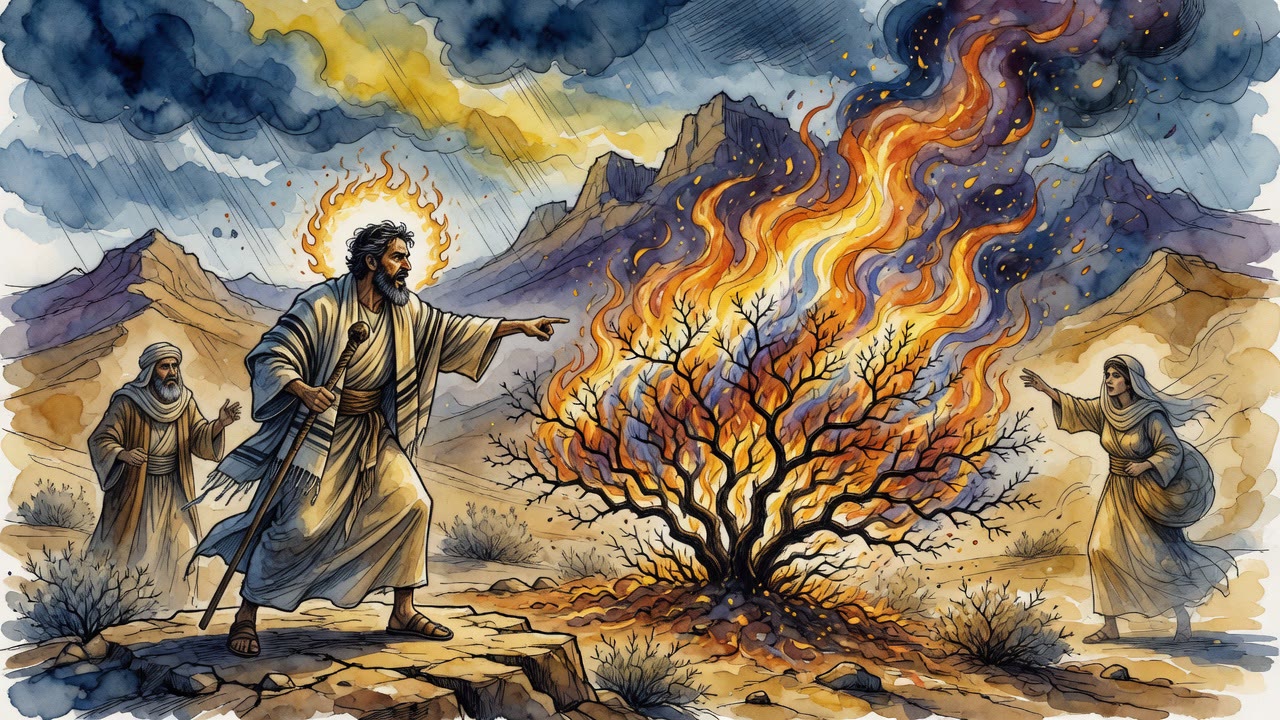
Years earlier, at a bush that burned and was not consumed, the other shepherds had seen nothing. Moses took five steps closer. God saw his distress over Israel's suffering and measured the volume of the call. Too loud, and Moses would flee. Too soft, and he would miss the weight of it. So God spoke in the voice of Moses's father, Amram.
"Here am I," Moses said. "What is my father's wish?"
"I am not thy father," God said. "I but desired to refrain from terrifying thee, therefore I spoke with thy father's voice. I am the God of thy father, the God of Abraham, the God of Isaac, and the God of Jacob."
Moses covered his face. The same care that had chosen a father's pitch now stood over a flock about to scatter. God would not win Samael's case by shouting. He would not let the accuser's volume be the one that decided the shore. He would occupy the hunter's mouth.
The Ram Thrown to the Wolf
A shepherd must bring his flock across a stream that runs fast and cold. The sheep bunch and bleat on the near bank. On that same bank, low to the ground, a wolf watches. The wolf knows that a crossing flock is a scattered flock, and a scattered flock loses its slowest first. If the shepherd simply drives the sheep into the water, the wolf will take the stragglers one by one while the man's back is turned.
So the wise shepherd does not fight the wolf and does not ignore the wolf. He reaches into the flock and pulls out a single strong ram, a big-horned animal worth ten thin ewes, and he throws it to the wolf. He hands over the ram so the wolf will be busy with its jaws full while the rest of the flock crosses safe. Later he will come back for the ram.
This is what God did with the accuser at the sea. Samael wanted a victim. Samael wanted his teeth in something. So God gave him one. Not Israel. God reached into the great flock of the righteous and drew out a single magnificent ram, a man upright and whole and turned away from every evil, and He threw that man to the accuser.
The man was Job. "Have you considered him," God said, the way a man offers a wolf the fattest animal in the pen. "There is none like him on the earth, a blameless and upright man, one who fears God and turns away from evil" (Job 1:8). Here was prey worth the accuser's whole attention, a soul so clean that breaking it would be a victory worth boasting of in the high court forever.
Samael turned. Of course he turned. The hunter cannot help himself when a finer quarry is set in front of him. He forgot the muddy crowd at the water and fastened on this one shining life. "While he busies himself with Job," God said, "Israel will pass through the sea unscathed, and as soon as they are in safety, I will rescue Job from the hands of Samael."
The Flock on Wet Sand
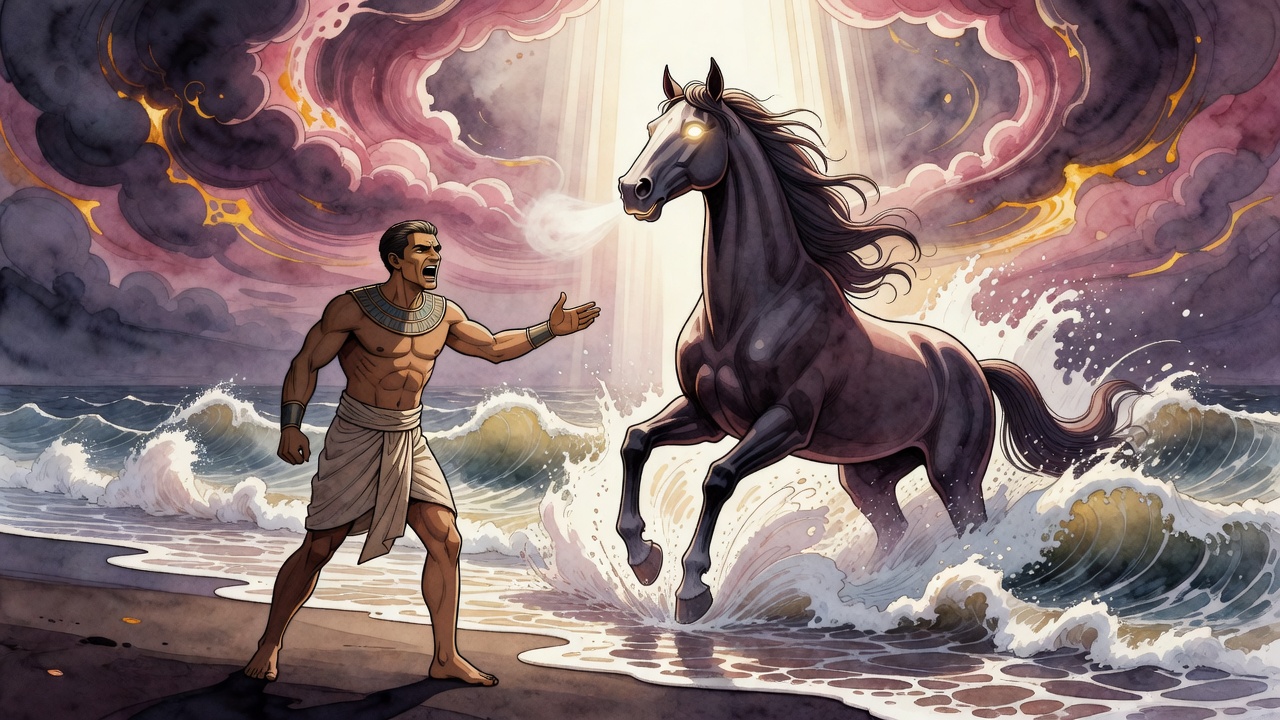
On the shore the wind came. It came from the east and it came hard, hard enough to lean a man over, hard enough to peel the sea back from its own bed. The water did not part gently. It stood, two green walls glistening and shot through with fish, and between them ran a corridor of wet sand going down into the dark and up the far side.
Israel walked. The slowest and the most frightened and the ones who had bowed to idols in Egypt, all of them, walked between the standing walls while the prosecutor's seat in heaven was empty, his attention bought and spent on another man's suffering. By the time the accuser might have remembered the flock at the water, the flock was across, and the chariots were sinking, and the case was moot.
Job, who had done nothing, would pay in boils and ash and dead children for a crossing he never saw (Job 1, Job 2). The wolf got his ram. The flock got the far bank. Moses, who had once covered his face at a father's voice, now watched a nation put its feet on sand that should have been water. No one standing on that wet floor knew the price paid above their heads to keep the accuser's mouth full while they crossed.
← All myths