Moses Argues at the Burning Bush Over Lot and Hagar
Fire moved through the thornbush and the leaves stayed green. A voice said his name twice. He answered, then he started to argue.
Table of Contents
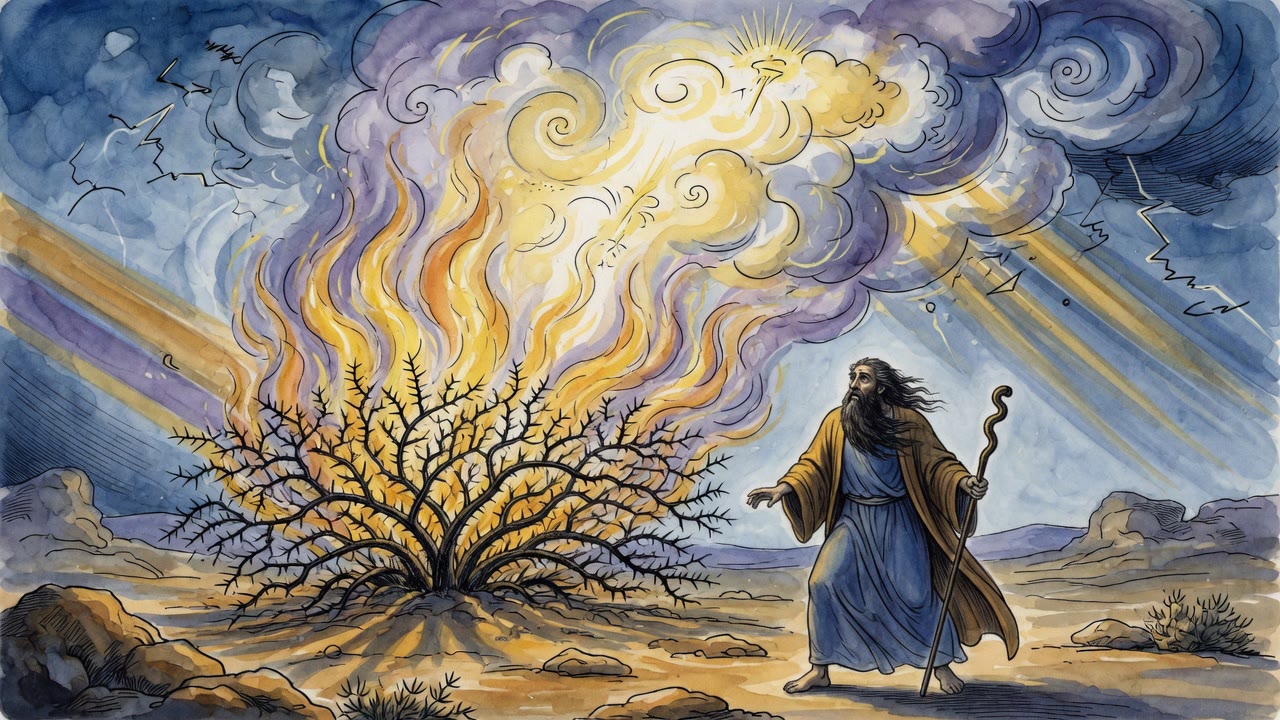
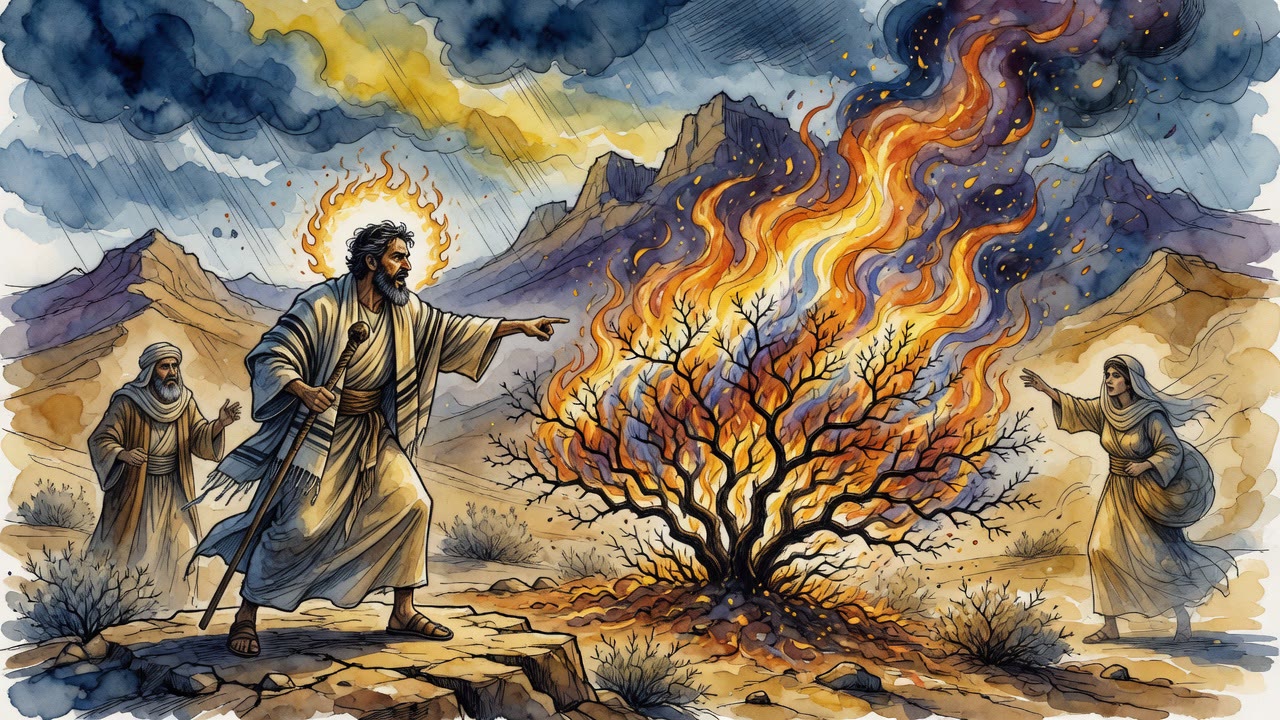
The bush burned and did not burn away. Fire moved through the branches the way wind moves through wheat, and the thornbush stood inside the flame, leaves green, twigs whole, nothing blackening, nothing falling to ash. Moses turned off the path. He had been driving the flock toward the far side of the wilderness, toward Horeb, and now he left the sheep bleating behind him and walked toward the thing that should have been a column of smoke by now and was not.
 Click for full size
A voice came out of the fire and said his name twice. He answered the way a man answers a knock in the dark. Here I am.
The Voice Tells Him Not to Come Closer
"Draw not nigh hither," the voice said (Exodus 3:5). The words pressed against his chest like a hand. He had expected an invitation. He got a boundary. The fire was not asking him to enter it. The fire was telling him to stop, to take the sandals off his feet, to stand on the ground as it was, scorched and ordinary and holy.
He bent and loosened the straps. The dirt was warm under his soles. As he straightened, the command kept unfolding, and it was larger than the patch of burning ground in front of him. The sandals were not only sandals. To strip them off was to strip off the things a man wraps around himself, his comforts, his household, the warm weight of a wife waiting in a tent. The voice wanted him bare. It wanted him sent.
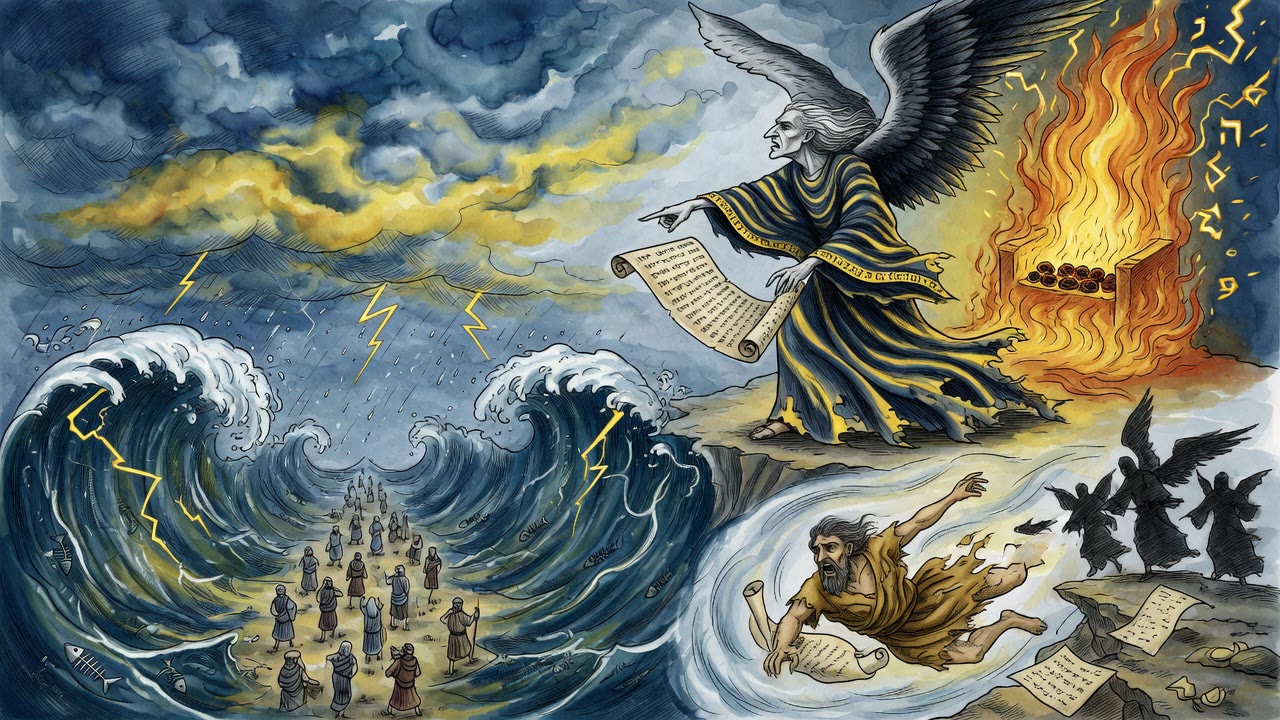
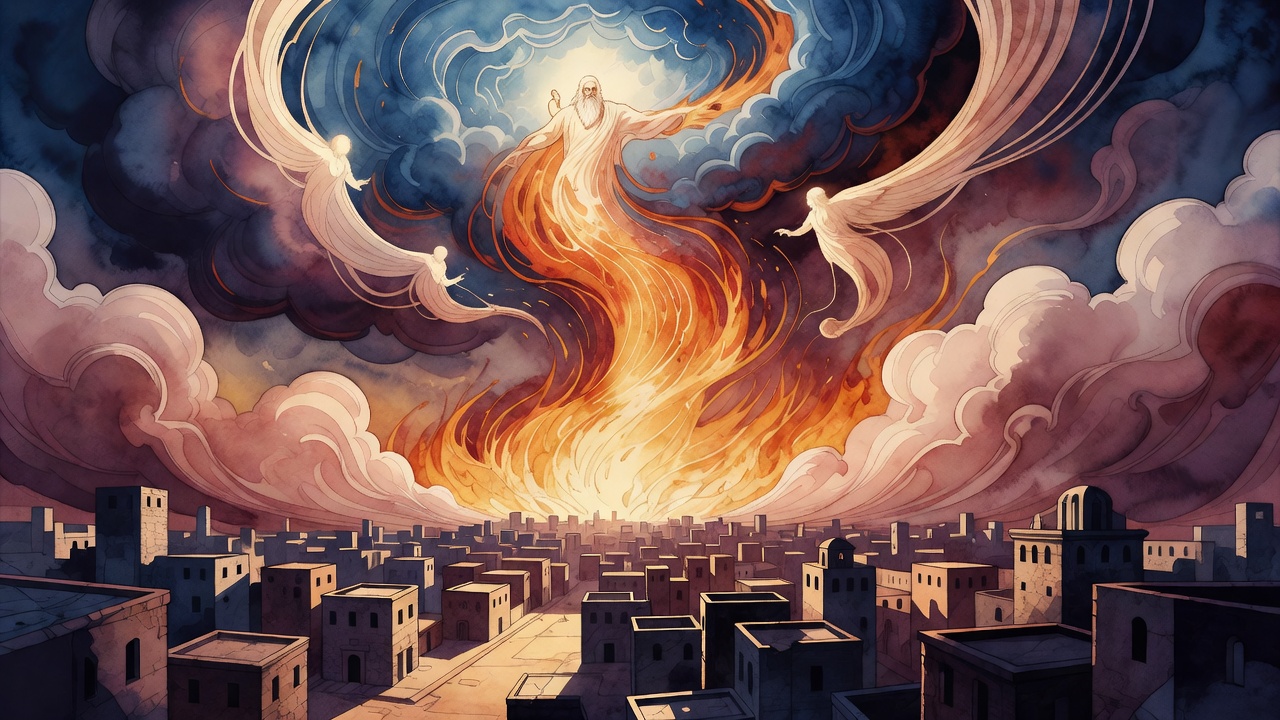
The angel Michael protested from somewhere above the flame. Can it be Thy purpose to destroy mankind? Blessing can prevail only if male and female are united. God answered that Moses had already fulfilled that duty. Now the Holy One wanted him joined to the Shechinah (שכינה), the divine presence, so that it might descend for his sake.
Moses Counts the Angels Sent for Lesser People
So go, the voice said. Go to Egypt, where the children of Israel groan under the brick quotas, sixty myriads of them, hundreds of thousands, the seed of Abraham bent double under the lash. Bring them out.
Moses did not bow. He did not weep with gratitude. He stood on the warm dirt and he began to argue, and he argued the way a man argues who has memorized the family records and means to use them.
"When Lot was taken," he said, "You sent angels."
He let it sit. Lot, Abraham's nephew, hauled off as a captive when the four kings broke the five and dragged their plunder north (Genesis 14:12). One man, and not even a son, only a brother's child. And for that one man heaven had opened and sent its messengers down to pull him loose.
"And Hagar," Moses went on, pressing now. Hagar the Egyptian bondwoman, cast out with her boy into the scrub of Beersheba, sitting down a bowshot from the child so she would not watch him die of thirst (Genesis 21:16). Heaven had not sent her one angel. It had sent five. Five messengers for one weeping foreign servant beside a dying child.
The Grandchildren of Abraham Versus a Nephew
"A grandchild," Moses said, "is reckoned a nearer kinsman than a nephew."
There it was, laid out clean. If a nephew in chains earned a delegation from the heavens, and a cast-off bondwoman earned five, then what did the direct descendants of Abraham deserve, the heirs of the promise, sixty myriads of them screaming under Pharaoh? Not nephews. Not strangers. The actual seed. The grandchildren many times over of the man whose nephew the angels had flown down to rescue.
By every rule the voice itself had ever followed, Israel had earned angels. A host of them. And the voice was offering Israel a stammering shepherd with the sand still on his bare feet.
"O Lord," Moses said, and he said it plainly, no veil over it, "send, I pray Thee, by the hand of him whom Thou wilt send." Send someone else. Send the one You will send in the days to come. Send anyone better made for this than I am.
The Honors That Belonged to Other Men
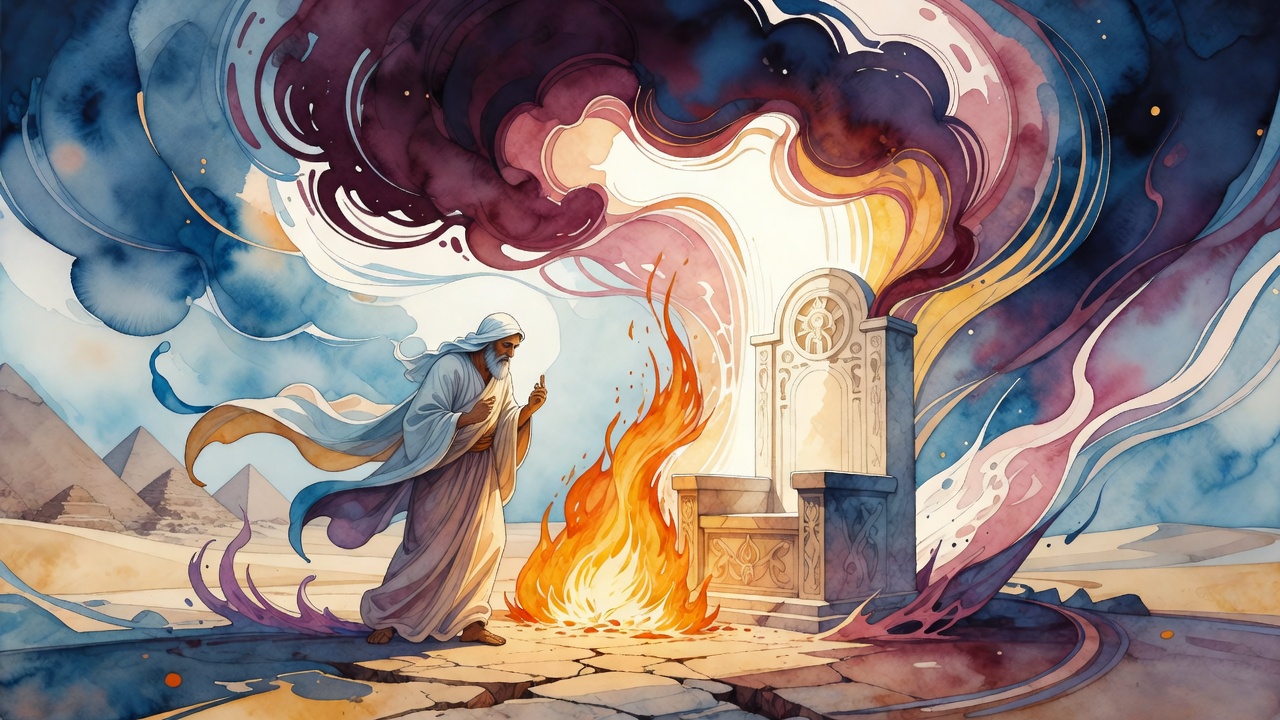
The voice did not strike him for it. The voice answered, and the answer reached back to that first warning, draw not nigh, and explained it. The fire had been marking a line not because Moses was too small for it but because the ground inside it was measured out for him alone, and the honors he might reach for were measured out for others.
The priesthood was not his. That robe belonged to Aaron and Aaron's sons. The crown was not his either. Kingship was being kept for David, generations off, still unborn in the loins of Judah. Moses was not being sent to be lifted above his people. He was being sent to do the one thing none of the angels had been sent to do.
The one Moses asked for, the future redeemer, would be sent to Israel at the end of days. Elijah would appear to them before the great and terrible day. The plea was not thrown away. It was dated later than this errand.
The Bare Feet and the One Errand
The angels had gone to Lot to carry a man out of a city. The angels had gone to Hagar to open her eyes to a well. None of them had been sent to walk into a throne room and stare down the most powerful man on earth and tell him to let his slaves go free. That errand did not belong to a messenger of fire. It belonged to a man with feet of clay and a stammer in his throat, a man who could stand before Pharaoh as one mortal before another and not be dismissed as a vision.
The freeing would come in stages, the hardest first. Confront the king. Break his grip. Only after that the sea, the wilderness, the mountain. Angels could not be flogged or imprisoned or made to plead a third and fourth time before a hardened heart. A man could. That was why the voice wanted him bare, stripped of the tent and the flock and the comfortable life, sandals in his hand, standing on warm dirt that would not stop burning.
Moses had argued like a lawyer and lost, and in losing he had been told exactly what he was for.
← All myths