Who Was the Angel Standing in the Burning Bush
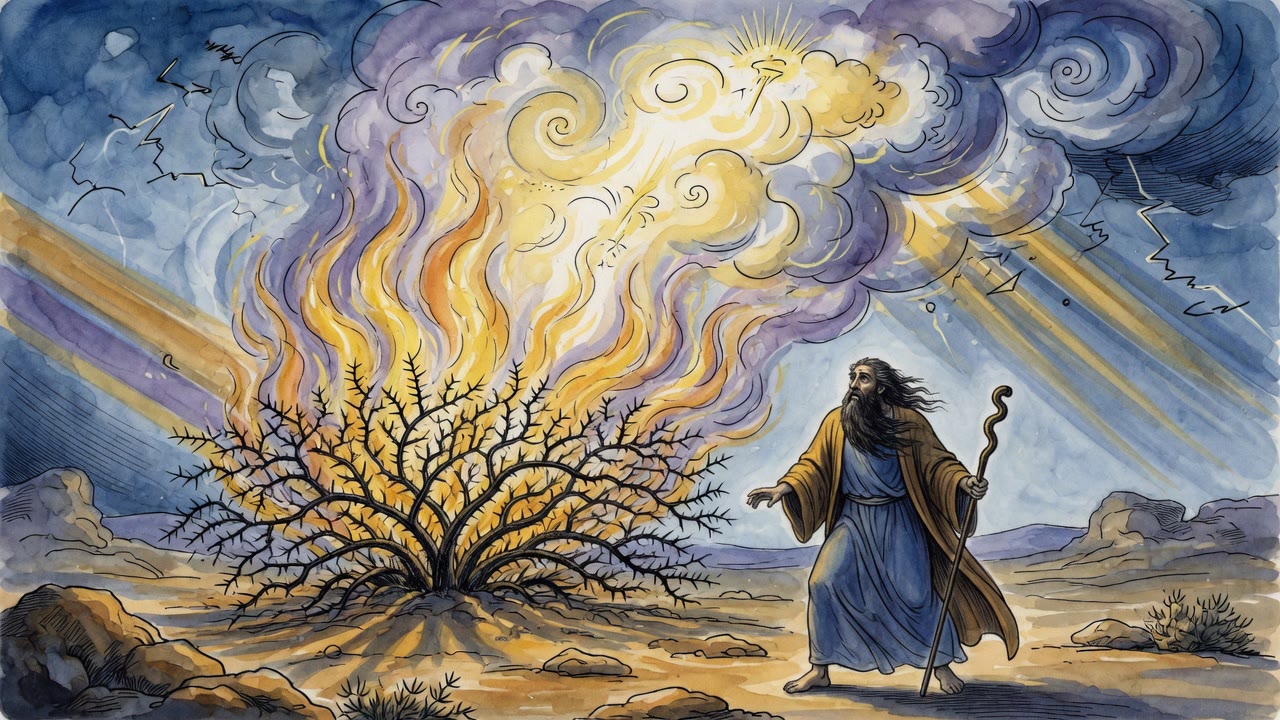
Birds would not land on the mountain. Moses came closer. A black fire sat in the thorns, and the bush still held its blossoms.
Table of Contents
Birds would not land on the mountain. Moses noticed that first, before the fire. The flock had wandered toward Horeb, and as he came near, the mountain itself leaned forward as if to meet him, then settled when his foot found it.
 Click for full size
Then he saw the thornbush.
Birds Would Not Land
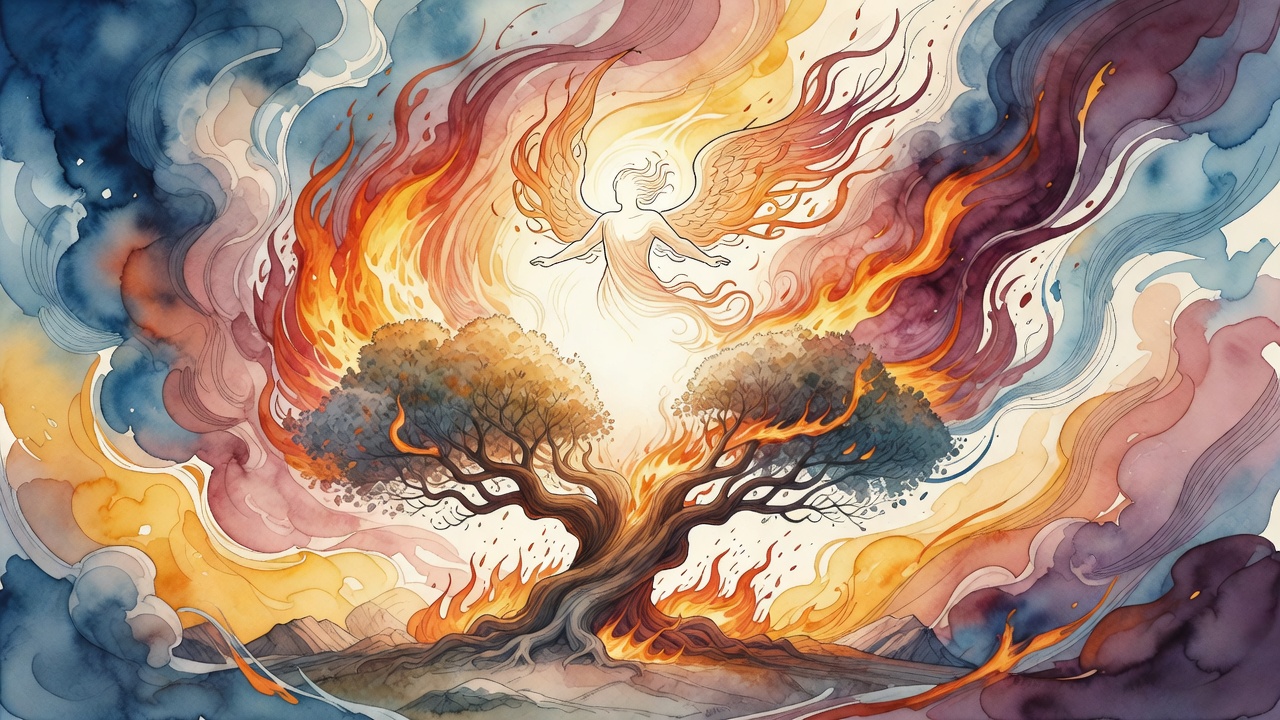
He had been a prince and a fugitive and a shepherd, but none of that prepared him for a shrub that burned and stayed a shrub. The upper part was flame. The lower part still held its thorns, and as he watched, blossoms opened inside the fire as if the heat were a kind of spring.
The fire was black, and it did not eat the wood. Moses told himself he would turn aside and see why the bush was not burned. He stepped closer. The messenger in the flame did not consume the thorn and did not consume him.
The Angel in the Thorns
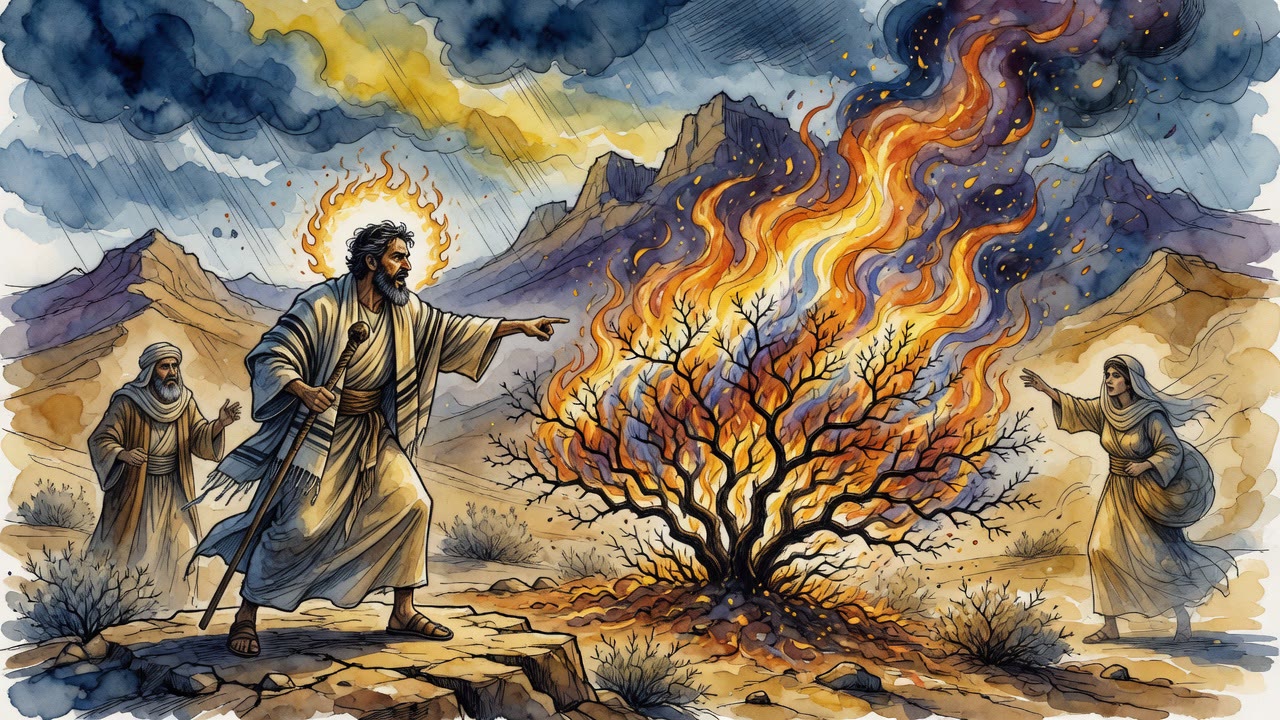
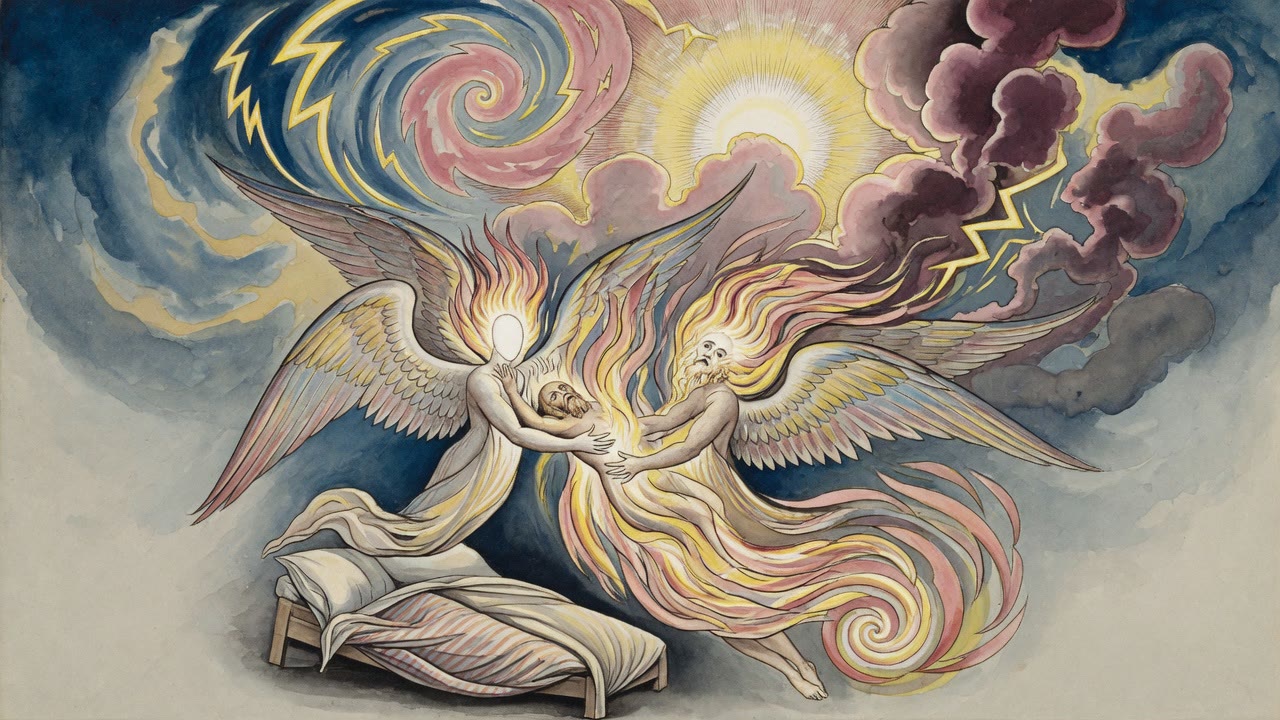
Zagnugael stood in the fire, the angel of divine flame, because flame was his nature, not a costume. He could stand inside a burning bush without being eaten and without eating it. Moses had a black fire, a thorn that would not die, and a figure inside it that did not flinch.
The fire drew him. That was the angel's work: draw the shepherd off the path and stop the man who was not inclined to stop. God wanted speech with Moses, but Moses wanted the flock counted and the day over, so the bush burned until he turned.
Sandals in the Dust
"Do not come closer," the voice said. "Take the shoe from your feet. The place on which you stand is holy, and upon it you are to receive the Law, to teach it to the sons of Israel."
The sandals came off. This was already the mountain where Israel would later stand, and Zagnugael had been keeping the heat of the place before a shepherd ever turned aside. Moses hid his face when the voice named itself as the God of Abraham, Isaac, and Jacob, because looking had already cost him enough.
He stood barefoot in dust that would not stop being holy. The flock was forgotten. The thorns still held their flowers. The angel who had drawn him to the shrub did his job and stepped back.
The Voice After the Flame
What Moses had seen was the messenger, but what spoke next was the Memra, the Word of the Lord. The fire had gotten his attention. The Word gave him the mission. The oppression of the people in Egypt was already known, and the cry had already been heard, and Moses was being handed a Name and a staff and a road back to a palace he had fled.
He tried to decline it, because he was slow of speech. He asked for a sign, then for someone else, then what to tell them if they asked the Name. The bush did not go out while he argued. Zagnugael held the shrub in bloom through every refusal. Moses hid his face a second time. The figure in the thorns and the voice that used the thorns were not the same pressure, and he was standing in the gap between them.
The Name He Carried Down
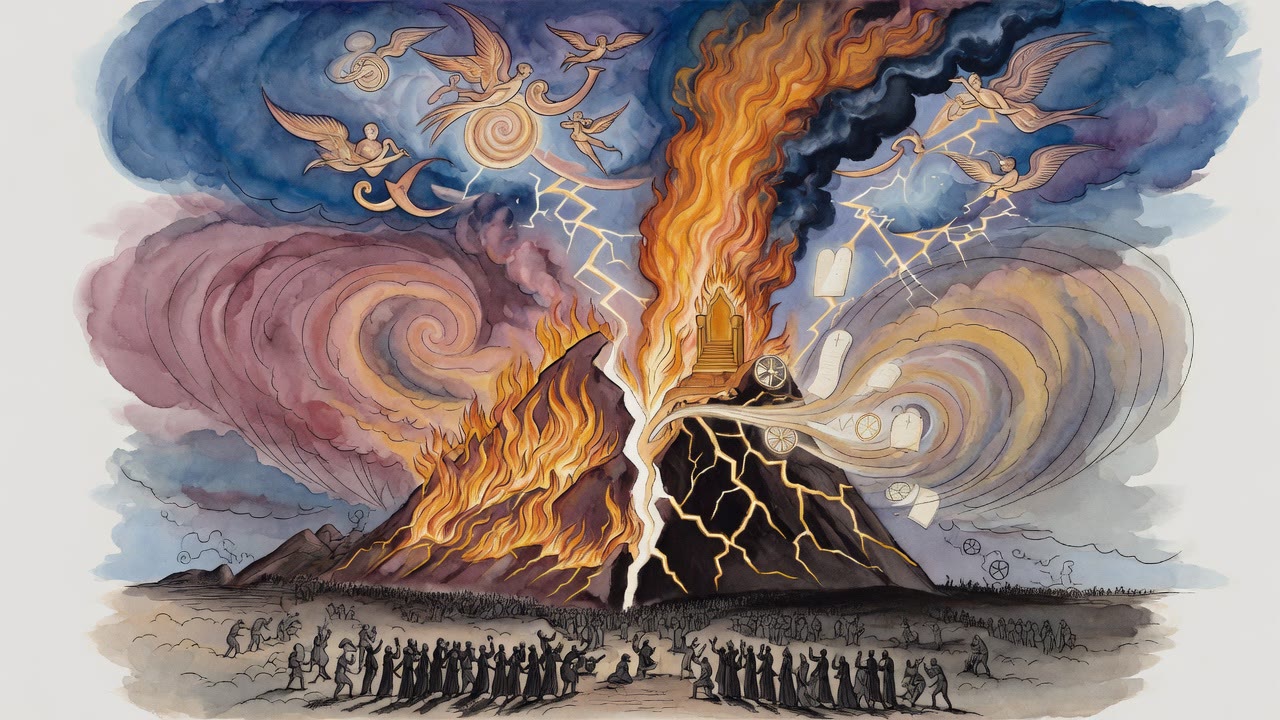
The angel in the flame was also a teacher. Before tablets, before Sinai, before a nation stood at the foot of a mountain, Moses met the mouth that would teach him how to carry a Name he did not want. He argued, and the fire waited, and then he went down the mountain of Midian with that Name in his mouth and a staff in his hand.
Behind him the bush kept burning, but he put his sandals back on at the edge of the holy dust, and the birds still would not land.
← All myths