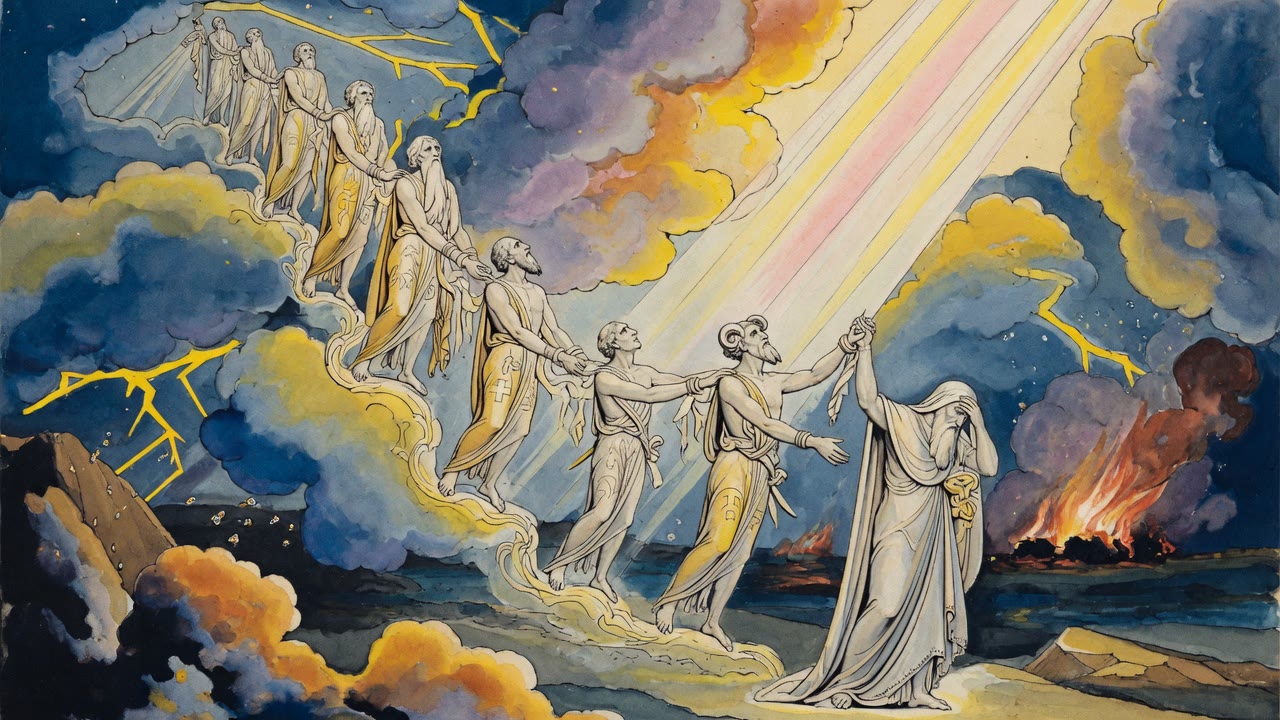
Lot's Silence in Egypt Saved Him from Sodom Years Later
Lot survived Sodom not only because of Abraham's prayer. The tradition traces his rescue to a moment in Egypt when he stayed silent and heaven noticed.
Table of Contents
 Click for full size
The Silence in Egypt
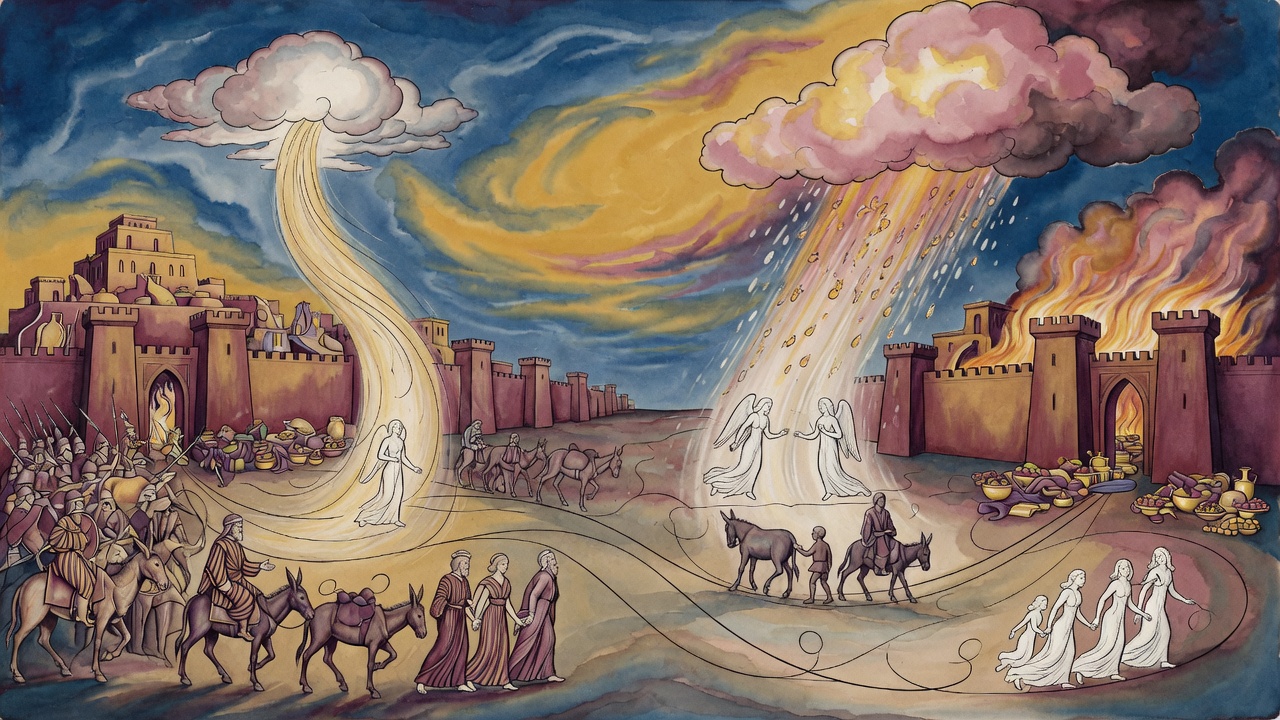
When Abraham and Sarah traveled to Egypt during the famine in Canaan (Genesis 12:10), Abraham asked Sarah to say she was his sister rather than his wife, because he feared Pharaoh would have him killed to take her. Lot was with them. He knew the truth. He said nothing.
The silence cost him nothing in the moment. It may have cost him something in his own estimation of himself, he had watched his uncle's strategy unfold and kept quiet about it, which is a harder thing to carry than an active lie. But the tradition's accounting of merit is not limited to heroic acts. Loyalty maintained under pressure, discretion exercised when disclosure would have been easy, a nephew who could have spoken and did not, these were recorded.
The Rescue of Sodom Traced Back to That Day
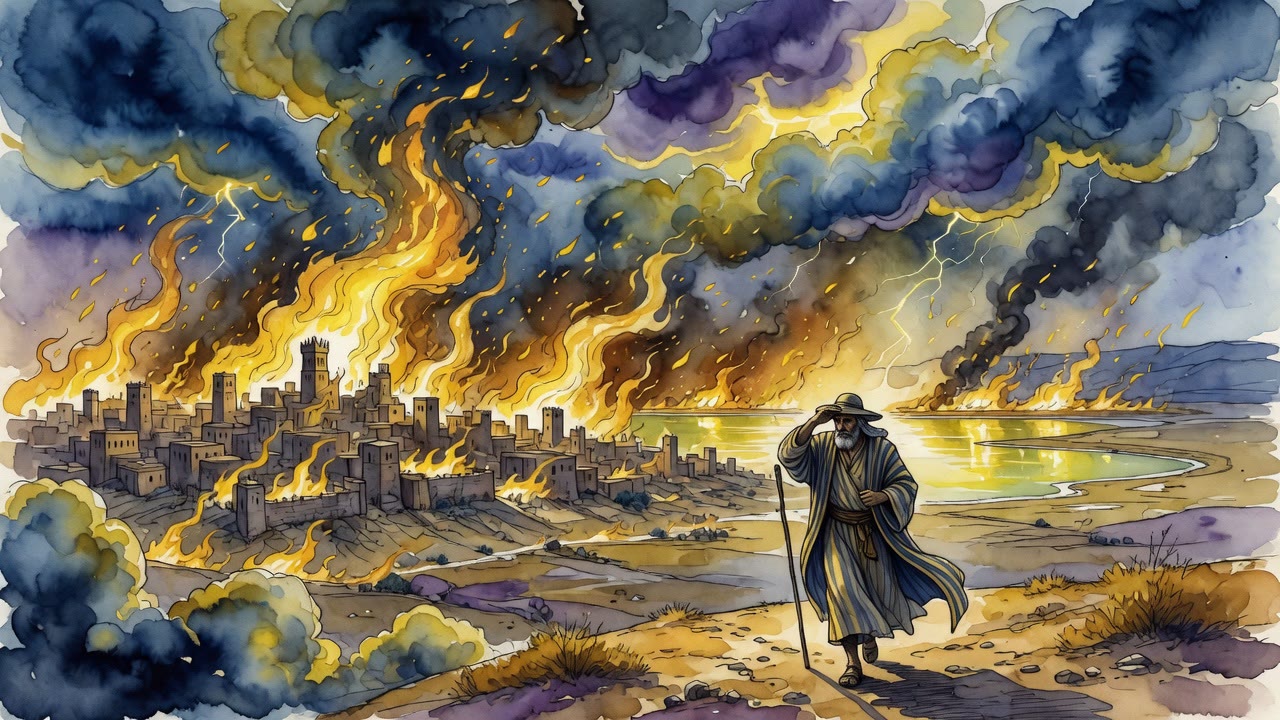
The Ginzberg tradition, drawing on centuries of Talmudic and midrashic sources, records the fuller accounting: Lot was saved from Sodom in part because of what he had not done in Egypt. His silence that day had accumulated into merit that held against him in the final reckoning. The Torah credits Abraham's intercession with Lot's rescue (Genesis 19:29). The rabbinic tradition adds that the intercession had something to work with, that Lot's own merit existed, even if it was modest, even if it was the merit of a man who had lived in Sodom for years and sat at its gate watching its cruelties.
A man who kept a secret out of loyalty once, decades before his own crisis, survived because of it. This is the kind of detail the tradition preserves with care, because it makes a specific argument about how the books are kept.
What Lot Chose in Sodom
The Book of Jubilees, composed in the second century BCE and preserved among the Dead Sea Scrolls, describes Lot's departure from Abraham's household with grief on both sides. Abraham had no children and Lot was his closest family. When Lot chose Sodom, he chose the well-watered Jordan valley over his uncle's company, chose proximity to abundance over proximity to righteousness. The separation was not merely geographical. Jubilees says he separated from the God of Abraham as well.
He had not entirely lost what Abraham's tent had given him. When the angels arrived in Sodom, he was the only man at the gate who rose to greet them. He practiced hospitality in secret, through back alleys, at risk of his life. This too was in the accounting. But it existed against a background of years during which he had watched the city he lived in systematically destroy strangers and had said nothing, had stayed, had built a life at the gate of a place whose cruelty he knew.
The Long Lineage from a Cave
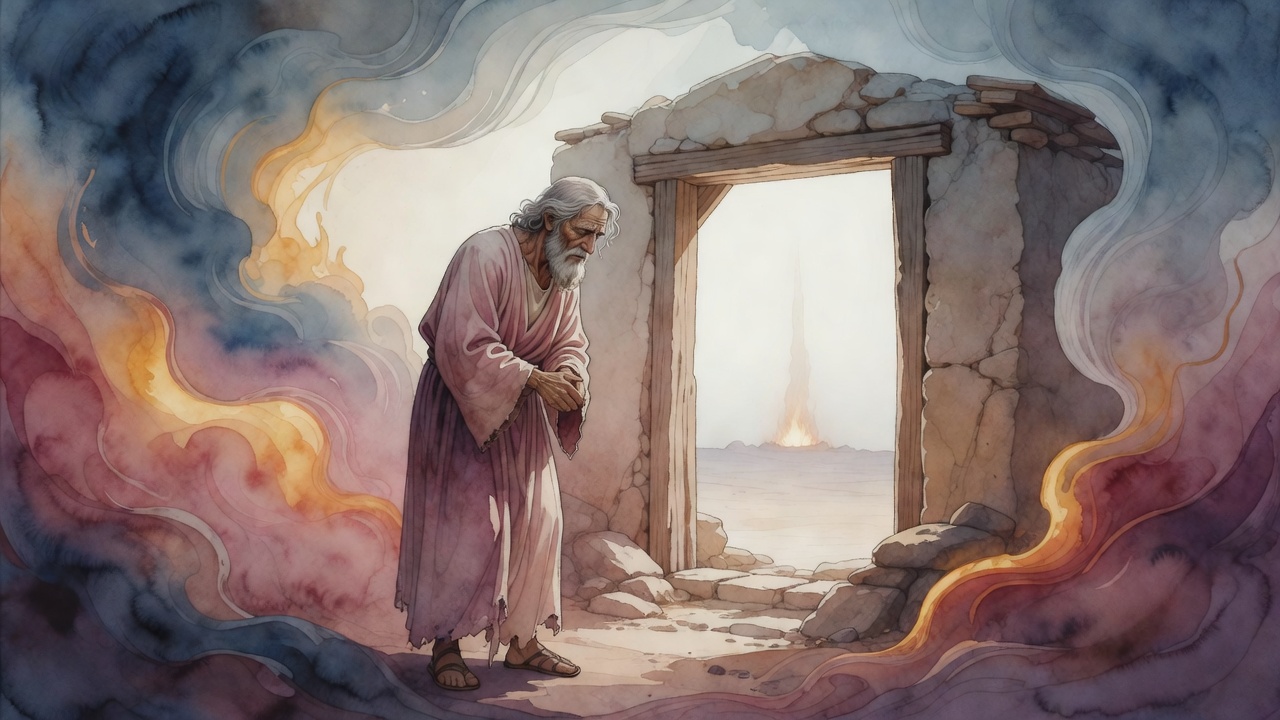
The Ginzberg tradition notes the strangest dimension of Lot's rescue: the Messianic line would pass through his descendants. The daughters born in Sodom, who survived the fire and fled with their father to a cave in the hills, would become the mothers of Moab and Ammon. From Moab would come Ruth, and from Ruth, through several generations, would come the house of David. Lot's rescue was not only about Lot.
The silence he kept in Egypt, the small, unspectacular, unwitnessed act of discretion, echoes down through generations to a lineage he could never have imagined when he chose not to speak.
← All myths