One Girl Gave Flour to a Starving Woman and Sodom Burned Her
Two girls went down to the well. One asked why the other looked so sick. The answer came in the third person, as if the starving girl could not say I.
Table of Contents
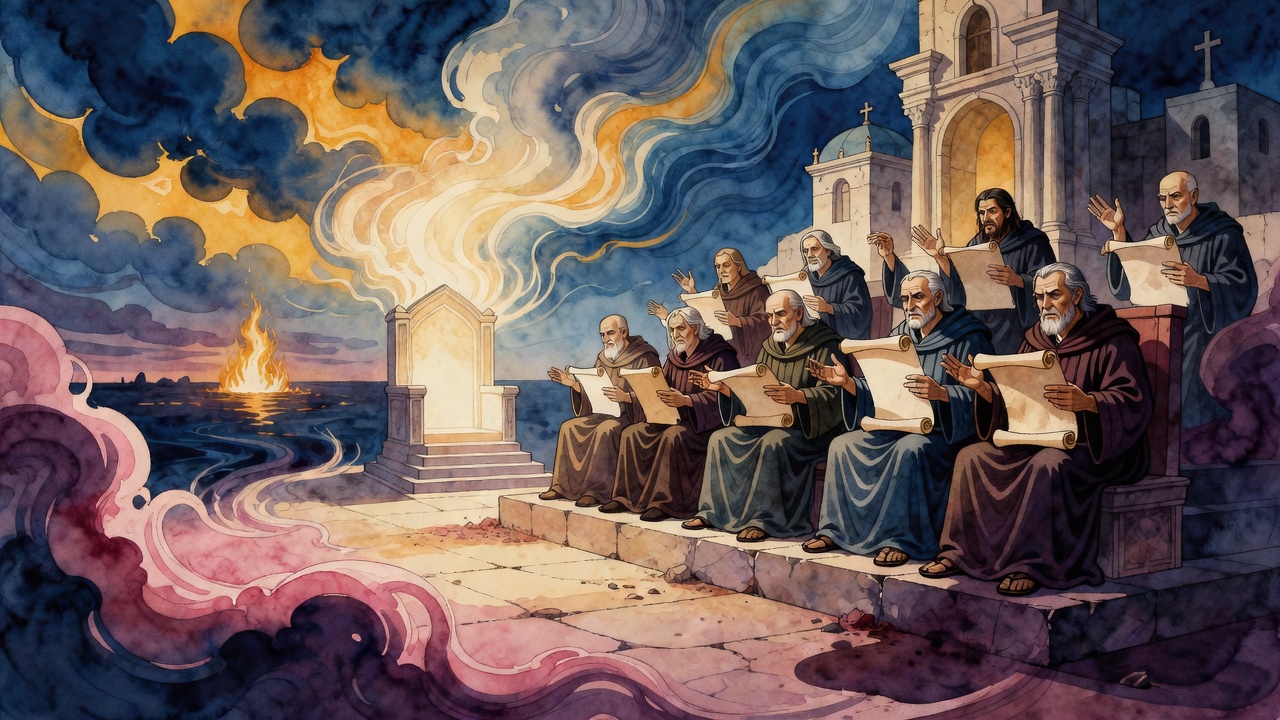
Two young women went down to the well in Sodom with empty jars.
 Click for full size
One of them looked at the other and said, "Why is your face like that?"
The other answered about herself in the third person, the way a person talks when she cannot stand the word I. "Her food has run out," she said. "She is close to death."
She Packed the Jar With Flour
The first girl did not answer. She bent over the well as if she were drawing water. She packed the jar with flour instead, pressed the mouth shut with her palm, and when they stood up she took the empty jar out of the starving girl's hands and put the full one there. She walked off with the light one.
Sodom found it out. The city always found these things out. They took the girl who had given the flour, and they burned her alive. Flour still on her hands. The well still in walking distance. The other girl standing somewhere in the crowd with a jar she was not allowed to keep.
Then God said, "Even if I wanted to keep quiet about this city, that girl will not let Me."
The cry that reached Him did not say their outcry. It said her outcry (Genesis 18:21).
The Mountains Thundered for Twenty-Five Years
Sodom had fifty-two good years in it. That was all it ever got.
For twenty-five of those years the mountains around the plain thundered, and cups walked across tables, and a man would set his cup down and pick it up and not ask why the ground was shouting. The shaking was not weather. It was an opening, sent again and again to a city that never once connected the noise to itself. He moves mountains and they do not know it (Job 9:5).
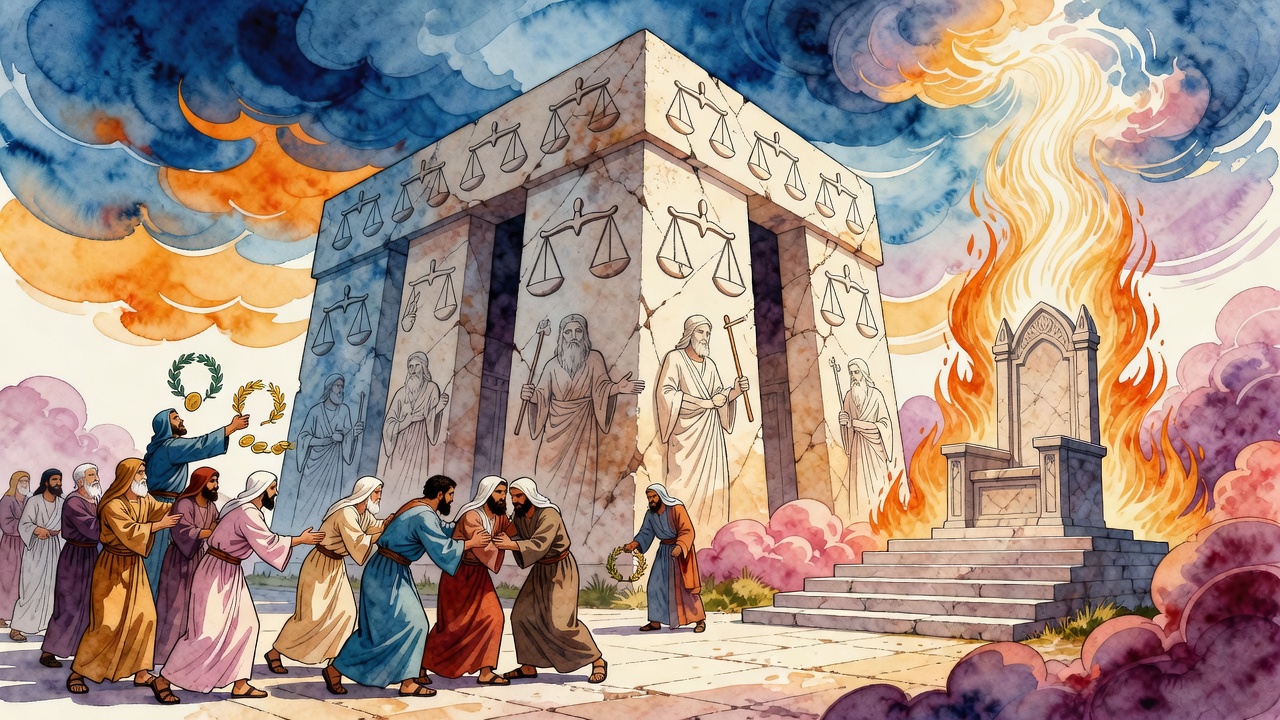
They did not stop. They wrote charity out of their law. A woman who put flour in a stranger's jar was a criminal, and they had already burned her for it.
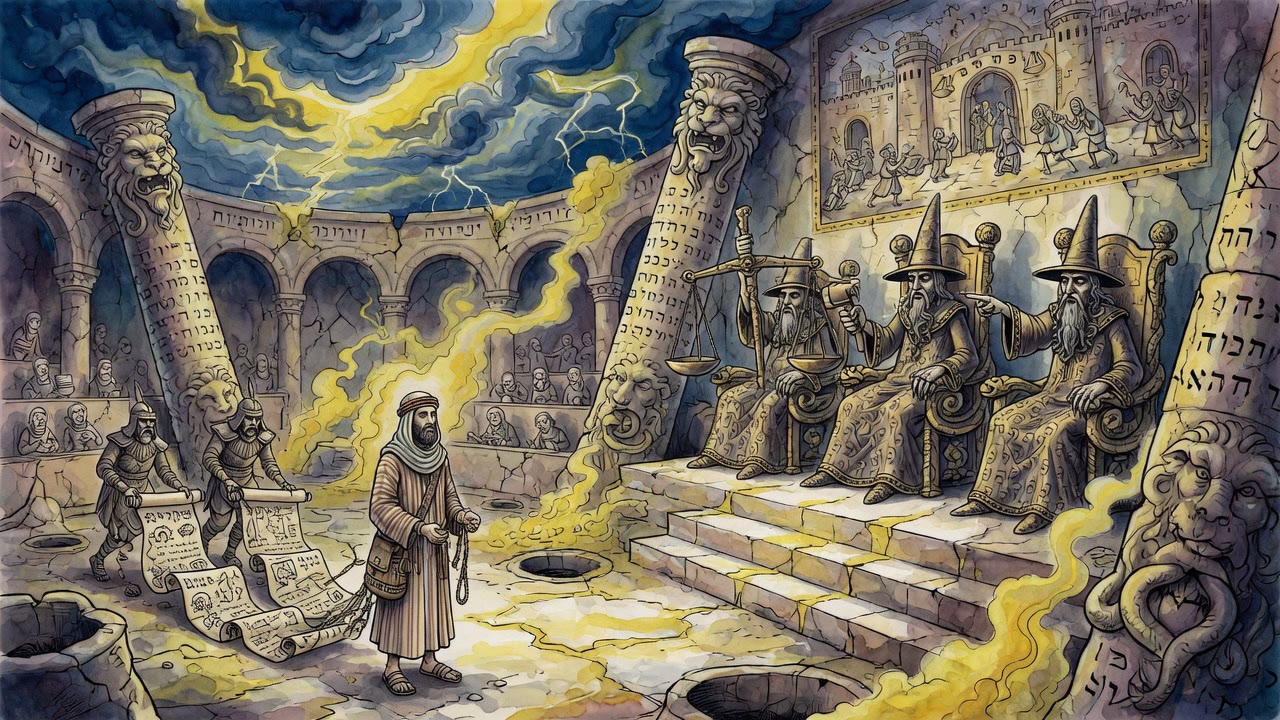
God said He would descend and see what He would find. Not because anything down there was hidden. It was one of ten times He is described as coming down into the world, and it was the last opening He gave them: the descent of a judge who wanted the record to show that He came and looked before He signed.
Three Men Stood at Abraham's Tent
He would not do it behind Abraham's back.
"Shall I hide from Abraham the thing I am about to do?" He said (Genesis 18:17). Then He appeared, and three men were standing at the door of the tent in the heat of the day, and Abraham ran at them with water and bread.
They gave him the good news first. This time next year, Sarah would have a son. An old man in a tent with a hundred years on him heard that his wife was going to give birth. While he was still holding that, the visitors changed the subject.
The outcry of Sodom and Gomorrah, one of them said, is great (Genesis 18:20).
The Young Man Ran to Raise the City
Two of them went on down and reached the city in the evening, and Lot got them inside his house before anyone could stop him.
Not before anyone saw. A young man of the city had watched them come through, and he ran, and by the time the bread was on the table the men of Sodom were at Lot's door, all of them, every quarter of the city, shouting for him to send the visitors out (Genesis 19:5).
Lot went out to them and shut the door behind him and offered them his two daughters. He handed over his own children to keep two guests off that street.
They refused. They wanted the strangers.
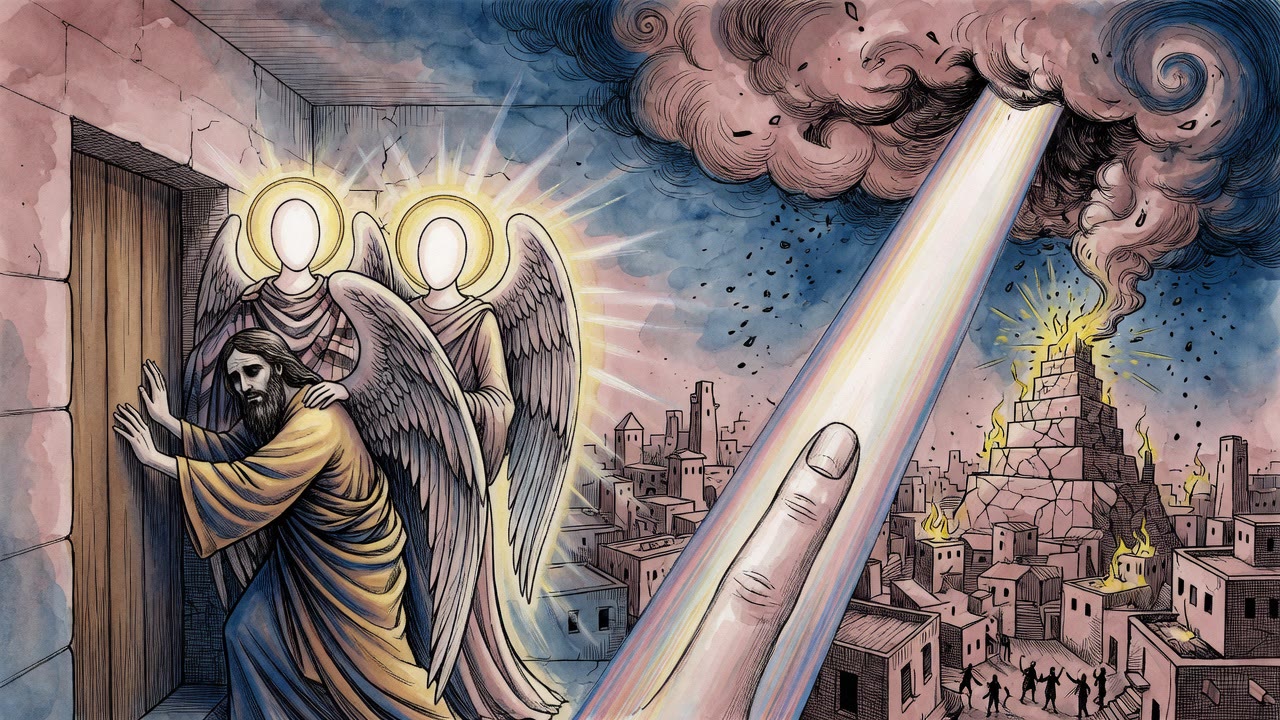
The angels reached through the door, took hold of Lot, pulled him back inside, and struck the whole crowd blind until dawn. Men who had spent their lives making sure nobody was ever taken by the hand into a house in Sodom stood in the dark feeling along a wall for a door that was right in front of them.
At first light the angels did the thing Lot had done. They took his hand, and his wife's hand, and the hands of both daughters, and pulled all four of them out of the city the same way he had pulled the strangers in (Genesis 19:16).
Edith Turned Her Head
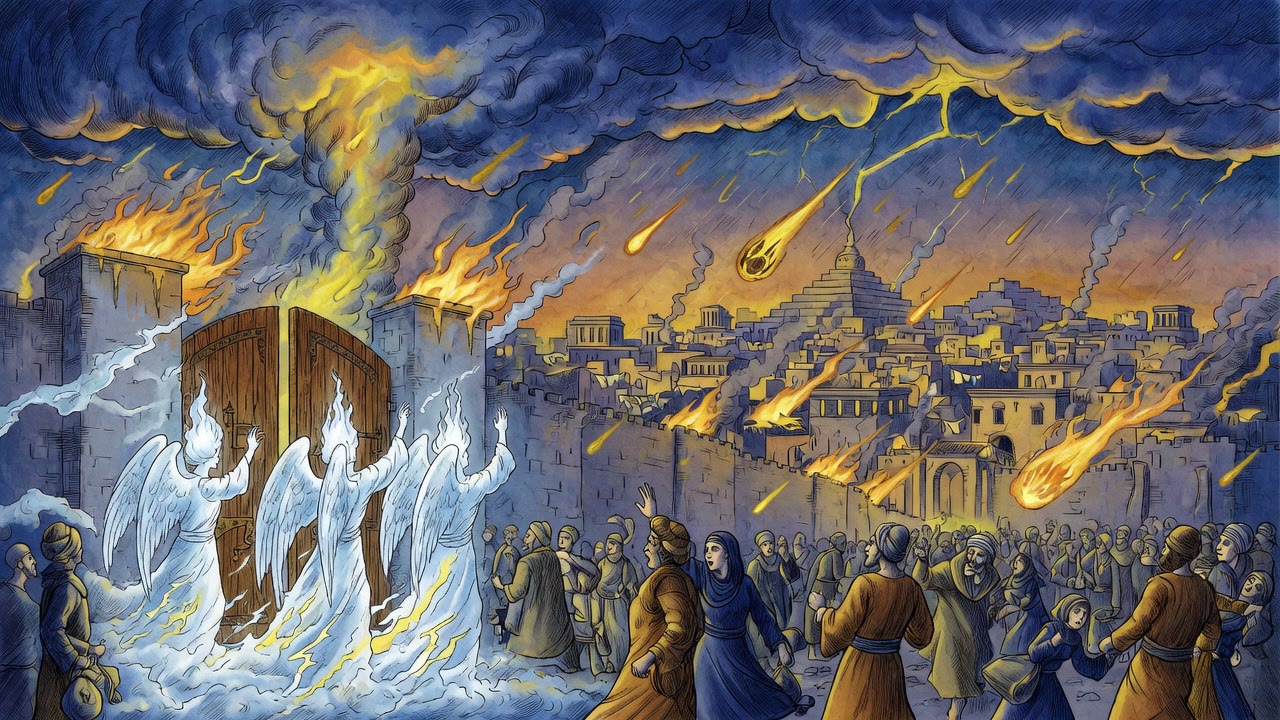
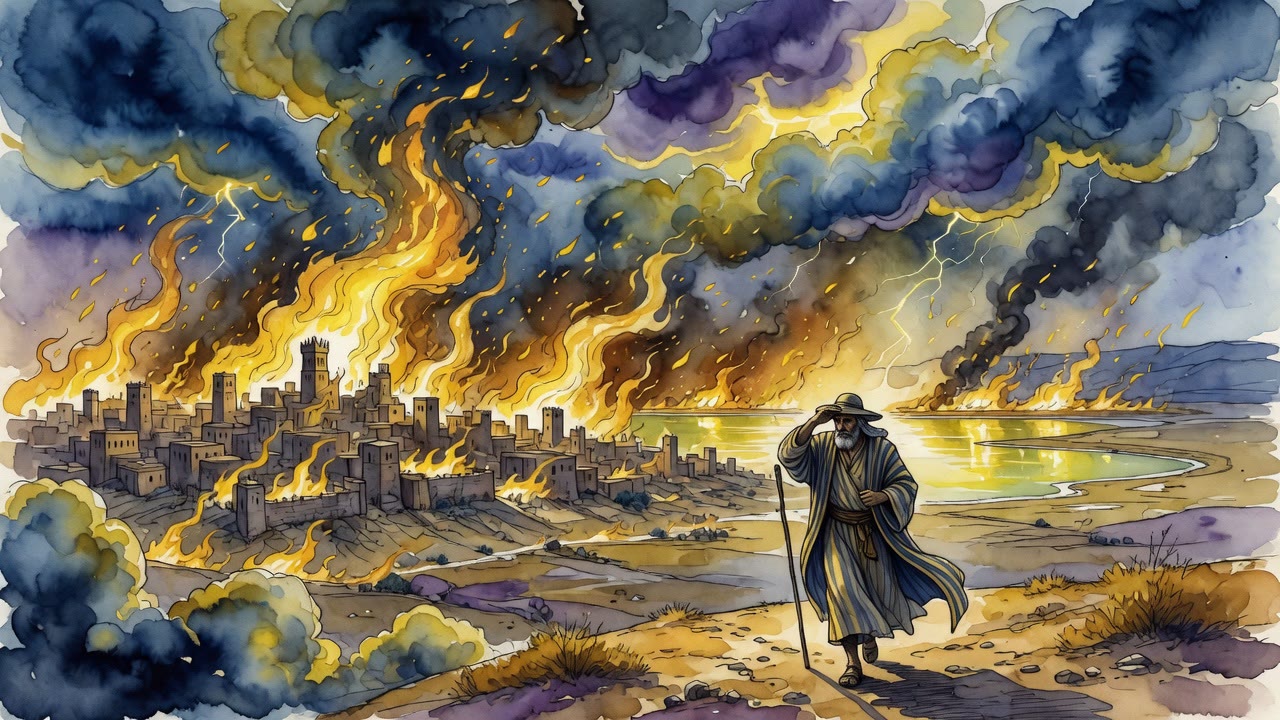
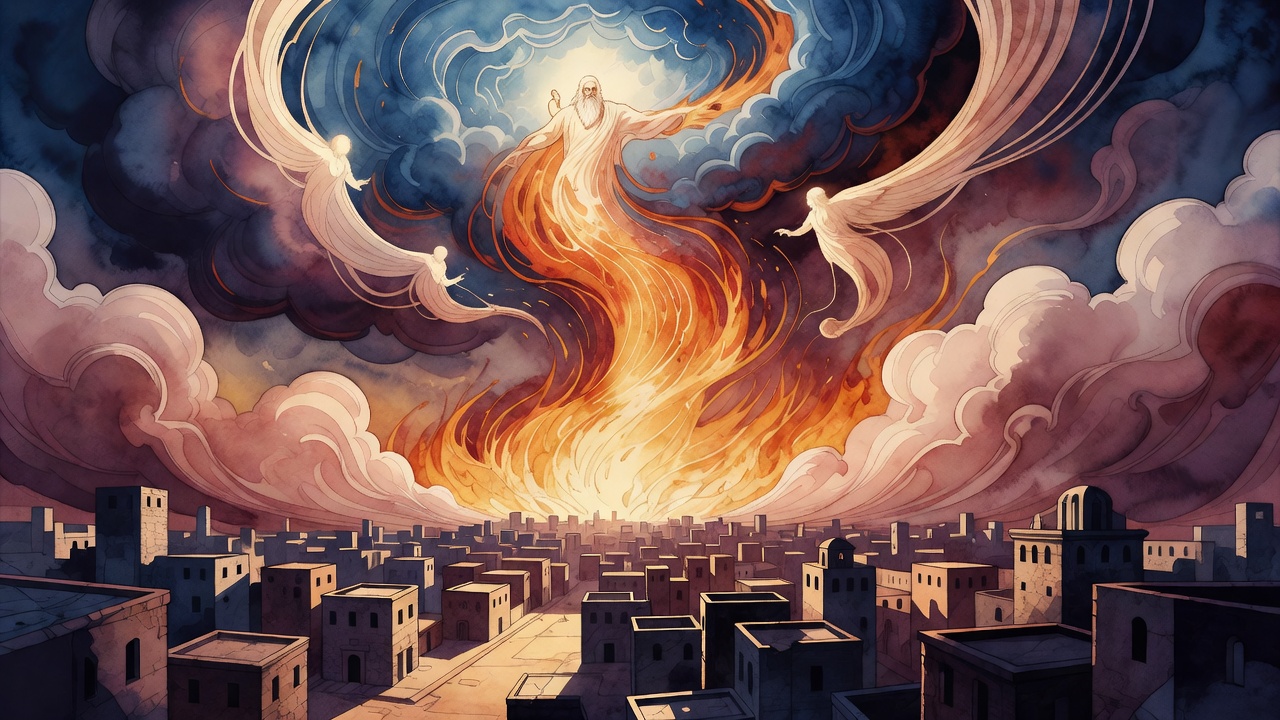
"Do not look behind you," they said. The Shekhinah (שכינה), the Divine Presence, had come down over the plain and was already raining fire and sulfur on it.
Lot's wife was named Edith. She had daughters in that city too, married ones, with husbands and houses of their own, and she had just been walked past their doors without being allowed to knock.
She turned her head to see whether they were coming after her.
She did not see her daughters. She saw what was standing behind her. The thing standing behind her was the Divine Presence, and she stopped on the road and turned into a pillar of salt (Genesis 19:26).
Lot came out of it alive on his brother's account. God remembered Abraham, pulled one household out of the middle of the overthrow, and left the pillar of salt standing on the road behind them.
← All myths