Samael Crowed Over Temples He Did Not Destroy
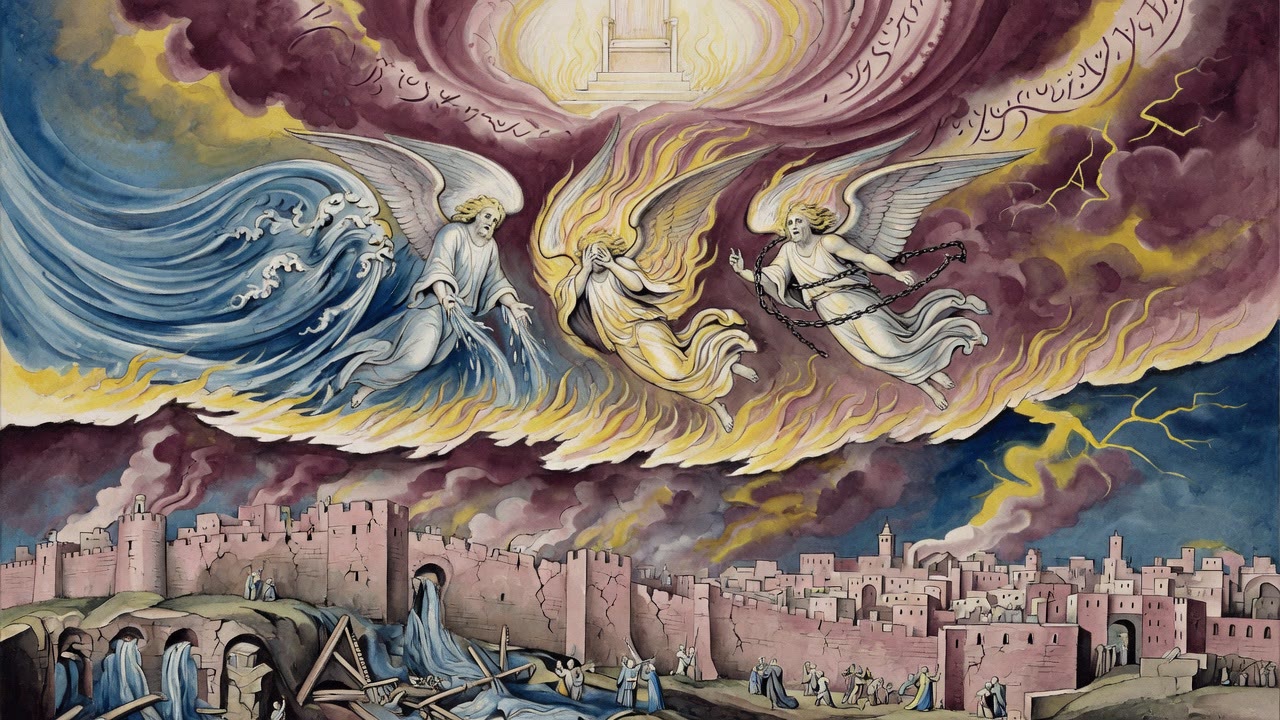
When the Temples burned, Samael celebrated. The Tikkunei Zohar says he did not cause the destruction but moved into the space that human failure opened.
Table of Contents
 Click for full size
The Angel Who Was Glad When the Temple Burned
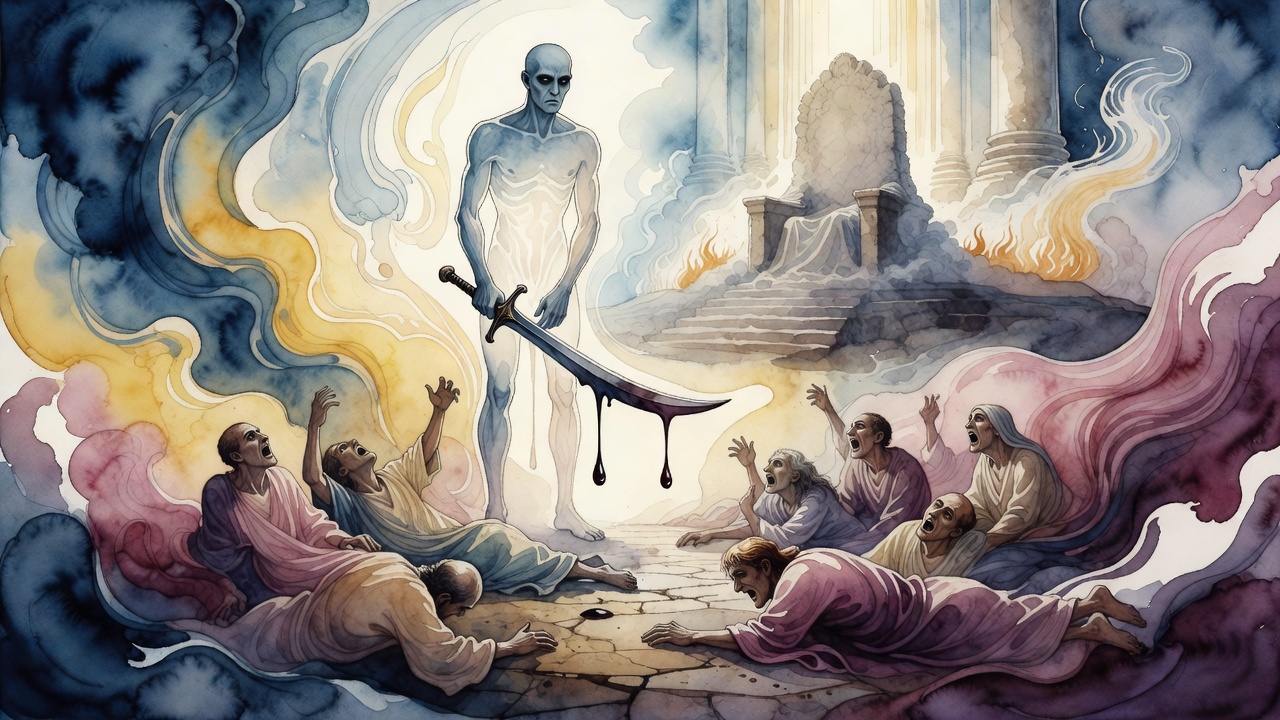
When the First Temple fell in 586 BCE and the Second Temple fell in 70 CE, there was an angel who was glad. His name was Samael, and in the Jewish mystical tradition he is not a rebel against God but a force that operates within God's system, specifically the force of strict judgment that turns against Israel when Israel turns against itself.
The destruction of the Temples was not Samael's idea. But he benefited from it. And the Tikkunei Zohar, composed in thirteenth-century Castile, Spain, is careful to explain what that means and what it does not mean.
The Distinction the Tikkunei Zohar Makes
The Tikkunei Zohar says Samael's forces did not fear God, and they destroyed His house. The language is extraordinary. Samael destroyed God's house. But the text is not saying Samael acted outside God's authority. It is saying Samael operated in the space that human failure opened. The Temple's destruction was not a defeat of the divine plan. It was the painful, necessary consequence of a covenant the Jewish people had broken across generations. Samael is the mechanism of that consequence, not its originating cause.
The distinction matters enormously. If Samael caused the destruction independently, then the destruction is a story about divine defeat. If Samael moved into a space that was already open because of Israel's failure, then the destruction is a story about the consequences of abandoning the covenant and about the possibility of return. The Tikkunei Zohar insists on the second reading.
Samael at the Sea and Before Moses
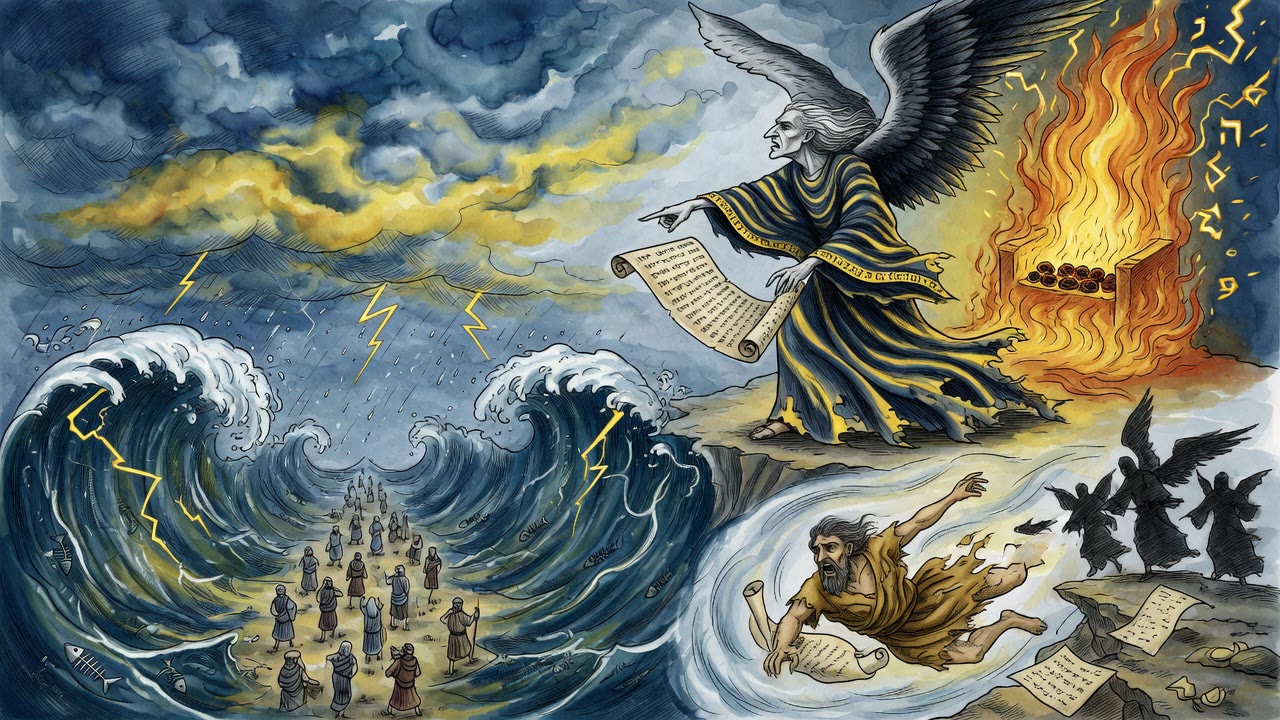
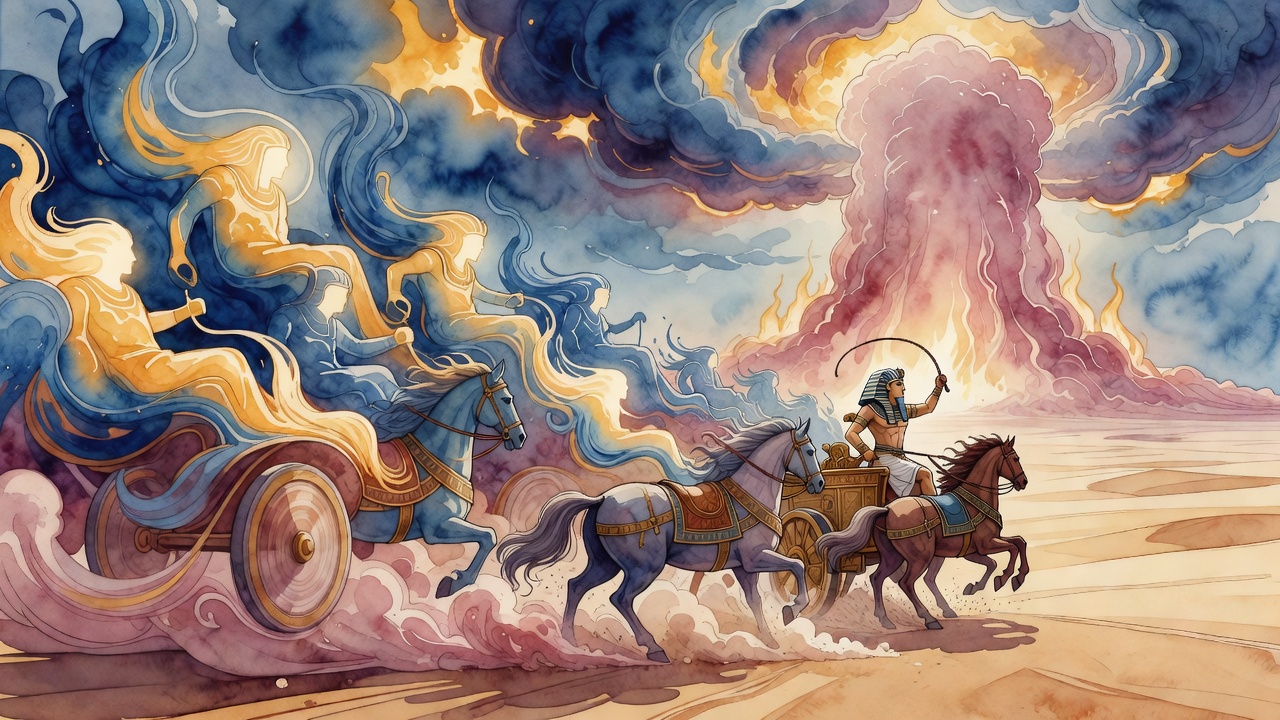
The traditions preserved in the Legends of the Jews, Rabbi Louis Ginzberg's early twentieth-century synthesis of midrashic literature from ancient and medieval sources, show Samael operating at other critical moments in Israelite history. At the moment the Israelites stood trapped between Pharaoh's army and the sea, Samael appeared in the heavenly court to argue that Israel should not be saved. They had been idolaters in Egypt, he argued. They were no better than their pursuers. The decree of mercy had no basis in their merit.
He was right about the facts. He was wrong about the determining factor. The sea split anyway. But the tradition records his argument because it is honest about what was at stake: Israel's survival at the sea was not a matter of earned merit. It was a matter of divine choice to extend mercy despite the absence of a strong merit case. Samael's role is precisely to make that case as difficult as possible. He is the voice that forces mercy to justify itself against the full weight of the record.
When Moses Died and Samael Lost Courage
The Legends of the Jews preserves the account of Samael coming for Moses's soul at the moment of death on Mount Nebo. Moses was nearing the end of his life, the decree had been issued, and God sent Samael to receive his soul. Samael arrived, and then something happened that the tradition finds worth recording: he lost his courage.
Moses, even dying, even at the moment when the decree was final and nothing more could be argued, was not a figure that Samael could approach without difficulty. The light on Moses's face, the proximity of the divine that had accreted over forty years of service, made Samael hesitate. He came for the soul of the man who had spent his life standing between Israel and the judgment that Samael represented. Eventually God withdrew Moses's soul directly, without using Samael as the instrument. Even at the end, even in the final submission to the decree, Moses was not fully at Samael's mercy.
The Shekhinah That Descended Into the Destruction
When the Temple burned, the Shekhinah, the divine feminine presence that had dwelt in the Temple's innermost chamber, did not ascend to safety. She descended into the destruction. The tradition of the Shekhinah accompanying Israel into exile, which the Talmud records explicitly in Megillah 29a, begins at the moment of the Temple's fall. The divine presence that had made its home in the earthly structure went with the structure's inhabitants into their displacement.
Samael's gladness over the destruction is, in this light, not only a celebration of Israel's punishment. It is a celebration of the Shekhinah's displacement, the moment when the divine presence was driven from its earthly home and the connection between heaven and earth was most severely damaged. What Samael cannot celebrate, what the Tikkunei Zohar insists on, is the permanence of that damage. The Shekhinah's (the Divine Presence) exile is real. Its duration is not infinite.
← All myths