Samael Sent Six Hundred Chariots to Lead Egypt Against Israel
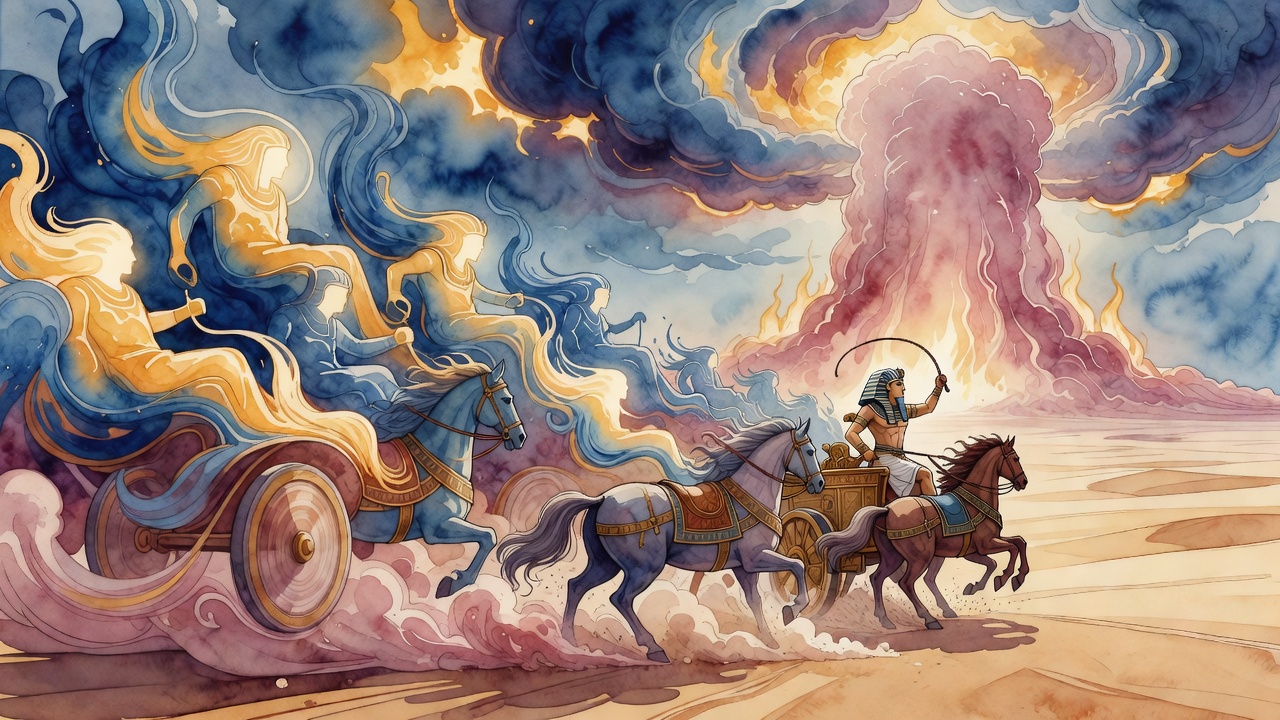
Pharaoh drove his own chariot toward Israel. Samael had already added six hundred supernatural chariots to lead the Egyptian vanguard.
Table of Contents
 Click for full size
Pharaoh Hitches His Own Chariot
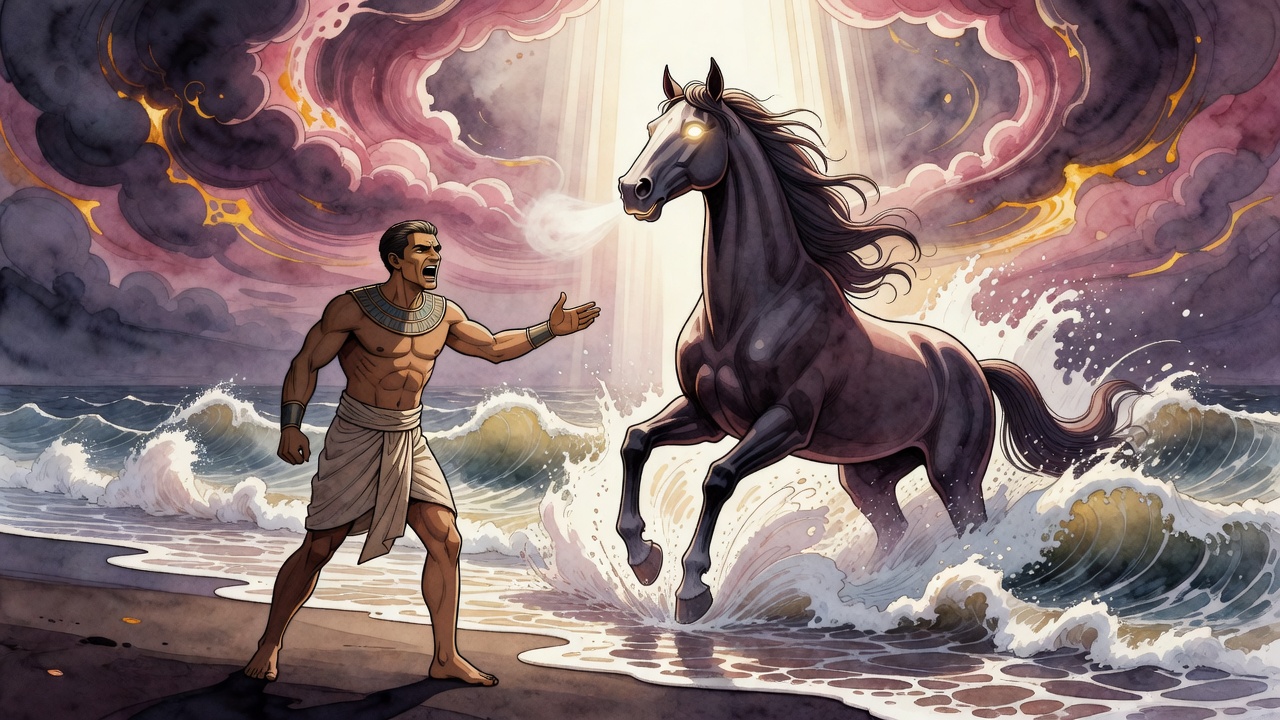
He did not send a general. Pharaoh hitched his own chariot himself, in a fury that had moved past tactics into something more personal. Four hundred years. Four hundred years the Israelites had been his property, had built his cities and fattened his storehouses and made Egypt what it was, and then the plagues had come and broken everything he had built on that labor, and now they were walking out. Walking out in broad daylight, with Egyptian gold on their necks and Egyptian silver in their arms, with the smell of death still on every Egyptian house where a firstborn had stopped breathing.
He was not going to delegate the retrieval.
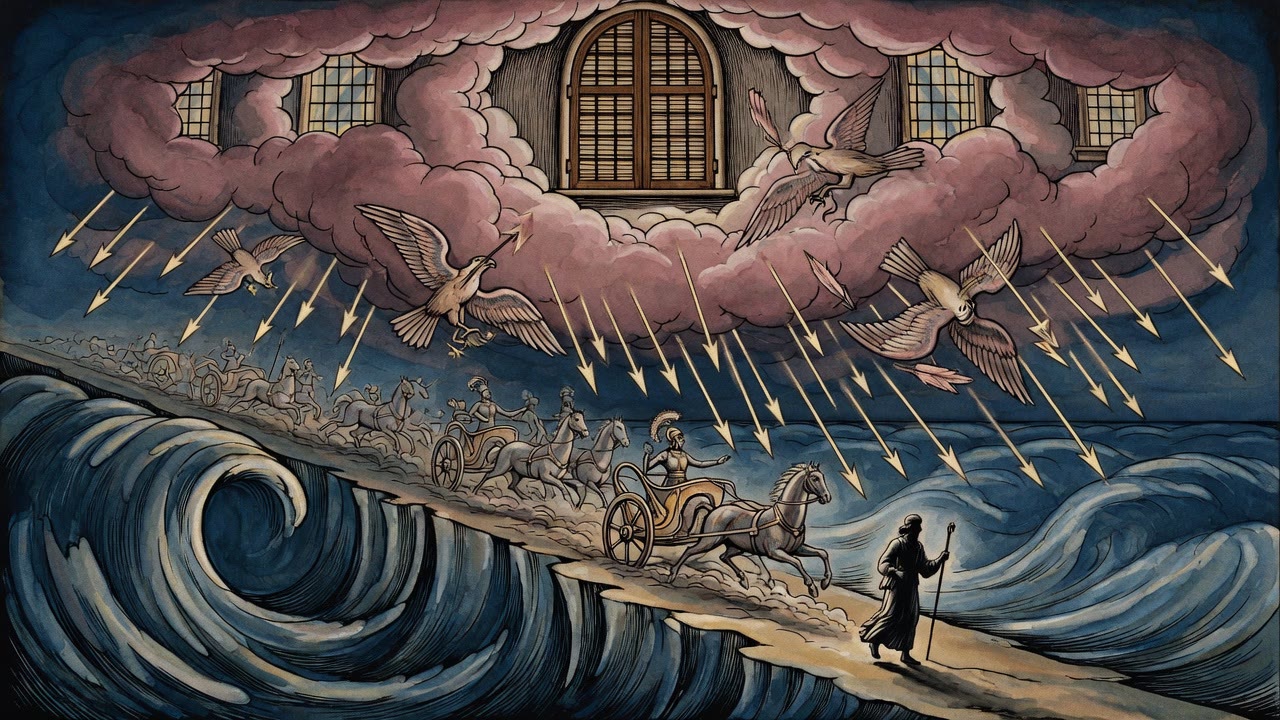
He drove his chariot to the front of the column himself, and the army assembled behind him, and the count of what assembled was staggering: the Israelites were outnumbered three hundred to one. Pharaoh packed three drivers into each chariot instead of the standard two, maximizing every advantage he could calculate. The Egyptian cavalry covered in a single day the distance Israel had traveled in three. The dust cloud rising behind them would have been visible long before the hoofbeats became audible.
Six Hundred Chariots From a Different Source
But the vanguard of the Egyptian pursuit was not entirely Egyptian. The tradition preserved in Midrash Rabbah records that Samael, the prosecuting angel, contributed six hundred supernatural chariots to Pharaoh's force. They ran ahead of the Egyptian military units, ahead even of Pharaoh's own chariot, forming the leading edge of the assault. They were not manned by soldiers. They were driven by forces that belonged to neither Egypt nor Israel but to the cosmic prosecution that had been arguing against Israel since the debates in heaven began.
The number was not arbitrary. Six hundred against the six hundred thousand Israelites who had come out of Egypt: one supernatural chariot for every thousand Israelites, a ratio of opposition shaped to match the number of those who had been released. The tradition reads the precision as deliberate. Samael was not improvising. He was making an argument at the Red Sea, the same argument the prosecuting angels had been making since Israel stood at the edge of the water and the sea refused to split.
Samael at the Sea
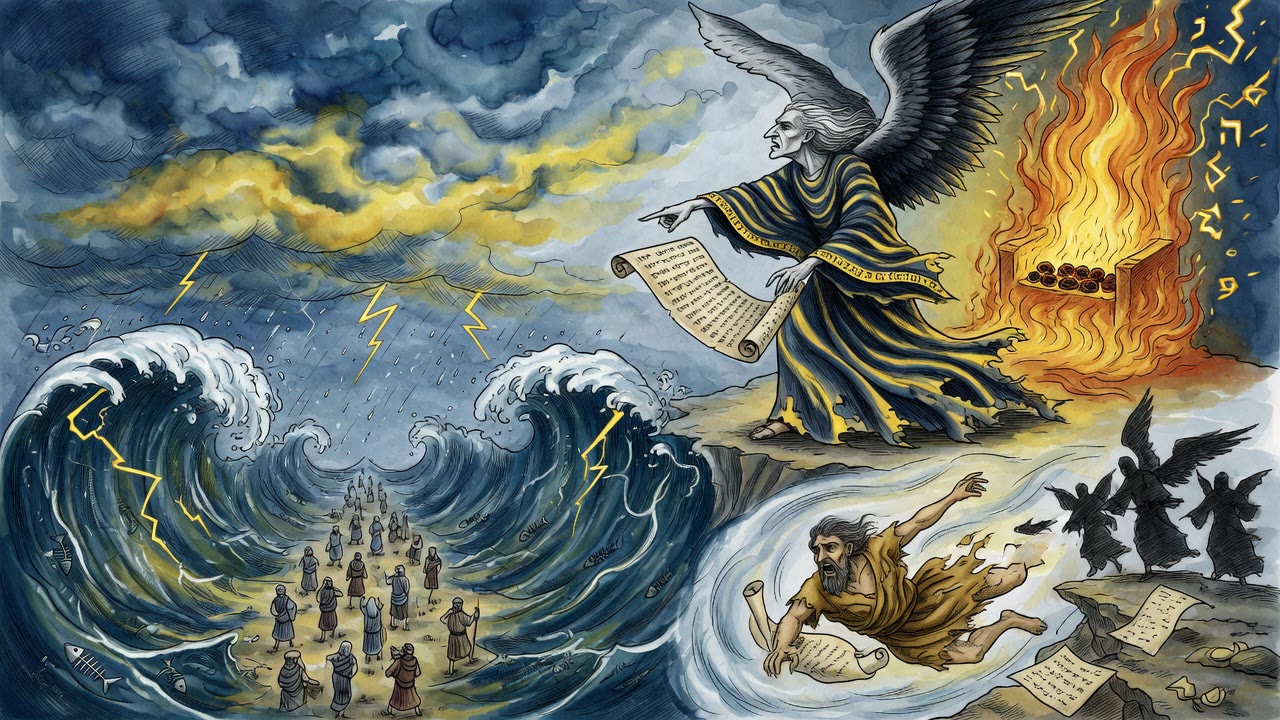
The prosecuting angel's argument at the Red Sea runs through several layers of the tradition. He stood before God and pointed at Israel and pointed at Egypt and said: these people worshipped idols and those people worshipped idols. What distinguishes them? On what basis do You drown one nation and deliver the other? The six hundred chariots were not only military force. They were legal argument in material form: the armed case for why Israel deserved to be swallowed by the sea alongside the Egyptians who had enslaved them.
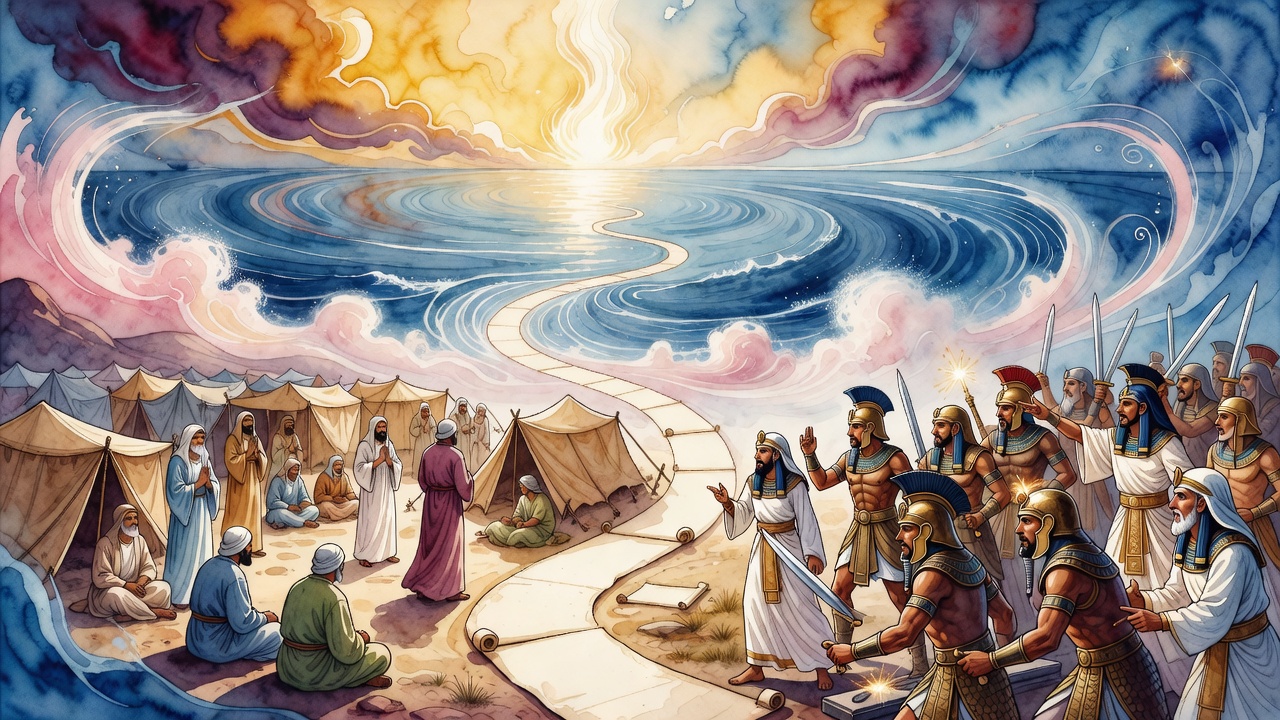
God's answer came through the water. The sea split. The Israelites walked through on dry ground. The Egyptian army and the six hundred supernatural chariots followed, and the sea came back.
What the Sea Swallowed
The tradition tracks the Egyptian losses carefully. The account in Ginzberg's synthesis describes bodies washing up on the shore within sight of Israel. Some accounts identify specific Egyptian commanders among the drowned, matching named individuals to named plagues and named punishments. The precision was intentional: every Egyptian who died in the sea died for a specific account, matched exactly to what that Egyptian had done or ordered or permitted during the years of slavery.
Samael's six hundred chariots went into the sea with the rest of them. The prosecuting angel who had lent his forces to the pursuit lost them in the same water that swallowed Pharaoh's cavalry. The legal argument he had assembled at the sea's edge, the armored case for Israel's destruction, was answered by the sea closing over every soldier who had ridden in response to it.
← All myths