39 myths · Page 1 of 2
Each story names the sources it was written from.
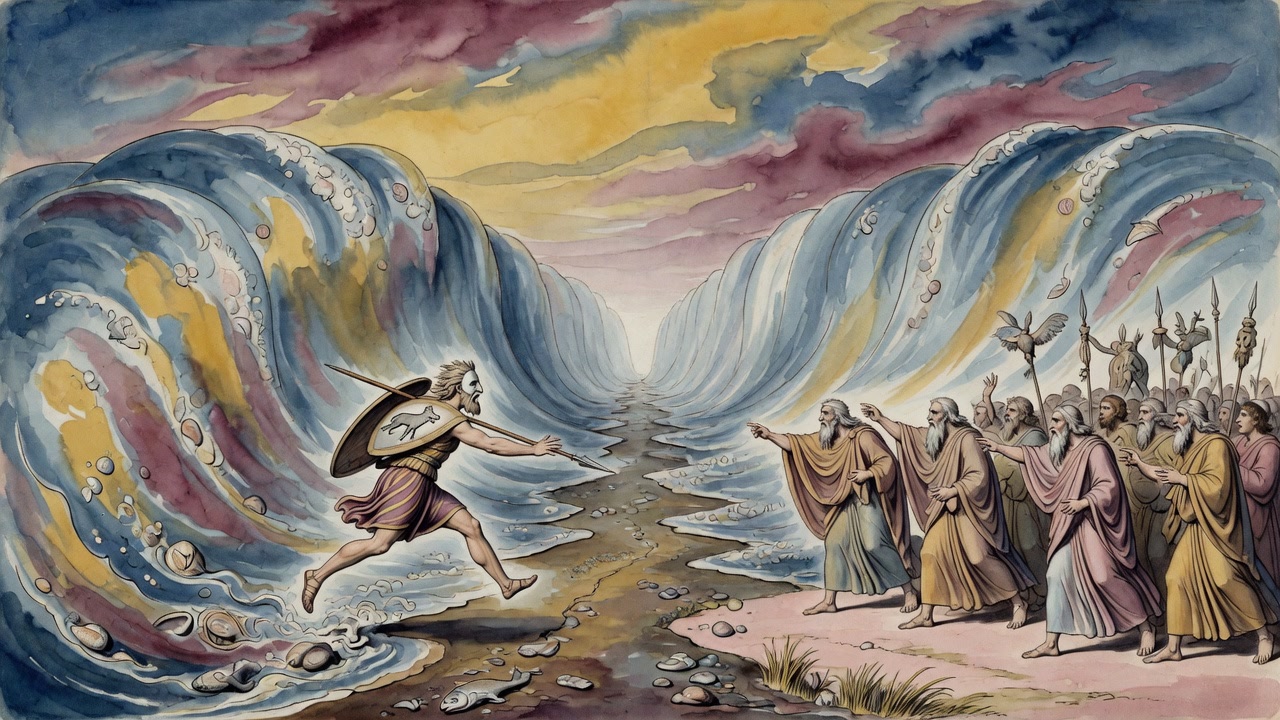
The tribes argued at the water's edge over who would lead Israel into the divided sea. Benjamin acted while they were still talking. Judah threw stones.
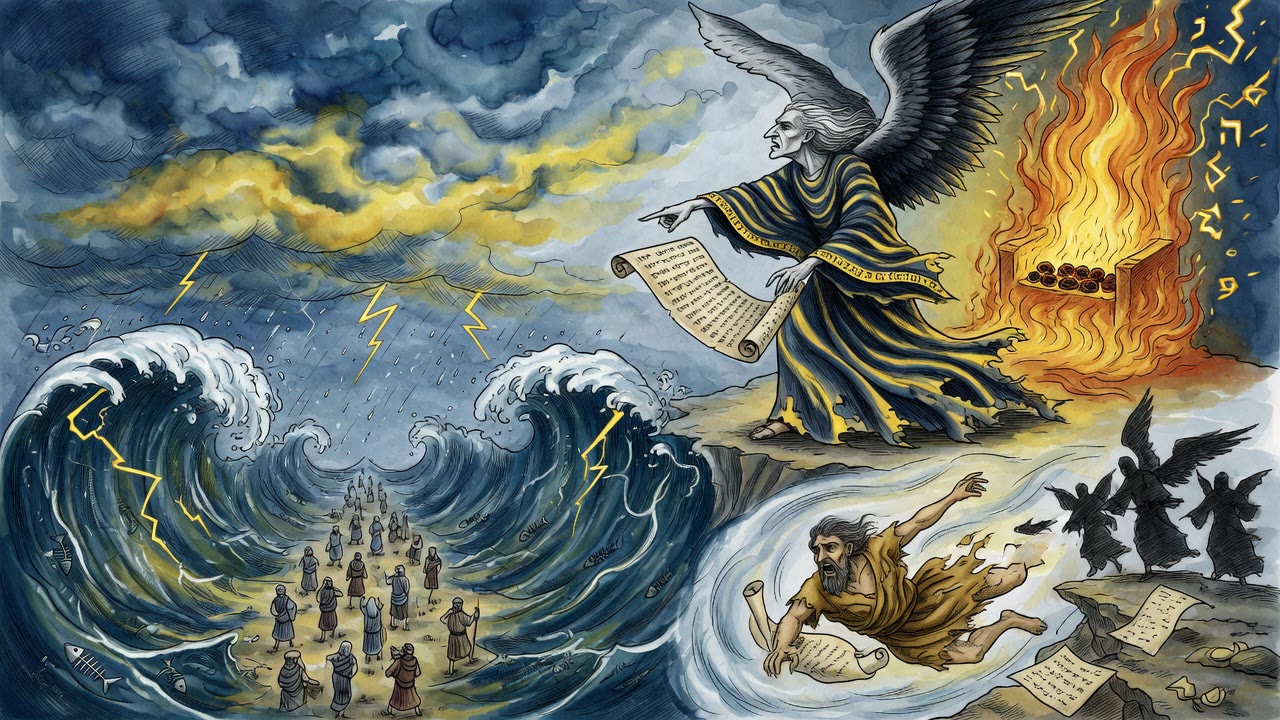
Chariots shook the reeds. In heaven Samael opened a true ledger against Israel. God did not argue. He threw the accuser a ram named Job.
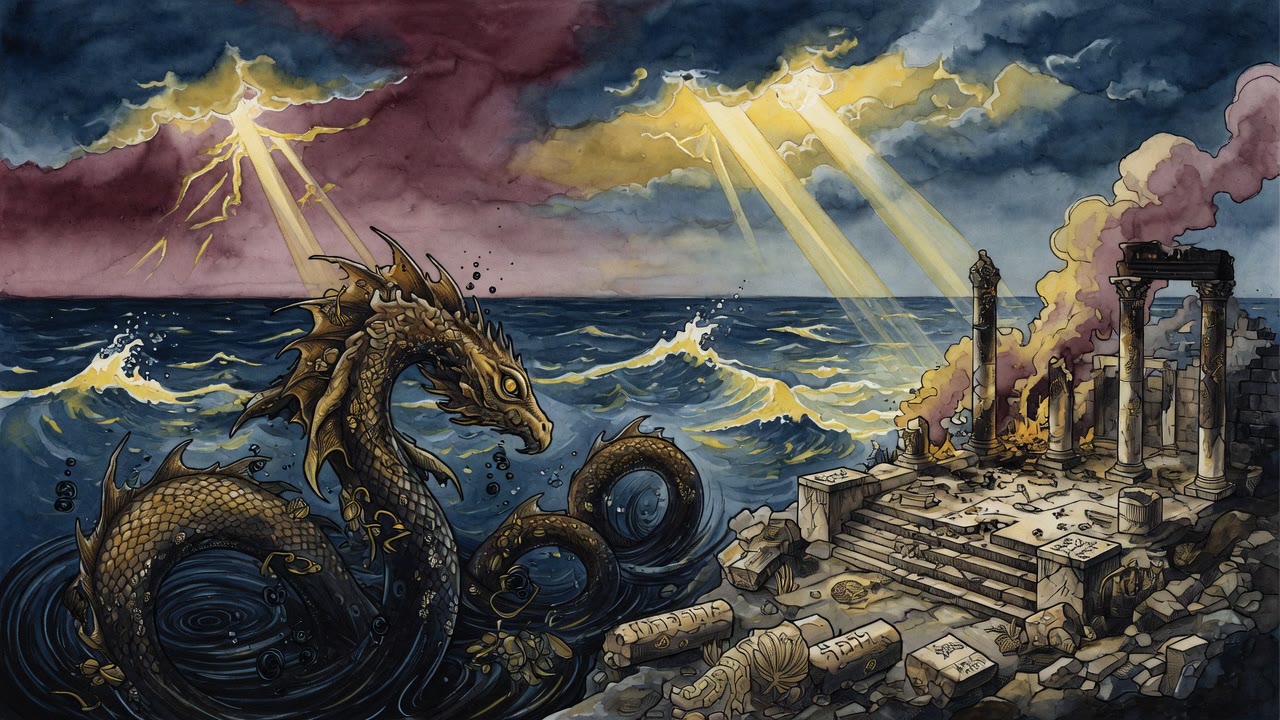
The sages gave God a daily schedule, but after the Temple burned, the last hours no longer belonged to play with Leviathan.
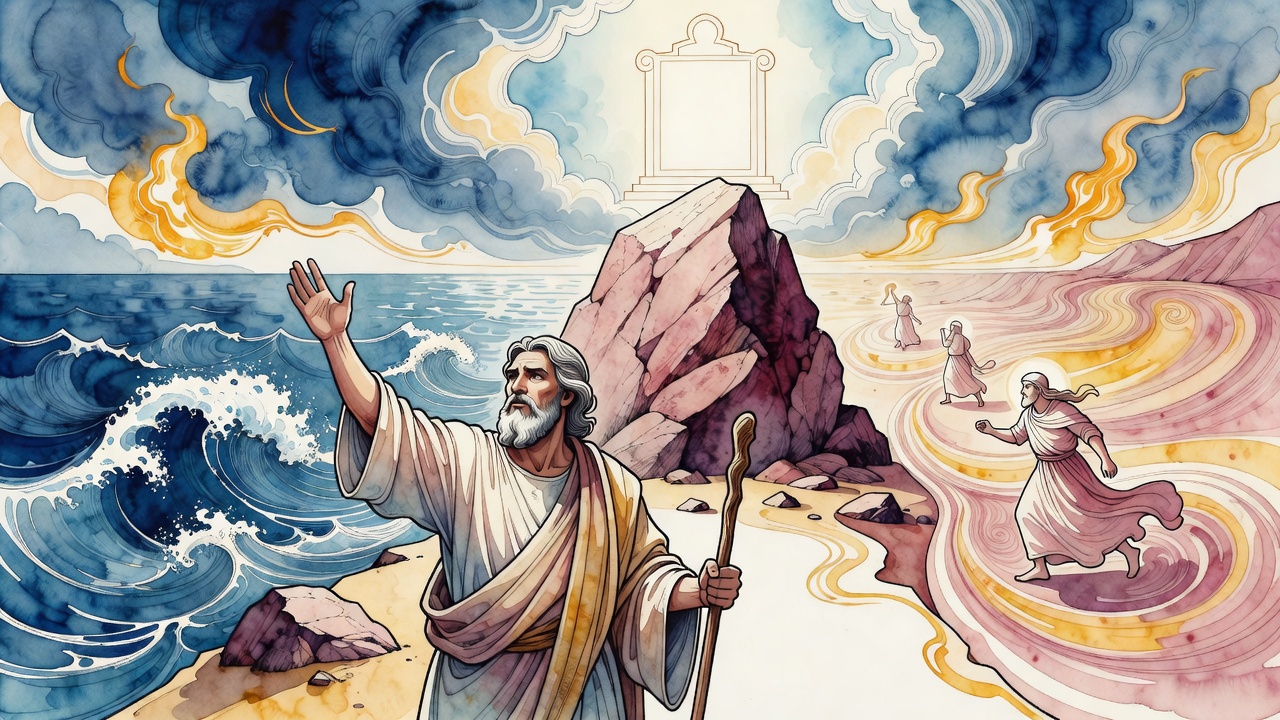
Egypt drowned Hebrew boys because God had sworn never to flood the world again. They thought the oath protected them. The same water came back over them.
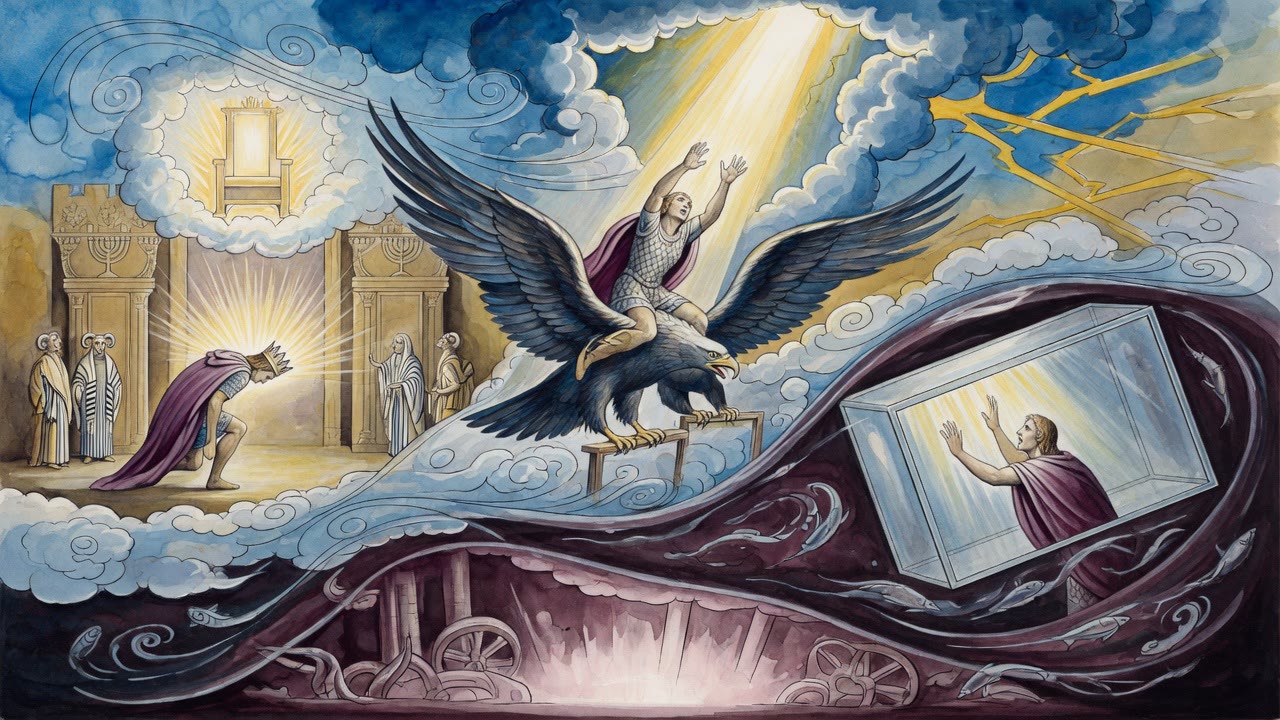
Jaddua would not break his oath to Darius. Alexander marched up from Gaza to punish him. He bowed to the Name cut in gold on the priest's mitre.
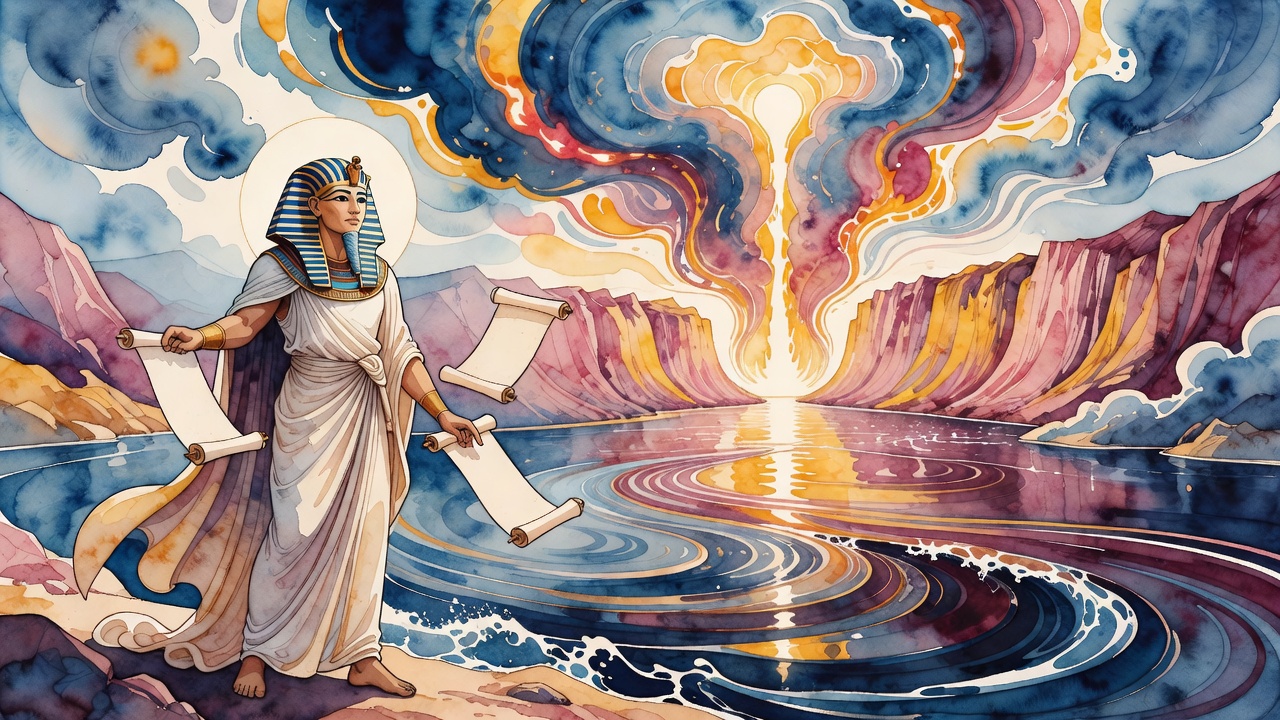
Pharaoh would not use the sword. God had already claimed that weapon. He sent the Hebrew boys into the Nile, sure the oath after Noah would keep heaven quiet.
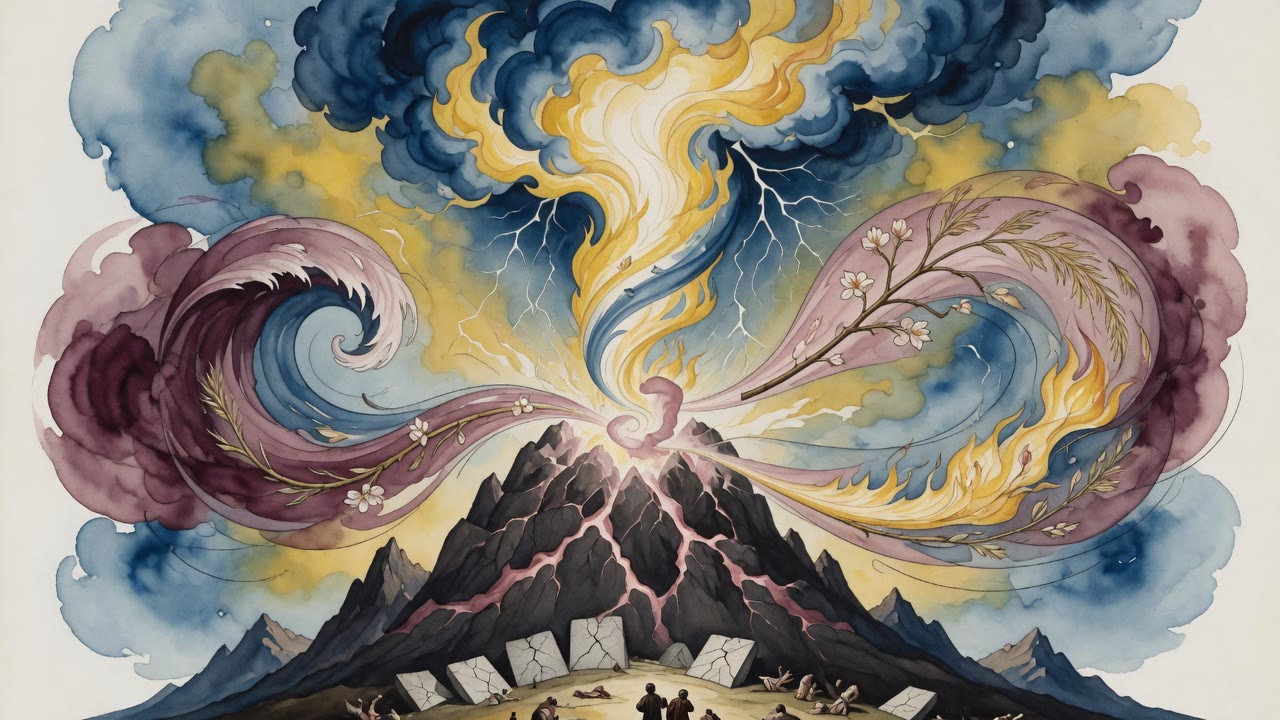
When the angels rose to sing as the Egyptians drowned, God stopped them with a sentence that cut through triumph and made mercy part of the judgment.
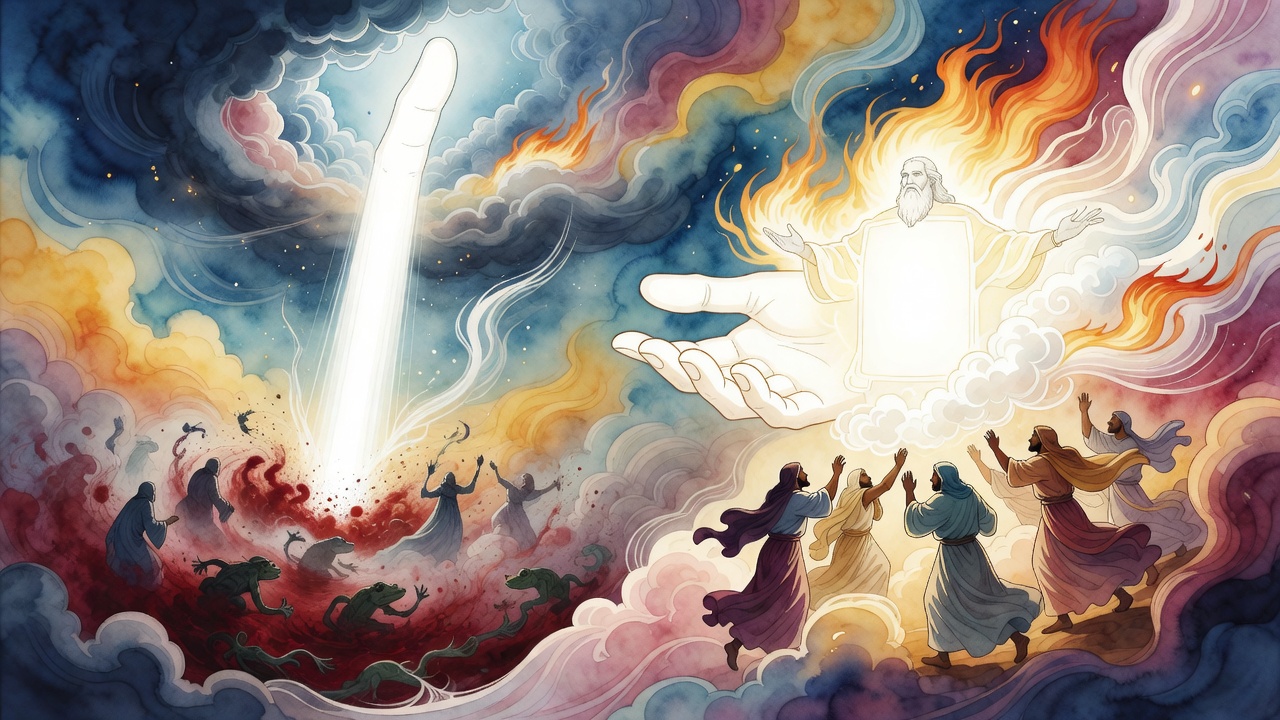
Egypt's sorcerers could copy blood and frogs but failed at lice. From that single admitted finger the rabbis traced the whole open hand of Israel's rescue.
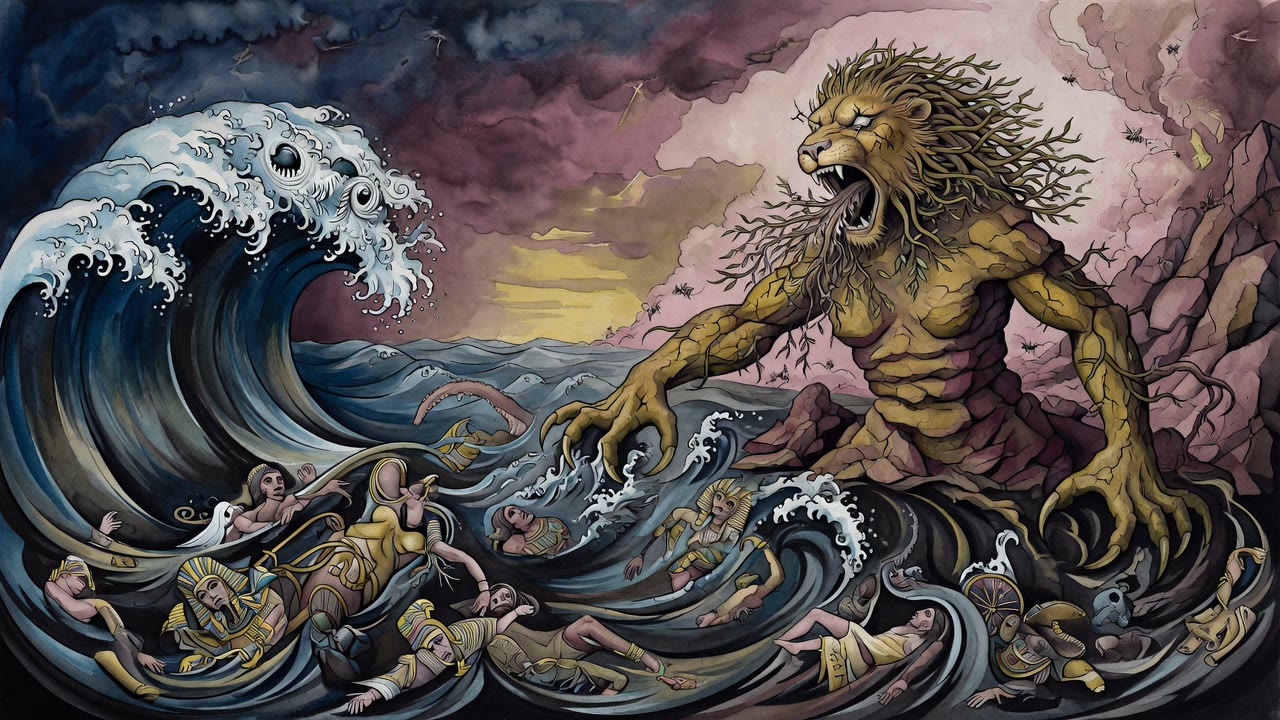
God orders Rahab to swallow the waters of creation. He refuses and is slain, and then the sea and the earth quarrel over who must take the dead.
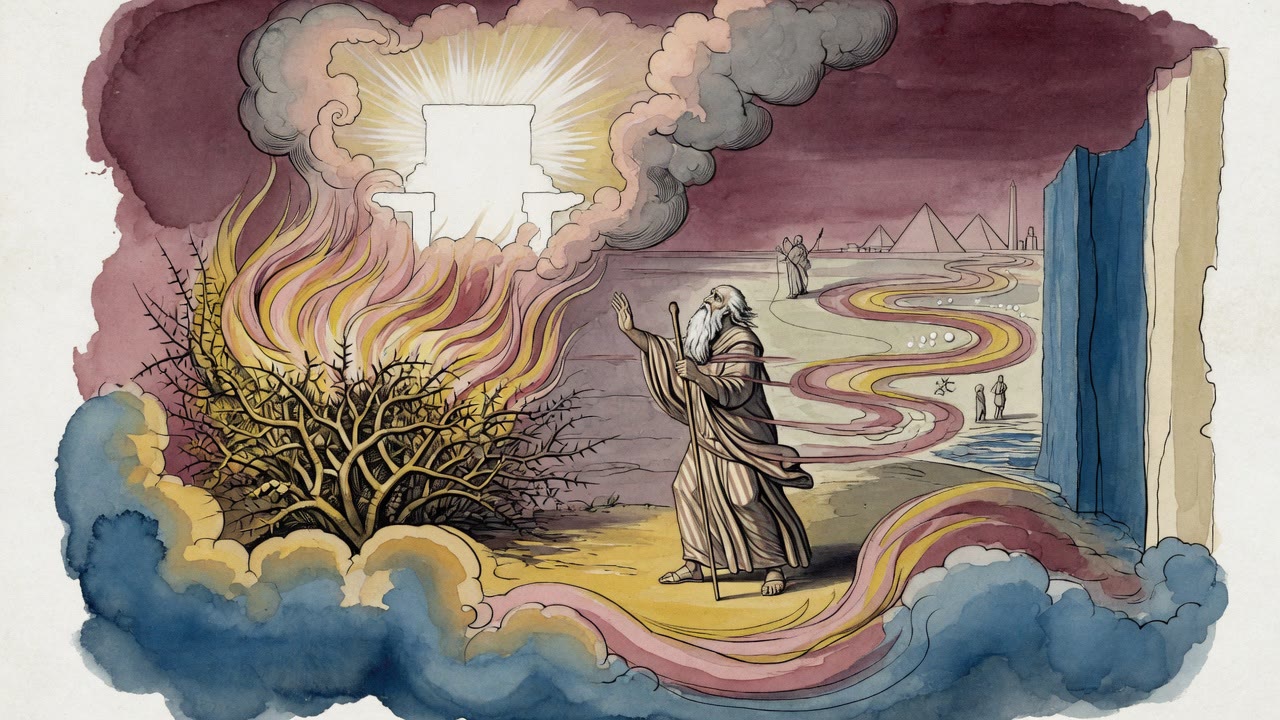
At the bush Moses asked God to send someone else. God sent him anyway, and eighty-year-old Moses walked Egypt into plagues and a split sea.
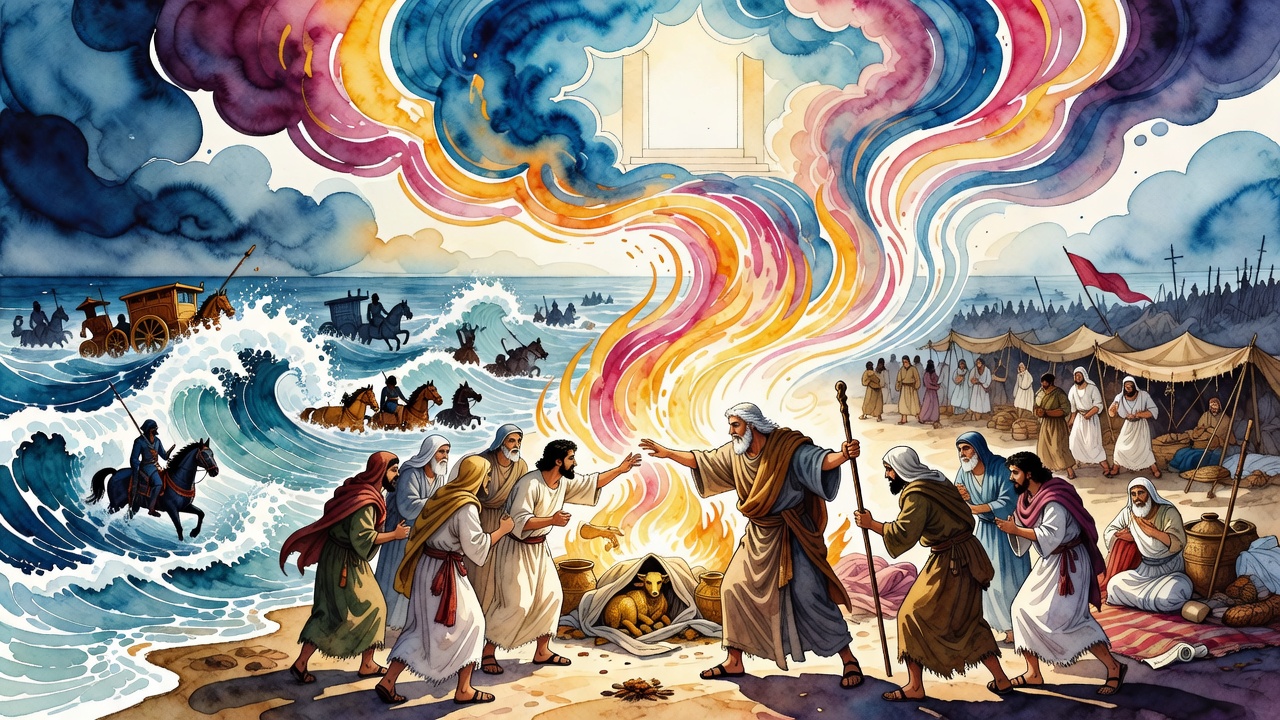
Egyptian corpses rocked in the surf. Then the camp listed five gifts and asked Moses for the road back to the bricks they knew.
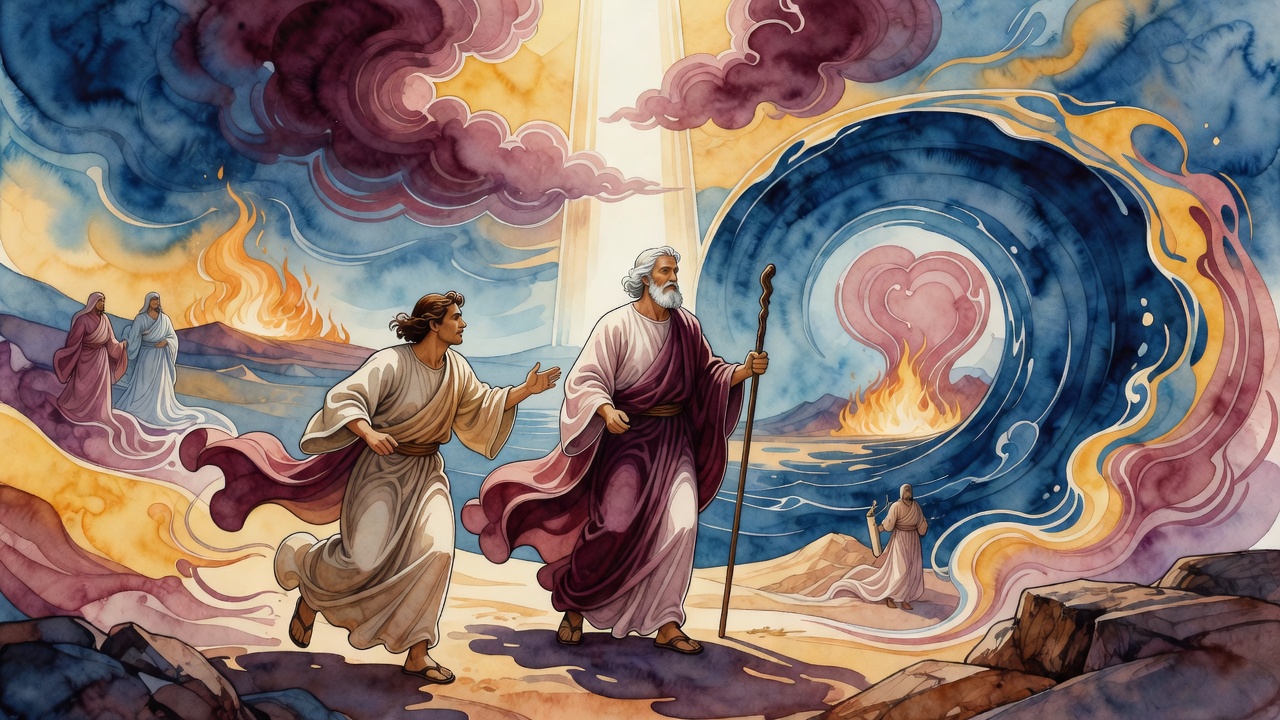
Moses tried to hand the mission back. Aaron had prophesied in Egypt for eighty years, and Moses feared taking his brother's place.
The darkness over Egypt was not total. It let them watch. All night they saw Israel eating in a light they could not walk into.
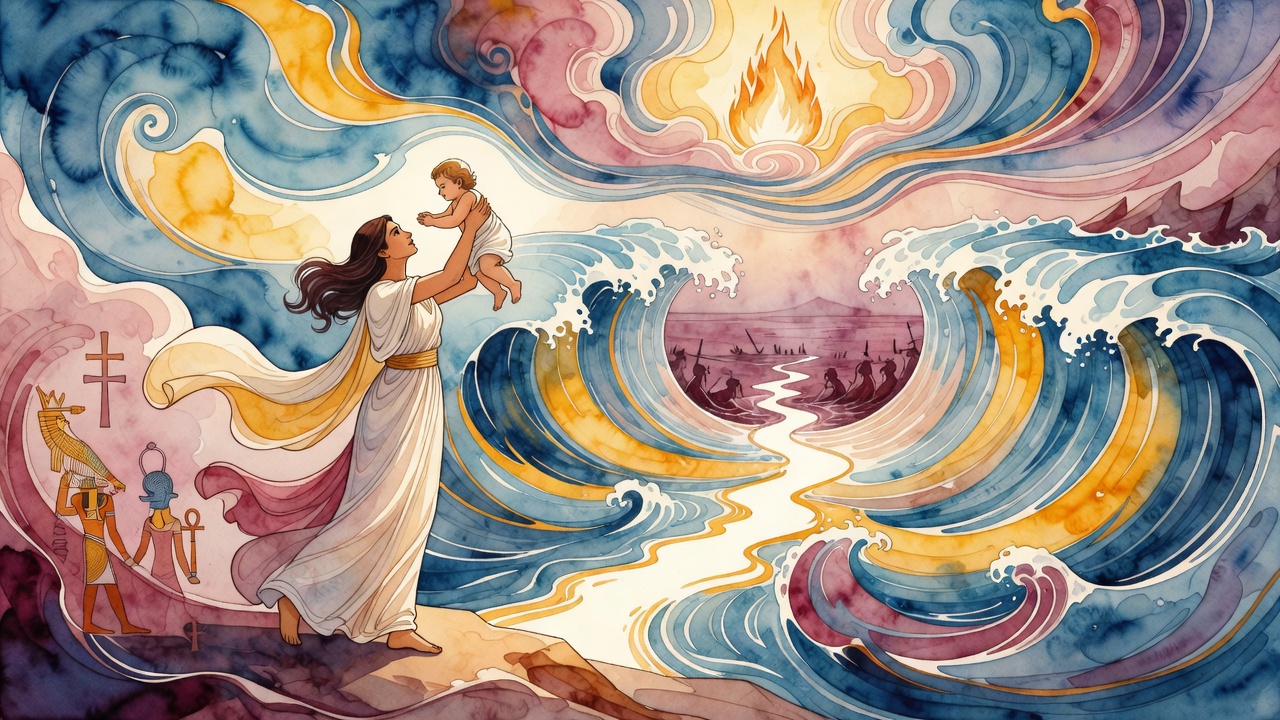
Pharaoh's daughter went down to the Nile to wash off her father's idolatry. Her maidens told her the decree still stood. Gabriel struck them down on the bank.
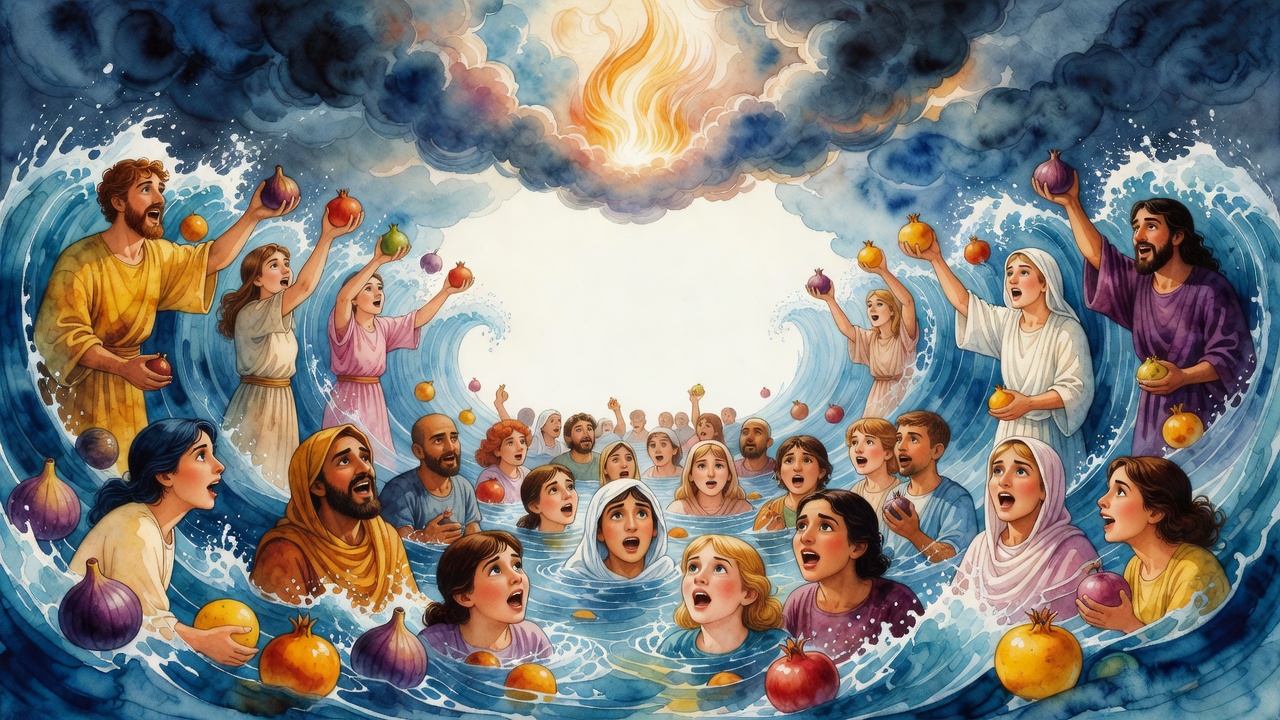
God detours Israel from the Philistine road. At the sea they enter to their noses, pluck fruit from water walls, and sing as dark yet comely.
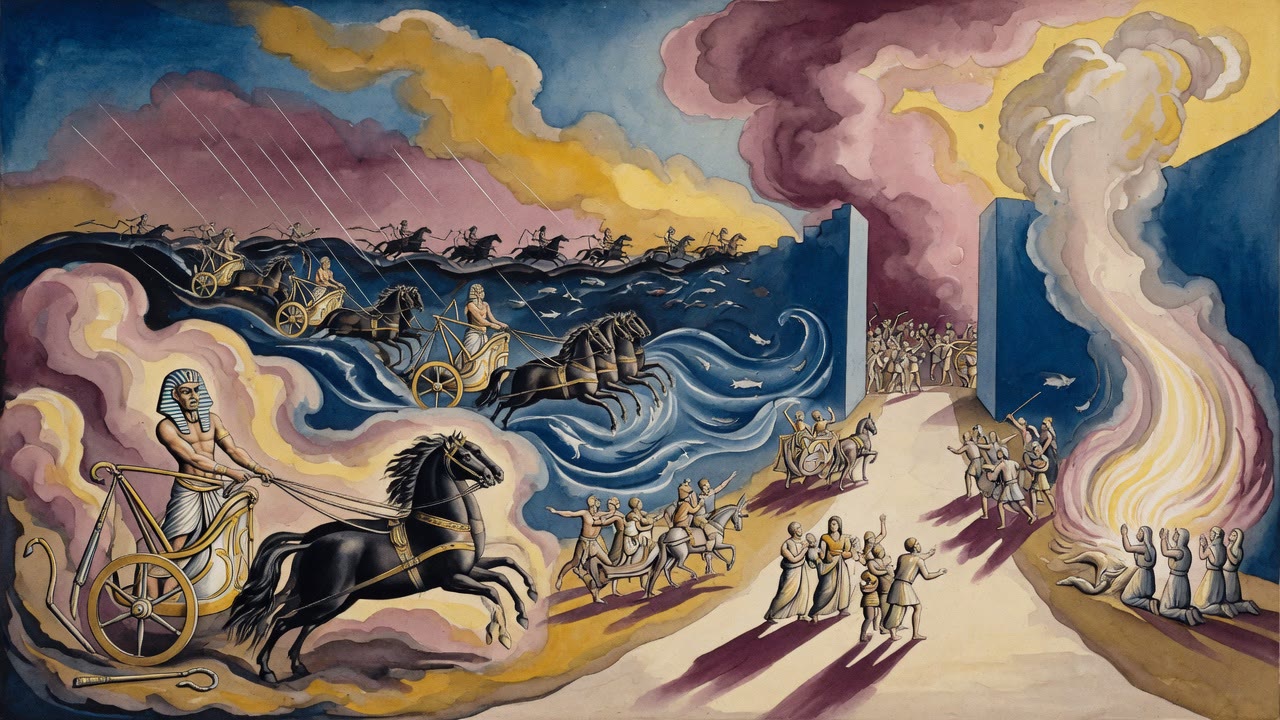
At the sea, fire burns chariot wheels while heavy labor returns on Egypt; clouds of glory still shelter the people who walk free.
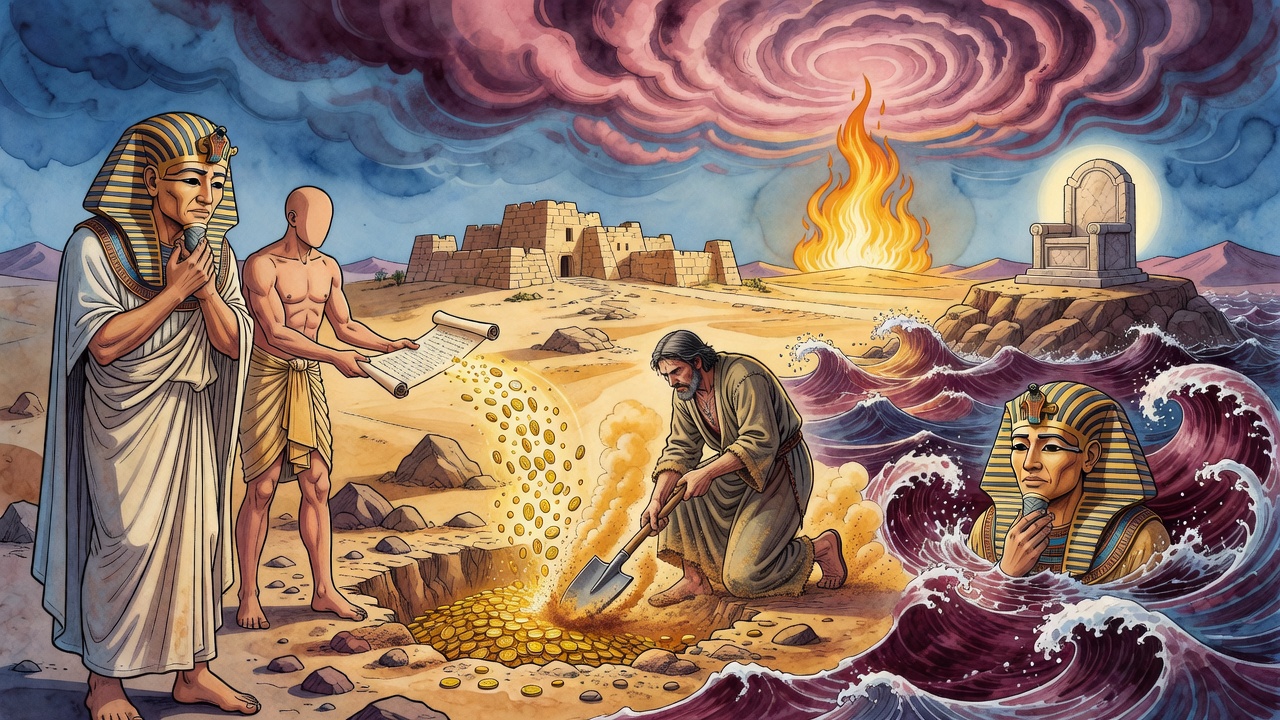
He sold a country-seat he had never walked. The buyer dug and pulled gold and pearls from the dirt. On the shore Egypt began to choke.
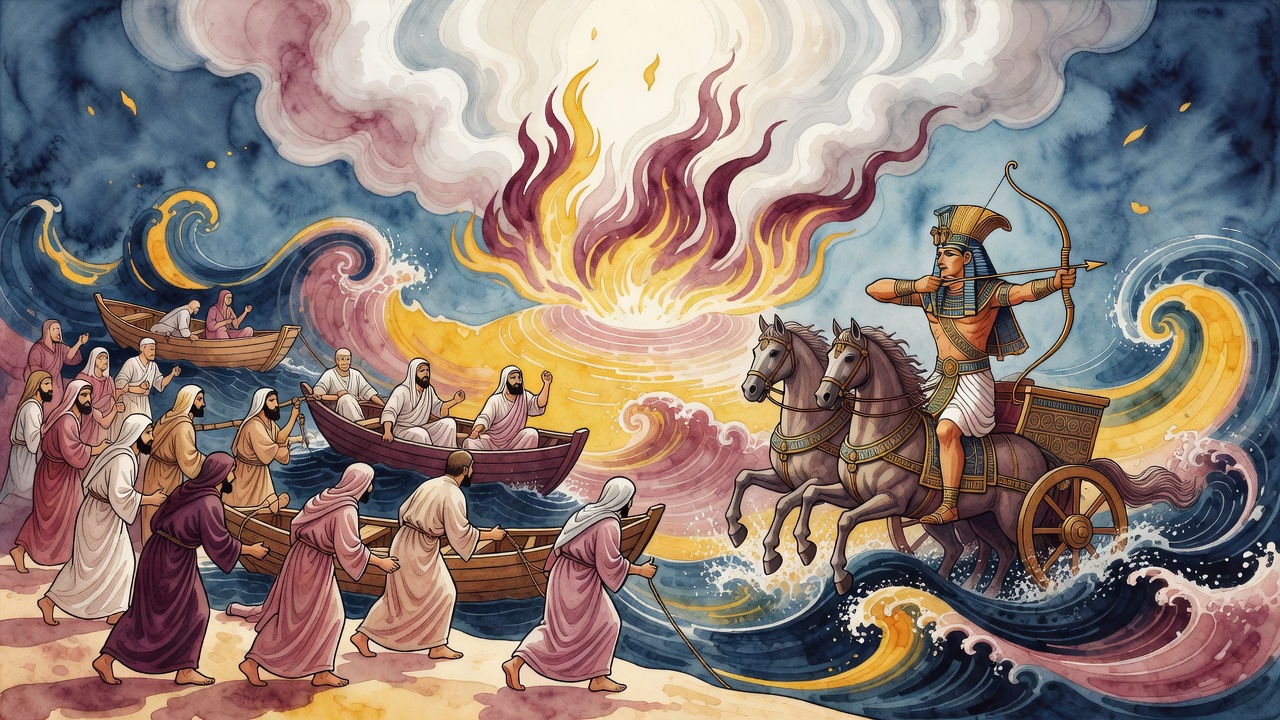
Israel took three days to reach the shore. Pharaoh burned that same road into one day of rage. At the sea the water was already waiting.
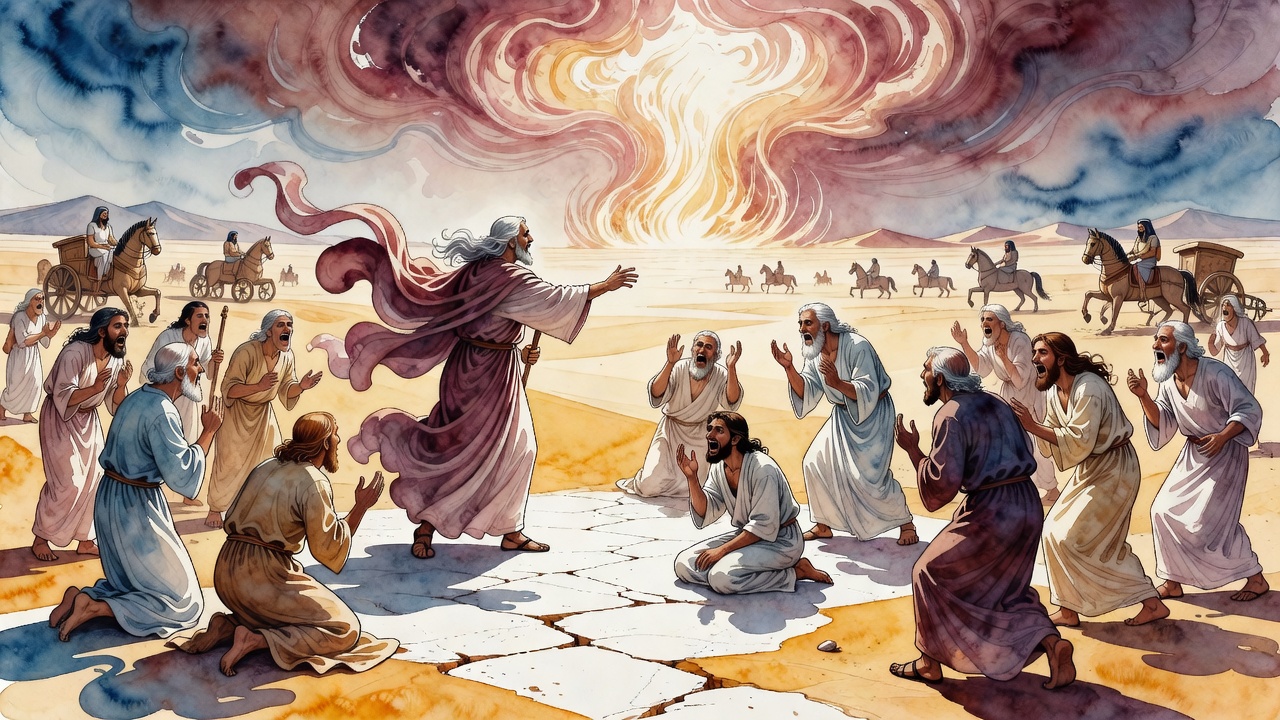
Chariots at their backs, the people turn on Moses. Death in the open desert, they cry, is worse than bondage with a proper burial.
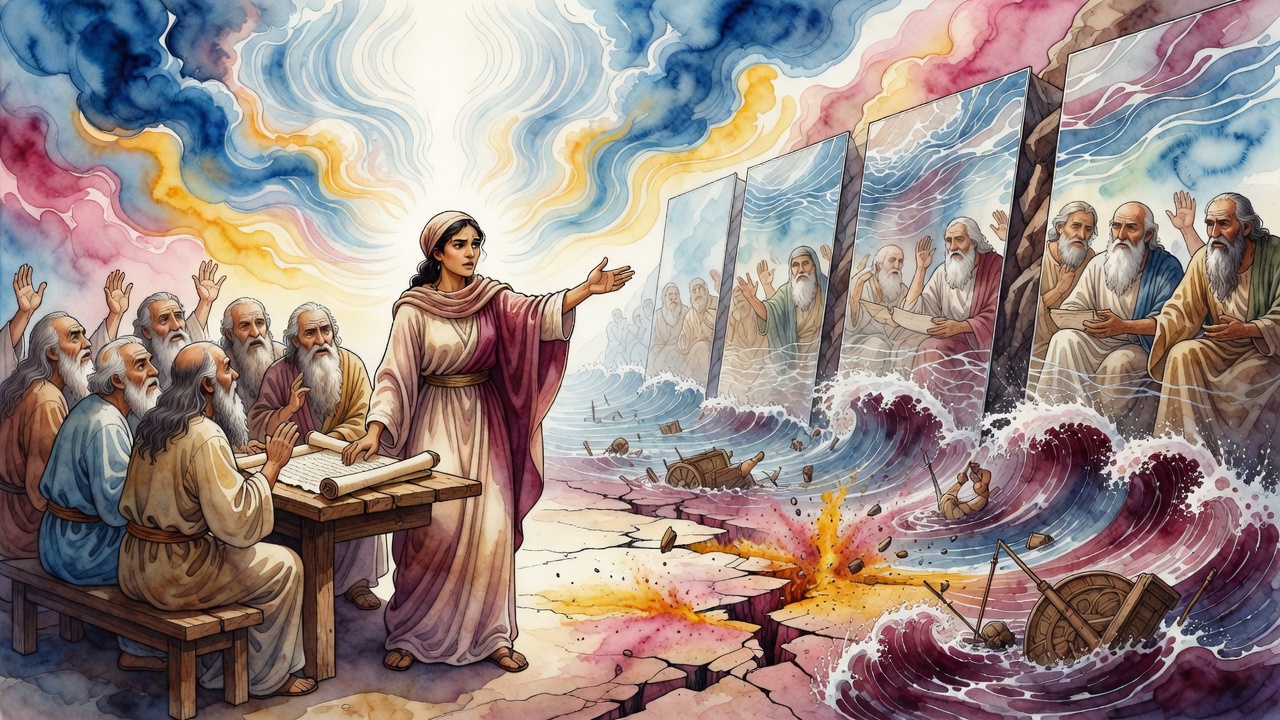
In the study hall Serah bat Asher corrects the sages. The sea walls were mirrors of all Israel. Earth and sea then fight over Egypts drowned host.
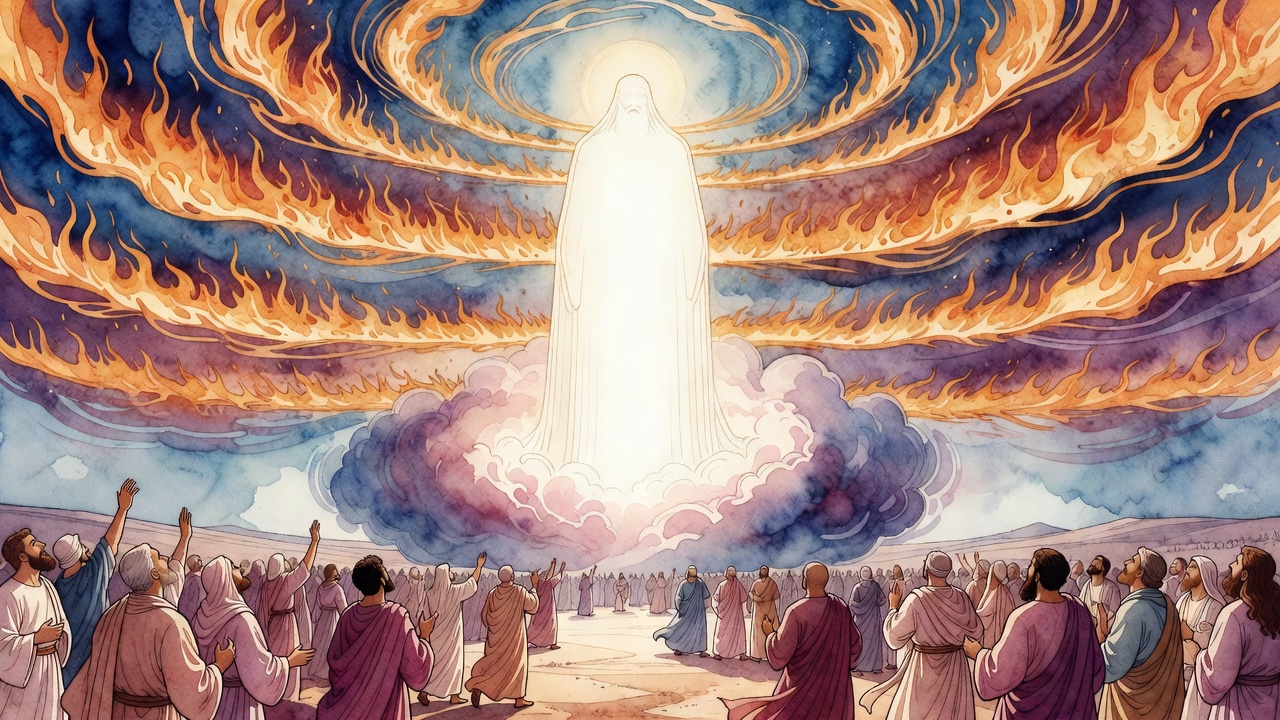
Moses sang of holy myriads and the camp looked up. Fire ranks without number filled the sky. None of them outshone the One who led them.
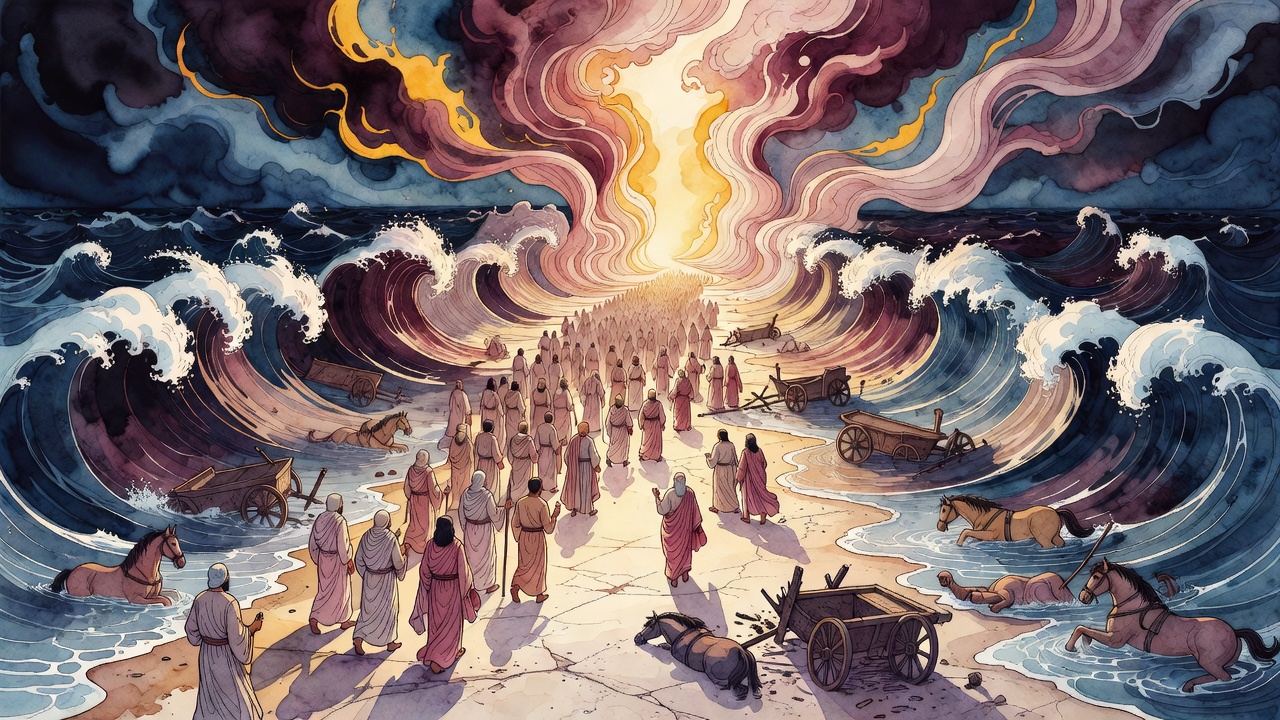
Moses told Pharaoh the last plague would make him shove Israel out. At midnight the king hunted the brothers through the dark himself.
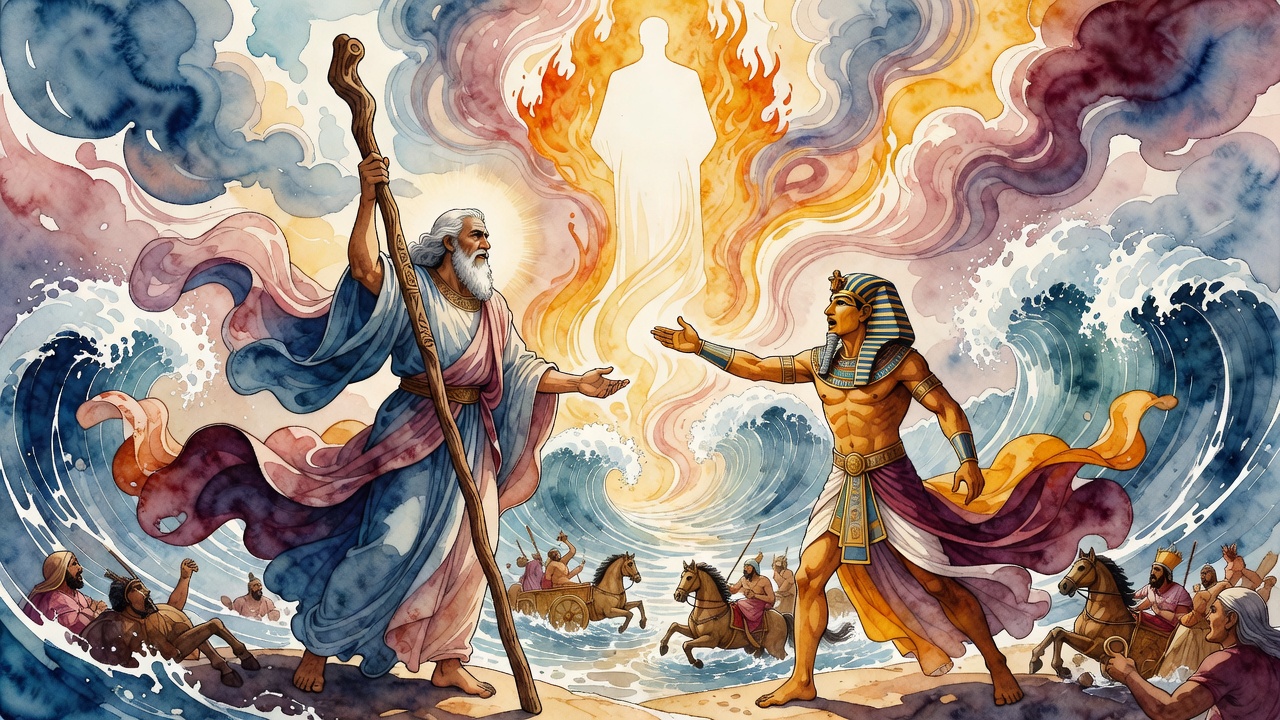
Sand in front. Chariots behind. They told Moses they had already chosen Egypt over a death in the open desert.
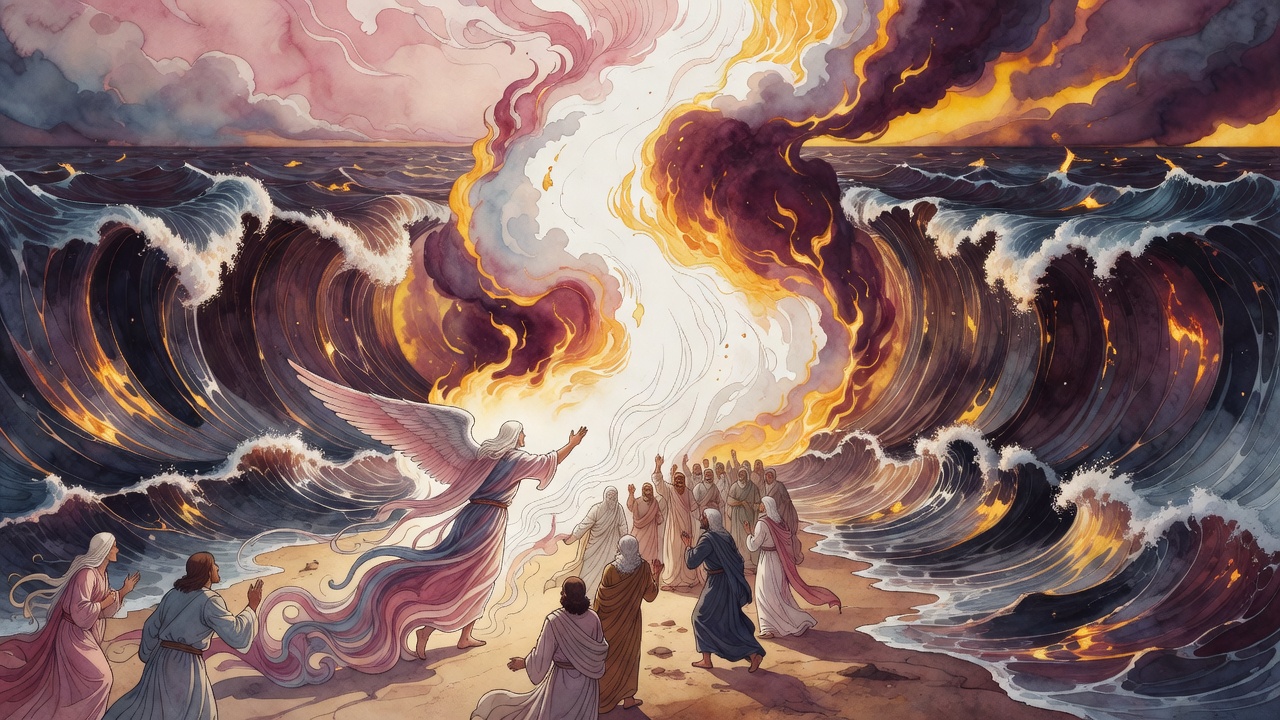
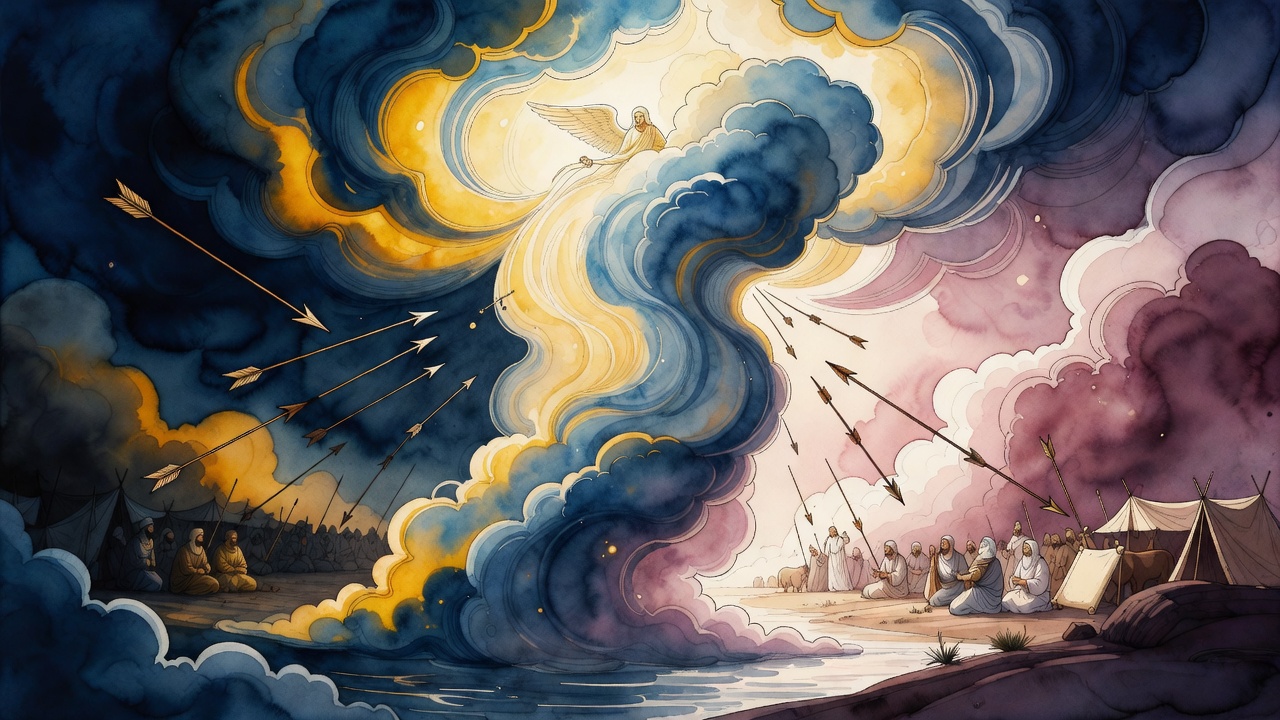
Darts hit a cloud and dropped into the sand. The Angel of the Lord had left the front of the camp and taken Israel's back.
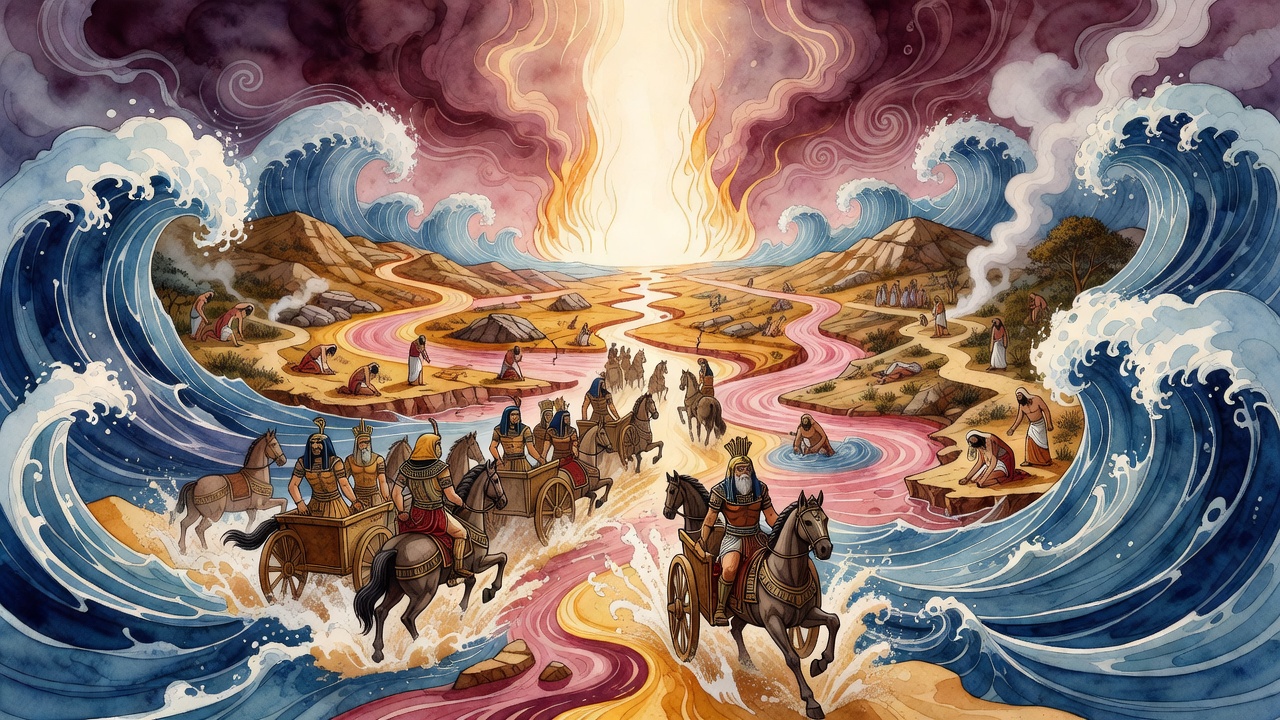
The drivers who once whipped Hebrew backs raced their horses down the dry seabed as if it were a road. Then the water came back and broke the chariots.
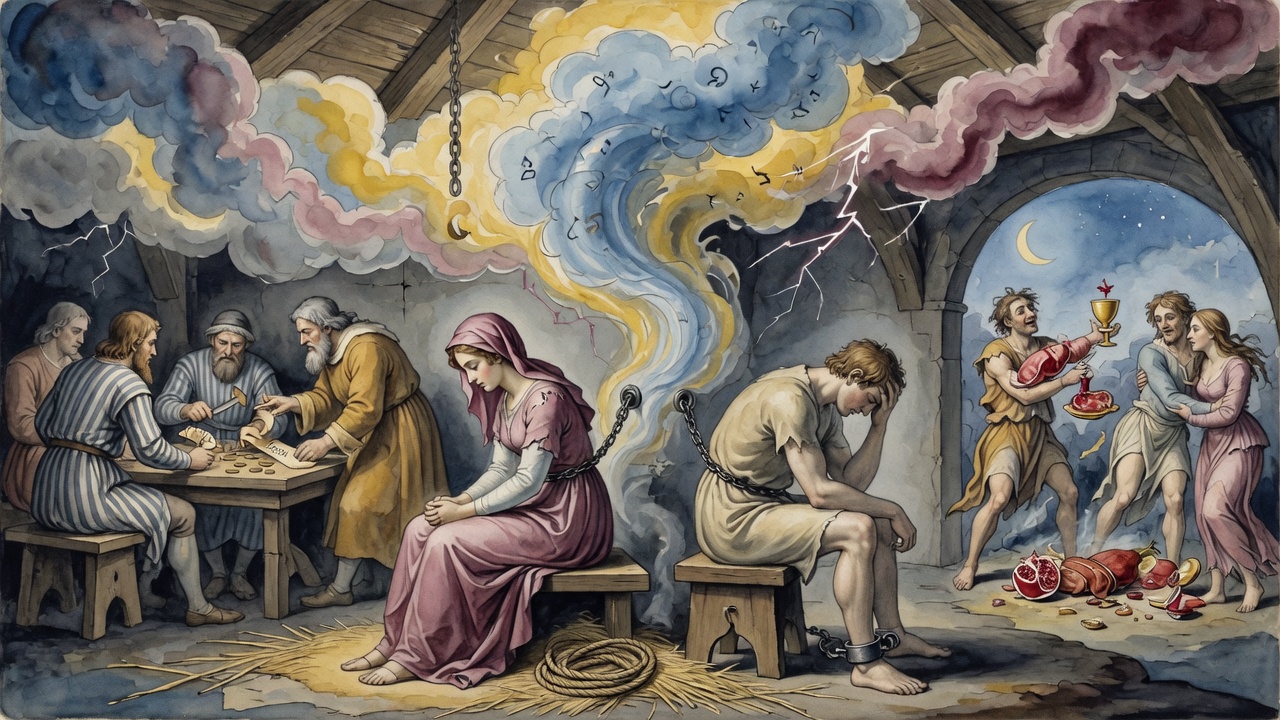
Two boys, tied to a Roman bed, hunted a verse for the rope on their wrists. One and a half columns. They had almost reached it.
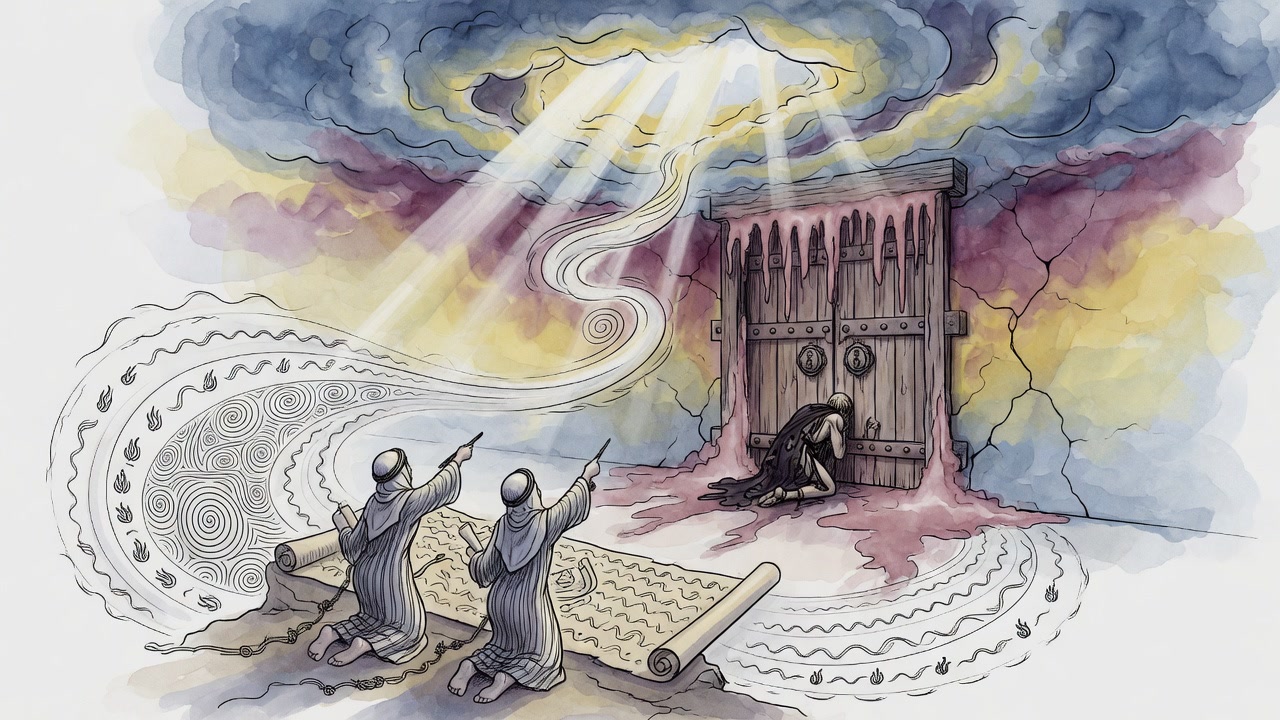
Storms tore the deck while rich men shook wooden gods. A poor boy went below, slept, then woke and called on the God who needs no carving.
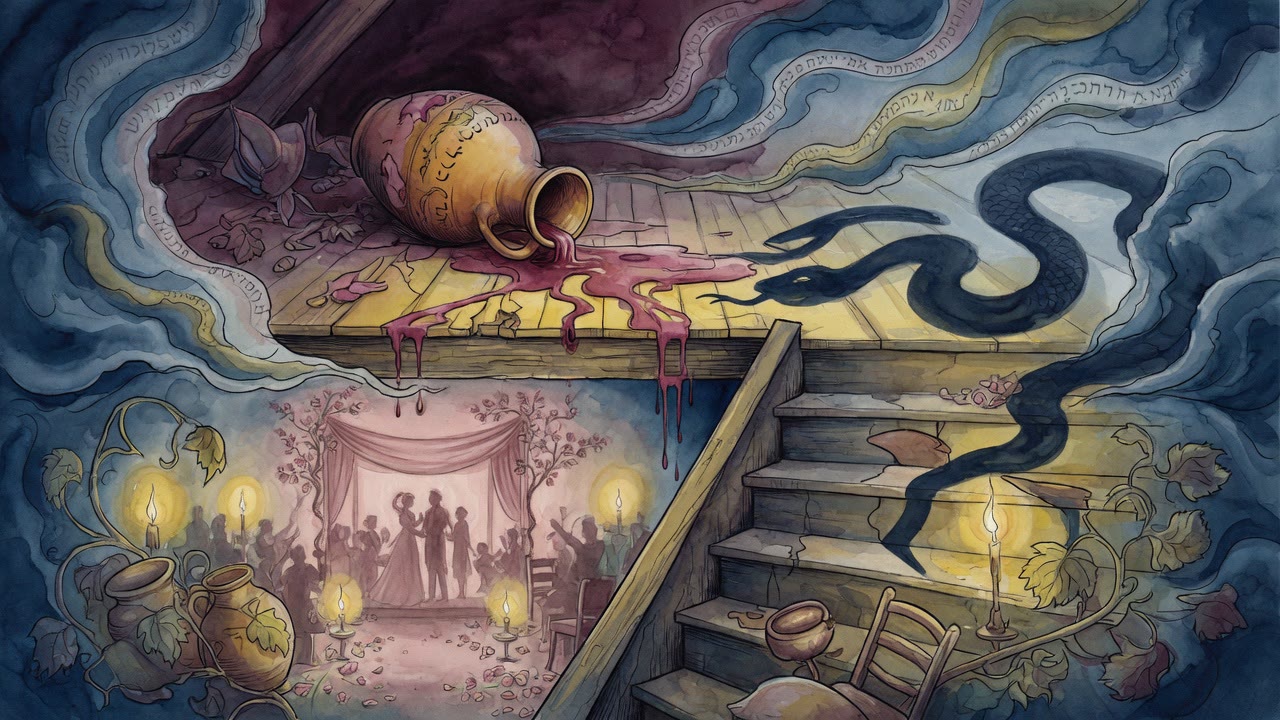
A town banned charity on pain of death. A pious man fed the sea, sank on Yom Kippur eve, and a great fish offered treasure or seventy languages.
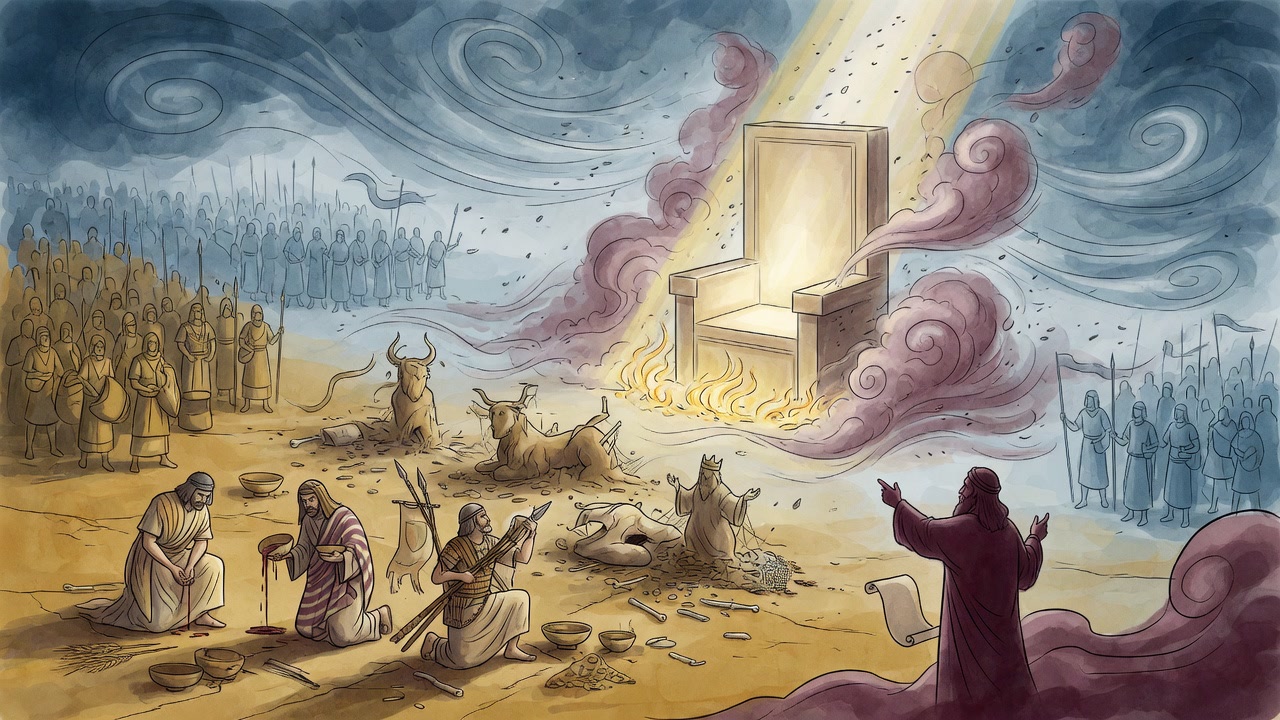
Gamliel mourned Akiva until the drowned man walked up the beach on one plank. A poor boy quieted another storm while merchants clutched idols that did nothing.
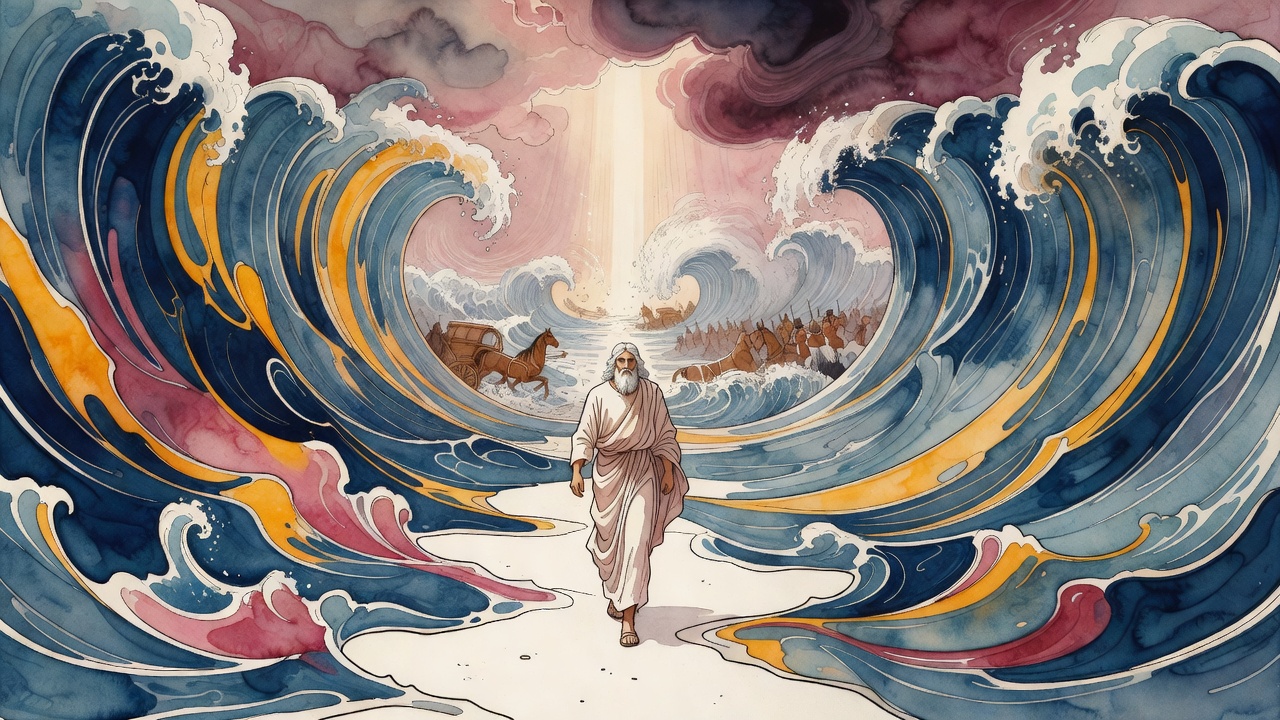
Israel walked between walls of water three hundred miles to each side. Egypt named God too late. The waves returned and not one soldier remained behind.
