Alexander Reached for Heaven and Sank Toward the Deep
Jaddua would not break his oath to Darius. Alexander marched up from Gaza to punish him. He bowed to the Name cut in gold on the priest's mitre.
Table of Contents
 Click for full size
The Oath Jaddua Would Not Break
The letter reached Jerusalem while Macedonian engineers were still pushing a causeway out toward Tyre. Send me auxiliaries. Feed my army. The tribute you have been sending Darius, send to me instead. Take the friendship of the Macedonians, and you will never regret it.
Jaddua the high priest sent the messengers back with a refusal. He had given Darius his oath not to bear arms against him, and he would not break it while Darius was still in the land of the living.
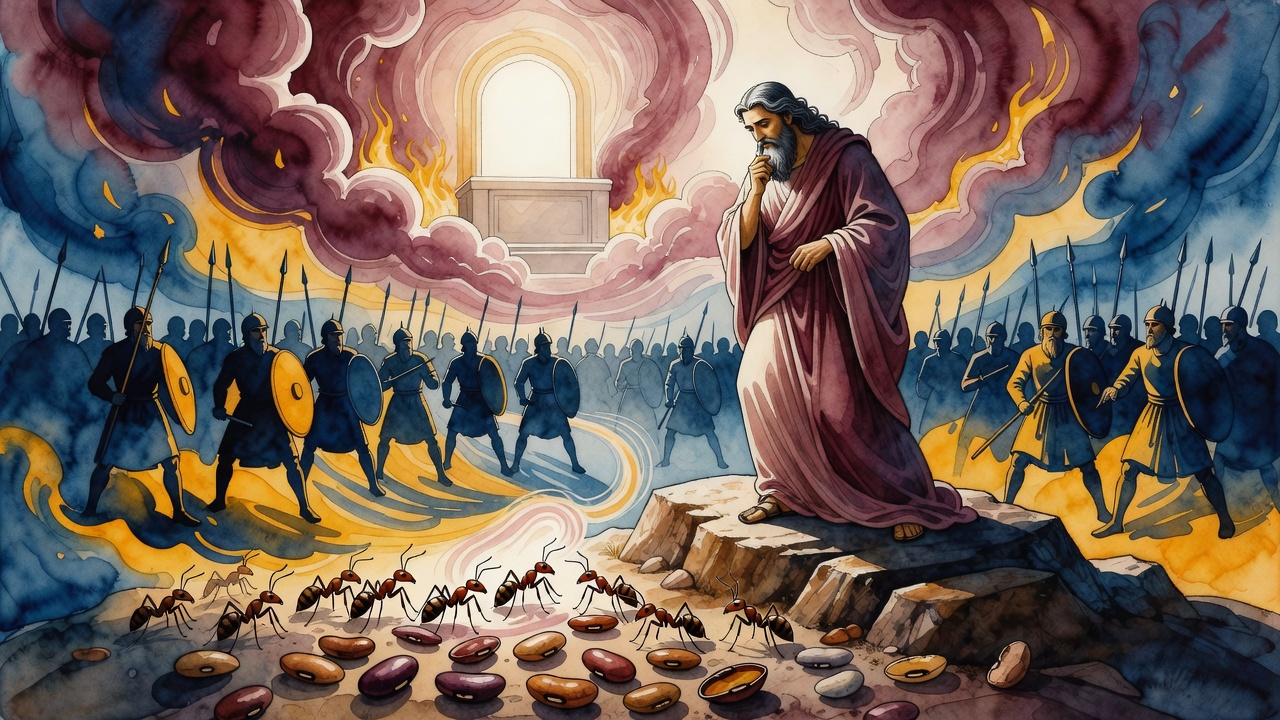
Alexander did not lift the siege to answer. He worked on Tyre for seven months and took it, then sat down in front of Gaza for two more, and the refusal sat in him the whole time. When Gaza fell he said he would go up and teach every man on earth, through the Jewish high priest, to whom oaths are owed.
While he was making that threat, Sanballat of Samaria walked away from Darius and came into the camp with seven thousand of his own men. He wanted one thing. His son-in-law Manasseh, brother of the high priest, had been driven from the altar in Jerusalem for marrying Sanballat's daughter. Sanballat asked leave to build a second temple on Mount Gerizim, argued that a nation split in halves would give a king less trouble than a whole one, and got his permission. He built it, installed Manasseh in it, and died before Gaza fell.
White Robes on the Rise at Sapha
Word came up the road that the army was coming, and Jaddua fell apart. He put the whole city to prayer, offered sacrifice, and begged God to cover the nation.
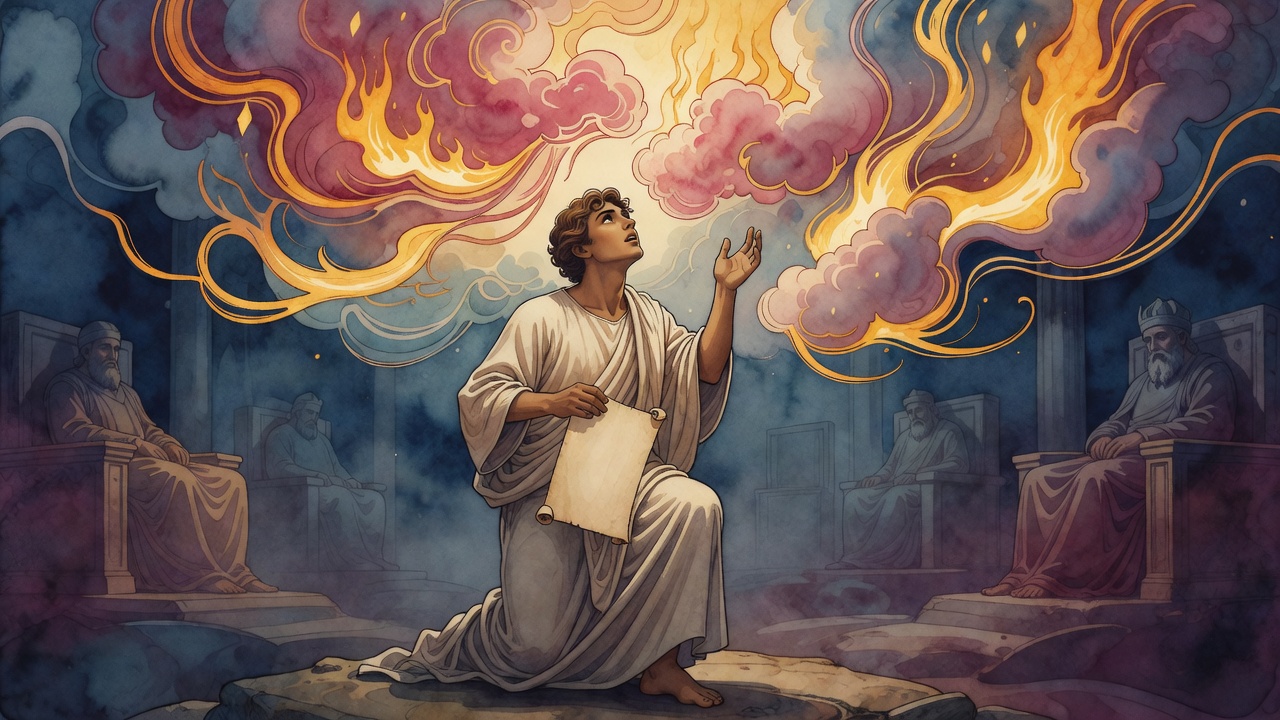
Then he slept, and was told what to do. Dress the city. Open the gates. Put the people in white, put the priests in the clothes of their order, walk out to meet him, and be afraid of nothing.
He woke happy, which nobody in Jerusalem had expected that week.
The procession went out as far as a rise called Sapha, where a man can see the city and the Temple in one look. The Phoenicians and Chaldeans marching with Alexander had spent the road agreeing on how they would divide Jerusalem and how slowly they would kill the high priest.
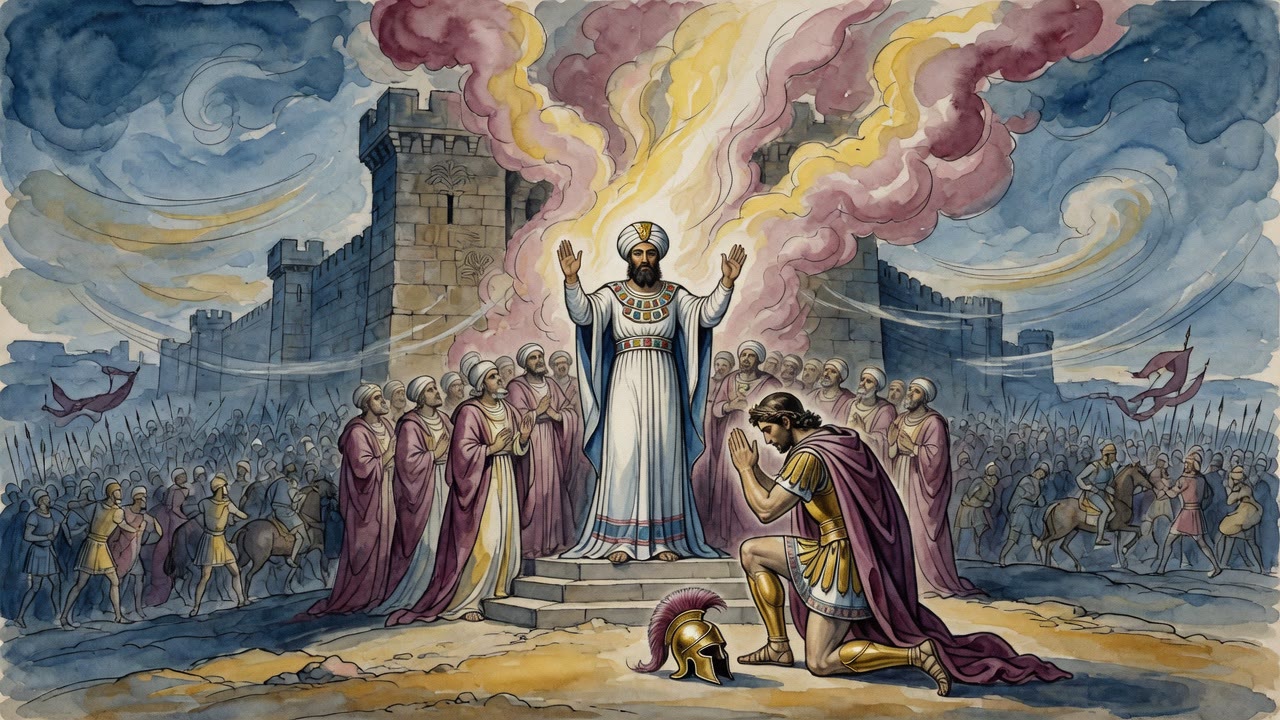
Alexander came over the rise and saw a crowd standing in white, priests in fine linen, and one old man in purple and scarlet with a mitre on his head and a plate of gold across the front of it, the Name of God cut into the metal.
He dismounted. He walked forward alone. He bowed to the Name, and greeted the priest before the priest could greet him.
Parmenio Asked Him Why
The kings of Syria in his train decided his mind had gone. Only Parmenio went up and said it out loud. Every man alive bows to you, and you bow to a Jewish priest.
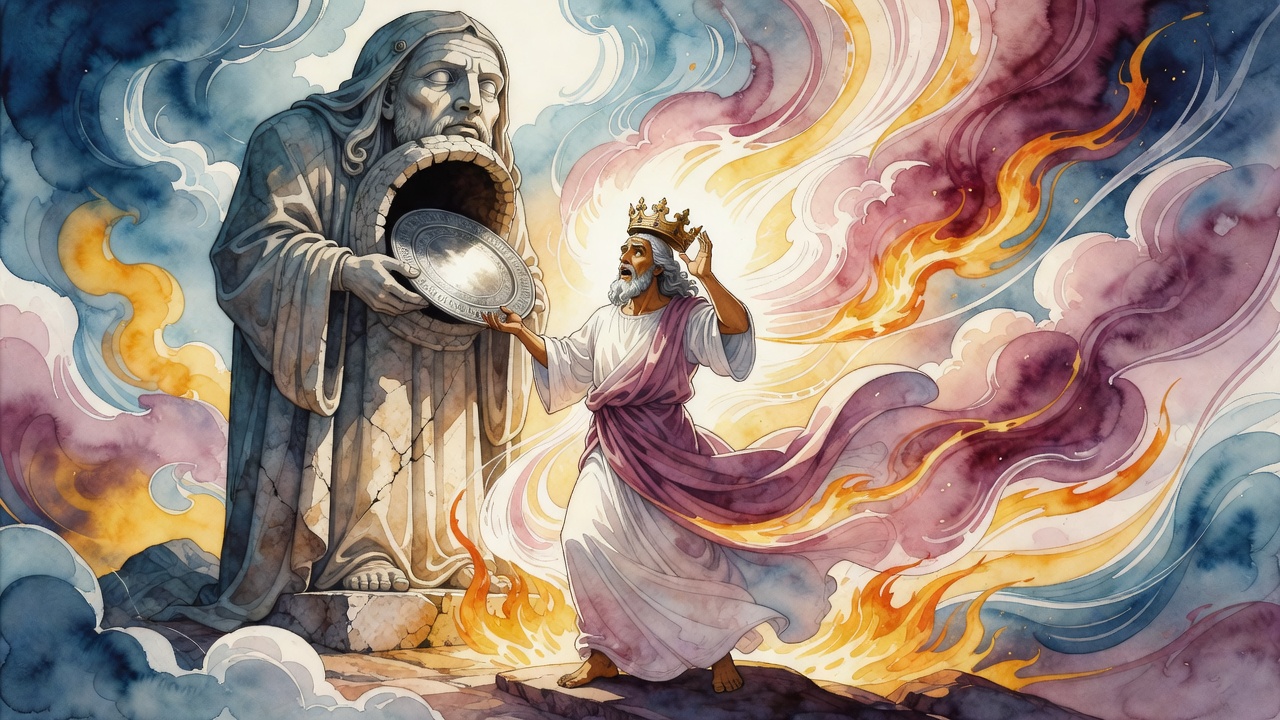
"I did not bow to him," Alexander said. "I bowed to the God who honored him with that office." Then he told them where he had seen the man before. At Dios in Macedonia, before any of the crossings, while he lay awake working out whether Asia could be taken, this same figure in this same dress had stood over him and told him not to delay, to bring the army over the water, and that he would go in front of it himself and hand him the Persians.
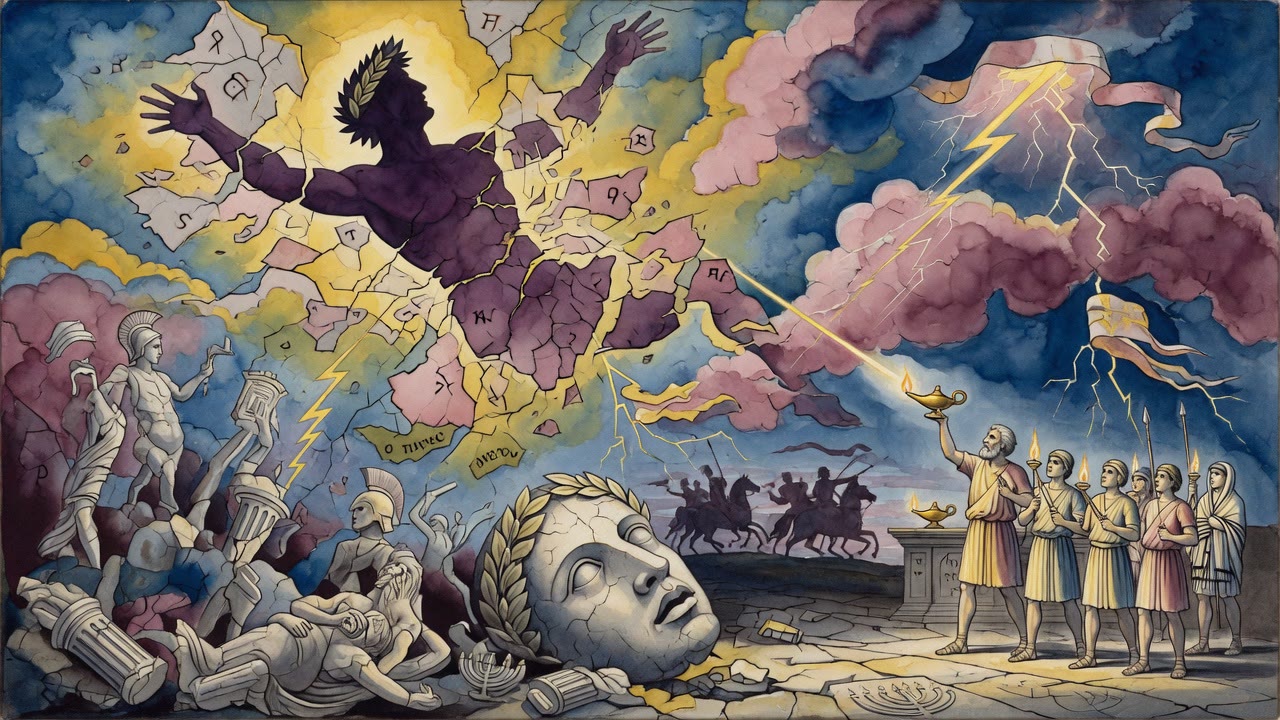
He went up into the Temple and sacrificed the way Jaddua told him to. Somebody brought out the book of Daniel and showed him the passage where a Greek breaks the empire of the Persians. He read it, decided it had been written about him, and went to bed pleased.
In the morning he told the Jews to ask him for whatever they wanted. They asked to keep the laws of their fathers and to pay no tribute in the seventh year, when the fields lie fallow. He granted it, and granted the same to the Jews of Babylon and Media, and took into his ranks every man who wanted to march under his own law.
The people of Shechem had watched all of this, and came out in splendor to meet him. They asked him to visit their temple. They asked for the seventh-year remission too, since they let their land rest as well.
He asked who they were.
Hebrews, they said, who go by the name of Sidonians and live at Shechem.
He asked whether they were Jews.
They said they were not.
"It was to the Jews that I granted that," he said, and sent Sanballat's seven thousand ahead of him into Egypt to be given land and set to guarding it.
Two Eagles and a Box of Glass
The kingdoms were his. Then he went after the two directions that were not kingdoms.
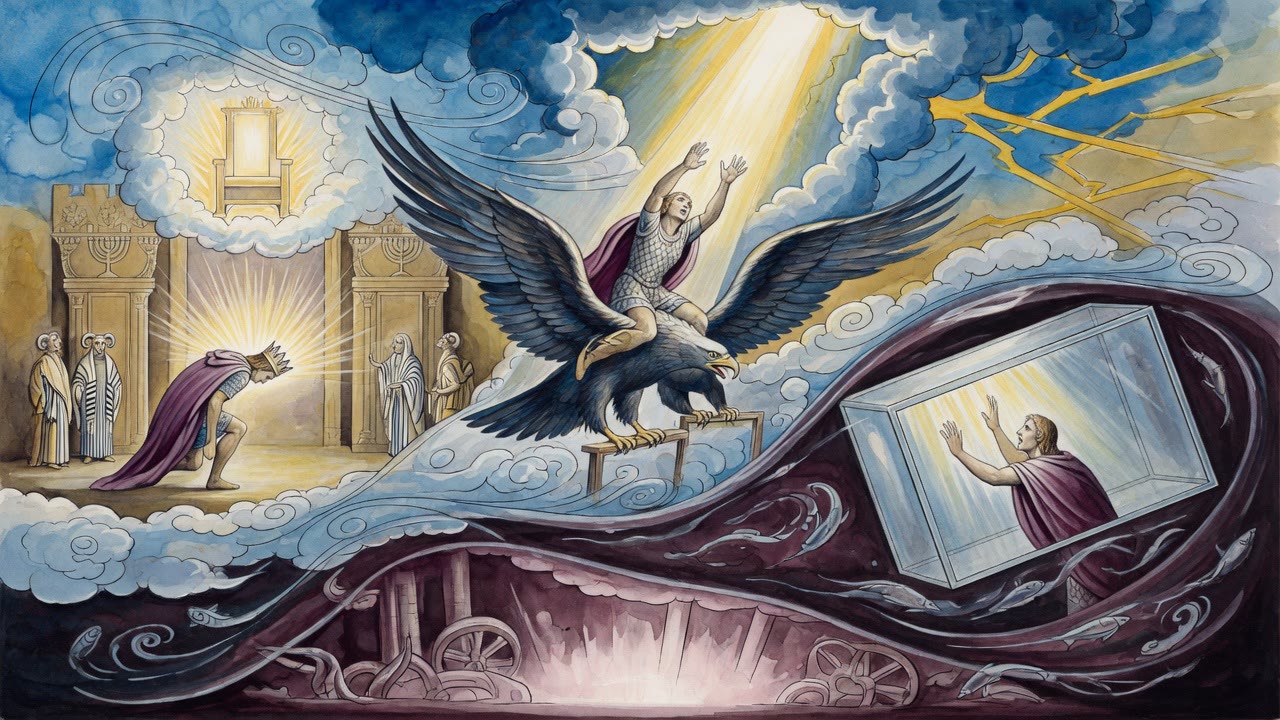
He tied two eagles together, fixed meat in front of them past the reach of their beaks, and stood between the birds while they flew up after it. The ground fell away. The empire went small and then went out. He was climbing toward heaven and heaven kept its distance, and the cold came into his face until his own eyelids dropped shut. He came down blind and sat on the earth until he could see again.
Then the other direction. Men built him a box of glass, sealed him inside it, and lowered him off a ship into the sea, and he sank through the green into the black, watching for a floor.
A voice reached him inside the glass. The iron of the axe has been falling for seven years, it said, and it has not touched the bottom yet.
He signaled to be pulled up out of the deep. Under the sea there was still no floor. He did not ask to go down again.
A Meal of Gold in Africa
In Africa a king set a meal in front of him made out of gold, on the grounds that gold was what he had come for.
While he sat there a case came into the local court. A man had bought a field, dug up a treasure in it, and was trying to hand the treasure back to the man who sold him the ground. The seller would not take it. He had sold the field and everything in it. The king heard them both out and ruled that the one man's son should marry the other man's daughter, and the treasure should go with her as her dowry.
Alexander said that in his own country the crown would have taken the treasure and put both men to death.
The king told him that the sun still rises over that country of his and the rain still falls on it. Both of them come down for the sake of the animals there, he said. Not for the sake of the men.
Alexander had flown until his eyes shut. He had sunk until a voice told him the axe had not found bottom. He sat in front of a plate he could not eat, and the rain outside was not falling for him.
← All myths