Pharaoh Chose Water and Found God Waiting There
Pharaoh would not use the sword. God had already claimed that weapon. He sent the Hebrew boys into the Nile, sure the oath after Noah would keep heaven quiet.
Table of Contents
 Click for full size
He Would Not Use the Sword
Pharaoh set the sword aside. God already used that weapon on nations. He wanted a death heaven would not repay.
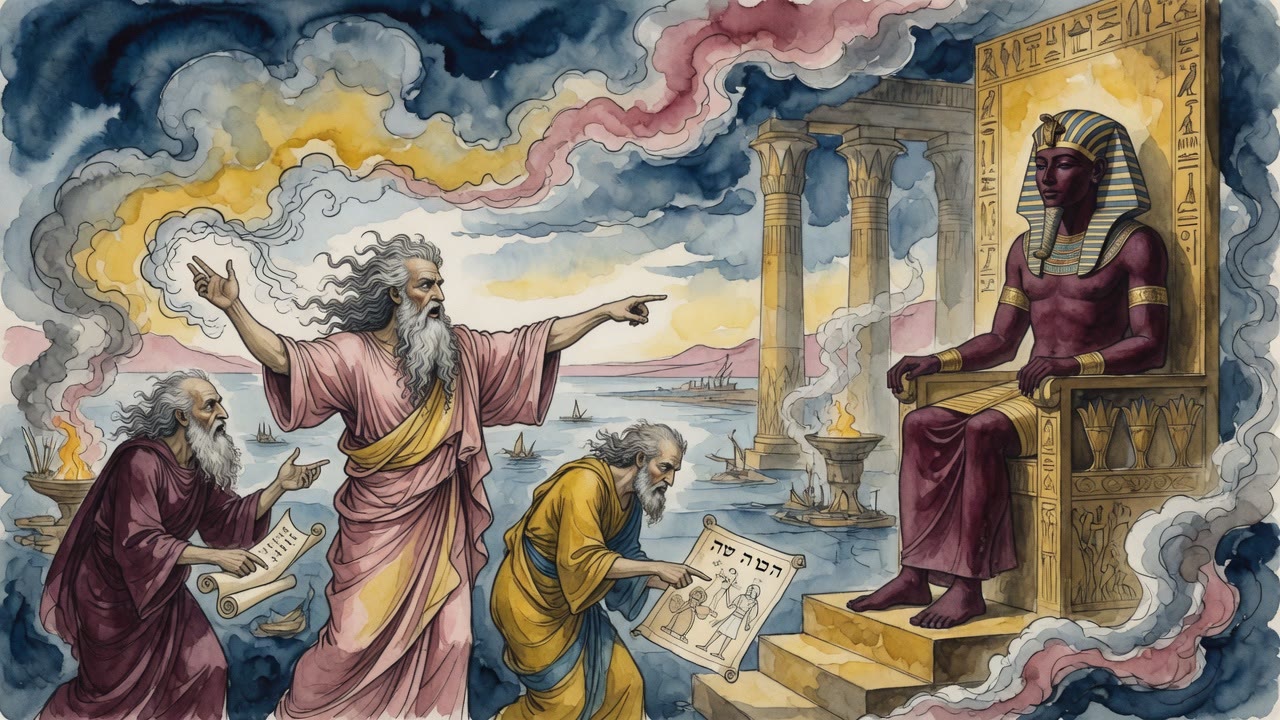
The children of Israel were filling the delta. A people he wanted as laborers had begun to look, in his mind, like a future army. He gathered his counselors. "Let us deal shrewdly with it," he said. Not with them. With it.
He was not only plotting against Israel. He was trying to outwit the God of Israel. The sword was the first thought. Then he remembered that God judges nations by the sword and would answer in kind. So he looked at water.
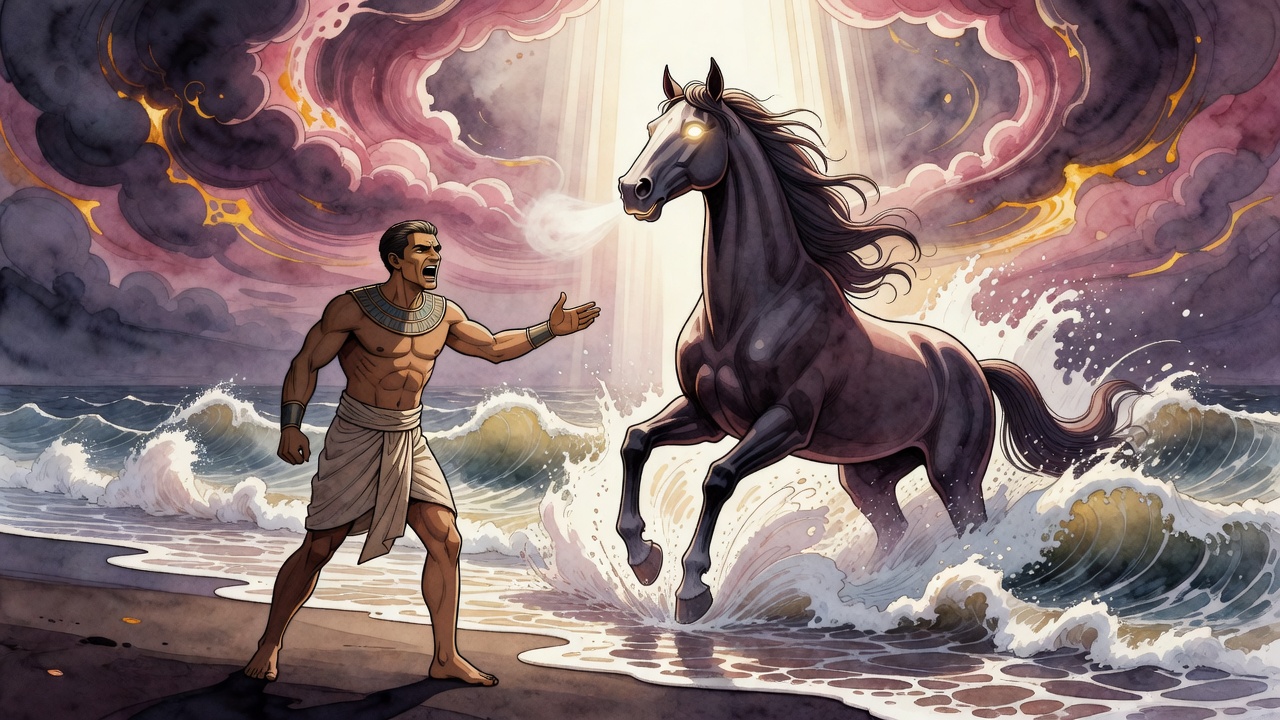
God had sworn after Noah that a flood would never again pass over the earth. Pharaoh heard a gap. Drown the boys. Let the Nile do what a global flood could not. No flood. One river. One king. Children, not a world.
Three sat in that counsel. Bilam advised him to persecute. Job kept silent. Yitro fled. Pharaoh took the advice that promised a gap in the oath and sent the boys into the water.
The Midwives Let the Boys Live
He ordered the midwives to kill the Hebrew boys at birth. Shiphrah and Puah feared God more than Pharaoh and let the boys live. When he called them in, they did not argue. They gave him a fact he could not easily disprove.
"The Hebrew women are not like Egyptian women," they said. "They are lively. They give birth before the midwife arrives."
The women bore in the fields, in hiding, in the clefts of the earth. The babies appeared and were hidden before any Egyptian could count them. Judah as a lion's cub, Dan as a serpent, Naftali as a hind, Joseph as a bull, Benjamin as a wolf: the midwives told Pharaoh this nation was like the beasts of the field, which do not wait for a midwife. He accepted the explanation. He did not harm them. The boys kept coming.
Moses Stood as God Before Pharaoh
When Moses finally stood in the court, the relationship was not equal and was not meant to be. "See," God said, "I have set you as God before Pharaoh, and Aaron your brother shall be your prophet."
Aaron spoke. Moses declared. Pharaoh was used to gods he could manage with ritual and gifts. The God Moses represented did not take a bribe and did not stay in a niche. Pharaoh, who had started the counsel, would be punished first, frogs on him before frogs on his people. He had chosen the first move. He would take the first blow.
Ephraim Left Thirty Years Too Soon
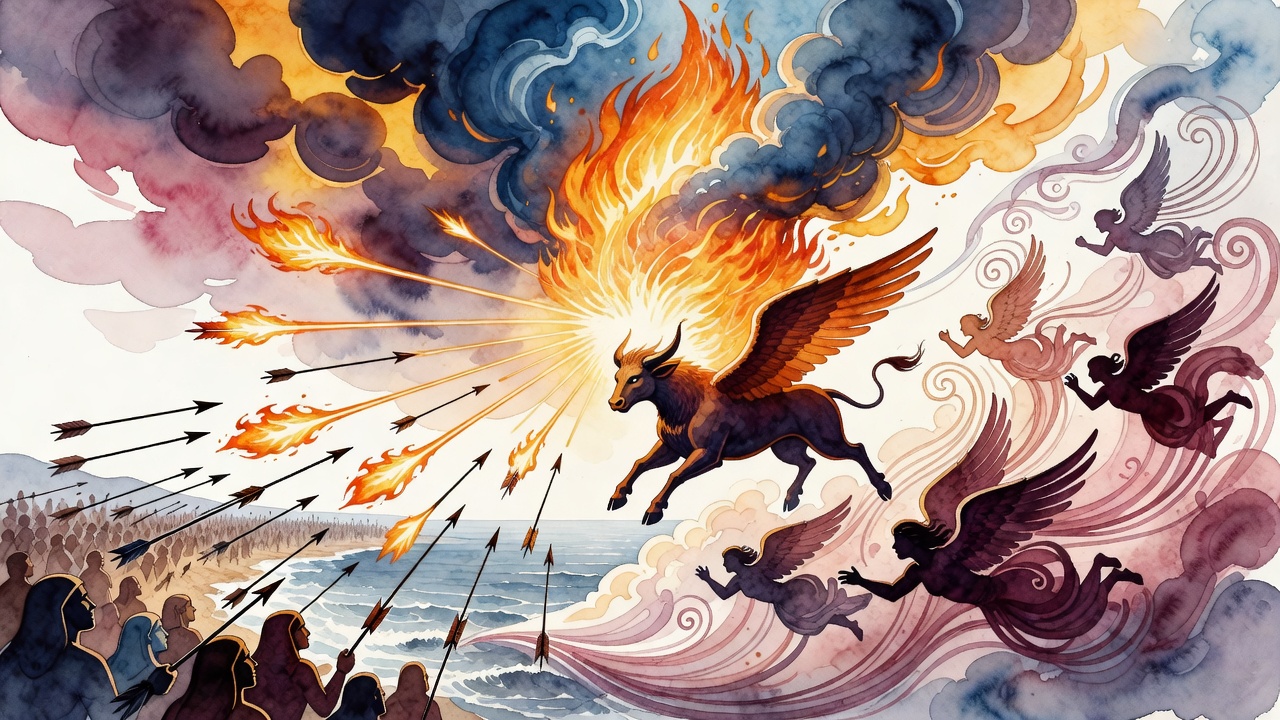
The tribe of Ephraim counted the four hundred years from the day God spoke to Abraham between the pieces, and they came out thirty years early. Three hundred thousand of them left Egypt before the appointed time, archers with the bow already in their hands. The Philistines killed them in the valley of their attempt.
When Israel finally went out, God did not lead them by the land of the Philistines, though it was near. The bones were still there. A people walking into freedom would have had to step over their own brothers, the ones who had the right destination and the wrong hour.
Pharaoh had tried to outmaneuver an oath by choosing water. Ephraim had tried to outmaneuver a schedule by leaving early. The timetable did not move for either of them.
They Fell Into the Water They Chose
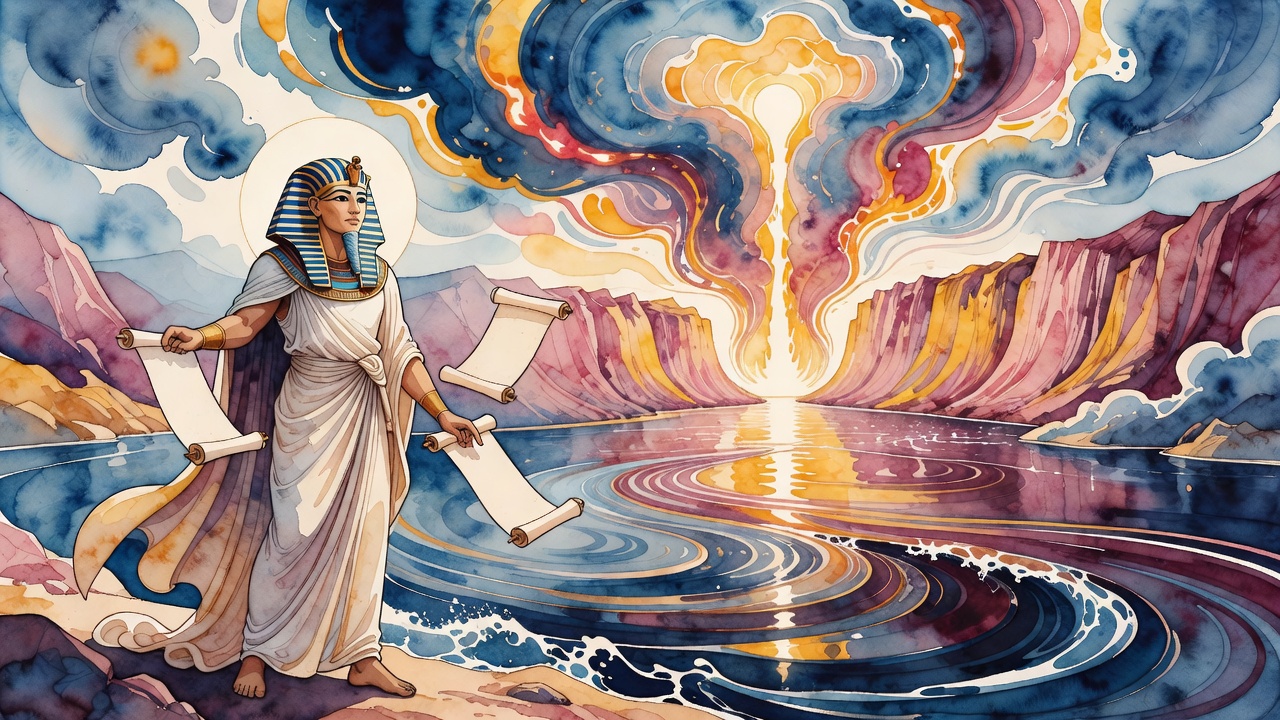
At the sea, dry land drew the chariots in. Then the water returned. The pot in which they had cooked the children cooked them. Pharaoh's host went down in the element he had picked for Hebrew boys. Wheels stuck. Mouths filled. The gap in Noah's oath closed over the army that had trusted it.
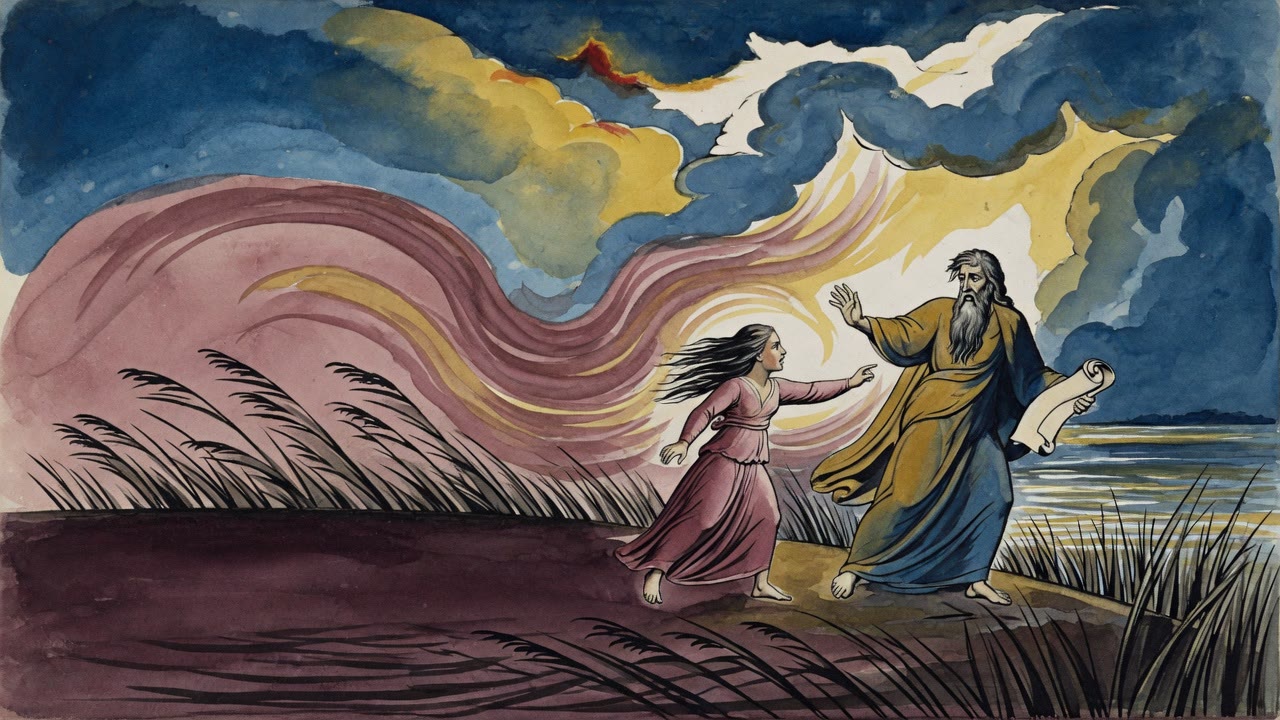
Israel stood on the far side and sang. Then they walked into the wilderness and came to Marah, where the water was bitter. There God gave them ordinances. Not yet at Sinai. Beside water that had to be made sweet. The law arrived at thirst, with the miracle of the sea already behind them and the desert ahead.
Pharaoh had chosen water to shut a promise. At Marah the same element sat in a bitter cup and became the first place the people were taught how to live. His wheels were already under the sea.
← All myths