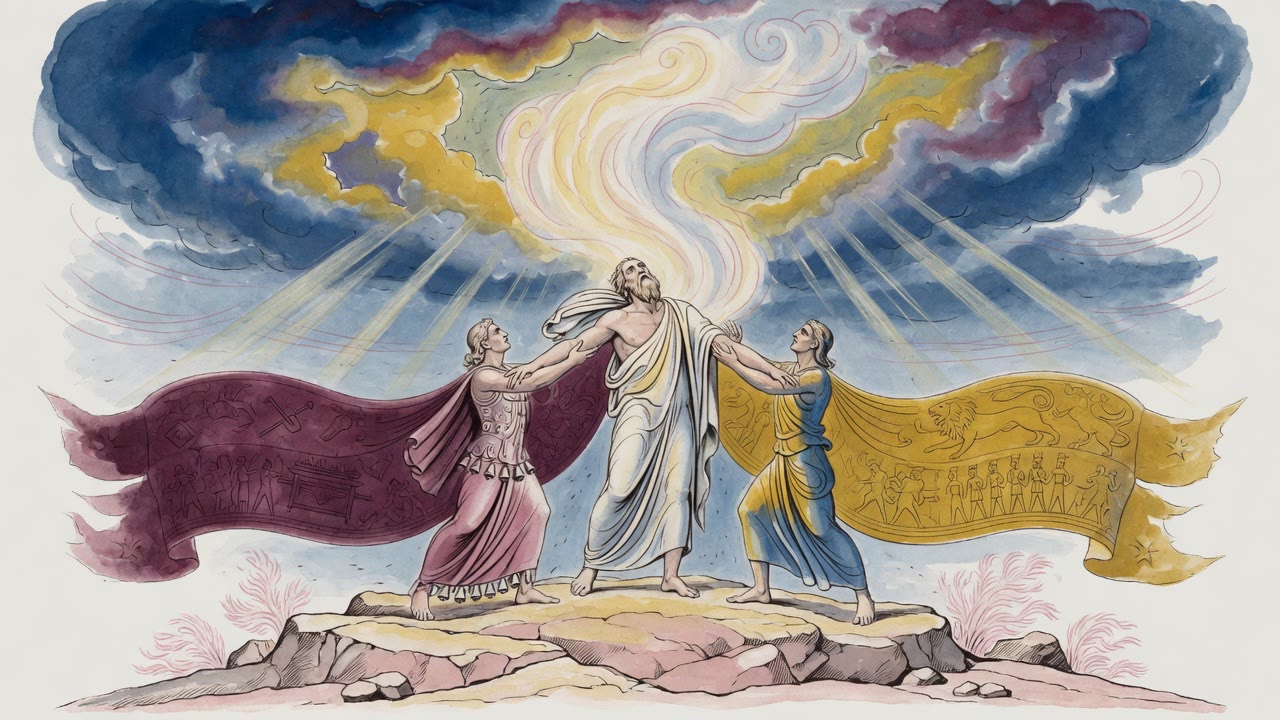
Moses Hid His Face Before the Tabernacle Stood Alone
The flame used his father's voice. Moses came closer. Decades later the Tabernacle still would not rise for the craftsmen.
Table of Contents
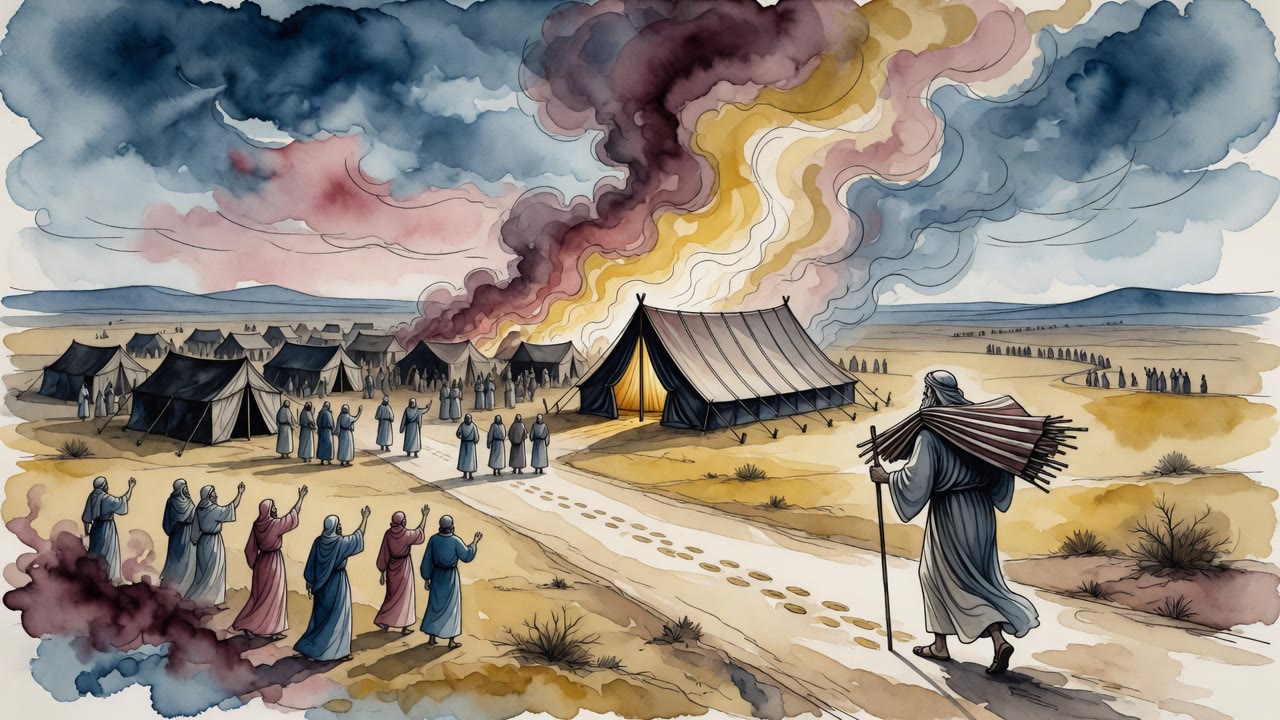
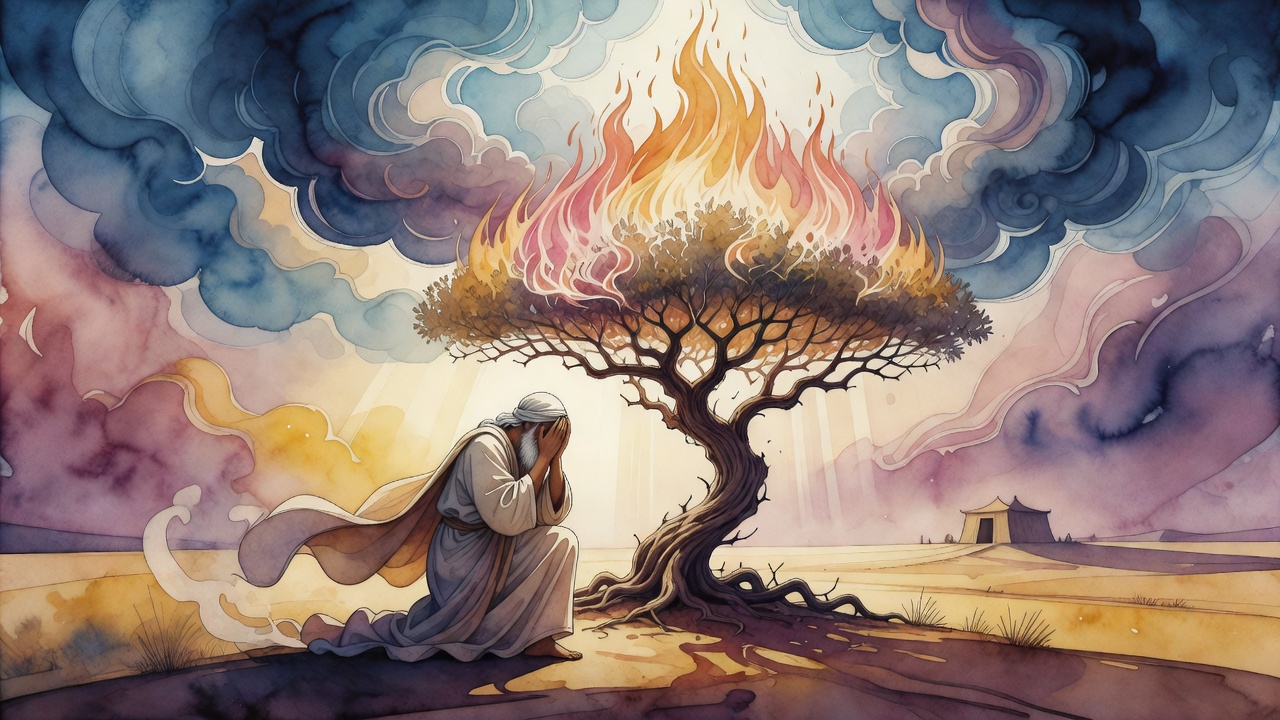
Moses heard his father's voice in the fire. Not thunder. Not many waters. Amram, who had named him and hidden him, calling from a bush that burned and did not eat itself.
 Click for full size
The Voice Sounded Like His Father
"Here I am," Moses said. "What does Abba want?"
The flame answered with a correction. "I am not your father. I am the God of your father, the God of Abraham, the God of Isaac, and the God of Jacob."
Moses stood in sand that had gone hot under the unconsumed wood. He had come closer because the voice was the one he already trusted. A novice at prophecy would have run from the real weight. So God met him in the sound of a house in Goshen, then told him whose house it had been.
Joy rose anyway. Amram's name had been spoken first, before the patriarchs, as if a quiet Levite from Egypt sat in that company. Then the fear arrived. Moses hid his face, because he was afraid to look at God (Exodus 3:6).
Around him the world kept trying to rise. Darkness sat over the deep and called that height. Mountains held their height like an argument. Kings named themselves gods. Moses did the other thing. He covered his eyes.
Moses Asked God to Send Someone Else
He did not leap from awe to the road. He stalled. He said he was not a man of words. He asked God to send someone else. The bush kept burning while the objections stacked, and the mission waited on a man who would not take it.
Anger moved. The priesthood that could have sat on Moses lifted and settled on Aaron. "You were fit to be a priest, and he a Levite," God said. "Because you refuse, you will be a Levite, and he a priest. He is coming out to meet you, and he will be glad in his heart."
Moses had feared his older brother's face. He got a glad heart instead. Aaron would speak. Moses would carry the staff. The man who hid his face would still have to walk into Egypt, only now without the altar.
Aaron's Heart Was Glad
When Aaron came, the gladness was not a courtesy. It sat in the chest that would later wear the Urim and Thummim (אורים ותומים), the stones of judgment on the high priest's breastplate. The joy he felt at seeing his brother alive became the decoration of his office. A transfer of role arrived without a wound between them.
They walked toward Egypt together, the spokesman and the man who had covered his eyes. In the court Moses lifted the staff and waited for a mouth to open. Pharaoh had seen enough by the fifth blow to fold. The mouth stayed shut. God had hardened the heart so the signs would not stop halfway, so Egypt would not watch a partial God. Moses, who had asked to be replaced, had to stand there until the sea took the army.
The Craftsmen Brought Him Boards
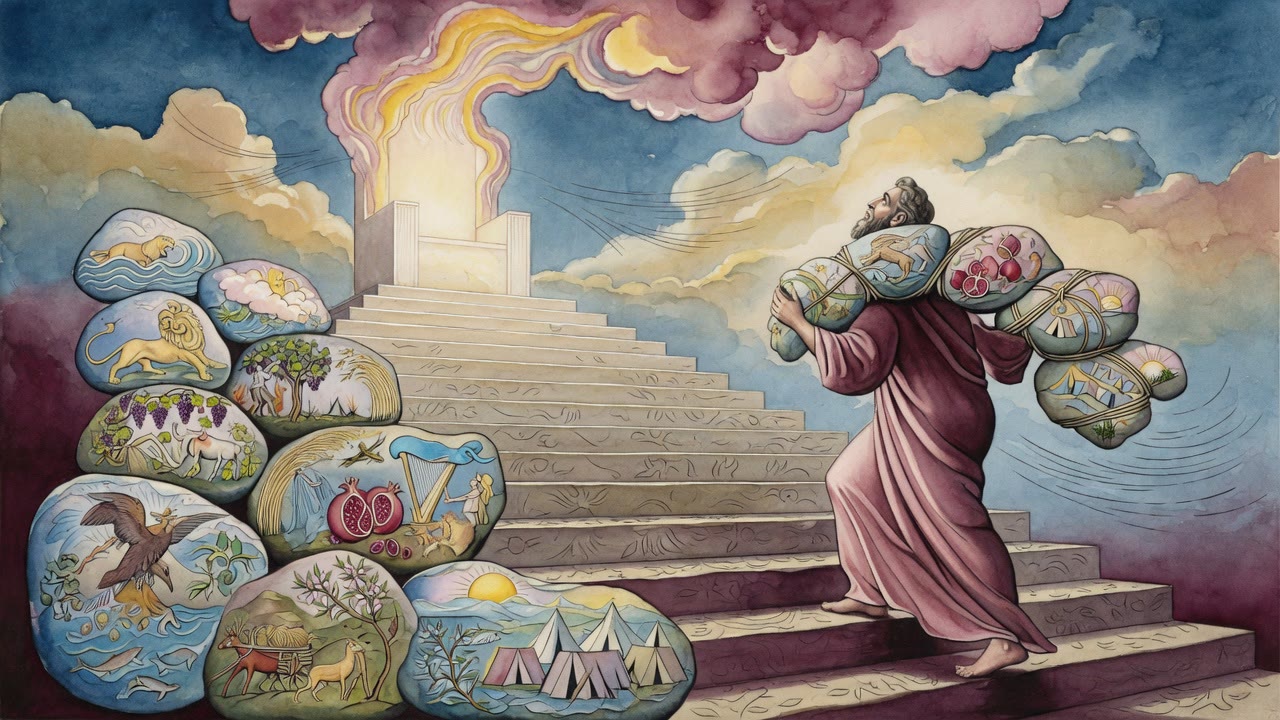
Years later the work was finished and still not standing. Bezalel and Oholiab and every skilled hand carried the pieces to Moses. Boards. Bars. Curtains. The menorah. The altar. Each man held out the labor of his months and could not make a house of it.
The boards were too heavy. The curtains would not hang. The beams resisted as if the Tent of Meeting had an opinion about whose hands it would accept. Moses had not lifted a tool in the building. The pile arrived at his feet anyway, because every other craftsman had already tried.
He looked at the gold and the acacia and said, "I cannot do this."
The Tent Stood by Itself
"Occupy your hands," God said.
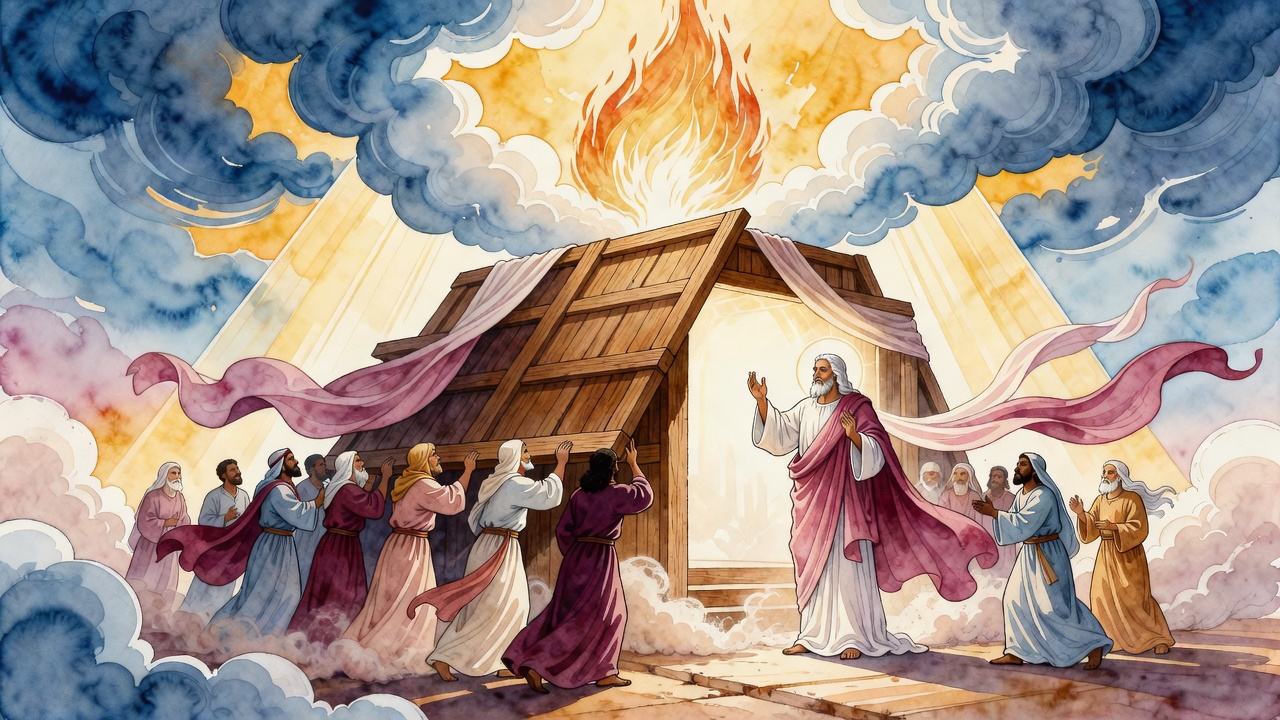
Moses moved his hands toward the Tent. The Divine Presence settled on him. The structure rose. Do not say he muscled it up. Miracles were performed regarding the Tabernacle, and it stood on its own, the way Solomon's House would later build itself without the sound of iron in the rooms.
The man who had hidden his face at a bush was the only one the house would rise for. He had refused the priesthood. He had asked to be sent away. He had covered his eyes when a father's voice became God's. The boards waited for those hands, then stood without them. Around the finished Tent the world went on exalting itself, mountain over valley, king over slave. Inside it, a prophet who had practiced lowering himself watched the sockets take the weight.
← All myths