5 min read

Aaron Challenged God When Fire Took His Sons

Aaron watched fire take Nadab and Abihu, challenged God over the sentence, and answered with praise no grieving father expects.

Curated by Arthur · Told by Maggid ·
Table of Contents
  1. The Curtain Bled
  2. The Staff Had Blossomed
  3. A Father Brought the Charge
  4. The Answer Passed Through Moses
  5. Aaron Chose the Psalm

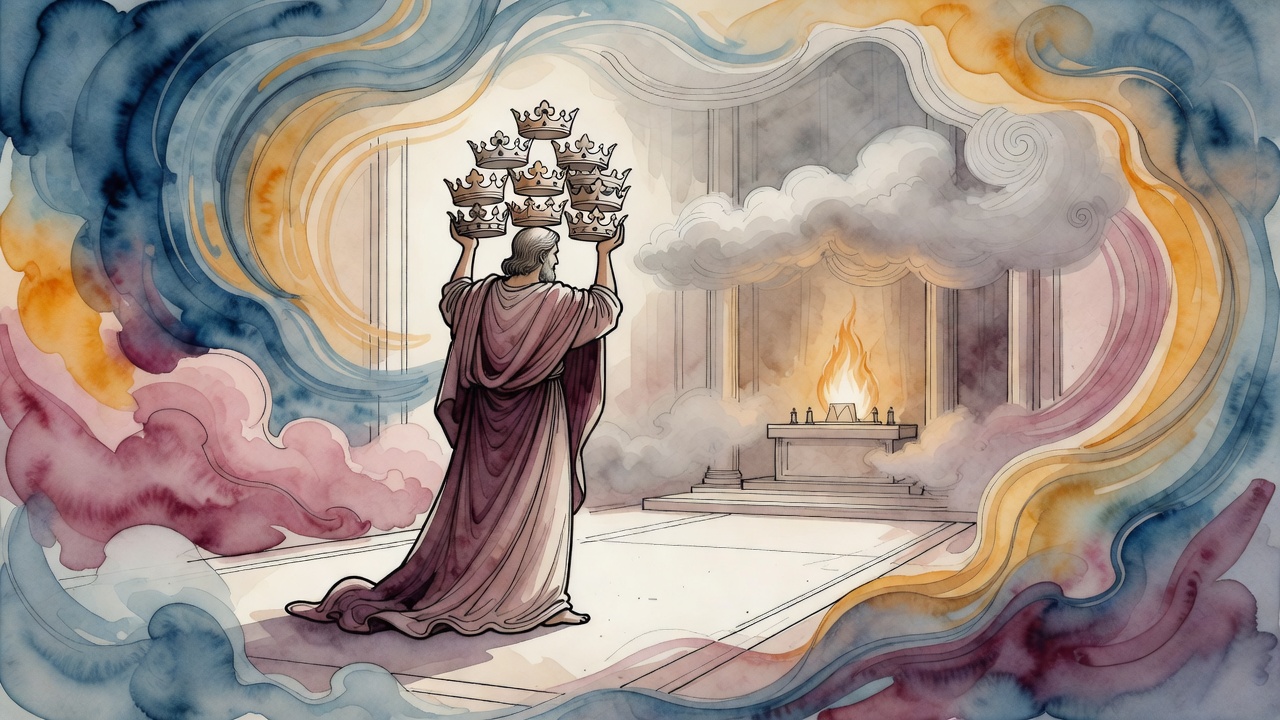
Titus walked into the Holy of Holies with a sword in his hand and came out alive.

He stabbed the curtain, the parochet (פרוכת), and the blade came out full of blood. He had entered the chamber no ordinary person could enter. He had raised steel against the veil of the sanctuary. No fire met him at the threshold. No flame took him by the bones. He entered in peace and emerged in peace.

The Curtain Bled

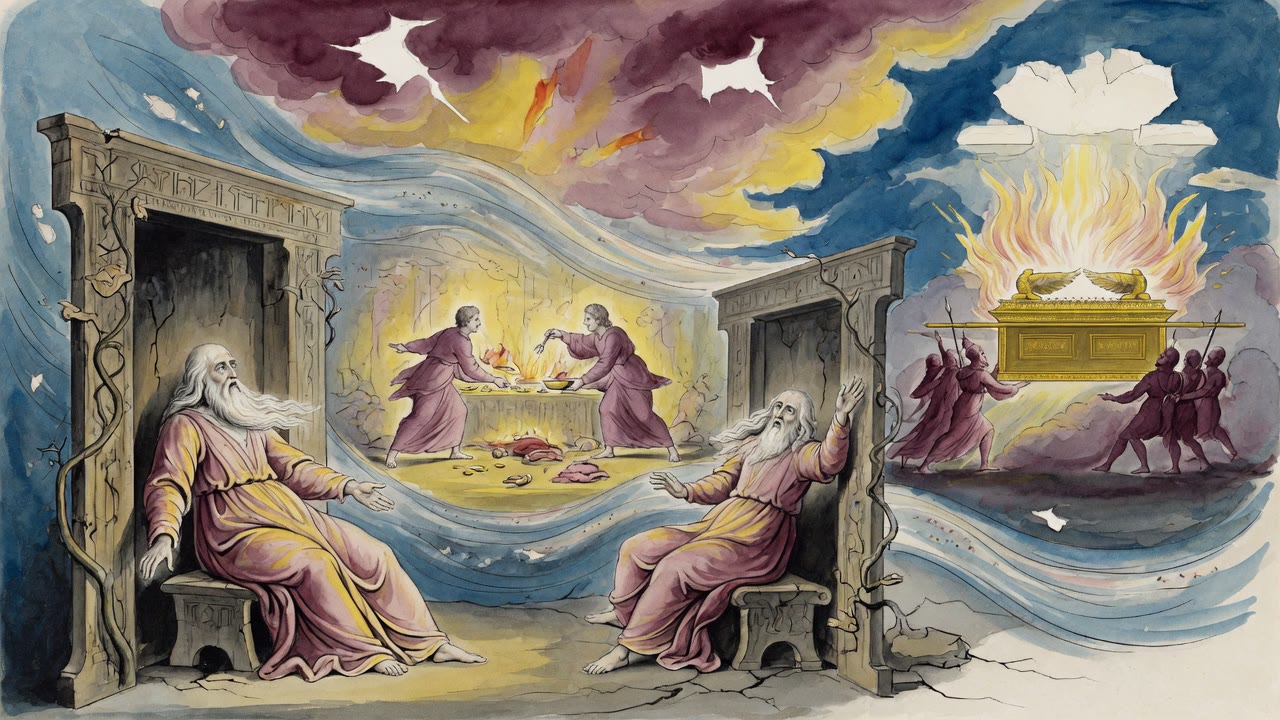
The image lands like a blow because the chamber was not empty space. It was the hidden center, the place where approach itself required command. A wicked man could step into it with violence and leave breathing. The sword could drip, and the man holding it could still walk.

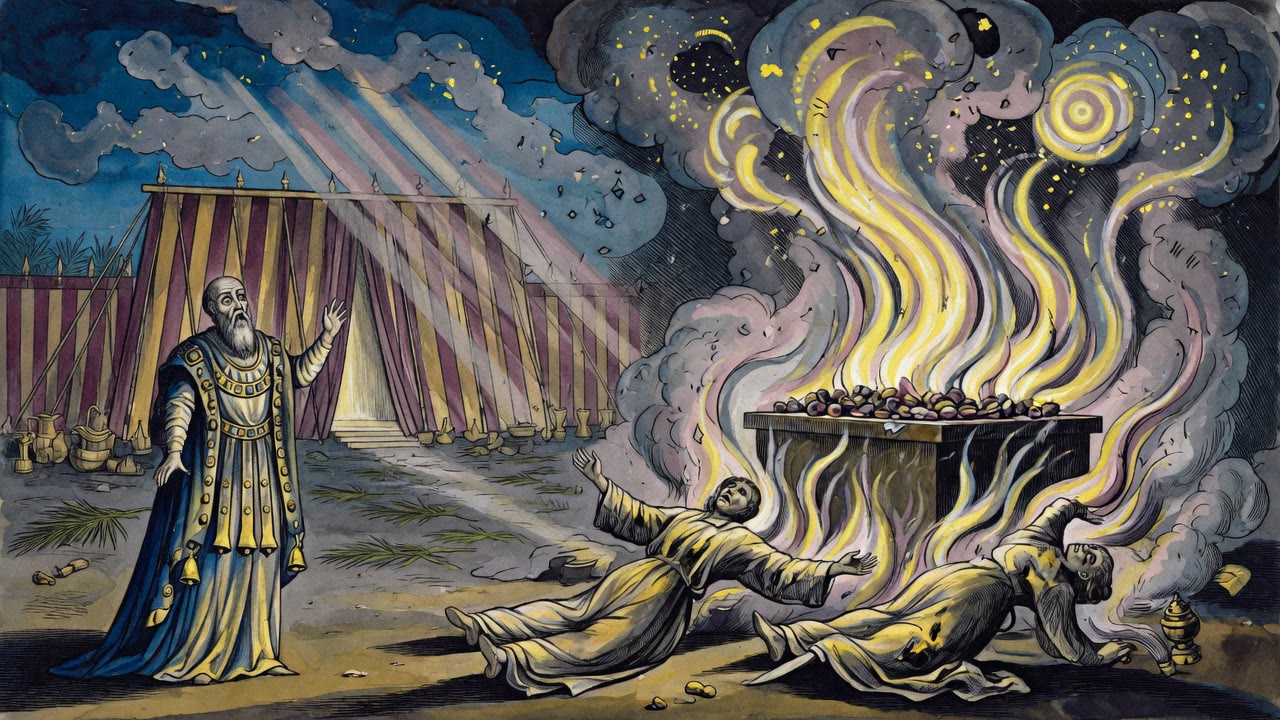
Far away in time, at an earlier sanctuary, two sons of Aaron approached for service and did not leave. Nadab and Abihu entered to sacrifice. Fire came out from before God and consumed them. Their father did not receive the mercy that Titus appeared to receive. The wicked desecrator lived. The priestly sons burned.

The Staff Had Blossomed

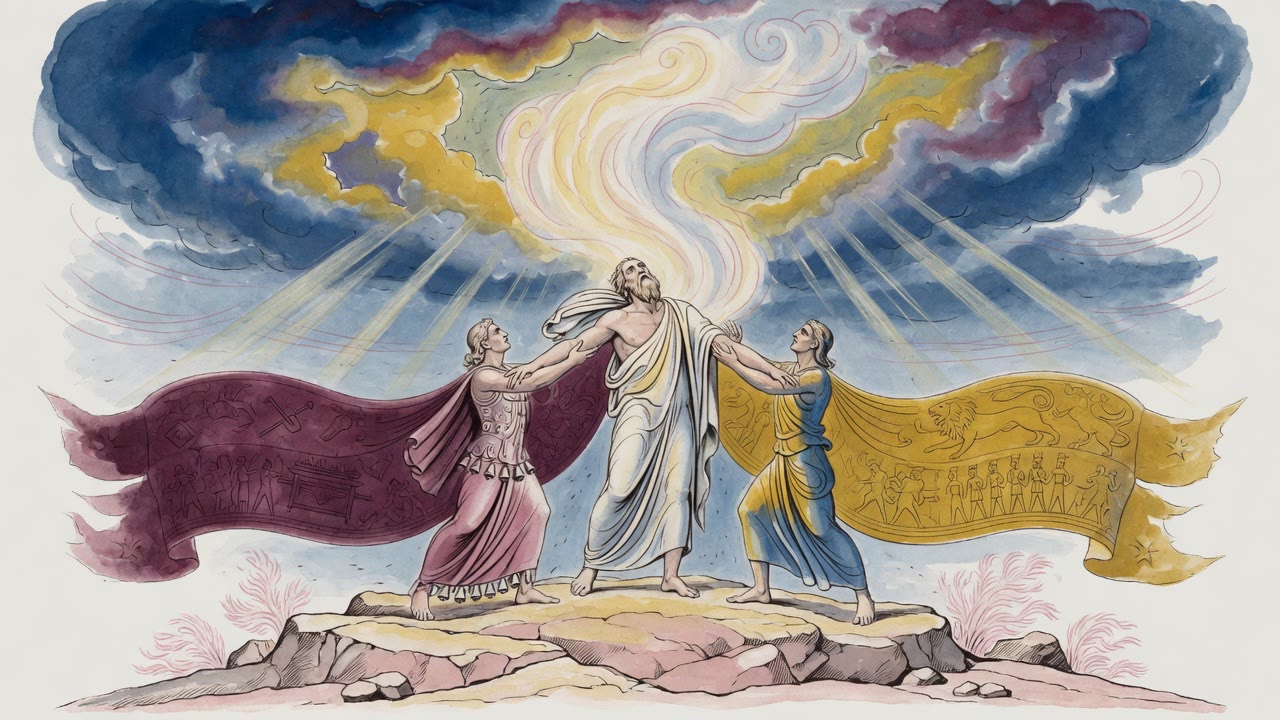
Aaron knew what God could do with something dry. His staff had once entered lifeless wood and emerged moist, budded, flowering, heavy with almonds. A dead branch had become proof of divine choice. If wood could enter dry and come out alive, what should have happened to Aaron's sons?

The heart trembles at that question. It does not sit still. It leaps from its place like a locust from the earth. The old order of expectation breaks. Nearness should protect. Service should crown. Sons raised for priesthood should not be carried out as ash while a destroyer with a sword is spared his next breath.

A Father Brought the Charge

Aaron did not swallow the contradiction. He brought it before God.

All Israel had seen God at the Red Sea and lived. All Israel had stood at Sinai and lived. His own sons had been ordered to dwell in the Tabernacle, in a place where a layman could not enter without death. They entered to behold God's strength and might. They were not strangers to the holy. They were not men from outside the camp pushing past a forbidden line for spectacle.

They were his sons.

The complaint had the plain force of a father counting bodies. The people had seen and survived. Titus had entered and survived. Nadab and Abihu had entered, and the fire kept them.

The Answer Passed Through Moses

God did not answer Aaron directly. The answer was given to Moses and sent into Aaron's grief through the mouth of his brother.

God had shown Aaron favor, the message said, and had granted him honor through the burning of his sons. The words were almost too hard to hold. Then the message opened its reason. Aaron and his sons had been assigned a place nearer the sanctuary than anyone else, even nearer than Moses. Nearness carried danger. God had decreed that whoever entered the Tabernacle without command would be stricken with tzaraat, an affliction that would send a person outside the camp.

Would Aaron have wanted his sons, appointed to the innermost places, to sit as afflicted men beyond the encampment because they entered where they had not been commanded?

The answer did not make death small. It made the alternative visible. Sons who had stood nearest the holy would have spent their lives outside the camp, cut away from the very place that had defined them.

Aaron Chose the Psalm

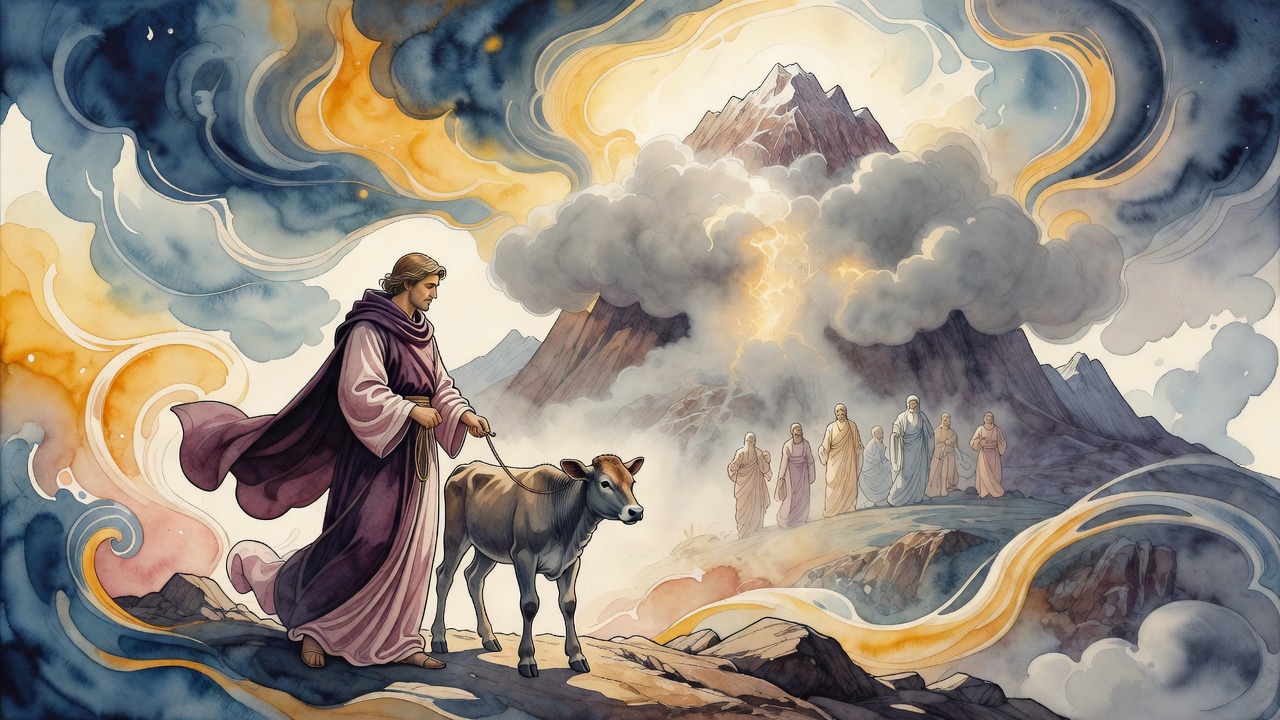
Moses carried the words to his brother. Aaron received them with the fire still fresh in the air.

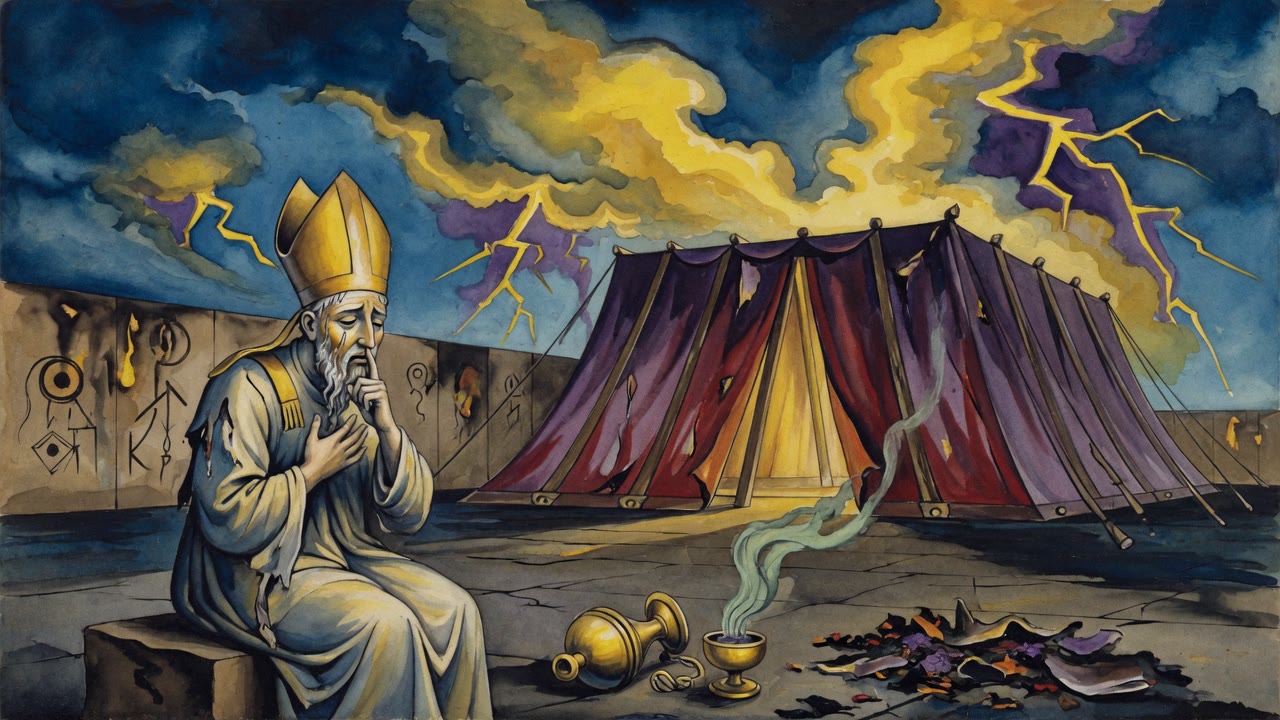
No one can make that moment gentle. The ashes were not returned as sons. The father's arms were not filled again. The Tabernacle still stood, and two places in his house were empty. But Aaron answered from inside the loss. He thanked God for causing his sons to die rather than letting them waste their lives as afflicted men outside the camp.

Then he reached for a verse of praise: because God's lovingkindness is better than life, the lips shall praise Him.

The words did not cancel the grief. They gave it a mouth. Aaron had challenged God, received an answer no parent would ask to hear, and still found a line of psalm strong enough to carry breath. Outside, the sanctuary remained dangerous. Inside, a father stood beside the fire and chose praise without pretending the fire had not burned.


← All myths
From the tradition

Sources

2 sources

The texts this telling draws on, in full. Open a card to read inline, or expand it for a wider, quieter read.

Vayikra Rabbah 20:5Vayikra Rabbah

The book of Job speaks to that feeling. "Even at this my heart trembles veyitar from its place" (Job 37:1). What does veyitar even mean?

Rabbi Aha and Rabbi Ze'eira, in Vayikra Rabbah, that beautiful collection of Midrashic (rabbinic interpretive commentary) interpretations on the book of Leviticus, see it as "and leaps," connecting it to the verse about leaping locusts: "To leap [lenater] with them from upon the earth" (Leviticus 11:21). It's a fascinating connection, isn't it? This trembling, this leaping… It speaks to a sense of instability, of things being radically, even violently, displaced.

That leads us to a profound question about legacy, about righteousness, and about the utterly unpredictable nature of divine judgment.

The text continues, asking: "Will Aaron’s sons not be like his staff, that entered dry and emerged moist?" We're talking about the famous story of Aaron’s staff that miraculously blossomed, a symbol of divine favor and priestly authority (Numbers 17:16-24). The Holy One, blessed be He, seems to be asking: shouldn’t Aaron’s sons, as priests serving in the Tabernacle, experience a similar transformation for the good? Shouldn't their service be a blessing, a sign of divine grace?

But the reality, as we know, is tragically different. The story takes a sharp, painful turn.

Consider Titus, the Roman general who infamously destroyed the Second Temple. He enters the Holy of Holies, the most sacred space, with his sword drawn. He desecrates it, stabbing the parochet, the curtain separating the Holy of Holies from the rest of the Temple, and his sword emerges dripping with blood. A horrific act of sacrilege. Yet, he enters in peace, and emerges in peace. He suffers no immediate divine retribution.

Now contrast that with Aaron’s sons, Nadav and Avihu. They enter the Tabernacle to offer sacrifice, presumably with the best of intentions, yet they emerge… burned. Consumed by a divine fire. Their transgression is a complex issue debated by commentators for centuries (Leviticus 10:1-7).

"After the death of the two sons of Aaron, [when they approached before the Lord and they died]," the Torah tells us. A stark and heartbreaking statement.

The comparison is jarring, isn't it? A wicked man desecrates the holiest place and seemingly gets away with it. Righteous priests, sons of Aaron, dedicated to serving God, are struck down.

Why?

There are no easy answers, and the text doesn’t explicitly provide one. But perhaps the point isn't to understand the why as much as it is to confront the what. To acknowledge the inherent mystery and the often-unfathomable nature of divine judgment. To recognize that even those closest to the Divine are not immune to tragedy. And that sometimes, the ground beneath us trembles, and all we can do is acknowledge the leap – veyitar – into the unknown.

Full source
Legends of the Jews 3:82Legends of the Jews

The Torah tells us about such a moment in the life of Aaron, the High Priest, after the devastating death of his sons, Nadav and Avihu.

The scene: Aaron’s sons, in their zeal, offer “alien fire” before God and are consumed (Leviticus 10). A gut-wrenching moment. Now, picture Aaron, a father overwhelmed with grief, questioning everything. According to Legends of the Jews, Aaron cries out, pointing to the miracle at the Red Sea and Sinai, where all of Israel witnessed God’s power and were spared. But his own sons, chosen to serve in the holiest place, the Mishkan (Tabernacle), entered and died. Why?

In his retelling, Ginzberg shares how God responds to Moses, saying, "Tell Aaron the following: 'I have shown thee great favor and have granted thee great honor through this, that thy sons have been burnt.'" It sounds harsh, doesn't it? How can death be a favor? The answer lies deeper. God continues, explaining that He assigned Aaron and his sons a place of honor closer to the sanctuary than anyone else, even Moses.

There’s a caveat. God also decreed that anyone entering the Tabernacle without command would be struck with tzara'at – often translated as leprosy, but understood by some to be a broader category of skin ailment. God asks, would Aaron have preferred his sons, privileged to enter the innermost spaces, to suffer as lepers outside the camp for their transgression?

This is where it gets really interesting. Moses delivers God’s message to Aaron, and Aaron, after processing this divine perspective, responds with profound acceptance. He says, "I thank Thee, O God, for that which Thou hast shown me in causing my sons to die rather then having them waste their lives as lepers. It behooves me to thank Thee and praise Thee, 'because Thy lovingkindness is better than life, my lips shall praise Thee.'" (Quoting Psalm 63:4).

Wow. Aaron, in his immense pain, recognizes a deeper truth. He acknowledges God's loving-kindness, even in the face of tragedy. He understands that there may be fates worse than death. He chooses to praise God, understanding that even in loss, there is divine purpose.

What can we learn from Aaron's response? Perhaps it's about finding meaning even when things seem meaningless. Maybe it’s about trusting in a divine plan, even when we can't see the full picture. It’s a challenging lesson, for sure. But in Aaron’s story, we see the potential for acceptance, gratitude, and unwavering faith, even when confronted with the most profound losses. It's a reminder that even in our darkest moments, we can choose to praise, to thank, and to find the loving-kindness that is, perhaps, better than life itself.

Full source