Parshat Shemini5 min read

Aaron's Sons Died on the Best Day of His Life

This was the best day of Elisheba's life. Her husband was high priest, her sons served beside him. Two were dead before the morning's service was over.

Curated by Arthur · Told by Maggid ·
Table of Contents
  1. Elisheba's Morning
  2. What Had Been Waiting Since Sinai
  3. The Fire That Did Not Burn the Bodies
  4. The Question Aaron Asked and the Answer He Received

Elisheba's Morning

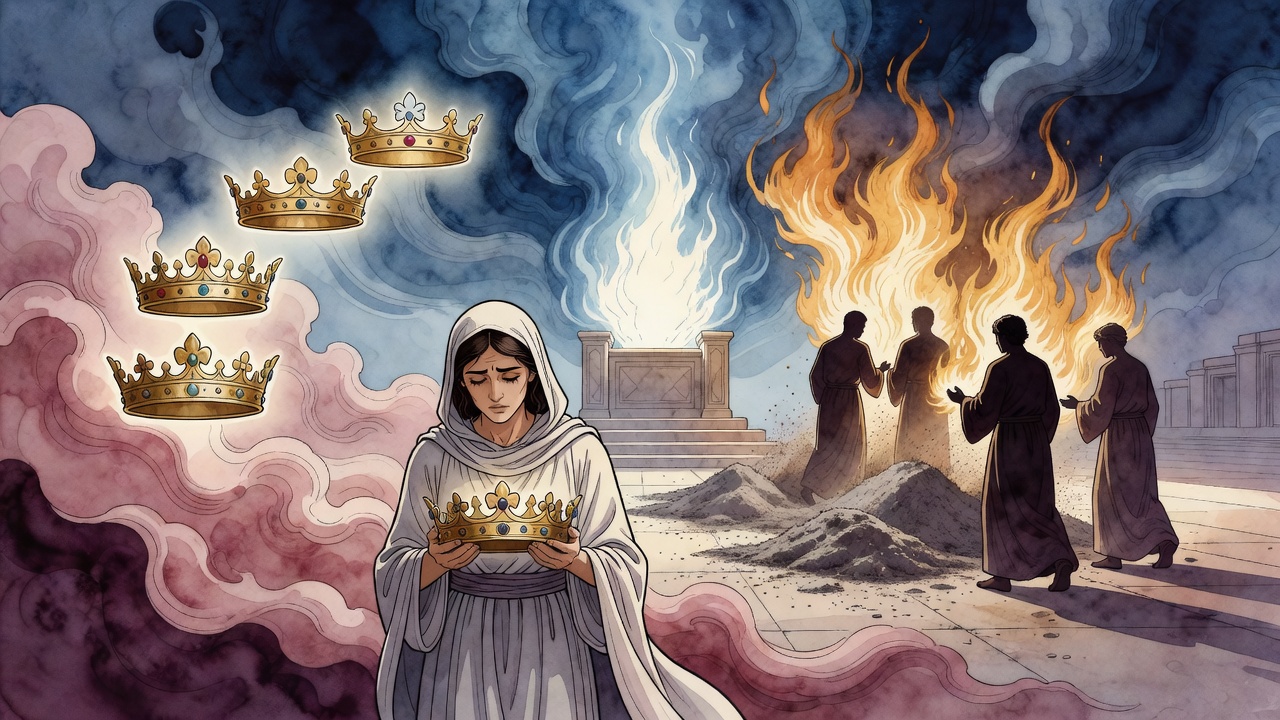
Elisheba, daughter of Amminadav, woke that morning with five reasons for joy. Her husband Aaron was the high priest of Israel, the holiest human office in the nation. Her brother-in-law Moses stood as prophet and king. Her son Eleazar was head of the priestly division. Her grandson Phinehas was already marked as the priest of war, and her brother Nachshon was prince of the tribe of Judah. Five honors converging on one family on the first day the Tabernacle would see real fire come down from God. She could not have imagined a day more complete than this one.

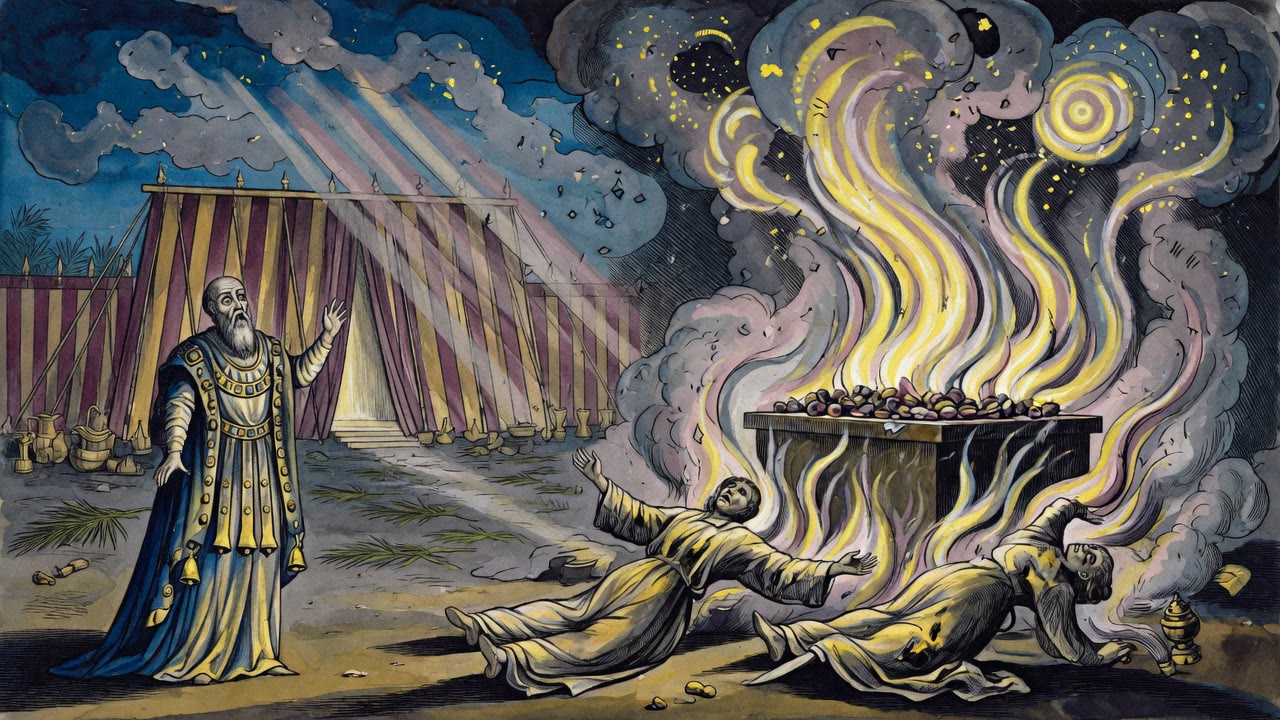
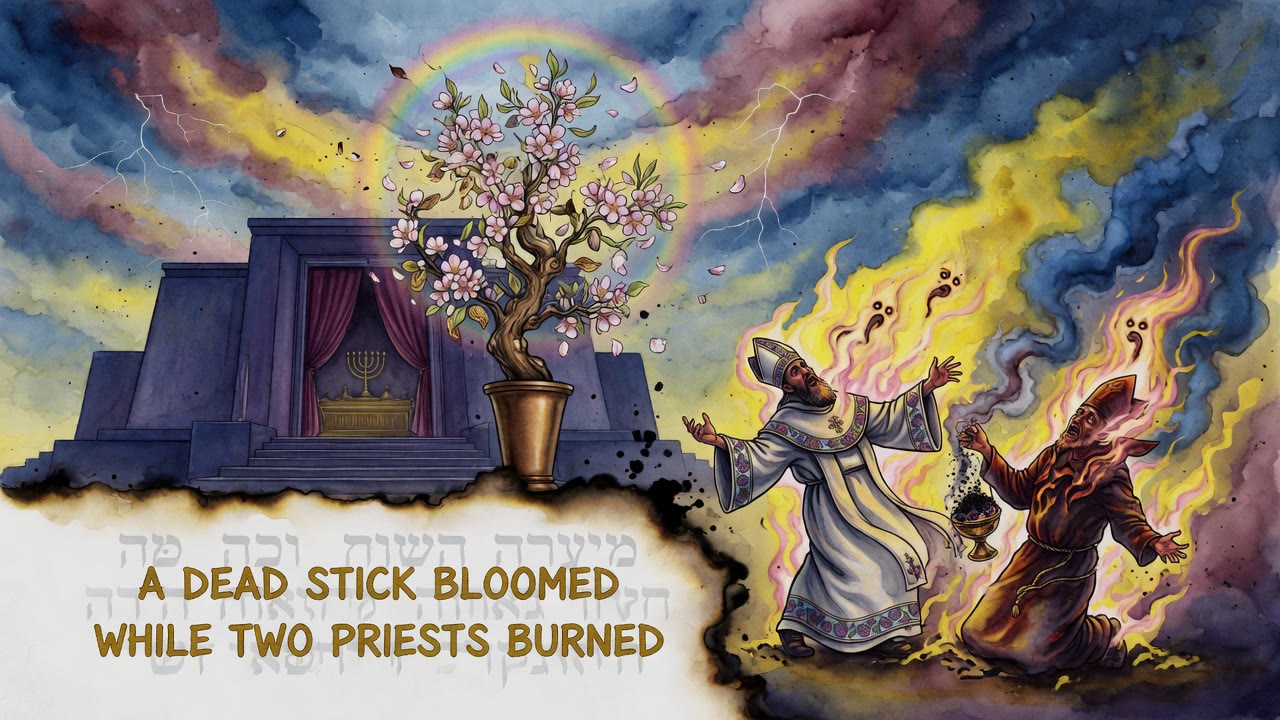
By the time the morning's service was over, two of her sons were dead. Nadab and Abihu, Aaron's eldest, had entered the Tabernacle with their incense pans and offered fire that God had not commanded, and fire had come out from before God and consumed them. Their bodies lay on the floor of the Tabernacle in their priestly vestments. The joy of the morning was the frame for a devastation that came without warning and could not be argued with.

What Had Been Waiting Since Sinai

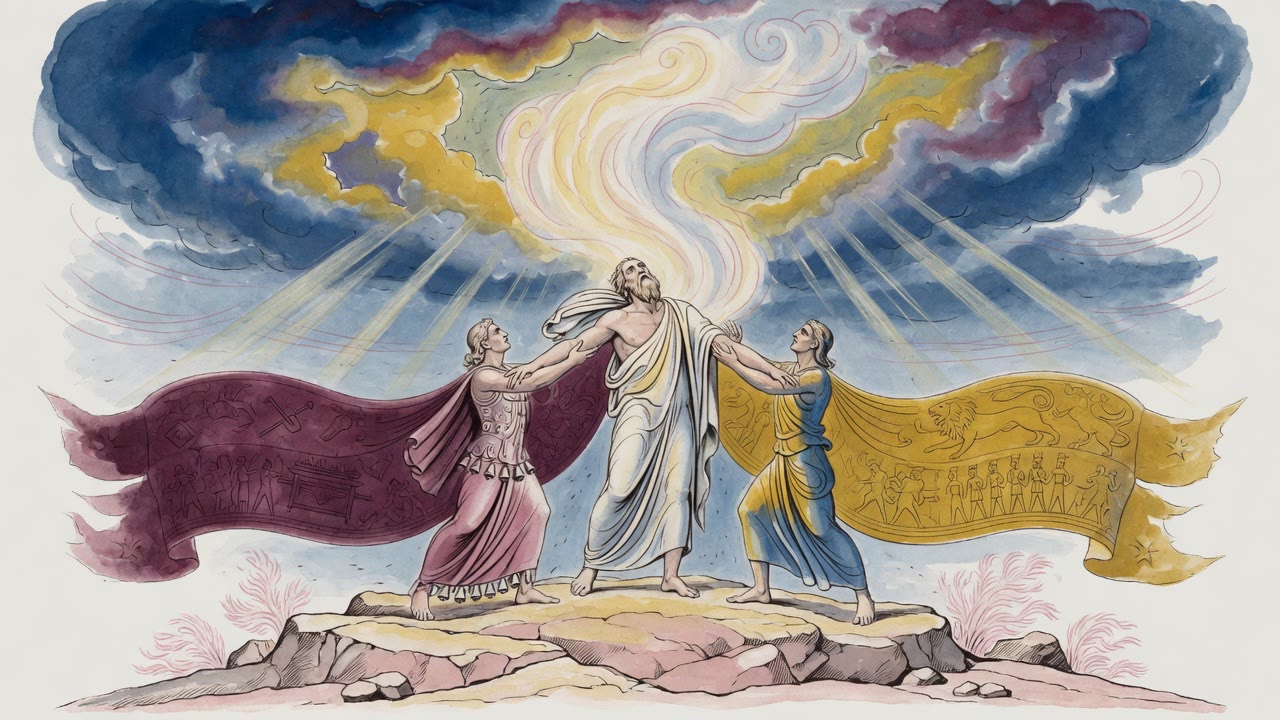
The tradition did not treat the deaths as arbitrary. It traced back what had been earned, carefully, over years. Nadab and Abihu had been on the mountain at Sinai. They had gone up with Moses and Aaron and the seventy elders and had eaten and drunk in the divine presence, and they had gazed directly at the vision there when they should have turned away as Moses had turned away at the burning bush. It was not a crime that registered immediately. It was a debt accumulating.

They had also spoken between themselves at Sinai about the future. When will these two old men die, they had said, speaking of Moses and Aaron, so that we can take over the leadership? The arrogance was noted. They were exceptional men. Their father was high priest, their uncle was prophet and king, their grandfather on their mother's side was prince of a tribe. They knew their position and they leaned on it. Pride of that quality does not always destroy immediately. Sometimes it waits for the moment when it will cost the most to demonstrate what it costs.

The Fire That Did Not Burn the Bodies

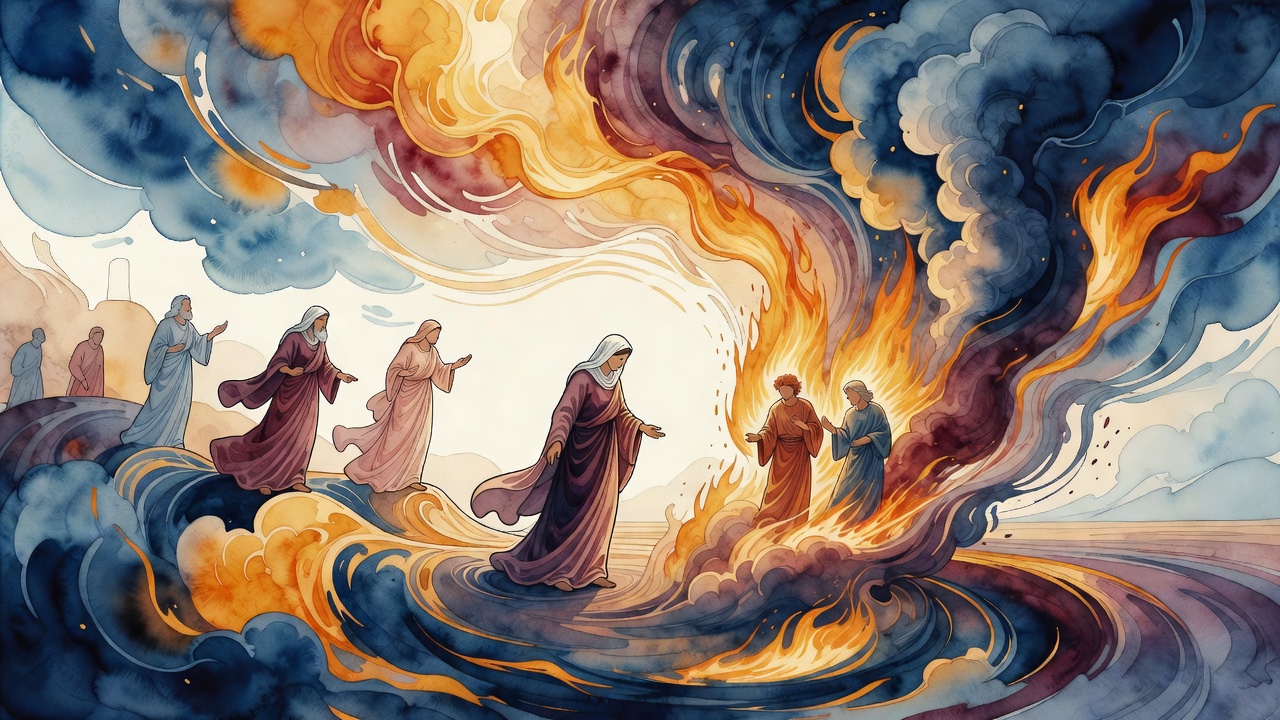
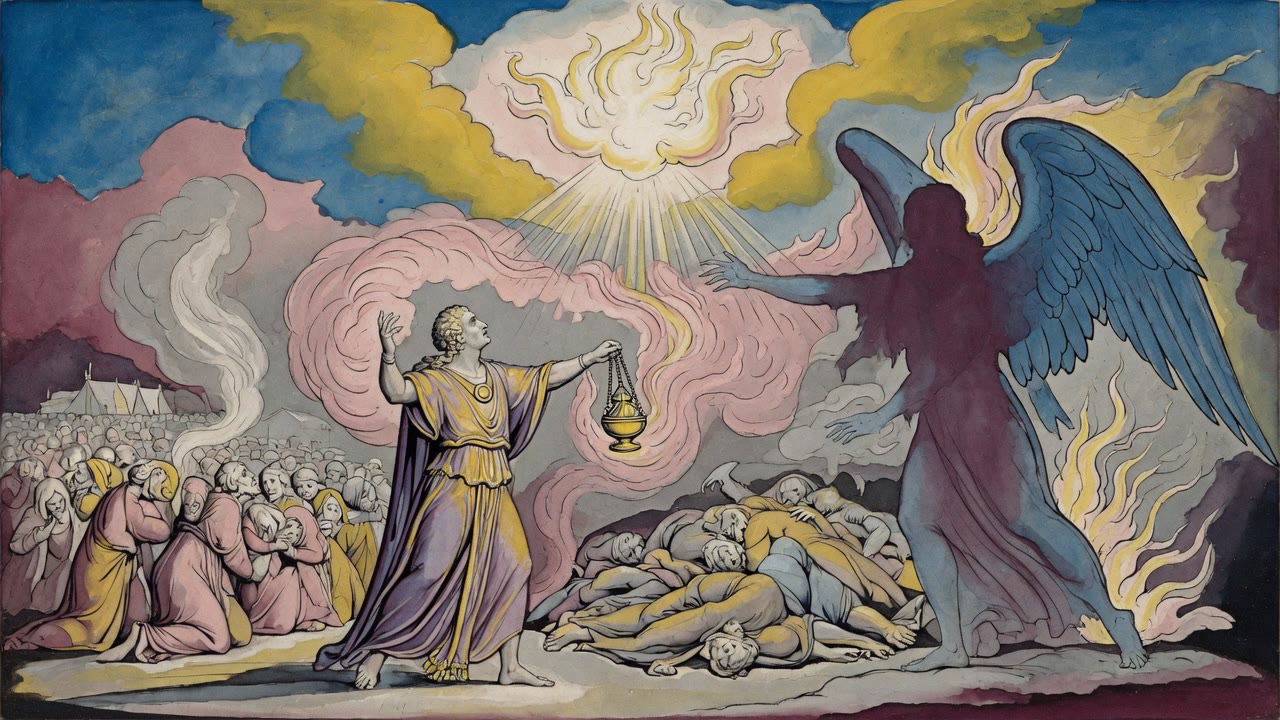
The fire that struck them down was specific in what it destroyed. The traditions record that their bodies were not burned. The external sign of death was smoke coming from their nostrils, and their garments were intact. The fire had entered them and done its work from the inside without marking the outside. Mishael and Elzaphan, their cousins, were called in to carry them out of the Tabernacle, gripping their vestments since the bodies themselves were untouched, carrying them outside the camp for burial.

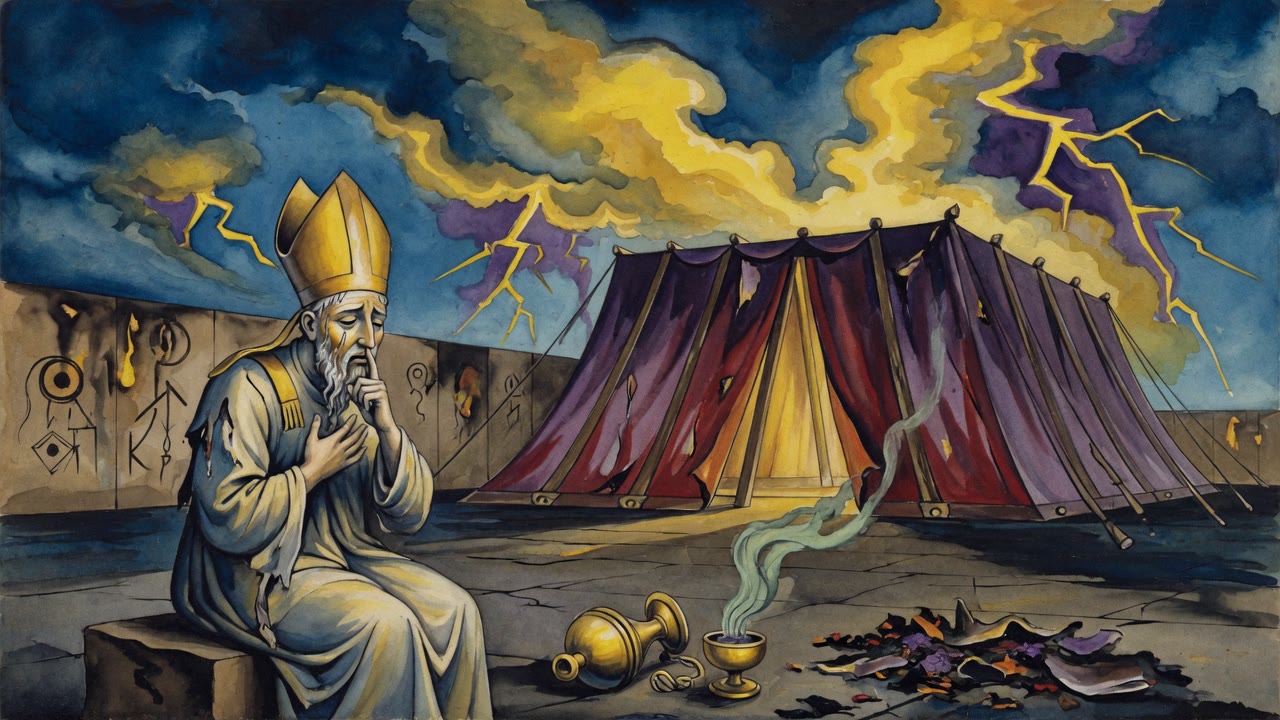
Aaron was told he was not permitted to mourn. He could not tear his garments, could not let his hair down in grief, could not leave the Tabernacle to follow the bodies to their burial. He was the high priest and this was the day of his service and the service could not stop. His two surviving sons, Eleazar and Ithamar, were told the same. The mourning that any father and brother would expect to express in the face of sudden violent death was suppressed by the requirements of the office. Aaron's response to Moses when Moses tried to explain the deaths to him is recorded in the Torah in a single word: vayidom. He was silent.

The Question Aaron Asked and the Answer He Received

Aaron's silence did not mean he had no question. The question came later. He pointed to what had happened at the Red Sea, where God had revealed his power to all of Israel and Israel had witnessed and survived. He pointed to what had happened at Sinai, where the full assembly had stood in the presence of the divine and lived. His sons had served in the Tabernacle, the designated place for God's encounter with Israel, and they had died. The ones who stood further away had been spared. The ones who came closest were consumed. What was the principle?

The answer Moses relayed from God was that proximity to the infinite intensified its demands. Those who come nearest to God are held to a standard that distance makes irrelevant. A fire that could consume anything but had chosen not to show that it could in every moment was, by that restraint, something whose nature needed to be honored with absolute precision. Nadab and Abihu had brought a fire of their own choosing into the space where only God's choosing operated. The principle was not cruelty. It was coherence. Closeness to the infinite did not dissolve the infinite's requirements. It intensified them. Aaron heard this, and he was silent again, and his silence the tradition read as acceptance.


← All myths

From the tradition

Sources

8 sources

The texts this telling draws on, in full. Open a card to read inline, or expand it for a wider, quieter read.

Legends of the Jews 3:79Legends of the Jews

For Elisheba, the joy is amplified fivefold! As Ginzberg recounts in Legends of the Jews, luck seems to be showering blessings specifically on her. Her husband, Aaron, is the High Priest, the most holy position. Her brother-in-law? None other than Moses himself, the King of Israel! Her son, Eleazar, holds the esteemed position of head of the priests. And her grandson, Phinehas, is the priest of war, a position of power and respect. Even her brother, Nahshon, is a prince, a leader of his tribe.

Can you imagine a day filled with so much pride and happiness? Every corner she turns reflects her family’s prominence and favor.

The Talmud (Sanhedrin 52a) reminds us that joy and sorrow often walk hand in hand. The Talmud tells us that Nadab and Abihu were punished for four sins: offering a strange fire, going into the Sanctuary while drunk, entering without washing their hands and feet, and not having wives. Elisheba's joy, so potent, so complete, is about to be shattered. Her two sons, Nadab and Abihu, caught up in the fervor of the dedication, decide to add their own offering. They take their censers, intending to increase God's love for Israel through this extra act of devotion.

It sounds innocent enough, doesn’t it? An eagerness to show their devotion. A desire to contribute to the already overwhelming joy.

But instead of being lauded for their piety, they meet a tragic end. The story, as told in Legends of the Jews based on various Midrashim (rabbinic interpretive commentary), is chilling. From the Kodesh Hakodashim (Holy of Holies), two thin flames, like threads of fire, emerge. These flames divide into four, and two pierce the nostrils of each brother. Their souls are consumed, yet their bodies remain outwardly untouched. No visible wound, no sign of struggle – only the extinguishing of life.

The Midrash Rabbah on Leviticus describes this scene vividly, emphasizing the unexpected and horrifying nature of their demise. It was an act of God, a divine judgment delivered swiftly and silently.

Why? What did they do wrong? The Torah tells us they offered an eish zarah (strange fire) before the Lord, "which He had not commanded them" (Leviticus 10:1). They acted without being commanded, taking initiative in a realm where only divine instruction was permitted. According to the Talmud (Sanhedrin 52a), they were punished for a variety of sins, including entering the Sanctuary while intoxicated, failing to wash their hands and feet, and even for not being married. Some interpretations suggest their eagerness, their very enthusiasm, was itself a transgression – a presumption of divine favor.

Elisheba's story is a stark reminder of the fragility of happiness. It highlights the unpredictable nature of life, where blessings can be followed by unimaginable loss. It’s a story that stays with you, isn’t it? A cautionary tale woven into the very fabric of Jewish tradition, reminding us that even in moments of greatest joy, we must remember humility and reverence. And that perhaps, true happiness is not in the accumulation of blessings, but in the ability to navigate both joy and sorrow with faith and grace.

Full source
Legends of the Jews 3:81Legends of the Jews

The story of Nadab and Abihu, the sons of Aaron, plunges right into that question. It's a tale filled with both tragedy and a strange kind of… merit?

We find this story in Leviticus 10, but the bare bones of the text are fleshed out in the tradition of Jewish legend. Ginzberg, in his Legends of the Jews, paints a portrait of two men who were, in many ways, exceptional. And yet… they met a sudden and fiery end.

What went wrong?

Well, according to the Rabbis, pride played a huge role. These weren’t just any young men. As Ginzberg elaborates, they were somebodies. Their father's brother was a king, their father was the High Priest, their mother's brother was a tribal prince, and they themselves were heads of the priestly families. Imagine that pedigree! They looked around and thought, "Who is good enough for us?" So, they remained unmarried, and many women were left waiting, hoping for their attention.

But their pride went even deeper. The Midrash (rabbinic interpretive commentary) suggests they secretly wished for Moses and Aaron to pass away so they could take over leadership. A little impatient, perhaps? As God says, "'Boast not thyself of to-morrow;' many a colt has died and his hide had been used as cover for his mother's back." In other words, don't count your chickens before they hatch.

The climax of their story comes with the offering of "strange fire" (esh zarah) before God. This act, described in Leviticus, seems simple on the surface, but the Rabbis see layers of transgression. They didn't seek permission from Moses or Aaron. They didn't even consult each other! Each acted independently, driven by their own sense of importance.

And the specifics are damning. They allegedly drank wine before entering the Sanctuary, which was forbidden. They didn’t wear the proper priestly robes. They hadn't sanctified themselves with water from the laver. According to some accounts, they even entered the Holy of Holies, a space strictly off-limits! And, crucially, they offered incense when God hadn't commanded it.

It was a complete breach of protocol, a ritual disaster.

But here's the twist. Despite all these sins, the legends also emphasize that Nadab and Abihu were, in many ways, righteous men. The Sifra, a tannaitic midrash on Leviticus, even says that God grieved their deaths more than Aaron did! Why? Because, despite their flaws, they possessed genuine worth and piety.

So, what are we to make of this?

Perhaps the story of Nadab and Abihu isn’t just a cautionary tale about pride and disobedience. Maybe it’s also a reminder that even good people can make terrible mistakes. That even those who possess great potential can be undone by their own hubris. And maybe, just maybe, God sees something in us – even when we stumble – that we don't always see in ourselves. It's a complex and uncomfortable truth, but one that resonates deeply within the Jewish tradition.

Full source
Legends of the Jews 3:80Legends of the Jews

Take the story of Nadab and Abihu, sons of Aaron, the High Priest. We encounter them in the book of Leviticus. They seem like pious individuals. But according to tradition, their end wasn't exactly unmerited.

The story, as elaborated upon in Legends of the Jews by Ginzberg, is fascinating. We learn that these weren't just any priests; they were present at Sinai. But here’s the twist: they didn't quite conduct themselves as they should have. Remember Moses and the burning bush? He turned away from the Divine vision, showing humility. Nadab and Abihu, however, gazed directly at the Divine vision of Mount Sinai.

Sounds subtle, doesn't it? But in the eyes of tradition, this was a significant act of hubris. The Zohar, that foundational text of Jewish mysticism, emphasizes the importance of humility before the Divine.

In Ginzberg, their fate had even been decreed beforehand. God, in His infinite wisdom, already knew what was to come. But here’s where it gets really interesting. God didn't want to mar the joy of the giving of the Torah by their death. Instead, He waited until the dedication of the Mishkan, the Tabernacle. like this: a king discovers, on his daughter's wedding day, that the best man committed a serious crime. What does he do? If he has the best man executed right then and there, he'll ruin his daughter's happiness. So, he waits. He chooses to administer justice on a day of his own gladness, rather than overshadowing his daughter's.

As we find in Midrash Rabbah, God acted in a similar way. He postponed their punishment until "the day of gladness of His heart", the dedication of the Tabernacle, rather than on the day the Torah was "espoused" to Israel.

It’s a complex image of God, isn't it? A God who is both just and merciful, who balances the need for accountability with a desire to protect joy. This narrative invites us to consider the delicate balance between Divine judgment and Divine grace, and the profound implications of our actions, even seemingly small ones, in the eyes of the Divine. What does it mean to truly be humble before something greater than ourselves? And how do our choices ripple outwards, impacting not only ourselves but also the world around us?

Full source
Legends of the Jews 3:84Legends of the Jews

The Torah tells us that Nadab and Abihu, in their zeal, offered "strange fire" before the Lord and were consumed (Leviticus 10:1-2). A devastating blow, not only to their family but to the entire Israelite community. But what happened next? Who attended to the grim task of burial?

In Legends of the Jews, a compilation of rich Jewish folklore by Rabbi Louis Ginzberg, Aaron, the High Priest, was forbidden from participating in the burial. Can you imagine? As High Priest, even the death of close relatives couldn't permit him to take part in funeral processions. This was the weight of his sacred office.

What of Eleazar and Ithamar, Aaron's surviving sons? They, too, were barred from mourning or attending the funeral on that specific day, because it was their day of dedication as priests. A terrible irony, isn't it? The very day meant to celebrate their entry into priesthood became overshadowed by immense grief.

So who was left to carry out this somber task? Aaron's cousins, the Levites Mishael and Elzaphan. These men, next of kin after Aaron's immediate family, stepped forward to fulfill this difficult duty. The text emphasizes their lineage, noting they were sons of a "very worthy father," Uzziel.

But what made Uzziel so worthy? The text goes on to say that he was "closely akin to Aaron in character." Just as Aaron pursued peace – a trait so central to his character that the Talmud Bavli (Pirkei Avot 1:12) states, "Hillel says: Be of the disciples of Aaron, loving peace and pursuing peace, loving mankind and bringing them close to the Torah"– so too did his uncle Uzziel. This detail isn't just a biographical note. It highlights the importance of character, of emulating the virtues of those who came before us.

Now, here's an interesting detail: as Levites, Mishael and Elzaphan weren't permitted to enter the sacred space where the "heavenly fire" had taken Nadab and Abihu. How, then, could they retrieve the bodies? An angel intervened, thrusting Nadab and Abihu out of the priestly room before they died, ensuring that Mishael and Elzaphan could approach them. Divine intervention, orchestrated even in the midst of tragedy, to ensure that proper respect could be given in death.

The story of Nadab and Abihu is more than just a cautionary tale. It's a story of duty, of character, and of quiet acts of service performed in the face of unimaginable grief. It reminds us that even in the darkest of times, there is still room for compassion, for kindness, and for fulfilling our obligations to one another. And sometimes, perhaps, for a little divine intervention.

Full source
Legends of the Jews 3:82Legends of the Jews

The Torah tells us about such a moment in the life of Aaron, the High Priest, after the devastating death of his sons, Nadav and Avihu.

The scene: Aaron’s sons, in their zeal, offer “alien fire” before God and are consumed (Leviticus 10). A gut-wrenching moment. Now, picture Aaron, a father overwhelmed with grief, questioning everything. According to Legends of the Jews, Aaron cries out, pointing to the miracle at the Red Sea and Sinai, where all of Israel witnessed God’s power and were spared. But his own sons, chosen to serve in the holiest place, the Mishkan (Tabernacle), entered and died. Why?

In his retelling, Ginzberg shares how God responds to Moses, saying, "Tell Aaron the following: 'I have shown thee great favor and have granted thee great honor through this, that thy sons have been burnt.'" It sounds harsh, doesn't it? How can death be a favor? The answer lies deeper. God continues, explaining that He assigned Aaron and his sons a place of honor closer to the sanctuary than anyone else, even Moses.

There’s a caveat. God also decreed that anyone entering the Tabernacle without command would be struck with tzara'at – often translated as leprosy, but understood by some to be a broader category of skin ailment. God asks, would Aaron have preferred his sons, privileged to enter the innermost spaces, to suffer as lepers outside the camp for their transgression?

This is where it gets really interesting. Moses delivers God’s message to Aaron, and Aaron, after processing this divine perspective, responds with profound acceptance. He says, "I thank Thee, O God, for that which Thou hast shown me in causing my sons to die rather then having them waste their lives as lepers. It behooves me to thank Thee and praise Thee, 'because Thy lovingkindness is better than life, my lips shall praise Thee.'" (Quoting Psalm 63:4).

Wow. Aaron, in his immense pain, recognizes a deeper truth. He acknowledges God's loving-kindness, even in the face of tragedy. He understands that there may be fates worse than death. He chooses to praise God, understanding that even in loss, there is divine purpose.

What can we learn from Aaron's response? Perhaps it's about finding meaning even when things seem meaningless. Maybe it’s about trusting in a divine plan, even when we can't see the full picture. It’s a challenging lesson, for sure. But in Aaron’s story, we see the potential for acceptance, gratitude, and unwavering faith, even when confronted with the most profound losses. It's a reminder that even in our darkest moments, we can choose to praise, to thank, and to find the loving-kindness that is, perhaps, better than life itself.

Full source
Kohelet Rabbah 2:2Kohelet Rabbah

Her story, found in Kohelet Rabbah, the commentary on Ecclesiastes, is a stark reminder that joy and sorrow can be two sides of the same coin.

The verse But what does that really mean? Kohelet Rabbah illustrates it with a powerful example: Elisheva.

Elisheva bat Aminadav was having the kind of day most of us only dream of. Seriously. Her brother-in-law was none other than Moses, the king! Her brother, Naḥshon, was the prince, the head honcho of all the tribal leaders! And her husband, Aaron, was the High Priest, decked out in the priestly garments and the ephod stones. To top it all off, her two sons were serving as deputy High Priests. Can you even imagine the pride? The sheer joy? Four major celebrations all rolled into one single day!

Elisheva must have felt like she was on top of the world. This was it! The pinnacle of happiness! But here’s where the story takes a devastating turn.

Her two sons, brimming with zeal, entered the Tabernacle to offer incense. Now, offering incense was a sacred act, and it had to be done exactly right, with the proper authorization. Sadly, they acted without permission. And in that moment, everything changed.

They were consumed by fire. Gone. Just like that, Elisheva's quadruple celebration was shattered. Her joy transformed into the deepest mourning. The laughter? Confounded. Silenced.

The passage then quotes (Leviticus 16:1), "After the death of the two sons of Aaron.." It's a chilling reminder of the fragility of happiness, how quickly it can be snatched away.

So, what are we to make of Elisheva's story? It's a tough one. It shows us that even in moments of immense joy, we need to remember that life is unpredictable. That sorrow can lurk just around the corner. Does this mean we should avoid happiness? Absolutely not! But perhaps it encourages us to appreciate the good times, to hold them close, and to remember that even in the face of tragedy, there is still room for hope and resilience. Elisheva's story, as told in Kohelet Rabbah, is a powerful, albeit painful, lesson on the confounding nature of laughter and the fleeting nature of joy. It's a story that stays with you.

Full source
Yalkut Shimoni on Torah 361:2Yalkut Shimoni on Torah

"And to Moses He said: Come up to the LORD, you and Aaron, Nadab and Abihu" (Exodus 24:1). This teaches that Moses and Aaron were walking, and Nadab and Abihu were walking behind them, and they were saying, "When will these two old men die, and we will exercise authority over the community in their place?" Rabbi Yudan in the name of Rabbi Aibo said: with their mouths they said it to one another. Rabbi Pinhas said: in their hearts they pondered it. Rabbi Berekhiah said: the Holy One, blessed be He, said to them, "Do not boast about tomorrow, for you do not know what a day may bring" (Proverbs 27:1); many colts have died and their hides have been spread upon their mothers' backs. Rav Pappa said: this is what people say, "Many are the old camels laden with the hides of the young." "And you shall bow down from afar" (Exodus 24:1). The Torah was given only in the merit of bowing down. "And he built an altar at the foot of the mountain" (Exodus 24:4). On the fifth day he built the altar etc. "And he sent the young men of the children of Israel" (Exodus 24:5) (this is written at remez 279).

Full source
Midrash Tanchuma Buber, Achrei Mot 13:1Midrash Tanchuma Buber, Achrei Mot

[From where came the offense for which they received [what was theirs]? Rabbi Hoshaya said: When Moses was going up, and the elders of Israel with him, from the wilderness, Aaron and Hur and seventy elders and Nadab and Abihu were going up with him. Moses and Aaron were walking first, Nadab and Abihu walking after them, and all the elders of Israel walking after them. And Nadab and Abihu were musing in their hearts, and they said: When will these two elders depart, so that we may take authority and we ourselves be first in every matter? The Holy One, blessed be He, said to them (Proverbs 27:1): "Do not boast about tomorrow." Many colts have died, and their hides have been made into coverings upon the backs of their mothers. He said to them: From that hour you deserved to receive what was yours; but what shall I do? Behold, I am waiting for you until the Tabernacle is set up, and after that I shall judge you. Therefore, when the Tabernacle stood, they received their sentence and died, "after the death of the two sons of Aaron" (Leviticus 16:1).]

Full source