Aaron Was Consecrated With Living Water and God's Name
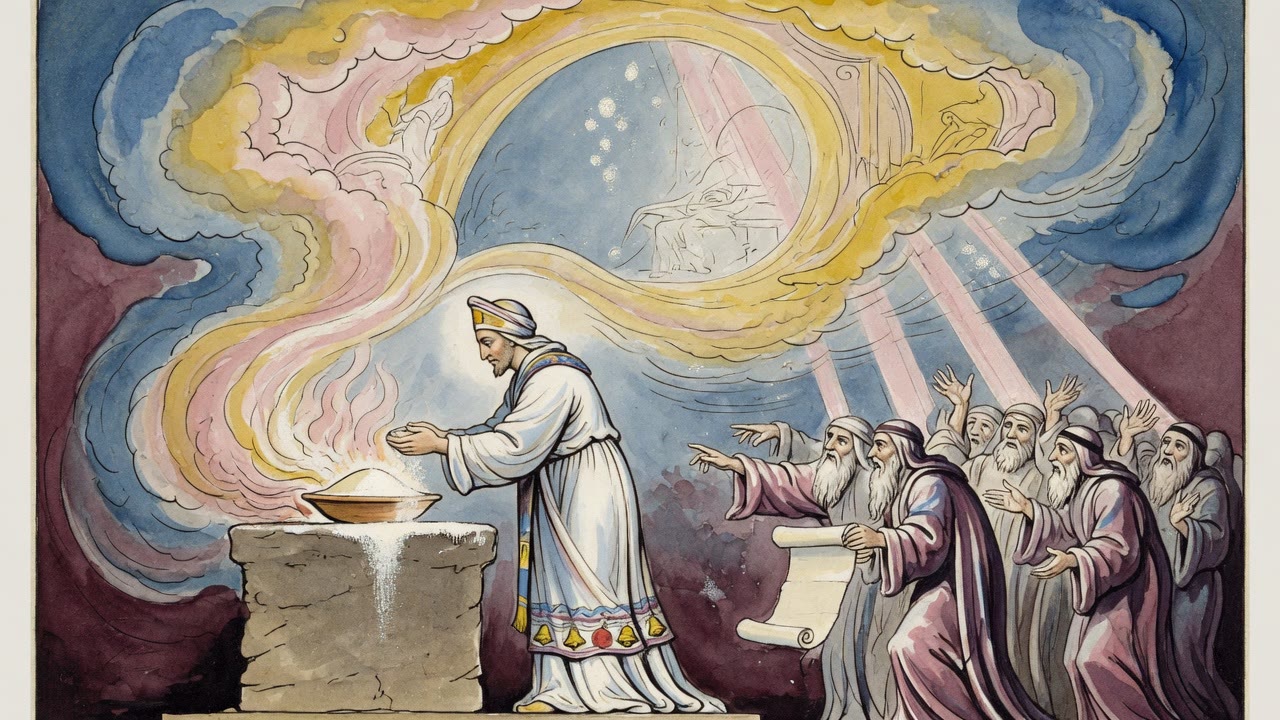
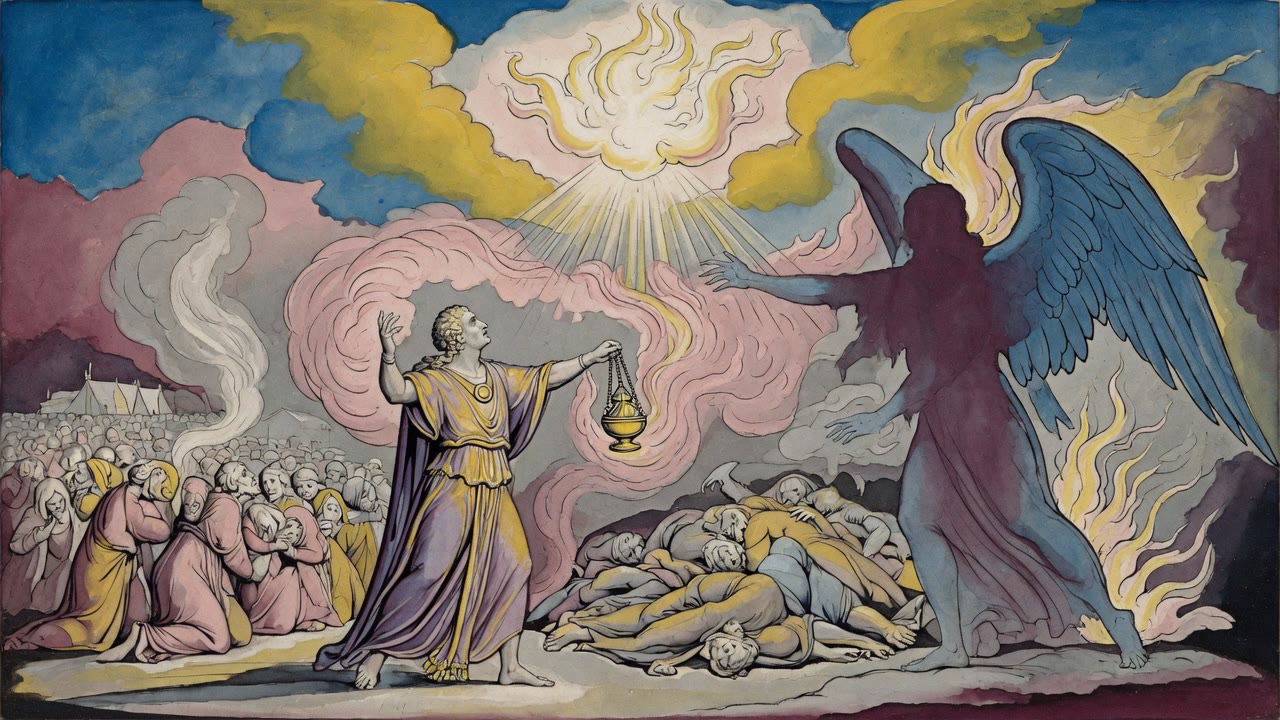
Moses brought Aaron to the Tent door where the whole camp could watch. Aaron still hung back, as if the calf were standing there with him.
Table of Contents
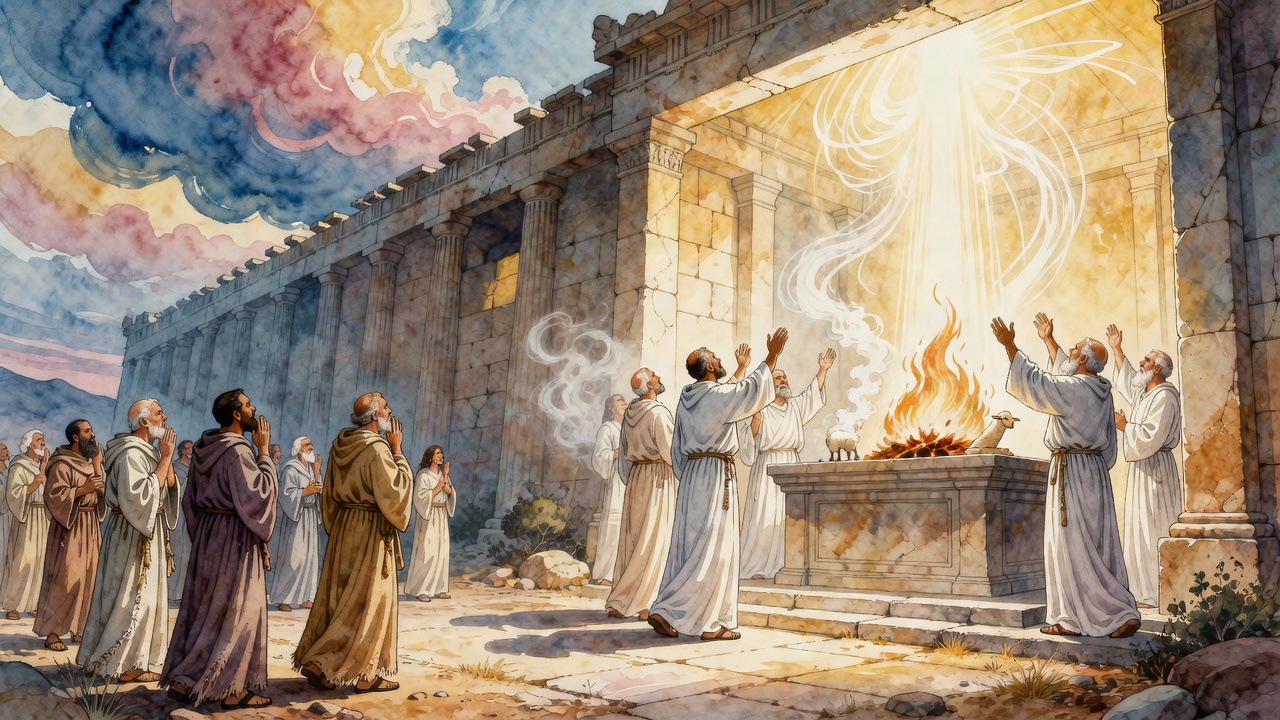
The ceremony happened in public, at the entrance of the Tent of Meeting, where every Israelite could watch. Moses brought Aaron and his sons to the threshold. The garments were waiting. The animals were waiting. The oil was waiting. Aaron hung back as if the calf were still standing in the doorway with him.
 Click for full size
Far Off Because of the Calf
God had told Moses to bring Aaron near. The extra words sat on the order like a bruise: bring near Aaron, who is far off because of the work of the calf.
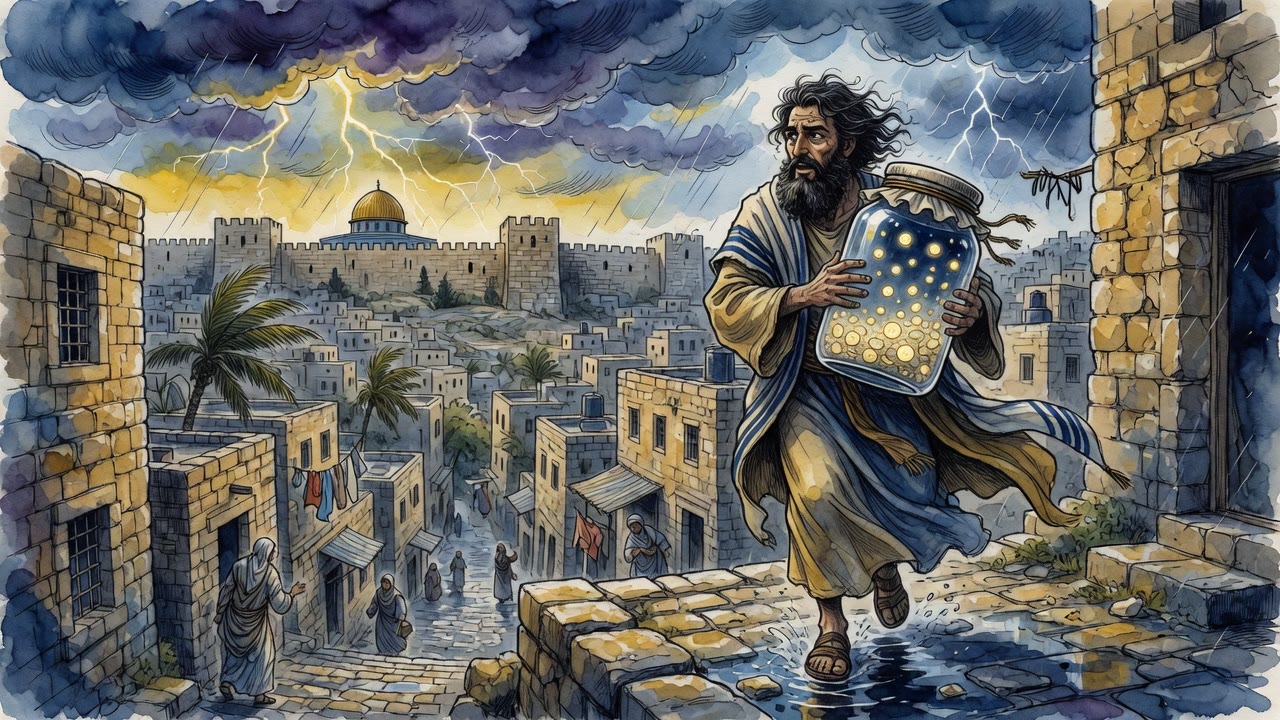
Aaron had asked the people for their gold. He had thrown it into the fire. He had watched an ox come out of it, and he had built an altar in front of it, and the camp had eaten and drunk and risen up to play. Now the same man was being walked to the door of the Tent to be made priest, and the camp that had danced then was standing still now, watching to see if heaven would take him.
The date was the twenty-third of Adar. For seven days the Tabernacle had been erected and taken down daily. Aaron and his sons had practiced the order of service under Moses's eye, over and over, as if the weight of what was coming could be borne only if the motions were already in the hands before the actual hour arrived. Moses himself had served at the altar through those days. He would not keep that work once Aaron was installed.
Four Measures of Living Water
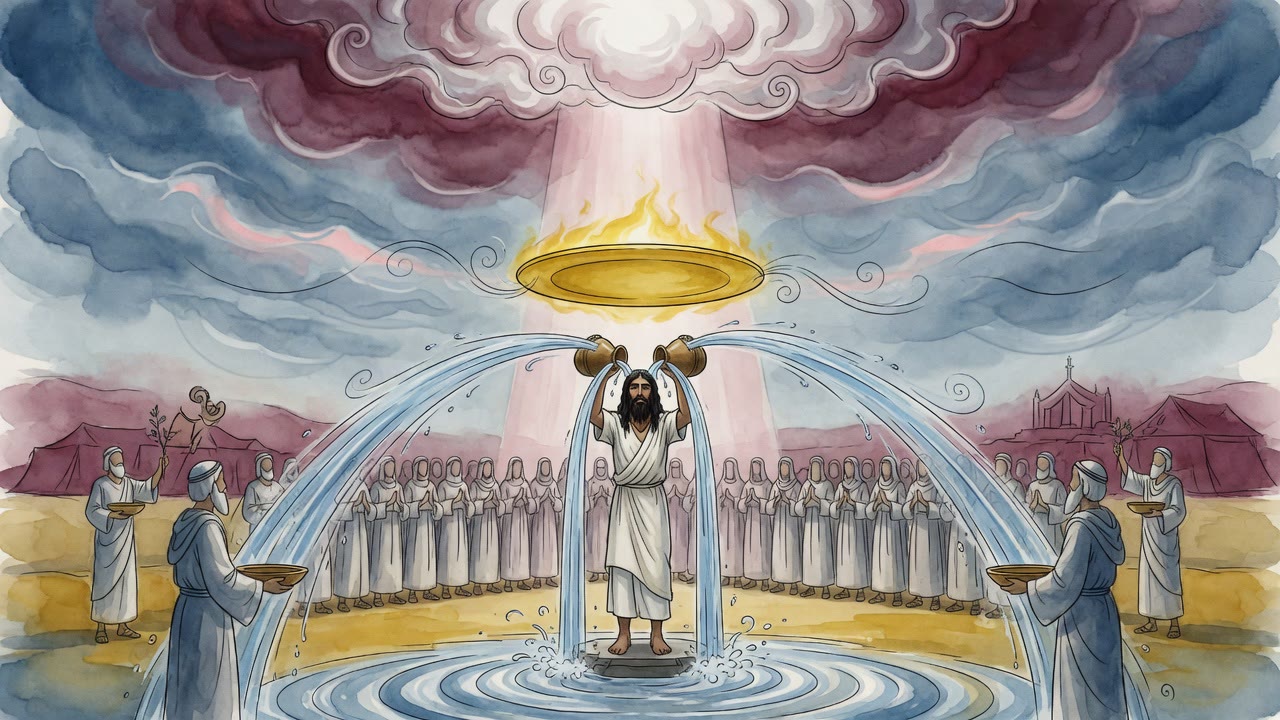
Before the robe, before the oil, before the blood, there was water.
Four measures of mayim chayim (מים חיים), living water, drawn from a flowing source. Not standing water. Not water from a cistern. Water that was moving when it was taken, water that still had the quality of flow.
Moses washed him at the door, in front of the camp. Aaron stood in it and did not look up. The washing was the first limit of a life that would be nothing but limits: what he could touch, what he could eat, which days he could enter, which blood he could carry, which Name he could speak. A priest begins wet, in public, with the most alive water the camp can find.
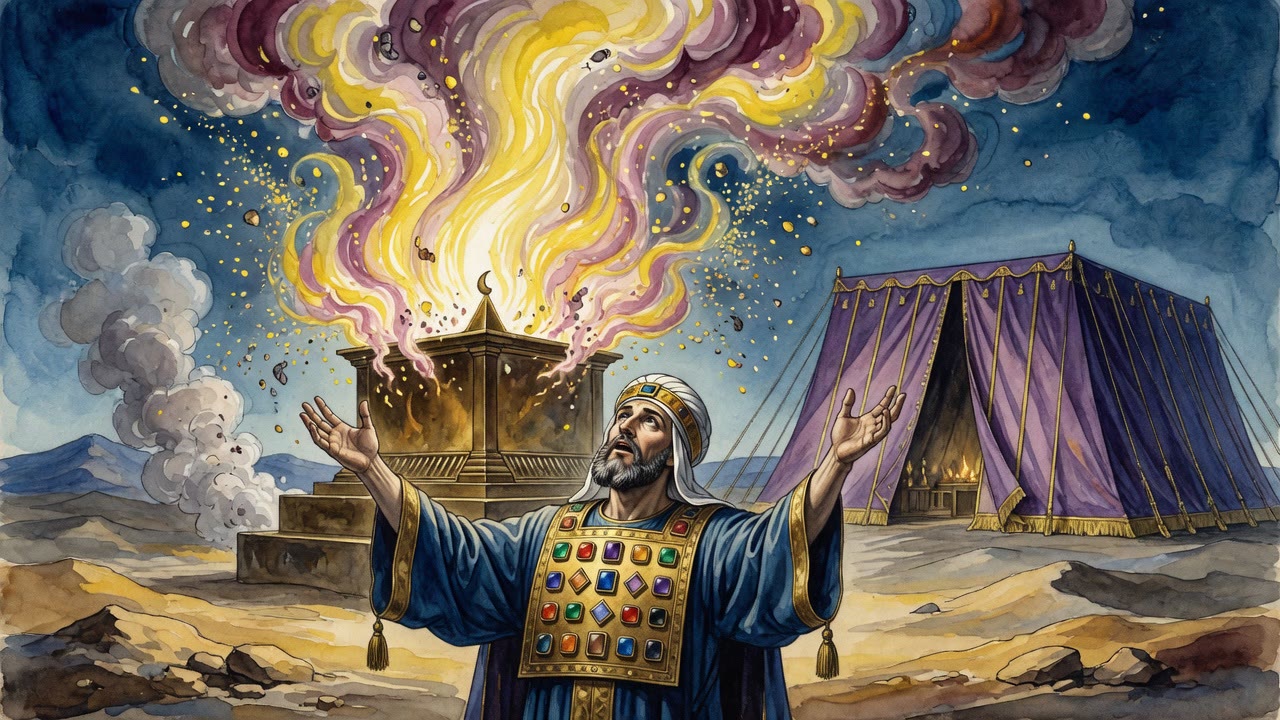
Then the garments went on. The robe. The ephod. The breastpiece. The turban. Oil ran down from the head. The bullock and the rams were brought up in a vehicle, a practical note nobody would have bothered to invent, and Moses did the work Aaron was not yet permitted to do for himself.
Blood on Ear, Thumb, and Toe
The second ram was for the installation. Moses took its blood and put it on the tip of Aaron's right ear, on the thumb of his right hand, and on the big toe of his right foot. The same for the sons. Ear, thumb, toe. Hearing, handling, walking. The blood marked the three places a priest would use for the rest of his life, and it marked them on a man who had heard the camp demand a god, handled their gold, and walked out in front of the ox.
Aaron did not flinch. He had flinched at the calf. He did not flinch here. The camp saw the blood go on and stayed quiet.
Moses put blood on the altar as well, and explained, while he did it, what the altar's purification was for. The place had to be clean before the man who had made the calf could serve at it. The man had to be marked before the place would take him.
The Plate With the Name
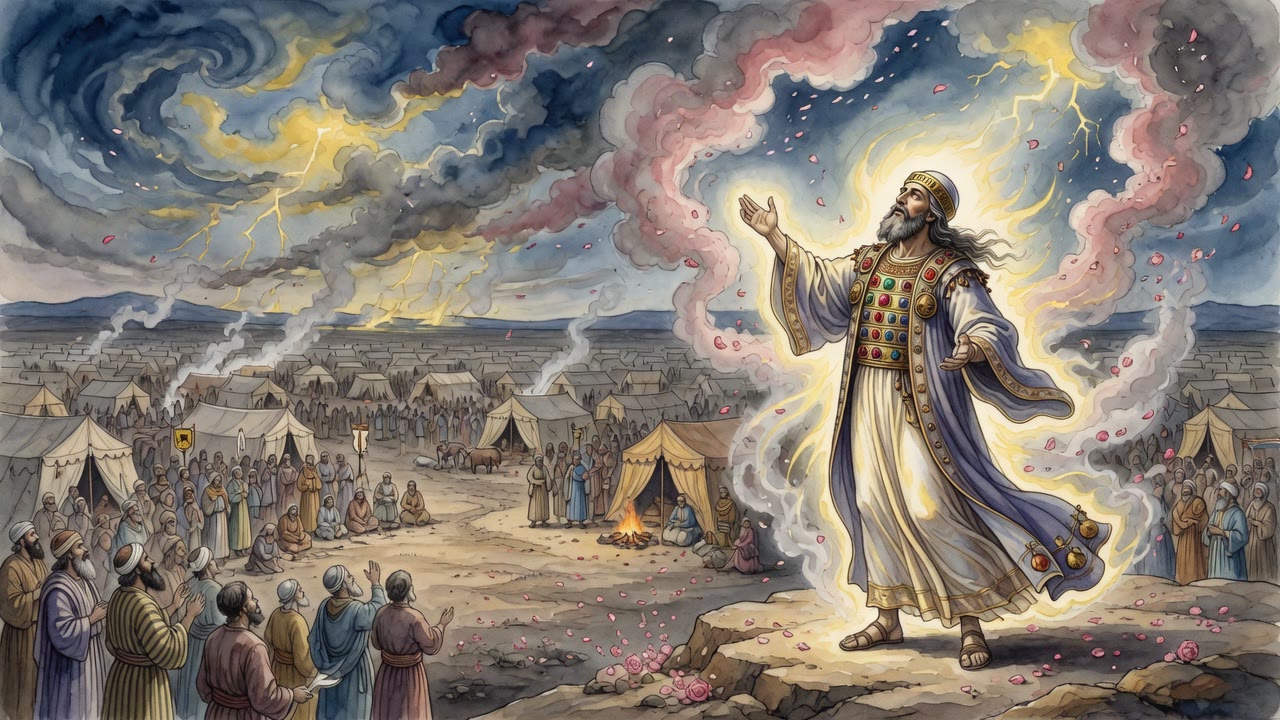
After the water and the garments and the oil and the blood, the golden plate went onto Aaron's turban. It sat on his forehead. The letters of the divine Name were cut into it.
The camp looking on went still, as if the man in the doorway were no longer only the brother they knew. The crown was carved with a holy seal. The plate gleamed above his eyes. Before him none like him, and after him no stranger would wear it.
The Name on the gold was a crown no political crown could match. When he stood later to bless Israel, the Name above his face would be the Name coming out of his mouth. Forehead and lips, one circuit. A man who had asked for earrings to cast an ox now carried the letters on his skin of metal, and could not take them off when the service was over.
He Blessed Them With the Name
That was what all of it was for. Not the washing alone, not the robe, not the blood on three points of the body. The priest was called to minister, to serve, and to bless the people with the Name. When Aaron raised his hands and spoke the blessing (Numbers 6:24-26), he was putting the Name over the assembled camp. The four measures of living water, the garments, the blood, the crown, and the inscribed plate were all preparation for a few seconds of public speech.
He stood between God and Israel, worn by the service, still marked by the calf, and the blessing went out of the same mouth that had said, of the ox, "These are your gods, O Israel." The camp that had watched him hang back at the door heard the Name leave him clean.
He had been far off. Moses had brought him near anyway. The water had moved. The blood had dried on the ear. The plate stayed on.
← All myths