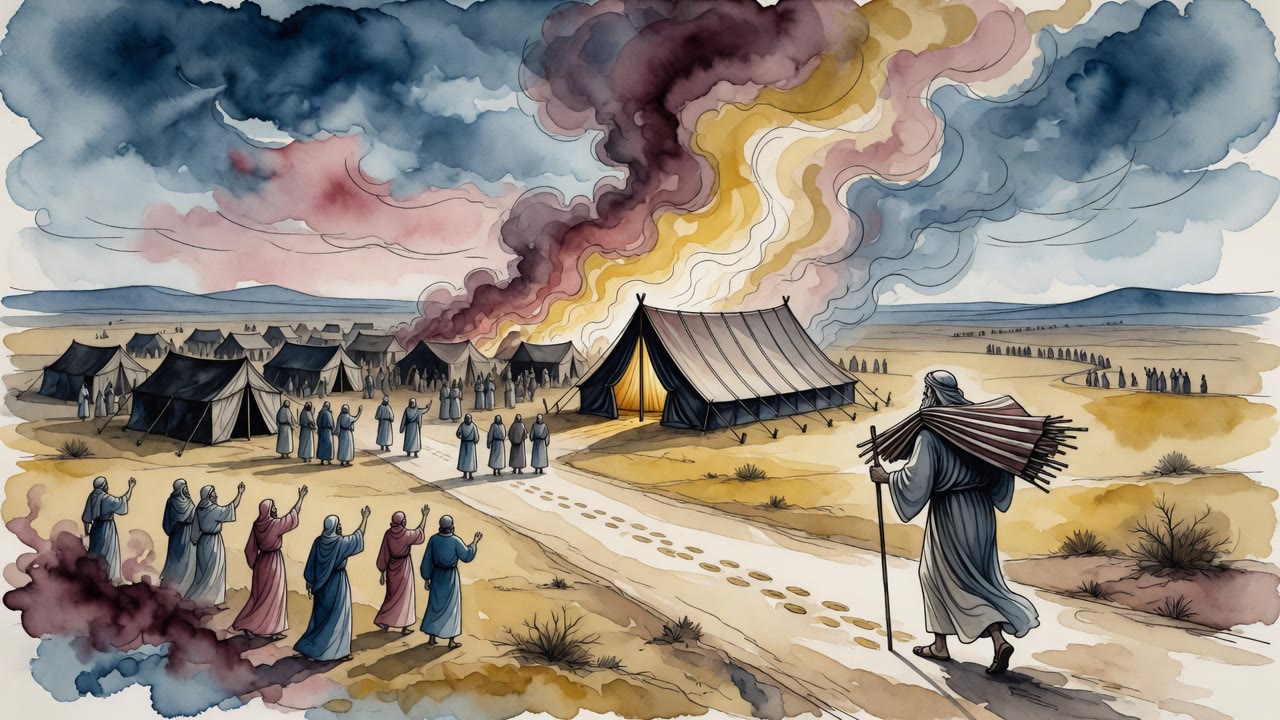
1 texts
Tabernacle in Jewish mythology is documented here through 1 source passages from 1 distinct source names represented in this theme. The strongest clusters come from Kabbalah & Mysticism (1), with frequent witnesses in Zohar (1). These texts preserve how Jewish writers, sages, and mystics described tabernacle across biblical interpretation, rabbinic storytelling, medieval compilation, and kabbalistic teaching.
This page is a topic hub, not a single article. Use it to compare how different Jewish sources treat tabernacle: where the theme appears in narrative, how it changes across source families, which figures or symbols recur, and which passages are most useful for citation. Representative entries include The Tabernacle Rivers Fill the Great Sea. For synthesized anthology narratives, start with Why the Dedication Waited for Nisan and Aaron Needed Moses's Help, Why the Tabernacle Was Finished in Winter but Dedicated in Spring, and Clouds Gathered Eden Stones for the Tabernacle.
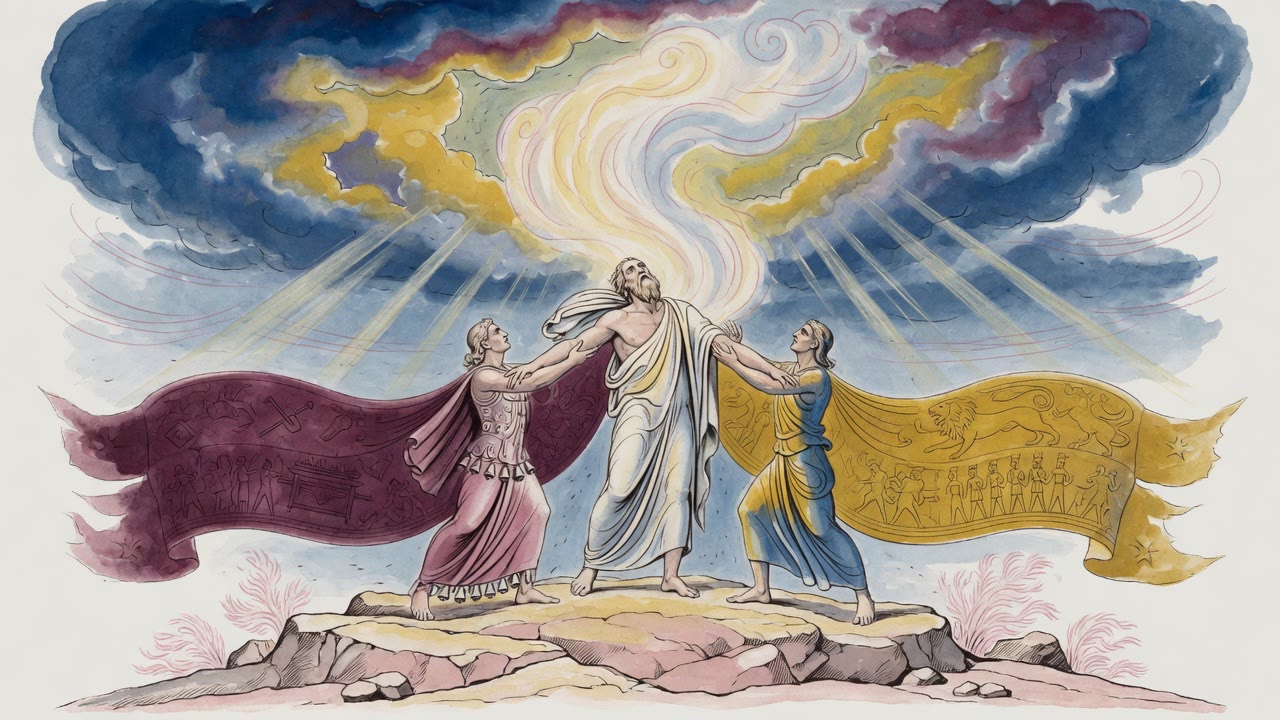
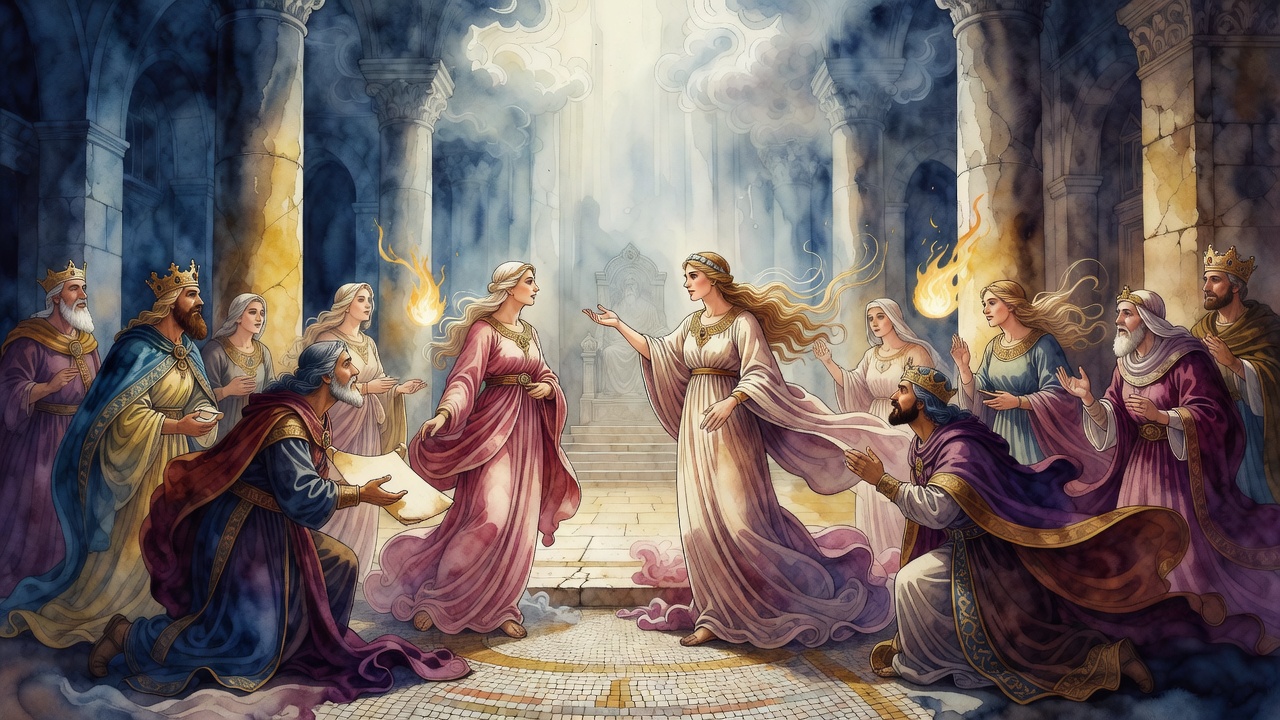
Ginzberg reads the Tabernacle dedication delayed for Isaac's birthday in Nisan and Aaron needing Moses's joint entry to bring the Shekinah as twin pictures.
The Tabernacle was completed on the twenty-fifth of Kislev but not erected until the first of Nisan, three months later. Yalkut Shimoni explains the delay...
When Israel brought offerings for the Tabernacle, the Targum Jonathan reveals that heavenly clouds made their own contribution, flying to the Garden of Eden...
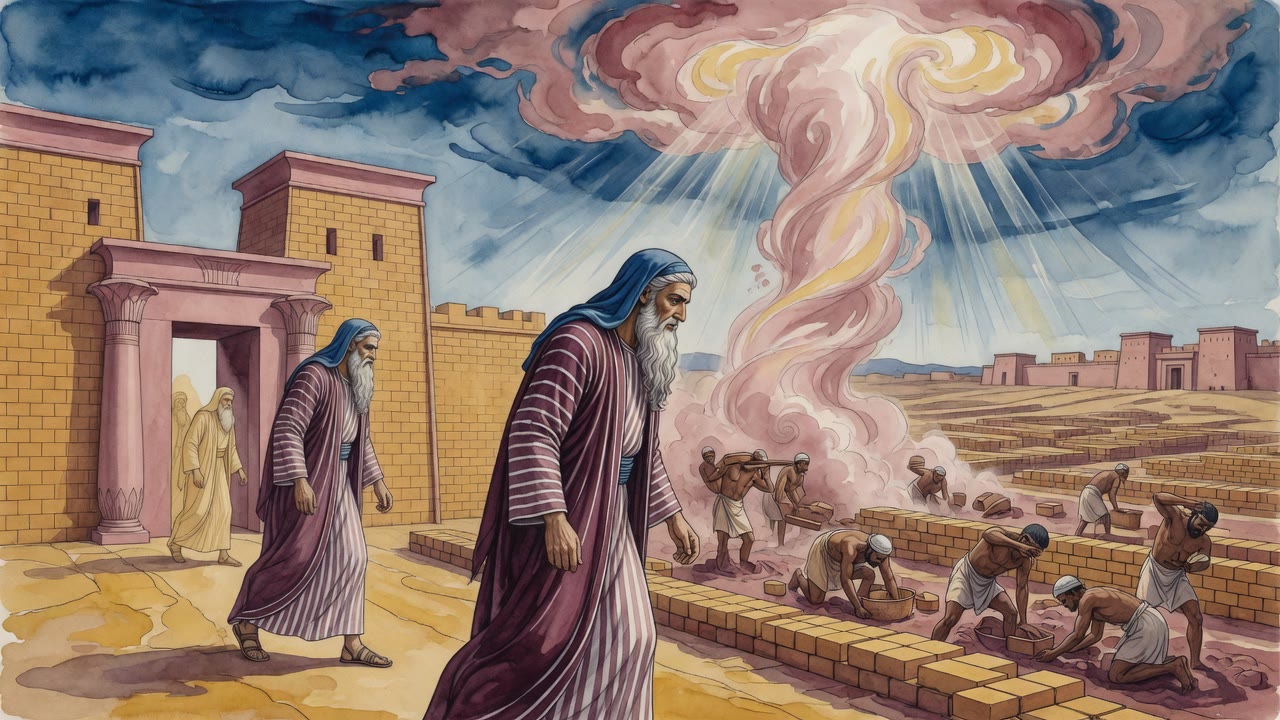
Shemot Rabbah joins Egypt, Passover, justice, Aaron, the tablets, and the Tabernacle into one story about redemption arriving on time.
Before Aaron's sons became priests, Israel's firstborn brought offerings and met the altar fire at the Tabernacle gate first.
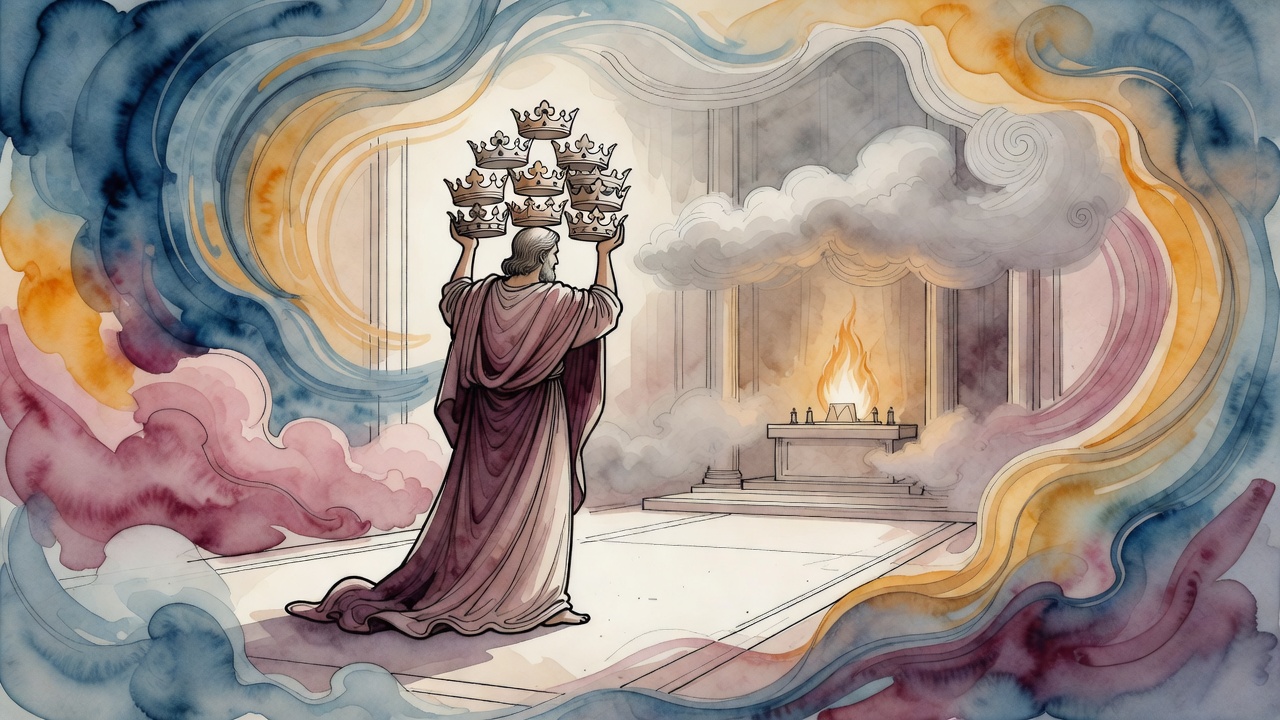
Gold, silver, bronze, and red skins in the Tabernacle each pointed to an empire that would one day rise and rule over Israel.
Pesikta de-Rav Kahana makes the Tabernacle's completion a wedding canopy, cosmic stabilizer, and day when demons left the world.
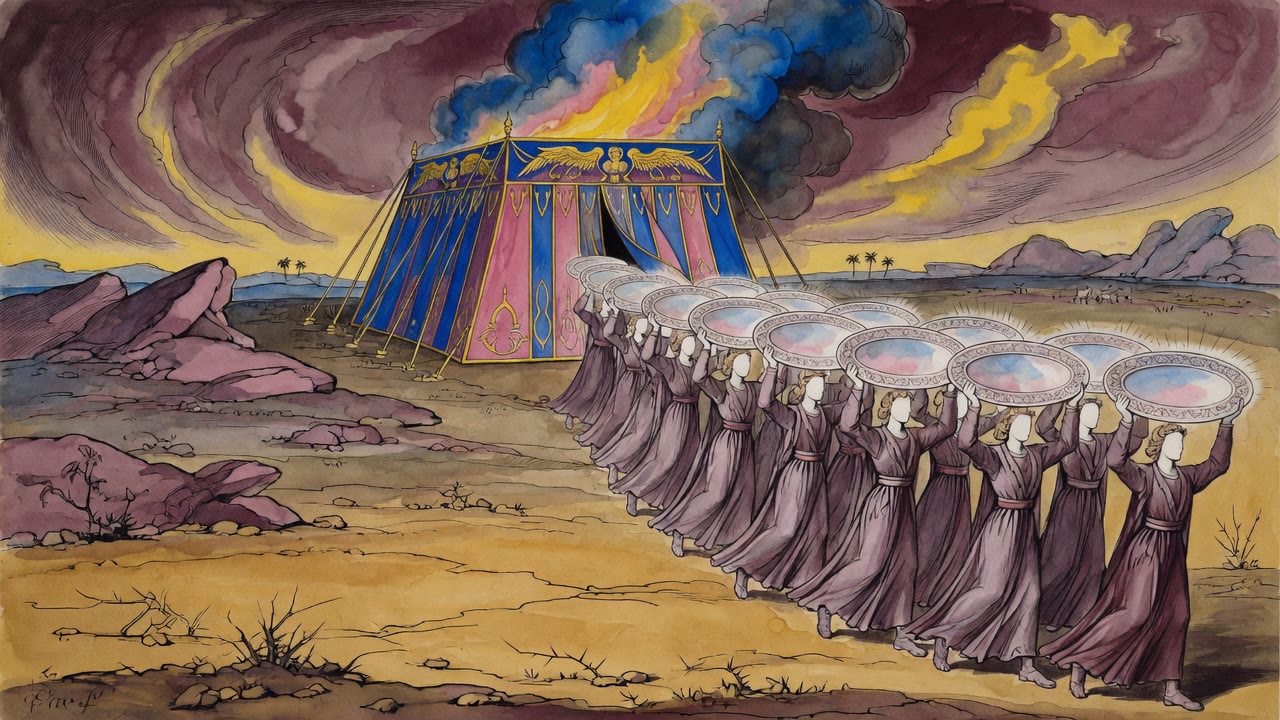
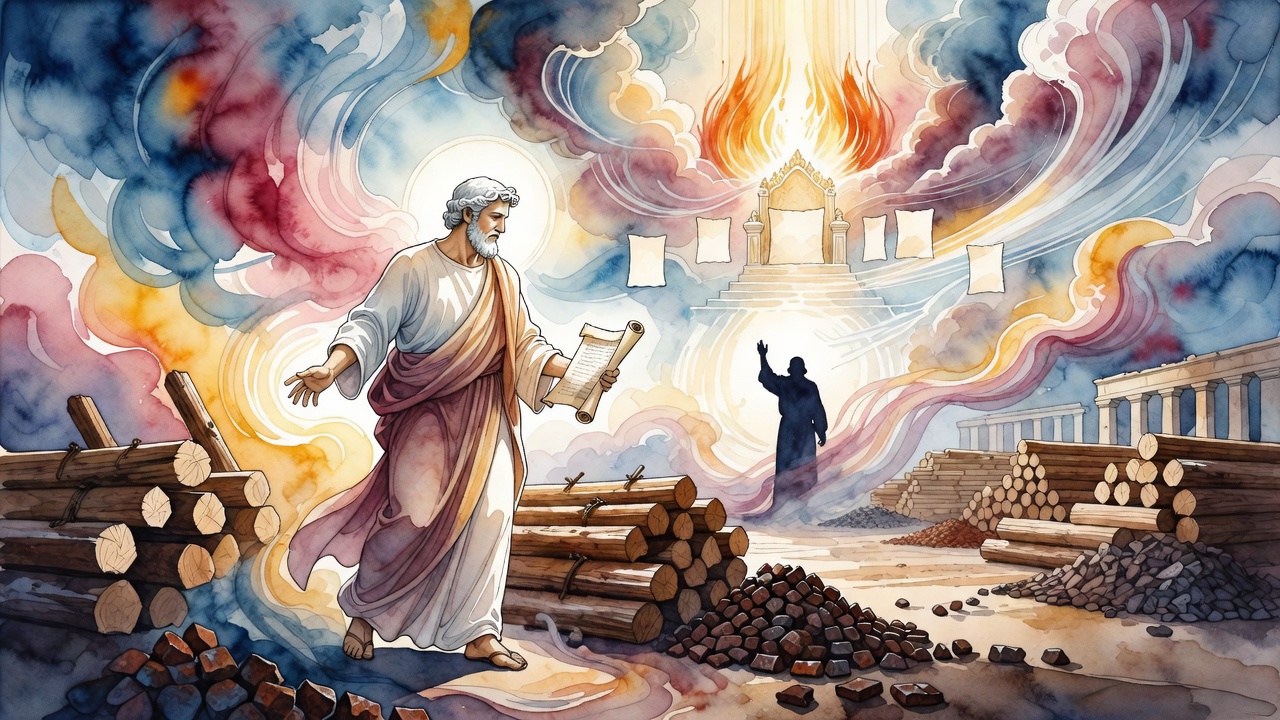
Midrash Tanchuma turns the Tabernacle into a story of atonement through acacia wood, incense, women’s mirrors, and work.
Shir HaShirim Rabbah reads God progressing from daughter to sister to mother and the watching gazelle as twin pictures of how divine love deepens with Israel.
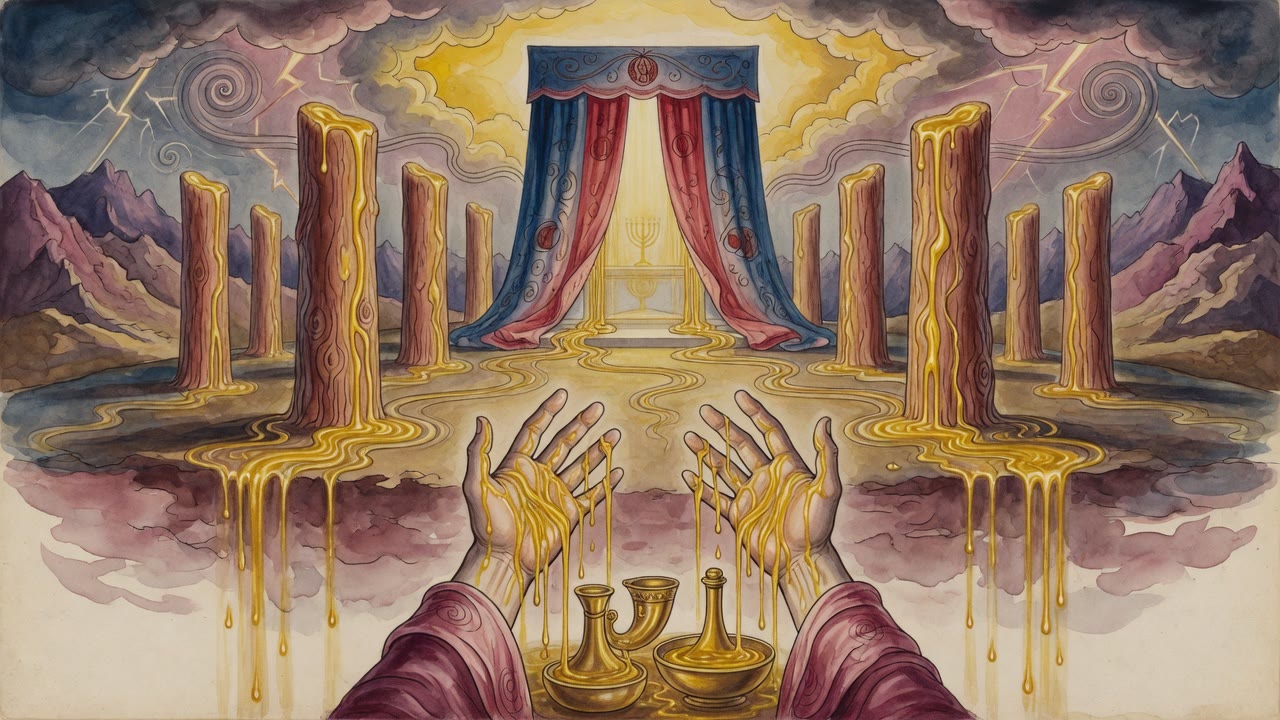
Pseudo-Jonathan supplies three exact priestly counts the Hebrew leaves blank: seventy-one bells, seven days of succession, twelve tribal logs of oil.
Moses won forgiveness for the Golden Calf on Yom Kippur. But he asked for something more: proof that the nations could see.
God rejoiced at the Tabernacle's dedication as deeply as at the creation of the world. The rabbis understood exactly why that was.
Moses built the Tabernacle with his own hands, but when the Cloud of Glory descended, even he had to stand outside and wait for God to call.
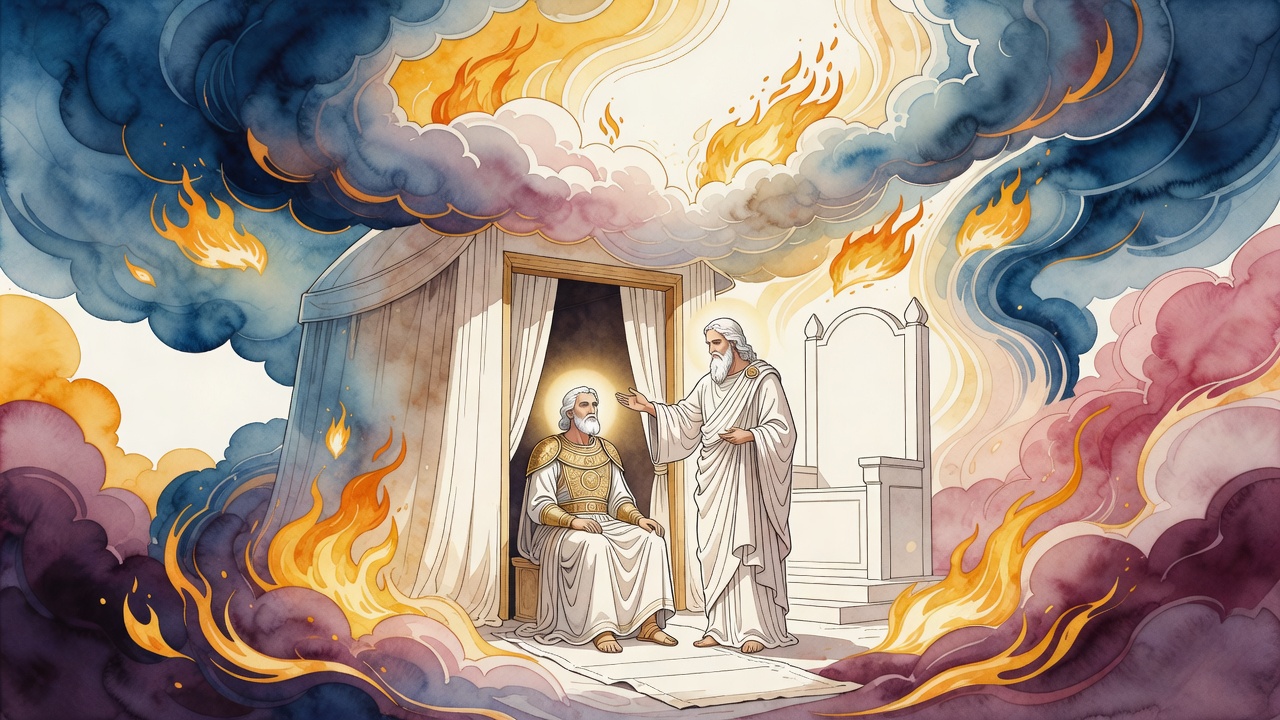
Targum Jonathan turns the opening of Leviticus into a story about Moses refusing to enter holy space until God calls him by name.
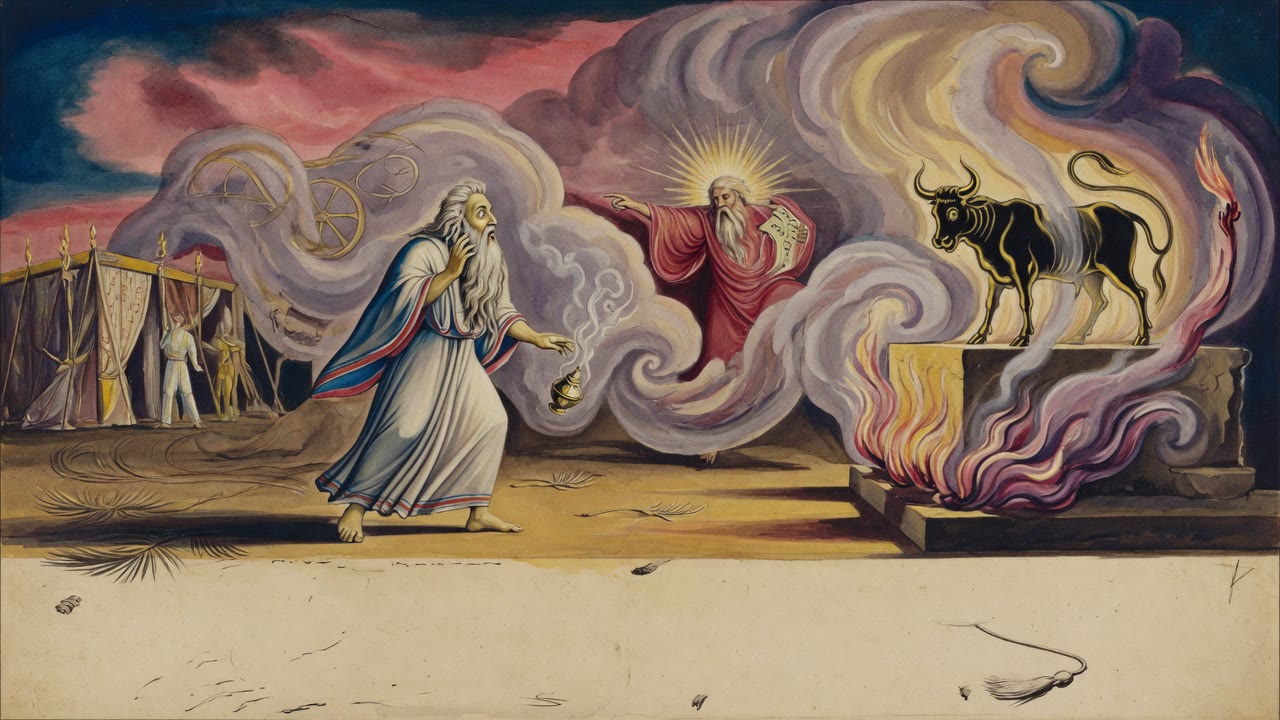
Most people assume Aaron was forgiven for the Golden Calf. The Targum Jonathan says every time he approached the altar, the shape was still there.
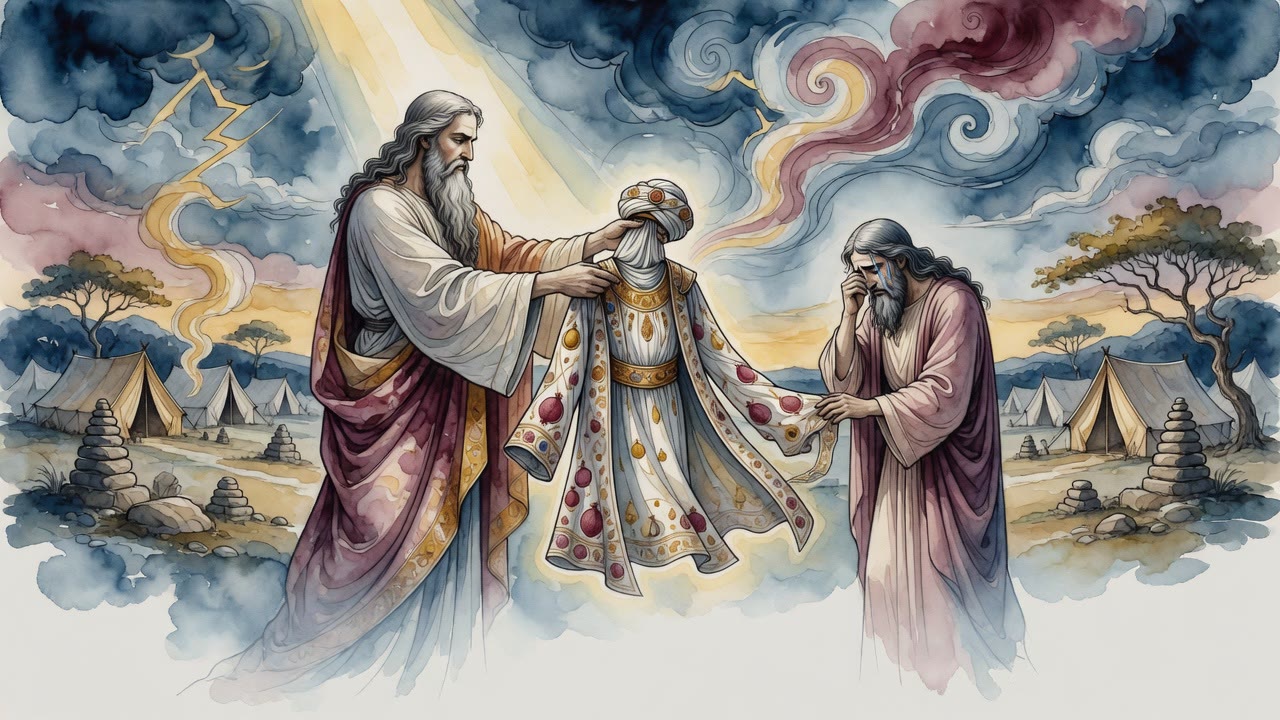
When God chose Aaron as High Priest, Aaron didn't want the job. He was a man who shunned distinctions, and Moses had to persuade him to accept.
Twelve tribal princes brought identical offerings for the Tabernacle, same objects, same weight, same measurements. What they got in return changed the...
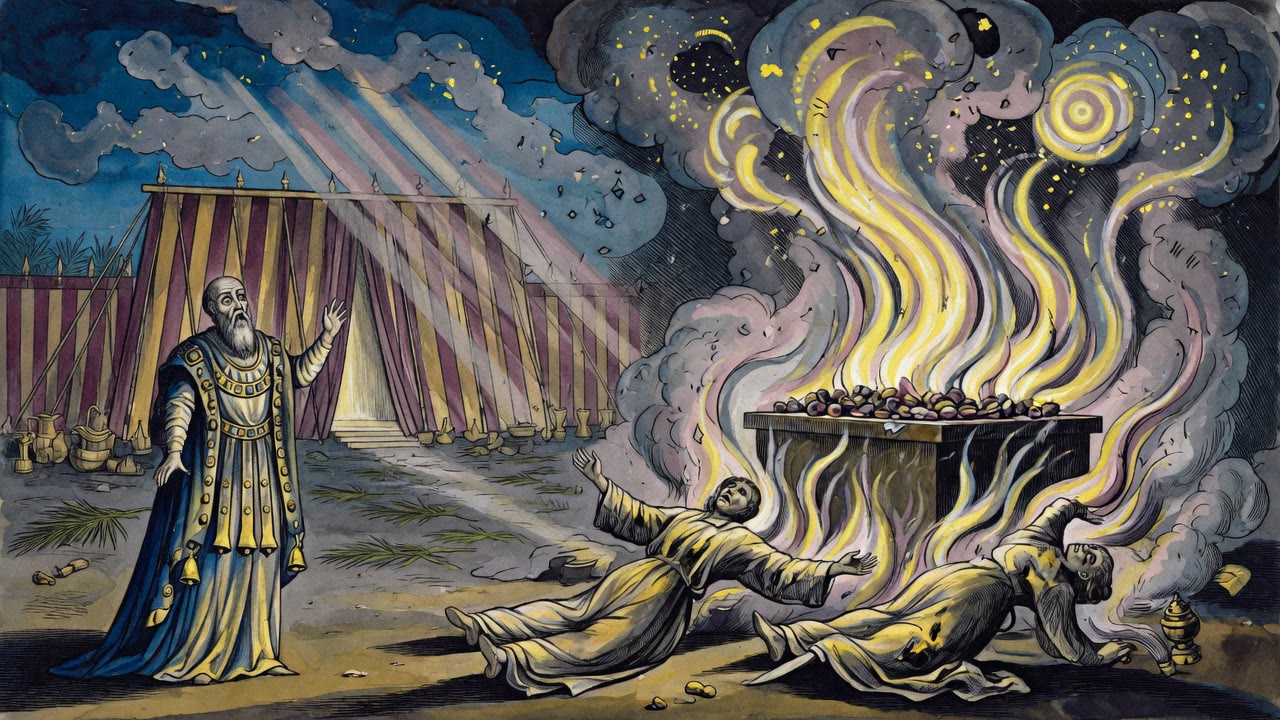
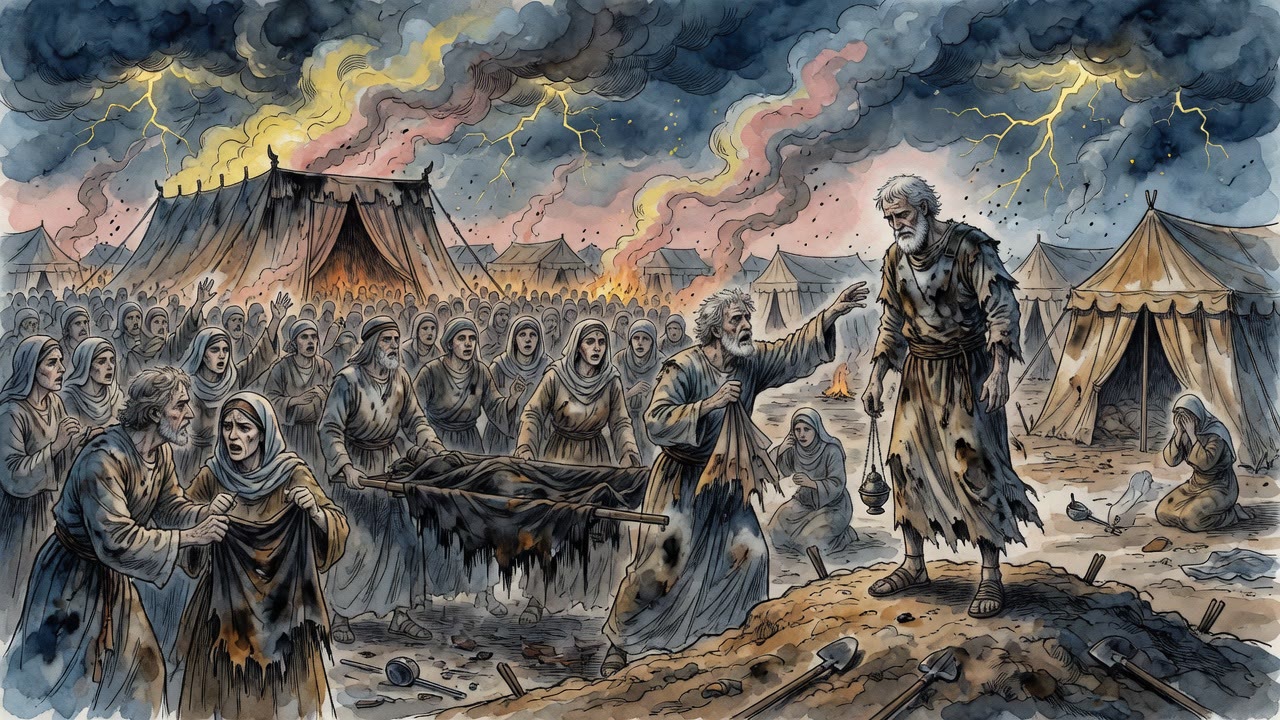
The Tabernacle's grand opening. Aaron's greatest day. Two of his sons were dead within the hour. The decree had been waiting since Mount Sinai.
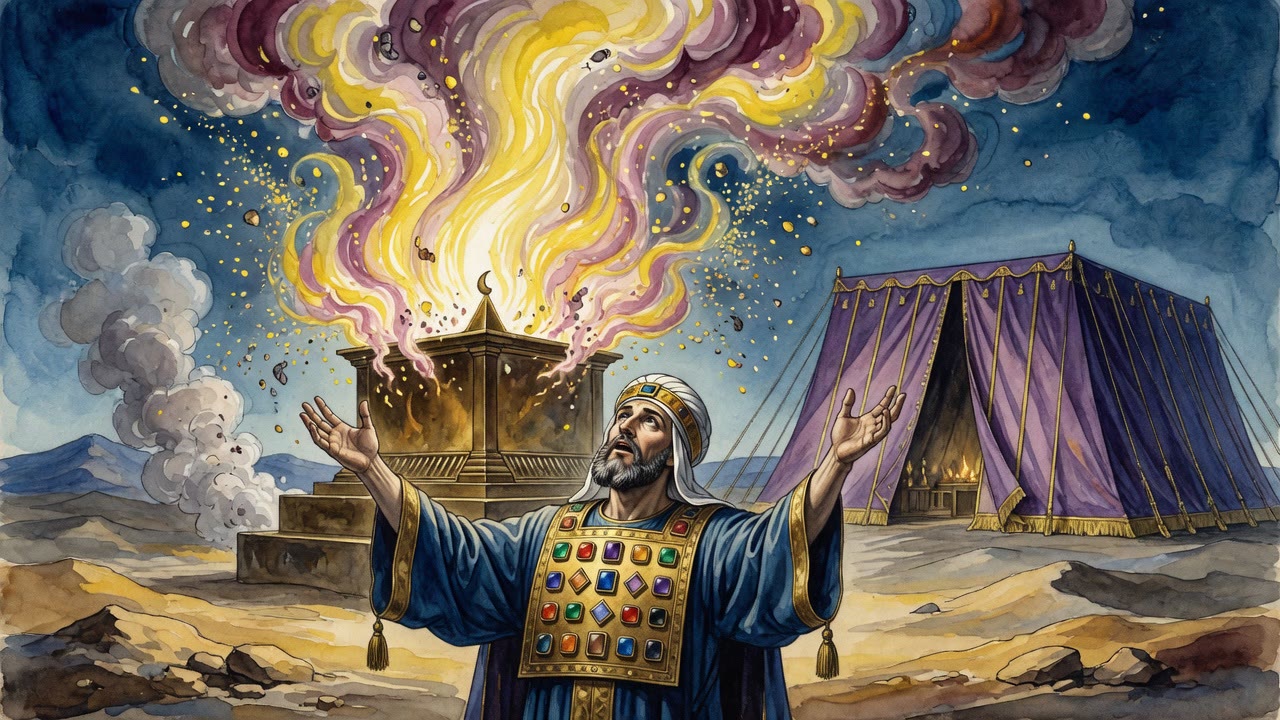
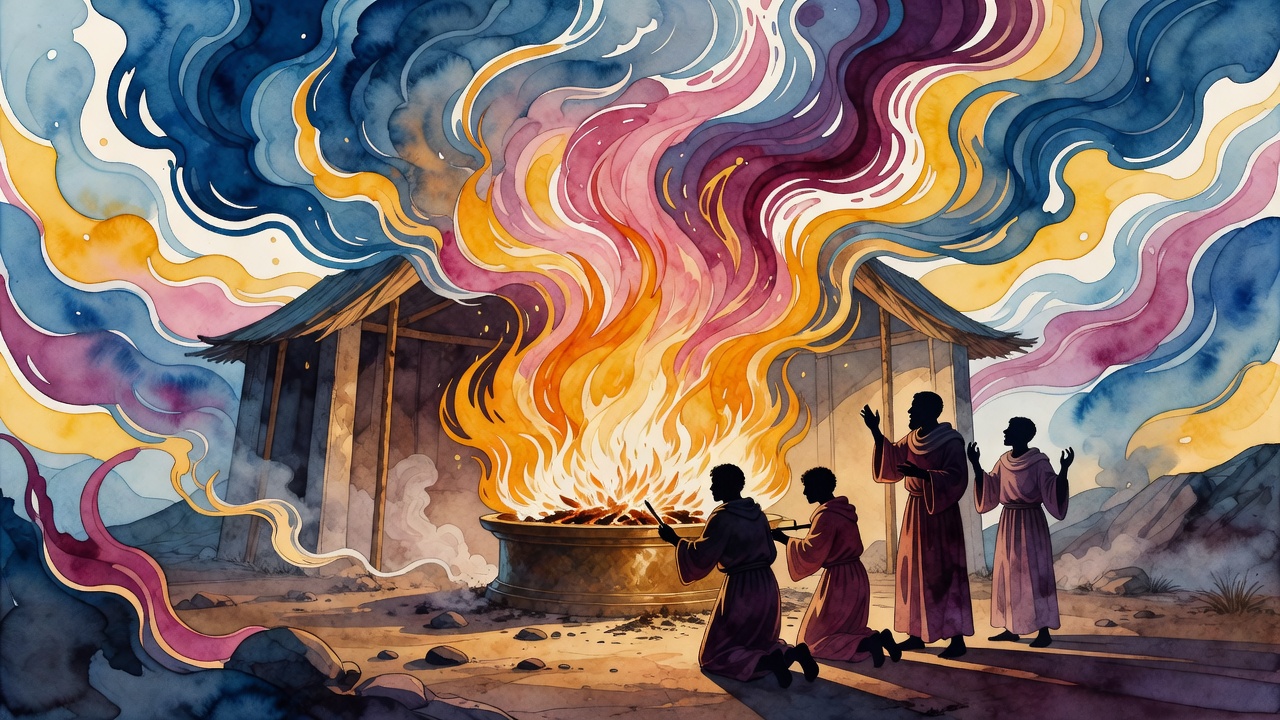
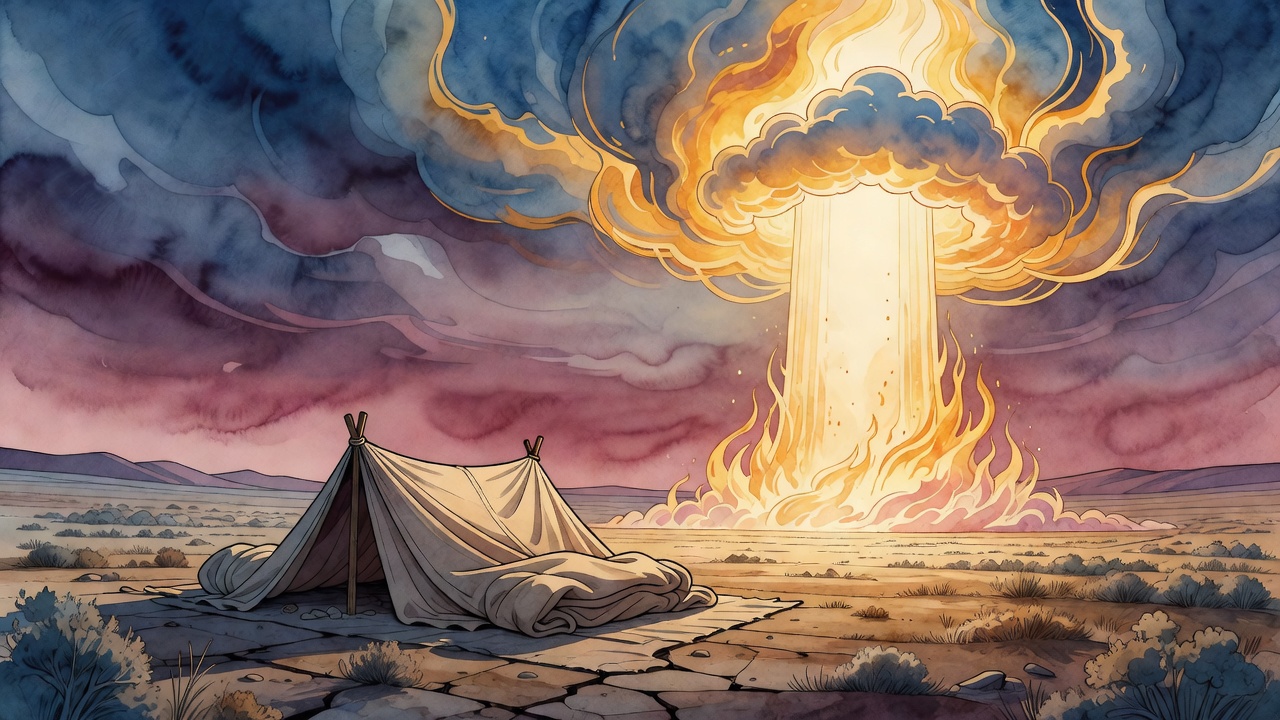
For seven days, Aaron performed the inauguration rituals alone with no sign from God. On the eighth day, fire came down from heaven and consumed everything...
Fire descended at the Tabernacle dedication and never left. Pirkei DeRabbi Eliezer traces it from the wilderness to the Temple, consuming offerings and sons.
Ginzberg reads the elders being rewarded with leading the Pesach sacrifice and the Tabernacle's dedication day producing eight laws as twin structural moments.
Targum Jonathan treats unauthorized slaughter as bloodshed because sacrifice outside the sanctuary can turn worship into violence.
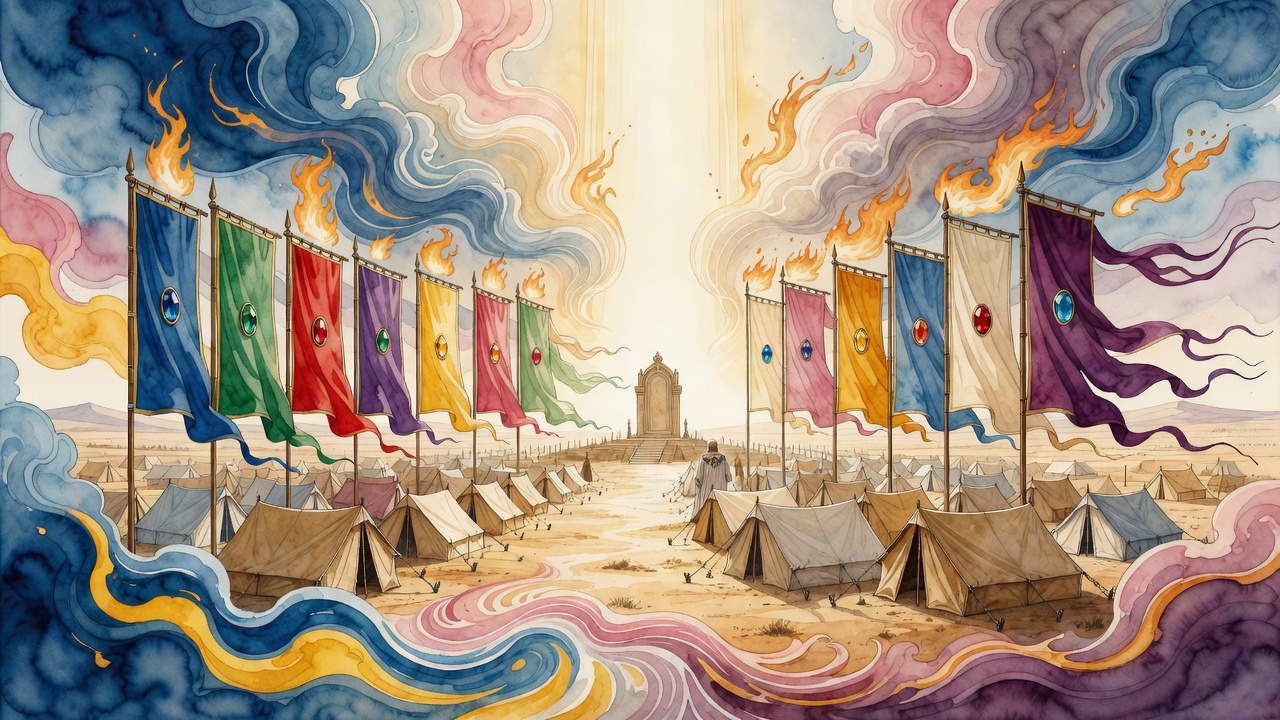
God arranged two million Israelites in a precise square around the Tabernacle in the Sinai desert. East, West, North, South - three tribes per side. The...
The Kohathites carried the Ark, the menorah, and the altar through the wilderness - but they were forbidden to look at any of it directly. Their job was to...
Every Israelite man paid exactly half a shekel for the Tabernacle census - not a whole shekel. The wealthiest gave the same as the poorest. The rabbis asked...
Each tribe marched under a standard whose colors matched the High Priest's breastplate. The banners were a portable version of the sanctuary itself.
Ginzberg reads Bezalel's five names and God's repeated counting of Israel as twin pictures of how the cosmic design treats the chosen with specific care.
Ginzberg reads the Israelite camp as a perfectly ordered twelve-thousand-cubit square and Moses placing Aaron in the center as twin pictures of sacred order.
When the Tabernacle was dedicated, each tribe's gifts revealed their soul. Issachar's offerings were a portrait of the Torah itself.
Zebulun traded at sea while Issachar studied Torah. The sages say this partnership was not just practical -- it was sacred.
The tribe of Simeon avenged Dinah at Shechem. The sages say every measurement of their Tabernacle offering encoded the sanctuary itself.
When Asher's prince made his offering in the wilderness, each detail told the story of Israel among the nations -- and what set Israel apart.
Pesikta DeRav Kahana reads the Tabernacle's dedication as God's bridal homecoming and Israel as the loincloth that cleaves to God as twin pictures of intimacy.
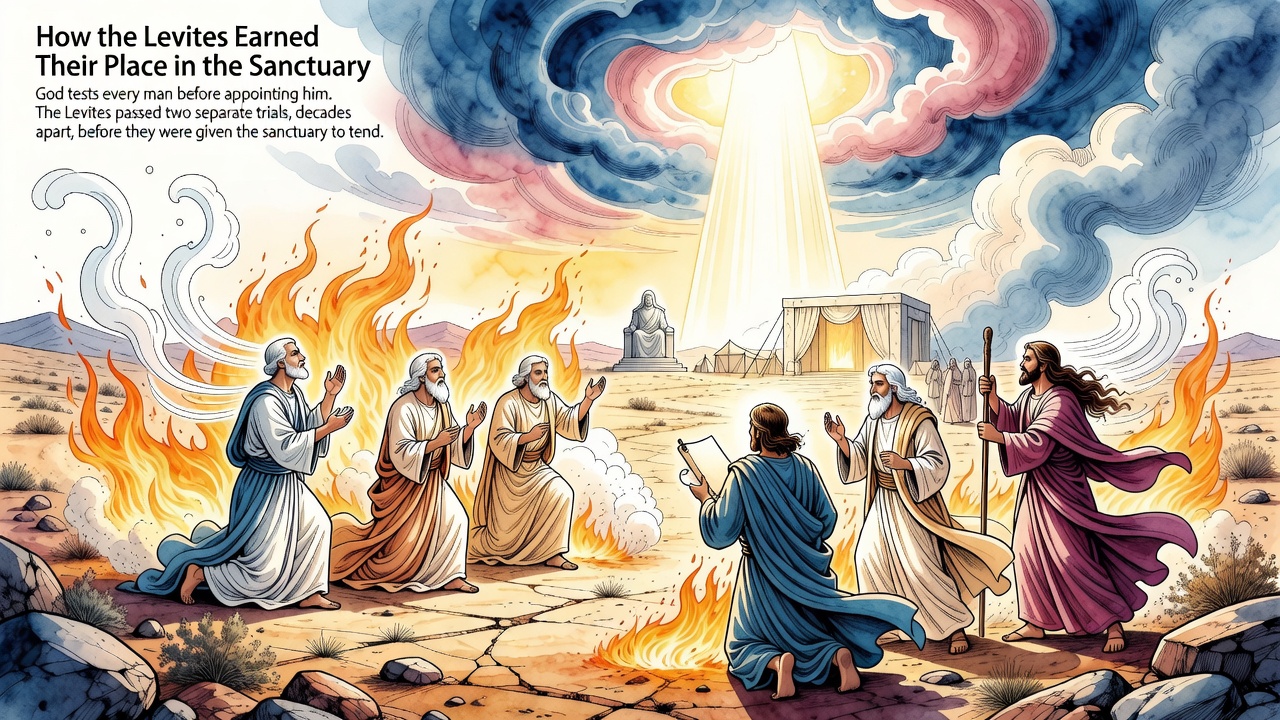
God does not hand sacred roles to those who simply want them. The Levites were tested twice before they were chosen, and both tests were brutal.
Bamidbar Rabbah imagines the Tabernacle as a small created world where human hands kindle light, elders share weight, and mitzvot reach heaven.
The Torah uses a word for the manna jar that appears nowhere else. The rabbis cracked it open and found a linguistic argument hiding a theology of witness.
Moses oversaw the most sacred building project in history and his own people accused him of stealing from it. The story ends with a menorah made of fire.
Standing on Sinai, Moses discovered that God's mercy wasn't a late amendment - it was the first principle, built into creation before anything else existed.
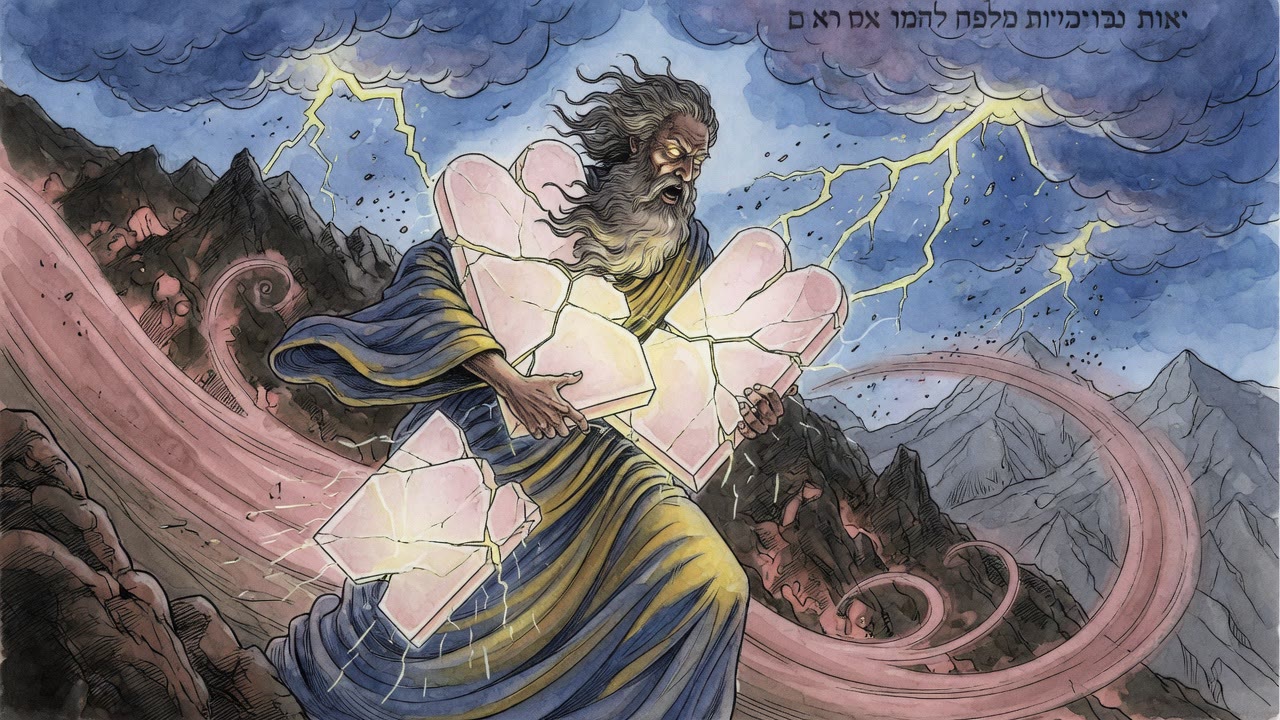
Moses shattered the first tablets at the Golden Calf. The fragments were not discarded. They rode in the Ark beside the second Torah for forty years.
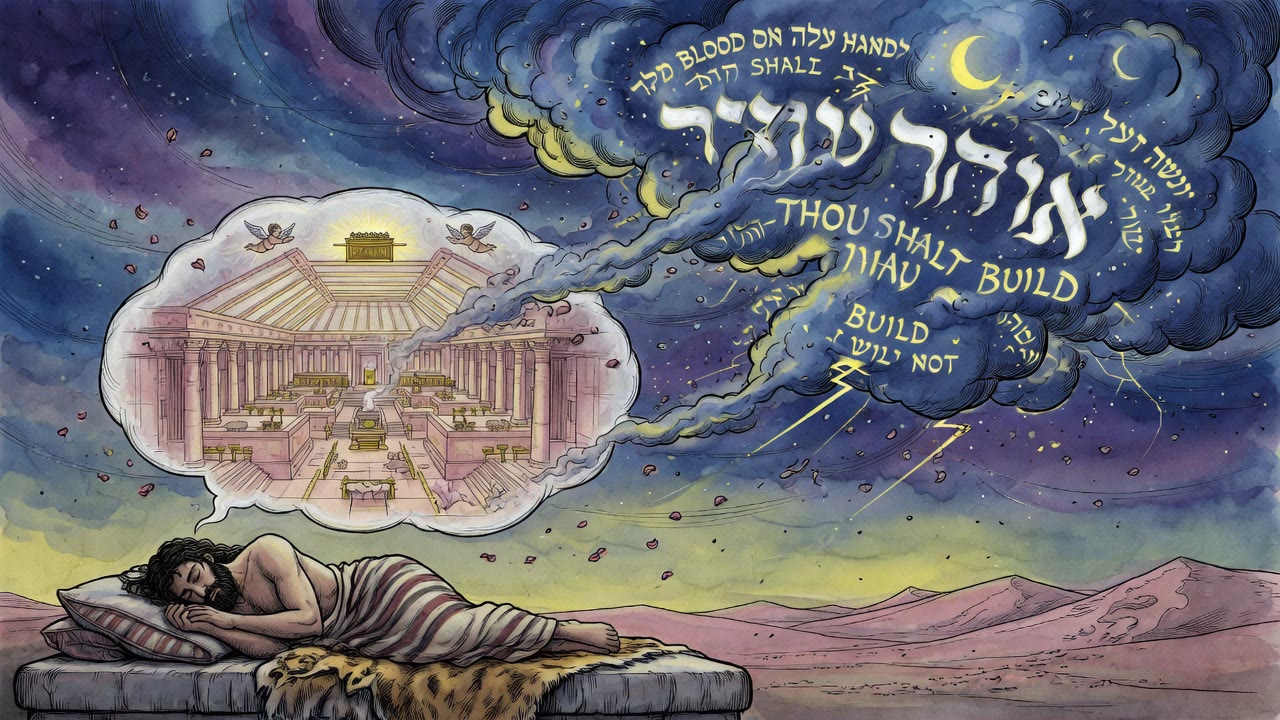
The longest Dead Sea Scroll claims to be God's own blueprint for a Temple never built, dictated to Moses at Sinai, specifying everything down to the latrines.
The first day of Nisan was so singular it earned ten names. Aaron spent the seven days before it in mourning he did not yet know he needed.
Aaron challenged God over the deaths of Nadab and Abihu. God answered with a reason no parent expects, and Aaron's response was gratitude.
Moses anointed Aaron as High Priest, but Aaron could not serve for a full week. The Book of Jasher explains the waiting and the cost.
A close reading of two adjacent verses in Exodus reveals that Aaron placed the preserved manna jar before the Ark long before most assume. The Mekhilta uses...
The cloud over the Tabernacle in the wilderness was more than a navigation device. Midrash Tehillim on Psalm 105 preserves a debate about how many clouds...
When God commanded Moses to build the Tabernacle, the Hebrew says 'that I may dwell among them.' Targum Jonathan rewrites that sentence in a way that...
The Torah says Aaron was washed before becoming High Priest. The Targum Jonathan reveals what that washing actually required, and why the priestly...
Moses built the Tabernacle from scratch and then refused to enter it. His reasoning, preserved in the Targum Jonathan, reveals something profound about the...
Shemot Rabbah follows Moses from Joseph's bones to Israel's first song, showing Exodus as memory carried into the future Mishkan.
Pseudo-Jonathan reads the tabernacle as a curriculum: five curtains for Torah, six for Mishnah, tribal stones, craftsmen who can teach.
Midrash Tanchuma reads an extra et to mean the heavenly tabernacle rose with the earthly one, and a repeated Take Aaron to transfer the priesthood.
Midrash Tanchuma pairs God's refusal to restore the first tablets with the tabernacle smoke as the public announcement that God had forgiven the calf.
Midrash Tanchuma pairs the menorah's beaten olive oil with the rabbinic teaching that God wrapped Himself in light before creating the world.
Midrash Tanchuma explains why the wooden altar did not burn under perpetual fire and shows that Bezalel was named at the foundation of the world.
Targum Jonathan reads the Tabernacle, Aaron's return, the Levite exchange, and the tribal offerings as one symbolic map of Israel.
Legends of the Jews turns Egypt's farewell gifts, Sinai's healing, the Golden Calf, and the Tabernacle into one story of gold repaired.
Bamidbar Rabbah paints Israel's worship as one wine barrel saved from a vinegar cellar, then has God groan the moment the Tabernacle stands.
Israel poured gold into the Golden Calf, then poured the same gold into the Tabernacle. Aaron lifted twenty-two thousand Levites to finish the trade.
Most people think Moses just delivered the Ten Commandments. Shemot Rabbah says he carried 611 more on his back, and never once skimmed off the top.
Bamidbar Rabbah measures the exact distance Israel kept from the Tabernacle, then shows what happens when a foreign king uses his eyes for the opposite purpose.
Three Levite families carried three different kinds of sacred burden. God counted them separately and then together, because both numbers mattered.
Sifrei Bamidbar maps the camp as three concentric zones (Israelite, Levite, Shekhinah), carried forward into the layout of Jerusalem itself.
When the chieftains of Israel brought six covered wagons to the Tabernacle, the sages counted them against the six matriarchs and the six warning steps of...
Midrash Tanchuma hears four distinct voices in Numbers 7:1, promising reward, handing Israel a charm, counting 26 generations, and whispering peace.
Aaron organized Israel's tribes by ancestry - then Israel turned his own family's lineage against him. How God responded reveals the weight words carry.
When the twelve tribal princes brought their offerings at the Tabernacle, Naphtali went last after Asher. The rabbis found a theology of joy hidden inside...
Bamidbar Rabbah makes the tachash a vanished desert creature whose hide covered the Ark, guarding holiness while Israel traveled.
Bamidbar Rabbah turns Elazar's charge over the Tabernacle into a warning that holy authority survives only through humility.
The twelve tribal princes brought identical offerings at the Tabernacle's dedication. Each was secretly a prophecy about the tribe's whole future.
Pseudo-Jonathan reads Exodus 36:3 and 40:6 together: the morning gifts kept the sanctuary rising, and the altar atoned for the rich who fed the poor.
Pseudo-Jonathan refuses to summarize Exodus 28:1 and 36:2, naming all four priestly sons and every category of wise-hearted artisan in full.
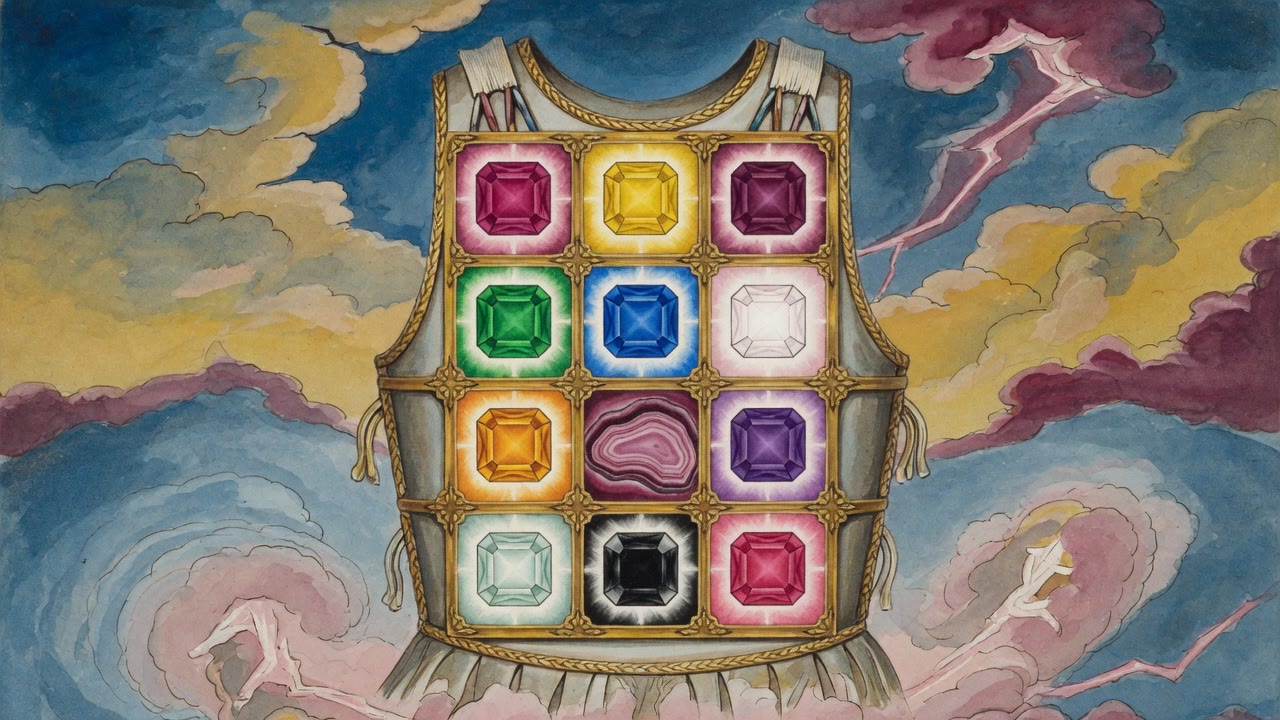
Pseudo-Jonathan places the tribe of Dan twice in the tabernacle: on the breastplate's second row and in Oholiab the deputy artisan from Dan.
Midrash Tehillim joins the soul's longing for God's house, the Tabernacle's burden, and the poor man's prayer into one Temple story.
A portable tent in the wilderness had a sanctuary bigger than the one Solomon built in Jerusalem. The rabbis argued about why for a thousand years.
God announced that Moses had one hour remaining. Moses didn't accept it. He bargained, pleaded, offered to live as a bird or a beast , anything to stay in...
In four passages of the Tikkunei Zohar, the sukkah, altar, Tabernacle, and future Temple all turn out to be built from human action, not stone.