Clouds Gathered Eden Stones for the Tabernacle
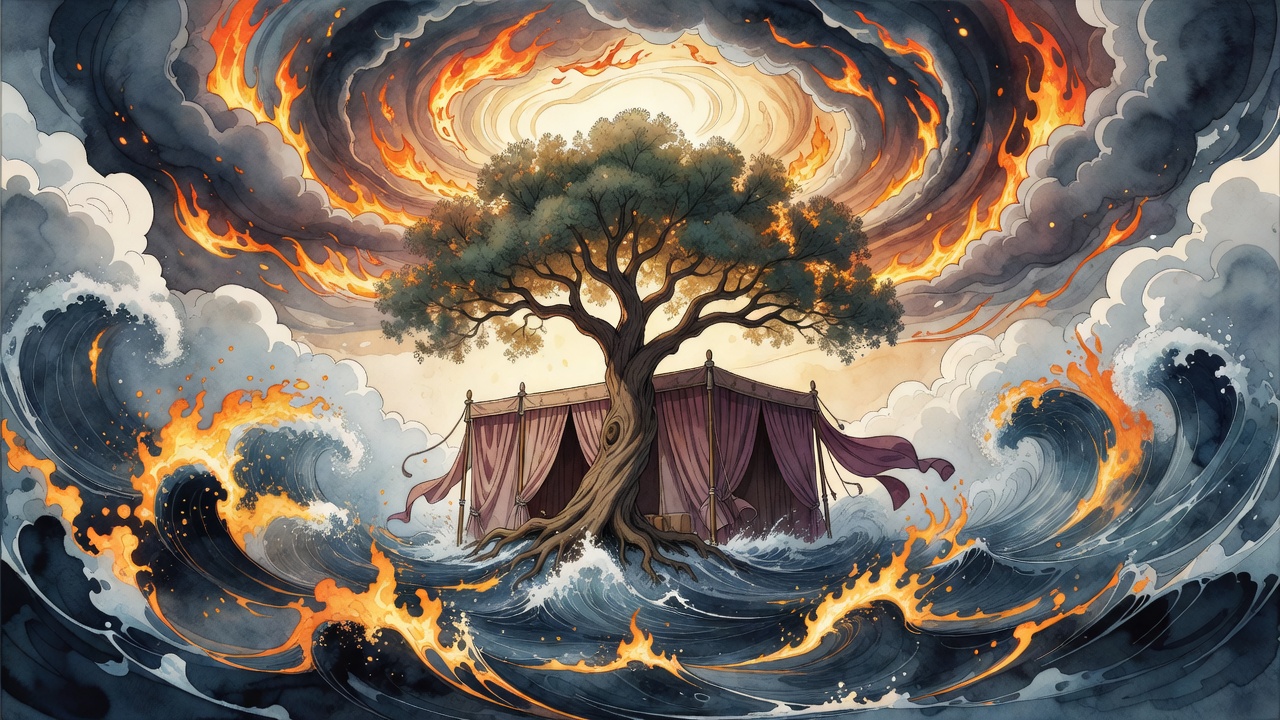
Clouds flew to the river Pishon at Eden's border and gathered onyx stones for Aaron's breastplate before Israel built the Tabernacle.
Table of Contents
 Click for full size
Princes Brought Stones They Did Not Mine
The princes of Israel presented the Tabernacle offerings. What they brought for the High Priest's breastplate and ephod were onyx stones and setting stones of exceptional quality. The Torah notes their gift and moves on (Exodus 35:27). No one asks where desert princes found stones fit for the garments of the High Priest. The text does not explain.
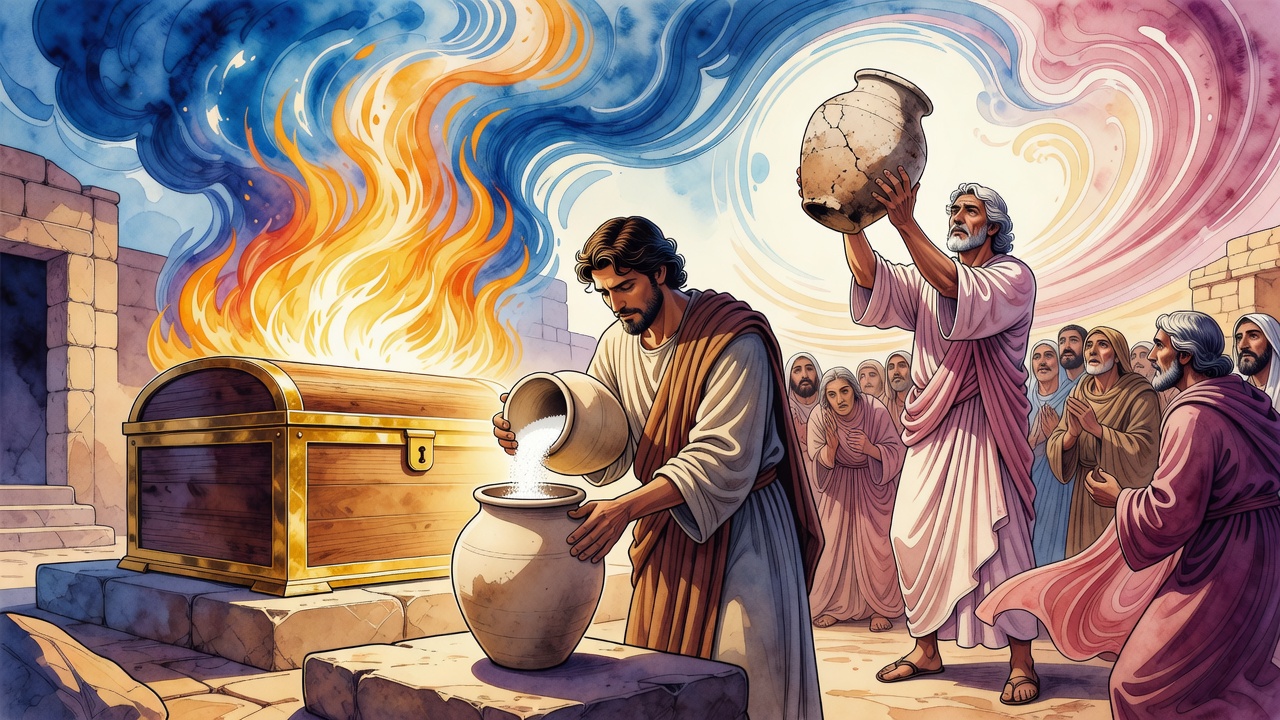
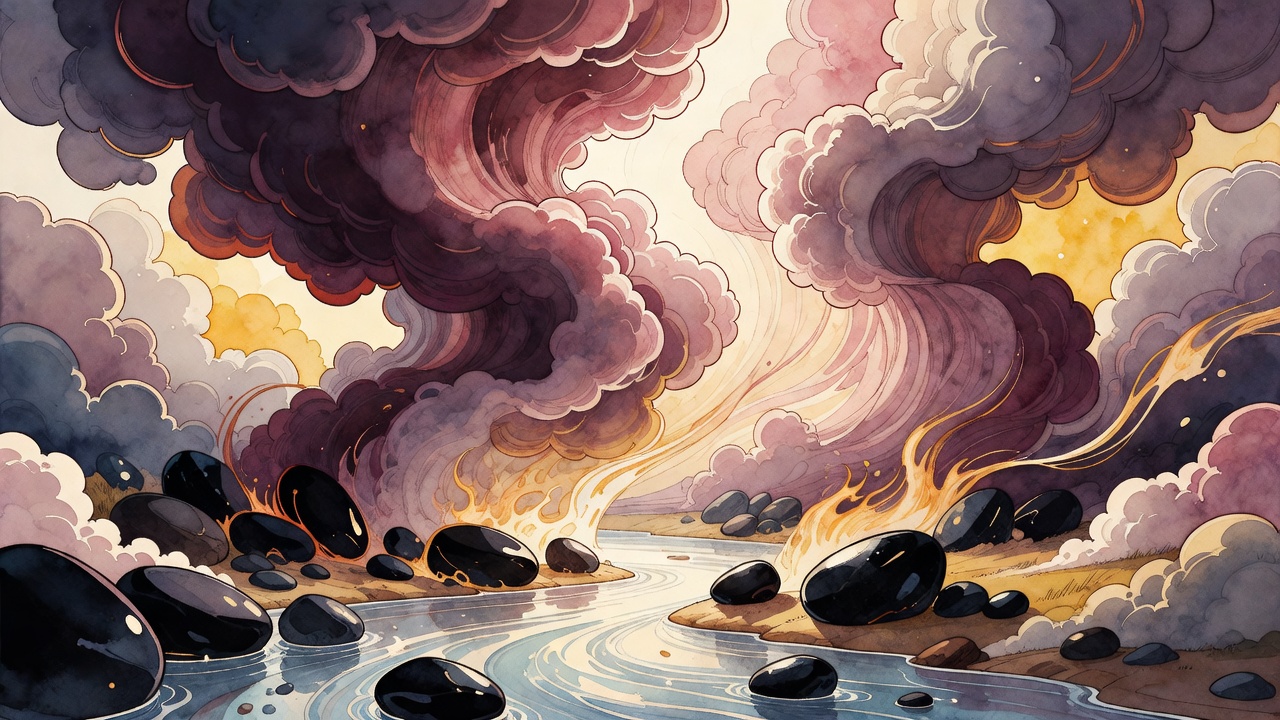
Targum Pseudo-Jonathan on Exodus 35:27, the Aramaic Torah paraphrase preserved in medieval manuscripts and drawing on Palestinian traditions from the early centuries of the Common Era, explains it this way: the clouds of heaven went to the Pishon. The river Pishon, named in Genesis 2:11-12 as one of the four rivers that flowed out of Eden, winds through the land of Havilah where good gold, bdellium, and onyx are found. The clouds drew up the onyx stones from its waters and spread them across the desert floor. The princes found them there and brought them in. The Tabernacle's stones came from the edge of the garden of first things.
The Second Journey, Deeper Into Eden
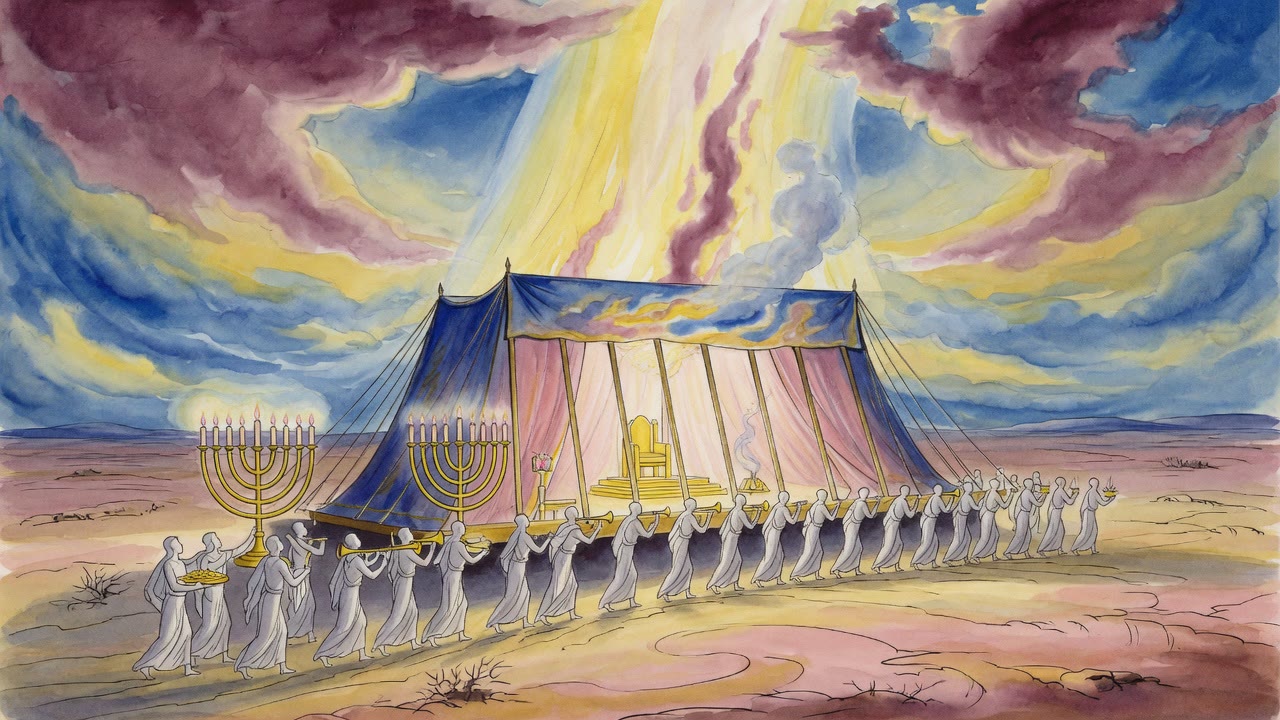
Targum Pseudo-Jonathan on Exodus 35:28 continues the supply chain. Where the previous verse sent the clouds to the river at Eden's border, this verse sends them further in. The clouds returned from the Pishon, went to the garden of Eden itself, and took from it choice aromatics, olive oil for the Menorah 's (the lampstand) light, pure balsam for the anointing oil, and the complex spices for the incense altar. Everything needed for the Tabernacle's living operations, the light, the anointing, the fragrance, came from the garden that humanity had been expelled from thousands of years earlier.
This is an extraordinary reversal. After the expulsion from Eden, the garden became inaccessible, guarded by the revolving sword. The human project since then had been carried on east of Eden, with everything requiring labor and sweat and the difficulty of extraction from an earth that resisted. But the Tabernacle materials were different. They came freely. The clouds served as intermediaries, and the garden gave what was needed without the friction that marks every other human acquisition.
Bezalel in the Shadow of God
The craftsman who worked these materials was Bezalel, whose name means In the Shadow of God. He was given the same three gifts, wisdom, understanding, and knowledge, that the sages say the Holy One used to make the universe itself. Proverbs 3:19-20 says by wisdom God founded the earth, by understanding He established the heavens, by His knowledge the depths were split open. Bezalel received those same words as his working tools. The man finishing the stones from Eden's river was operating with creation-level capacity.
Rabbi Levi, as recorded in the midrashic tradition, says a pure menorah descended from heaven as a model because Moses was unable to understand the design from verbal description alone. God showed him a menorah of fire. Once Moses saw it, he still could not construct it. God finally told him to throw the gold into the fire, and the menorah formed itself. Even with Eden's materials and creation's wisdom in the craftsman's hands, the final step was surrender, throwing the metal in and letting the design emerge.
The World and the Tent
The Midrash Rabbah on Exodus, Shemot Rabbah compiled in Palestine around the sixth to seventh centuries CE, and Midrash Tanchuma, associated with Rabbi Tanchuma bar Abba and reaching its current form between the seventh and ninth centuries CE, develop the correspondence between the Tabernacle and the created world into a full systematic parallel. The Tabernacle has a curtain: the world has sky, made like a curtain. The Tabernacle has a laver of water: the world has the sea. The Tabernacle has a Menorah: the world has the sun. The Tabernacle has its High Priest dressed and anointed: the world has the day dressed in light.
The logic is tight. If the Tabernacle is the world in miniature, and if Eden provided the raw materials for the Tabernacle, then the sanctuary is not just a symbol of creation. It is creation's most accurate small-scale replica, built from the original sources. The stones from the Pishon and the balsam from Eden's garden are not incidental supply details. They are what makes the correspondence work. The Tabernacle contains actual Eden.
← All myths