Parshat Shemini7 min read

Nadab and Abihu Tried to Live on the Sight of God Alone

Aaron's two eldest sons reasoned that if Moses lived on the sight of God alone, they could feast their eyes and skip the body too.

Curated by Arthur · Told by Maggid ·
Table of Contents
  1. The Sons Did the Arithmetic of Heaven
  2. A Verse That Was Written Twice
  3. The Other Charge Against Them
  4. The Disciple Who Would Not Last the Year
  5. The Fire That Answered the Hunger

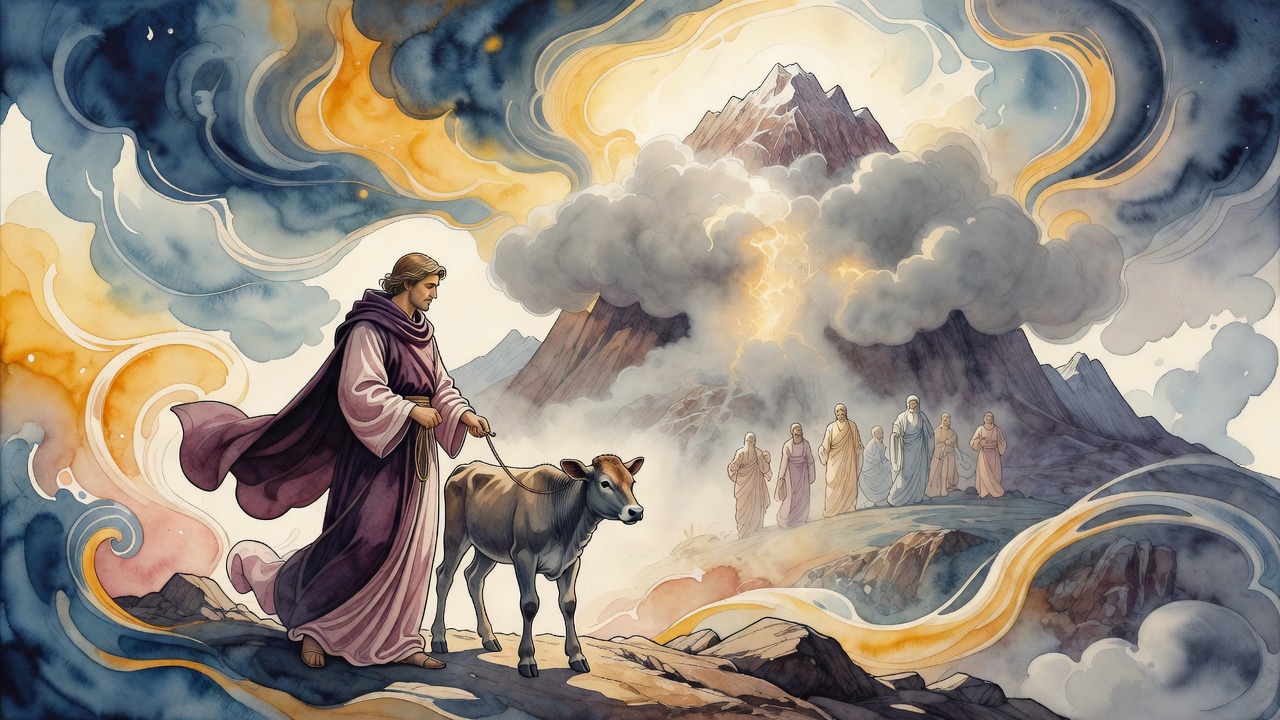
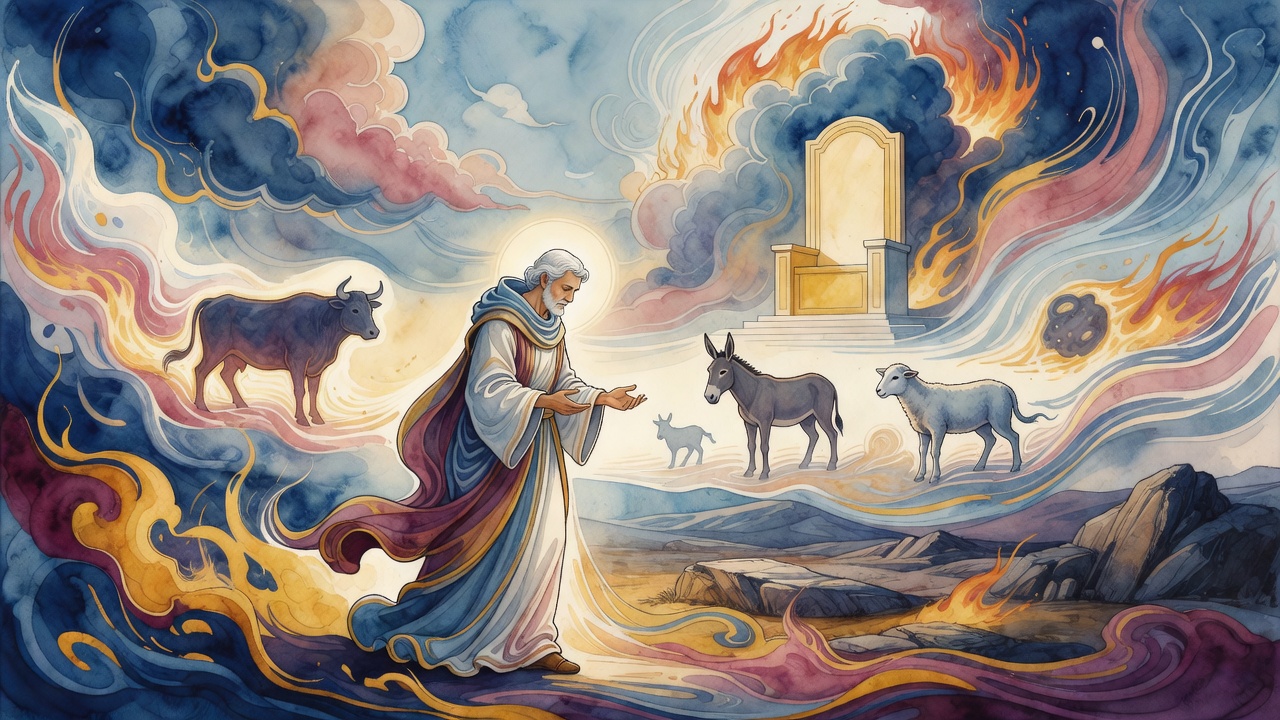
The Tabernacle stood finished, its boards gold and its veil hung, and the fire had not yet come down. Inside the freshness of that new house, two young priests watched their uncle climb a mountain and vanish into a cloud, and they began to do arithmetic with holiness.
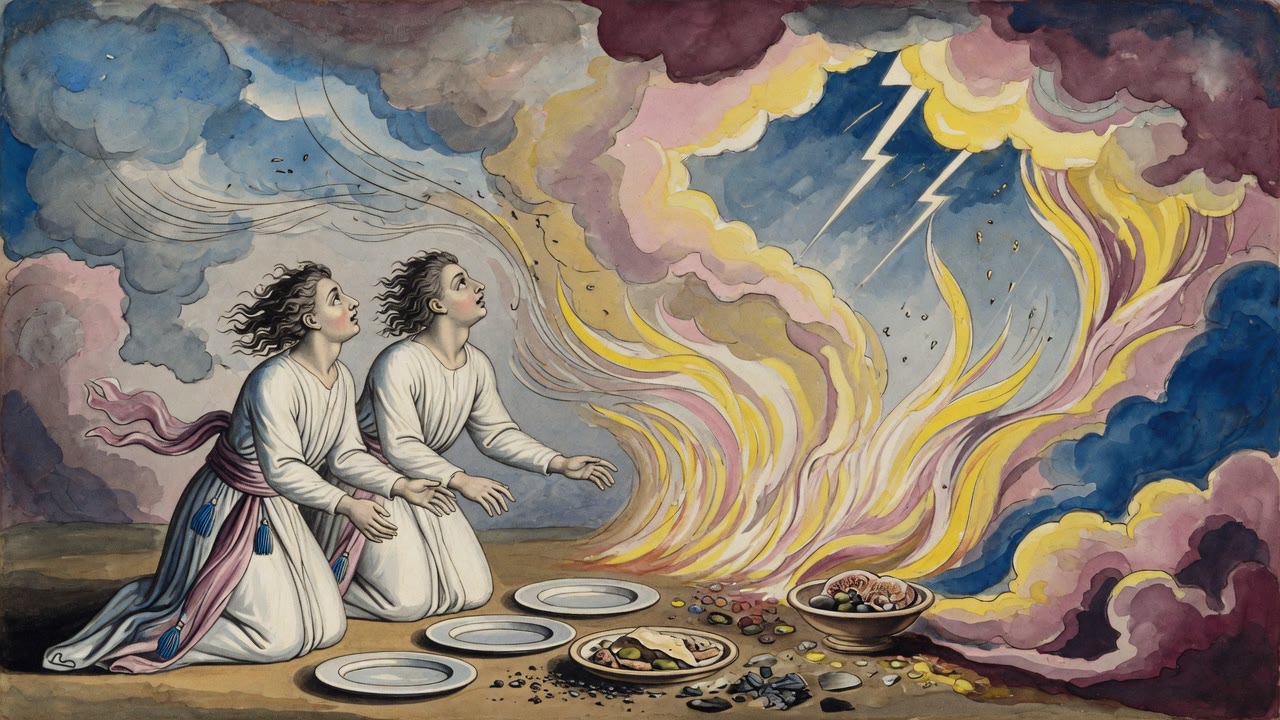
Nadab and Abihu, the eldest sons of Aaron, had seen what other men only heard rumored. They had stood on Sinai with the seventy elders while the pavement under the feet of God shone like sapphire, clear as the body of the sky. They had looked up, and they had lived. The verse said it plainly. They beheld God, and they ate and drank.

The Sons Did the Arithmetic of Heaven

It was the eating and the drinking that nagged at them.

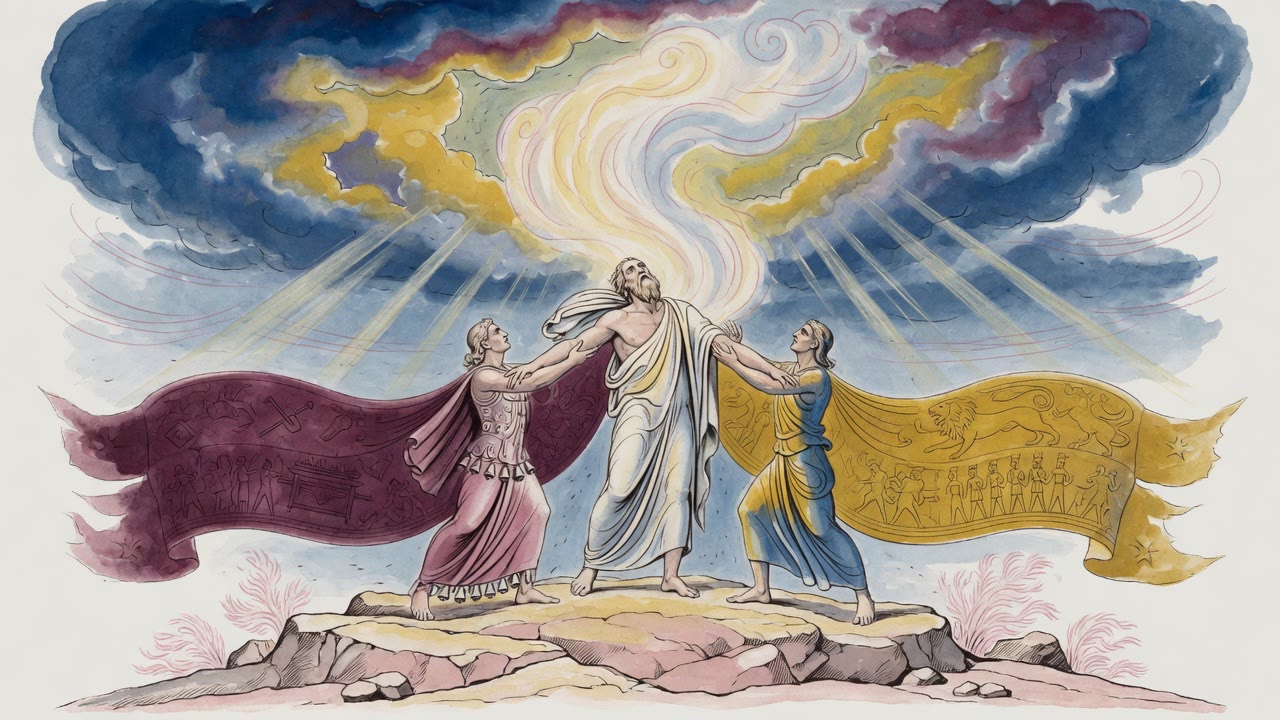
"Our master Moses went up to the firmament," one said to the other, and the words had the shape of a ruling already half decided. "He gazed on the Shekhinah. Forty days he stayed, and he did not eat bread and did not drink water. The seeing was his food."

The other took the thought further, the way a student finishes a teacher's sentence to prove he has understood it. "Then we who gaze on the Shekhinah have no need of bread either. We have no need of water. Let us not waste this nearness on appetite. Let us feast the eyes alone."

It was a clean argument. It moved from a true premise to a daring conclusion, and that was exactly its danger. They had stood at Sinai and looked and afterward sat down and ate and drank like men. The hunger had returned to their bodies the way it returns to anyone. But they had decided that the hunger was a failure to be corrected, not a wall built into them by the One who made the body. So they set themselves to do better than the seventy elders. They would look, and keep looking, and let the looking burn the need for everything else away.

A Verse That Was Written Twice

God watched them feed their eyes.

There is a quiet patience in the way heaven answered them, and it is more frightening than a thunderclap. The hand was already raised. But the house was not yet dedicated, and the new altar had no fire on it, and a death before the work began would have been a death without a name. So the sentence waited. It waited through the building of the Tabernacle, through the bringing of the boards and the weaving of the curtains, through the long preparation of the courtyard where the eldest sons of Aaron would one day stand to serve.

When the day came that they drew near to offer, the waiting ended.

Afterward the verse remembered them strangely. Nadab and Abihu died before the Lord, it said, and then it said before the Lord a second time in the same breath, when they offered strange fire before the Lord. Twice the same words, as if the place of their death wanted underlining. They had wanted to live before the Lord without the body, and they died before the Lord because of it. The doubled phrase is the seam where their desire and their sentence were stitched into one line.

The Other Charge Against Them

Rabbi Eliezer told it with a colder edge, and his version had nothing to do with food at all.

The brothers died, he said, for one act. They ruled a point of law in the presence of Moses their master. Somewhere in that courtyard, on the matter of the fire or the incense or the order of the service, they decided the law for themselves and acted on their decision while the man who had brought the law down from the mountain stood close enough to ask. They did not ask. To rule in front of your teacher is to say, with your hands, that his presence has become unnecessary. The whole transgression was the same transgression. They wanted nearness without limit, and limit was the one thing nearness required.

Rabbi Eliezer knew the weight of this rule because he had felt it land in his own house.

The Disciple Who Would Not Last the Year

A student of his once ruled a halakhah in front of him.

The man meant no harm. He answered a question that came to him, decided it, gave the ruling. He was good. He was confident. He was standing where his master could hear him. When he had gone, Rabbi Eliezer turned to his wife.

"Imma Shalom," he said to her, "this man will not live out his year."

And the man did not. The year turned, and he was gone before it closed, just as the words had said. The disciples came to their teacher unsettled, because a thing foretold and fulfilled looks like prophecy, and prophecy in a sage frightened them.

"Our master," they asked him, "are you a prophet?"

He gave them a borrowed answer, an old prophet's refusal. "I am neither a prophet nor the son of a prophet." Then he gave them the true one, the tradition he had received from the masters who taught him. "Whoever rules a halakhah in the presence of his master is liable to death." He had not foreseen the man's end. He had only known the law that the man had broken, and known what such a breaking costs.

The Fire That Answered the Hunger

So the same death has two faces, and they are one face.

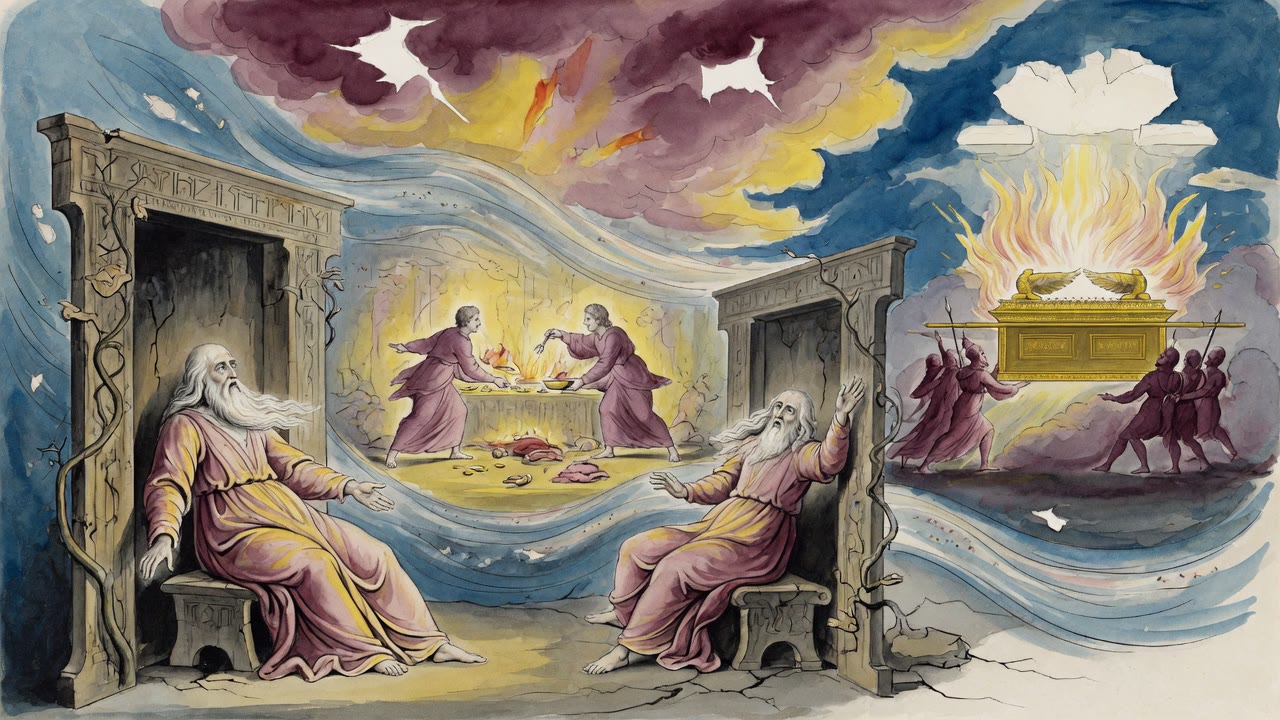
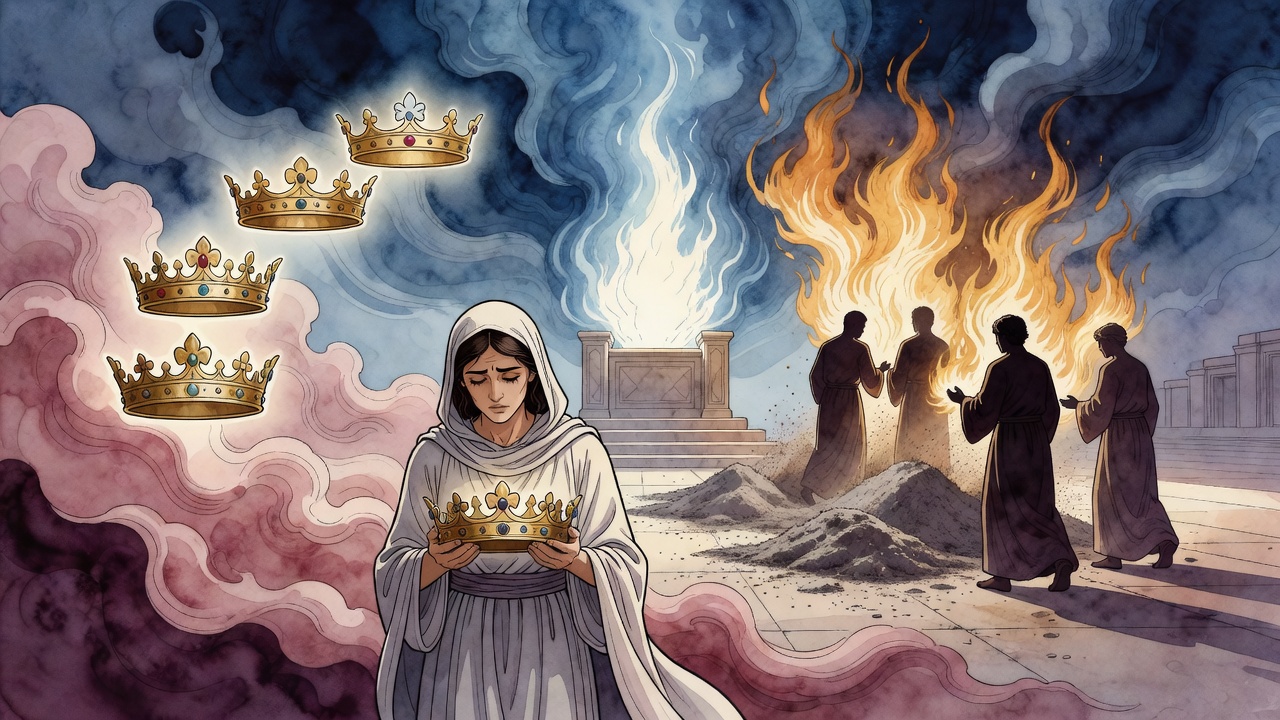
In the courtyard of the finished Tabernacle, the sons of Aaron came near with fire that was theirs and not commanded, hungry to see what only Moses had seen and to decide what only Moses could decide. They had reasoned themselves past the body and past the master in a single motion, because both were the same wall, the limit that says a creature does not become the Creator by looking hard enough or ruling boldly enough. Fire came out from before the Lord. It did not consume the curtains or the gold. It went for the two who had tried to live on sight alone, and it gave their hunger the only answer it had been asking for, which was to be filled completely and forever.

And when Israel's grief rose afterward in that courtyard, the One who had sent the fire grieved with them, the way a father carries out his own dead and counts the loss as his own. In all their distress, He was distressed.


← All myths
From the tradition

Sources

5 sources

The texts this telling draws on, in full. Open a card to read inline, or expand it for a wider, quieter read.

Midrash Tanchuma Buber, Achrei Mot 13:3Midrash Tanchuma Buber, Achrei Mot

Our rabbis say: it was because they fed their eyes on the Shekhinah. They said: Did not Moses do thus, who went up to the firmament and gazed upon the Shekhinah, and needed neither eating nor drinking? So too we, since we are gazing upon the Shekhinah, we need neither eating nor drinking. Even so, "and they beheld God" (Exodus 24:11), yet they needed eating and drinking, as it is said, "and they ate and drank" (ibid.). From that hour the Holy One, blessed be He, sought to stretch out His hand against them. Said the Holy One, blessed be He: I will wait until the Tabernacle is made, and they will enter to offer, and I will execute upon them the attribute of justice, as it is said, "when they drew near before the Lord, and they died" (Leviticus 16:1). Twice is "before the Lord" written: "And Nadab and Abihu died before the Lord, when they offered strange fire [before the Lord]" (Numbers 3:4). Why twice? Said the Holy One, blessed be He: Bring out the dead from before Me, for thus it is written, "Draw near, carry your brothers away from before the sanctuary" (Leviticus 10:4). As it were, when Israel is in distress, He too is with them, for thus it is written, "In all their distress He was distressed" (Isaiah 63:9). Said Rabbi Meir: "So the Lord saved on that day" (Exodus 14:30), "He was saved" is written. Said Rabbi Abbahu: See what is written, "Before Ephraim and Manasseh, stir up Your might and come for our salvation" (Psalms 80:3), the redemption is Yours and ours. Said the Holy One, blessed be He: In the world to come I will redeem you, and you will rejoice and I will rejoice, [as it is said,] "May the Lord rejoice in His works" (Psalms 104:31); "Let Israel rejoice in its Maker" (ibid. 149:2).

Full source
Midrash Tanchuma Buber, Achrei Mot 6:1Midrash Tanchuma Buber, Achrei Mot

"After the death" (Leviticus 16:1). It was taught [in the name of] Rabbi Eliezer: Nadab and Abihu died only because they ruled a halakhah in the presence of Moses their master.

There is a story about Rabbi Eliezer, that his disciple ruled a halakhah before him. He said to Imma Shalom his wife: This man will not live out his year. And so it was: he did not live out his year. His disciples said to him: Our master, are you a prophet? He said to them: "I am neither a prophet nor the son of a prophet" (Amos 7:14). Rather, thus I have received as tradition from my masters: Whoever rules a halakhah in the presence of his master is liable to death.

Full source
Midrash Tanchuma Buber, Achrei Mot 7:3Midrash Tanchuma Buber, Achrei Mot

R. Mani of Sha'av and R. Joshua of Sikhnin said in the name of R. Levi: For four reasons did the sons of Aaron die, and in connection with all of them death is written. Because they entered while drunk with wine, and it says, "Drink no wine nor strong drink, etc., that you die not" (Leviticus 10:9). And because they entered without washing hands and feet, and it says, "When they come into the Tent of Meeting, they shall wash with water, that they die not" (Exodus 30:20). And because they entered lacking garments. And what were they lacking? R. Levi said: They were lacking the robe, and death is written concerning it, as it is said, "And it shall be upon Aaron to minister, and its sound shall be heard, etc. [that he die not]" (ibid. 28:35). And because they had no sons, and death is written concerning it, as it is said, "And Nadab and Abihu died, etc., and they had no children" (Numbers 3:4).

Abba Hanan says: Because they had no wives, and it is written, "And he shall make atonement for himself and for his household" (Leviticus 16:6). R. Levi said: They were very arrogant, and they would say, "Which woman is fit for us?" Many women sat as deserted ones, waiting for them, while they would say, "Our father's brother is king, our father is High Priest, our mother's brother is prince, and we are deputies of the priesthood, which woman is fit for us?"

R. Menahma in the name of R. Joshua bar Hanina [said]: Concerning them it says, "Fire devoured their young men, and their maidens had no marriage song" (Psalms 78:63). Why did "fire devour their young men"? Because of "their maidens who had no marriage song." And further, from this: "And to Moses He said, Come up to the Lord, [you and Aaron, Nadab and Abihu]" (Exodus 24:1). This teaches that Moses and Aaron were walking first, and Nadab and Abihu walking after them, and they were saying, "When will these two old men die, so that we may exercise authority over the community in their place?" [R. Judan in the name of] R. Aybu said: With their mouths they said this to one another. R. Pinhas said: In their hearts they pondered it.

R. Berekhyah said: The Holy One, blessed be He, said to them, "Boast not of tomorrow, etc." (Proverbs 27:1). Many young colts have died, and their hides have been spread out upon their mothers. And further, from this: "And upon the nobles of the children of Israel He laid not His hand" (Exodus 24:11), from here that they were deserving of the laying on of a hand.

R. Hosha'ya said: Did cakes (that is, loaves) go up with them to Sinai, that it says, "And they beheld God, etc." (ibid.)? Rather, they fed their eyes upon the Shekhinah, like a man who gazes at his fellow while eating and drinking. R. Yohanan said: There was actual eating [and drinking], as it is written, "In the light of the king's face is life" (Proverbs 16:15). R. Tanhuma said: It teaches that they made their hearts haughty, and stood upon their feet, and fed their eyes upon the Shekhinah. R. Joshua of Sikhnin in the name of R. Levi said: Moses did not feed his eyes upon the Shekhinah, as it is said, "And Moses hid his face, etc." (Exodus 3:6). And further, from this: "And Nadab and Abihu died before the Lord" (Numbers 3:4). And did they die before the Lord? Rather, it teaches that it is grievous before the Omnipresent when the sons of the righteous depart [in their lifetimes].

Full source
Midrash Aggadah, Leviticus 10:1Midrash Aggadah

"And the sons of Aaron, Nadab and Abihu, took each of them his censer" (Leviticus 10:1), the two of them in a single counsel. "And put fire therein", for they acted without permission. They said: Even though fire came down from heaven, it is a commandment to bring fire from a common source, as it is said, "And the sons of Aaron the priest shall put fire upon the altar" (Leviticus 1:7); yet they ought not to have done so without first taking permission.

Another interpretation of "And the sons of Aaron took": From the fact that it says "Nadab and Abihu," do I not already know that they are the sons of Aaron? Rather, it teaches that they did not give honor to Moses and to Aaron.

"And they offered before the Lord strange fire", they brought it in at the wrong time. Rabbi Eliezer says: The sons of Aaron were not made liable to death except for the fact that they ruled on a point of law in the presence of Moses their teacher, for anyone who rules on a point of law in the presence of his teacher is liable to death.

"And there came forth fire from before the Lord", this teaches that the fire came forth from the Holy of Holies and was divided into four parts, and two entered the nostril of this one and two the nostril of that one, and they died.

"And devoured them", it burned them, but not their garments, [as it is said, "and they carried them in their tunics"]. "And they died before the Lord", by a kind of death in which the soul is burned and the body remains intact.

Rabbi Eliezer says: "And they died before the Lord", they did not die inside, but outside, in the place where the Levites are permitted to enter, as it is said, "and they drew near and carried them in their tunics." If so, what does "before the Lord" mean? The angel struck them down and had mercy and brought them outside.

Rabbi Assi bar Akiva says: Nadab and Abihu died only so as not to give an opening to those who come into the world to say that the Shekhinah did not rest upon the Tent of Meeting; and since Nadab and Abihu had entered before the Lord into the Tent of Meeting, the Holy One, blessed be He, said: If I am long-suffering, if these do this, every single one of Israel will do likewise. It is better that Nadab and Abihu die and that My honor not be diminished even for one hour. Immediately He said to the angel, "And strike them down." If toward those who are near He acts thus, toward those who are far how much more so.

And already Moses and Aaron were walking on the road, and Nadab and Abihu were walking behind them, and Nadab and Abihu said: When will these two old men die, and you and I will lead the generation? The Holy One, blessed be He, said to them: We shall see who buries whom.

Rabbi Jeremiah says: In four places He mentions the death of the sons of Aaron, and in every place He mentions their offense, to teach you that they died only on account of the offering, and because they entered without counsel, and because of the strange fire.

Rabbi Eliezer of Modi'in says: How beloved are the righteous before Him who spoke and the world came into being, for in every place where He mentions their death He mentions their offense, to make known to you that there was in them nothing but this sin alone. And are these things not a matter of inference from the lesser to the greater? If at the moment of anger the Holy One, blessed be He, had pity on them, at the moment of favor how much more so.

Full source
Targum Pseudo-Jonathan on Exodus 24:11Targum Pseudo-Jonathan on Exodus

The narrative in Exodus 24 troubles the ancient interpreters. Nadab and Abihu, the comely young sons of Aharon, ascended the mountain with the elders, beheld the God of Israel, and ate and drank. No lightning struck. No fire consumed them. They saw what Moses alone should have seen and walked away alive.

The Targum Pseudo-Jonathan resolves the tension with a chilling addition. The stroke was not sent in that hour, the text says, but it awaited them on the eighth day for a retribution to destroy them. The fire was simply delayed. When Nadab and Abihu later offered their esh zarah, strange fire, before the Lord (Leviticus 10:1), the judgment withheld at Sinai finally landed.

For that moment on the mountain, though, they saw the glory of the Shekhinah and rejoiced. Their offerings had been accepted with favor. They experienced the closest communion with the divine recorded in Torah, and the Targum says they ate and drank in that presence, or as if they ate and drank, nourished by the vision itself.

The Targum's gloss is brutal and tender at once. God allowed them the full measure of revelation before the account came due. Their privilege was not revoked; it was suspended. The young priests who glimpsed heaven carried an unpaid debt back down the mountain, and it caught them at the very moment they reached for more.

The lesson the old rabbis drew: ecstasy is not acquittal. What you see on the mountain still must be earned in the courtyard, and the fire that warmed you can still be the fire that consumes.

Full source