Aaron Tended the Fire That Came Down and Never Left
On the eighth day of the Tabernacle's dedication, fire fell from heaven and did not go back. It consumed offerings and sons with equal precision.
Table of Contents
 Click for full size
The Eighth Day
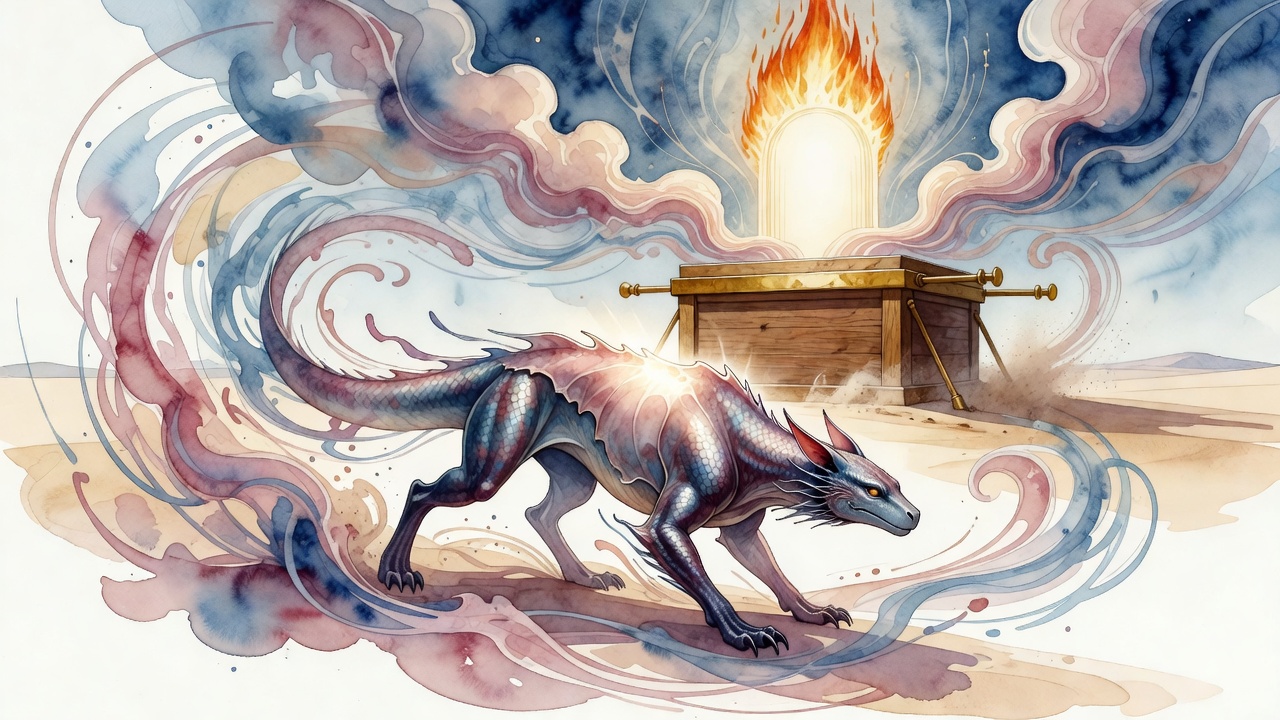
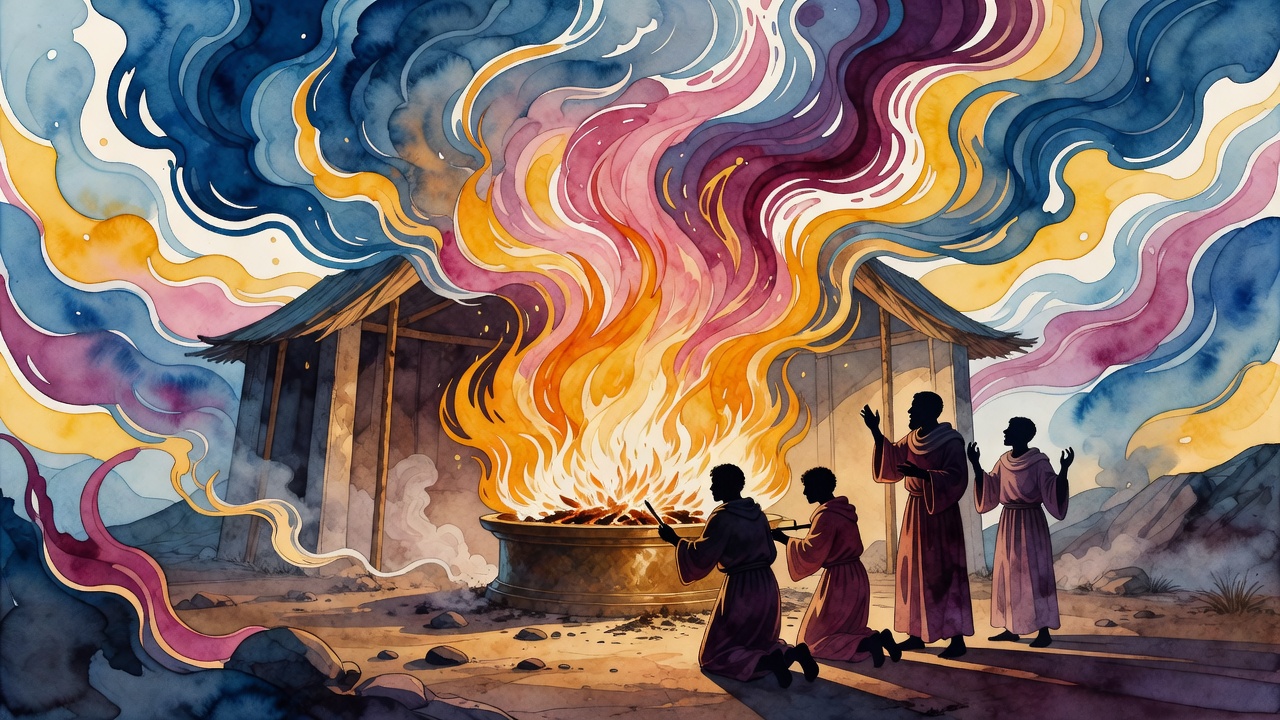
The fire fell from heaven on the eighth day of the Tabernacle's dedication and did not go back.
This is the claim Pirkei DeRabbi Eliezer traces with careful precision: a single celestial fire moving from creation through the wilderness all the way to the Temple in Jerusalem. When God descended fire from before His presence at the dedication of the Mishkan, the portable Tabernacle Israel built in the desert, it was not a one-time demonstration. It was a dwelling. The fire settled into the sacred precincts and stayed there, consuming offering after offering, year after year, generation after generation, traveling with the Mishkan wherever it traveled.
It is the fire of Leviticus 9:24: and there came forth fire from before the Lord. Not fire that descended from above. Fire that emanated, that originated from the divine presence and found the nearest earthly vessel it could inhabit. The Mishkan was that vessel. Because the vessel was portable, the fire was portable. The divine fire that burned in the wilderness is the same fire that burned in Jerusalem.
The Same Fire That Consumed His Sons
The same fire, Rabbi Judah says, consumed Nadav and Abihu, the sons of Aaron, when they brought strange fire into the Holy of Holies on that same eighth day. The tragedy of Aaron's sons is inseparable from the miracle of Aaron's fire: the same presence that made the Tabernacle holy was the presence that could not tolerate the wrong kind of approach. The fire did not distinguish between offerings and sons. It distinguished between the permitted and the unpermitted, and acted accordingly.
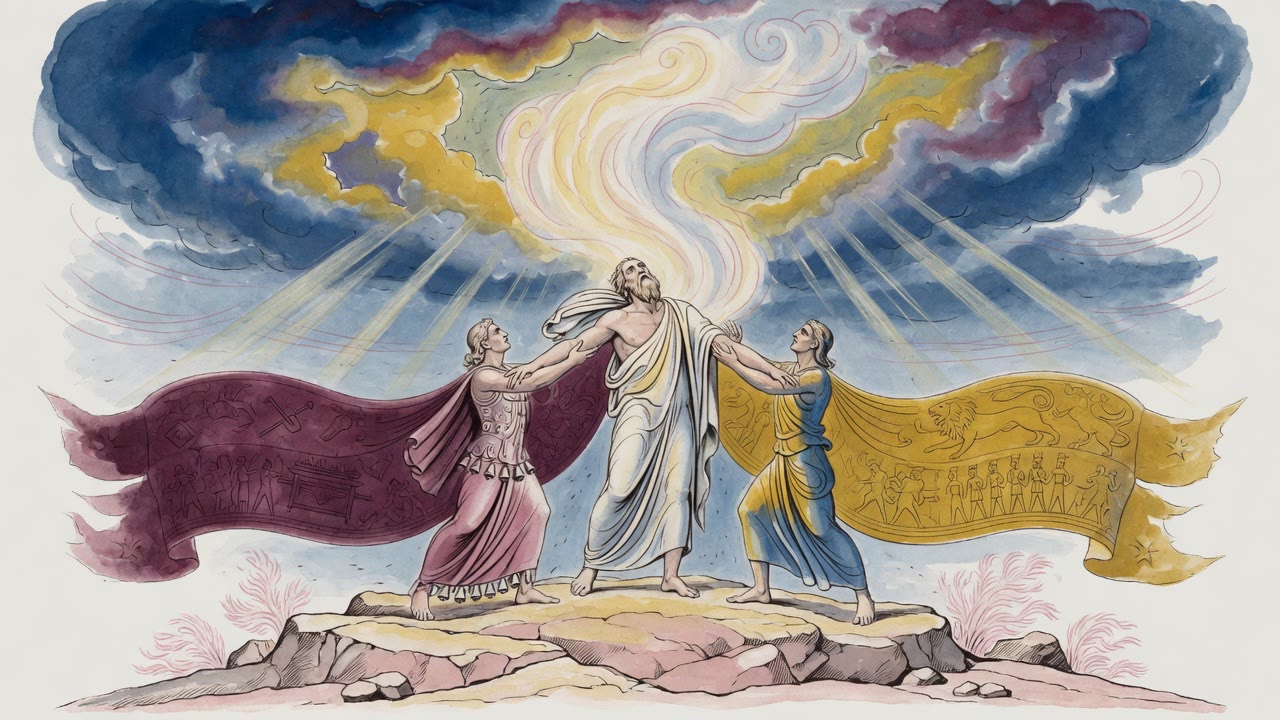
Vayikra Rabbah, the great midrash on Leviticus compiled in fifth-century Palestine, asks directly: did Aaron control the Shekhinah, the divine presence that rested on the Ark? Rabbi Yudan of Gaul answers immediately: of course not. The Holy One is in charge. Aaron did not summon the fire. He maintained the conditions under which it chose to remain. That is the full complexity of his role. He was the High Priest, the keeper of the fire, the one who entered the Holy of Holies once a year and came out alive when lesser men could not have survived. But the fire was not his. It used him. He was the steward of something he could never own.
The Coverings and the Carriers
Bamidbar Rabbah, the midrash on Numbers, describes in meticulous detail how Aaron dismantled the Tabernacle for each leg of the wilderness journey. The Ark of the Testimony had to be covered in a specific sequence: first the curtain of the veil, then a covering of blue, then a covering of tachash skin, then a cloth of solid blue. Each covering had its own significance. The outermost covering was not for protection from weather. It was for protection from the carriers themselves, the Kohathites who bore the Ark were not permitted to look at it directly, even while transporting it. The wrapping was less about keeping something safe inside than about keeping human beings safe outside.
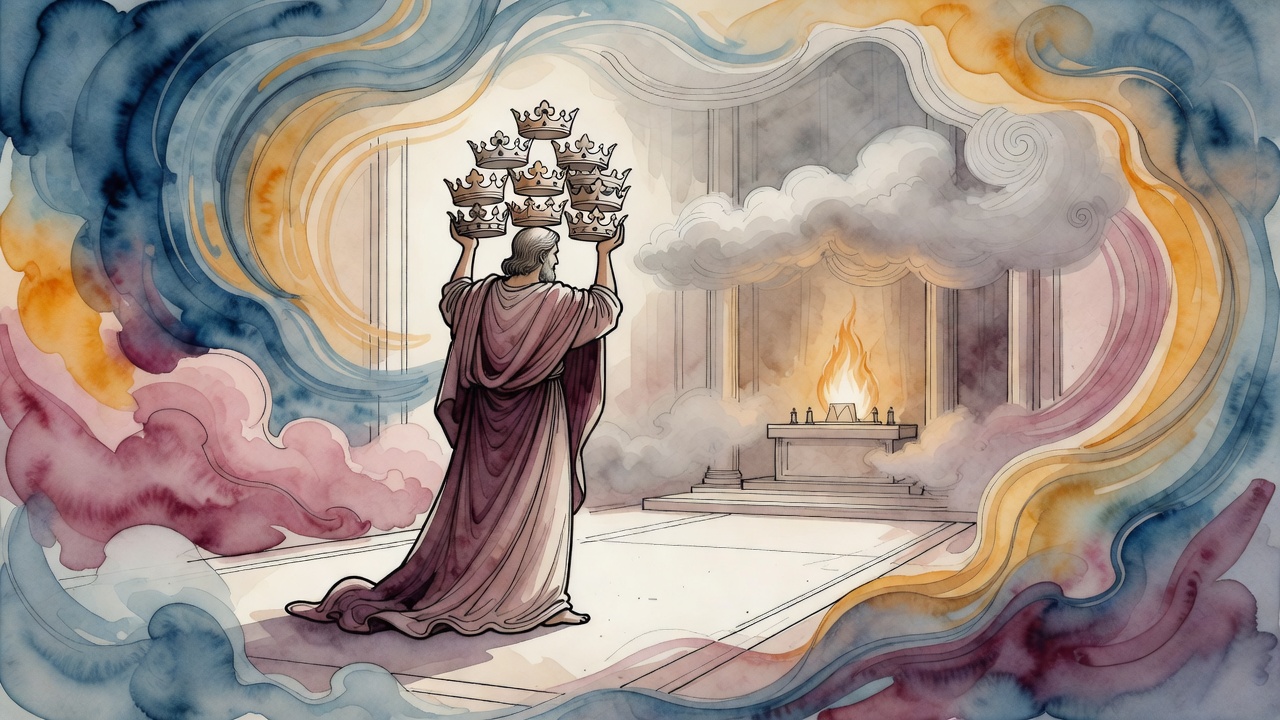
The Sifrei Bamidbar records the list of priestly gifts, twelve types of offerings that sustained the Cohanim, including first fruits, tithes of tithes, and the redemption price of the firstborn. The priests received portions from birth, from harvest, from death, from sin. Their livelihood was woven through every stage of Israelite life. They ate from birth and harvest and atonement and death, and this is not coincidence. They were maintained by the full circuit of human experience so that they could minister to the full circuit of human experience.
Why Aaron Was Silent
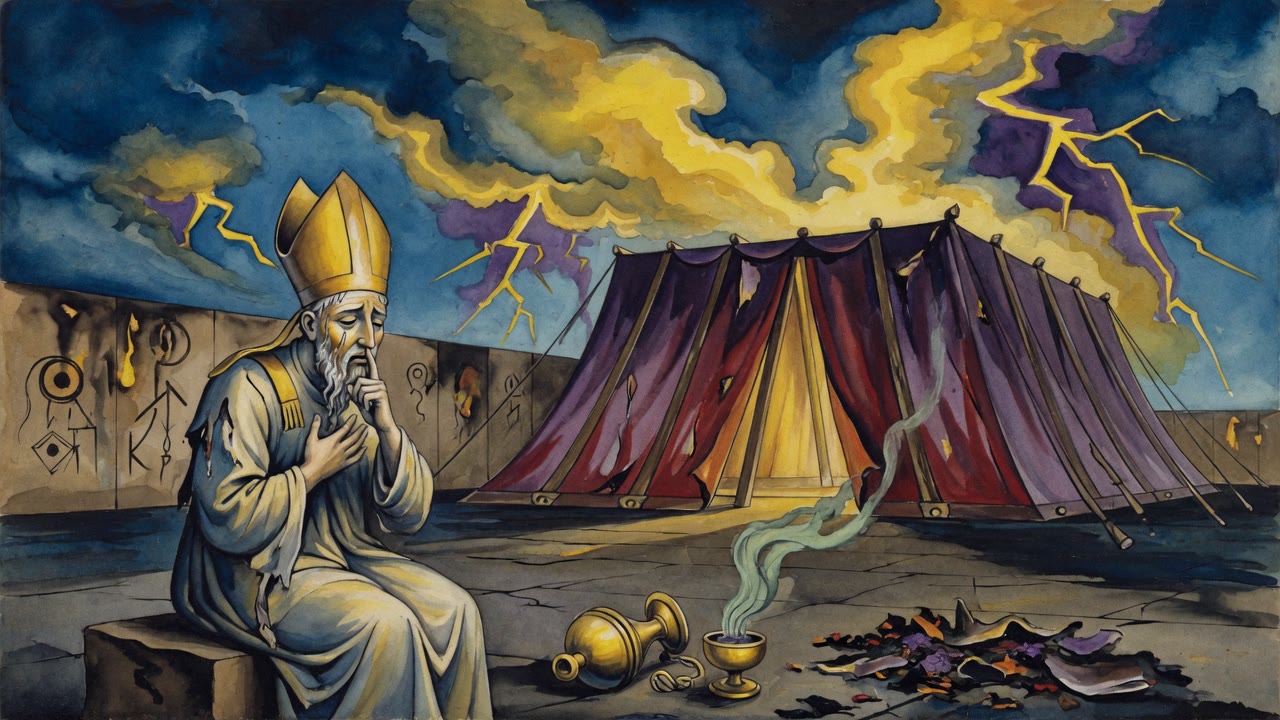
Nadav and Abihu thought their devotion exceeded the need for protocol. Or perhaps they thought that ardor was a substitute for precision. The fire that had come for offerings came for them, and Aaron, the Torah says with devastating simplicity, was silent.
He could not mourn. He was still on duty. The fire was still burning on the altar, consuming the day's offerings, continuing its work as though nothing had happened. Because for the fire, nothing had interrupted it. It had simply followed the law that Aaron had been appointed to uphold: that which approaches God outside the permitted path will be consumed. His sons had been consumed. The fire went on burning. Aaron stood beside the altar and said nothing.
Midrash Tehillim on Psalm 26 connects the ritual purity required of those who approached God to the Mishnaic teaching that even a stolen palm branch invalidates the ritual of Sukkot (the autumn festival of booths). Holiness cannot be built from theft. The approach to the divine must be clean all the way down, from the smallest ceremonial detail to the largest architectural ambition. Aaron washed his hands. He changed his garments. He performed the rituals in the exact order given to Moses on the mountain. Because the fire, once given, could not be safely approached by anyone who thought that close enough was good enough.
← All myths