How the Tabernacle Finished What Creation Had Started
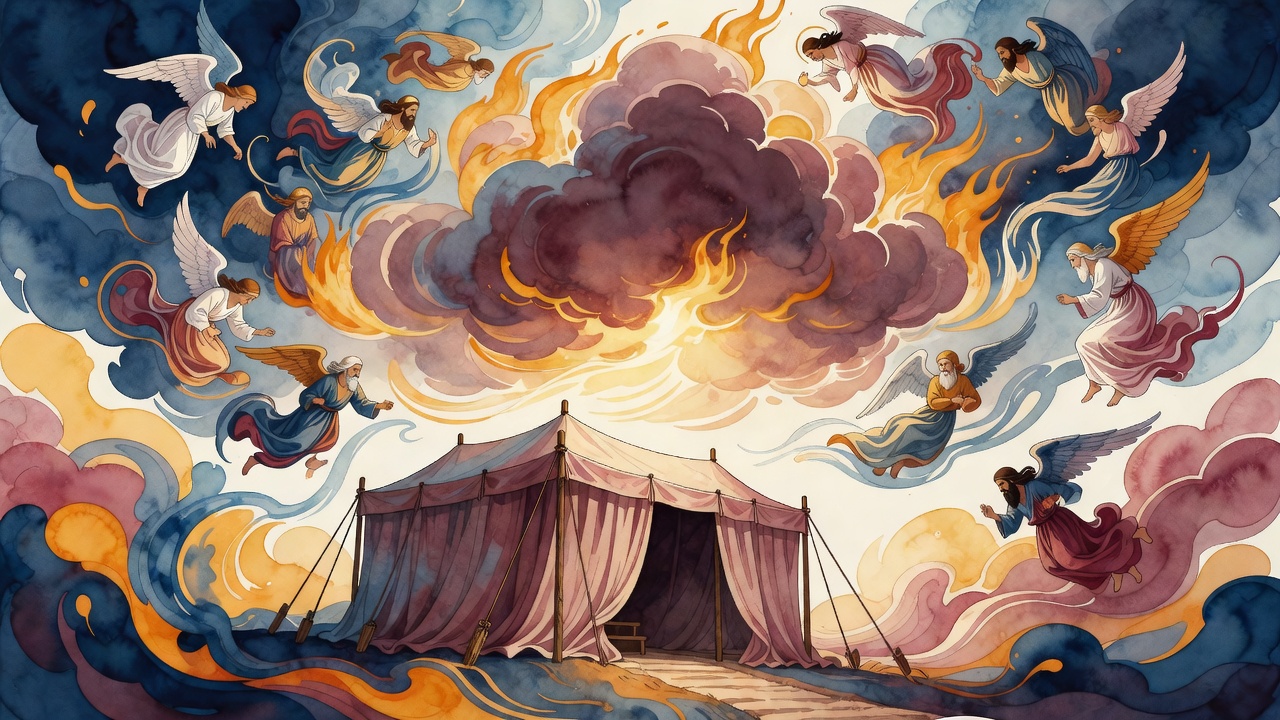
When the Tabernacle was raised and fire came down, God's joy matched the joy of the first day. The world had been waiting for this moment.
Table of Contents
 Click for full size
The Craftsman Whose Name Was Already Written
Moses stood on the mountain and saw the entire Tabernacle laid out before him. Every plank, every curtain, every vessel in its place. He understood that he was looking at something that had to be built, and he assumed he would be the one to build it.
God stopped him. "A king gives direction," God told him. "A king does not carry the lumber himself." The construction was not Moses's to execute. His task was to direct, to oversee, to stand at the center of the work while others carried it out.
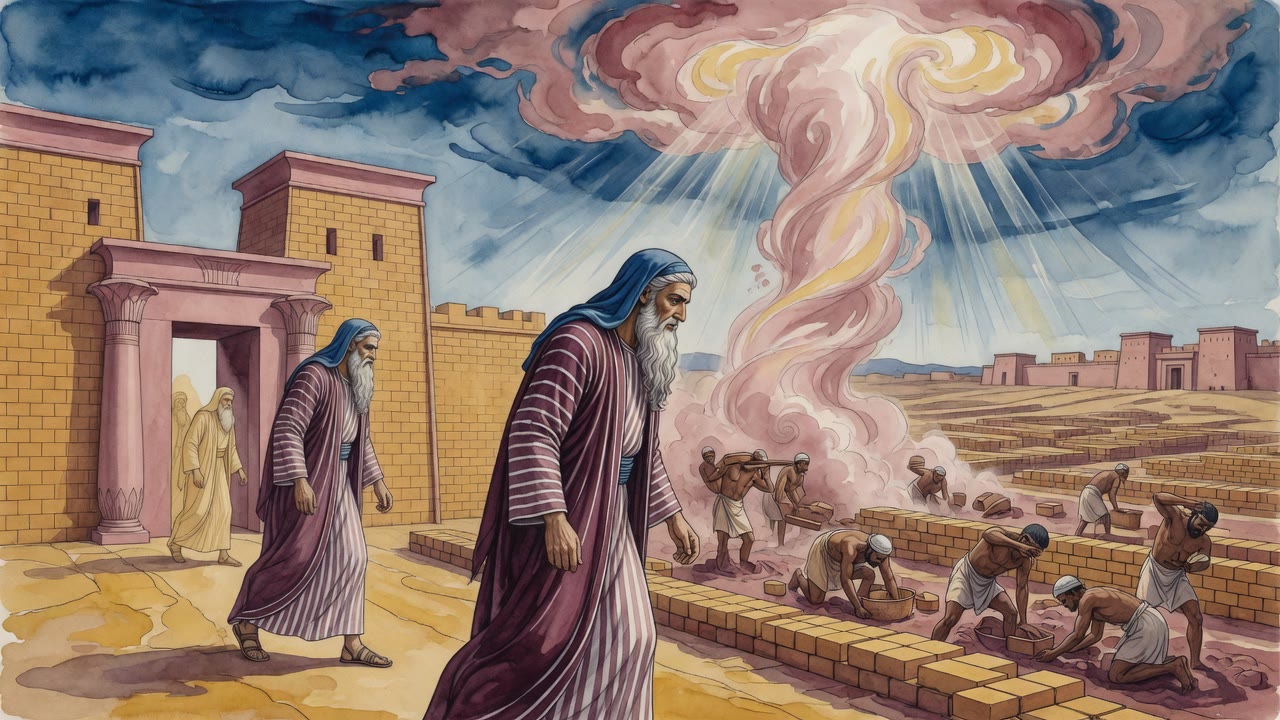
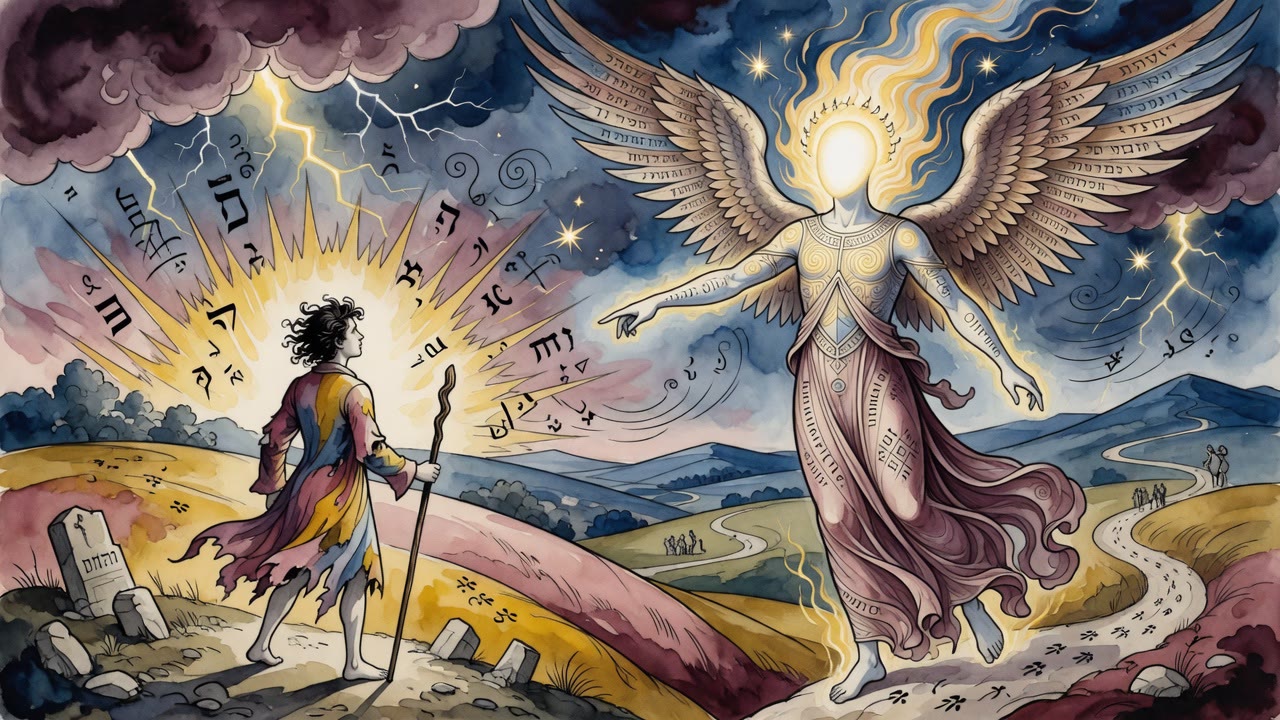
But who would be the master craftsman? Moses would need a name. God told him to open the book of Adam, the record in which every generation and every calling had been written since the first hour of the world. There, in that record, was the name of Bezalel son of Uri. This man had been appointed for this task before the boards were cut, before Sinai, before Egypt, before the covenant with Abraham, before anything that had made Israel Israel. The Tabernacle had a builder whose appointment predated his own birth by more than a thousand years.
What the Princes Learned Too Late
When Moses called for donations to fund the construction, the tribal princes held back. They had a plan. They would wait to see what the common people contributed, then step in to supply whatever was still needed. The princes wanted to be the ones who made the difference, the people without whom the sanctuary could not have been completed.
The people gave everything. By the time the princes arrived with their contributions, there was nothing left to supply. The entire Tabernacle had been funded without them. All they could bring were the stones for the priestly vestments, which is exactly what they brought. The sages did not read this as a humiliation without lesson. The princes had miscalculated what it meant to lead. They had waited for an opportunity to be essential rather than simply giving when giving was possible.
The Fire That Had Always Been Coming
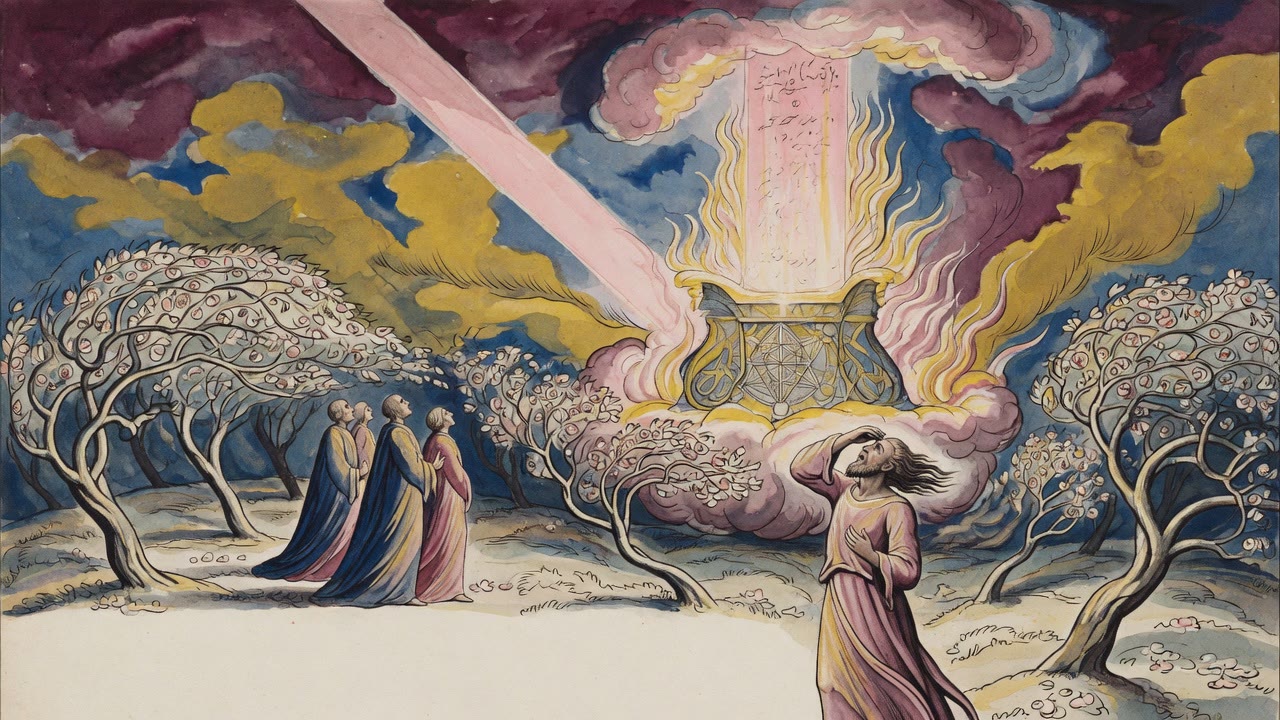
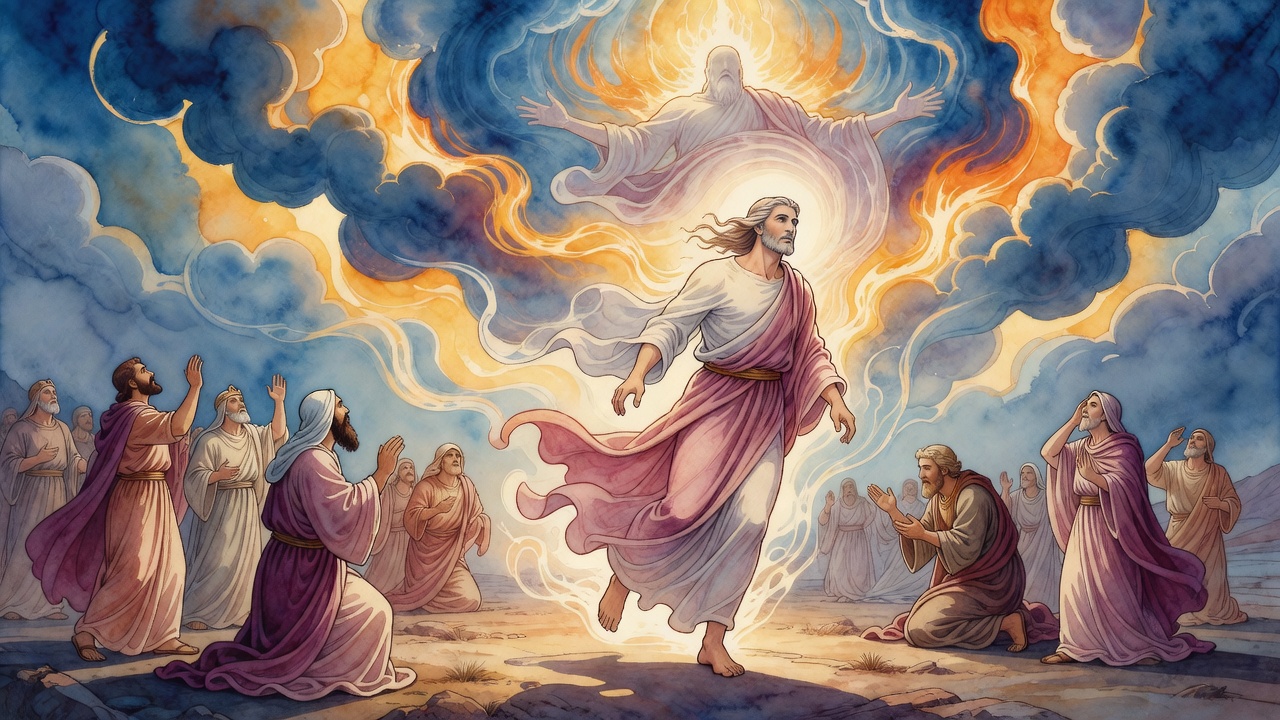
On the day of dedication, fire descended from heaven and consumed the offerings on the altar. This was not the same fire that burns wood. It was the fire that had been waiting since the creation of the world for this particular altar, this particular arrangement of priests and vessels and sacred space, to be ready to receive it.
God's joy over the Tabernacle matched the joy of the first creation. This was the claim the tradition made without softening it. The world had been built. Torah had been given. Lovingkindness had been present in the world since the beginning. But the world stood, according to the rabbinic account, on three pillars: Torah, sacred service, and lovingkindness. Before the Tabernacle, the middle pillar was absent. Creation had been incomplete.
The Shekhinah Returns to Earth
In Eden, God's presence had been immediate. The divine and the human occupied the same space. After the transgression, that presence withdrew. With each generation, the withdrawal continued upward, further from the world, further from the human beings who had broken the proximity.
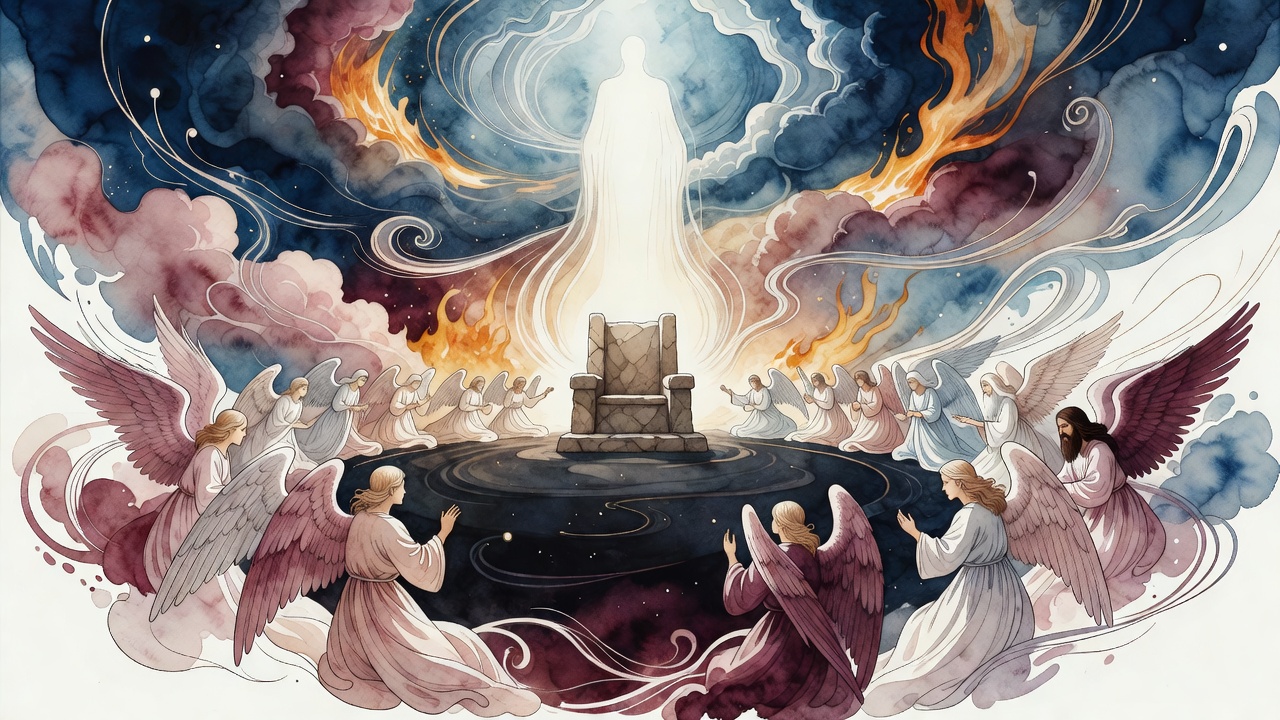
The Tabernacle reversed the direction. Not all the way back to Eden. But the Shekhinah, the divine presence, descended into the camp of Israel and took up residence in the portable sanctuary that moved when Israel moved and stopped when Israel stopped. The angels worried about this. If God's presence went below, would heaven be abandoned? God's answer, preserved in the tradition, was that heaven would not be emptied. But the descent was real. The presence that had retreated from the world came back into it, and the world was changed by the return.
← All myths