560 related texts · 2 related myths · Page 1 of 12
The closing verse of the book of Exodus is, among other things, a promise for the road. Targum Pseudo-Jonathan on (Exodus 40:38) describes what every Israelite could see the mornin...
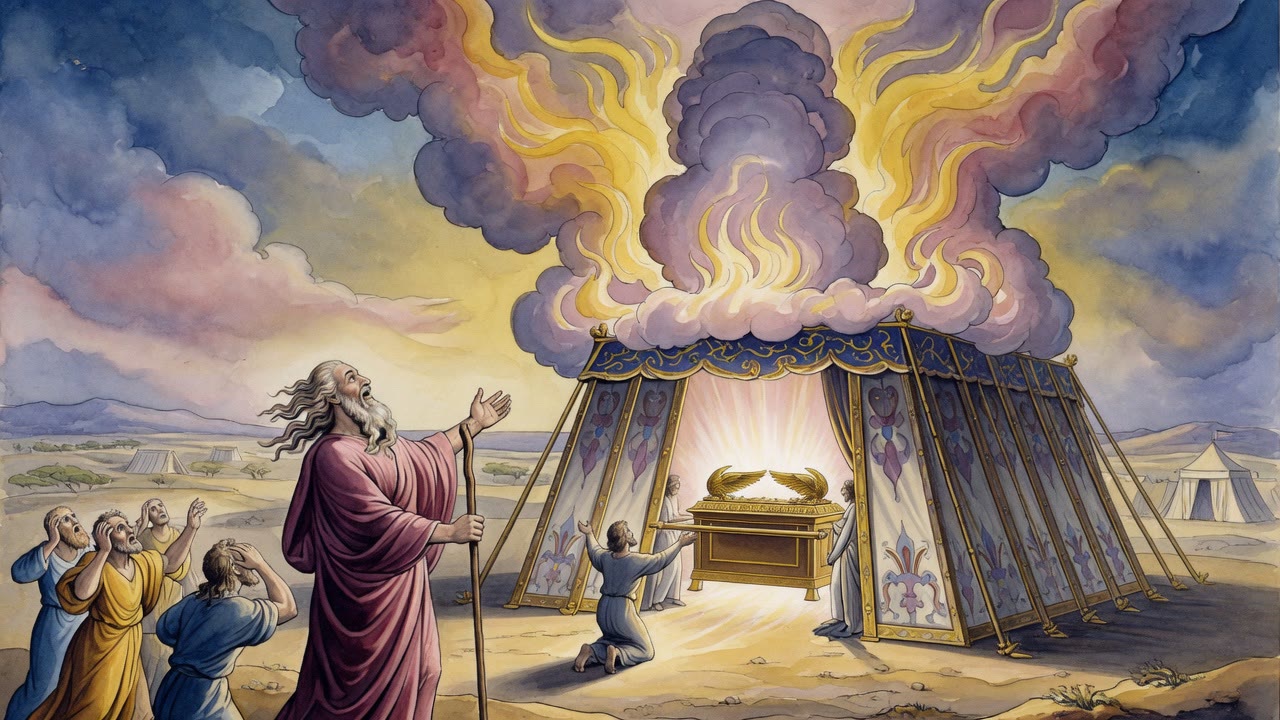
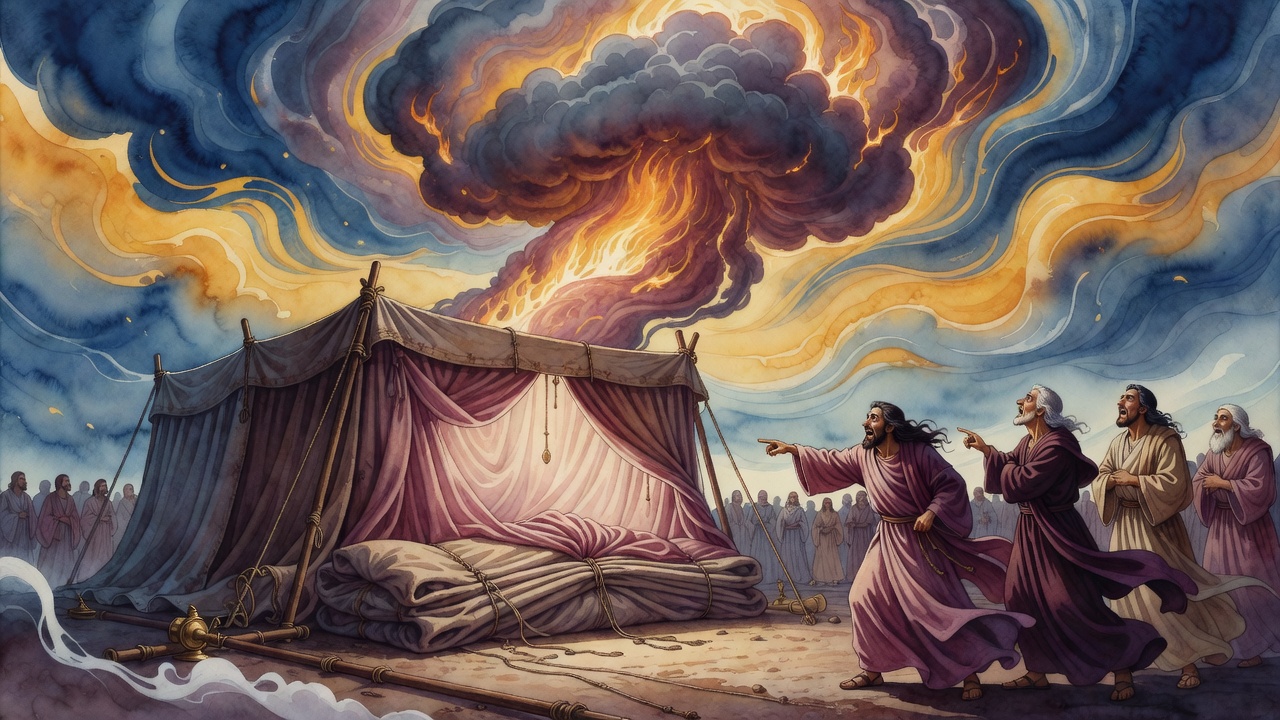
The greatest prophet in the Torah, the man who spoke with God "face to face" (Exodus 33:11), the builder of the sanctuary itself. And he could not walk inside. Targum Pseudo-Jonath...
When every piece of the sanctuary had been assembled and inspected, Moshe surveyed the whole and saw that the people had done exactly what the God of Israel had commanded. Then he ...
Targum Pseudo-Jonathan on (Exodus 40:9) takes a small detail, anointing the tabernacle with the consecration oil. And reaches forward across centuries. Anoint the tent and everythi...
When the Tabernacle stood finished in the wilderness and every board was raised into place, the Holy One turned Moses's attention from the walls to the men who would serve inside t...
The collection of materials for the Tabernacle in (Exodus 35:1-35) is, in the Hebrew Bible, a straightforward account of voluntary giving. The Targum Jonathan inserts miracles that...
There is a quiet moment in the construction of the Tabernacle that the text almost hurries past. Targum Pseudo-Jonathan on (Exodus 40:21) captures it: Moses brought the ark into th...
Targum Pseudo-Jonathan on (Exodus 39:33) does something the plain Hebrew text does not. It tells us where, exactly, the finished tabernacle was brought. Not to a random tent. Not t...
The altar of burnt offering was the first thing anyone saw on approaching the Tabernacle. Targum Pseudo-Jonathan on (Exodus 40:29) places it exactly there, at the gate, before the ...
Exodus 40 ends with a single line of deep significance. Targum Pseudo-Jonathan renders (Exodus 40:33) simply: Moses reared up the court around the tabernacle and the altar, set the...
Of all the objects in the Tabernacle, the brass laver had the strangest origin. Targum Pseudo-Jonathan on (Exodus 38:8) preserves the story: it was made from the brasen mirrors of ...
It wasn't just about hammering tent pegs and hanging curtains. There was a whole ritual, a consecration, full of wonder and divine intervention. One of the most fascinating aspects...
Parashat Pekudei opens with an accounting of the Tabernacle's materials (Exodus 38:21), but the Kedushat Levi (Rabbi Levi Yitzchak of Berditchev) sees something far deeper than a l...
For forty long years, as they wandered, they had a constant companion: a pillar of cloud by day, and a pillar of fire by night. The Torah tells us, in (Exodus 13:21), "And Yahweh w...
Bamidbar Rabbah turns to The Mysterious Census Number That Echoed the Tabernacle. This particular number, 603,550, might ring a bell. It echoes another census, the one taken during...
It’s a story rich with symbolism, divine presence, and, In Bamidbar Rabbah, 13, it all began on the 23rd of Adar, and culminated on the first of Nisan. Rabbi Yosei tells us that fo...
Our story comes from Shemot Rabbah, a collection of rabbinic interpretations on the Book of Exodus. It centers on a seemingly simple verse: “The Tabernacle of the Testimony, as the...
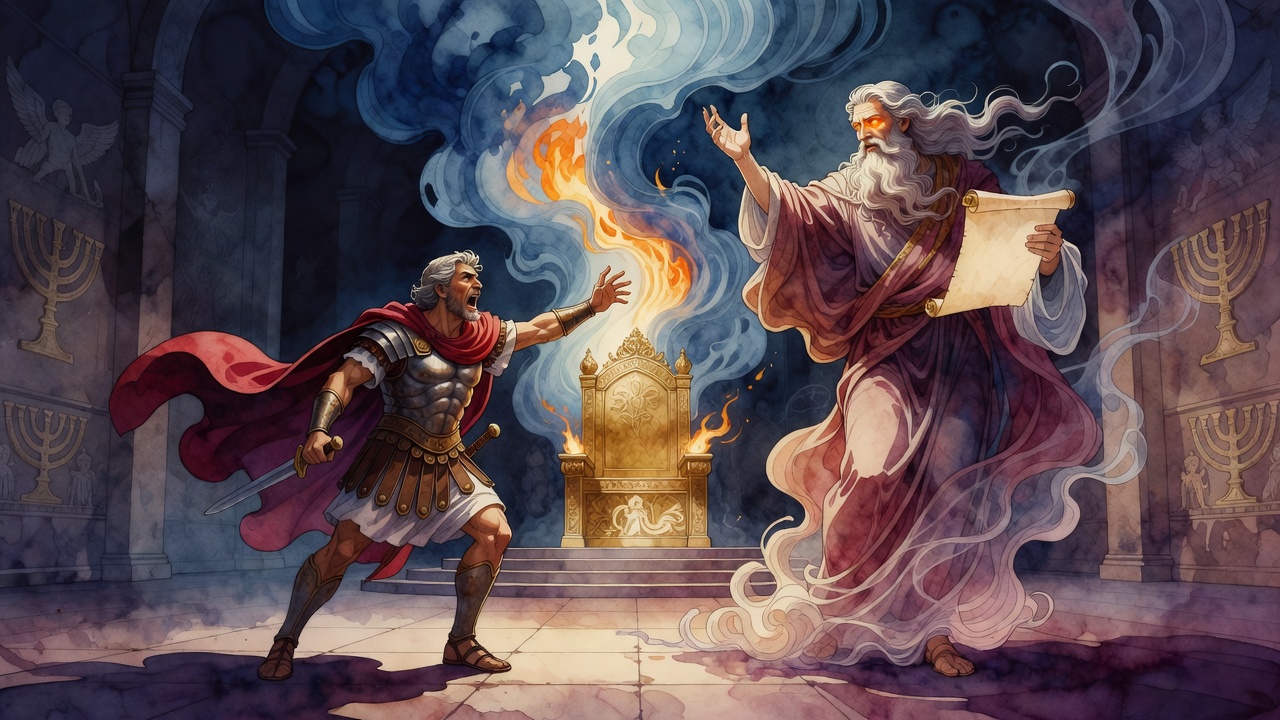
Nebuchadnezzar, king of Babylon, stood as the supreme example of human arrogance brought low. The Mekhilta recounts how this mighty ruler dared to place himself above all creation....
Jewish tradition teaches us that this feeling might be more than just a lucky coincidence. It might be the very presence of the Divine. Shemot Rabbah, a classic compilation of rabb...
The instructions for building the Tabernacle in (Exodus 25) read like an architectural blueprint in the Hebrew Bible. The Targum Jonathan adds theological meaning to nearly every m...
The Targum Jonathan on (Deuteronomy 12) is obsessed with a single idea: the place where God's Shekinah (שכינה), His divine presence, will choose to dwell. The Hebrew text says "the...
The Targum Pseudo-Jonathan on (Exodus 13:21) watches a miracle change its posture. By day the "glory of the Shekinah of the Lord" went before Israel in a column of cloud to lead th...
What happened to all those half-shekels? Targum Pseudo-Jonathan follows the Torah's answer: Moses was to gather the silver of the ransom from the sons of Israel and apply it to the...
When Betzalel finished the choshen, the breastplate of judgment, he did not simply sew a garment. He built a map of the world the House of Israel carries on its heart. In Targum Ps...
Targum Pseudo-Jonathan on (Exodus 40:5) refuses to let a single detail of the sanctuary pass without meaning. The golden altar of incense is to be placed before the ark of the test...
Targum Pseudo-Jonathan on (Exodus 40:6) gives the outer altar a location and a purpose that the plain Hebrew leaves unspoken. Place it before the door of the tabernacle of ordinanc...
Targum Pseudo-Jonathan on (Exodus 40:8) takes a simple instruction, set up the court around the tabernacle and hang a curtain at its gate. And turns it into one of the most strikin...
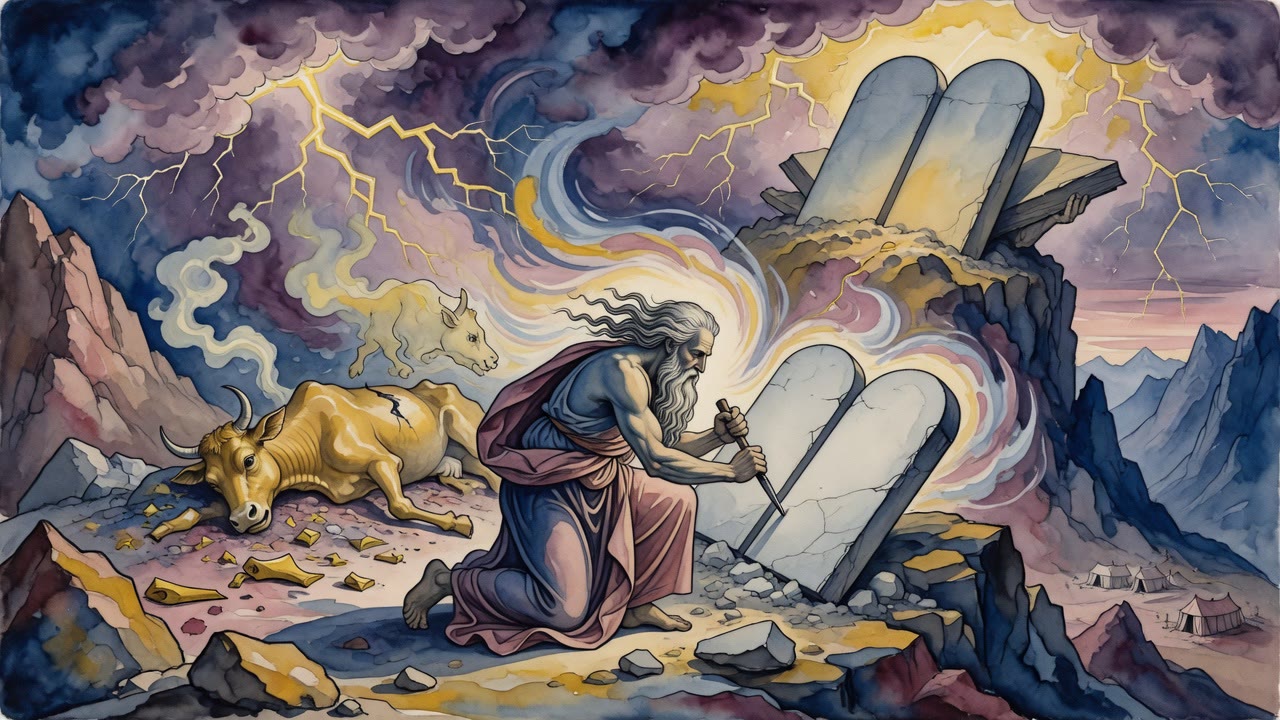
Most retellings of the golden calf stop at the moment Moses hurled the tablets to the ground and shattered them at the base of Sinai. But a remarkable tradition preserved in Targum...
Between the outer altar and the inner tent of the Tabernacle, a bronze basin sat on its foundation. Targum Pseudo-Jonathan on (Exodus 40:30) describes what Moses poured into it, no...
Drawing from various Midrashic (rabbinic interpretive commentary) sources, the Israelites were so generous in their donations for the Tabernacle that they had more than enough mate...
It plays out in a beautiful way in the story of Moses. In Ginzberg’s retelling in, Legends of the Jews, Moses, ever humble, believed his work was done once the Mishkan, the Taberna...
Jewish tradition recognizes this feeling, and even offers a powerful response: the idea of spreading a tabernacle of peace. Where does this idea come from? It appears in a seemingl...
We pray to God. But…does God pray? And if so, to whom? The mystics have wrestled with these questions for centuries, and the answer, perhaps unsurprisingly, is layered and fascinat...
There’s so much more to it than just a spiritual "reset" button. on Rosh Hashanah, the Jewish New Year, tradition tells us that God sits in judgment of everyone. Then, on Yom Kippu...
Talmud Bavli, Bava turns to A Tabernacle For The Righteous. The World to Come, Olam Ha-Ba (the World to Come). It's a place of unimaginable reward for the righteous. But what does ...
It’s not random. There's a beautiful and intricate choreography to our relationship with the Divine. Consider the dedication of the Mishkan, the Tabernacle. The Book of Numbers tel...
Prayer is often remembered as a one-way street, us reaching out to the Divine. But what if the Divine is also reaching out, also… praying? The Yalkut Shimoni, a compilation of Midr...
It wasn't just a one-day event. According to Sifrei Bamidbar, the book of Numbers, the seven days leading up to the dedication were a whirlwind of activity. Every single morning fo...
One small Hebrew word, kalot, "completed", carries an entire wedding, an entire exorcism, and the steadying of the whole world. In Pesikta de-Rav Kahana 1:5, the sages pry open (Nu...
The opening verse of Numbers 7 says a single thing twice. Moses "anointed the Tabernacle and sanctified it," and then the verse adds, "and he anointed them and sanctified them." Wh...
The Targum Pseudo-Jonathan gives the simple altar law a mystical interior. "An altar of earth ye shall make to My Name, and sacrifice upon it thy burnt offerings and thy sanctified...
The climax of the consecration chapter is not a ritual instruction. It is a declaration, and Targum Pseudo-Jonathan gives it a weight the plain Hebrew only hints at: the sons of Is...
Targum Pseudo-Jonathan on (Exodus 35:28) continues the miraculous supply chain it began in the previous verse. The clouds of heaven returned, and went to the garden of Eden, and to...
Bamidbar Rabbah turns to Tabernacle — The Golden Calf. They connect this moment of completion and consecration to (Psalm 85:9): "I will hear what the Almighty Lord has to say, for ...
A seemingly simple phrase, “Et hamishkan” – "the Tabernacle.” But according to this Midrash (rabbinic interpretive commentary), it's so much more than it seems. It proposes that th...
It wasn't just a matter of unfolding some tents and calling it a day. The Torah tells us, in (Exodus 40:17), that it was "in the first month during the second year, on the first of...
The Book of Numbers, Bamidbar in Hebrew, is full of details about the Israelites' journey through the wilderness. And in chapter 7, we find a fascinating account of the dedication ...
It’s not always just for emphasis. Sometimes, there’s a deeper, almost heartbreaking reason. Take the word mishkan, "Tabernacle," in the Book of Exodus. We find it stated twice in ...