396 texts · Page 1 of 9
This passage from Ben Sira is all about seeking wisdom, actively, intentionally. It begins with a simple invitation: "If thou art wishful to hear (H); And incline thine ear (H), th...
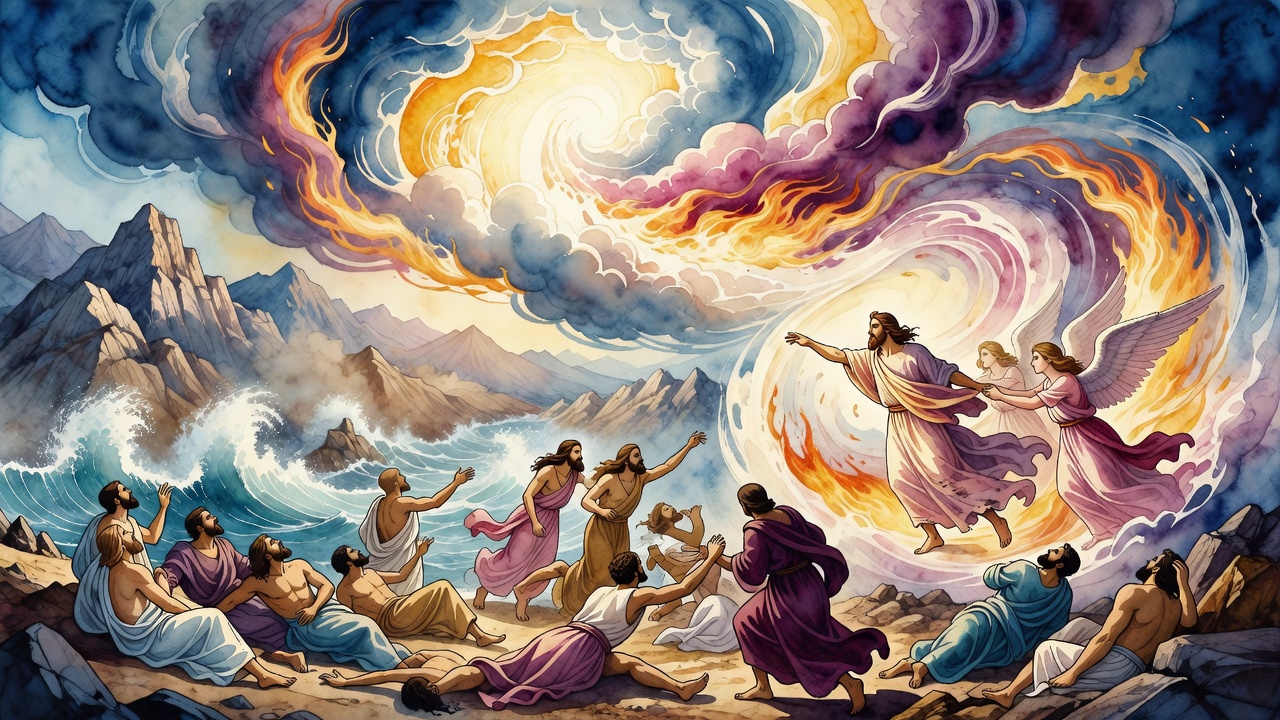
The Book of Jubilees, a fascinating text considered canonical by some but relegated to the Apocrypha by others, offers a glimpse into such a reality. Specifically, Chapter 23 paint...
According to Legends of the Jews, God didn't hold back when addressing the serpent. It wasn't just a slap on the wrist; it was a complete overhaul of the serpent's very being. "I c...
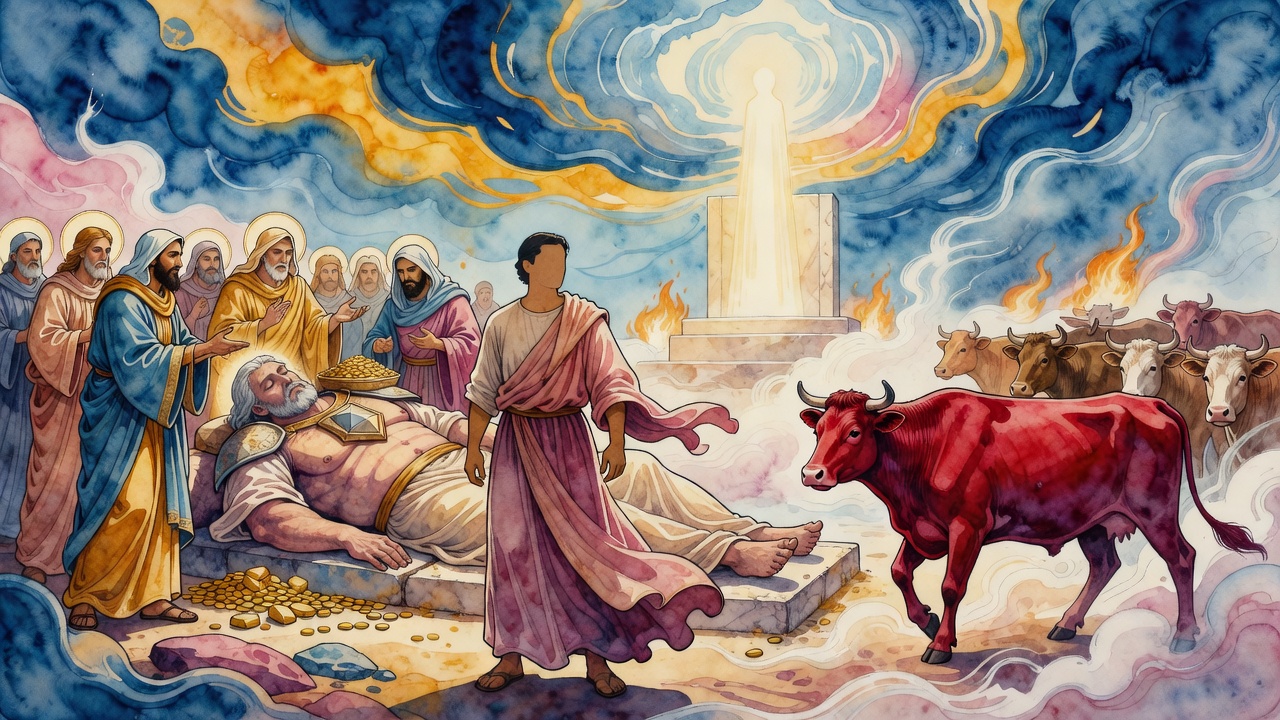
You know the story: Abraham, victorious in battle, refuses to take any spoils. Not a single thread. Not even a shoe-latchet. A tiny thing. But according to the Legends of the Jews,...
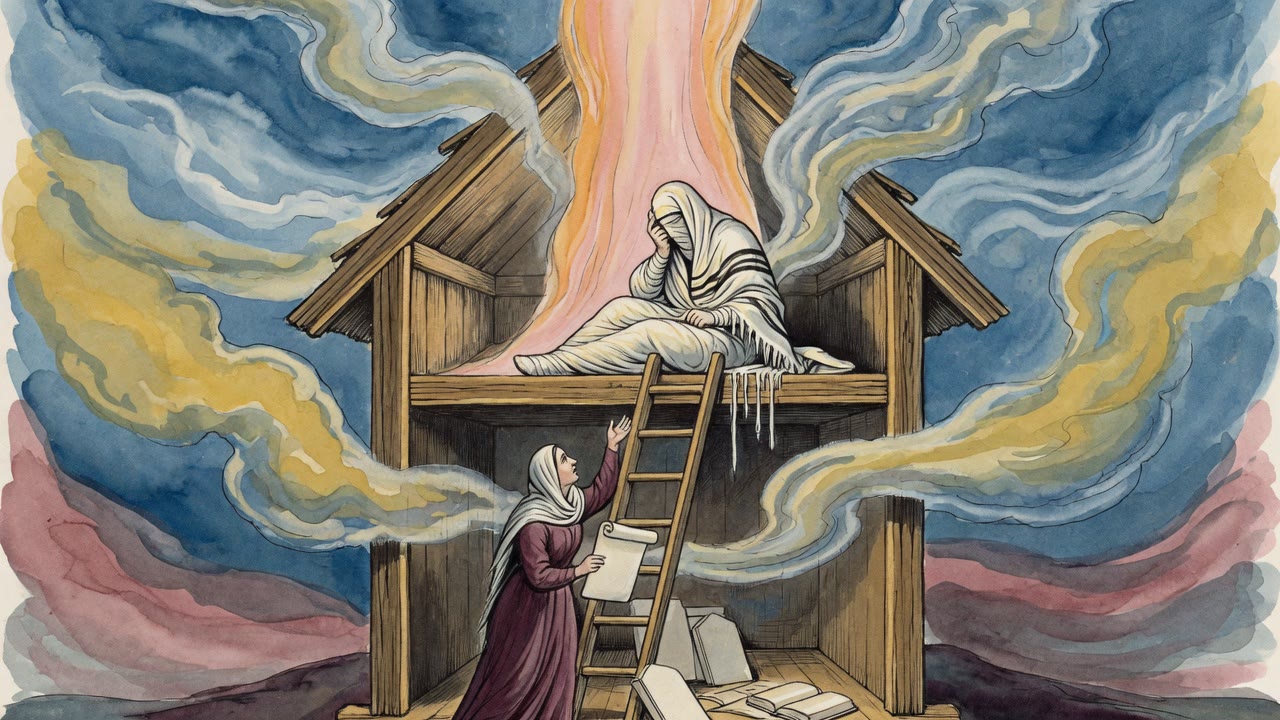
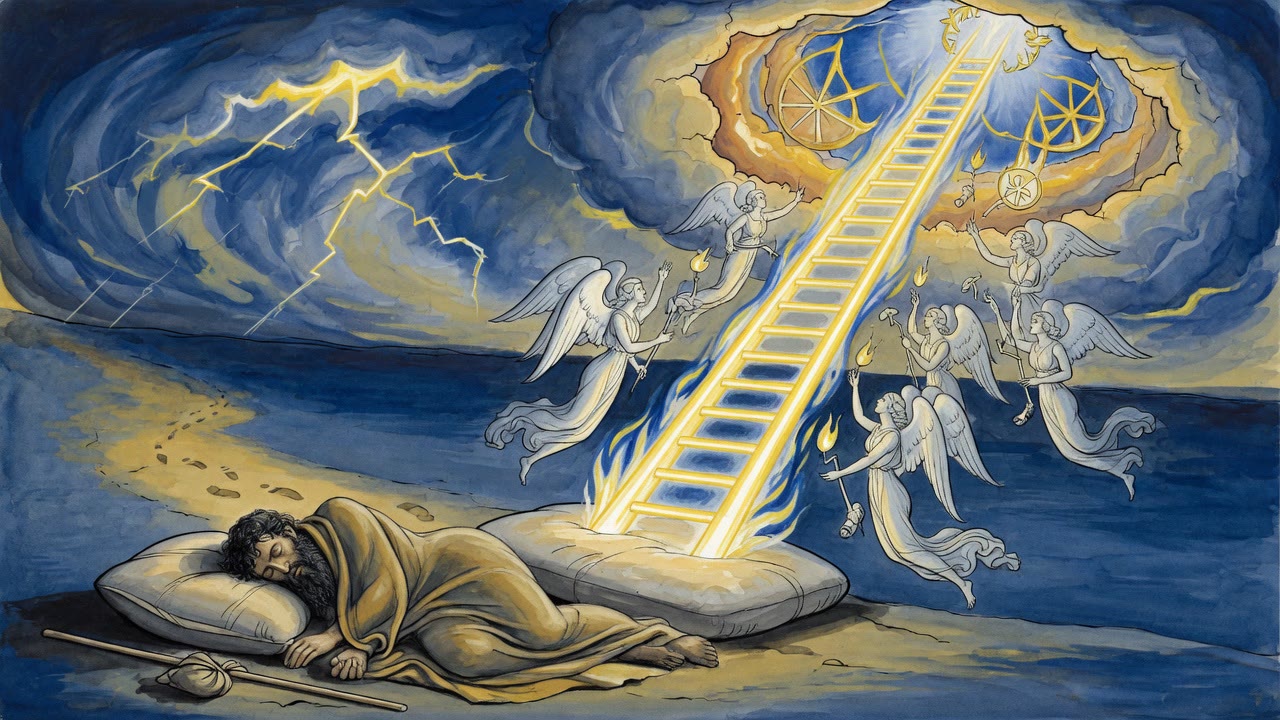
We find one such vision in Ginzberg's monumental work, Legends of the Jews, a treasure trove of rabbinic and folk traditions. The passage takes us on a journey, a spiritual ascent ...
Did they just shrug it off? Were they curious? Intrigued? According to the Legends of the Jews, they had some pretty strong opinions, actually. So, the story goes that when they he...
It’s a question that’s plagued humanity for centuries, and one that the wisdom of Kabbalah addresses with profound depth. to an idea from Baal HaSulam, one of the most important co...
It’s a question that’s plagued philosophers and theologians for centuries. But Jewish mystical tradition, specifically as illuminated by Baal HaSulam in his introduction to the Zoh...
The Talmud in Makkot (23b) offers a fascinating idea. Rabbi Ḥananya ben Akashya says that God, wanting to bestow zekhut, or merit, upon the Jewish people, increased Torah and comma...
The light of creation, the shefa (divine abundance), has diminished, become veiled. It’s like trying to see the sun through a thick fog. But here’s the beautiful part: we're not pa...
In Asarah Perakim LeRamchal – "Ten Chapters of the Ramchal," a Kabbalistic text attributed to the great 18th-century scholar Rabbi Moshe Chaim Luzzatto – we find a glimpse into the...
The Kalach Pitchei Chokhmah, a profound Kabbalistic text, grapples with this very idea. It asks a fundamental question: Why do we even need to perform mitzvot (commandments), comma...
And Jewish tradition, especially Kabbalah, dives deep into unpacking just what that "image" – that d’mut Adam (דמות אדם), the archetypal Likeness of Man – really signifies. The Kal...
And one of the keys to unlocking that blueprint? It lies in understanding the Sefirot (the divine emanations). What are the Sefirot? Imagine them as divine emanations, like facets ...
According to the ancient wisdom tradition of Kabbalah, it's all heading towards a state of pure goodness and complete perfection. A time when only good exists, and evil...vanishes....
Kabbalah, Jewish mysticism, delves into this very question, often using the concept of the Partzuf (פַּרְצוּף), a divine "face" or configuration. It's a complex idea, but at its he...
I’m not talking about societal roles or cultural expectations. I mean, deep down, at the very core of our beings. It's a question that's captivated mystics and philosophers for age...
Jewish mysticism, particularly in the Kabbalah, grapples with this very idea when discussing the Partzuf (a divine configuration)im (Divine Personas or Configurations). We're talki...
Specifically, the shin – the Hebrew letter ש – embossed on the head tefillin (leather phylacteries worn during prayer). It’s not just decoration. It’s a doorway to something profou...
The Tikkun (spiritual repair)ei Zohar, a core text of Kabbalah, delves into just that – the intricate connections that bind the universe, especially during the holy time of Shavu'o...
We all lead busy lives. But is that really what's being asked of us? to a fascinating passage from the Tikkun (spiritual repair)ei Zohar to unpack this idea of constant Torah study...
Every commandment you perform sends a flood of infinite light into the physical world. That is not a metaphor. According to the Tanya of Rabbi Schneur Zalman of Liadi, that is the ...
A strange ruling sits at the heart of Jewish law. If you recite the Shema prayer entirely in your mind, with complete concentration and devotion, you have not fulfilled your obliga...
Angels are, in a certain sense, spiritual animals. The prophet Ezekiel saw them with the face of a lion, the face of an ox (Ezekiel 1:10). The Tanya takes this literally: angels ha...
Rabbi Chaim Vital, the great student of the Arizal, revealed something extraordinary about what happens in the upper worlds when we study Torah. Study Torah with genuine intention,...
Before you put on your tallit in the morning, before you open a book of Torah, before you do anything holy at all, you need one thing first. Fear. Not terror. Not dread. Rabbi Schn...
There are two kinds of awe, and they lead to entirely different places. Rabbi Schneur Zalman of Liadi maps them with surgical precision in the Tanya, drawing on the Mishnah (the ea...
There is a love of God so universal that every single Jewish soul possesses it, regardless of spiritual level. Rabbi Schneur Zalman of Liadi locates it in a verse from Isaiah that ...
There is a direct road to God that does not require you to be a mystic or a saint. Rabbi Schneur Zalman of Liadi calls it the attribute of our patriarch Jacob: the path of compassi...
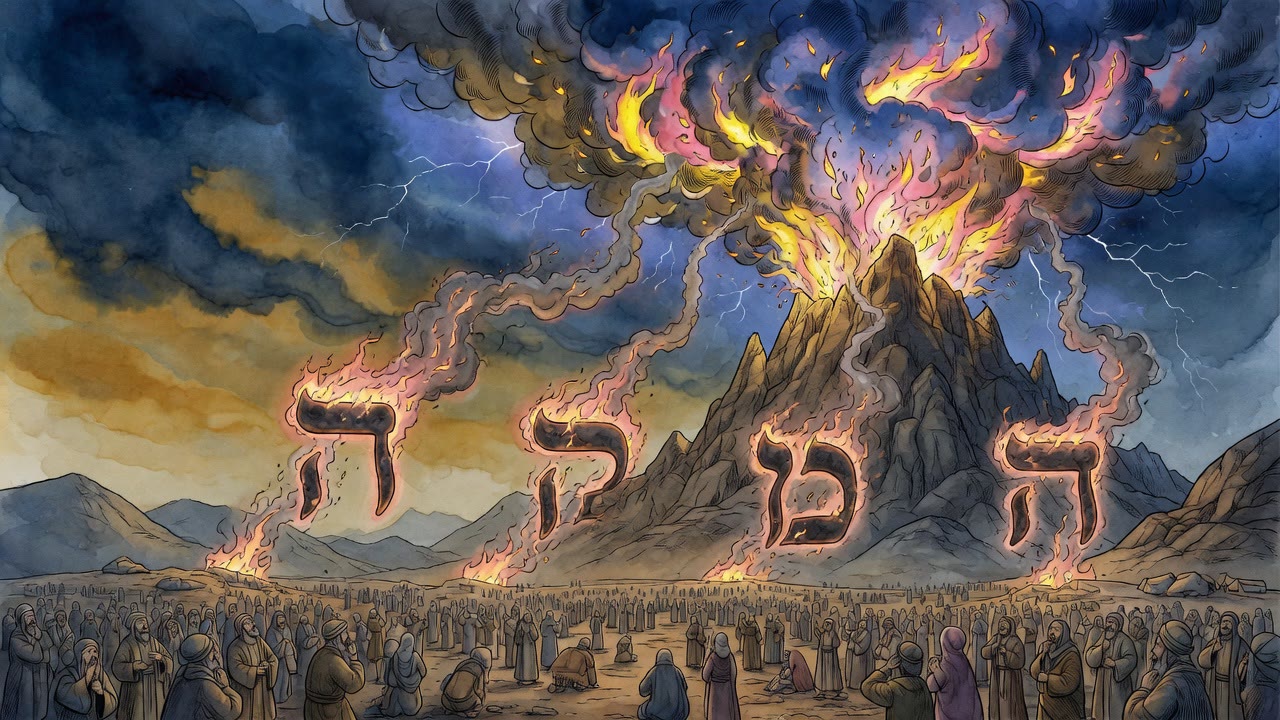
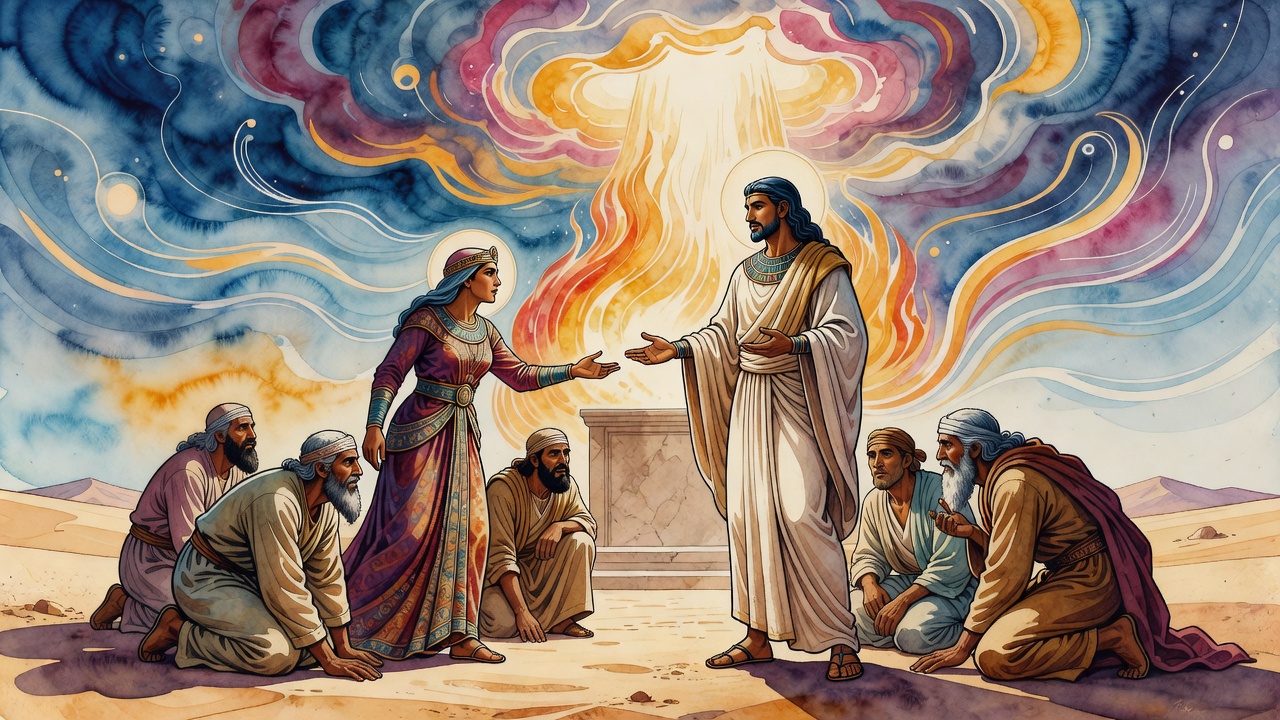
"You will prostrate yourselves from a distance" (Exodus 24:1). Rabbi Levi Yitzchak of Berditchev reads this verse not as a physical instruction about how far to stand from Mount Si...
R. Eliezer says: Sheep for the Pesach (Passover) and cattle for the chagigah. You say this, but perhaps both are for the Pesach? And how would I understand "an unblemished lamb, et...
R. Akiva says: One verse states "And you shall slaughter the Pesach (Passover) to the L–rd your G–d, sheep and cattle," and another, "From the sheep and from the goats shall you ta...
"And they shall place it on the two side posts and on the lintel": I might think that if he placed (the blood on) one before the other, he has not fulfilled his obligation. It is, ...
And whence is it derived that in the absence of matzoh and maror one fulfills his obligation with the Pesach (Passover)? From "shall they eat it" (in any event). I might think that...
Rebbi — Rabbi Yehudah HaNasi, the redactor of the Mishnah (the earliest code of rabbinic law) and the most authoritative sage of his generation — weighs in on the Passover cooking ...
"uvashel": "bashel" (here refers to flesh that was) roasted (before, the understanding being that it is forbidden to cook it even if it had been roasted previously), as in (Devarim...
The Torah gives strict instructions about Passover leftovers: "You shall not leave over anything of it until the morning, and what is left over of it until the morning, in fire sha...
The Torah commands the Israelites to eat the Passover lamb "in haste" (Exodus 12:11). But whose haste? The Mekhilta identifies a surprising ambiguity in this seemingly simple word ...
"And you shall celebrate it as a festival for the L–rd": This tells me only of the first day of the festival as requiring a chagigah (offering). Whence do I derive (the same for) t...
(Ibid. 15) "Only on the first day you shall eliminate leaven from your houses": before the eve of the festival. You say this, but perhaps (the meaning is) on the day of the festiva...
Rabbi Yossi HaGlili confronts the timing question head-on: when exactly must a person eliminate chametz from their home before Passover? His answer hinges on a single Hebrew word t...
Rabbi Yehudah ben Betheira flips the entire debate on its head with a single devastating observation. The other rabbis have been arguing that chametz must be burned — and only burn...
The Torah states in (Exodus 12:16) that "all labor shall not be done" on the festival days. The Mekhilta asks a pointed question: who exactly is covered by this prohibition? The an...
The Torah commands in (Exodus 12:17), "And you shall watch over the matzot." The Mekhilta takes this verse as the foundation for one of the most detailed areas of Passover law: the...
Rabbi Yoshiyah takes the verse "And you shall watch over the matzot" and performs one of the most beloved wordplays in all of rabbinic literature — a reading that transforms a law ...
"And you shall guard this day": What is the intent of this? Is it not already written (16) "all labor shall not be done in them"? This tells me only of labor per se. Whence do I de...
The Torah states in (Exodus 12:20), "All leavening you shall not eat." The Mekhilta asks why this verse is needed at all — since the Torah has already forbidden chametz in an earli...
"In all of your habitations shall you eat matzoth": What is the intent of this? From (Devarim 14:23) "And you shall eat before the L–rd your G–d the tithe of your grain and wine an...