The Messiah Agreed to the Iron Yoke If Not One of Israel Was Lost
Somebody lit a candle for him on the road and it went out. Somebody lit another. He stopped walking. From here on, he said, I am waiting for the morning.
Table of Contents
 Click for full size
They Set the Boards the Way the Tree Had Grown
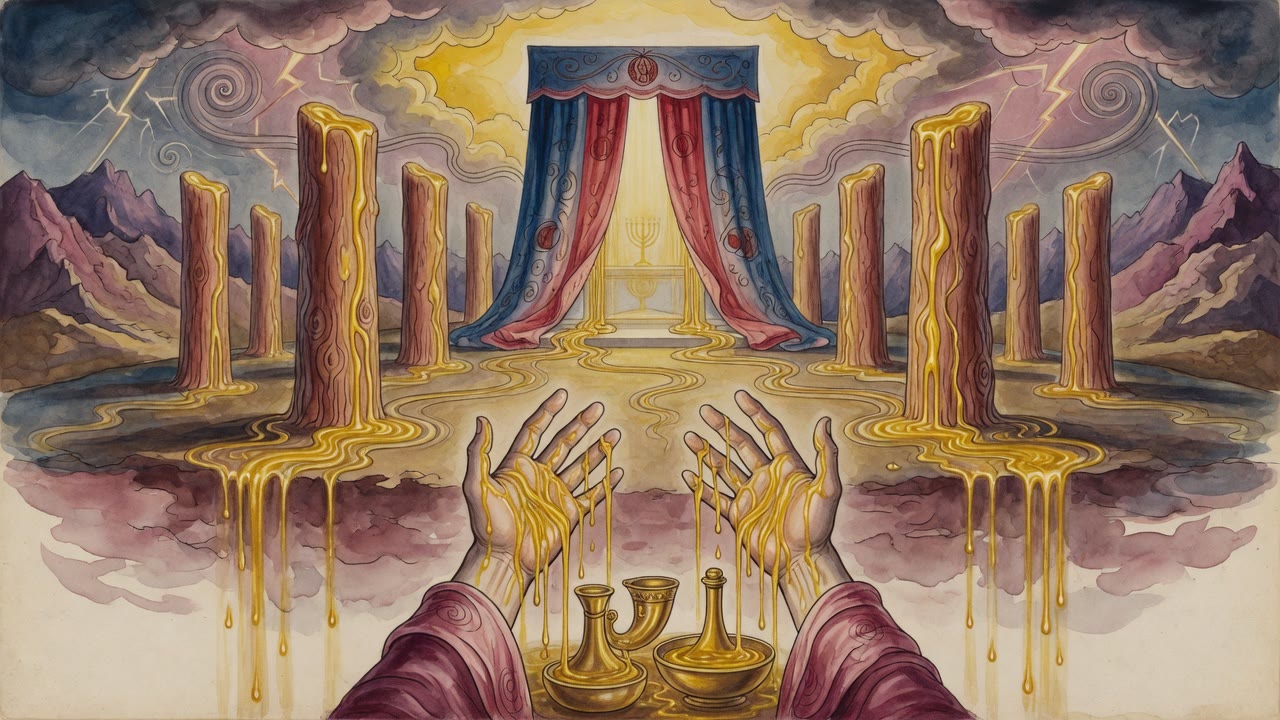
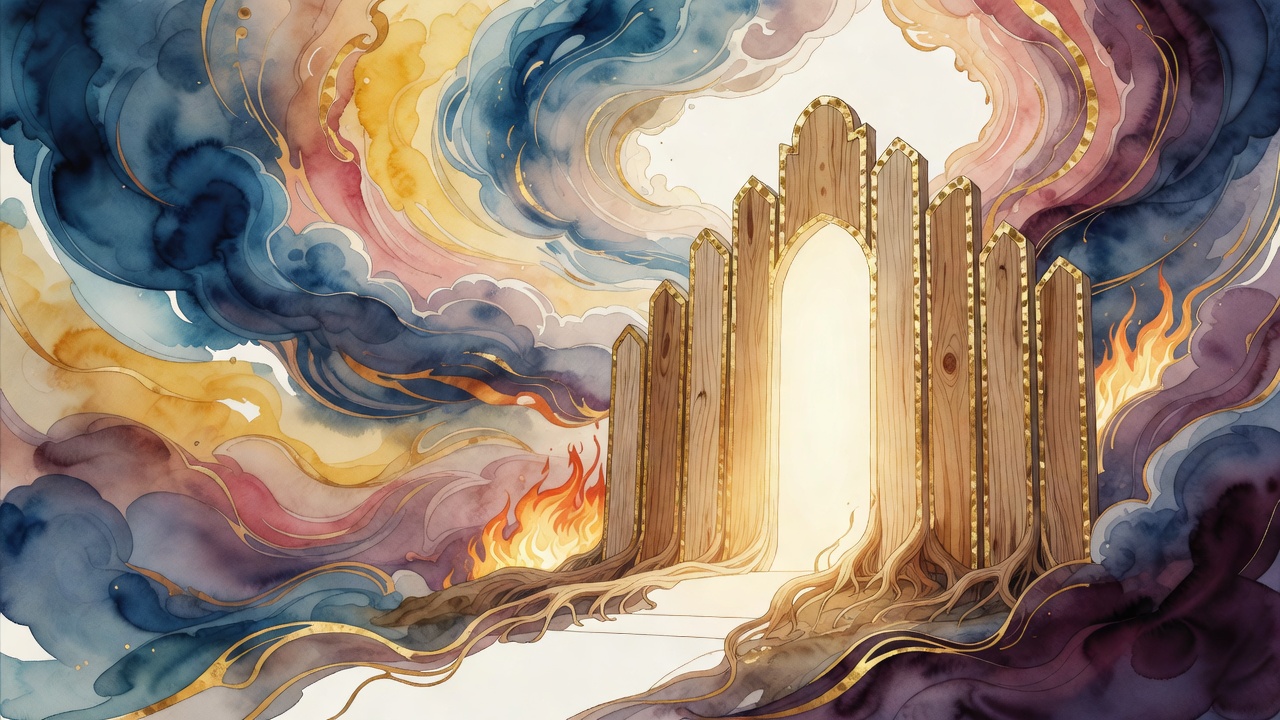
The artisan lifted each acacia board and set it the way the tree had grown. Root end down. Crown end up. The instruction about the sanctuary walls said the boards were acacia wood, standing. Every board in every building on earth stands. The word looked like it was doing no work at all.
It was doing this. The acacia had been felled in the desert, stripped, squared, planed smooth, then hammered over with gold until no grain showed anywhere. There was no way left to tell by looking which end had ever been in the ground. The artisan knew anyway. He lifted each board and seated it in its socket still reaching toward heaven through the gold.
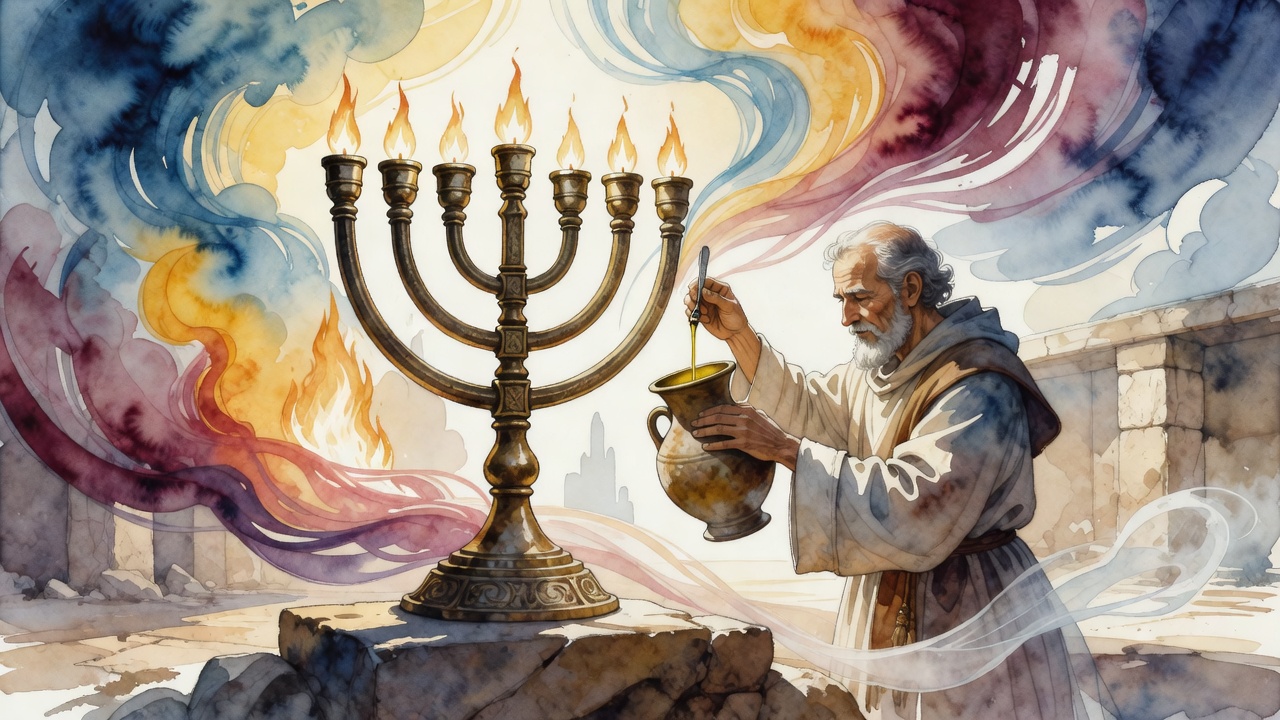
The lamp got the same care. Give it its measure, the instruction said. Enough oil to carry a flame from evening until morning, worked out in advance so that nothing fails in the middle of the night when nobody is watching it.
Then it went out.
Two Lamps Went Out on the Road
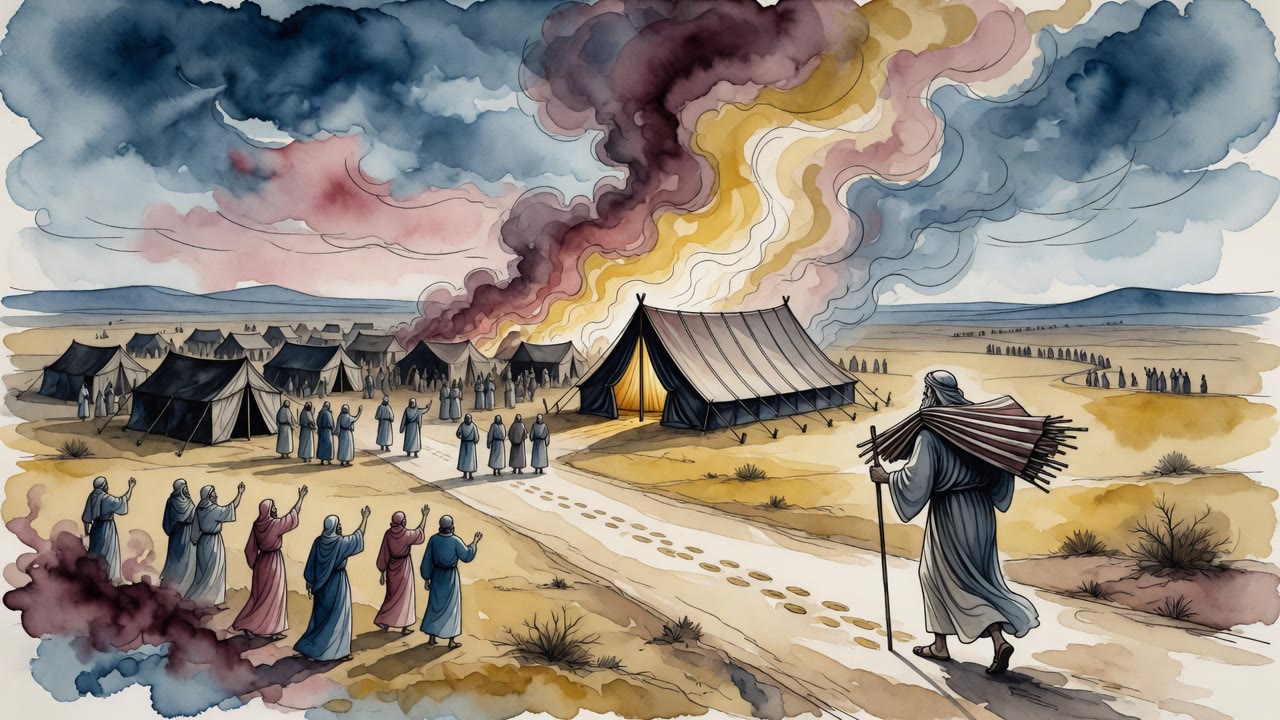
A man was walking a road after dark. Somebody came along and lit a candle for him, and it went out. Somebody else came and lit another one, and that went out too. The man stopped walking.
"From here on," he said, "I am waiting for the morning."
Israel said the same thing to God in almost the same words. "We made You a lampstand in the days of Moses and it went out. We made You another in the days of Solomon and it went out. From here on we are waiting for Your light and nothing else."
The Accuser Asked Who the Light Was For
There was a light already put away for them. Before the world was made, God had looked forward into the generation of the Messiah and everything that would happen to it, and He had taken the light of the first day and stored it under the Throne of Glory.
Ha-Satan, the Accuser, came and asked about it. "The light stored under Your Throne. Who is it for?"
"For the one who is going to turn you back and put your face to shame."
"Show him to me."
"Come and see him."
He looked, and he went down on his face on the ground. "This one is going to throw me and every guardian angel of the nations into Gehinnom (the realm of judgment after death)."
The nations came running with the same question from the other side. "Who is this that we are going to fall under? What is his name?"
"Ephraim. My righteous Messiah."
He Added the Stillborn and the Never Made
Then God laid out the conditions in front of him, before any of it had happened.
"The sins of those people are stored up with you. They will put you into a yoke of iron. They will make you like a calf whose eyes have gone dark, and grind your spirit down under it, and your tongue will stick to the roof of your mouth. Is this what you want?"
"Master of the world. How many years will the pain last?"
"By your life and by the life of your head, I have decreed seven for you. If it grieves your soul, I will clear them out of the world from now."
The Messiah did not take the offer to clear them out. He took the years.
"With gladness of heart and joy I take it on myself, on one condition. That not one of Israel is lost."
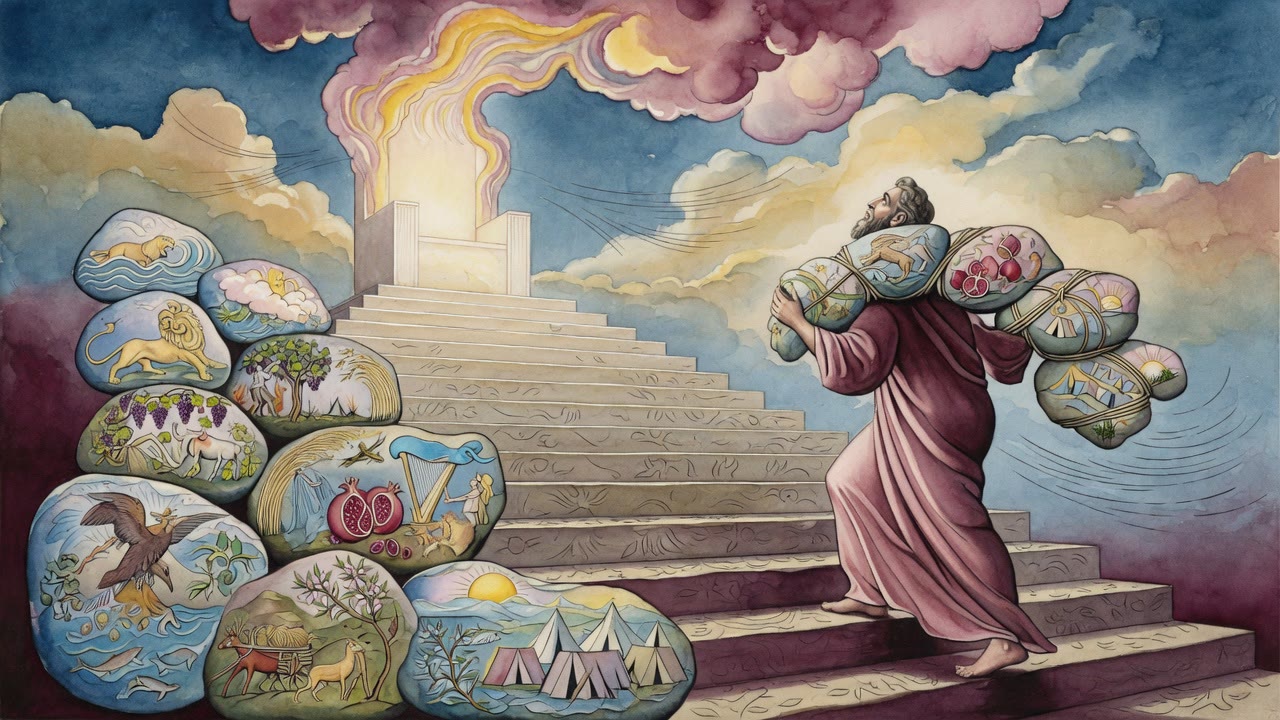
Then he kept adding to the condition, and nothing stopped him. "Not only the living in my day. The ones hidden in the dust. Not only those. Everyone who has died since the first man until now. Not only them. The children who never drew a breath. Not only them. The ones You only thought of and never made at all."
"This is what I want. This I accept."
The Dew on Another Head
The week comes when the beams of iron are laid across his neck until his back bends under them, and he screams, and the sound goes up through every height there is.
"Master of the world. How much strength do I have. How much spirit. How much soul. How many limbs. Am I not flesh and blood?"
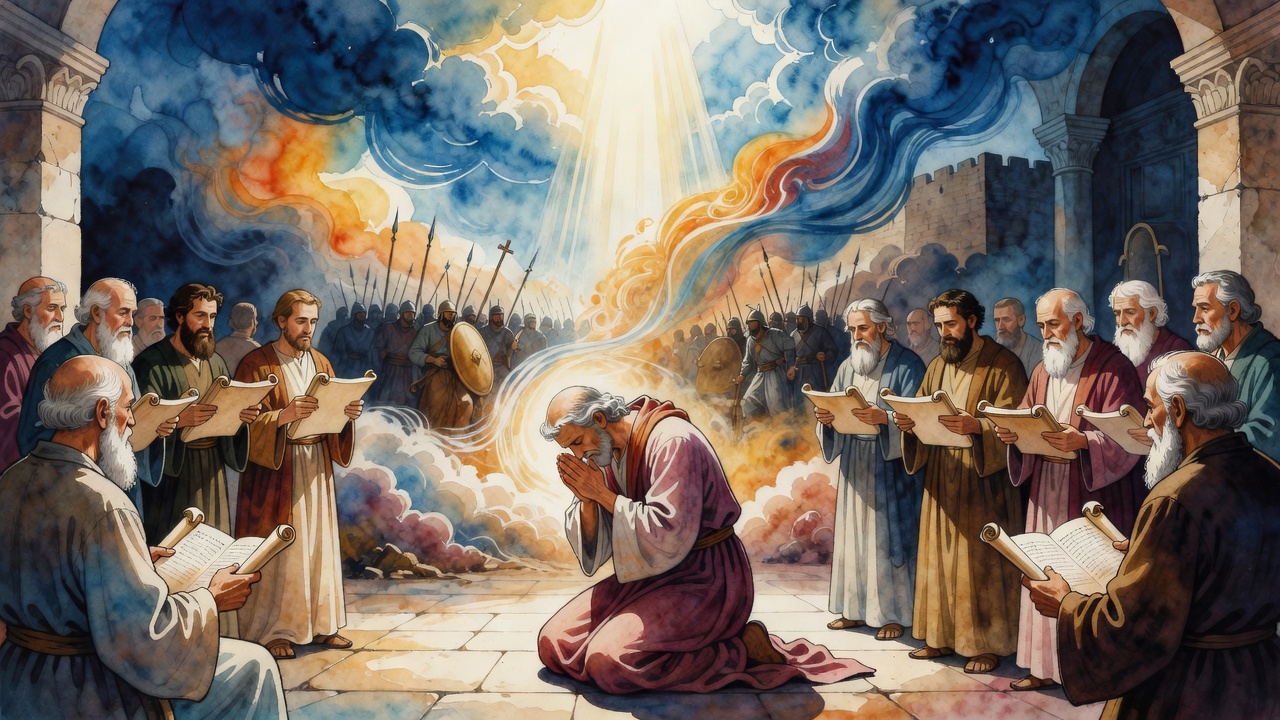
God answered him. "Ephraim, My righteous Messiah. You took this on yourself from the six days of creation. Your pain now is My pain. From the day the wicked Nebuchadnezzar came up and pulled down My house and burned My sanctuary and drove My children out among the nations, by your life and the life of your head, I have not gone in and sat on My Throne. If you do not believe it, look at the dew on My head."
The Messiah looked. The dew was there. He did not ask for the yoke to come off.
"Now I am satisfied," he said. "It is enough for the servant to be like his master."
The boards in the desert were still standing the way the tree had grown. The lamps of Moses and Solomon had already gone out. Morning was the thing they were waiting for, and the one who had agreed to buy it was still adding names in the dark.
← All myths