1,715 related texts · Page 1 of 36
"And you shall plate it with pure gold" (Exodus 25:11). The Talmud (Sukkah 45b) reads the verse about the Tabernacle's acacia wood—"standing up" (Exodus 26:15)—to mean that the woo...
The Torah prohibits "gods of silver and gods of gold" (Exodus 20:20). But what exactly do these phrases add to the prohibition against idolatry? After all, the commandment against ...
It’s a fascinating glimpse into ancient ritual and devotion. Today, we're diving into some of the details, specifically as recorded in Bamidbar Rabbah 13, a section of the great co...
God told Moses to "bring near Aaron" for the priestly consecration—and the Targum Jonathan adds three devastating words the Hebrew Bible does not contain: "who is afar off on accou...
It wasn't just a matter of tossing everything into a wagon. There was a precise order, a sacred choreography, and it all begs the question: Why this order? Bamidbar Rabbah, specifi...
The Book of Jubilees, a text that gives us a unique retelling of the Torah, certainly seems to think so. It’s a book overflowing with warnings and rebukes, a call to remember the c...
It's more than just a pretty tent, you know. It's a story of atonement, of divine presence, and of a relationship between God and the Jewish people that’s been unfolding for millen...
We often think of the Mishkan, the Tabernacle, and its sacred objects, but right alongside their creation, the priestly garments were being made too, specifically for Aaron and his...
Twelve days of celebration, twelve days of dedication… and Aaron's tribe, the Levites? Nowhere to be seen. According to Legends of the Jews, Aaron was deeply troubled. "Woe is me!"...
On the eighth day of consecration—the first of Nisan—Aaron was about to offer his first sacrifice as high priest. Then he froze. The Targum Jonathan says he "saw at the corner of t...
Ben Sira, in his wisdom, reminds us of the immense task Aaron undertook. He says, "And who, in his nobility, his heart, atoned for the children of Israel." Aaron atoned. Think abou...
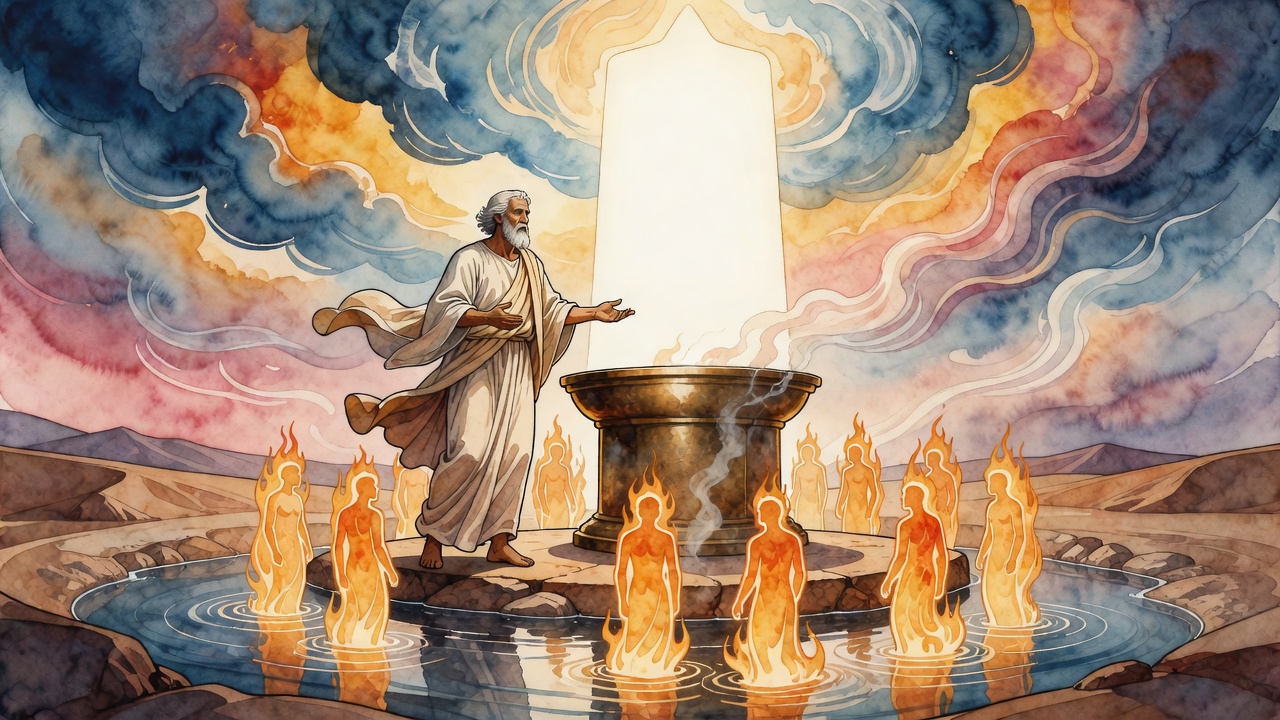
Ben Sira, in his wisdom, gives us a glimpse. He paints a picture, vibrant and alive, of Simon the High Priest at the altar. Can you see him? Receiving the sacrificial pieces from h...
It’s a powerful idea, isn't it? That the very things used to worship God could also tell the story of our destiny. According to Ginzberg’s retelling in Legends of the Jews, each ma...
The people of Israel are ready to begin their worship. Aaron, brother of Moses, is chosen to be the first High Priest. This is his moment! He should be filled with pride and joy. B...
Take Aaron, for example. After the tragic episode of the Golden Calf – a moment where Aaron, sadly, wasn't entirely blameless – God initially decreed that all four of Aaron's sons ...
The Torah records God's instruction: "And they shall make for Me a sanctuary, and I will dwell among them" (Exodus 25:8). The Mekhilta once again poses its characteristic question:...
Issi ben Akiva proposed a striking interpretation of the altar's construction: it was a copper altar filled with earth. This sounds like a simple engineering detail, but the Mekhil...
That feeling’s deeply rooted in Jewish tradition. Midrash Tehillim, our window into the book of Psalms, connects this idea of purity with the very act of approaching God. It says, ...
We all know the story: Moses is up on Mount Sinai, receiving the Torah, and the Israelites, feeling abandoned, demand a new god. But what was going on behind the scenes? What choic...
It wasn't just packing up and hitting the road. Every item, every sacred object, had its specific covering, its designated place, its own ritual. Take the golden altar, for instanc...
It’s a truly bizarre episode, filled with sacred oaths, dissolved scrolls, and the threat of divine retribution. to one particular passage, Bamidbar Rabbah 9, and unpack some of it...
And the very first offering? It's from Naḥshon, son of Aminadav, from the tribe of Judah. We read, "The one who presented his offering on the first day was Naḥshon..." (Numbers 7:1...
Sometimes, it's in those very details that we uncover profound insights into Jewish law and tradition. to one such detail from Sifrei Bamidbar, a fascinating work of halakhic (lega...
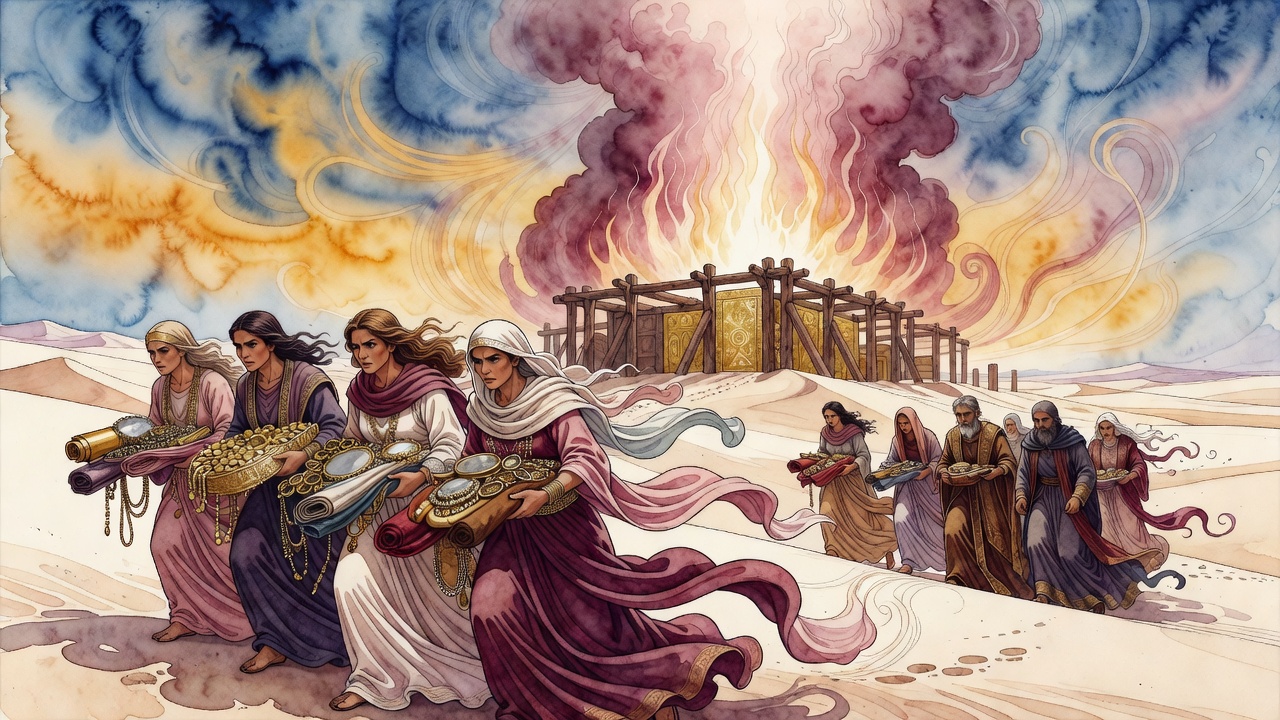
The people brought so much gold that Moses had to tell them to stop. That detail, preserved by Josephus, captures something remarkable about the building of the Mishkan (Tabernacle...
Take, for instance, the description of the offerings brought by the tribal leaders in the Book of Numbers – Bamidbar – specifically in chapter 7. We’re told, in painstaking detail,...
We’re diving into a fascinating passage from Bamidbar Rabbah 14, which wrestles with a seemingly redundant verse in (Numbers 7:85): “One hundred and thirty was each silver dish, an...
It wasn't just about hammering tent pegs and hanging curtains. There was a whole ritual, a consecration, full of wonder and divine intervention. One of the most fascinating aspects...
That feeling, that heavy weight of responsibility, might give you just a glimpse of what Aaron, the High Priest, must have felt on that momentous day of the Tabernacle's consecrati...
According to Pirkei DeRabbi Eliezer, a fascinating and somewhat enigmatic text of Jewish tradition, fire isn't just fire. It’s something… else. Rabbi Judah paints a vivid picture, ...
The standard biblical text of (Exodus 26:1-37) reads like a construction manual. Ten curtains of fine linen, fifty gold clasps, boards of acacia wood, silver bases. The ancient Ara...
That they take for me an offering (Exod. 25:2). May it please our masters to teach us: What did they do with the surplus offering?1The surplus offering was from the funds contribut...
See [Hen], God is beyond reach in His power (Job 36:22): Rav Berakhiah said, "It is in the Greek language [as hen means one]. It is as you say, One is our God: Exalted in His power...
We all know about the Exodus, the parting of the Red Sea, and even receiving the Ten Commandments. But what about the nitty-gritty details of setting up their new life, their new r...
While Moses was up on Mount Sinai receiving the Torah, they were down below, melting their gold into a Golden Calf (Exodus 32). A pretty devastating moment. But here's where it get...
Right there, in front of everyone, Aaron and his sons were chosen, set apart for the holy task of serving as priests. Immediately following this ceremony, Aaron and his sons went i...
But for Elisheba, the joy is amplified fivefold! As Ginzberg recounts in Legends of the Jews, luck seems to be showering blessings specifically on her. Her husband, Aaron, is the H...
We find ourselves in the realm of the twelve princes, the nesi'im, each representing one of the twelve tribes of Israel. They were tasked with a sacred duty: to offer gifts to the ...
It wasn't just a party. It was so much more. The Mishkan, or Tabernacle, was the portable sanctuary the Israelites carried through the desert after the Exodus. A physical represent...
It's all about finding hidden meanings within the Torah, within every verse, every word, even every letter. And sometimes, it’s about finding those meanings in the most unexpected ...
Midrash Tehillim, a collection of rabbinic interpretations on the Book of Psalms, offers a fascinating perspective. It points to the tribe of Levi, specifically those who resisted ...
It wasn't just about beauty; it was about exactitude, a reflection of the divine order itself. And it all comes down to weight, specifically the weight of silver. We find ourselves...
And it seems even the leaders of ancient Israel weren't immune. We find a fascinating story in Bamidbar Rabbah 12, a section of the great collection of Midrash (rabbinic interpreti...
Our ancestors felt that way, too. The ancient rabbis understood this, and that's why we find so much human drama, even in the most sacred texts. Take this story from Bamidbar Rabba...
The ancient rabbis wrestled with this feeling too, especially when thinking about how we, as humans, could possibly offer anything to God. Bamidbar Rabbah, a collection of rabbinic...
The answer, according to our Sages, might surprise you. In Shemot Rabbah, a collection of rabbinic teachings on the Book of Exodus, we find a fascinating discussion about the Ark, ...
Take Betzalel, for example, the master craftsman of the Mishkan, the Tabernacle. We read in (Exodus 31:2), "See, the Lord has called by name Betzalel, son of Uri, son of Ḥur…” But ...
It’s a question that’s occupied Jewish thought for centuries. And the Rabbis in Vayikra Rabbah, a Midrash (rabbinic interpretive commentary)ic collection on the Book of Leviticus, ...
But there’s also another set of treasures that had a similar effect: the vessels created for the Temple in Jerusalem during the time of the Second Temple. And the Letter of Aristea...