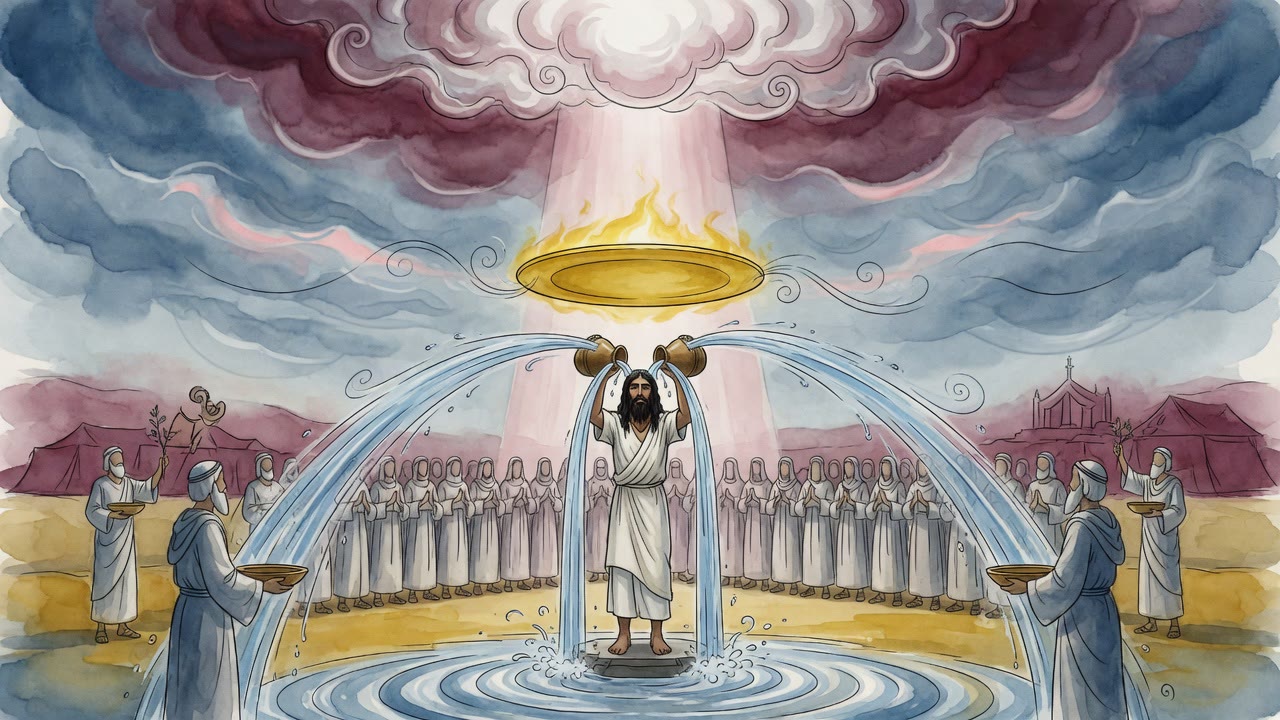
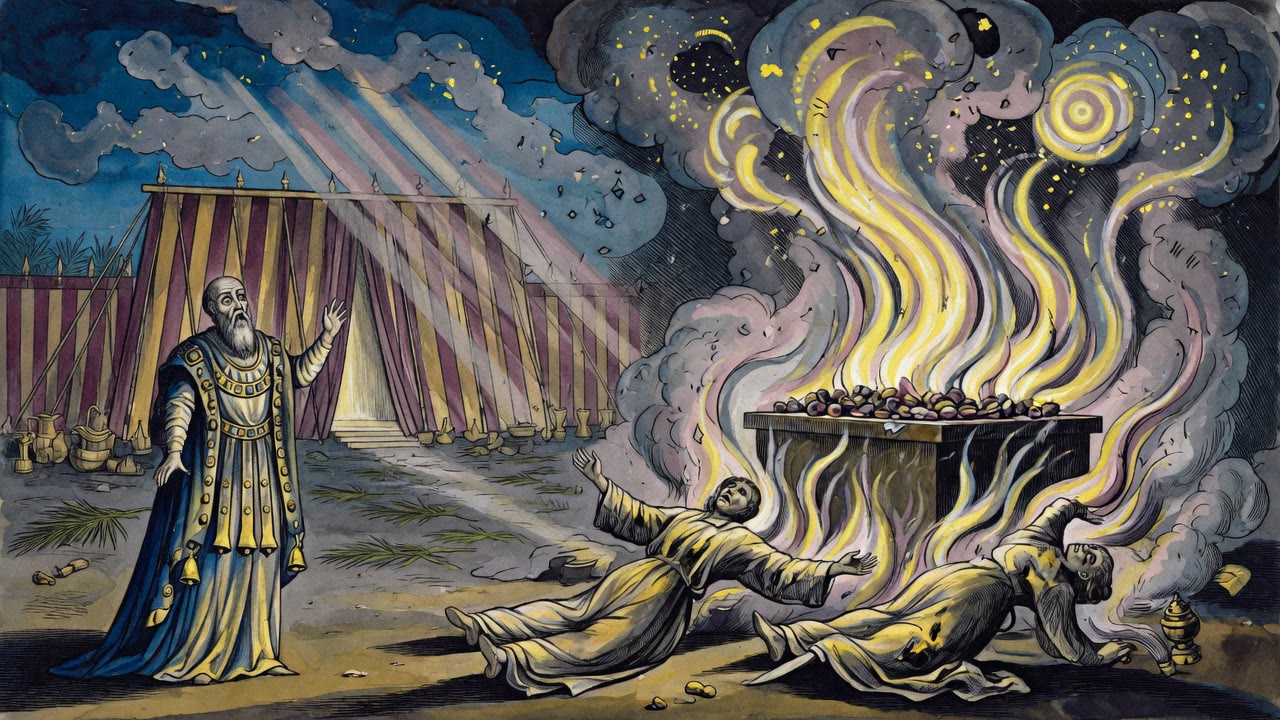
Issachar Studied Torah and Offered Second at the Tabernacle
Reuben's prince walked toward the altar on the second morning. Moses stopped him. The desert march would set the offering order too.
Table of Contents
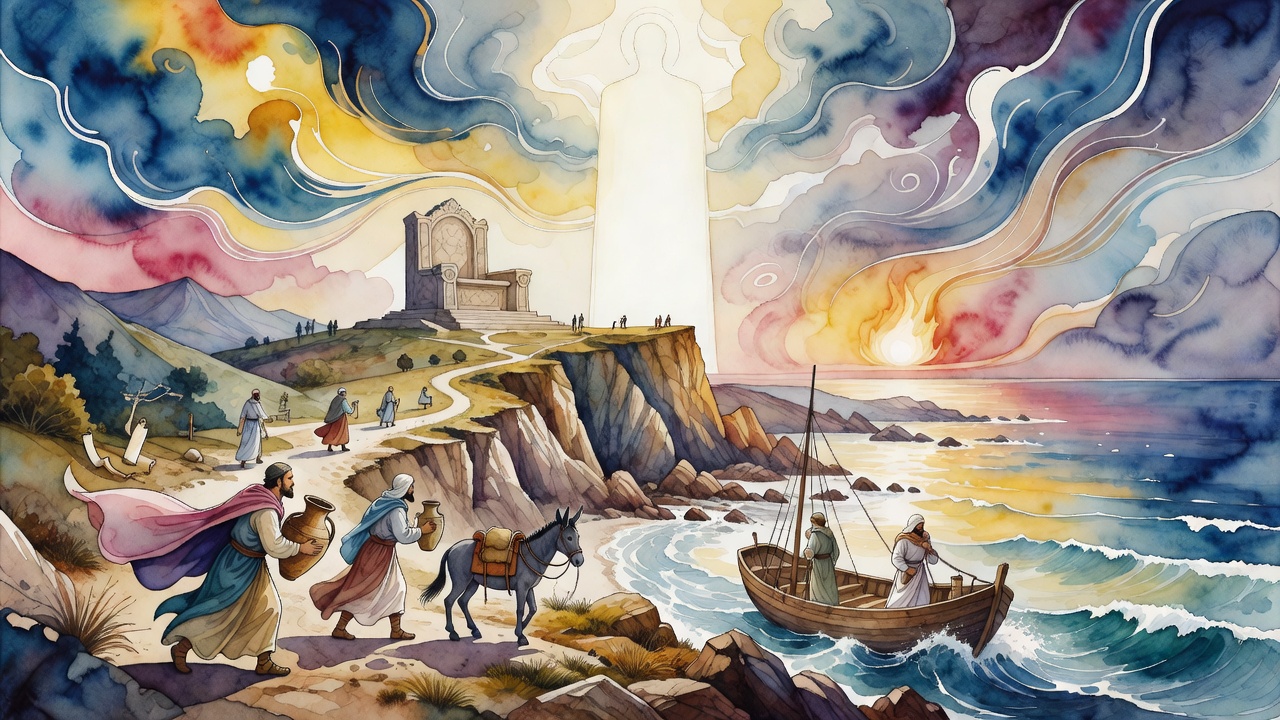
On the second morning of the Tabernacle dedication the prince of Reuben walked out toward the altar with his tribe's offering, and Moses stopped him where he stood.
 Click for full size
The man had a case and he made it out loud. Judah had gone first. Fine. Judah had gone first, and that was already more than the eldest line should have had to swallow. Reuben was Israel's firstborn son. Surely now.
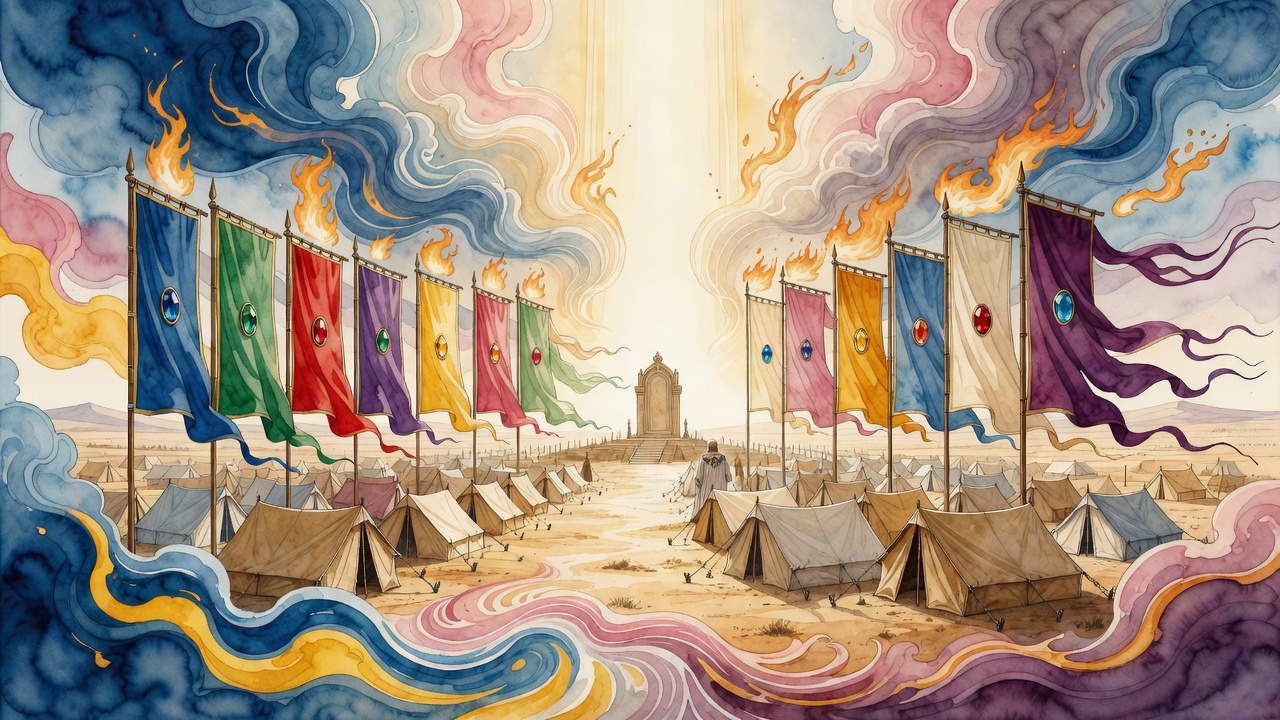
Moses told him no, and told him why, and the reason had nothing to do with birth. God had set the order of the camp Himself, standard by standard, and had fixed the sequence in which the tribes broke camp and moved through the desert. The offerings would come in that same sequence. Whatever the marching order was, the altar order was.
Reuben marched fourth. He would offer fourth.
The Tribe That Kept the Calendar
Behind Judah came Issachar, and Issachar had a claim that did not depend on anybody's father.
Issachar studied. They loved the Torah more than any of the others did. Two hundred heads of the Sanhedrin came out of that one tribe, and when the rest of Israel could not settle a point of law they went to Issachar and Issachar settled it. They were called men with understanding of the times, who knew what Israel should do. It means they ran the calendar. They watched the moon and the barley and told the whole nation which day was the festival and which day was not, so that a people scattered across a wilderness could all eat the Passover lamb on the same night.
Jacob had seen it coming and put it in a blessing that sounds almost like an insult. Issachar bent his shoulder to bear, and became a servant under tribute. He bent his shoulder under the yoke of the Torah, and anybody in Israel who got a law wrong came knocking on his door and made a servant of him.
The dedication offerings had been Issachar's idea in the first place. They were the ones who proposed that the tribes brought gifts to the altar at all.
Nahshon Was Never Called Prince
Every man who came forward on the twelve days was announced as the prince of his tribe. Every man except the one who went first.
Nahshon of Judah is never given the title. He offered on day one, ahead of everyone, and the record quietly declines to call him what it calls the other eleven. The reason is that a man who goes first will eventually say so. If Nahshon had ever come to the others and told them he was king over them because his offering had been accepted before theirs, they had the answer ready. "You are a commoner. Every one of us is called prince in the roll. You are not."
The precedence he wanted was handed to him and the title was withheld in the same breath.
Zebulun Put Food in Issachar's Mouth
Third day was Zebulun, and Zebulun had not earned it in the study house.
Zebulun traded. He worked the coast, the ships, the ports, the ordinary grinding business of buying and selling, and he handed the money to Issachar so that Issachar would not have to stop learning long enough to make a living. He fed him. He put wine on the table and silver in his hand and took nothing back except a share in what his brother learned.
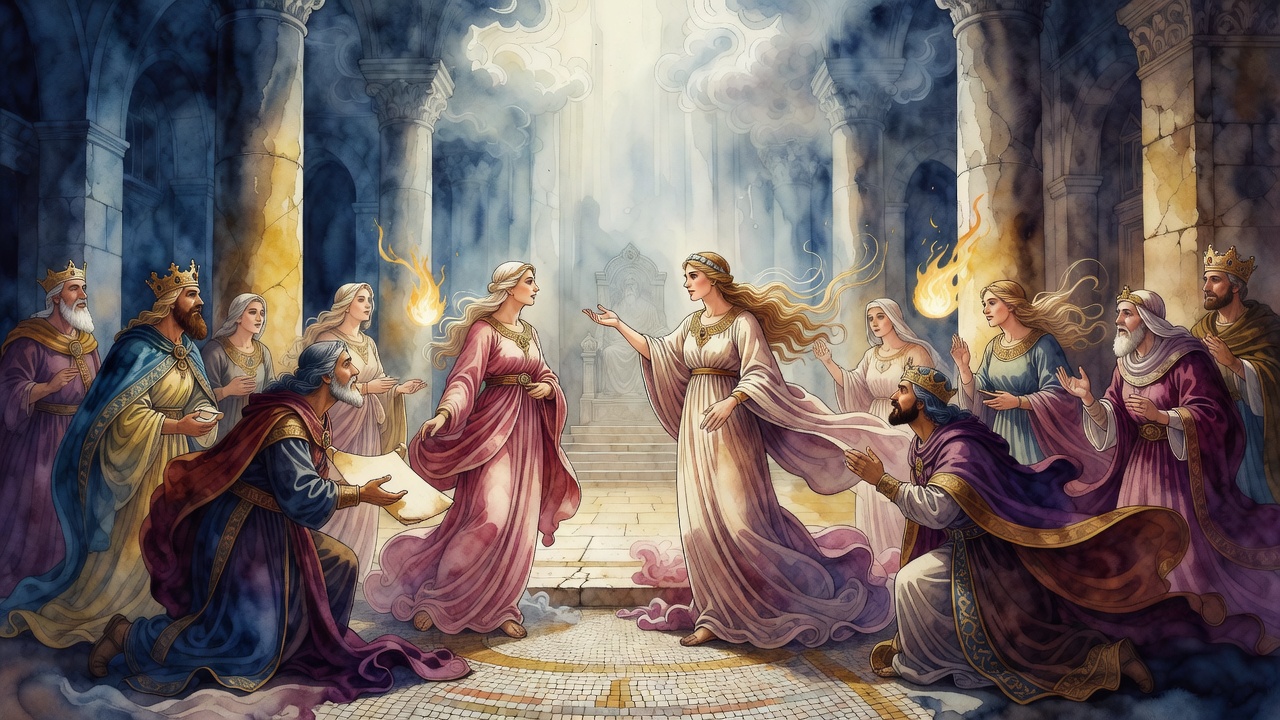
That is why Zebulun's silver dish weighed as it did. The one who makes the learning possible walks to the altar right after the one who does it. Judah first, then the scholars, then the traders who keep the scholars alive. Birth waited in fourth place and watched the others march.
What Netanel Set Down
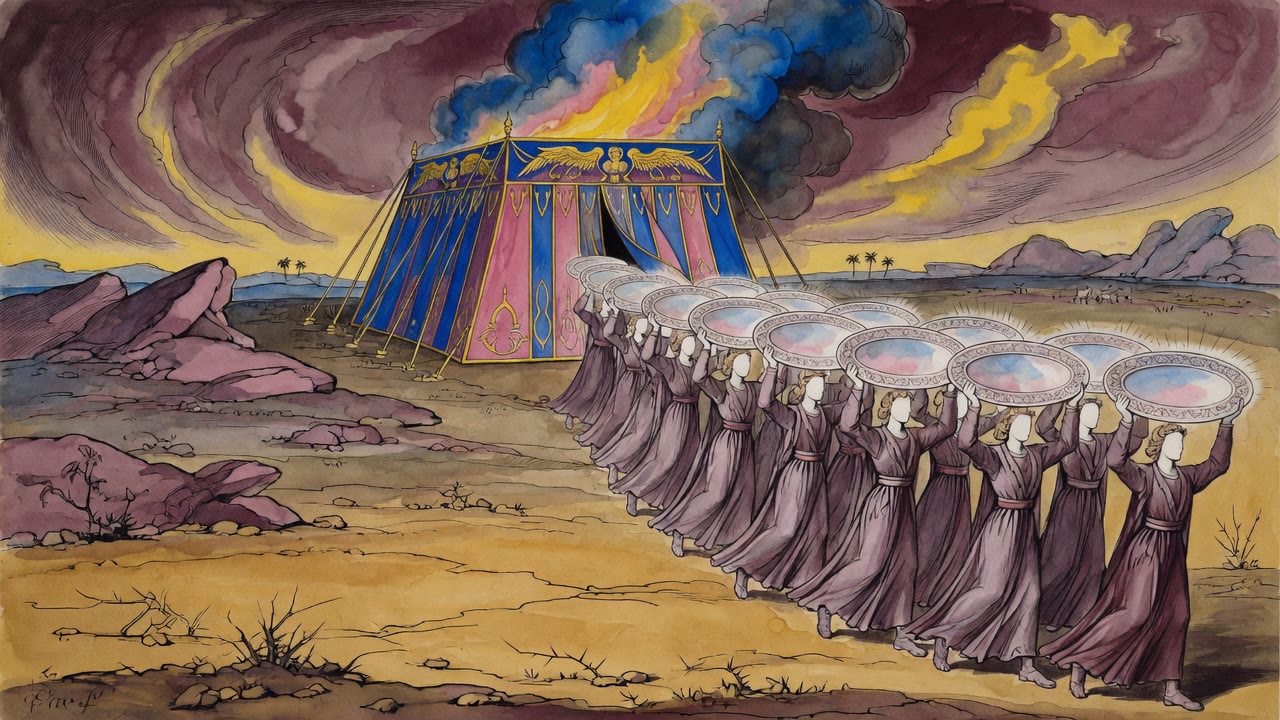
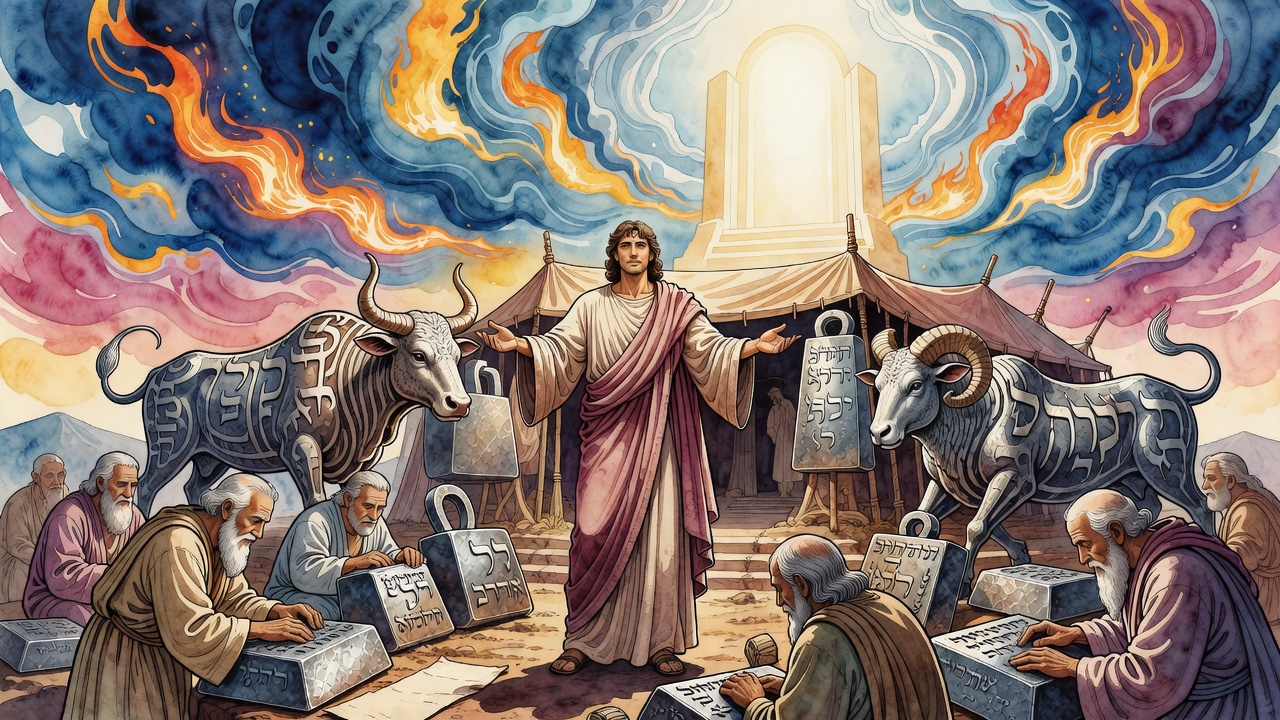
On the second day, after Moses had sent Reuben's prince back into line, Netanel son of Zuar came out of the camp of Issachar and offered second. He brought a silver dish that took both arms, a silver basin, and a gold ladle of ten shekels packed solid with incense.
Behind him came the animals. One young bull. One ram. One lamb of the first year for the burnt offering, and one goat for the sin offering. For the peace offering, two oxen, five rams, five he goats, five yearling lambs.
He set it all down and stepped back, and the smoke went up, and the record notes only that this was the offering of Netanel son of Zuar.
Two days later the standard of Reuben came forward in its turn, in the place the desert march had given it, and the eldest line of Israel offered fourth.
← All myths