5,112 texts · Page 1 of 107
One figure looms large in this discussion: Satanael. In the ancient text of 2 Enoch, this was the name of the highest angel, and the story surrounding him is… complicated, especial...
Jewish tradition offers some pretty fascinating, and sometimes unsettling, answers. Take the story of Satan's fall from grace. It's not just a simple tale of rebellion; it's a comp...
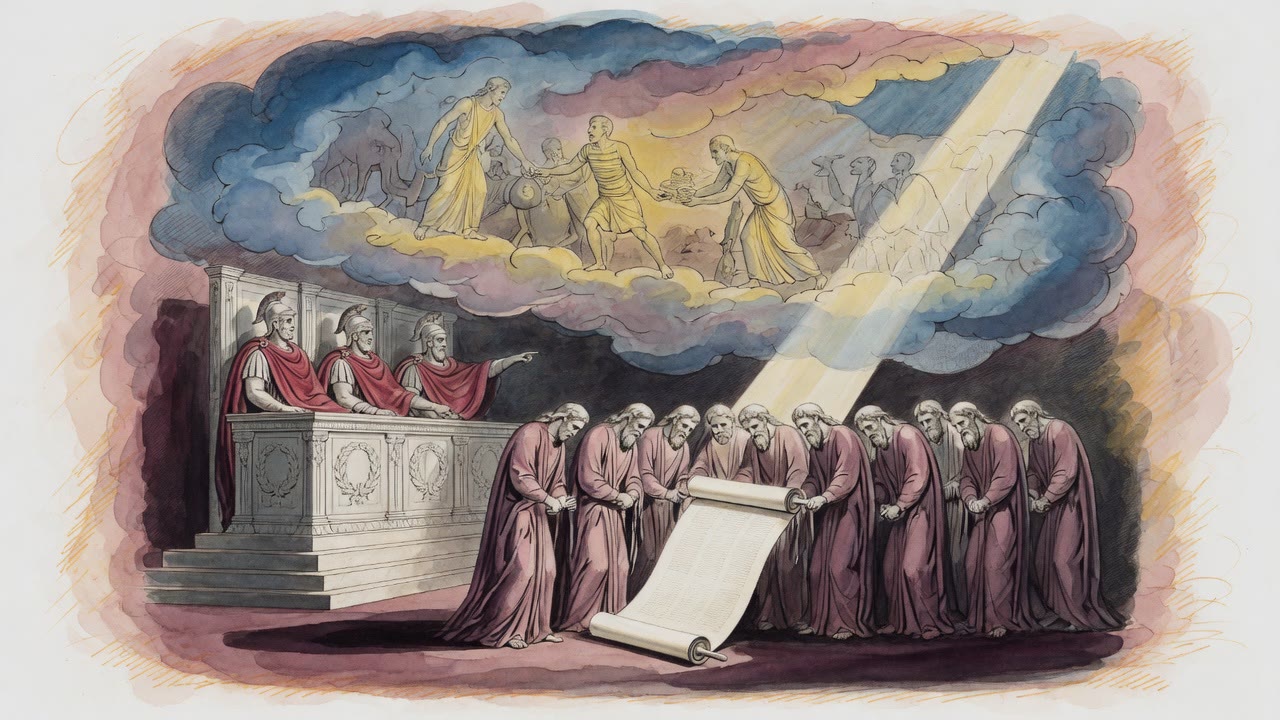
One such story, preserved in Vita Adae et Evae (The Life of Adam and Eve), tells of a remarkable vision. It's a bit obscure, not as well-known as other heavenly journeys like Enoch...
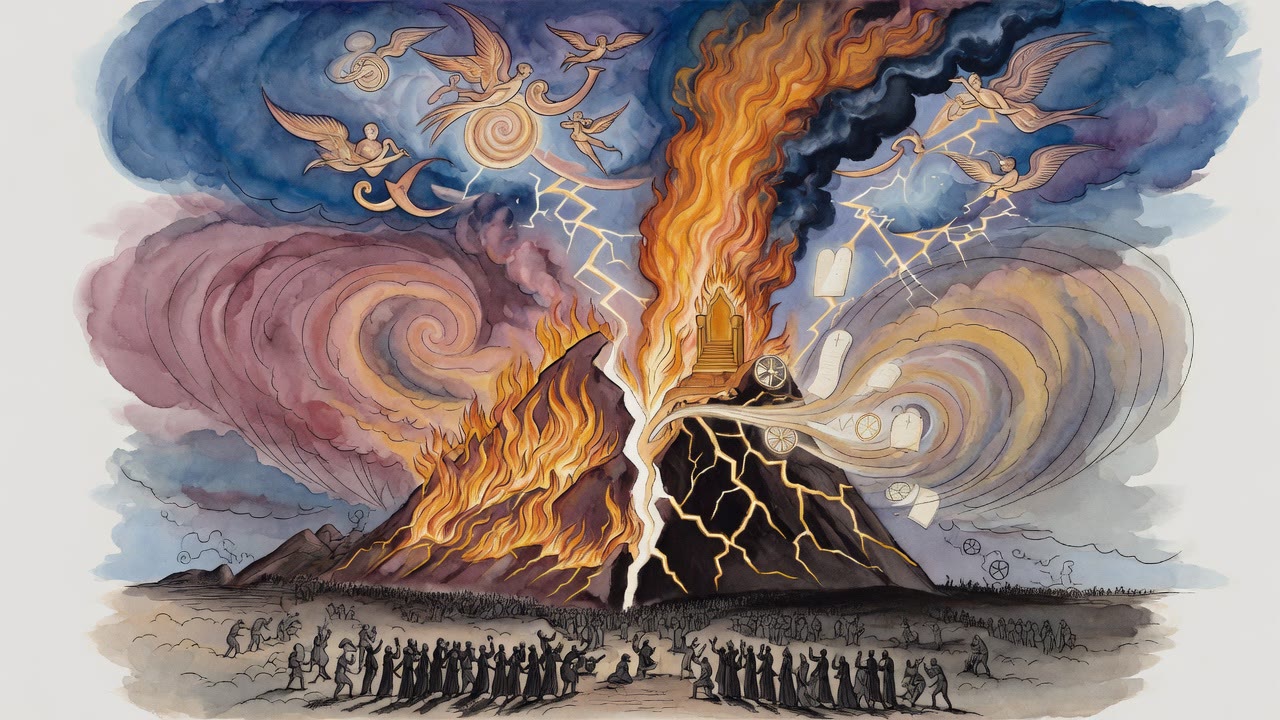
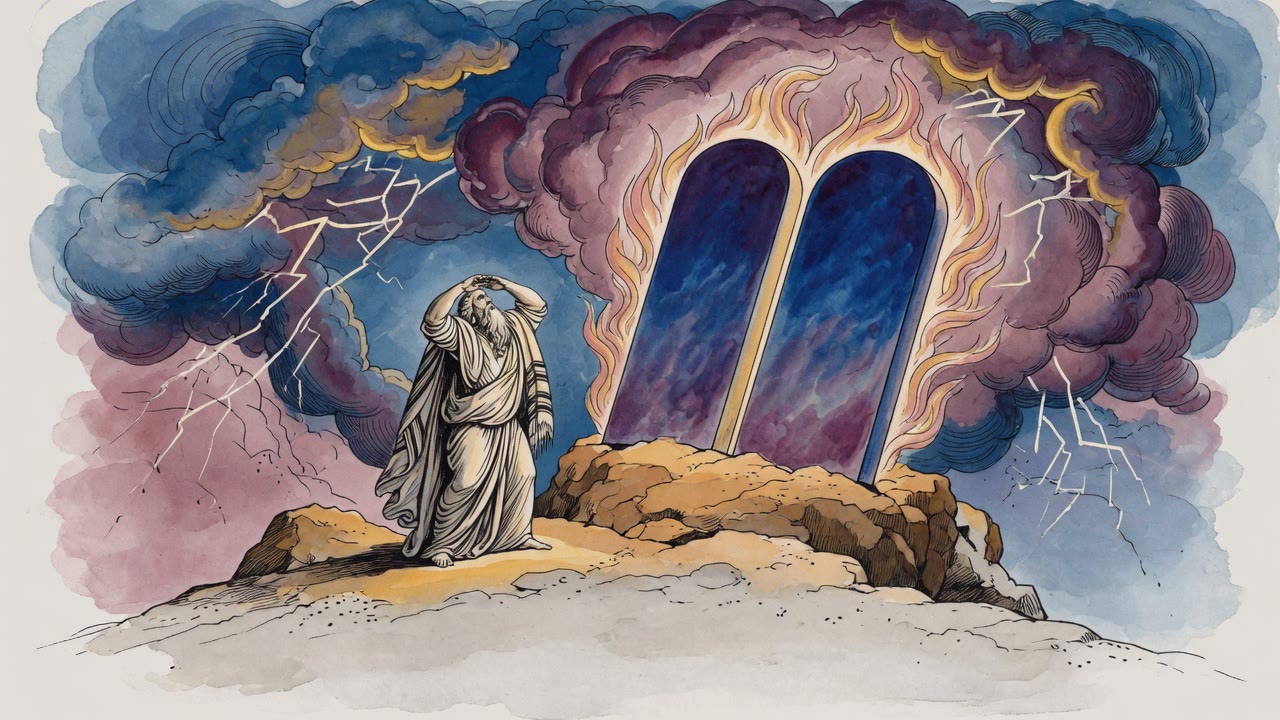
We often picture Moses on Mount Sinai, receiving the divine word directly from God. Forty days and forty nights of dictation. But what if I told you there's another story, a fascin...
In fact, the Sabbath isn't just a terrestrial observance; it's a celestial one, too. Imagine this: right after creating the Sabbath, God gathers all the angels – the angels of the ...
Jewish tradition is rich with stories of dreams and visions, and the power they hold. One particularly striking tale, found in Tree of Souls by Howard Schwartz, tells of a dream th...
The story goes that one night, long after leaving Eden when Cain and Abel were young men, Eve was shaken awake by a horrific vision. As The Penitence of Adam (22:2:1-23:3:2) tells ...
(Genesis 6:4) mentions the Nefilim. That word, Nefilim, generally understood to mean “giants.” But who were they, really? And where did they come from? The Torah just kind of drops...
One that echoes through generations, forcing us to confront our own anxieties and shortcomings. But it's not all doom and gloom. Ben Sira, also known as Yeshua ben Sirach, offers a...
It’s easy to get caught up in the now, in what’s shiny and new. But what about the wisdom that comes from years of living, years of observing, years of learning? Ben Sira, that sag...
Ben Sira, also known as Ecclesiasticus, is a book of wisdom literature from around the 2nd century BCE – a time of huge cultural shifts and anxieties. It’s not part of the Hebrew B...
Ben Sira paints a picture of someone so deeply connected to wisdom that they "encamp about her house." What does that even mean? It's more than just visiting. It suggests a dedicat...
Ben Sira, also known as Ecclesiasticus, is a book of wisdom literature, a collection of ethical teachings and practical advice. It's not part of the Hebrew Bible as defined by rabb...
It’s a challenge as old as time, and the Book of Ben Sira, a treasure trove of wisdom literature, offers some incredibly relevant insights. So, what does it really mean to find tha...
Ben Sira, that wise sage whose words echo through the ages, offers us a powerful insight in his teachings. He tells us, "He that feareth the Lord shall discern judgement; And shall...
One wrong step, and BOOM. Ben Sira, that wise sage of ancient times, knew a thing or two about navigating life's treacherous paths. And in chapter 33, he offers some pretty direct ...
Ben Sira, that wise sage from centuries ago, had some thoughts on that very feeling. He says, "He that hateth the law shall not be wise; And he is moved as…tossed with tempest (?)....
Ben Sira, in his wisdom, offers a clue: "Their wisdom the community will repeat, and their praises the assembly will recount." It's through the act of remembering, of telling and r...
Ben Sira, also known as Ecclesiasticus, is a book of wisdom literature, a treasure trove of insights into Jewish thought and practice, though it's not included in the Hebrew Bible'...
Ben Sira chapter 45 gives us a glimpse, a whisper of what it meant for Moses and Aaron to be elevated by God. "And God honored him, and strengthened him in the heights." It begins ...
Let’s journey for a moment into the world described in the book of Ben Sira, also known as Sirach or the Wisdom of Yeshua ben Sira. It's part of the Apocrypha, writings associated ...
The Book of Ben Sira, a treasure trove of wisdom literature, gives us a glimpse into this very idea, specifically through the lens of the priesthood. It speaks of one called to "mi...
Ben Sira, in his wisdom, reminds us of the immense task Aaron undertook. He says, "And who, in his nobility, his heart, atoned for the children of Israel." Aaron atoned. Think abou...
It’s all about humility, devotion, and a legacy that blossoms through generations. Ben Sira celebrates those judges of old, "each man by his name, every one who didn't self-glorify...
Ben Sira, in his wisdom, offers us a glimpse into the very heart of David's reign. "And he went against the Philistine foe, and to this day shattered their horn." It's a powerful i...
Let’s journey back to the time of King Solomon, or Shlomo in Hebrew, a figure so central to Jewish history and lore. The Book of Ben Sira, a work of wisdom literature from around t...
Incense fills the air, music swells, and then Simon the High Priest appears. He's just completed the sacred service, and the sight is so breathtaking, so imbued with holiness, that...
Ben Sira, that wise sage from centuries ago, knew the feeling. He even wrote about it. He mentions "the inhabitants of Seir and Philistia; And the foolish nation that dwelleth in S...
That’s how I feel every time I delve into the Book of Ben Sira. This passage from Ben Sira 51 – it's like a whispered confession, a peek into the author's journey. "See with your e...
It all starts with a divine download, so to speak. The book tells us it contains the secret history of how time is divided – days, weeks, years, and especially those big jubilees, ...
We all know the story: Moses goes up the mountain, gets the Ten Commandments, and comes back down. But what if there was more to the story? What if the Bible we know is just a glim...
We're going to delve into a text that's both familiar and strangely… different. A book that whispers of secrets given directly to Moses on Mount Sinai. I'm talking about the Book o...
It's almost like a prophetic warning echoing through the ages. This book, not included in the standard Hebrew Bible but considered canonical by some, dives deep into the potential ...
The Book of Jubilees, a fascinating text from around the 2nd century BCE, speaks to that very feeling. It paints a picture of a future where the people stray from the path, and the...
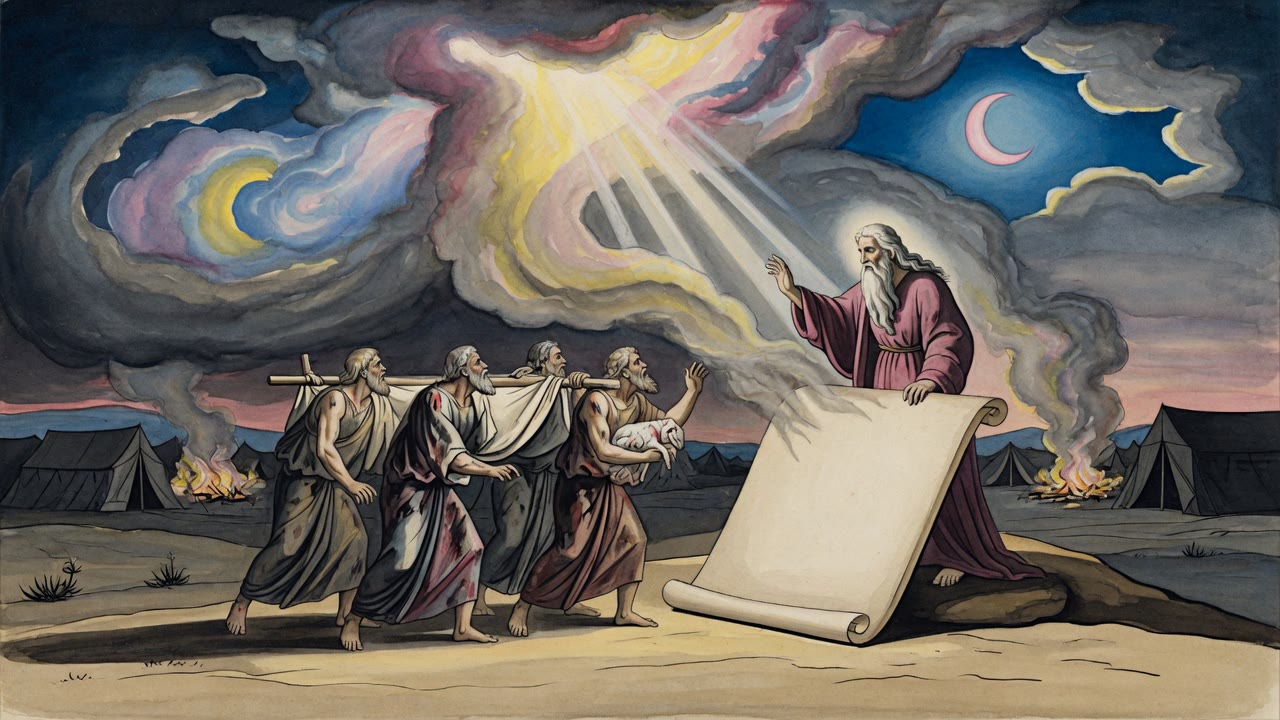
That's the scene set for us right at the beginning of Jubilees. God commands Moses, "Write down for thyself all these words which I declare unto thee on this mountain, the first an...
Our story begins not just at the beginning of time, but with the very blueprint for it. We’re talking about the Book of Jubilees, a text that, while not part of the canonical Hebre...
The Book of Jubilees, an ancient Jewish text that expands on the stories we find in Genesis and Exodus, really emphasizes this point. It paints a picture of creation itself as a mo...
Turns out, they’re all about that rest too. The Book of Jubilees, a fascinating text considered canonical in some traditions but not included in the standard Hebrew Bible, gives us...
The Book of Jubilees, an ancient Jewish text not included in the Hebrew Bible but considered scripture by some, gives us a glimpse into a fascinating perspective. It emphasizes the...
Let’s talk about beginnings, about Adam and Eve, and about a mysterious detail tucked away in the Book of Jubilees. This ancient Jewish text, considered scripture by some but not i...
It might surprise you to learn that some of it isn't directly from the Torah we read in synagogues. Let's talk about a text called the Book of Jubilees. The Book of Jubilees, also ...
The Book of Jubilees, a text that expands on the Torah and offers a unique perspective on biblical history, gives us a fascinating glimpse. It claims to be a divinely revealed acco...
I’m not talking about clashing colors, but something far more fundamental. The Book of Jubilees, an ancient Jewish text that expands on the stories in Genesis, tells us that one of...
The ancient texts resonate with that feeling too. Take the Book of Jubilees, for instance. It paints a stark picture of a world gone wrong, a world that’s deeply, fundamentally…cor...
When Noah finally stepped onto dry land, one of the first things he did was offer a sacrifice. But what was so special about it? The Book of Jubilees, a text that expands on the st...
Where does that come from, really? We find a fascinating glimpse into its ancient roots in the Book of Jubilees. Now, the Book of Jubilees is a fascinating text, considered part of...
The Book of Jubilees, a text bubbling with rich detail expanding on the Torah’s narratives, dives headfirst into this very topic. This isn’t just a suggestion; it's a decree. A pow...
The Book of Jubilees, treasured as scripture by some ancient Jewish communities like the Essenes of Qumran, retells the Torah with a storyteller's eye for detail — and chapter 6 li...
Every other mountain was too grand and too tainted. Sinai was chosen because it was humble, pure, and carried a secret the other mountains did not know.
When Jacob blessed his son Judah with the image of a lion, he was encoding a dynasty, a theology, and a mystery into three letters of his name.
God marked Cain after the first murder, and most people assume it was a punishment or a stigma. The rabbis disagreed. They argued it was God's protection — placed on the world's first killer to prevent a cycle of violence that would have consumed humanity.
God could have built the Ark instantly. Instead, according to the rabbis, Noah was commanded to build it slowly, publicly, and conspicuously — so that everyone watching would have time to ask why.
The standard reading says God was threatened by human ambition. But the rabbis found something more disturbing in the story — a political project that was erasing individual human life in favor of collective uniformity, and a God who intervened to protect diversity.
Hagar was an Egyptian slave woman cast into the wilderness twice with nothing. Both times she met God. She is the only person in the entire Torah who gave God a name.
When Sarah overheard the angel's announcement and laughed in disbelief, God repeated her words to Abraham — but changed what she'd actually said. The rabbis noticed, and turned that one editorial decision into a law.
After Sarah died, Abraham married a woman named Keturah and had six more sons. The rabbis argued for centuries about who she really was — and the answer changes the whole story.
When Abraham died, the Torah says Isaac and Ishmael buried him together. The rabbis noticed something remarkable — what that simple detail reveals about the older brother who was cast out.
Abraham had Sarah, Hagar, and Keturah. Jacob had Rachel, Leah, Bilhah, and Zilpah. Isaac had Rebecca — one woman, one marriage, one love the Torah describes with a single remarkable verb.
The Torah says Abraham passed Sarah off as his sister to protect himself — three times. The rabbis asked the obvious question: why was she still that beautiful at ninety?
The mandrake incident in Genesis is one of the strangest scenes in the Torah — two sisters negotiating over a fertility herb, using Jacob as the bargaining chip.
The Torah says Leah's eyes were 'soft' or 'tender' — a strange description the rabbis decoded as a record of years spent weeping over a fate she had heard would be hers.
Genesis describes Dinah's assault in detail. It describes her brothers' violent revenge in detail. It never mentions Dinah again. The rabbis found her anyway.
Jacob gave Joseph a coat, and the rabbis say that single act of favoritism set in motion a chain of consequences that eventually brought an entire nation into Egyptian slavery.
Tamar was condemned to be burned alive by Judah for harlotry. Then she produced evidence. The patriarch's own words: 'She is more righteous than I.'
Joseph fled. His garment stayed. Potiphar's wife turned a piece of clothing into an accusation that sent an innocent man to prison — and the rabbis found a pattern in every detail.
Joseph had all the power. He could have revealed himself immediately. Instead he planted a silver cup in his youngest brother's bag and waited to see what his brothers would do.
Joseph had the power. His brothers were terrified. He could have destroyed them. Instead he cleared the room, wept so loudly Egypt heard him, and said: 'I am Joseph.'
Joseph had Benjamin. He had all the power. He had his brothers exactly where he wanted them. Then Judah spoke — and what he said in that throne room made a viceroy weep.
On his deathbed in Egypt, Jacob called his twelve sons and told each one his destiny. Some heard blessings. Some heard rebukes that echoed for centuries.
Jacob called Judah a lion's cub and promised that the scepter would not leave his tribe until the final redemption. Two thousand years of Jewish history have not cancelled that promise.
Most people remember Jacob stealing the blessing. The Book of Jubilees remembers what happened after, when Esau lifted his voice and wept.
Abraham had endured ten trials before he climbed toward Moriah. The ancient midrashim reveal how he recognized the mountain — and why news of a birth reached him at the summit.
Three ancient sources tell the story of Abraham's journey to Egypt — and together they reveal a patriarch who was as much philosopher and astronomer as wandering herdsman.
After the destruction of Shechem, seven Amorite kings march on Jacob's camp. It is Judah who finds the words his terrified father cannot.
Reuben forfeited everything through one act of dishonor. His final gift to his children was to point them toward the brother who would carry what he could not.
Two teenage sons of Jacob tricked an entire city into circumcision and then slaughtered every man. Their father was furious — and then picked up his sword.
God chose the seventh: Levi was the seventh righteous man from Adam. The rabbis traced this pattern through creation, time, and every sacred institution.
When Isaac blessed Jacob at Beersheba, he was doing something older than Abraham — repeating the first blessing God ever spoke over a human being.
Before Jacob ever reached Laban, he vanished for fourteen years. Where did he go? Into the house of the last man who remembered the world before the Flood.
Two tribes, born the same night from the same tent, divided the world in two. One took the Torah, one took the sea. Together they kept both alive.
Among Jacob's twelve sons, Issachar never became a warrior or a priest. He farmed. And his testament claims that simple, undivided life was the one thing that defeated the forces of darkness.
Noah saw a rainbow and called it a promise. Solomon saw the same symbol and called it a doorway. The Tikkunei Zohar says they were both right.
Sodom was the richest city in the ancient world. The Mekhilta says that is exactly what destroyed it, and the logic cuts deeper than you expect.
In the shade of the grove of Yavneh, Rabbi Tarfon unravels two puzzles hidden in the Joseph story: the strange cargo of his kidnappers, and how Judah earned the throne.
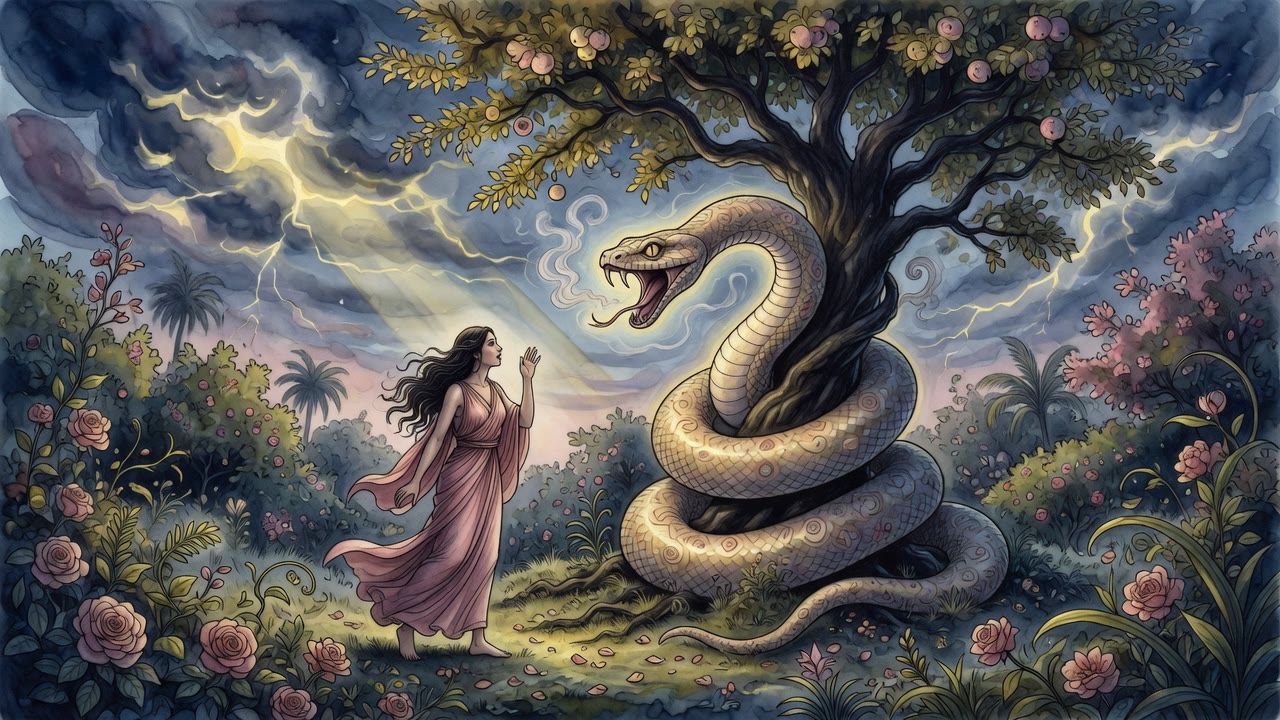
God gave Adam one rule. Adam added a second to make it safer. That extra rule is why Eve ate the fruit. The rabbis never let him forget it.
The Torah says God descended to see the Tower of Babel. Onkelos refused to let that stand. What he changed reveals an entire theology hidden in plain sight.
Isaac's failing eyesight before blessing Jacob was no accident. The rabbis say God dimmed his eyes on purpose, and they explain exactly why.
Aggadat Bereshit links Jacob's ladder dream to Doeg the informer, asking what both men share. The answer is about words that cannot be taken back.
A fifth-century rabbi noticed that Genesis uses a plural word for God with singular verbs throughout. He said this grammatical oddity was not an accident. It was the most important sentence in the Torah.
When Judah approached Joseph at the moment of crisis in Egypt, the rabbis saw something bigger than a family confrontation. They saw Torah defending itself.
Jacob gathered all twelve sons at his deathbed and gave each one a blessing tied to their destiny. The rabbis read those blessings as a map of all of Israel's future.
Judah sentenced Tamar to death by fire. What he didn't know was who her father was, and why that made his sentence the only legally correct one.
Abraham had no father to guide him, no master to study under. So God installed wisdom directly into his body, teaching him through his own kidneys.
A Roman eunuch mocked Rabbi Akiva for walking barefoot. Akiva's reply killed him. Kohelet Rabbah traces the same pattern back to Joseph sold to the Ishmaelites.
When Rabbi Akiva called the Song of Songs the holiest book in the Hebrew Bible, he was not talking about romance. He was talking about the moment a people heard God's voice and trembled.
The Torah says Adam and Eve were expelled from the garden. The Kabbalists say something stranger: Adam's soul contained every soul that would ever live.
After the Flood, Noah became the first teacher of a moral code. The covenant sealed with him was the same one passed to Abraham generations later.
Jubilees warned that forgetting Shabbat would cost Israel everything. The Zohar said Israel's giving is what holds the cosmos flowing.
Jubilees says an angel brought Jacob seven tablets with his entire future inside. The Midrash says Israel was briefly immortal at Sinai, then lost it.
When Joseph arrived in Potiphar’s house as a slave, the crops multiplied and the livestock thrived. Something traveled with him that could not be contained.
The Sifrei Devarim calls the Land of Israel an admixture of all the world. The Mekhilta says its people carry that same quality even in exile.
Isaac observed the Sabbath before Sinai and kept commandments before the Torah, earning direct access to God's heavenly academy through consistency.
The Baal HaSulam taught that every person contains an Israel within. The Heikhalot mystics found what God keeps in storehouses prepared for Israel.
The Book of Jubilees records God's declaration that one nation would be set apart to observe Shabbat. The choice was made at creation, long before Jacob's...
Before Abram left Haran, before he smashed his father's idols, he was a fourteen-year-old boy commanding ravens to turn back in a field. The Book of...
When Abraham arrived in Canaan, he did not know it was his. He built altars, muzzled his camels. The covenant was being lived before it was fully given.
Jacob ran from Esau through fourteen hidden years. When he died, Egypt formed an honor guard. Then his son carried his coffin to freedom.
Rabbi Yitzchak made a startling claim: the Shekhinah surpasses even Abraham's hospitality, feeding the worthy and the wicked alike without distinction.
God hid His own name inside the names of Adam and Eve. If they kept His ways, the name would protect them. If they failed, it would burn them alive.
A Roman officer stopped two disguised students and challenged them with their own teacher's teachings. Every answer they gave, he corrected.
Did Abel bring a peace offering before the Torah existed? A Talmudic debate over one Hebrew word reshapes everything we know about sacrifice before Sinai.
Before Jacob's family entered Egypt, he sent Judah ahead. Not to scout the territory. Not to prepare a camp. To build a house of study.
Shavuot was not invented at Sinai. It was already engraved in heaven, and Noah kept it on the mountain before any Torah was written.
When Noah commanded his sons after the flood, he was passing on laws that came from Enoch himself, who received them from the angels.
Tobit came from Naphtali, the tribe first to fall into idolatry and first dragged into exile by Assyria in 722 BCE. His faithfulness was a one-man correction.
Long before the brimstone fell, Sodom had expelled every instinct toward mercy. The Book of Jubilees and the Midrash both record why the reckoning was total.
Centuries before Moses received the Torah on Sinai, Shem son of Noah ran a house of study in Canaan where the patriarchs learned it first.
The midrash doesn't blame Dinah. It blames the city that watched and said nothing, invoking the laws given to Noah to explain why it had to be destroyed.
Issachar was born from a night traded for mandrakes. His sons' names, his tribe's stone, and Jacob's blessing all point to one vocation: carrying the Torah.
Eve named her son Abel because life was vapor. His murder was the first crime on the heavenly tablets. His blessing reached all the way to the patriarchs.
Rabbi Joseph Karo wrote the Shulchan Aruch by day and received a heavenly visitor by night. One night the maggid explained his wife's past life.
A Polish scholar compared his battle to Jacob's night fight with the angel. His enemy was not Esau -- it was men who wanted to destroy the tradition.
The Tikkunei Zohar reveals that when Jews wrap themselves in tefillin, they are not merely fulfilling a commandment. They are clothing the Shekhinah, the divine feminine presence, in the same leather garments God sewed for Adam and Eve when they left the Garden of Eden.
The Mekhilta reads the Sabbath commandment in Exodus 31 not as a schedule but as a signature, the sign of the covenant between God and Israel that marks them as distinct from every other nation. Rabbi Nathan's teaching that one Shabbat can purchase a lifetime of observance transforms the theology of the day entirely.
After Israel sinned, God summoned all twenty-two letters of the Hebrew alphabet as witnesses. Each letter prepared to testify against the people. Then Abraham stepped forward and silenced the first letter before it could speak.
Adam knew the entire Torah before Sinai. He taught it to Seth, his true heir. Seth passed it down through the generations that preceded the flood, and from Seth's line, Noah carried the tradition into the world that came after.
Midrash Tehillim teaches that God commanded Adam six times in a single verse before the Torah was given, establishing a moral baseline for all humanity. Rabbi Levi's reading of Genesis 2:16 finds six separate commandments folded into four Hebrew words, a discovery that reframes the entire biblical narrative of law.
Rabbi Hama of Hama found a profound analogy hidden in the most basic priestly requirement: every sacrifice must be salted. His teaching in Midrash Tehillim connects the altar's chemistry to the preservation of the Jewish people across millennia.
A weary traveler finds a tree that gives everything, fruit and shade and water, and realizes he has nothing to offer it in return. Yalkut Shimoni uses this image to describe Abraham's relationship to Torah, arguing that the patriarch who discovered the entire tradition before it was given at Sinai was like a tree whose saplings are the only fitting blessing.
Genesis begins with a word, Bereshit, that the rabbis could not leave unexamined. Why does the Torah start with creation rather than the first commandment? Yalkut Shimoni preserves R. Yehuda bar Shalom's answer: the world was created in the merit of Israel, and the opening word of the Torah is the hidden proof.
The Torah says God's offerings are "bread." The rabbis of Sifrei Bamidbar took that word literally and discovered a theology of sacrifice hidden inside a dietary metaphor: blood, fat, and fire are not primitive ritual but a precise grammar of encounter.
When a Jew and a non-Jew brought a dispute before Rabbi Ishmael, he faced a choice that went far beyond the courtroom. Sifrei Devarim records the procedure he followed and the principle behind it, revealing how the tradition understood fairness in a world where not everyone lives under the same law.
The Torah says to bind a sign on your hand, and the rabbis spent centuries arguing about which part of the arm that meant. Sifrei Devarim preserves the debate, and the answer involves a relationship between the arm and the heart that turns a legal dispute into a meditation on how the body prays.
Egypt has the Nile. Israel has the sky. Sifrei Devarim treats this difference in hydrology as a difference in divine relationship: Egypt gets water from what is visible on the surface, while Israel gets rain that nourishes even what is hidden underground. The agricultural distinction becomes a theological one.
When Deuteronomy permitted secular meat-eating, it was a theological concession wrapped in restrictions. Rabbi Akiva's reading in Sifrei Devarim reveals what the permission cost and what it demanded, tracing the permission back to Adam's original vegetarian diet in Eden.
Sifrei Devarim faces an uncomfortable moment in Jewish law: Deuteronomy appears to allow you to walk away from an enemy whose animal has collapsed. It does not. The rabbis read the verse carefully and emerge with a ruling that forces compassion even toward people you are right to distrust.
The word 'chosen' sounds like favoritism. The rabbis of Sifrei Devarim knew it wasn't. They traced the same verb from the priesthood to the entire nation and found something far stranger than privilege.
The Torah lists forbidden birds without explaining why each one is forbidden. No identifiable physical mark. No obvious pattern. The rabbis traced this silence back to Adam, who named every creature in Eden, and to the knowledge that was lost when he left.
The Torah commands every Israelite to bring tithes to Jerusalem. But what happens when the journey is too long, the tithe too heavy, and the person bringing it too poor to afford transport? Sifrei Devarim works through every case, and the answers reveal a legal system designed around human reality.
Shemitat kesafim, the sabbatical cancellation of debts, was meant for a society rooted in the land. When the rabbis of Sifrei Devarim extended it to Jews living far from Israel, they were making a claim about Jewish ethics that had nothing to do with geography.
The Torah's command to remove chametz before Passover is not just about searching drawers. Hillel and the sages of Sifrei Devarim read the verse carefully and found a requirement that goes all the way down to what you consider yours inside your own mind.
When Deuteronomy says a man who wrongs a woman must marry her and cannot divorce her all his days, the rabbis hear an echo of Eden. The permanent marriage is not a punishment. It is a restoration of the bond Adam and Eve had before the expulsion changed everything.
Deuteronomy commands Israel to protect escaped servants. Sifrei Devarim asks whether that protection extends to servants who escape from the people of Edom, Esau's descendants. The answer unlocks centuries of rabbinic tension about how law, memory, and national identity interact.
Deuteronomy commands employers to pay wages the same day they are earned. Sifrei Devarim asks whether this obligation extends beyond Israelites to hired foreigners. The answer reveals how the rabbis built a legal framework of fairness that reached past ethnic boundaries.
The Torah's most feared punishment, karet, means being cut off from the community of Israel. Rabbi Shimon reads it carefully and finds what everyone missed: the person cut off from the people is not cut off from the possibility of return. The two severances are different, and the difference saves lives.
When Abraham and Lot's herdsmen quarreled over grazing land, Abraham did something that surprised everyone who heard it: he offered Lot first choice. Sifrei Devarim says that peace cannot come from strife, and Abraham already knew it.
Sifrei Devarim's commentary on false weights takes an unexpected turn: it links commercial fraud to the first transgression in Eden, tracing the human capacity for self-deception through every generation that followed.
Genesis 38 already contains one of the Torah's most stunning reversals. Targum Jonathan makes it more stunning still, identifying Tamar as a descendant of Noah's righteous son Shem, explaining why Judah's sons died, and describing how God intervened to save the lost evidence that proved her innocence.
When Joseph's brothers returned to Egypt with Benjamin, Targum Jonathan reveals that Joseph's household slaughtered and prepared the meat with the sinew removed according to Jewish law, that Jacob spoke a prophecy through the Holy Spirit before they left, and that the seating chart at dinner encoded every brother's birth history.
Jacob built altars, made vows, and offered sacrifices long before the Temple existed. The rabbis asked why, and the answer turned out to be about what the Torah itself was doing in his hands.
The claim that Jacob observed all 613 commandments before Sinai was not a compliment. It was a legal problem that divided the sages for centuries.
When Jacob sent Judah ahead to Egypt, the rabbis asked why. Their answer reveals an entire philosophy: before you settle a new place, you establish a place to study Torah.
When Genesis says Abraham and Sarah made souls in Haran, the rabbis did not read it as a metaphor. Sarah's work of spiritual transformation became the template for what Moses would do at Sinai.
A man who dies childless weeps before God. God's answer overturns everything he thought he knew about legacy, children, and the Torah.
Before God created the world, the Torah existed as a cosmic blueprint. The Tower of Babel was not merely political arrogance — it was an attempt to rebuild the world on a different set of plans, without the architect's permission.
Of all twelve sons of Jacob, only Judah received a blessing that sounded like a war cry and a royal decree combined. The Book of Jubilees explains why the line of kings and the hope of redemption both run through the son who once sold his brother.
Noah boarded the ark with a sapphire book that contained every secret of creation. Solomon, three thousand years later, was still asking the same questions that book had already answered.
The expulsion from Eden and the giving of the Torah at Sinai seem like opposite events -- one a punishment, the other a gift. But ancient texts trace a continuous thread from Eve's transgression through the patriarchal era to Moses standing at the mountain, discovering that the thread had never broken.
When angels appeared to Abraham as men at Mamre, he prostrated himself before them. A medieval Kabbalistic text uses this to draw the exact line between honor and worship.
The angels owned the Torah for 974 generations before the world existed. Then Moses arrived to take it. One argument silenced all of heaven.
Rabbi Akiva calculated that Israel traveled 240 kilometers at Sinai, recoiling 12 kilometers after each commandment and walking back ten times.
Jewish tradition sees the number three woven through Torah, Israel, and Moses himself. The pattern is too precise to be coincidence, and the rabbis noticed.
When God spoke the Ten Commandments, the Israelites died from the force of it. What God sent next would one day raise all the dead.
While Israel sang and the angels rejoiced at Sinai, God alone wept. He could already see the Golden Calf forty days away.
Before God handed the Torah to Israel, the Midrash says He studied it Himself first. Even the One who wrote it prepared before speaking.
When God gave the Torah at Sinai, everything was on fire. The parchment, the letters, the thread, the mountain itself. The rabbis asked what that meant.
One tribe studied Torah by day and night. The other sailed the sea to pay for it. Their stones on the High Priest's breastplate knew why.
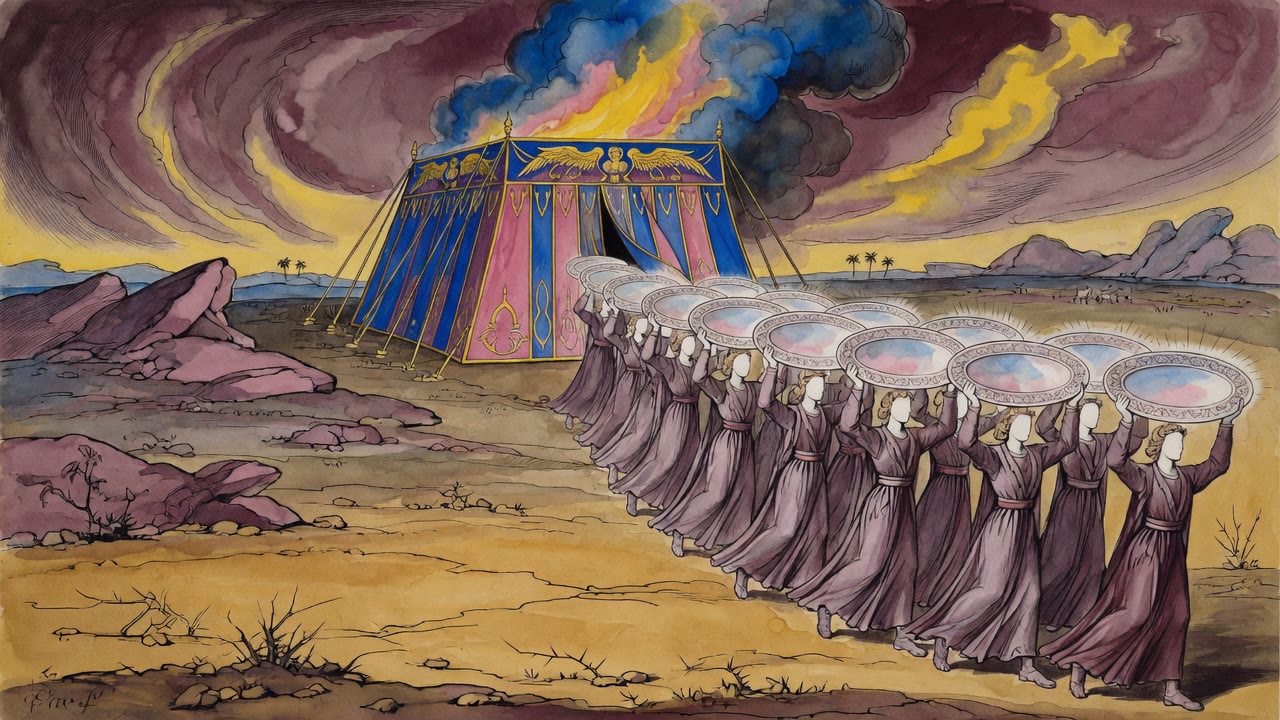
Twelve tribal princes brought identical offerings for the Tabernacle, same objects, same weight, same measurements. What they got in return changed the rules of Shabbat.
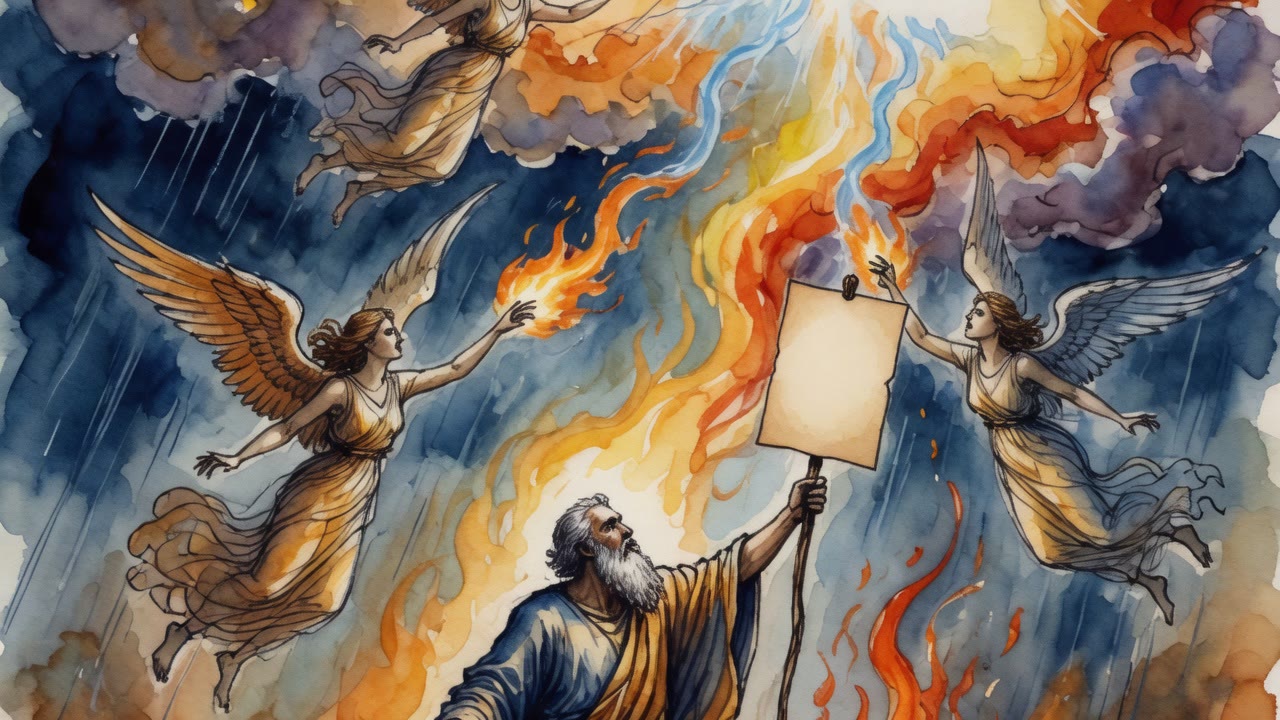
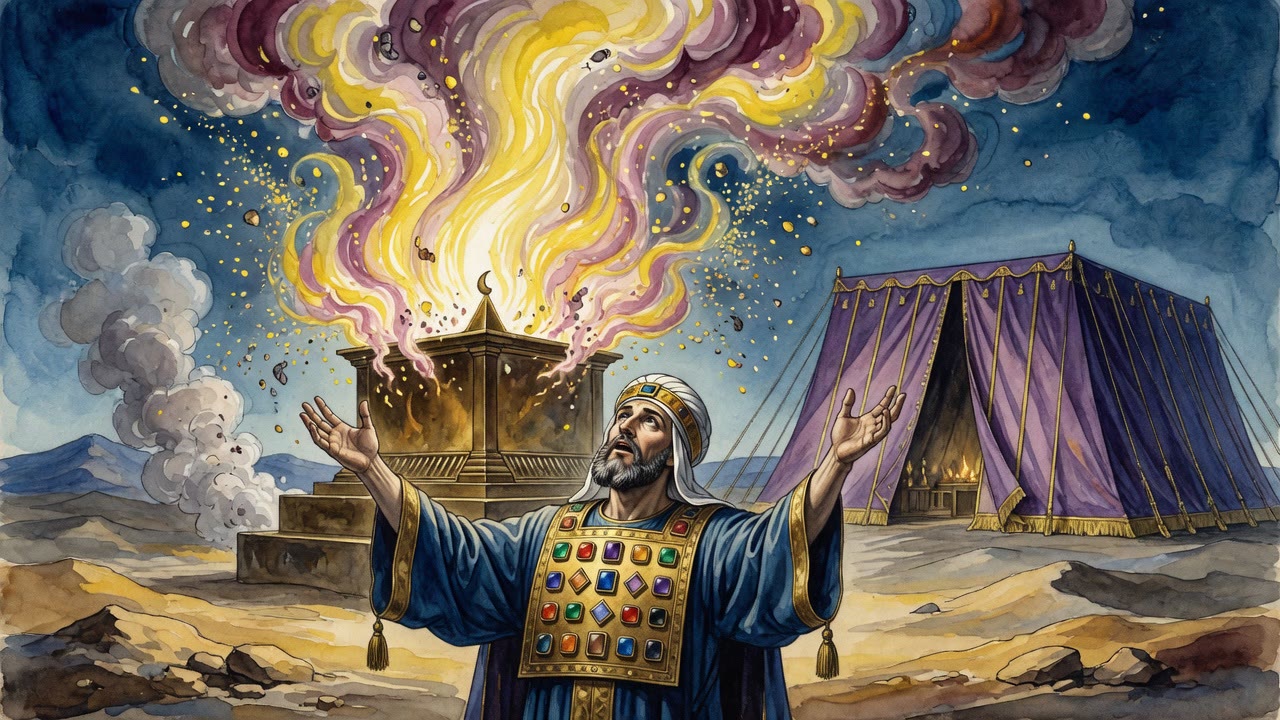
For seven days, Aaron performed the inauguration rituals alone with no sign from God. On the eighth day, fire came down from heaven and consumed everything on the altar. What happened during those seven silent days — and why did God wait?
Moses was furious. The goat of the sin offering had not been eaten, and he rebuked Aaron's surviving sons directly. Then Aaron explained. And Moses conceded. The rabbis found this moment remarkable — because it is the only time in the Torah that Moses admits a legal error.
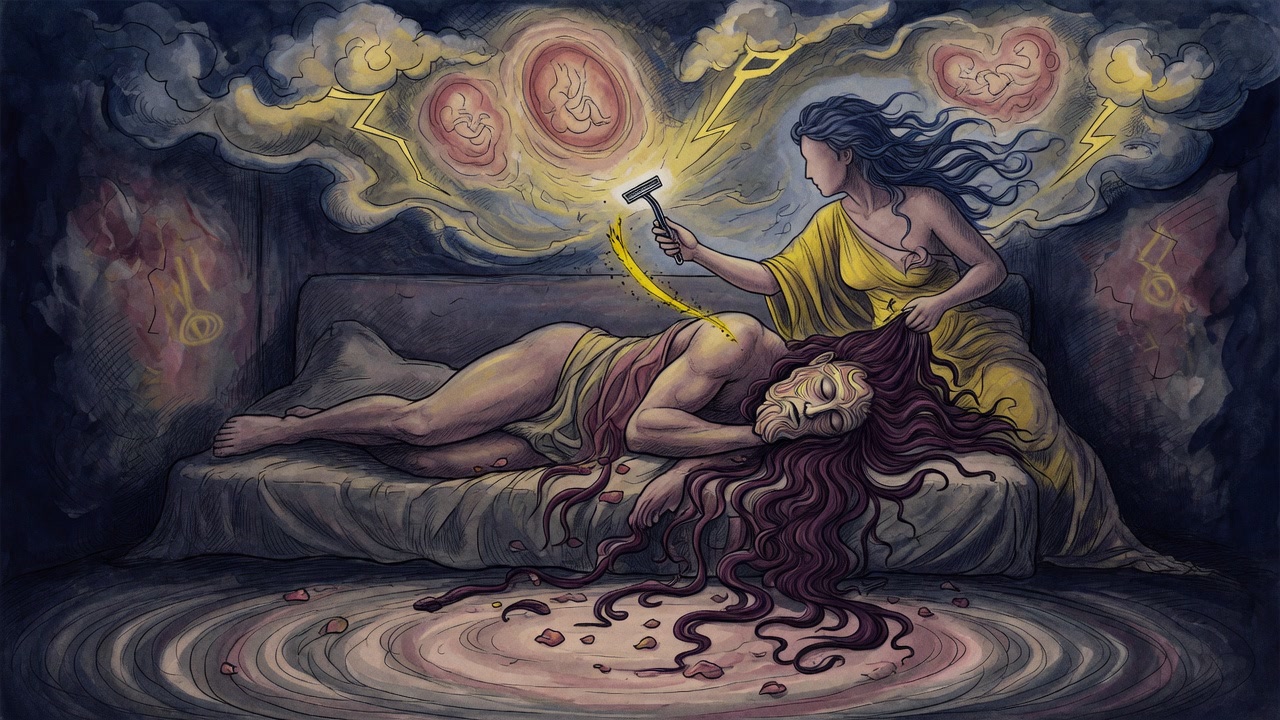
Every Bible translation calls it leprosy. The rabbis were certain that was wrong. Tzaraat — the skin affliction described in Leviticus 13 — was a supernatural disease caused by a specific sin: lashon hara, evil speech. Miriam got it. King Uzziah got it. And the punishment fit the crime precisely.
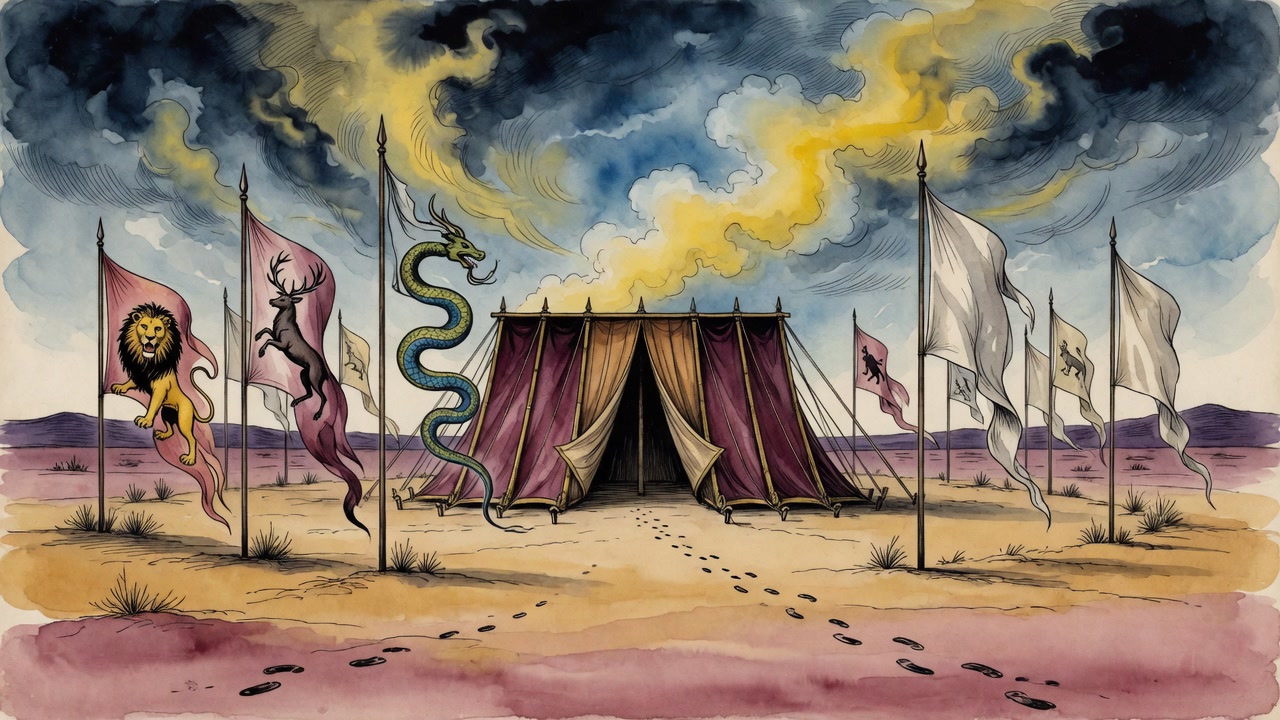
God arranged two million Israelites in a precise square around the Tabernacle in the Sinai desert. East, West, North, South — three tribes per side. The kabbalists said the layout was copied from God's heavenly throne room. What did they mean?
The Kohathites carried the Ark, the menorah, and the altar through the wilderness — but they were forbidden to look at any of it directly. Their job was to carry objects whose lethal holiness they could never witness. What were they actually afraid of?
Every Israelite man paid exactly half a shekel for the Tabernacle census — not a whole shekel. The wealthiest gave the same as the poorest. The rabbis asked why half, and the answer they gave is still quoted in synagogues every year before Purim.
When Moses counted Israel in the wilderness, he got exactly 603,550 men. The rabbis refused to believe that number was an accident.
Over two million people — if you count women, children, and Levites — moved through the Sinai desert together for forty years. The Torah describes exactly how they arranged themselves. The rabbis filled in everything else.
Moses received six wagons and twelve oxen to transport the Tabernacle. He distributed them all to two Levite clans. The Kohathites, who carried the holiest objects, received nothing. The reason was a matter of how holiness works.
When the Tabernacle was dedicated, each tribe's gifts revealed their soul. Issachar's offerings were a portrait of the Torah itself.
Zebulun traded at sea while Issachar studied Torah. The sages say this partnership was not just practical -- it was sacred.
When Asher's prince made his offering in the wilderness, each detail told the story of Israel among the nations -- and what set Israel apart.
God told Moses to tell Aaron how to light the seven-branched lampstand. Aaron was the High Priest. He had been serving at the Tabernacle for months. Why did he need to be instructed on something so basic? The kabbalists had an answer.
A group of men came to Moses and said: we were impure on Passover and couldn't bring the sacrifice. Is there nothing for us? God answered with a second Passover, one month later. It is the only holiday in the Torah created because the people demanded inclusion.
Moses asked for one night before answering Korah's challenge. The reason tells you something about how Moses understood both anger and the way God judges.
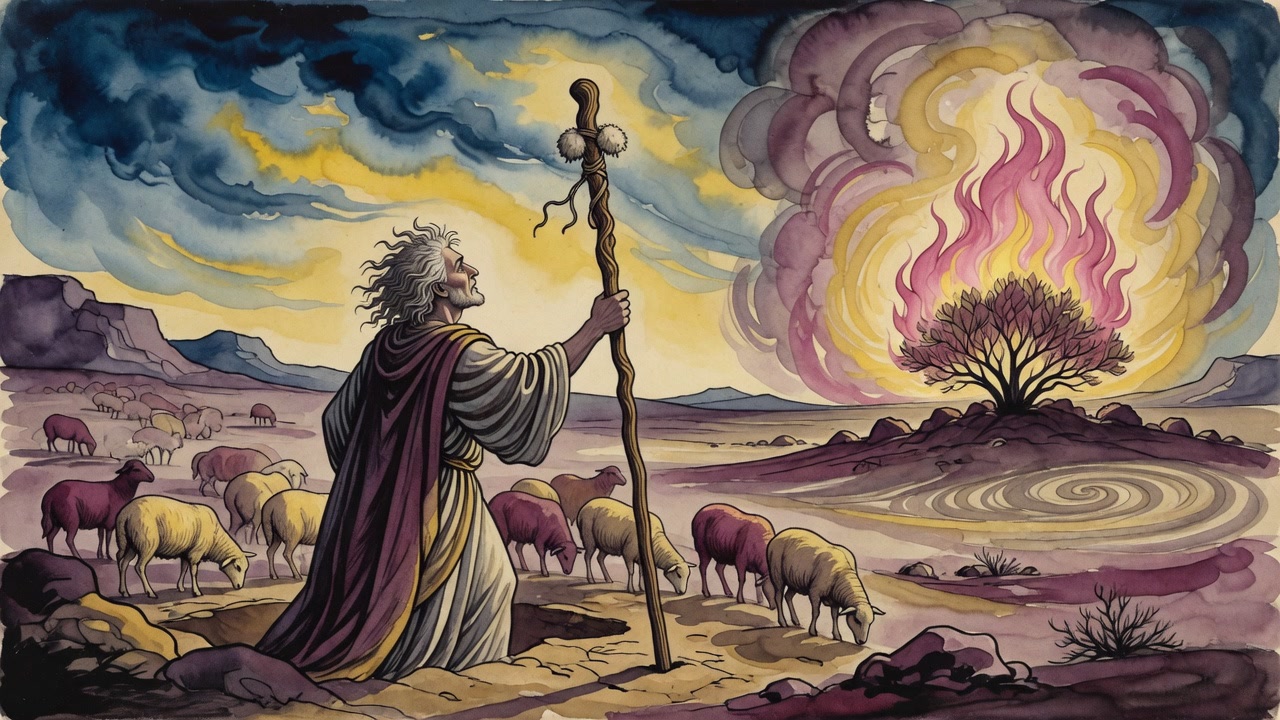
Between fleeing Egypt as a prince and returning as a prophet, Moses spent forty years tending sheep in the wilderness. The rabbis describe those years as the most important preparation in human history — and what God was waiting to see.
Moses had just parted the Red Sea and received the Torah at Sinai, and he couldn't manage a simple justice system. It took his non-Israelite father-in-law — a former idol-worshiper from Midian — to solve the problem that the greatest prophet in history had missed.
Numbers 15 records a man gathering wood on the Sabbath. Moses didn't know the punishment, asked God, and God specified death by stoning. The rabbis who tried to explain this case found it increasingly difficult to justify — and some concluded God meant it as a lesson, not a precedent.
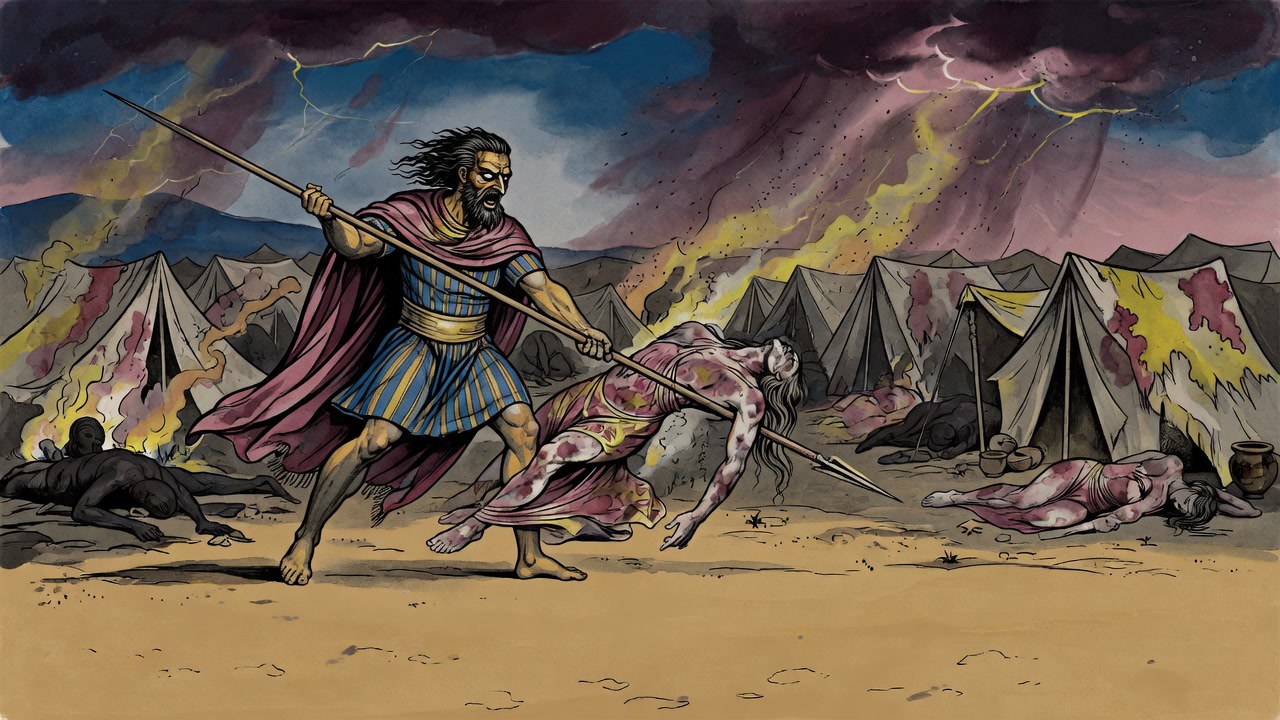
Pinchas grabbed a spear and killed two people in the middle of a plague, and God rewarded him with an eternal covenant of peace. The rabbis who had to explain this found it was one of the most theologically fraught moments in the entire Torah.
When snakes attacked the Israelite camp, God told Moses to put a bronze serpent on a pole so that anyone who looked at it would live. The rabbis found the cure more philosophically strange than the plague — and asked whether it was really the snake doing the healing.
After Korach's rebellion, twelve tribal leaders placed their staffs in the Tabernacle overnight — and in the morning, Aaron's had grown leaves, blossoms, and ripe almonds. The rabbis asked what a wooden stick blossoming in the dark actually proved.
At Sinai, Israel uttered three words that rabbis have been debating for two thousand years — 'we will do and we will hear' — in the wrong order.
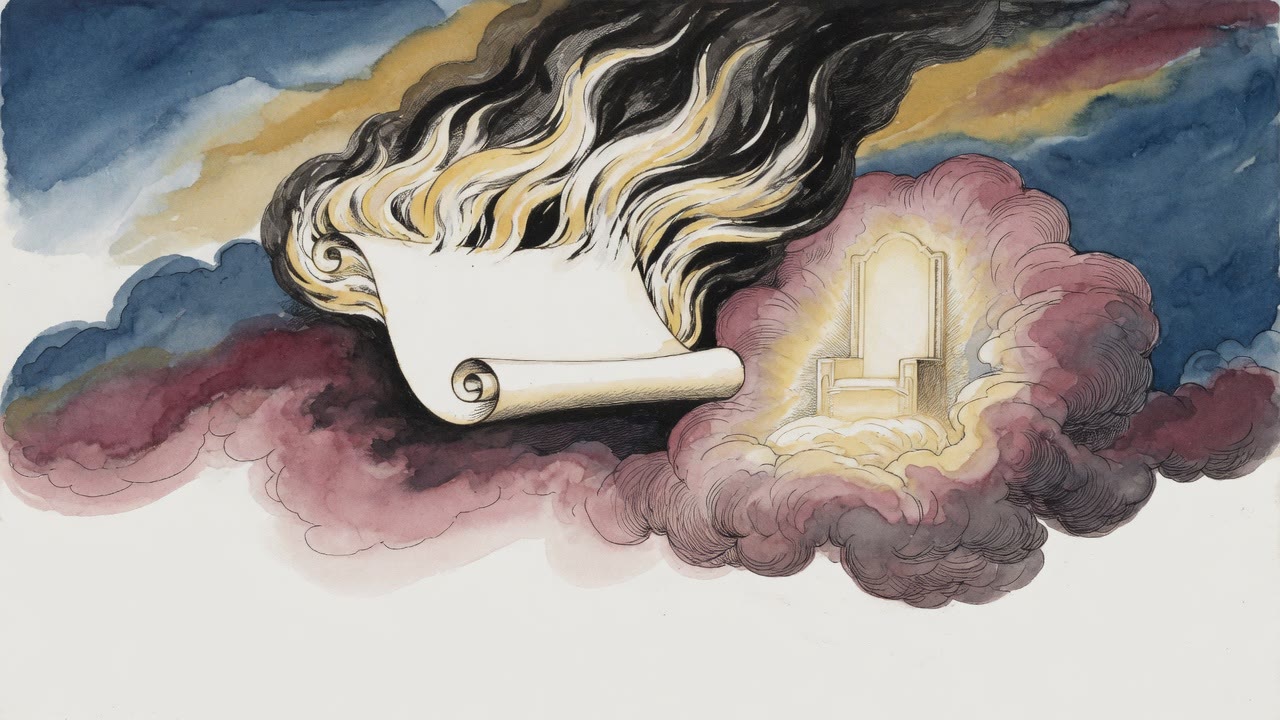
Two thousand years before the Torah was given at Sinai, the rabbis taught it already existed — written in black fire on white fire, the blueprint God used to build the universe.
The Torah describes thunder and fire. The rabbis went further — they said the Israelites died at the voice of God, and had to be resurrected to hear the second commandment.
Between the Exodus and the giving of the Torah lie 49 days of counting — the Omer. But why count? And what were the Israelites supposed to become in that time?
Passover gets a week. Sukkot gets detailed rituals. Shavuot gets almost nothing — not a date, not a story, barely a name. The rabbis had to invent its meaning from scratch.
Zelophehad left no sons — only five daughters. When they stood before Moses and the entire Israelite assembly to argue their case, God sided with them immediately. The midrash says Moses was speechless.
The well that sustained Israel through 40 years in the wilderness was given in Miriam's merit. The moment she died, the water dried up — and the people did not immediately understand why.
Accidentally killed someone in ancient Israel? Run. The roads to refuge were the widest in the country. Signs at every crossroad. The law was built to save you.
Six tribes on Mount Gerizim shouted blessings. Six on Mount Ebal shouted curses. The midrash says Gerizim bloomed green and Ebal turned barren on the spot.
When Moses came down from Sinai with the stone tablets, he carried something more. An entire second Torah — explanations, expansions, and traditions — was transmitted orally. The rabbis called it Torah she-be'al peh, and it was considered just as binding as the written text.
Deuteronomy ends with Moses's death and burial. But Moses wrote the Torah. The rabbis spent centuries debating the most quietly devastating logical problem in the entire Hebrew Bible.
Exodus 12 is the only place in the Torah where God speaks directly to both Moses and Aaron. The ancient rabbis noticed, and asked why.
God told Moses to take his brother up Mount Hor and bury him there. Moses prayed all night trying to figure out how to say it.
The Torah uses a word for the manna jar that appears nowhere else. The rabbis cracked it open and found a linguistic argument hiding a theology of witness.
Accept the Torah, or find your grave underneath. The rabbis did not soften the threat. They said it out loud and argued about it for centuries.
When Moses commanded the sea to part, it refused. Twice. The Mekhilta reveals what actually happened at the shore — and why the sea finally fled.
The Mekhilta's verse-by-verse reading of Exodus 19 reveals something extraordinary: Sinai was not a monologue. God gave each commandment, Moses carried the people's answer back, and only with their consent did God speak the next word.
According to the Talmud, God uprooted Mount Sinai and held it over Israel like an upside-down barrel, threatening to bury them if they refused the Torah. But a later judge pointed out the legal problem — a contract signed under coercion is not binding. The Talmud's answer comes from the Book of Esther.
At Rephidim, Moses faced a thirsty mob ready to stone him, then an enemy who attacked without provocation. The Mekhilta reveals what both crises taught about leadership, memory, and divine justice.
The Israelites arrived at Sinai as one man with one heart. What made that unity possible, and what does Shavuot ask us to recover from it?
Rabbi Akiva found in one word of Exodus 12 a principle that overturns everything we think we know about prophecy: Moses heard God's voice because of Israel's merit, not his own.
The Tikkunei Zohar draws a direct line between Pharaoh ordering Jewish infants drowned and the great fish swallowing Jonah. Both were attacks on the same thing.
When Ptolemy demanded a Greek translation of the Torah, seventy-two sages made thirteen identical changes without consulting each other. The Mekhilta records every word they changed and why.
Two rabbis disagreed about who was rushing at the first Passover meal. The answer changes what faith actually looks like when freedom is hours away.
Isaiah promised Israel would ride on the heights of the earth. The Mekhilta shows Moses said the same thing centuries earlier, proving the promise was never new.
God owns the Torah. Moses received it. So why does Malachi call it the Torah of Moses? The Mekhilta gives a surprising answer about devotion and naming.
The nations confronted Israel with a brutal question: why suffer and die for a God you cannot see? Rabbi Akiva answered with Song of Songs.
The Mekhilta teaches that Israel's obedience does not just reduce God's anger. It eliminates it entirely. When Israel walks in God's ways, wrath has no occasion to arise in the universe.
Moses had the entire Israelite nation assembled and ready to build God's Tabernacle. He paused first to teach them one rule that overrode everything else.
Before Israel said yes at Sinai, God went door to door across the ancient world. Every nation heard the offer. Every nation turned it down.
Moses did not beg God to save Israel from Amalek. He argued from God's own long-term plan, pointing out that if Amalek won, the Torah would have no one left to read it.
Moses argued with God using God's own prophecy about Israel's exile. If Amalek won now, there would be no people left to scatter, no exile, and no return. Extinction was worse than exile.
The Mekhilta finds four things called acquisitions in Scripture: Israel, heaven and earth, the Temple, and the Torah. The rabbis say they belong together by design.
The Mekhilta reads three words from Exodus 2:4 as a three-part proof that Miriam carried genuine prophetic power the day her brother floated downstream.
R. Yossi reads a verse from Isaiah to prove the Torah was given openly to all who wanted it, and that God announced the reward before He gave the law.
The Mekhilta explains why the Torah compares God's voice to roaring waters and crackling fire. Every metaphor is a mercy, and the strongest sounds in creation are still not enough.
When God descended on Sinai, every mountain in the world shook with jealousy. The Mekhilta says God's answer was devastating: your height is exactly why you were not chosen.
The manna was not ordinary food. The rabbis taught it merged completely with the body, leaving no waste, no residue, nothing expelled.
Every word God spoke at Sinai killed the Israelites. They had to be revived each time. The Talmud records what it felt like to receive the Torah.
After Moses came down from Sinai, Ha-Satan searched the earth, the sea, and the depths for the Torah. He could not find it. Moses wouldn't admit he had it.
Moses, Aaron, and seventy elders climbed Sinai and saw God. That is what the Torah says. Onkelos and the rabbis spent centuries explaining why that cannot mean what it appears to mean.
Three strangers came to Shammai with impossible requests and were driven away with a measuring rod. Then they went to Hillel. All three converted. The tradition preserved the story to explain the difference.
Rabbi Akiva insisted there was only one frog at the Exodus. Rabbi Elazar told him to stop telling stories and stick to what he knew. The debate is stranger than it sounds.
The Song of Songs describes cheeks lovely with ornaments. The rabbis read those cheeks as Moses and Aaron, and the ornament as something rarer than gold.
Moses entered the cloud at Sinai, but the midrash says he kept going - through seven heavens, past angels of fire and ice, to the throne.
When Moses ascended to receive the Torah, thirty thousand angels escorted him. That sounds like an honor. It was not. It was crowd control.
Standing on Sinai, Moses discovered that God's mercy wasn't a late amendment — it was the first principle, built into creation before anything else existed.
God is omniscient. Moses knew this. He still went back and reported the people's answer. The Mekhilta found in that small act the most important lesson Moses ever taught.
The rabbis asked why God gave the Torah in a wilderness. The answer led them back before Creation itself, to a mountain that was waiting long before the...
Moses ascended to receive the Torah and found God still decorating it. What he witnessed in heaven changed his understanding of his own place in history.
The mountain where God gave the Torah was not called Sinai by accident. Each of its six secret names describes a different layer of what happened there.
They received the Torah at Sinai, then retreated from it. Each commandment sent them reeling backward. The rabbis measured the distance exactly.
Between Egypt and the Exodus, Moses spent forty years as a king of Cush. The Book of Jasher fills in the decades the Torah skips entirely.
Before Israel received the Torah, they underwent the same rites as a convert. The gold given at Sinai was not decoration. It was a wedding gift.
The Midrash preserves six different names for Mount Sinai, each carrying a separate meaning. Together they describe not a mountain but the moral weight of what happened there.
Ben Sira, Ginzberg's Legends, and Josephus each describe Moses as a figure the whole created order recognized -- and that the serpent of Eden feared.
Jubilees, Shemot Rabbah, and Vayikra Rabbah describe the one moment in history when Israel stood without blemish, and how the Golden Calf ended it.
Moses ruled a kingdom in Cush before he ever reached the burning bush. Then he fought angels to seize the Torah. Then God buried him personally.
At the dawn of creation God assessed every nation before choosing Israel. But the lawgiver God chose still needed to be taught by five sisters who asked a question he could not answer.
The mountain was called Horeb before Moses arrived. A burning bush renamed it. The cloud that settled over it killed trespassers. The silver dish of the princes hid a secret about what Israel brought to the mountain.
Moses spent forty days in heaven without eating. The angels challenged his right to be there. God told Moses to answer them himself.
Moses received the Torah at Sinai. But it was Aaron who protected the living tradition — the thing that breaks when no one is watching.
God spoke at Sinai in thunder and fire. But the rabbis said Israel was not accountable for the Torah until it was explained in the Tent of Meeting.
In the Mekhilta, Rabbi Yitzchak appears again and again — a man who refuses to accept a ruling unless it can be proved from three different directions.
God planned to give the Torah immediately after the Exodus. He delayed it by weeks because Israel would not stop arguing with each other.
When plague struck Israel after Korah's rebellion, Moses sent Aaron running with incense. The remedy came from a secret learned in heaven.
Moses did not just receive the Torah. He revised it. Three times he challenged God's stated intentions, and three times God changed course.
In the Mekhilta, Rabbi Shimon bar Yochai uses a wolf-and-lion parable and sharp legal logic to show how attention resets and categories must hold firm.
When Moses raised his hands at Rephidim, Israel prevailed. When he lowered them, Amalek surged. The rabbis say the real battle was always about Torah.
Two traditions answer Sinai in opposite ways: heaven bent down to the mountain, or the mountain tore free and rose into the sky to meet God.
When God's voice sounded at Sinai, all of Israel fell dead. The Torah interceded. God sent the dew of rebirth. Moses received 49 of the 50 gates of wisdom.
At Sinai, God dressed as a prayer leader and showed Moses the thirteen attributes. Then Moses paused over 'let us make man' and asked God why.
Every mountain competed to host the Torah. Sinai was chosen for its humility -- and then became the site of Israel's worst betrayal.
Amalek and Jethro both heard about Israel's miracles at the sea. One attacked. One converted. The same news, two opposite responses.
Josephus saw what the stone-tablet image obscures: Moses taught righteousness through narrative, letting stories do what bare laws alone cannot.
Moses named Joshua his successor. Joshua declared he had no questions. Within moments he had forgotten hundreds of laws and nearly been killed for it.
When Joshua died, Jethro's descendants abandoned fertile Jericho for a Torah academy in the wilderness, choosing learning over land without hesitation.
God does not hand sacred roles to those who simply want them. The Levites were tested twice before they were chosen, and both tests were brutal.
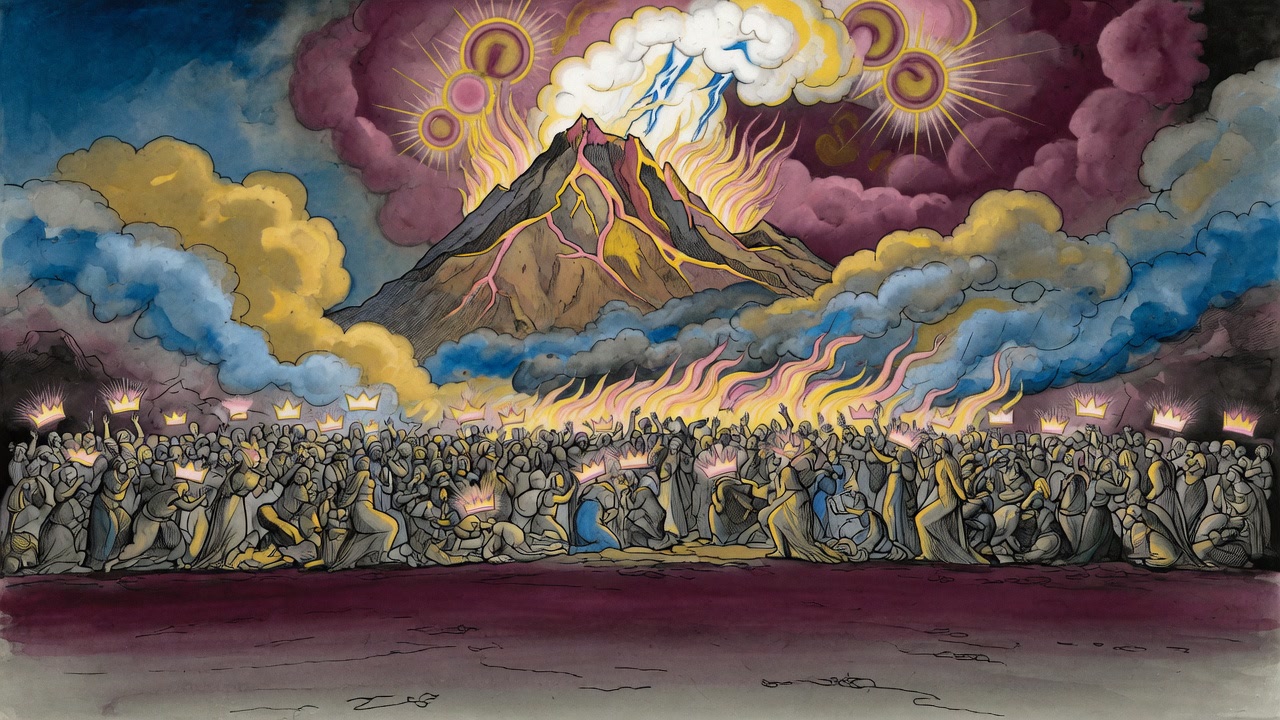
The mountain was on fire, the sky had turned black, and every single Israelite heard God speak. Moses was the messenger. Sinai was the broadcast.
On Simhat Torah 1609, Chaim Vital dreamed that the body of Moses was laid in the Safed synagogue, then became a Torah scroll read from Genesis to Deuteronomy.
In Da'at Tevunot, the Soul is certain about God but lost on providence and resurrection. Moses carried the same tension and never fully resolved it.
Moses taught Torah for forty years. One question about divine justice never had a satisfying answer. The Ramchal says that silence was the intended response.
At Sinai, Moses was told to approach from a distance. Rabbi Levi Yitzchak of Berditchev read that instruction as a complete philosophy of how finite minds relate to infinite reality, and why both distance and nearness are necessary.
Rabbi Yitzchak noticed a contradiction in Exodus 15:26 that has fascinated interpreters for two thousand years: God promises not to send illness to Israel, and then calls Himself the one who heals them. If no one gets sick, why does anyone need a doctor?
Before Joshua drew his sword against Amalek in the wilderness, Moses made an argument to God that had nothing to do with military tactics. He asked who would read the Torah if Israel were destroyed.
Before Sinai, all humans were forbidden to kill under universal law. After Sinai, Israel received a detailed new legal code. Rabbi Issi ben Akiva asked the uncomfortable question: did the new specificity make killing easier to get away with?
The Torah says to honor your father and your mother. Rabbi Yitzchak noticed that a single word connecting the two parents in a verse about striking them changes the entire scope of the death penalty. One word. Two lives.
The Talmud preserves an extraordinary account of Moses ascending to heaven to receive the Torah and finding the angels furious at the intrusion. They demanded God keep the Torah in heaven, where it belonged. Moses answered them.
Midrash Mishlei reads Proverbs 31 as a portrait of the Torah herself, a cosmic woman of valor who existed with God before the world was made, whose worth exceeds all pearls, and whose husband trusted her completely. Moses, the Midrash teaches, was the one who merited to carry her from heaven to earth.
When Psalm 12 calls God's speech 'pure as silver refined seven times,' the rabbis took this literally. Midrash Tehillim teaches that every divine word in the Torah was refined through seven levels of spiritual purity before it reached human ears, and that Scripture itself is proof of this refinement in its careful avoidance of improper language.
When God's voice thundered across Sinai, it did not merely deliver commandments. According to Pirkei DeRabbi Eliezer, it transformed every person who heard it into something resembling the ministering angels themselves, immune to decay, untouched by death's usual instruments.
Moses stood at the edge of the land he had spent forty years leading Israel toward and prayed to enter it. The rabbis counted his prayers: 515 in total. God heard every one, and refused every one. The question the tradition asked is not why God refused, but what the refusal meant for the greatest prophet who ever lived.
Moses stood on Sinai and received the Torah. Rabbi Akiva, fourteen centuries later, died reciting it. A famous Talmudic passage imagines Moses sitting in Akiva's classroom, confused by what he hears but reassured when Akiva traces everything back to the teaching from Sinai. Two lives, one Torah.
The forty days Moses spent on Sinai receiving the Torah ended in disaster when Israel built the Golden Calf. When he climbed back up and spent forty more days, the laws he brought down the second time included a ruling about blood and water that encodes a complete theology of sacred and profane.
Rabbi Akiva asked a devastating question: Moses had never hunted, never traveled the world, never catalogued its creatures. How could he possibly have known the signs of every kosher and forbidden animal? The answer Sifrei Devarim gives changes what we understand about Moses and about revelation itself.
Deuteronomy's laws about maintaining camp sanitation seem like military hygiene. Sifrei Devarim reveals they are about something far more serious: the divine presence traveled with Israel in the wilderness, and its departure was a catastrophe worse than any military defeat.
The revelation at Sinai was not a private event between God and Israel. Sifrei Devarim records that the thunder of Sinai shook the entire world, and the nations sent to their prophets to ask what was happening. The answer they received is one of the most pointed lines in all of rabbinic literature.
Every prophet received visions and dreams. Moses received something different, something the Torah calls face-to-face speech, and the rabbinic sages spent centuries trying to explain what that difference actually cost him.
The Torah says Aaron was washed before becoming High Priest. The Targum Jonathan reveals what that washing actually required, and why the priestly consecration left nothing to chance.
When Moses read the entire Torah aloud and sealed the covenant in blood, he believed faithfulness would protect him. Then God told him it would not.
The revelation at Sinai killed the entire people of Israel. The revival that followed was not a miracle that happened alongside the giving of the Torah. It was the point.
Moses climbed into heaven to receive the Torah and the angels were furious. They wanted to incinerate him. God had to answer for bringing a mortal into the highest realm.
When Moses climbed Sinai to seize the Torah, the angels insisted no human was worthy. The answer lay in what had already been decided before the world was made.
The Torah existed two thousand years before the world began. The tribe that would carry it through history was already being shaped to receive it before the mountain was chosen.
The mountain where Moses received the Torah was not chosen at random. According to the Book of Jubilees, Sinai was among four sacred places set apart from the very beginning of creation.
When Moses ascended to receive the Torah, the angels were furious. They demanded God explain why a mortal made of flesh and dust had been given what belonged to heaven. Moses had to argue for his own worthiness with 30,000 angelic guards watching.
When Moses ascended to receive the Torah, he did not simply arrive at a mountain peak and wait. He traveled through all seven heavens, and in the highest one, he saw the creatures that support the throne of God.
On the second day of creation, God made the firmament, fire, and the angels — and built into the fabric of the cosmos the mountain where the Torah would one day be given. The rabbis read the architecture of heaven backward from Sinai.
The tradition insists that every soul who would ever prophesy in Israel stood at Mount Sinai when the Torah was given — including those not yet born. The revelation was not an event. It was an architecture that all future prophets carried inside them.
Rabbi Tarfon taught that the holiness of the Land of Israel was not geography but theology — God's speech itself narrowed to a single patch of earth, and the prayers of the patriarchs were still in the ground waiting.
Most accounts say God spoke the Torah to Moses directly. The Book of Jubilees tells a different story: an angel called the Prince of the Presence sat beside Moses on Sinai and dictated everything, from creation to the messianic age, in one unbroken transmission.
Most people with seven names are trying to hide something. Jethro's seven names each recorded a different act of devotion, and they followed his descendants into the desert for centuries.
The word for "he rejoiced" and the word for "he became a Jew" differ by a single vowel. The rabbis read both at once, and what they found there rewrites Jethro's whole story.
Before Sinai, the rabbis say, every Israelite who had been injured by Egyptian slavery was healed. God refused to give the Torah to imperfect bodies. And Torah itself, they argued, is the permanent cure.
The Torah was created before the world. God waited nearly a thousand generations to give it to anyone. The rabbis counted exactly why, and the answer is stranger than you expect.
The rabbis made a claim that sounds impossible. Every prophecy ever spoken by any prophet in Israel, including those who lived centuries later, was first received at Mount Sinai.
God heals and wounds at the same moment. Creates death and life in the same breath. The Ten Commandments, the rabbis say, were spoken all at once, because only God can hold opposites together without flinching.
God brought the Torah to every nation on earth before Israel. Each one asked what was in it and walked away. Only Israel said yes without asking. And the world almost ended because of it.
Of all the animals in Leviticus 11, the pig is the only one that actively looks kosher. It has split hooves — the sign it's supposed to show. It just doesn't chew its cud. The rabbis thought that was not an accident.
Why do two physical traits — split hooves and cud-chewing — determine whether an animal is spiritually fit to eat? The rabbis were convinced the signs contained meaning, not just rules. Here is what they found.
The Torah is explicit: only a priest could examine and rule on tzaraat. Not a physician. Not a family elder. A priest. And the priest's examination had nothing to do with medicine. What does this tell us about how ancient Jewish thought understood the relationship between body and soul?
One bird killed over running water. One bird dipped in the dead bird's blood and released alive over an open field. Leviticus 14 never explains what this means. The rabbis had theories — and they were remarkable.
Leviticus 14 says a house can be afflicted with tzaraat — the same spiritual plague that strikes people. The house had to be inspected, quarantined, and possibly demolished. The rabbis said this was not a punishment. It was a gift.
No other chapter in the Torah packs this many commandments. Forty-one laws in one chapter, don't steal, don't lie, don't curse the deaf, don't put a stumbling block before the blind. The rabbis called it the heart of the Torah. They meant it literally.
Every seventh year, the Torah commands the entire agricultural economy of ancient Israel to stop. No planting, no pruning, no harvesting. The land gets a Sabbath. What happened to people who couldn't eat?
Every 50 years, all debts cancel, all slaves go free, and every piece of land returns to the family it started with. The Jubilee was the most radical economic law in the ancient world. Did anyone ever actually follow it?
The Torah forbids 'wronging one another' — and the rabbis ruled that this applies to words, not just money. What counts as oppressing someone with speech? The Talmud's answer is more specific than you'd expect.
Leviticus 26 contains 49 blessings and 98 curses — terror, plague, cannibalism, exile. Every year in synagogue it is chanted in a hushed voice. What exactly does it threaten, and why do rabbis insist it is actually a love letter?
The entire covenant in Leviticus 26 is conditional. 'If you follow my statutes.' What happens to a promise that depends on your behavior? The rabbis who survived the Temple's destruction had to answer this directly.
The Torah gave husbands a ritual for testing suspected infidelity. It involved bitter water, an erased divine name, and a God-administered verdict. The rabbis spent centuries making sure it could never be used.
The Torah created a category of voluntary holiness anyone could enter — no birth, no lineage required. You could become a Nazirite for a week or for life. The rabbis found this troubling and fascinating in equal measure.
When the twelve tribal princes dedicated the Tabernacle, every single one brought exactly the same offering. Same animals, same quantities, same items. The Torah still lists each offering separately — 89 verses. The rabbis found a reason.
The Urim and Thummim was not a metaphor. It was an object worn in the high priest's breastplate that could be consulted before battles, judicial decisions, and national crises — and it stopped working when the First Temple fell.
On Yom Kippur, the high priest entered the Holy of Holies — a chamber so sacred that entering it incorrectly meant instant death. The rabbis say a rope was tied to his leg so his body could be retrieved if he didn't come out.
If a husband suspected his wife of adultery but had no witnesses, the Torah prescribed a ritual in the Temple involving holy water, dust from the floor, and a scroll dissolved in the water. God would decide the verdict.
The Jubilee year was not a suggestion. Every fifty years, all debts were cancelled, all slaves freed, and all land returned to its original tribal owner. The Torah's most radical economic law was also one of its oldest.
Eating chametz on Passover brings kareth, spiritual excision. The Mekhilta closes a loophole no one thought to close: can you escape by leaving Israel entirely?
Rabbi Akiva said Torah must be taught until it is placed in the mouth. He compared a properly taught law to a set table -- complete, ready, nothing missing.
Aaron stopped more sins than Moses by never mentioning sin. His method was to make people feel too ashamed to misbehave after he had been kind to them.
When sectarians were killing Jews and the communities were dangerously blurred, one sage volunteered to infiltrate the other side, draw a permanent line, and never come back.
The most uncomfortable sections of Leviticus, the ones about bodily discharge and skin disease, are the ones God says are pleasant. The Midrash explains why.
Rabbi Yishmael and Rabbi Akiva read the same verses and reached opposite conclusions about whether eating meat in the desert was permitted or forbidden. Both were right.
Before Levi died, he told his children what Enoch taught. The rabbis who studied Genesis 9 heard the same teaching in God's first law against murder.
Outside the Temple priests used an epithet. Inside, they spoke God's actual Name. Three lines, seven meanings, one Name that stayed within the walls.
Every year on Yom Kippur, a goat carried the sins of all Israel into the wilderness and vanished. The ritual required two animals, a lot, and a cliff.
Rabbi Yitzchak examined a Torah verse about Hebrew servants and declared it unnecessary. The law it teaches could already be derived through pure logic. What it reveals about why the Torah writes what it doesn't have to write is the real lesson.
Rabbi Akiva noticed that the Torah's fivefold penalty for stealing an ox applies only to oxen and not to donkeys or other animals. His proof was not a legal tradition but the word 'tachath,' repeated twice, whose sacrificial implication excluded everything that could not be offered on the altar.
The Torah has a secret hiding inside the flour offering. It is not about poverty. It is about what God actually counts.
The rabbis noticed that Torah laws are never placed next to each other by accident. A missed flour offering, an outbreak of skin disease, a wife brought to judgment -- all connected.
When Hillel the Elder told his disciples he was going to the bathhouse to perform a mitzvah, they laughed. His answer silenced them for centuries.
The Torah opens Numbers with a census — every male over 20, counted by name. The rabbis asked why an omniscient God would need to count. The answer they gave is one of the most tender passages in all of midrash.
God's original plan was for the firstborn son of every family to serve as priest. Then came the golden calf. The Levites stayed loyal. God swapped them in. The exact numbers reveal something strange about divine accounting.
In the wilderness camp, the tribes were not grouped at random. Dan carried a shadow, and its neighbors were chosen to carry light.
The donkey saw the angel, spoke in the holy tongue, and outwitted the most powerful prophet the nations ever produced. Then she died.
Most people know Balaam as the prophet with the talking donkey. The midrash says before that, he was a king who used sorcery to escape a siege.
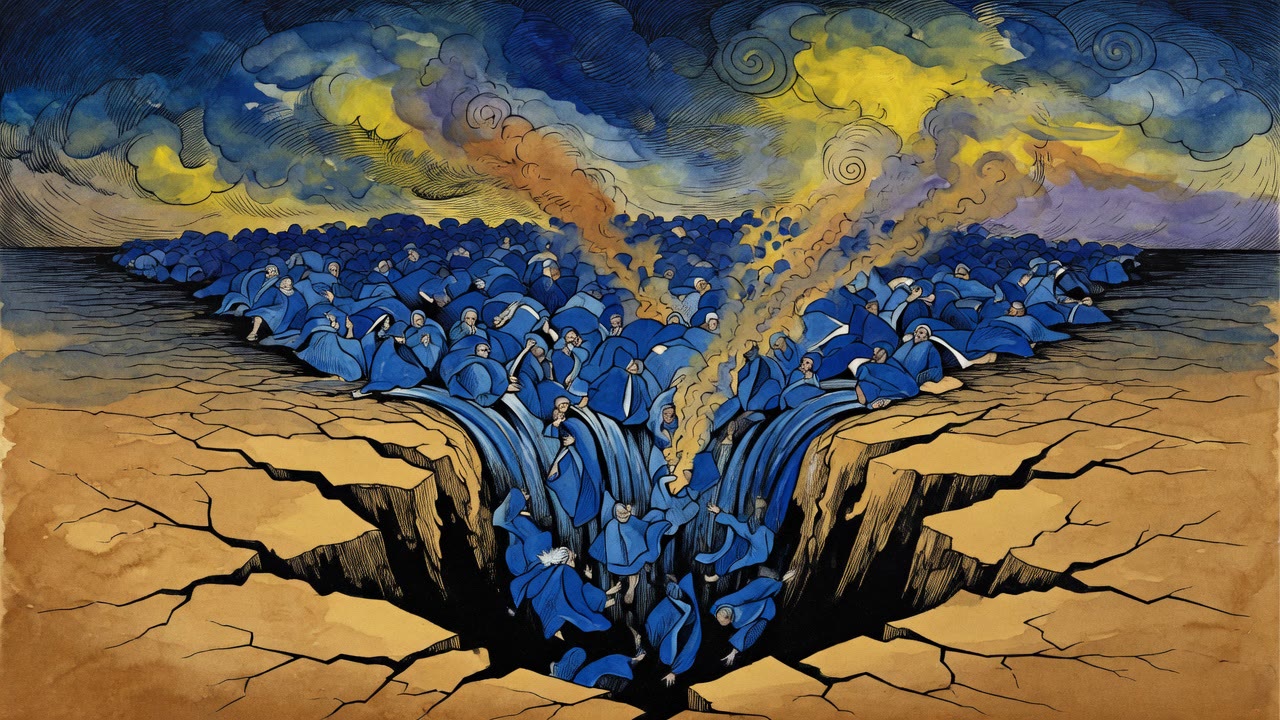
Korah did not act alone — he recruited 250 of Israel's most respected men. The midrash asks why the ground didn't just open immediately, and the answer reveals something unsettling about divine patience.
The red heifer is the one commandment in the Torah that even Solomon could not explain — it makes the ritually unclean clean while making the clean unclean in the same ceremony.
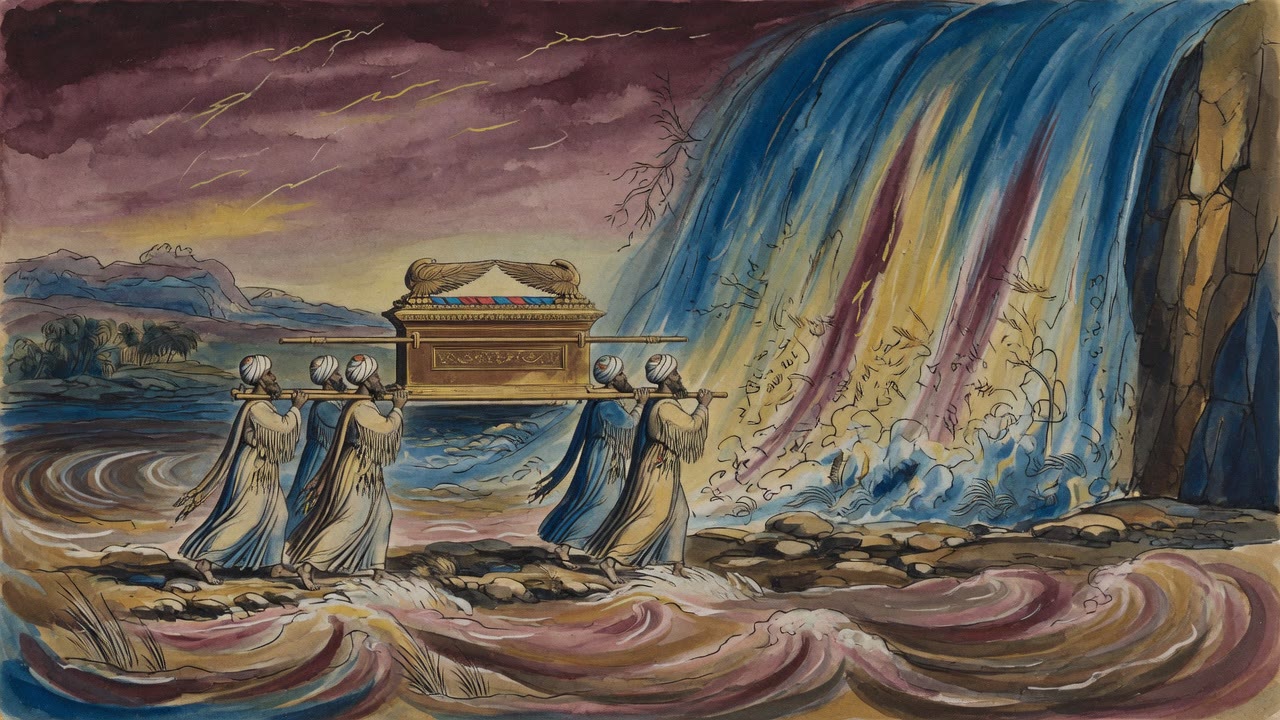
When Israel crossed the Jordan River into Canaan, the water piled up 300 miles upstream. The midrash says the river remembered the Red Sea and asked why it got to split first.
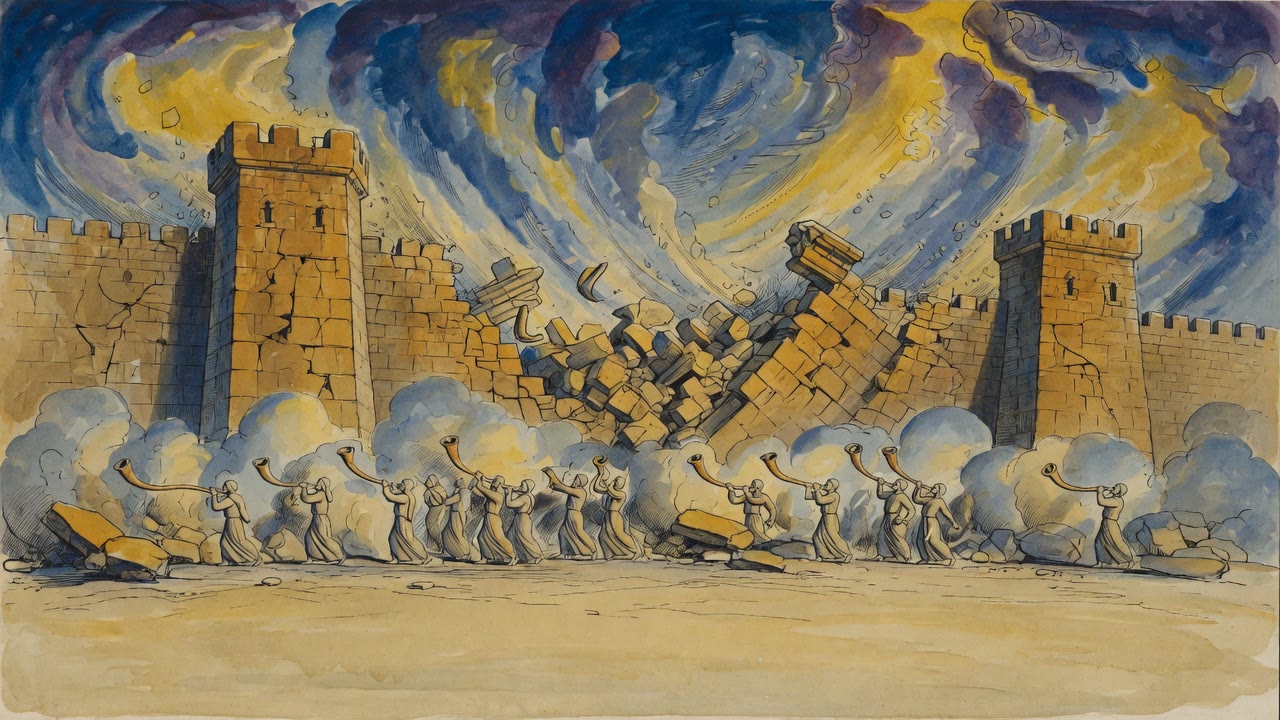
For six days Israel marched around Jericho and said nothing. On the seventh day they circled seven times, and on the final circuit, they shouted — and the walls collapsed. The midrash explains why the silence was the hardest part.
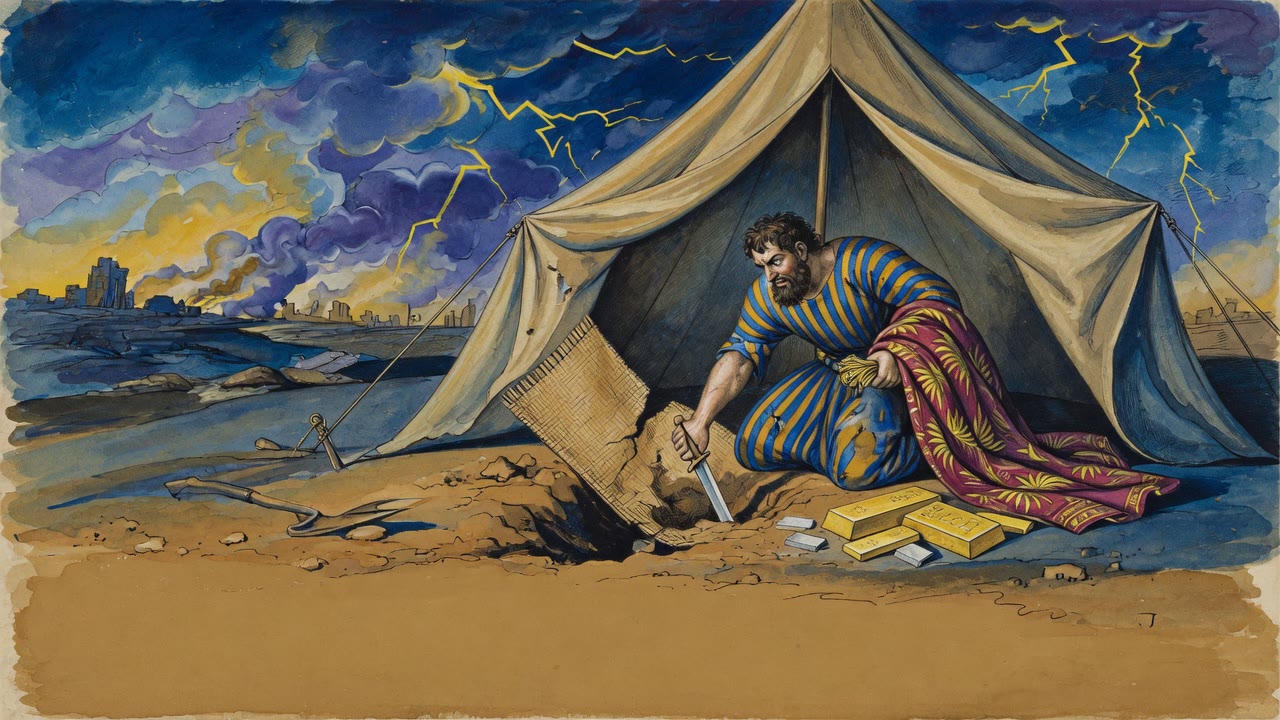
After the miracle of Jericho, Israel attacked the tiny city of Ai and was routed. God told Joshua exactly why — one man had taken forbidden loot. The midrash asks how one person's sin could make an entire nation lose.
The Torah says the commandments were written on both sides of the tablets. The midrash says the writing was miraculous — the letters were cut all the way through, and when you turned a tablet over, the letters read correctly from either direction.
The Torah commanded that the land of Israel lie fallow every seventh year. Israel observed the Sabbatical year for 490 years, then stopped. According to Chronicles, the seventy years of Babylonian exile were the land's revenge — it took its rest by force.
Korah's two arguments: a fictional widow crushed by priestly law, and the claim that every Israelite heard God at Sinai. Both were true. Both were weaponized.
The Talmud says Korah is still down there. Every thirty days he returns to where the earth swallowed him alive and cries out that Moses was right.
Balak hired Balaam to curse Israel. Instead, Balaam delivered the most precise messianic prophecy in the Torah — and every attempt to silence him made it stronger.
When the twelve tribal princes brought their offerings at the Tabernacle, Naphtali went last after Asher. The rabbis found a theology of joy hidden inside that order.
Balaam told Balak that sorcery could not touch Israel: they used the Urim and Tummim. And one day, angels would come to Israel to learn Torah.
A single verse in Numbers describes what happens when a person dies inside a tent, and from that verse the rabbis of Sifrei Bamidbar built one of the most elaborate legal structures in all of Jewish law, with one unexpected reading that honored Torah scholars above all others.
The tribe of Levi received no territory in Canaan. Instead, God said: I am their inheritance. The Levites' landlessness was not punishment but elevation, and the rabbinic sources explain exactly why Torah study required it.
Zebulun is the forgotten tribe, overshadowed by the warriors and prophets. But the rabbis say Zebulun's commercial empire did something no army could: it brought foreign nations to Jerusalem.
Moses counted every tribe except his own. The Levites were numbered separately, set apart, given to God before the census began. The rabbis asked why they were different.
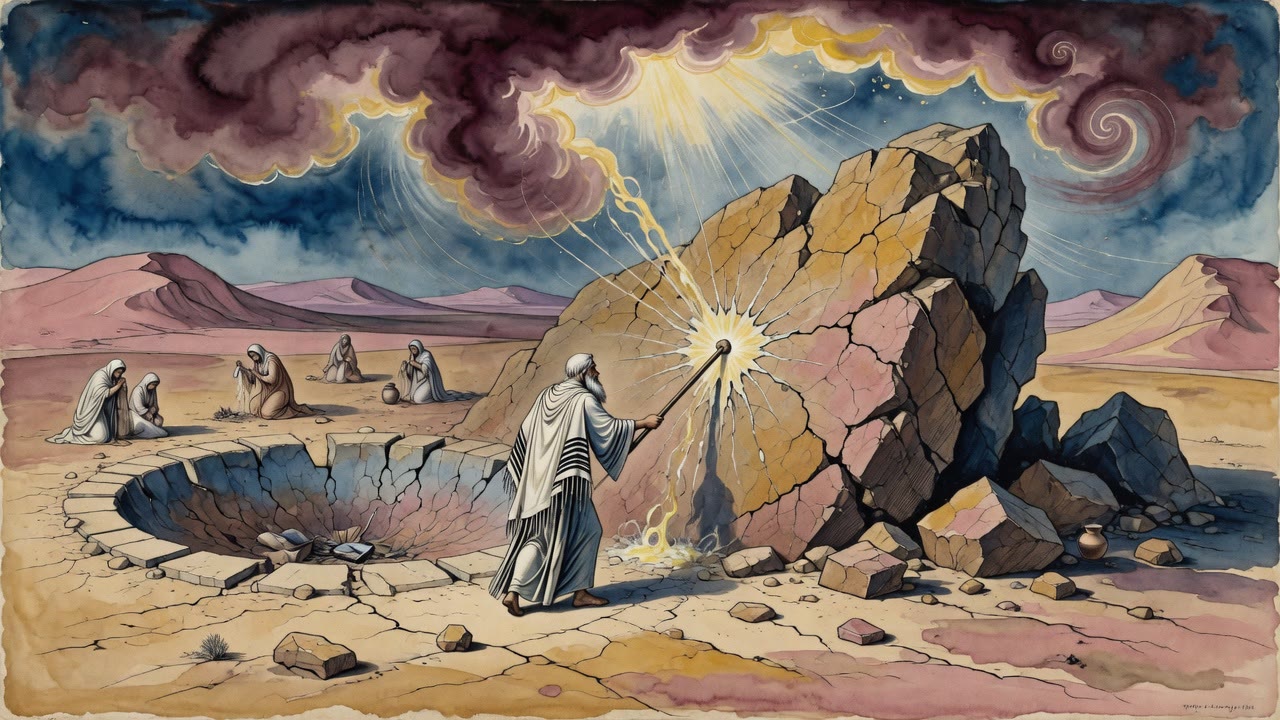
Moses had argued to the angels in heaven that only humans need the Torah because only humans can sin and repent. Years later, standing at the rock he struck in anger, he lived out exactly the argument he had made. The tradition asks whether God's verdict was just.
A miraculous well followed Israel through forty years in the desert, and the rabbis were specific about whose merit it came from: Miriam's. When she died, the water stopped immediately. The tradition traces what that well fed, and how far its effects reached.
Most people think the Torah's curses are ancient warnings. Ki Tavo's 98 curses are so feared that readers whisper them - and Moses trembled delivering them.
At the end of his life, Moses stood before God and tried to negotiate his way out of death by comparing his record to Adam's. It did not go well.
On Simchat Torah, the final words of Deuteronomy are read aloud, and before the scroll can rest, Genesis 1:1 begins. The Torah never ends. The dancing never stops. The rabbis designed it that way deliberately.
When Samael came to claim Moses, he did not find a dying man. He found someone writing the Name of God — and fled in terror.
The last eight verses of the Torah describe Moses dying. The Talmud debated who wrote them — and the answer Rabbi Shimon gave is more beautiful than expected.
During every sabbatical year, when the land went fallow, one tribe alone kept Israel from hunger. Moses knew why before they were born.
Two tribes. Two completely different blessings. Dan got strength at the border. Naphtali got fish, sweet fruit, and a great house of learning. Both were necessary.
Deuteronomy opens with a string of place names. They are not geography. Each one is a veiled reference to a sin the wilderness generation committed against God.
Hours before Moses died, he sang a poem about Israel's future betrayal of God. He already knew what would happen. He sang it anyway. Onkelos translated every word with care.
Onkelos spent a lifetime correcting the Torah's anthropomorphic language. Then he reached the Shema and did not change a single word. That restraint tells us everything.
Two rabbis in the Sifrei Devarim saw something fall from the sky at Sinai. One saw a loaf and a rod. The other saw a scroll and a sword. Both were right.
Moses told Israel to stop asking God to speak directly to them. Then he made a promise that changed everything about how prophecy works.
When God told Moses his time was up, Moses did not accept it quietly. He argued, wept, bargained, and petitioned every force in creation before God finally took his soul with a kiss.
Before every patriarch died, he gathered his children and gave instructions. Moses did the same, and his final words worked better than Sinai.
The Book of Judith and the Sifrei Devarim agree on one thing: the Land of Israel is conditional. What holding it required and what letting it go meant is the oldest warning in Jewish scripture.
God told Israel that a sigh is enough to reach the Throne. But the blessing it brings can only be received in one place on earth.
The Shema is Judaism's central declaration of faith, recited twice a day for three thousand years. But Hillel and Shammai could not agree on the correct posture for saying it, and their dispute reveals a deeper argument about whether the body or the intention is the seat of religious obligation.
Deuteronomy's command to build a fence around your roof sounds like building code. Sifrei Devarim turns it into a map of moral accountability that covers everything from public roads to whether the universe itself owes you protection.
The Accuser came for Moses at the end of his life and expected an easy victory. Moses answered every accusation with a verse of Torah. The confrontation lasted until God intervened personally.
During a battle, Joshua needed more daylight to finish defeating Israel's enemies. He spoke to the sun and moon and commanded them to stand still. The midrash asks what it means for a human being to command the heavens.
When Rachav told Joshua's spies what she had heard about the Exodus, the Mekhilta saw it as proof that Israel's obedience to God echoes outward until foreign kings tremble.
When all the kings of Canaan allied to destroy Israel crossing the Jordan, Joshua prayed. The Mekhilta says the result was identical to the Red Sea.
When God commanded Israel to drive out the seven nations of Canaan, the rabbis read the command with surgical precision. The conquest, Sifrei Devarim insists, was not a mandate for total war but a carefully graduated process with room for mercy, negotiation, and retreat.
The rabbinic reading of Joshua's entry into Canaan is stranger than the military narrative suggests. Sifrei Devarim teaches that the very act of coming to the land was itself the reward. You did not conquer your way into inheritance. You arrived your way into it.
Long before Joshua ever crossed the Jordan River, his name was encoded into the first day of creation. The rabbis who discovered this pattern were not reading poetry; they were reading history.
When Joshua allocated the land of Canaan among the twelve tribes, he was completing a transaction that began with Abraham. The rabbis traced every border, every valley, every disputed tribal territory back to promises made by God to the patriarchs centuries before Joshua was born.
Samson was a Nazirite from birth, designated before conception. When Delilah cut his hair, it wasn't a clever spy's trick. It was the severing of a lifelong sacred vow. The rabbis had a lot to say about what that meant.
A Levite's concubine was brutally killed in the city of Gibeah. Her husband sent pieces of her body to all twelve tribes. What followed was a civil war that nearly destroyed Benjamin entirely — and the midrash asks why Israel did not act sooner.
Samson's power was not in his hair. His hair was a vow — and his vow was the only thing connecting him to God. When Delilah cut it, she did not weaken his muscles. She severed his covenant.
Samuel told Saul to wait seven days before the battle. On the seventh day, Samuel had not arrived. Saul offered the sacrifice himself. Samuel arrived moments later. That one act of impatience cost Saul his dynasty.
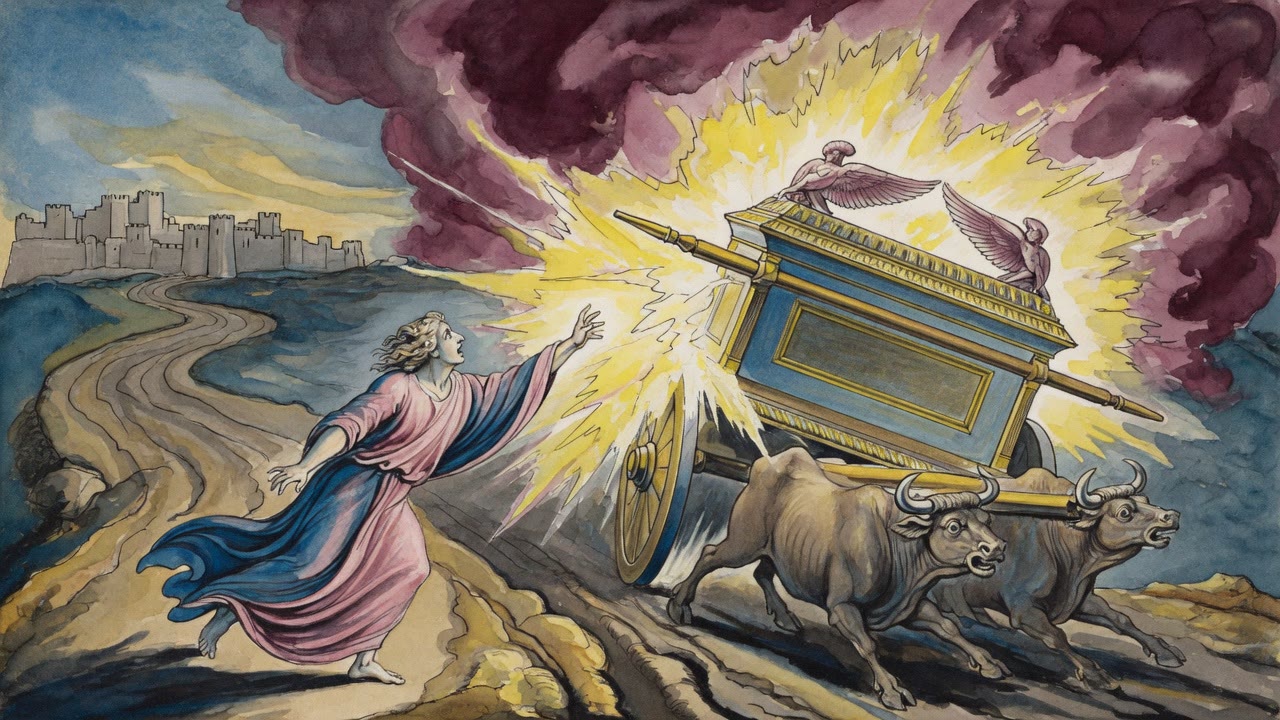
The Ark was slipping from the cart that carried it. Uzzah reached out to steady it with his hand and fell dead on the spot. The midrash spends centuries asking whether he deserved it.
Two of the greatest leaders in Jewish history sinned publicly. One asked God to expose it forever. The other begged God to bury it.
When David's own son drove him from Jerusalem, the rabbis say he came closer to idol worship than at any point in his life. and one man stopped him.
David was surrounded by armies and glory. He wrote that he was lonely and afflicted. The rabbis explained exactly what kind of lonely he meant.
King David was a warrior, king, and poet. The later tradition adds a fourth role: student of Torah. What he said when he found it surprised everyone.
The Shema promises rain in Marcheshvan for obedience and drought for idolatry. The Talmud says God multiplied commandments to refine Israel, not to burden them.
Before attacking Amalek, Saul asked God what wrong the children had done. His mercy and his defeat were connected in ways the rabbis could not stop debating.
David ordered a census against divine law. His general spent nine months trying to sabotage it from the inside while the kingdom waited for the reckoning.
King Hezekiah preserved Isaiah and Proverbs for all time, then buried a book of medical cures. The rabbis praised both decisions equally.
After every war, the surrounding kings analyzed what they had witnessed. Their conclusion about Israel's survival was not strategic. It was theological.
Midrash Tehillim reads David's declaration of trust in Psalm 7 as a meditation on the twenty-two letters of the Hebrew alphabet, which contain the totality of Torah. Then it confronts the fact that Doeg the Edomite knew every letter and every law and still informed on the priests of Nob, proving that knowledge without loyalty is the most dangerous combination.
Psalm 65 opens with a paradox: silence is praise to God in Zion. Midrash Tehillim connects this to Isaiah's description of God restraining himself like a woman in labor, holding back a cry. Two of Israel's greatest voices, David and Isaiah, converge on the same insight: sometimes God's power is most present in what is not said.
A single verse in Genesis about the tribe of Judah generated centuries of debate: who is the lawgiver, and how does the same prophecy apply simultaneously to Moses, David, and the coming king? Midrash Tehillim finds them all speaking from the same mouth.
A debate preserved in the Sifrei Bamidbar over whether an iron tool always kills, regardless of force used, opens into one of the most sophisticated discussions of criminal intent in all of rabbinic literature. The question is not what the Torah says happened, but what it means that a person chose to do it.
Samuel was the prophet who made Saul king of Israel. When Saul failed, Samuel wept for him for the rest of his life. The relationship between the last judge and the first king is one of the most complex in all of Jewish legend.
The Midrash uses a verse from Song of Songs to reveal that creation rests on six pillars of Torah, then tells a story about King Saul and an angel with a sword.
Why does David say Bless the Lord, my soul exactly five times? The rabbis found Moses hiding inside David's Psalms -- one blessing for each of the Five Books of Torah.
King David repeated the same phrase five times in Psalm 103. The rabbis refused to believe it was an accident.
On his deathbed, David passed three secrets to Solomon: how to resist temptation, how to confess, and how to begin every prayer with praise.
King Hezekiah was one of the most righteous kings in the Hebrew Bible. Then Babylonian envoys arrived, he opened the Ark of the Covenant, and everything changed.
The prophet Elijah descended to reveal a secret about plowing oxen and donkeys together. It had nothing to do with farming.
Psalms attributes the Temple dedication to David even though Solomon built it. The Mekhilta finds in this a principle that runs through Torah: the name belongs to whoever devoted their life to the work.
King Hezekiah called his students 'my sons.' The Sifrei Devarim asks what that makes the teacher, and finds the answer in Elisha's grief over Elijah.
Two rabbis argued for two Shabbatot over which tribe Jonah came from. The third week, a compromise earned one of them twenty-two years at the pulpit.
Seven courtiers had one job: remind Solomon daily of the Torah's laws for kings. The wisest man alive still needed people appointed to keep him honest.
Three brothers served Solomon for thirteen years. Two chose coins over wisdom. Only the one who chose wisdom made it home alive.
Elijah once cut off a beloved rabbi over a single moral compromise. The story reveals what Jewish tradition demands of its spiritual leaders.
Elijah once turned down a thousand million gold coins rather than leave a house of learning. Then he showed a rabbi stones that lit up the sky.
From a cave in Roman Judea to a fiery rock in medieval Spain, Elijah was the prophet who carried Jewish mysticism across a thousand years of silence.
Elisha's most gifted disciple used forbidden knowledge to make golden calves utter the words of Sinai. The catastrophe that followed was irreversible.
Ahaz closed every Torah academy in Judah and made study illegal. When Hezekiah became king, he decreed study mandatory, reopened every school, and paid for the oil himself.
King Amon destroyed every copy of the Torah he could find. One scroll survived, hidden in the Temple, and changed everything when his son opened it.
King Josiah's inspectors toured every home in Judah and found no idols. They were being fooled. The trick was in the hinges.
When Pharaoh warned Josiah not to block his army's march, Josiah quoted Moses and refused. He was struck by three hundred arrows.
Josiah inherited the throne at eight years old after two generations of catastrophic kings. Then a scroll turned up in the Temple walls that changed everything.
In the Mitpachat Sefarim the Torah appears in sackcloth, her face covered, treated as an object of ridicule. The image is modern. The wound is ancient.
For nearly every person, spiritual growth stays invisible. Moses, Enoch, and Elijah were exceptions whose souls crossed a threshold the body could not contain.
Midrash Tehillim on Psalm 91 records a debate among the sages about what truly lurks in darkness, and how the Torah itself became the answer to every demon that walks at noon or moves by night.
Elijah kept appearing to the rabbis of the Talmudic era, and every time he showed up, someone was in trouble for knowing the law without living it.
Jewish tradition has always known that learning Torah comes at a price. The demons described in Sifrei Devarim are not metaphors; they are the real cost of opening the sacred text for the first time.
The Torah specifically warns kings against three things: too many wives, too many horses, too much gold. Solomon, the wisest man alive, broke all three. The rabbis spent centuries asking why.
Isaiah's four 'servant songs' describe a figure who suffers in silence, is rejected, bears the pain of others, and is vindicated. Jewish tradition identifies this figure not as an individual but as the entire people of Israel — and has 2,700 years of argument to back that up.
Isaiah invoked Moses more often than any other prophet. The ancient midrashim reveal why — and what Isaiah understood about Moses that even Moses did not say about himself.
God told Isaiah to write that He was disowning His children. But the rabbis said God was not serious, and the proof was buried in the grammar.
Sifrei Devarim finds a painful parallel between Moses's accusation that Israel is 'a people ignorant and not wise' and Isaiah's lament that Israel did not know and did not understand. Together they identify the same failure across centuries.
Isaiah prophesied a new heaven and a new earth. The Zohar took him literally and explained exactly how new worlds get made: through new interpretations of Torah, rising each time someone understands something no one has understood before.
Jerusalem was under siege, Jeremiah was in prison, and God told him to buy a field in Anatoth. He did it — and then asked God what on earth He meant.
King Jehoiakim sat by a fire and cut Jeremiah's scroll into pieces as it was read to him, throwing each column into the flames. God told Jeremiah to write it all again — and this time, add more.
Centuries after the Exodus, Jeremiah pulled out the preserved jar of wilderness manna to answer the people who said they were too poor to study Torah.
Ezekiel announced a day God had promised. The rabbis traced the promise back through eight centuries to a single line in the Song of Moses.
Rabbi Shimon bar Yochai taught that the three greatest gifts ever given to Israel all came wrapped in suffering. Not despite the pain. Because of it.
Midrash Tehillim reads Psalm 27 as a rope woven from three strands: the merit of the ancestors, the grace of God, and the sustaining power of Torah.
In Midrash Tehillim, the same organ that can carry a righteous person to Gan Eden can drag a wicked one into Gehenna. David's final lesson to Solomon proved it.
When God told Jacob his children would be like the dust of the earth, it sounded like an insult. The rabbis of Midrash Tehillim knew it was the opposite.
The Arameans told Joab he was not really a son of Jacob. He had no answer. So he went to the king, and the king convened the court.
When Roman soldiers raked iron combs across Rabbi Akiva's flesh, his students expected screams. Instead, Akiva began reciting the Shema. He had been waiting his whole life for this moment.
Rabbi Levi traced seven divine gifts, Torah, blessing, beauty, support, life, greatness, and salvation, each one to a different verse, and each verse to Zion.
When the Romans executed the Ten Martyrs, Rabban Shimon and Rabbi Ishmael died because of a sin they personally did not commit. They accepted the sentence anyway. What they debated in their final moments tells us everything about Torah.
Moses visited Rabbi Akiva's classroom and could not follow the lesson. Akiva was teaching Torah that Moses himself had received at Sinai but could not recognize.
King David says 'Bless the Lord, my soul' five times across two Psalms. The rabbis map each blessing to a different stage of human existence, from the womb to the world to come.
Shammai drove them away with a building rod. Hillel accepted every one. The three conversations recorded in the Talmud and Midrash are not stories about patience; they are stories about what makes Torah teachable to anyone who genuinely wants it.
Eliphaz, Bildad, and Zophar were not bad people. They came to comfort Job, sat with him in silence for seven days, and then proceeded to make everything worse. The Talmud says their mistake was saying true things at the wrong time.
Ruth the Moabite had every right to go home. She was a widow, a foreigner, and her mother-in-law was telling her to leave. She refused — and three words sealed the fate of a dynasty.
The Book of Ruth is read on Shavuot, the holiday celebrating the giving of the Torah. The rabbis chose it deliberately — because Ruth's famous declaration to Naomi is the model for every conversion to Judaism ever performed.
The Letter of Aristeas records a table conversation about truth and mercy that sounds, in every way, like Ruth's answer to Naomi on the road from Moab.
A midrash on the timing of divine judgment reveals something unexpected: God judges the nations at night, when they are at rest, but judges Israel precisely when they are studying Torah. The difference is not a punishment; it is a definition of what Israel is.
Rabbi Yehoshua walked into a Roman prison to test a captive boy. One answered verse saved the child and changed rabbinic history.
An emperor killed seven sons of Miriam one by one for refusing idols. The youngest, age two, answered every theological challenge before he died.
When the Temple fell, the rabbis counted what was taken: ten horns of power, each rooted in a patriarch or prophet. All were severed. All will be returned.
The Midrash explains why Haman rose so high so fast — and why his every accusation against the Jewish people was answered in heaven before he finished speaking.
The Tikkunei Zohar hides a map of the entire structure of prayer in a single verse from the Book of Esther. Three movements. One unbroken conversation.
Haman did not just pick a date to destroy the Jews. He tested every day of the week, every month of the year, and every tree in creation. Every single one turned against him.
Mordecai's palace gate vigil was not guardianship. He was Esther's husband and Torah instructor, and he persuaded her to break Passover to save her people.
When royal delicacies arrived at Esther's chamber, she refused them all. She survived on vegetables and surrounded herself with seven women as pious as herself.
Before Purim, Haman and Mordecai served on the same military campaign. By year one, Haman had burned through three years of supplies.
When scholars objected that leaving Haman hanging violated Jewish law, Esther invoked a forgotten precedent from the time of King Saul.
After Purim, Esther petitioned the sages to add her story to the Hebrew Bible. They refused twice. Then she quoted Moses at them.
Midrash Mishlei teaches that Wisdom built the world on seven pillars that are the seven firmaments, then identifies Queen Esther as the fulfillment of Wisdom's feast, the woman who prepared a table in this world and the next by getting Haman drunk and saving her people.
Haman knew the texts, knew the law, knew the God of Israel. The Midrash asks the obvious question: how does a man who studies Torah end up signing the death warrant for every Jew in Persia?
When Daniel retired, his accumulated merit passed to Esther. The tradition calls it merit transmitted by the hand of the worthy, and it changed everything.
The Book of Maccabees holds up Daniel as a model not of miraculous survival but of what steadiness looks like when everyone around you has stopped believing.
Zedekiah dug a secret tunnel from Jerusalem to Jericho. God sent a deer, soldiers chased it, and it led them to the exit just as Zedekiah emerged.
Daniel the tailor read a verse from Ecclesiastes and saw the faces of children punished for sins they never committed. His grief became a promise from God.
The Talmud says the First Temple fell because of idolatry and murder. The Second Temple fell because of baseless hatred between Jews. And the story it tells to illustrate this begins with someone writing the wrong name on a party invitation.
When the tribe of Dan could not settle in Canaan, they hatched a plan so bold it terrified the Egyptians. What happened next has puzzled historians for centuries.
Most people assume the Torah death penalty for a rebellious son was meant to be applied. The Talmud says it never happened and was never meant to.
The ten sages executed by Rome were not killed for rebellion or insurrection. According to the tradition, they died for a crime committed by Jacob's ten sons 1,500 years earlier — and the Roman emperor used the Torah's own law to justify it.
The 13 Principles of Faith are printed in nearly every Jewish prayer book — but when Maimonides first proposed them in the 12th century, some of the greatest Jewish scholars rejected them outright.
Rabbis have described the lulav — the tall palm branch waved on Sukkot — as a sword, a victory flag, and a scepter. This is not modern reinterpretation. It is medieval midrash, and it changes everything about the ceremony.
The Sanhedrin was the highest judicial body in ancient Judaism — 71 judges, capital jurisdiction, and procedural rules so strict that a court that executed even one person in seventy years was called bloodthirsty.
Pirkei Avot — Ethics of the Fathers — is six chapters of aphorisms from ancient rabbis. It is the only tractate in the Talmud with no legal content at all. And it is the one Jews read every Shabbat between Passover and Rosh Hashana.
Tractate Bava Metzia opens with two men fighting over a garment and spirals into questions about returning lost objects, honesty in commerce, and the moral obligations of finders. Its first case is one of the most analyzed legal puzzles in all of Jewish law.
Most people read the rainbow as God's promise never to flood the world again. The rabbis read it as a weapon God hung up — still loaded, still pointed at humanity — as a constant reminder of what we almost caused.
The rabbis read Ecclesiastes as an economic prophecy: Edom swallows everything, but in the end the inheritance belongs to the humble scholars who thought they were nobody.
The rabbis mapped every property of olive oil onto Israel and Torah, and the comparison holds at every point: bitter start, sweet end, and all.
Rabbi Loew built the Golem to defend Prague's Jews. When the emperor ended the blood libel, its work was done. Unmaking it was as ceremonial as creating it.
Who actually wrote the Mishnah? The Mitpachat Sefarim reopened the question and found an answer more beautiful than anyone had admitted.
The Torah says a Hebrew servant who enters alone leaves alone. Rabbi Akiva read the word 'alone' as 'intact' and built an entire system of protections for enslaved people that the plain text had never mentioned.
When an ox kills a person, Jewish law holds the owner liable. Except in one carefully defined case. Rabbi Akiva's reading of the exemption reveals a legal system working out the exact limits of human responsibility for what we cannot fully control.
From a single word in Exodus, Rabbi Akiva derived that an ox condemned to death for killing a person must be tried before the same court that tries capital cases involving humans. The word 'too' in a single verse became the foundation for one of the most startling principles in ancient Jewish law.
A gathering of the greatest sages of the Mishnaic era debated the birth of the new moon and arrived at a far larger discovery: heaven was created by a single divine word. Pirkei DeRabbi Eliezer records what happened when the leading scholars of their generation turned their attention to the moment before time began.
Before he was Rabbi Simeon ben Lakish, one of the Talmud's most celebrated legal minds, he was Resh Lakish the highwayman, robbing travelers in the mountains. The story of how he got from one life to the other is one of rabbinic literature's most honest accounts of what repentance actually costs.
The new moon festival was never supposed to be lumped in with the daily offerings. Sifrei Bamidbar explains why God gave Rosh Chodesh its own verse, its own laws, and its own theology of time. The moon's monthly renewal is the calendar's argument for redemption.
Rabbi Akiva did not merely endure suffering; he constructed a complete theology around it, argued for it in the study house, and died inside it. Sifrei Devarim preserves his radical claim about divine discipline, and the Talmud's record of his death tests whether the theology held.
Most people assume Shammai was simply stricter than Hillel. But the debate over the Shema posture reveals something more precise: Shammai was making a claim about the body as a sacred instrument, not just a container for spiritual intention, and the patriarchs were his evidence.
When the Torah mentions 'your tithes,' most readers see a single obligation. Rabbi Akiva saw two: the grain tithe and the animal tithe. His reading in Sifrei Devarim is a case study in how close attention reveals the architecture of obligation beneath every verse.
What happens when the person asking for a loan is capable of earning their own way but simply won't? Sifrei Devarim addresses this case directly, and the answer reveals something surprising about what the commandment to lend is actually protecting.
The Torah commands every male to appear before God at the Temple three times a year. But who counts as 'every male'? Sifrei Devarim works through the exemptions with surprising precision, and what emerges is a picture of sacred obligation shaped around the limits of the human body.
When you appeared before God at the Temple, you could not come empty-handed. But how much was enough? The schools of Shammai and Hillel debated the minimum offering required, and underneath the numbers was a disagreement about what the appearance itself was for.
Deuteronomy 24:1 allows a husband to divorce his wife if he finds something 'unseemly' in her. The debate between the schools of Hillel and Shammai over what 'unseemly' means is not just a legal dispute; it is a fundamental argument about whether Jewish law should minimize divorce or make it humane.
Rabbi Akiva's ruling that a man may divorce his wife for finding a more beautiful woman is the most controversial position in Sifrei Devarim. It becomes coherent only when read alongside Akiva's other teachings, which treat marriage as the closest earthly parallel to the covenant between God and Israel.
Rabbi Akiva's ruling on fraudulent weights and measures in Sifrei Devarim treats commercial dishonesty as a theological offense, not merely an economic one. The shekel in your hand is a moral document.
A skeptic came to Hillel demanding to hear the whole Torah while standing on one foot. Hillel gave him a single sentence and then said three words that changed Jewish education forever: go and learn.
The rabbis taught that the Torah given at Sinai was a copy — the original was written in black fire on white fire and existed before God created anything else.
Before Rabbi Isaac Luria revolutionized Kabbalah, Elijah appeared at his birth and held the infant during his brit milah. Only the father knew what was happening.
Kabbalistic tradition insists Torah must be lived in the world, not abstracted into ideals. Moral principles without substance can kill.
Rabbi Shimon bar Yochai gave himself entirely to Torah. Centuries later, a book was written in his name. The question of who wrote the Zohar is not simple.
In the Tikkunei Zohar, the most feared angel in heaven is not expelled from God's presence. He is given the Torah and told to study.
Lurianic Kabbalah maps the soul across four worlds. The rule is absolute: you cannot skip a level. Each must be fully repaired before the next opens.
Rabbi Isaac Luria taught that there are exactly 600,000 Jewish souls, each one connected to a unique interpretation of the Torah that no other soul can access.
Rabbi Yehuda Leib Ashlag spent decades writing a commentary on the Zohar so that ordinary people could finally enter its depths without being lost in them.
Greater scholars than us lived in every century between the Zohar's composition and today. So why did its deepest meaning only become available now?
Baal HaSulam taught that what happens among the Jewish people is not separate from what happens in the world, in ways the Zohar traces through cosmic structure.
Before a soul enters a body, the angel Metatron teaches it the entire Torah. The moment of birth is also the moment of forgetting. The Tikkunei Zohar explains what this erasure is meant to accomplish.
The Tikkunei Zohar finds the architecture of the Jewish prayer service hidden in a single Hebrew letter, Vav, and traces its pattern back to Abraham. The discovery changes how the daily Amidah prayer looks when you understand what it is actually doing.
The Kabbalists taught that Abraham, Isaac, and Jacob are not merely historical ancestors but the living hands through which God channels blessing into the world. The Torah hid this teaching in a single phrase.
The Tikkunei Zohar records a confrontation that happens not on a battlefield but inside the question of purification itself. Samael quotes Job to argue that no one can be cleansed. The Torah offers an answer from an unexpected direction.
The Tikkunei Zohar used Jonah's ship as a model of the human body: the sailors are the limbs, the captain is the heart, and the Torah is the soul that keeps everything aloft. When the crew ignores Torah, the spirit abandons ship.
The most famous melody in Jewish liturgy is recited three times as the sun sets on Yom Kippur — but most people don't know it's a legal declaration, not a prayer, and has nothing to do with God.
Kol Nidre is not a prayer. It is a contract annulment — a legal formula recited in court language before a rabbinic tribunal. The melody that makes grown men weep was attached to a cancellation of vows.
The God of the Hebrew Bible has at least seven distinct names, and Jewish tradition holds that each one reveals a different face of the Divine — none of them interchangeable.
A stranger demanded the whole Torah while standing on one foot. Shammai drove him away. Hillel gave an answer so perfect the man converted.