The Scroll and Sword That Descended from Heaven Together
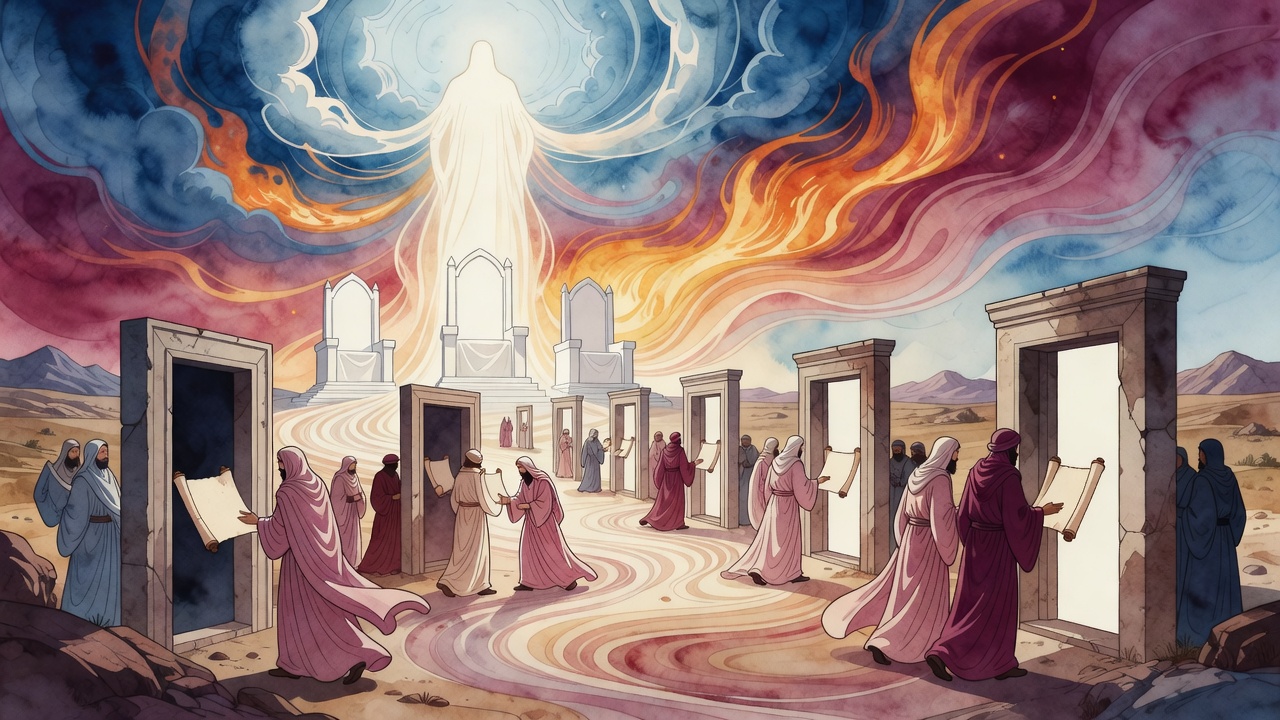
Two rabbis in the Sifrei Devarim saw something fall from the sky at Sinai. One saw a loaf and a rod. The other saw a scroll and a sword. Both were right.
Table of Contents
 Click for full size
What Came Down With the Torah
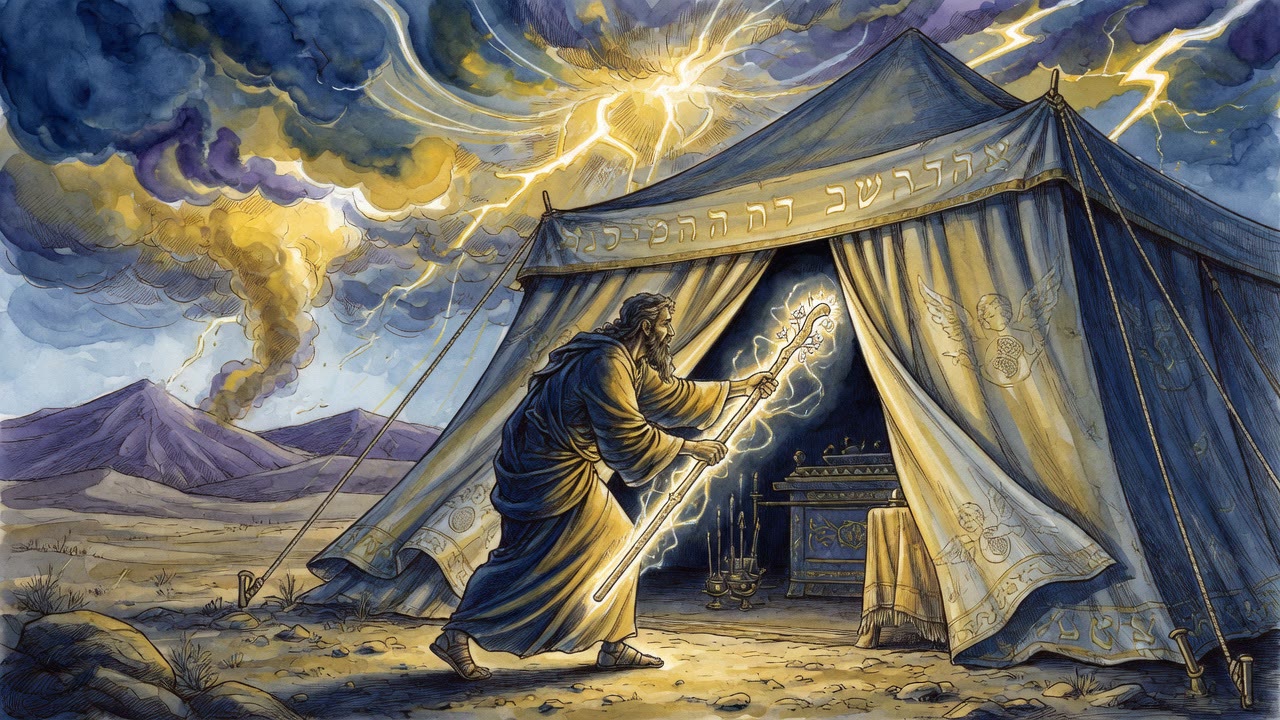
The fire and the thunder are remembered. The mountain that shook and the voice that split the air and the tablets that Moses brought down are what people know. But the Sifrei Devarim, the early rabbinic commentary on Deuteronomy, remembered something that came down from heaven at Sinai alongside the Torah itself.
According to Rabbi Shimon bar Yochai, it was two things bound together. A loaf of bread and a rod for striking.
God held both out to Israel and made the terms plain: observe the Torah, and the loaf is yours. Refuse, and the rod awaits you. Abundance and punishment arrived together and have never been separated since. The covenant was not a gift with conditions written in small print at the bottom. The conditions were there from the beginning, as visible and as real as the loaf and as solid as the rod.
Rabbi Shimon's Vision of the Loaf and the Rod
The image is almost domestic, which makes it more striking rather than less. This is not a vision of armies or fire or celestial judgment. A loaf. A rod. The kind of things found in any household. Rabbi Shimon finds his proof text in Isaiah, who sets abundance and destruction in a single verse: if you accept and heed, the good of the earth shall you eat; if you refuse and rebel, the sword will devour you. Two outcomes. One choice. Both available simultaneously, waiting on what Israel will do with the moment in front of them.
The loaf is real. The rod is real. They descended together and they are still together, the rabbis say, in every moment when the choice presents itself again.
What the Other Rabbi Saw
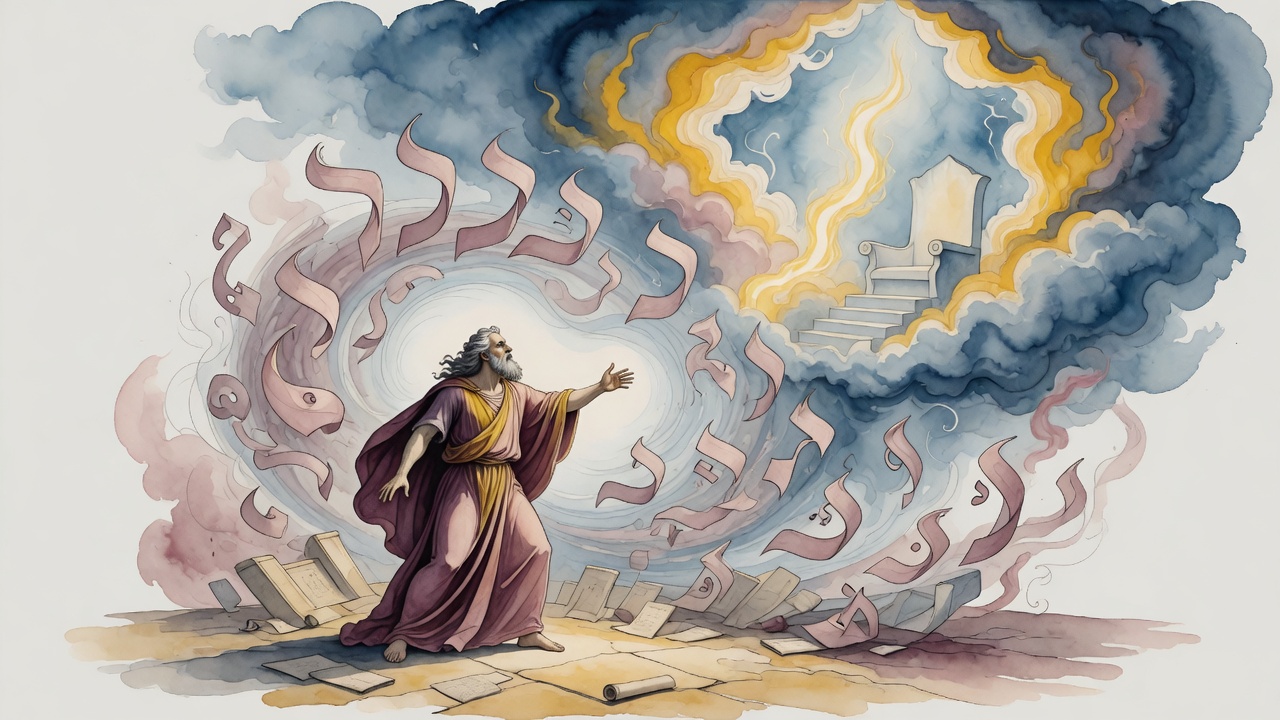
Rabbi Shimon's tradition is not the only one preserved in this passage. Another sage, working the same verses, saw a different pair. Not a loaf and a rod. A scroll and a sword.
A scroll is the Torah itself, the word written down, the covenant made permanent. A sword is the instrument of death. The same moment, the same descent from heaven, but now the pair is different in its nature. The loaf and the rod describe a choice between outcomes. The scroll and the sword describe something prior: the nature of the thing being offered and the nature of what accompanies it. The Torah does not come unaccompanied. It comes with the sword, meaning with the consequences of the relationship. To accept the scroll is to accept both.
The Covenant as Ultimatum
The Sifrei Devarim does not soften this. Both traditions, the loaf-and-rod reading and the scroll-and-sword reading, point toward the same underlying claim: the covenant presented at Sinai was not a gift that could be received and set aside. It was a binding arrangement that came with the full weight of what binding means. The word God spoke at Sinai carried in it, from the first syllable, the whole range of what following and refusing that word would produce.
Other nations offered their gods tribute and asked for protection. The Sinai covenant was different in kind. It was not a transaction in which Israel paid for divine services. It was an alliance that carried obligations running in both directions, and the rod and the sword were there to make clear that God meant the obligations as seriously on the day of the giving as the people would mean them when they eventually, inevitably, tested the limits.
← All myths