Jacob Built Altars and Poured Offerings Before He Knew Why
Every time Jacob arrived somewhere new, he built an altar and poured out what he had. The rabbis noticed the pattern and found a legal crisis hiding inside it.
Table of Contents
 Click for full size
The Altar at Bethel
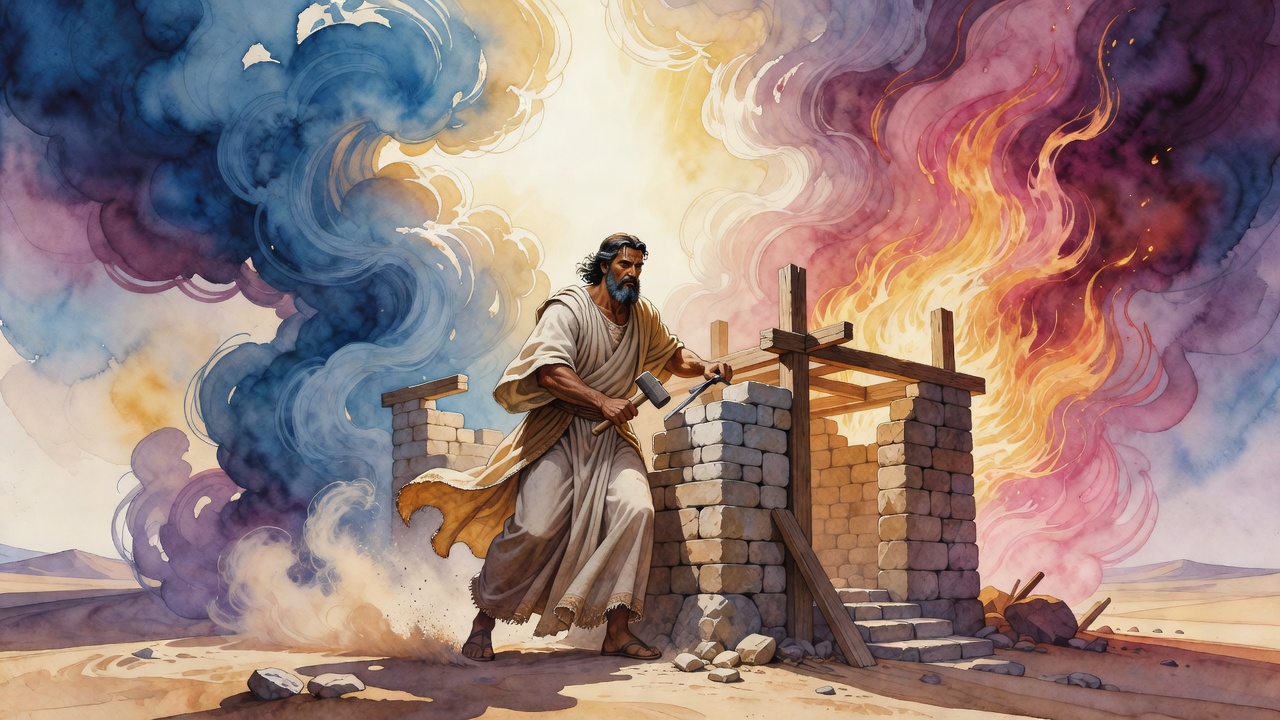
Jacob woke up from the dream of the ladder, took the stone he had been sleeping on, stood it upright as a pillar, and poured oil on it. He vowed that if God brought him home safely, he would give back a tenth of everything he received. This was his first act after the most overwhelming vision of his life. Any reasonable person might have simply continued down the road, stunned and grateful. Jacob built an altar and made a financial commitment.
The pattern repeated. At Beersheba before going down to Egypt, at Shechem when he returned from Aram, at every significant moment of arrival or departure, Jacob stopped and offered something. The rabbis who examined this pattern found it theologically charged: Jacob was performing rituals that had not been commanded, observing laws that would not exist for another several centuries, and doing it with what appeared to be complete natural certainty. He was practicing the Torah before the Torah existed.
The Offering That Equaled the Sea
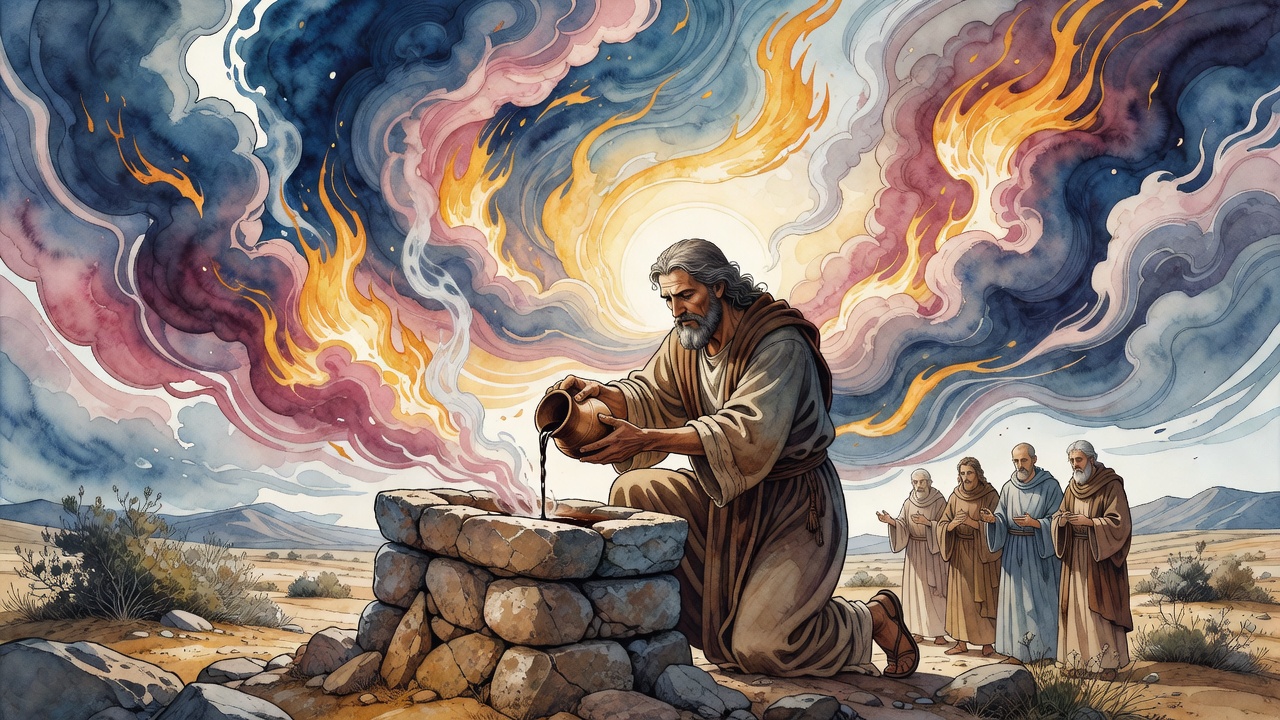
The most extravagant detail in the tradition comes from Legends of the Jews, Louis Ginzberg's comprehensive compilation of midrashic and aggadic sources assembled in the early twentieth century from classical texts. When Jacob poured out his libation at Bethel, the earth drank it in before it could flow away. The amount he poured was said to equal all the water in the Sea of Tiberias. This is not a record-keeping detail about a very large jar. It is a statement about the quality of Jacob's intention: when he gave, the earth itself reached up to receive it before a drop could be wasted.
The Talmudic discussion of Jacob's libation in tractate Hullin asks a precise question: if the law against pouring wine as a libation to idols was already in force, how could Jacob have poured one to God? The answer required distinguishing between a libation offered in worship and an offering poured in gratitude. The distinction saved Jacob from a technical violation but left the underlying problem intact. He was operating inside a legal framework that did not officially exist yet, and his every act of piety had to be interpreted through laws that had not been given to anyone.
Why He Sacrificed to the God of Isaac
When Jacob offered sacrifices at Beersheba before going down to Egypt, the Torah specifies that he sacrificed to the God of his father Isaac, not to the God of Abraham. The rabbis noticed this and asked why. The answer preserved in Bereshit Rabbah, the midrashic collection on Genesis compiled in the Land of Israel around the fourth to fifth century CE, explains that the respect owed to a living parent required Jacob to honor his father's name rather than his grandfather's. Abraham was dead. Isaac was still alive. To invoke Abraham over Isaac while Isaac breathed would have been a slight against the living.
This detail matters because it shows Jacob calculating not just piety but precision. He was not simply sacrificing. He was sacrificing correctly, observing the proper hierarchy of honor even in an act of worship that no law had yet specified. The same man who poured an offering equal to an entire sea was also making sure he used the right name when he spoke to God. The quantity of his devotion and the exactness of his devotion were apparently inseparable.
The House of Torah Study He Built Before the Journey
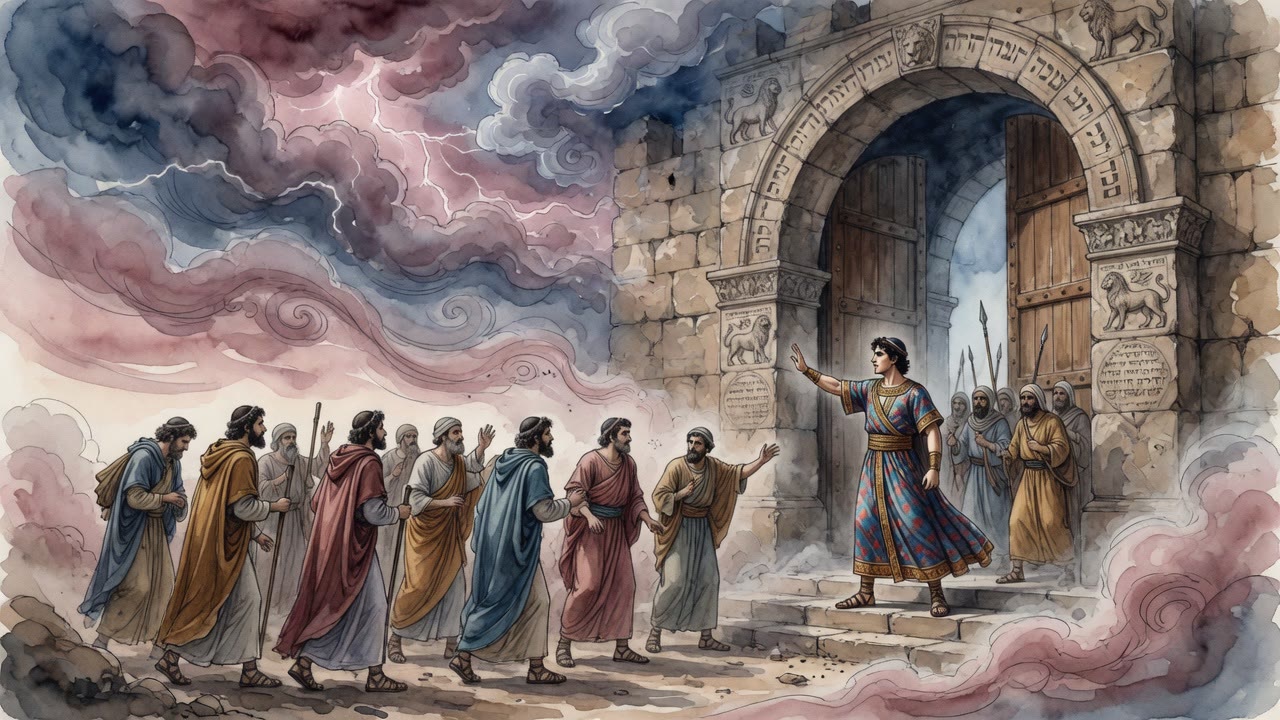
Before Jacob went down to Egypt, he sent Judah ahead to Goshen. The Targum Onkelos and related traditions explain why: Judah was being sent to establish a house of Torah study in advance, so that when Jacob arrived, the structure for continued learning would already be in place. Jacob was not simply moving his family to a country that had food. He was establishing an institution that would maintain the covenant in a foreign land, before he set foot there himself.
He had done the same at every stop. The altars were not merely gestures of gratitude. They were acts of institutional formation, marks on a landscape that said: the covenant has been here, the covenant continues here, the covenant will be observed here even when no law has yet been written down to require it. Jacob's entire itinerary was a kind of pre-Sinai Torah observance performed at every point of arrival and departure, as if he understood that the covenant was something you practiced into existence rather than received by waiting.
← All myths