Adam, Fire, and the Name Hidden Inside the Name
God reached for dust while a warning already named Adam's anger. After the fruit, Adam pointed at Eve and would not confess.
Table of Contents
 Click for full size
God Reached for Dust Anyway
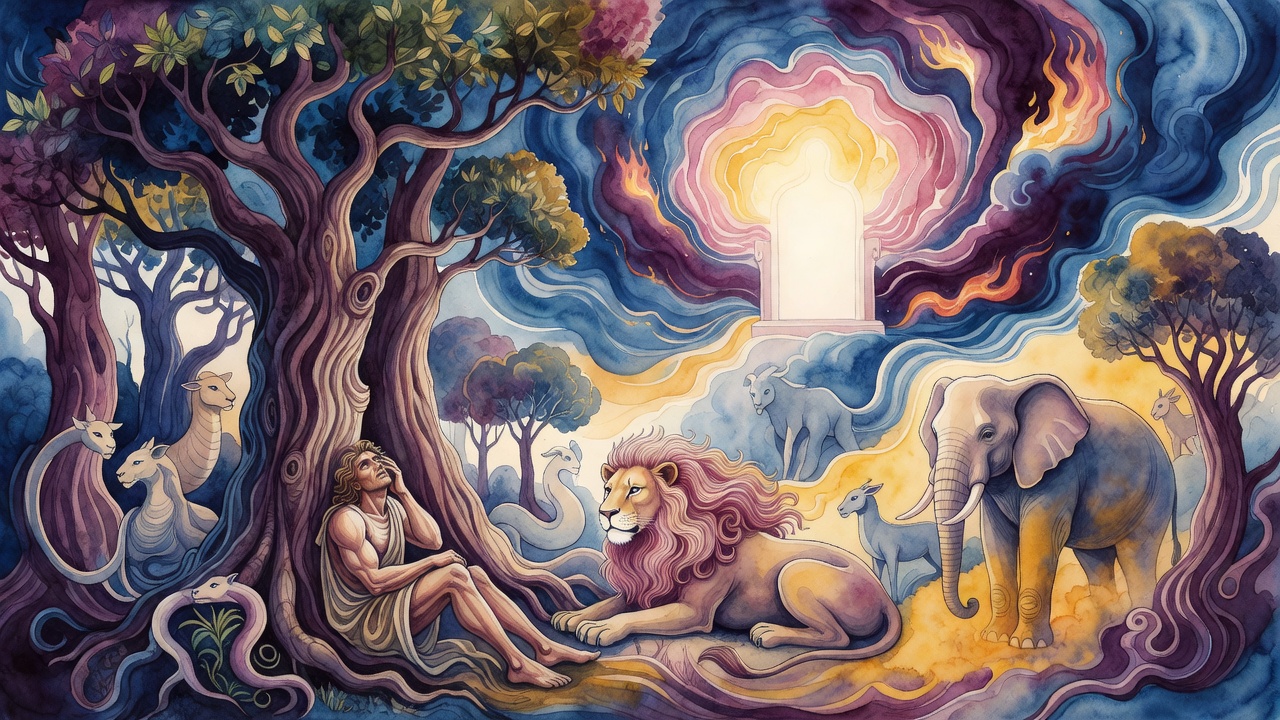
God spoke of making a human in the divine image. Before Adam had lungs, a voice already in the world named the trouble. Short days. Anger. Appetite. An open road to sin. If patience would not stand beside him from the first breath, better for dust to remain dust.
God answered with the names by which mercy would later know Him. Slow to anger. Abounding in compassion. Ready to bear with the creature before the creature had done anything worth bearing. Adam was not made because he would be harmless. He was made because patience had already taken its place near the clay.
The warning did not cancel the making. God still reached for dust.
Dust Came From Four Corners
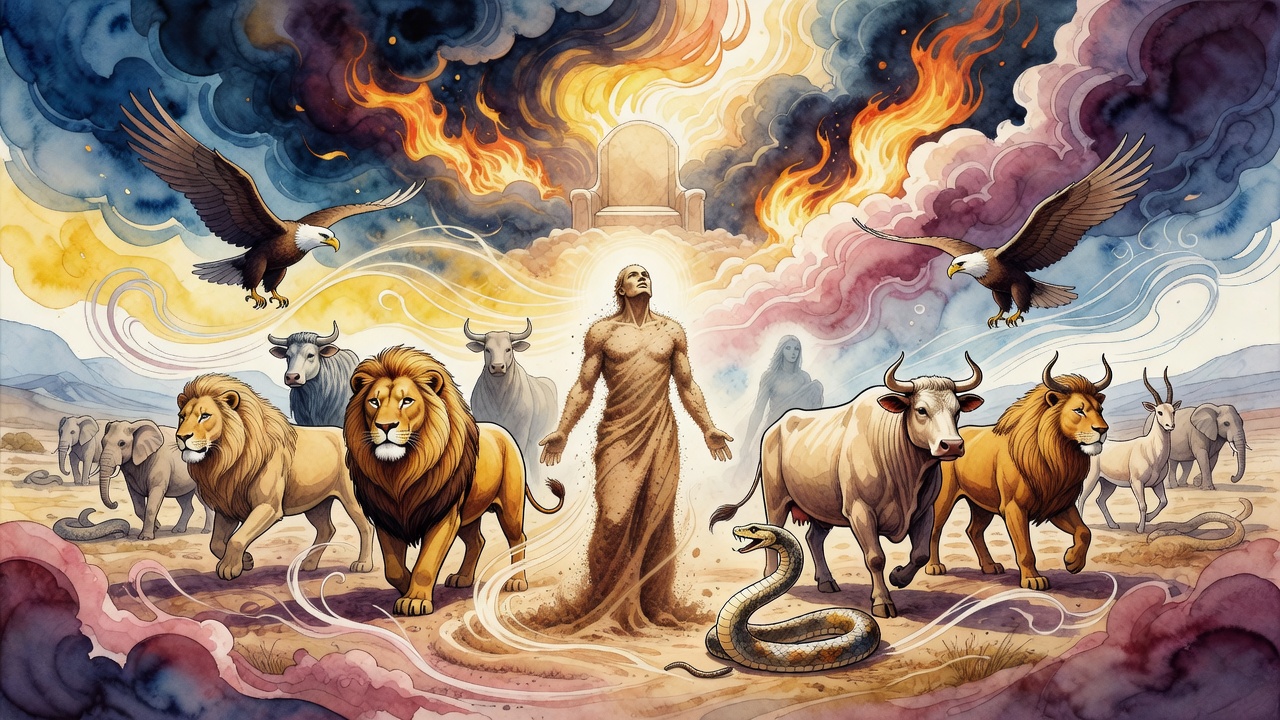
The first body did not rise from one patch of earth. Dust came from the four corners of the world, red, black, white, and pale green. No single country could point to Adam and say, mine. No valley could claim his bones as private property. The human body began as a gathering.
God named him Adam from adamah, ground, and because dam, blood, would run in him. Soil receives rain, seed, footprints, and graves. Blood warms, stains, cries out, and leaves the body when the body is broken. The human stood between field and wound before he opened his mouth.
God Put Letters in the Fire
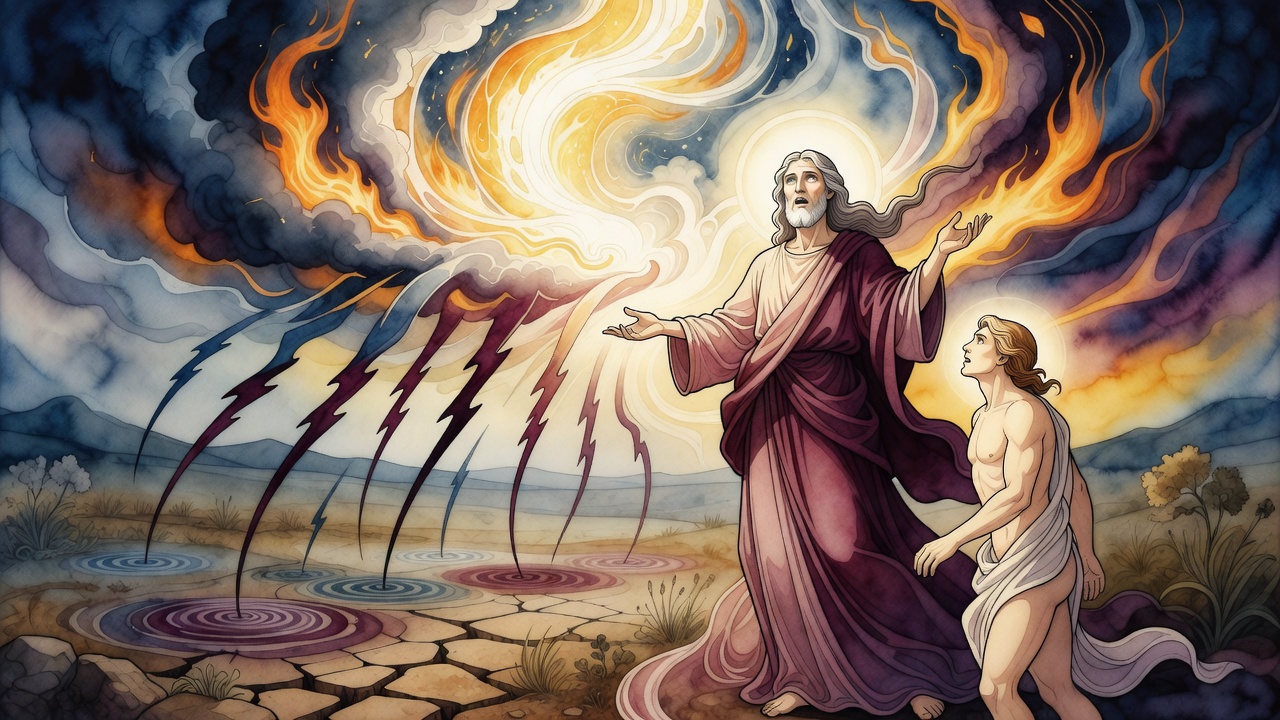
When Eve was made for him, the hidden danger brightened. The two of them were called esh (אֵשׁ), fire. Not a candle. Not a safe ember in a palm. Fire that can warm a tent or eat it to the poles. Fire that can cook bread or blacken the field.
God placed a letter of the divine Name inside each of them. Yod entered ish, man. Heh entered ishah, woman. Together those letters formed Yah (יָהּ), a name of God held between two flames. The name was not decoration. It was the boundary that kept fire from becoming only fire. When the Name rested between them, heat could become life, speech, desire, and blessing. If the Name withdrew, the letters left behind were still esh. Fire remained. Its keeper was gone.
The Serpent Pushed Eve Against the Tree
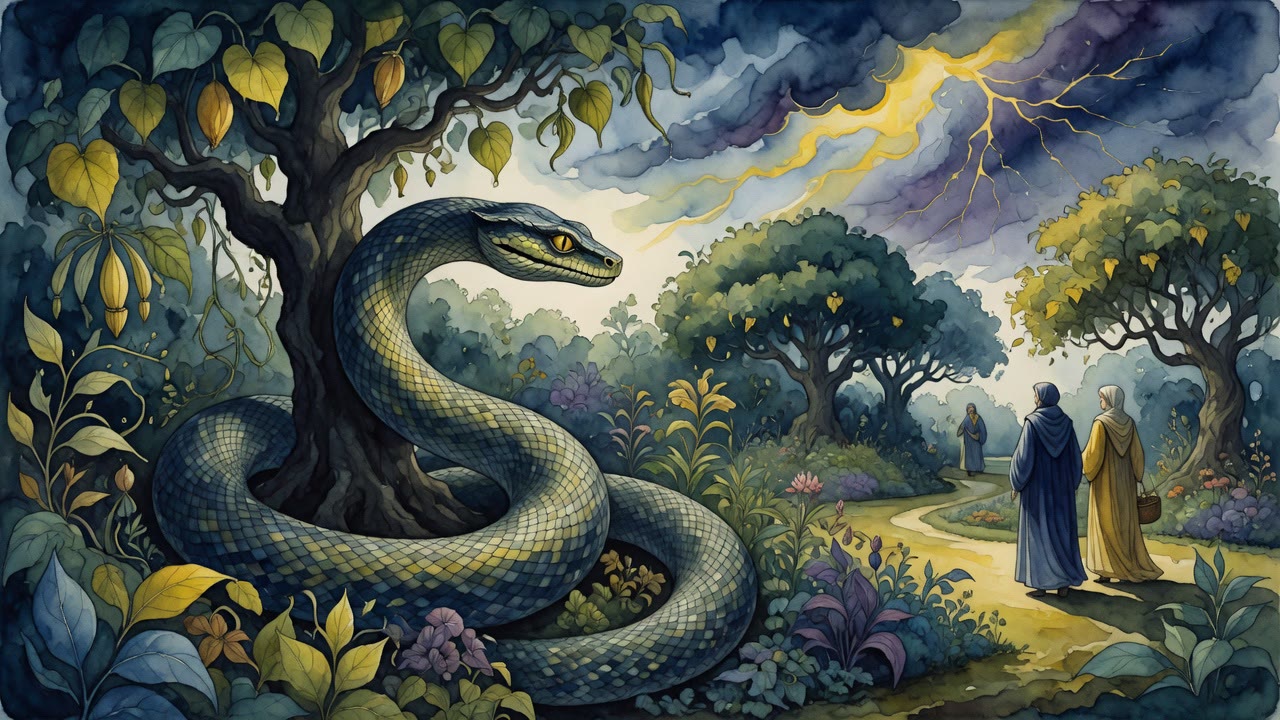
The serpent was not a crawling thread in the grass. It had stood upright, tall as a camel, quick enough to serve the first pair and strong enough to carry the world's work. It saw Adam and Eve bound together, and envy moved through its body.
It did not begin with force. It began with a question near the tree. Eve answered that eating was not allowed, and touching too. The fence had grown higher than the command. The serpent pushed her against the tree. Bark met skin. No death came. Silence widened.
If touch did not kill, the serpent whispered, why should taste kill? It turned Adam's extra fence into a weapon against God's word. Eve reached. Fruit broke under teeth. The fire that had been guarded by the Name flared toward blame.
Adam Would Not Open the Gate
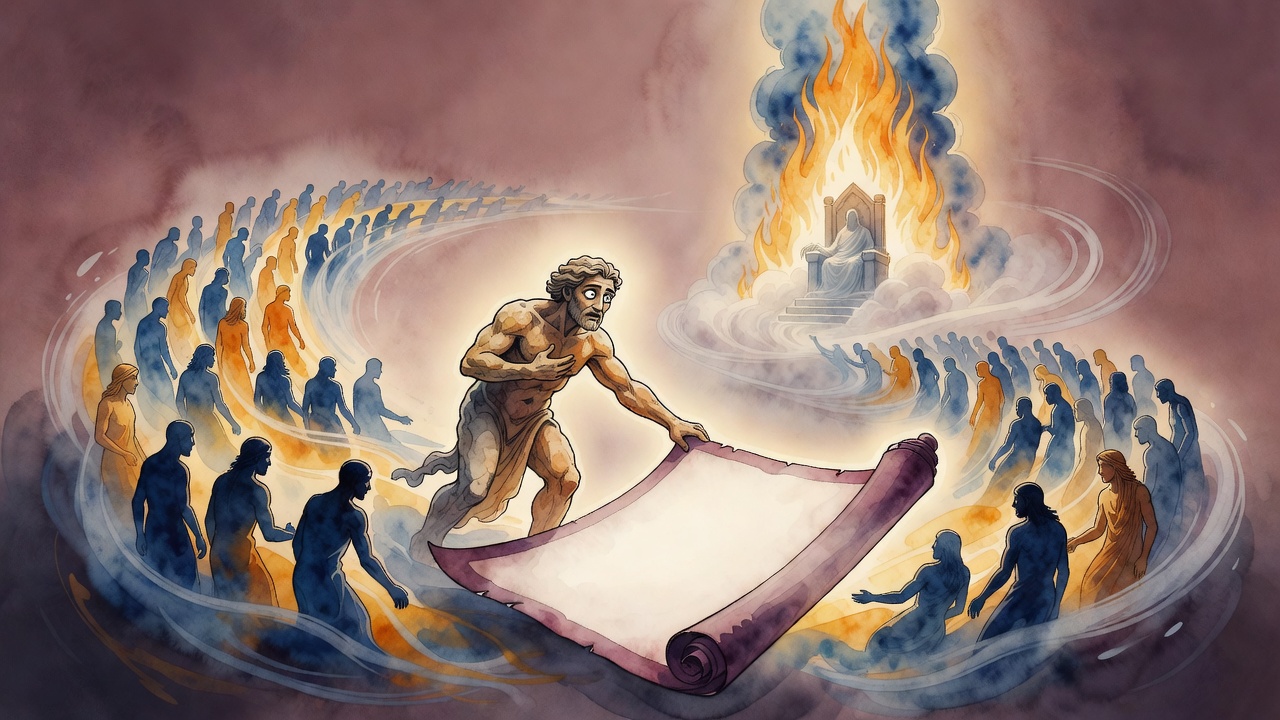
God came into the garden with a question large enough to leave room for return. Adam needed only one sentence. I have sinned. Mercy had been prepared before his breath, and the gate stood close enough for a human mouth to open it.
Adam did not step through. He pointed to Eve, and through Eve back toward God.
"The woman You gave me," he said.
Gift became accusation. Bone of his bone became evidence for the defense.
God turned to Eve, and the same door stood there. She pointed to the serpent. The serpent received no hearing. An inciter does not get a courtroom in which to polish the trap. The garden had begun with fire held by a Name. It ended with two fires standing apart, each waiting for the word that would have drawn mercy near. Neither said it.
← All myths