6 min read

Joseph Karo's Maggid Revealed His Wife's Past Life to Him

Rabbi Joseph Karo wrote the Shulchan Aruch by day and received a heavenly visitor by night. One night the maggid explained his wife's past life.

Table of Contents
  1. The Maggid and What It Was
  2. What the Maggid Said About the Third Wife
  3. Why She Loved Him
  4. The Question of Children and the Soul's Gender
  5. What This Passage Reveals About the Maggid Meisharim

Rabbi Joseph Karo is the man who wrote the Shulchan Aruch, the Code of Jewish Law compiled in Safed around 1563 CE, which remains the most widely consulted legal code in Jewish life to this day. He is, by any measure, one of the most consequential legal authorities in the history of Judaism. He is also the man who, for decades, received nightly visitations from a heavenly messenger, a maggid, who spoke to him in his sleep and whose words he transcribed in the Maggid Meisharim, a journal of mystical encounters that reveals an entirely different Rabbi Karo than the one who wrote the codes.

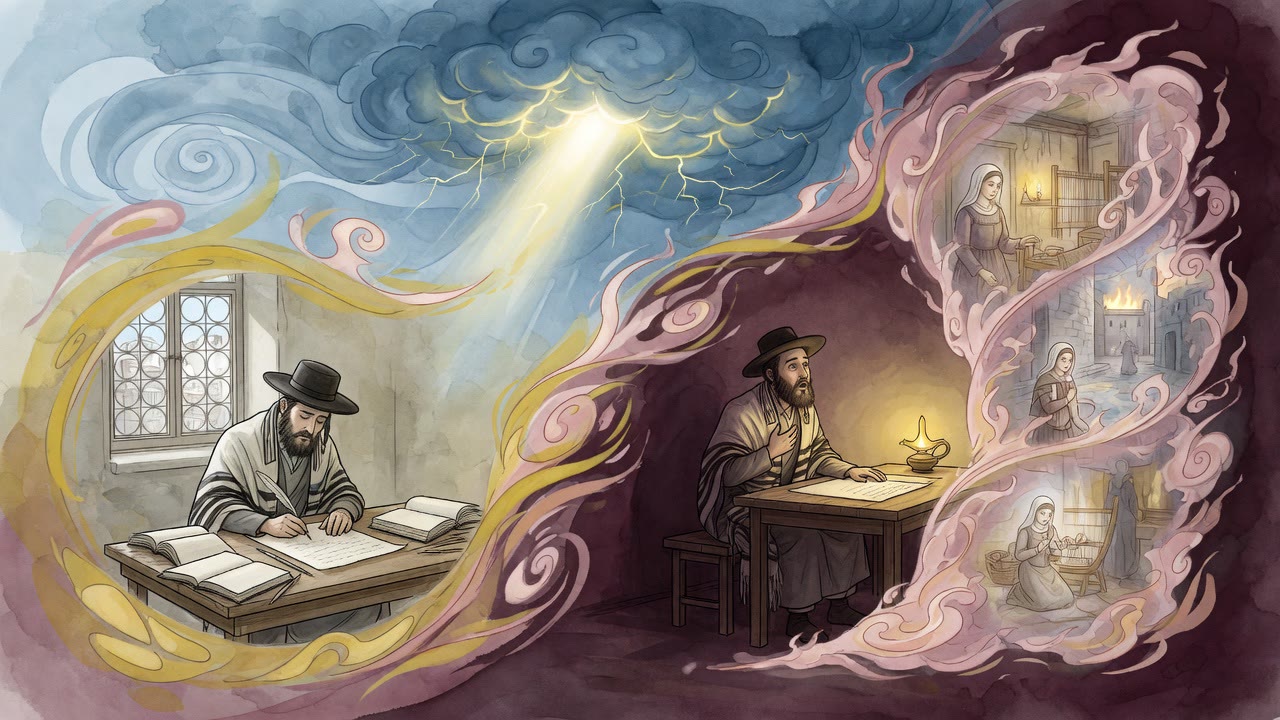
One night, the maggid explained his third wife to him. Why she loved him so fiercely. Why they had never had children together. And what she had been, a long time ago, before she was who she was now.

The Maggid and What It Was

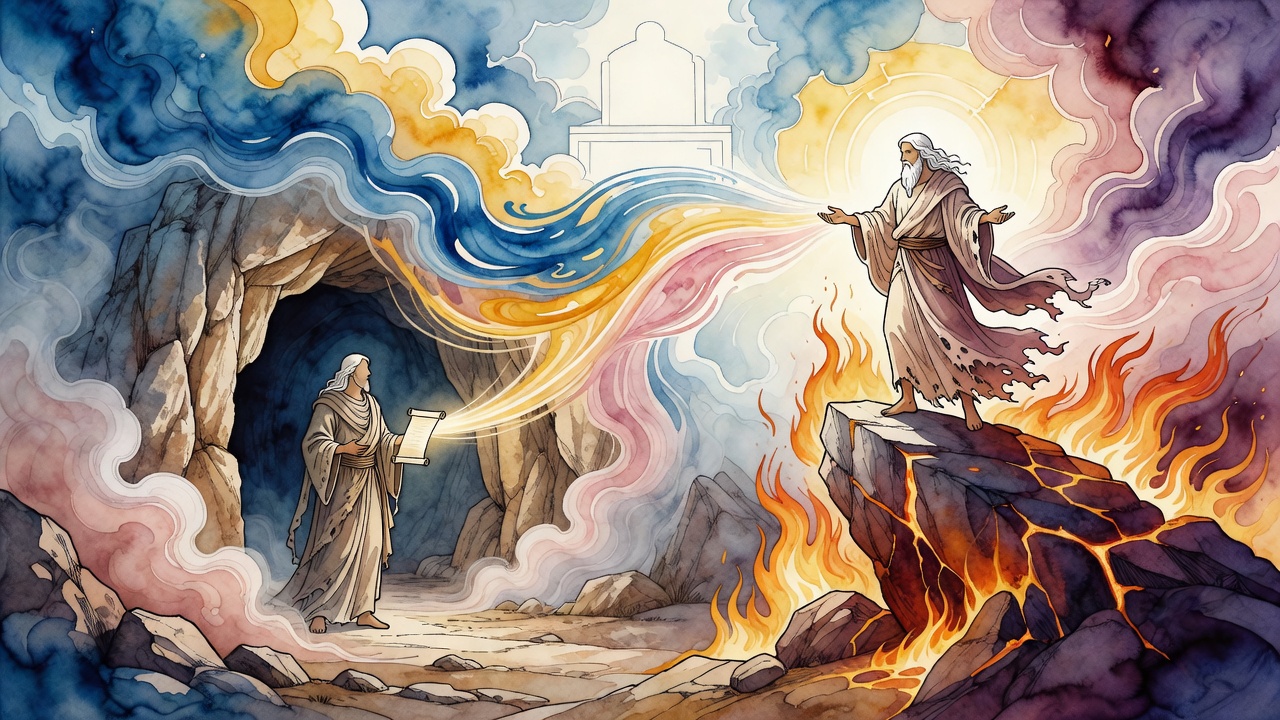
The Maggid Meisharim, preserved in manuscript and first printed in the seventeenth century, is a record of teachings Rabbi Karo claimed to receive from a celestial being he described as the maggid of the Mishnah, the personification of the Oral Torah itself. The traditions of Kabbalistic literature recognized multiple modes by which divine knowledge could reach a human being: prophecy, dream, the bat kol (heavenly voice), and the maggid, a more intimate and personal form of transmission in which a spiritual entity attached itself to a specific person and spoke through them or directly to them.

Rabbi Karo was not the only sage of his generation to receive a maggid. Rabbi Solomon Alkabetz, the Safed mystic who wrote the Shabbat hymn Lecha Dodi, reported witnessing Rabbi Karo in a state of mystical transport where the maggid spoke through his mouth with a voice that was not quite his own. The Ari, Rabbi Isaac Luria, apparently confirmed the phenomenon and considered it a mark of Rabbi Karo's extraordinary spiritual attainment. For a legal codifier of Rabbi Karo's standing to be simultaneously a vehicle for mystical transmission was, to his contemporaries in sixteenth-century Safed, entirely consistent.

What the Maggid Said About the Third Wife

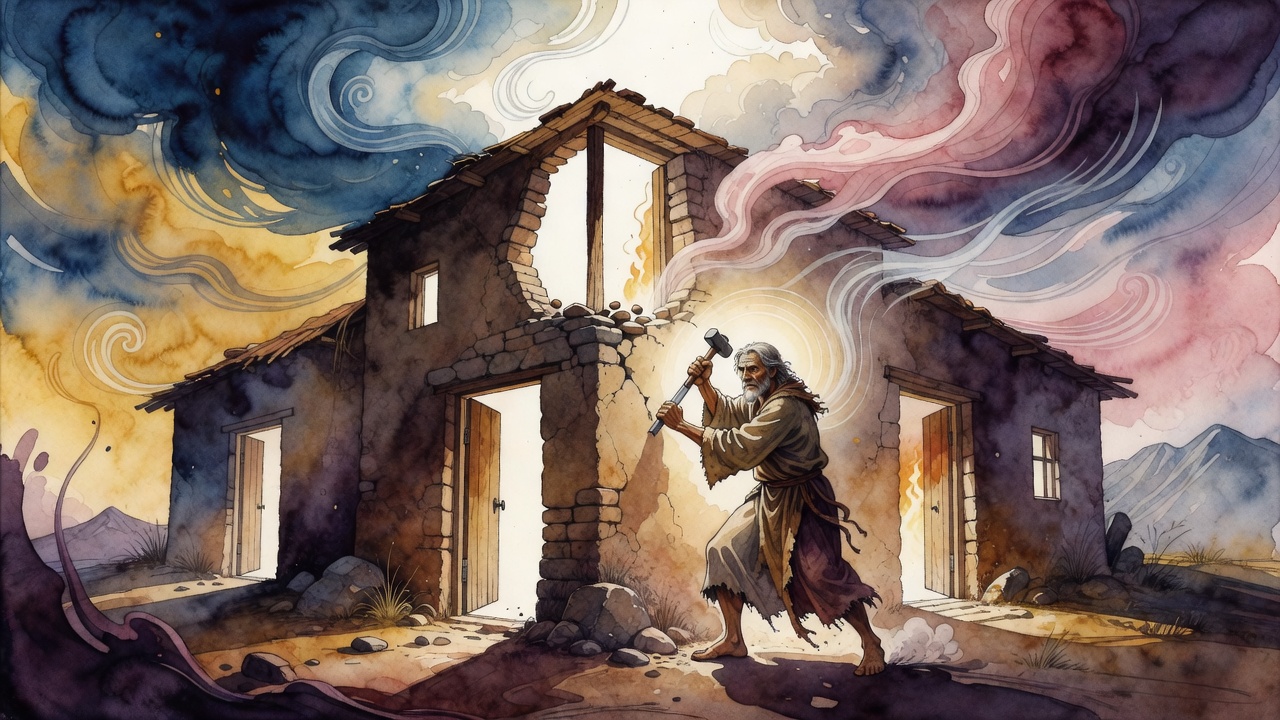
The passage preserved in Maggid Meisharim 8:3 begins with a direct statement: this woman was, in a previous incarnation, a Torah scholar. The maggid uses the masculine pronoun, because the previous incarnation was a man. He was a scholar of genuine ability. But he was stingy, with both his money and his learning. He refused to give charity. He refused to teach others. He kept what he had accumulated in both the material and spiritual realms for himself alone.

The principle the maggid invokes is middah k'neged middah, measure for measure, the same principle by which the Talmud Bavli in tractate Sotah explains many of the punishments and rewards recorded in the Torah. The miser who withheld was given, in his next incarnation, a life structured entirely around receiving. A woman, the maggid says, is constantly in the position of receiving from another. She is dependent, in the social structure of the sixteenth-century world, on someone who gives to her. The soul that refused to give was placed in the role of the one who must receive.

This is the Kabbalistic doctrine of gilgul, soul-reincarnation, applied with the precision of a legal argument. The Shaar HaGilgulim, the Gate of Reincarnations composed by Rabbi Hayyim Vital in the early seventeenth century based on the Ari's teachings, develops this logic across hundreds of cases from the Hebrew Bible. Cain returns as Jethro. Abel returns as Moses. Every soul carries its unfinished business forward into the next life, and the configuration of the next life is shaped by what was left undone.

Why She Loved Him

Here the maggid's explanation becomes something unexpectedly moving. The reason his third wife loved him so intensely, he says, is not accidental. She is drawn to him because he does exactly what her soul failed to do in its previous incarnation: he teaches Torah, he spreads learning, he labors to write books that will carry Jewish wisdom to generations he will never meet. These are precisely the activities the stingy scholar withheld. Her soul, carrying the imprint of that withholding, recognizes in Rabbi Karo the correction it needs. She loves what heals her.

The Zohar, first published around 1280 CE, contains a teaching that souls are drawn toward the conditions of their own tikkun, their own spiritual repair. This is not merely a theological claim but a description of how love operates in the Kabbalistic worldview: the most intense attractions often reflect the deepest needs of the soul rather than superficial compatibility. The maggid's explanation of this particular marriage is, among other things, a love story told in the language of cosmic repair.

The Question of Children and the Soul's Gender

The maggid does not stop there. Rabbi Karo had not had children with his third wife, and the maggid offers an explanation that the Kabbalistic tradition considered internally consistent even if it surprises modern readers: she carries the soul of a male, and two male souls cannot produce offspring together. The soul's gender in the Lurianic framework is not identical to the body's gender. A soul has its own quality, its own orientation toward giving or receiving, its own position in the cosmic structure. A soul with a fundamentally masculine orientation, one that is structured to give rather than to receive in the Kabbalistic sense, will encounter certain restrictions when housed in a body that operates in the receiving mode.

The maggid anticipates the obvious objection: she had children from her first marriage. His answer is that her first husband carried a feminine soul-quality, and the complementarity between a masculine soul in a female body and a feminine soul in a male body was enough to produce offspring. The categories here are not biological but metaphysical, rooted in the Lurianic mapping of the divine structure onto the human situation.

What This Passage Reveals About the Maggid Meisharim

The Maggid Meisharim is a strange document precisely because it contains passages like this one alongside legal discussions and moral exhortations. Rabbi Karo was simultaneously running a major legal academy, writing commentaries on the Tur and the Rambam, and receiving private transmissions about the karmic backstories of his wives. The Kabbalah tradition that produced this document understood these activities as continuous with each other, not as separate compartments of a divided life. The law and the mysticism were reading the same reality from different angles.

What the maggid gave Rabbi Karo that night was not merely information about a woman's soul history. It was a framework for understanding the people in his life as souls in process rather than as finished individuals with fixed identities. His wife's love for him was real. Her past as a miserly scholar was real. The correction her soul was working toward through that love was real. All three things were true simultaneously, and the law that governed their marriage existed within a larger story that the law alone could not see. That is, in miniature, the relationship between the Shulchan Aruch and the Maggid Meisharim: the law as structure, the mystical transmission as the story the structure is trying to tell.

← All myths