The Question Moses Asked That God Would Not Answer
God told him to make the lampstand and Moses could not do it. God built a model out of four fires. Moses looked at it and still could not do it.
Table of Contents
 Click for full size
Make the Lampstand
God gave Moses the commission for the lampstand and Moses could not carry it out.
It was not laziness and it was not refusal. The thing had a central shaft and six branches coming off it, and on every branch there were cups shaped like almond blossoms, and knobs, and flowers, and all of it had to come out of a single piece of hammered gold with nothing joined on. He turned the instructions over and could not find the place to start.
Four Fires and a Model
"I will show you a model," God said.
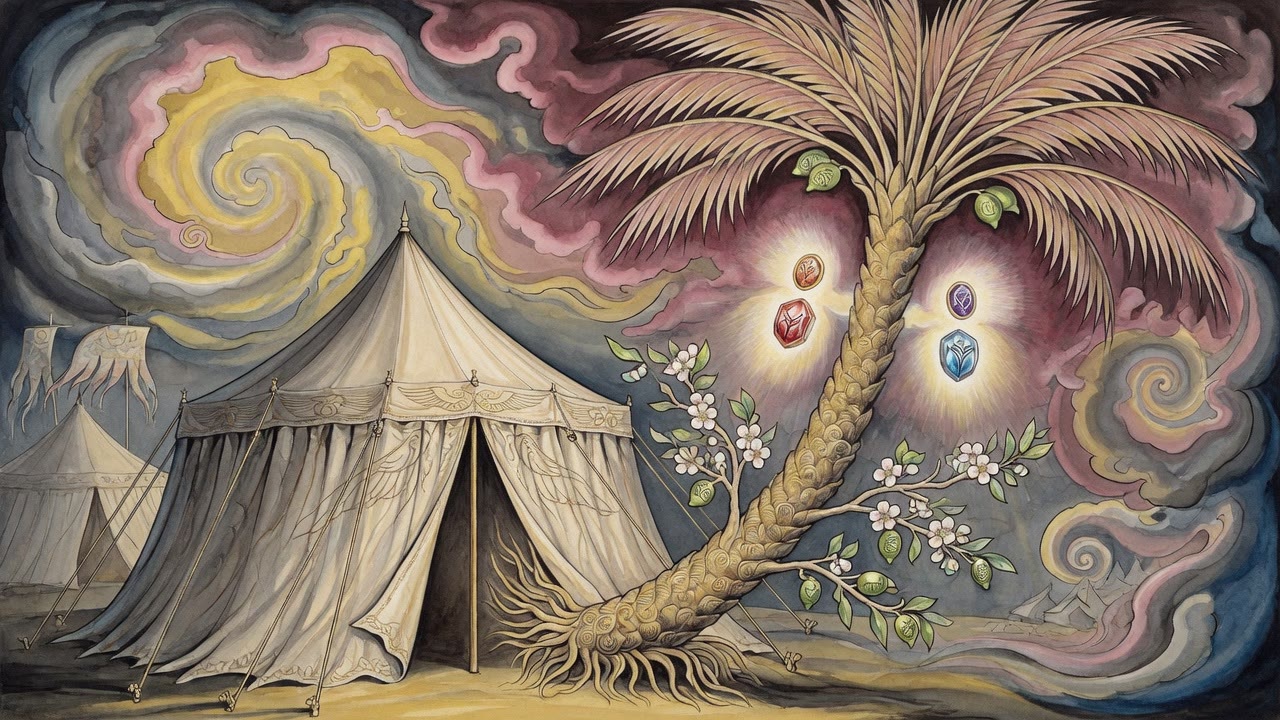
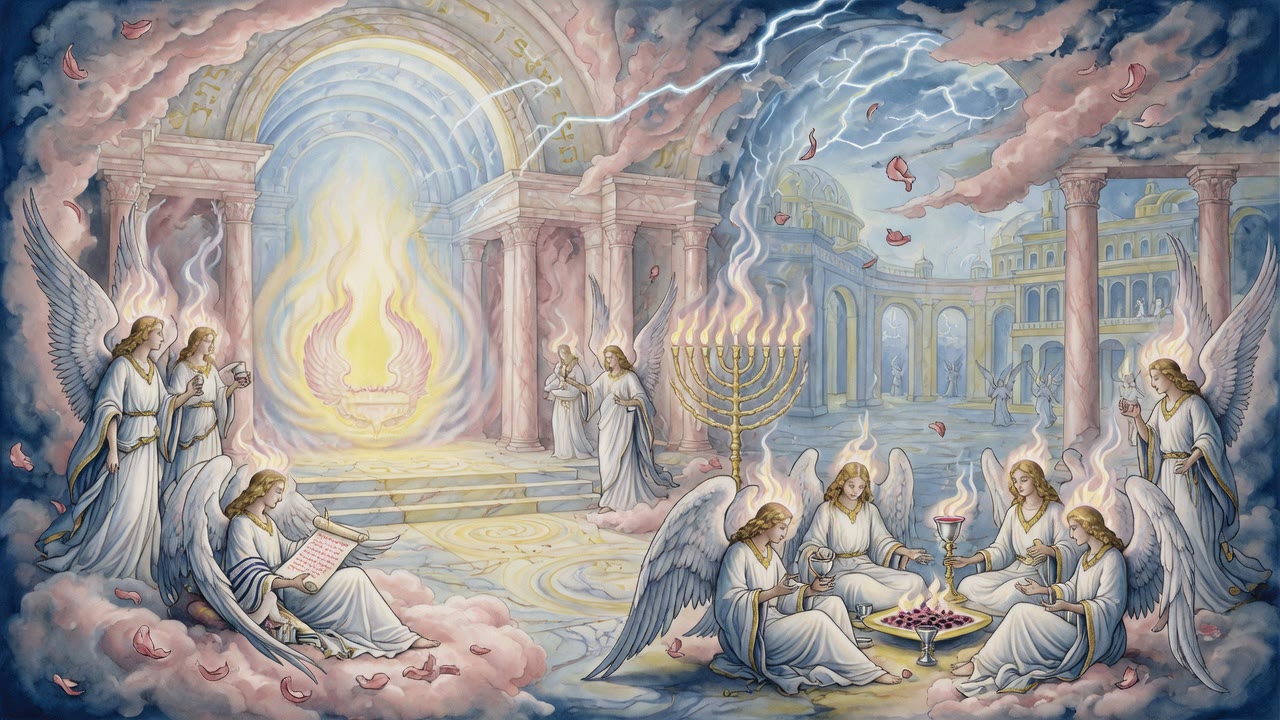
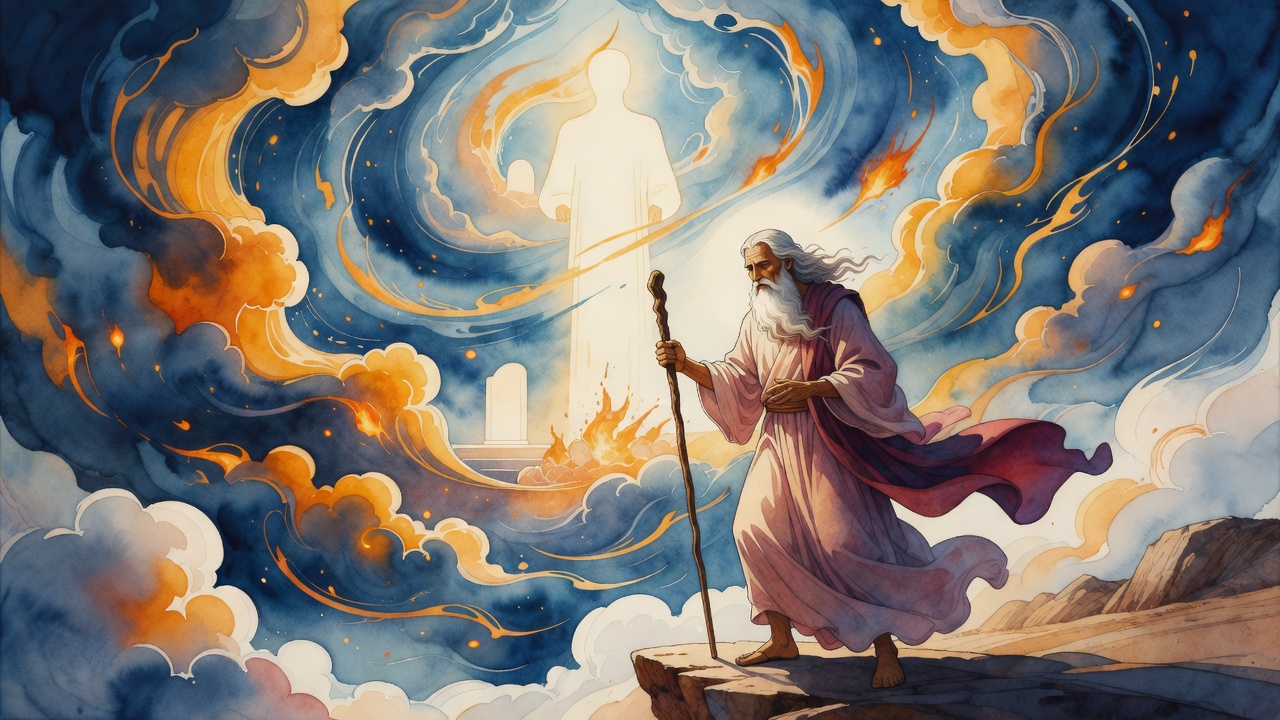
He took white fire, and red fire, and green fire, and black fire, and out of the four of them He made the lampstand in the air in front of Moses. The cups were there. The knobs were there. The flowers were there, opened, on branches of burning color, and Moses stood and looked at it.
Then he tried to copy it, and could not.
The Drawing on His Palm
So God took his hand and drew the design on it.
"Look at this," He said, "and make what I have drawn on your palm."
Moses looked at his own hand with the lampstand on it. He had the shape now, at the size of a man's palm, in lines he could follow with a finger. He went to the gold and he still could not make it.
Three times he had been given the thing. Spoken, burning in the air, and drawn on his skin. Three times his hands had come up short.
Throw the Gold Into the Fire
"Cast a talent of gold into the fire," God said.
Moses lifted the weight of it, sixty or seventy pounds of gold, and threw it in.
The lampstand came out of the fire finished. Shaft, six branches, the almond cups, the knobs, the flowers, all of it in one piece, and nobody's hands on it. When Aaron lit those lamps in the sanctuary he was lighting something no craftsman had touched.
This You Shall Eat
It happened more than once. When the laws of the clean and the unclean came down, God did not leave Moses to work them out from a list either. He brought the creatures out one at a time and held each one up in front of him.
"This you shall eat."
"This you shall not eat."
Beast by beast, bird by bird, a specimen and a ruling, until the whole of it had gone past Moses's eyes with a body attached. He was a man who had to be shown, and heaven kept showing him.
The One Thing Nobody Put in His Hand
On the mountain he had asked for something else.
"If I have found mercy before You," he said, "make me know the way of Your goodness. Make me understand Your mercy. There are just men, and it falls to them as it falls to the guilty. There are guilty men, and it falls to them as it falls to the just. Show me how it comes instead to the righteous according to their righteousness, and to the guilty according to their guilt. Let it be made clear by You that this people is Your people."
He had asked to be shown, exactly as he had been shown the fire and the animals. It was the same request in the same voice from the same man on the same mountain.
Nothing was placed in front of him.
No model burned in the air. Nothing was drawn on his palm. He was given a passing glimpse of a back and the sound of a name and no answer to what he had actually asked, and he came down the mountain with tablets under his arm and the question still in his mouth.
He carried it for forty years and died with it. He argued God out of destroying the people, twice. He got a decree softened that had already gone out. He extracted more from heaven in a single conversation than anyone before or since, and this one thing he could not get, and he went on building the sanctuary and judging the cases and burying the dead without it.
The lamp he could not make stood lit in the tent behind him the whole time.
← All myths