Hayim Vital Dreamed That the Body of Moses Became a Torah Scroll
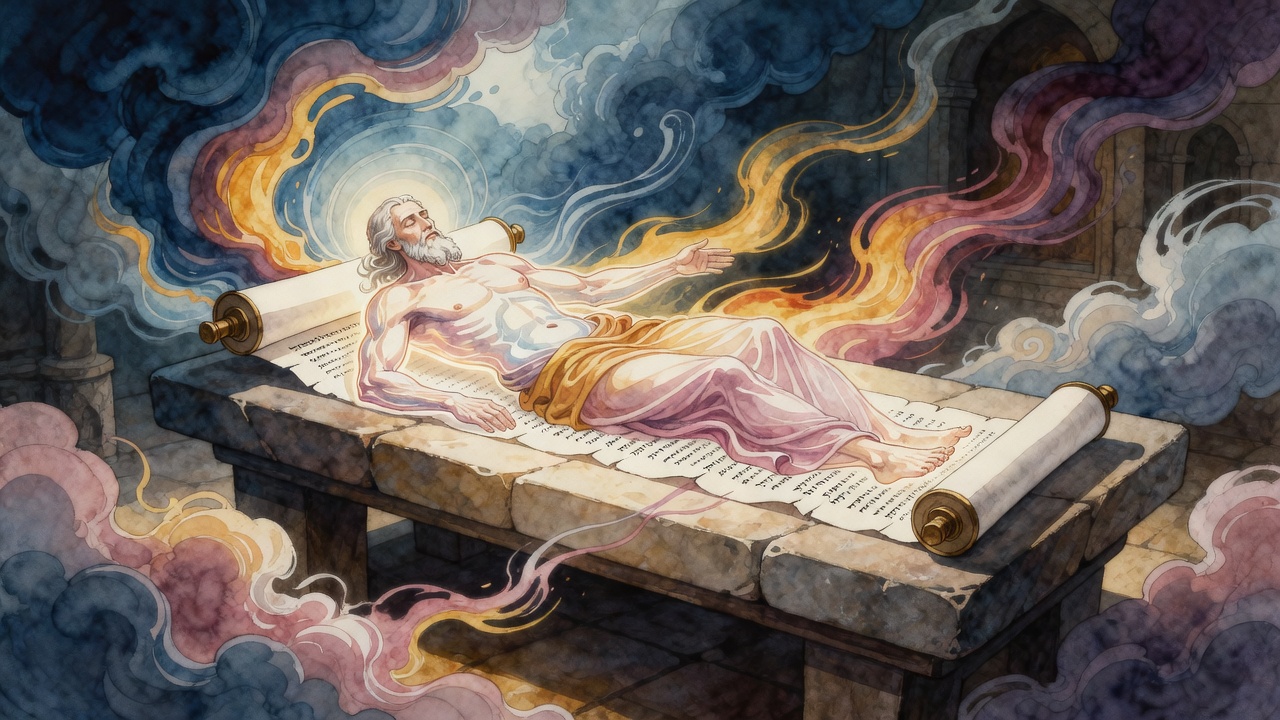
On Simhat Torah 1609 in Safed, a mystic dreamed that Moses was laid on the reading table and unrolled from Genesis to Deuteronomy like a scroll.
Table of Contents
 Click for full size
The Dream in the Safed Synagogue
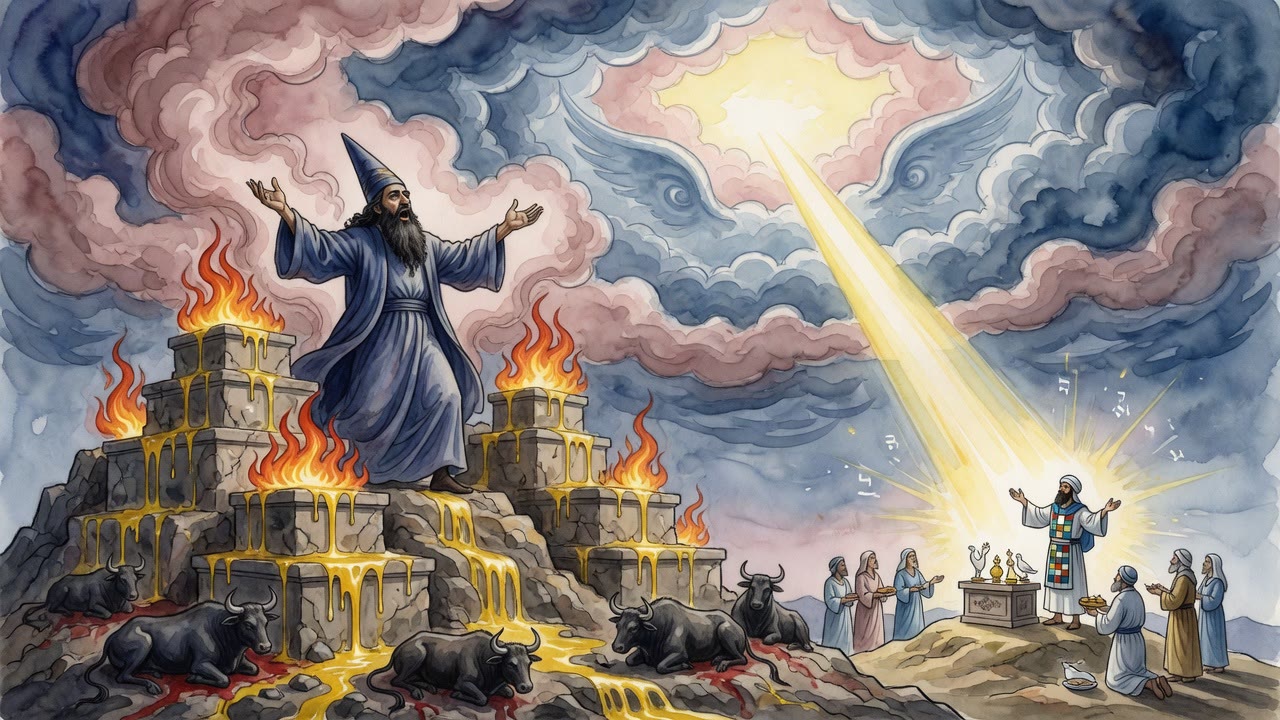
The holiday was Simhat Torah, the day when the annual cycle of Torah reading ends and begins again, when the scroll is danced with through the synagogue and communities stay up through the night with it. In Safed in 1609, Hayim Vital dreamed that he was seated in the synagogue when a procession entered carrying a body. They laid the body on the long reading table at the center of the room.
It was Moses. The body of Moses, who had died on Mount Nebo twelve hundred years before the Temple was built, was present in the Safed synagogue on Simhat Torah.
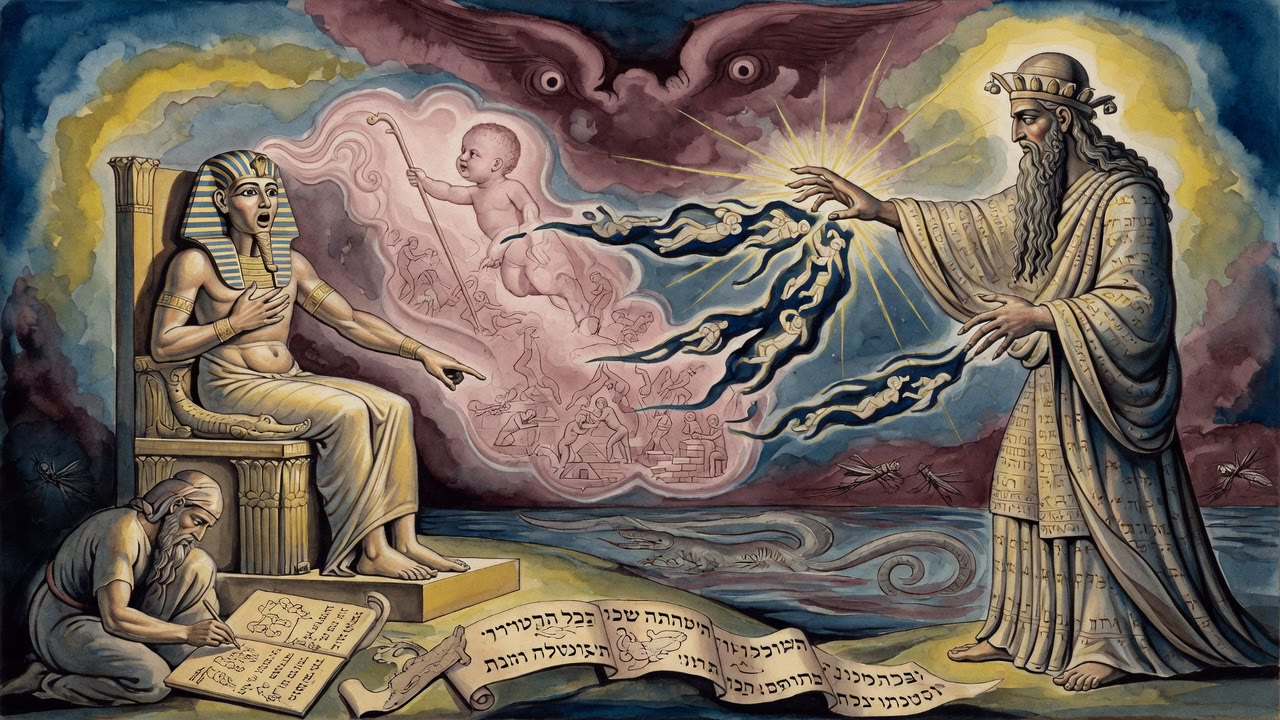
The body was unrolled. Not opened. Not examined. Unrolled, the way a scroll is opened at the rollers when a reader begins the weekly portion. From the first word of Genesis the body of Moses became the text he had received on Sinai: parchment, ink, letters, the whole Torah from the first word to the last. A reader came forward and read, going through the portions in order. When the reading reached the final section of Deuteronomy, the account of Moses's own death, the parchment folded back into a man, and Hayim Vital, who was seated at the foot of the table nearest the end of the scroll, woke with the sense that Moses was still in the room.
Who Hayim Vital Was
He was the primary student of Rabbi Isaac Luria, the Ari, the most important Kabbalistic teacher of the sixteenth century. The Ari lived in Safed for only two years before his death in 1572, but in those two years he transformed Jewish mysticism. He taught nearly without writing anything down. Vital wrote everything, taking his notes from the Ari's oral teachings and organizing them into the systematic body of work known as the Eight Gates, which became the canonical record of Lurianic Kabbalah. Whatever the Ari thought and said that has survived to the present, it survived because Vital preserved it.
Vital's Sefer ha-Hezyonot, the Book of Visions, is something different from his theological writings. It is a private document, a record of his own dream life over decades, maintained as a spiritual diary. The Lurianic school regarded dreams as a legitimate channel of prophetic information, a residual form of prophecy available in an era when direct prophecy had ceased. Vital recorded his dreams with the same precision he brought to recording the Ari's teachings, treating them as primary evidence about the state of his soul and the spiritual realities his waking mind could not access directly.
What the Dream Meant
The Lurianic tradition had developed an elaborate account of the connection between Moses and the Torah. Moses did not simply transmit the text. He was, in the Kabbalistic reading, the channel through which the divine light of the Torah entered the world, and the channel and what flows through it are not separate things. Moses was the da'at, the knowledge or consciousness that linked the upper and lower worlds, and the Torah was the form that consciousness took when it entered human language. The dream Vital saw was a visual statement of this theological proposition: there is no gap between Moses and the Torah. They are one thing seen from two different angles.
The placement of Vital at the foot of the table nearest the account of Moses's death is not incidental. The Ari had taught that Vital was a gilgul, a reincarnation, of a specific biblical figure, and that the relationship between Vital's soul and Moses was direct and significant. The dream positioned Vital at the exact section of the Torah that described Moses's death: the student seated at the end of the master's body, present at the moment the text and the man were reunited and then separated again.
The Safed School and What It Produced
The community in Safed in the sixteenth century was unlike anything that had existed in Jewish intellectual history before it. In the decades after the Spanish expulsion of 1492, the town in the Galilean hills became the gathering point for the most significant collection of halakhic and mystical scholars in the Jewish world. Rabbi Joseph Karo, whose code of Jewish law the Shulchan Aruch remains authoritative to this day, was Vital's contemporary and neighbor. Rabbi Moses Cordovero, who systematized Kabbalah before the Ari arrived to transform it, taught there. The Ari himself came late and briefly, but what he produced in those two years, filtered through Vital's pen, shaped Jewish mysticism for the next four centuries.
The dream Vital recorded in 1609 was not a private experience disconnected from this world. It was a culminating moment in a tradition that had spent a century developing the theology of Moses as the Torah's body, and Vital, who had spent his life recording that theology as his master dictated it, saw it made literal in a dream on the night when the Torah itself completes and begins again.
← All myths