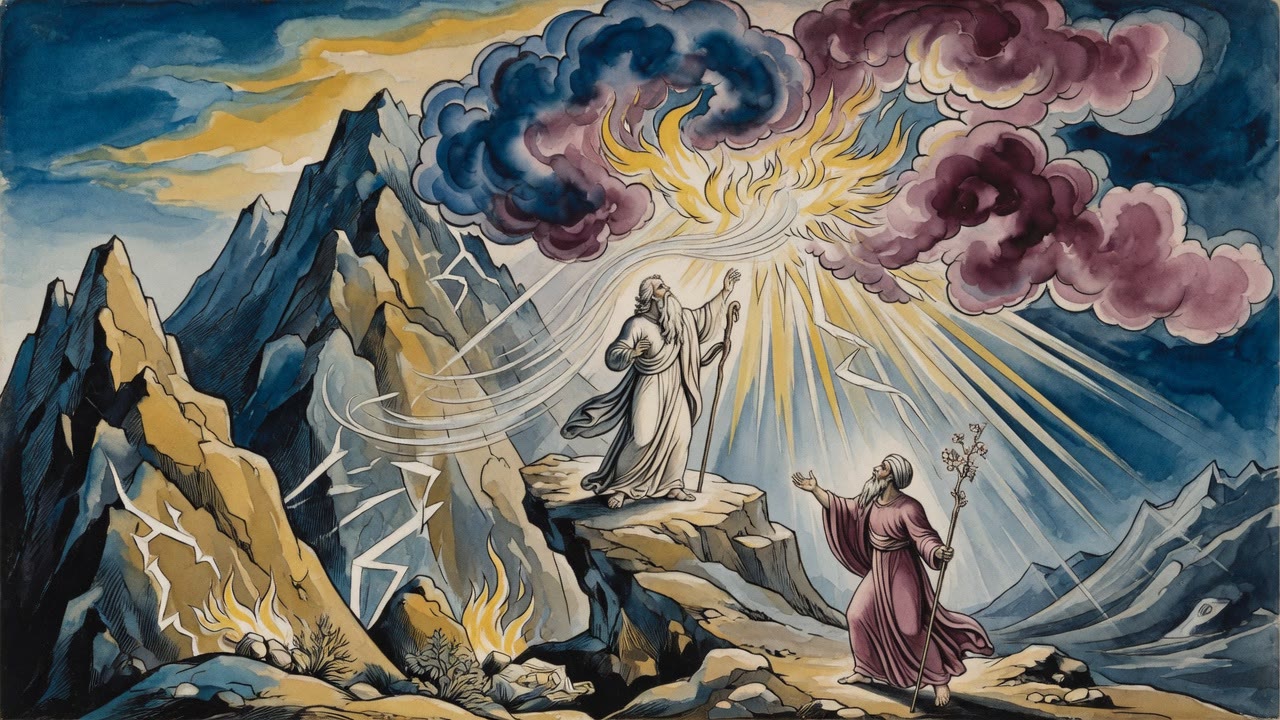
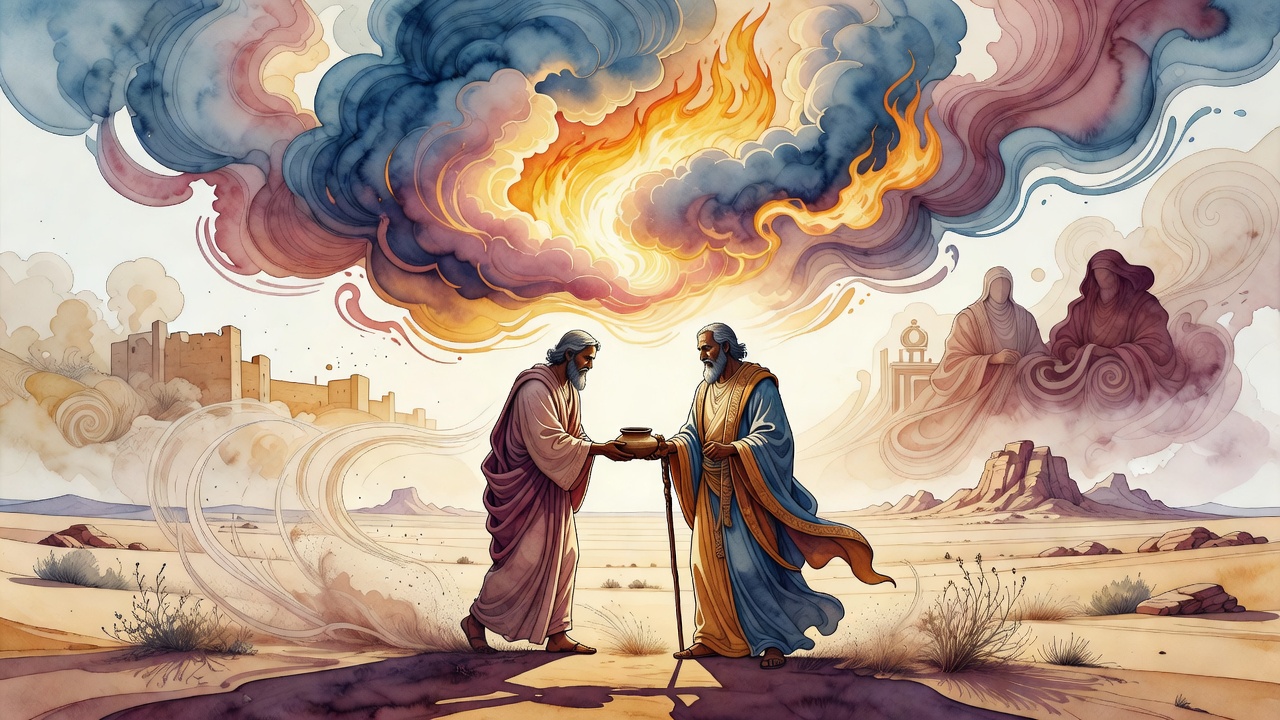
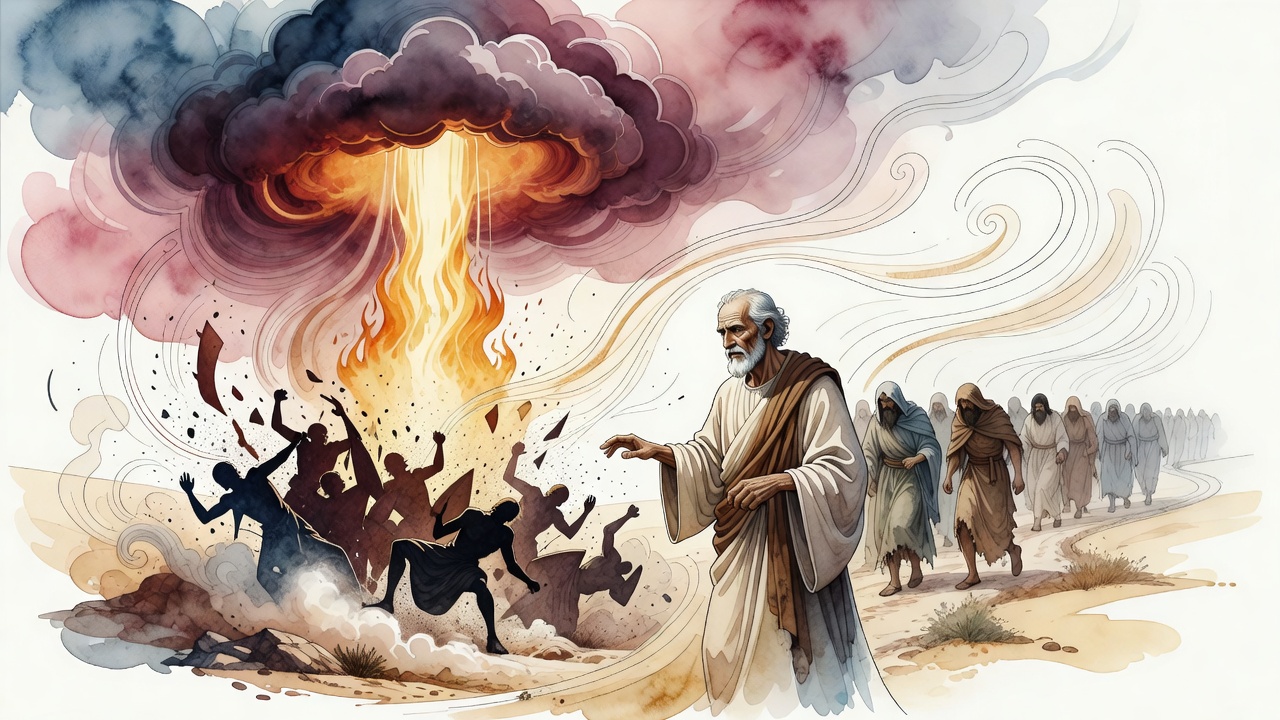
Amalek Attacked Israel at Rephidim and Jethro Came to Join Them
Israel would not ask God out loud whether He was still with them. They held the question in their hearts and waited to see if He knew.
Table of Contents
 Click for full size
The Question Nobody Said Out Loud
There was no water at that camp and the arguing started before noon.
They had come out of Egypt behind a pillar of cloud. They had eaten bread that arrived on the ground every morning without a field anywhere. They had asked for meat and quail had dropped out of the sky onto the sand until the camp stank of it. Now there was no water, and the thing they said to Moses was not a request.
Two teachers later disagreed about what exactly the people were doing. Rabbi Judah said they made it a straight bargain among themselves. If He feeds us the way a king feeds a city when he enters it, we serve Him. If not, we walk. The sages said it was quieter and worse than that. They did not put the terms to God at all. They held the question in their chests and agreed to watch. If He knows what we are thinking without being told, we will serve Him.
"Is the Lord among us, or not."
Moses shouted at them in the open. "Why are you fighting with me? Why are you testing the Lord?" But the test was not in the shouting. It was in the part they never said.
The Child on His Father's Shoulders
Rabbi Levi told it as a scene from a road.
A man is walking with his small son up on his shoulders. The boy sees something and calls down, take me there, and the father carries him there. The boy sees something else and the father carries him to that. And to a third place. Then a stranger comes along the road, and the boy leans down from his father's own shoulders and asks the stranger, "Have you seen my father?"
The father does not answer him. He reaches up, takes the boy under the arms, and sets him on the ground.
A dog comes out from somewhere and bites the child.
Their Hands Went Slack
The place where the camp stopped had a name, Rephidim, and the teachers cracked it open into two words that mean their hands went slack. Not slack from the march. Slack from the commandments. The grip that had held since the sea had loosened, and it had loosened at the exact hour the people decided to run a silent experiment on the God who was carrying them.
God gave them their answer in the only form they had left Him. "You have been asking whether I am among you. I will let you know."
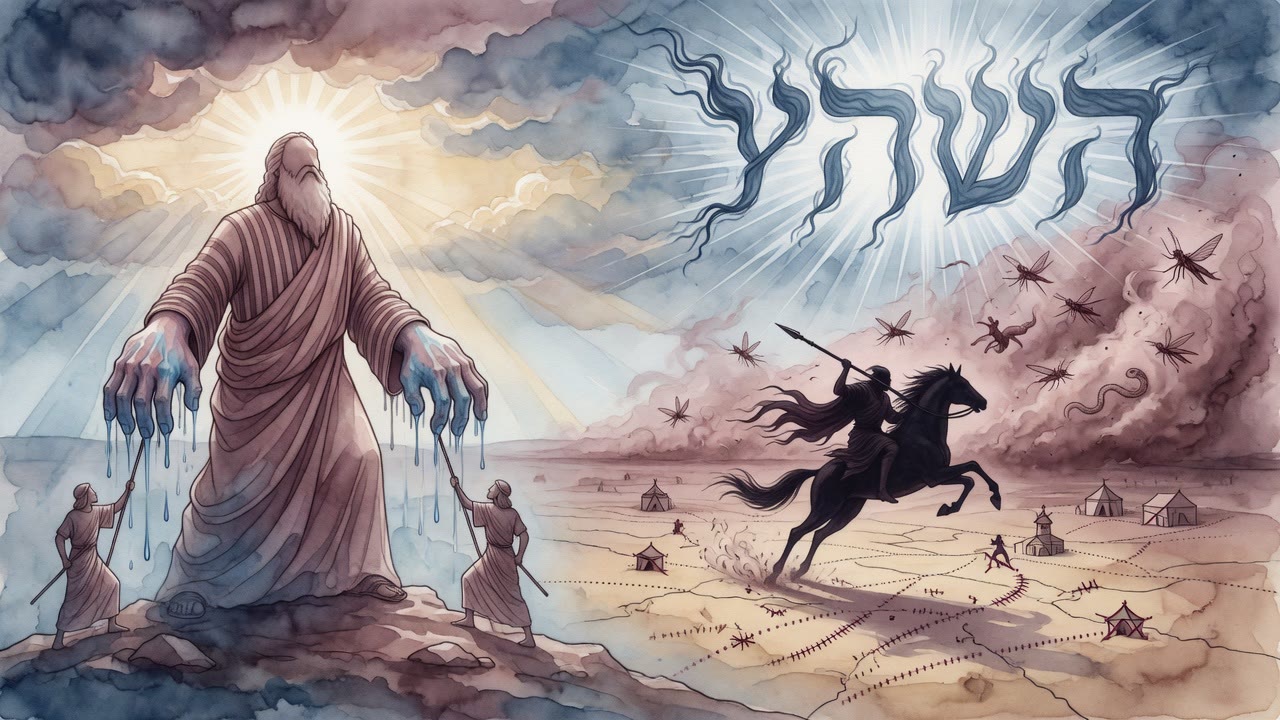
Then Amalek came.
He did not attack as a nation with a grievance about land or water rights. He attacked that camp, in that week, at that exact loosening, and he came at the back of the column where the tired and the stragglers walked.
Two nations heard the same report out of Egypt that season. One of them chose to attack it. The other packed a household and went to join it. Israel beat him in the field before the day was out. It did not matter. Every nation between Egypt and Canaan had spent months hearing that this people could not be touched, and Amalek had now touched them. The scalding water had been cooled for everyone who came after him.
The Priest in Midian Heard the Same Report
The news of the sea traveled every caravan road in the region, and the news of Rephidim traveled right behind it. Some men heard and lost by it. Joash listened to flatterers and ended under judgment. And there was a man in Midian who heard and gained everything.
Jethro had been a priest of idols. He had run a household of gods and made a living from them, and he had also given a fugitive from Egypt a flock, a roof, and a daughter. When word reached him of what had happened at the water and then at Rephidim, he did not raise men. He loaded his daughter and her sons onto animals and went out into the wilderness to find his son-in-law, and he joined them, and came in under the wings of the Presence and stayed there.
Rabbi Yannai's teachers said the earlier generations had been given only the smell of the commandments. Adam got one. Noah and his sons got six. At Sinai the whole jar was tipped over Israel the way a man empties oil from a barrel, and the smell of it carried far enough that outsiders came walking toward it from other countries. Jethro was the first of them.
What the Outsider Put Into the Torah
He watched Moses sit and judge the whole camp alone from morning until night, and the first thing this newcomer said to the man who had broken Egypt was that he was doing it wrong.
"The thing you are doing is not good."
Then he described the men Moses should find. Not the well connected. Men strong enough to carry the law, who fear God in the plain sense of those words, who tell the truth, and who hate a bribe so much that they hold their own property lightly. A judge like that says the thing out loud that makes him unpopular. Burn my sheaves. Cut down my vineyard. I will still judge you honestly.
That paragraph is in the Torah, and a Midianite priest put it there.
Generations later, when Saul was sent to destroy Amalek, he stopped his army long enough to send a message to the Kenites camped among them. "Get out from among the Amalekites, because you showed kindness to Israel when they came up out of Egypt." They were Jethro's people. They walked out of the valley before the swords came down.
← All myths