Hezekiah Made Torah Study Mandatory Across All of Judah
Ahaz had closed every Torah academy in Judah. When Hezekiah became king, he drove a sword into the ground and declared it was time to study or die.
Table of Contents
 Click for full size
The Sword in the Ground
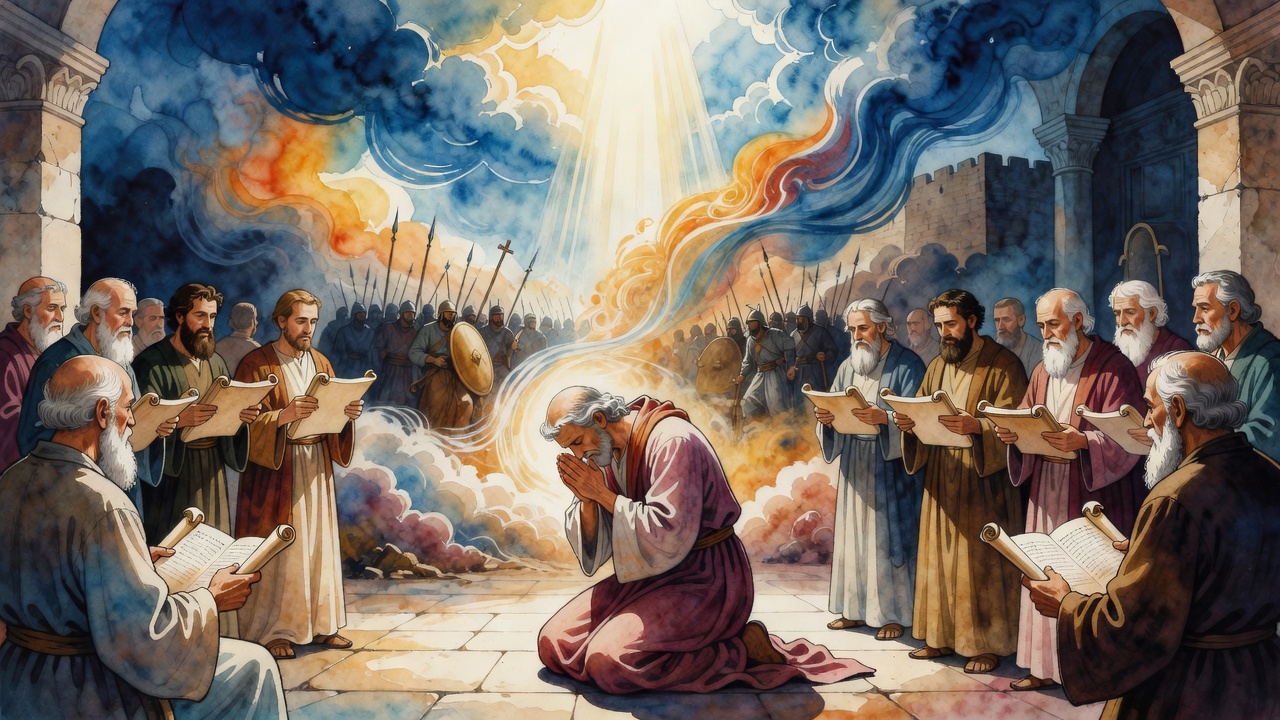
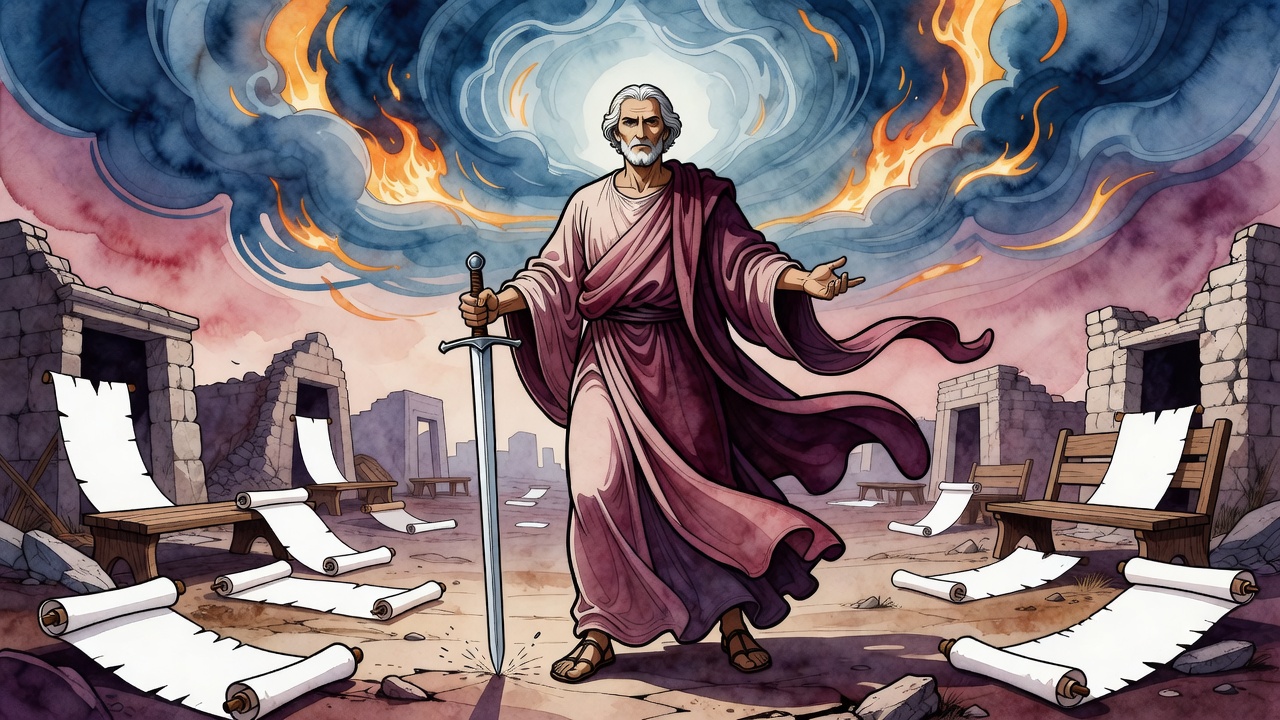
Hezekiah drove a sword into the ground outside the house of study. He declared that whoever would not learn Torah had no right to eat. This was not a metaphor. He was drawing a line between the kingdom he had inherited and the kingdom he intended to build, between the generation that had grown up with closed schools and the generation that would grow up with open ones. The sword was the marker.
The inspection his officers conducted afterward found something they had not expected. They searched the entire land of Israel from Dan to Beersheba, from the northern border to the southern desert, and they found not a single child or adult who was ignorant of Torah. In every corner of the kingdom, from priests to craftsmen to farmers, they found people who had taken Hezekiah's decree seriously and learned.
What His Father Had Done First
Ahaz had understood that a tradition lives in its teachers. Kill the teachers, close the schools, and within a generation the tradition is the private property of a dwindling number of specialists whom the general population has no way to access. Within two generations it feels foreign. The people remember that their fathers studied but cannot say what they studied or why. The forms of practice continue out of habit while the reasoning behind the forms disappears quietly.
He had closed every Torah academy in Judah. He made study illegal. By the time Hezekiah inherited the throne, the land was not ignorant exactly, but it was cut off. The transmission had been broken. The living chain from teacher to student that carries a tradition across time had been interrupted, and interrupted chains are difficult to restart because the people who remember the beginning are old and the people who would continue it have never started.
What Hezekiah Found in His Kingdom
He looked at what the interruption had produced. Families who could name the books but had never opened them. Communities who knew the holidays but had lost the texts behind them. Officials who had grown up watching their fathers study without understanding what they were watching. The surface of Jewish life had been maintained. The depth had been abandoned.
This was the situation that produced the most extraordinary claim the tradition makes about any king's achievement. The Talmud says that during Hezekiah's reign, the entire land achieved a level of Torah knowledge so complete that no one from the greatest scholar to the most ordinary farmer was ignorant of the laws of ritual purity. The specific laws of purity, which were among the most technically complex in the entire code, had become common knowledge across every social class in Judah.
What He Built and Why He Built It Fast
He did not work gradually. He understood what gradualism costs when a tradition has been interrupted. Every year spent moving carefully is another year in which children grow up with the same gap their parents had. He issued his decree at the beginning of his reign and he enforced it. The schools reopened, all of them. He paid for it with royal resources. He staffed them with whatever teachers still lived and remembered. He made study not an option available to those who sought it but a requirement for everyone.
The Midrash Tanchuma, compiled in the Palestinian academies, describes the effect on subsequent generations: students who surpassed their teachers, who went further into the tradition than their instructors could follow, who discovered connections and implications that no one had reached because no one had been allowed to study long enough to reach them. The interruption had cost Israel not just what was forgotten during the gap but all the scholarship that would have been built on what was forgotten. Hezekiah was trying to recover the compounding losses of a generation.
The Debt He Left the Tradition
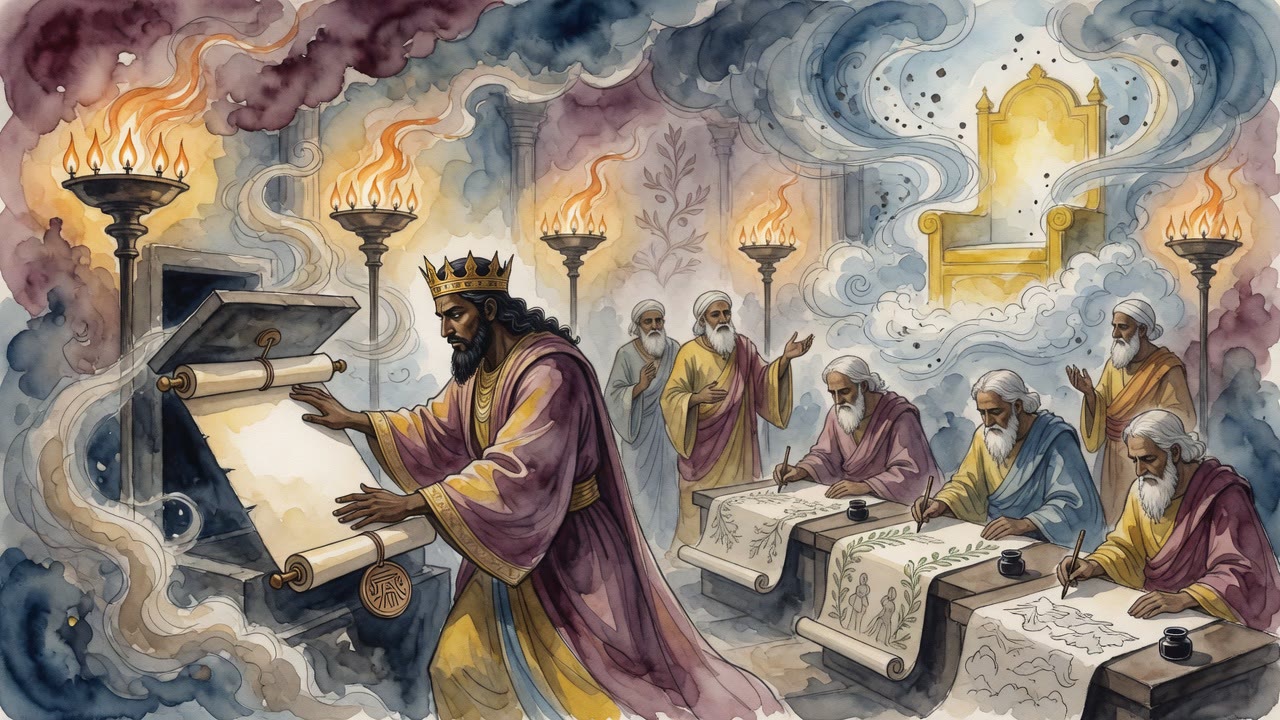
The Talmud credits Hezekiah's scribes with preserving four books of the biblical canon: Isaiah, Proverbs, Ecclesiastes, and the Song of Songs. These texts existed in copies held by individual teachers and schools, vulnerable to destruction and neglect. Hezekiah made their copying a royal project, standardizing and multiplying them at a scale that only royal patronage could sustain. He did not compose them. He kept them from disappearing.
He also hid a book he did not want preserved: the Sefer ha-Refuot, the Book of Cures. This was a manual of medical remedies that, in Hezekiah's judgment, had caused more harm than good by giving the people techniques they trusted more than God. The rabbis approved of both decisions: the preservation and the burial. A king who understood which books to copy and which to bury understood something about how tradition works that most kings never grasp.
← All myths