Haman Squandered His Rations and Had to Beg Mordecai
Both men commanded Persian forces on the same campaign. Haman burned through three years of supplies in twelve months and had to beg Mordecai for food.
Table of Contents
 Click for full size
The Campaign in India
Before the gallows and the decree and the casting of lots, before Haman had the king's ring or Mordecai had the king's gratitude, both men were military commanders on the same campaign. Ahasuerus had sent them to suppress a revolt in India, issuing each man identical provisions: food and supplies sufficient for three full years of campaign. Equal shares. Equal trust. Equal responsibility. The king had no particular reason to prefer one over the other. They were both prominent men in his service and they both received the same allocation.
Mordecai rationed carefully from the first week. He planned for three years because the campaign was three years and the provisions were three years' worth and a competent commander does not treat long-term supplies as immediate abundance. His soldiers were fed. His stores were managed. He tracked the consumption and adjusted the distribution and by the end of the first year his provisions remained largely intact because he had planned for all three.
How Haman Ran Out
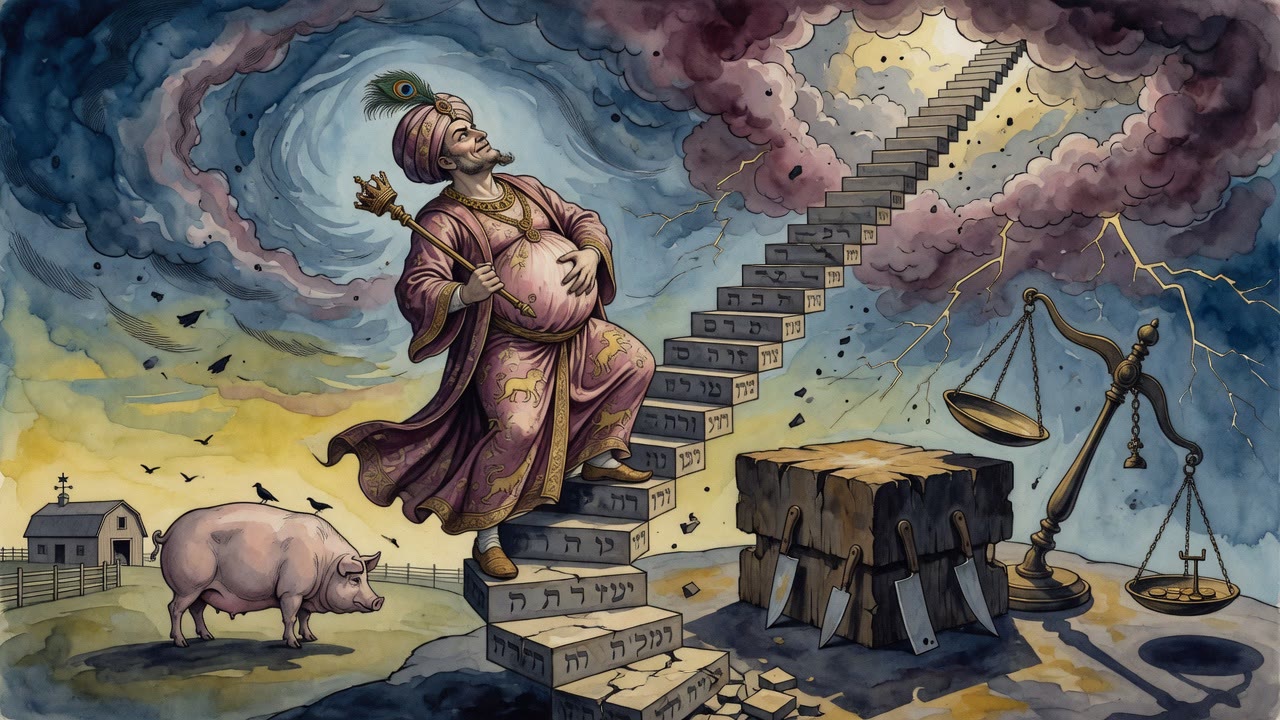
Haman's provisions were gone in twelve months. Every measure of grain, every jar of oil, every stored portion consumed in a year that was supposed to be one third of the campaign's total duration. The tradition does not specify whether it was extravagance or poor planning or simple arrogance toward consequences, the assumption that more would appear when needed because he was the kind of man for whom more usually appeared. Whatever the cause, the result was a commander with two years of campaign remaining and nothing left to feed his army on.
He went to Mordecai.
The request was not made as an equal asking an equal for professional assistance. Haman came to Mordecai as a man who had destroyed his own position through incompetence and needed what someone else had maintained through discipline. He offered himself as a bondsman, a transaction that placed him, at least symbolically, in a relation of debt and obligation toward the man he would later try to hang.
The Sale of Haman to Mordecai
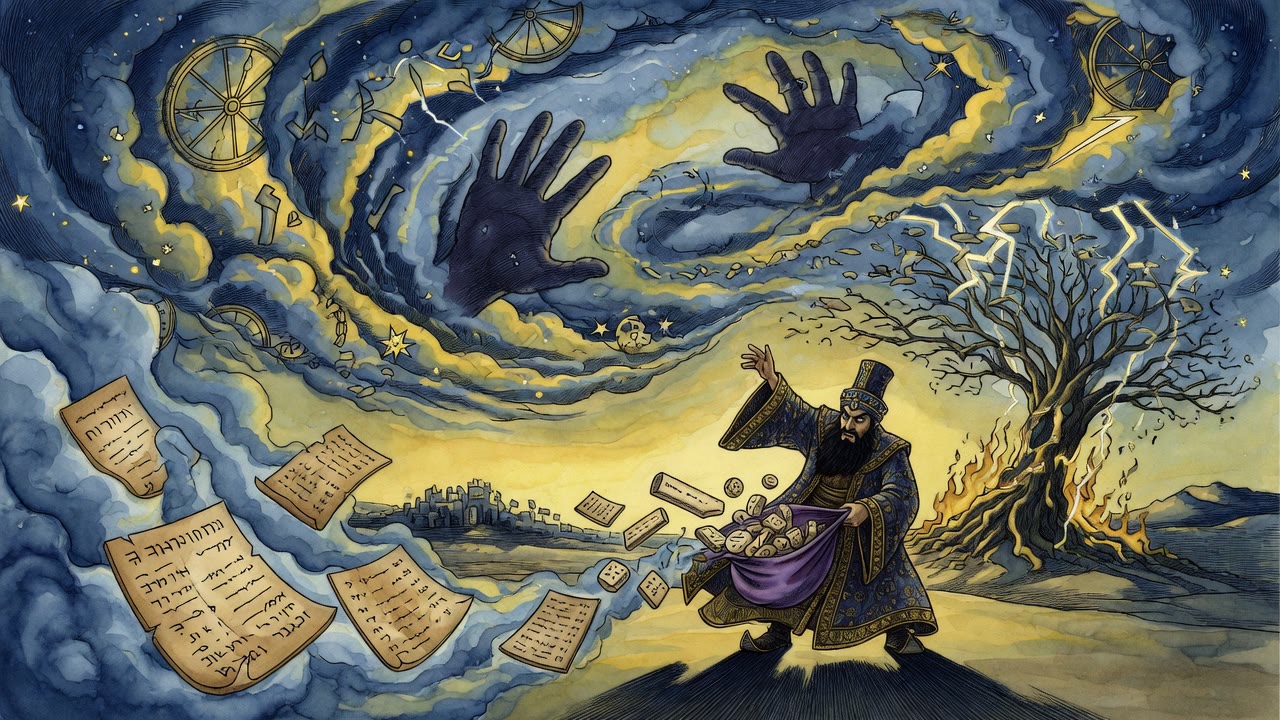
Mordecai provided the food. He took Haman's note of obligation and fed his army and kept the campaign operational. The document Haman signed, whatever legal form it took in this tradition, registered a transaction in which Haman's pride had been weighed against his survival and survival had won. He had come to the man he would spend years trying to destroy, as a supplicant, and the man had fed him.
The rabbinic tradition preserves this episode as the background to Haman's particular fury at Mordecai's refusal to bow. When a person owes a debt they cannot repay and the creditor is visibly prospering while the debtor is watching from a position of inferiority, the emotional arithmetic tends toward resentment rather than gratitude. Haman had needed Mordecai. Mordecai had provided. The memory of that provision was not a softening influence. It was an additional grievance, the humiliation of having been dependent on the man you despise.
What the Campaign Revealed
The India campaign is the tradition's earliest character test for both men, placed before the palace intrigue and the gallows and the Purim rescue as a simple demonstration of what each man was when given equivalent resources and equivalent responsibility. One man planned. One man consumed. The planning man kept his army fed. The consuming man ran out and borrowed against his own freedom to cover the shortage.
The tradition reads this not as a minor embarrassment but as the root of the whole subsequent disaster. Haman was a man who could not manage three years of provisions. He was given the authority to manage a decree of genocide and the king's ring and the entire apparatus of a Persian empire at war with a single people, and the result was the same: he overextended himself, misjudged the resources available to him, and ended on a gallows built for someone else.
← All myths