David Said Torah Scholars Were Worth More Than Gold
David had taken the crown of kingdom and filled rooms with silver. He sat down to Torah and said the scholars were worth more than both.
Table of Contents
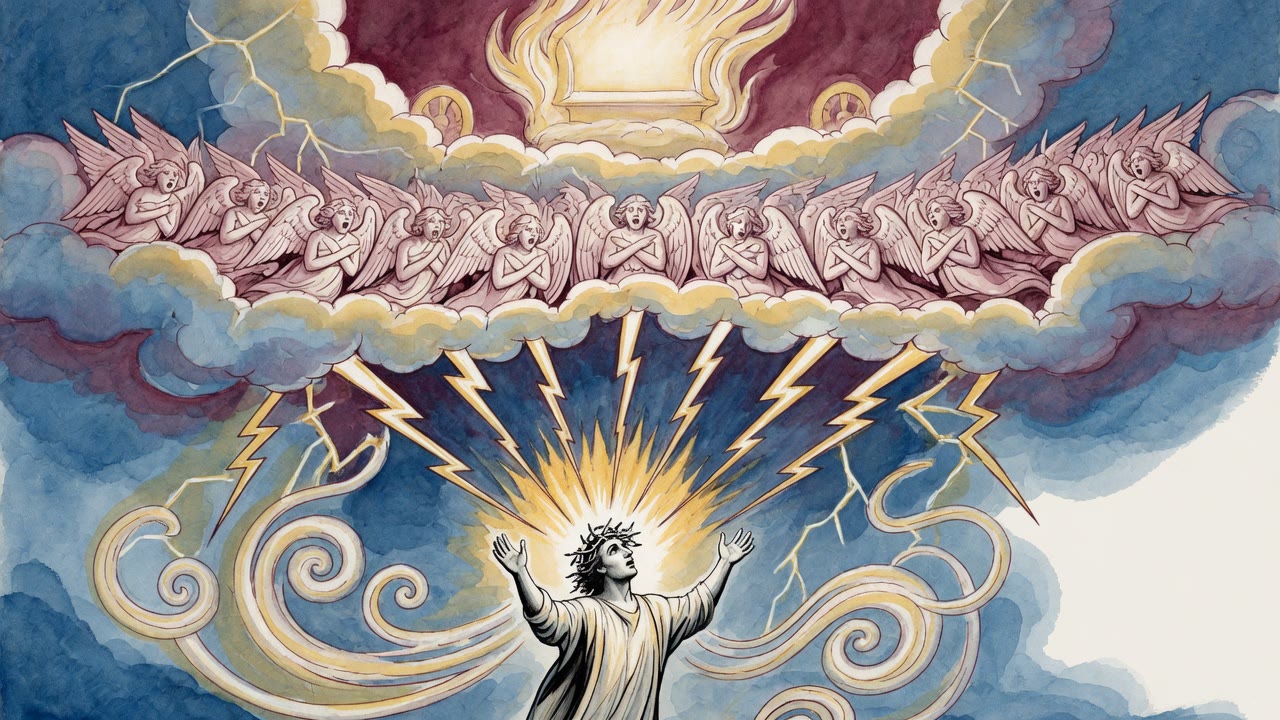
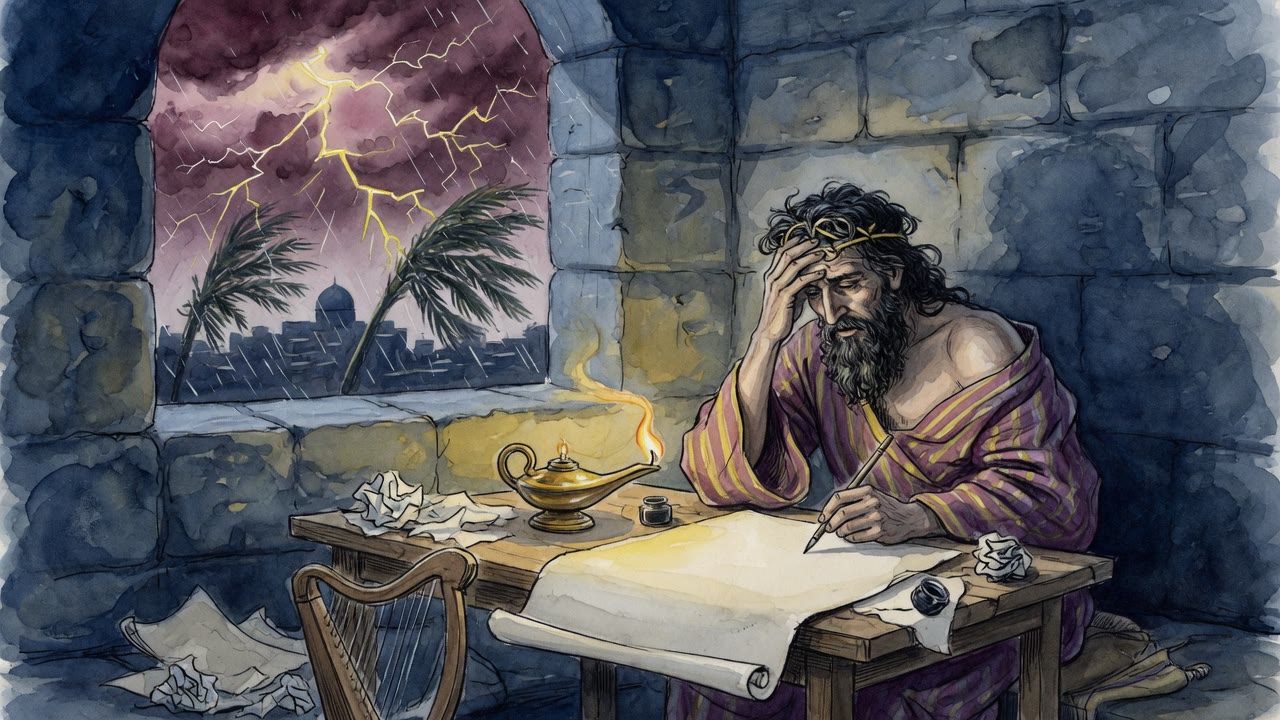
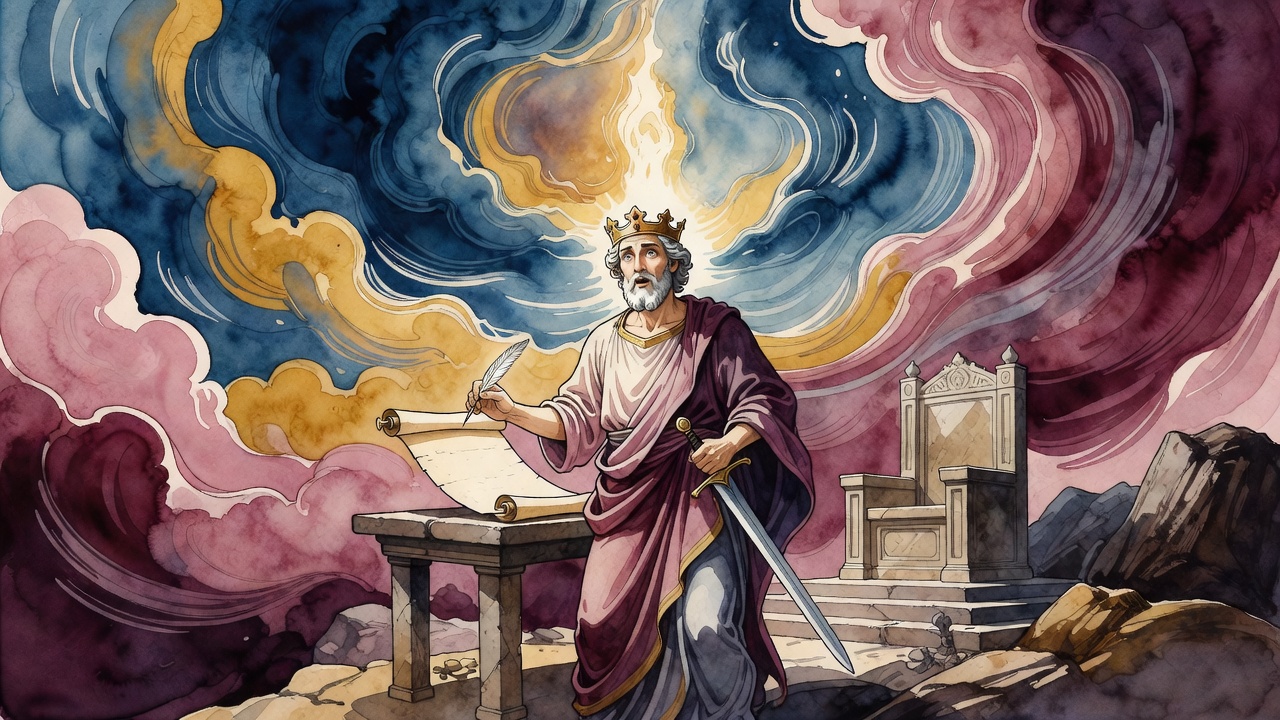
David sat among the gold he had taken and opened a scroll. The rooms held silver. The crown of kingdom already fit. He had killed Goliath. He had danced before the Ark. He had written songs. None of that stopped him from sitting down like a student.
 Click for full size
When he grew great in the learning, he said it out loud.
"And to me, how precious are Your loved ones, O God. How mighty is their sum" (Psalms 139:17). Then the line that spent his treasury in a sentence: "Better to me is the Torah of Your mouth than thousands in gold and silver" (Psalms 119:72).
The Crown That Was Still Vacant
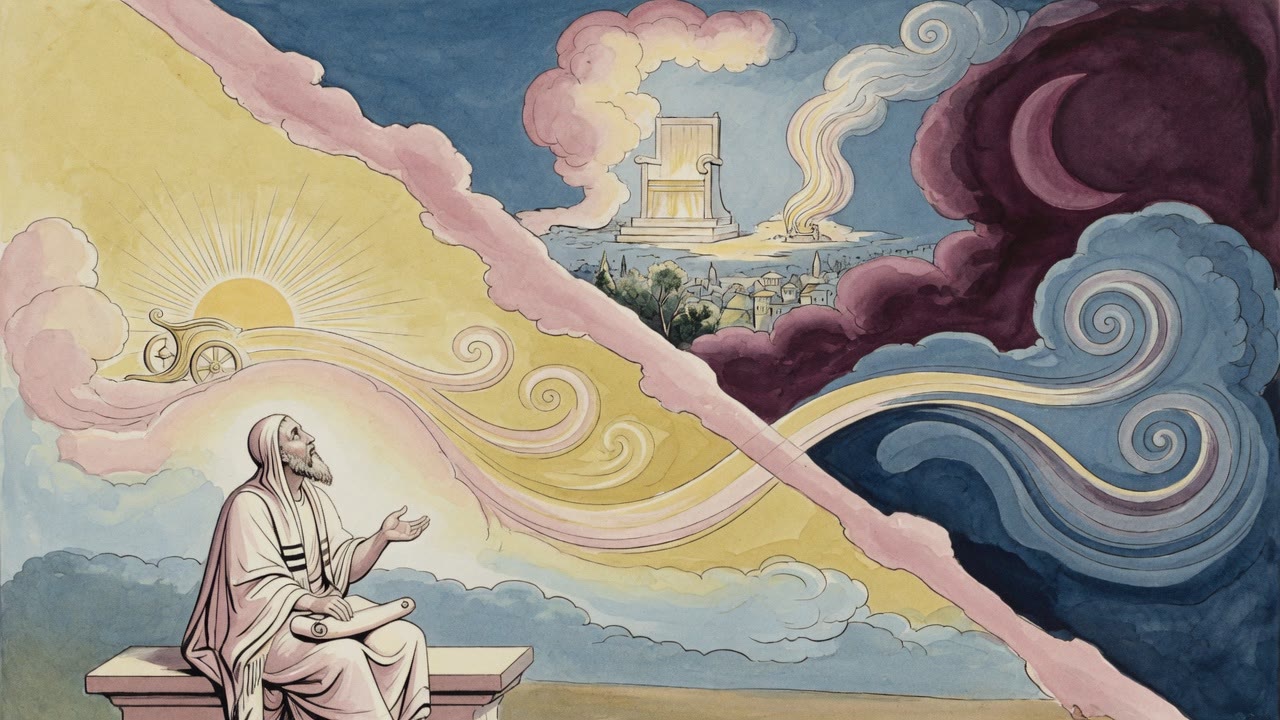
Three crowns sat in the accounting. The crown of priesthood, which Aaron took. The crown of kingdom, which David took. The crown of Torah, which nobody owned.
It was left vacant on purpose. If priesthood and kingdom had been left open, a man could say he would have taken them if they had been offered. Torah stays open so that excuse dies. Whoever merits it is counted as if all three had been waiting for him. Whoever refuses it is counted as if all three had been waiting and he took none.
David already had one crown. He could not take Aaron's. He sat with the third and found it heavier than the gold in the rooms. Gold and silver take a man out of this world and the next. Torah brings a man into both. He had held both kinds of weight in his hands. He knew which one lasted.
A human king sits in the midst of his court, and some of the men around him are taller, or stronger, or better to look at. When God comes from the myriads of His holy ones, He is the distinctive one in the middle, an oth, a sign, not a face lost among better faces. David had spent his life near that kind of sovereignty. He sang it. He could not buy it. He could only study it, practice it, and pass it on.
He Attended to the Poor
He wrote another line and then had to live it. "Happy is one who attends to the indigent; the Lord will deliver him in the day of evil" (Psalms 41:2). Attend. Not only give. Look at the person long enough to know what would actually help.
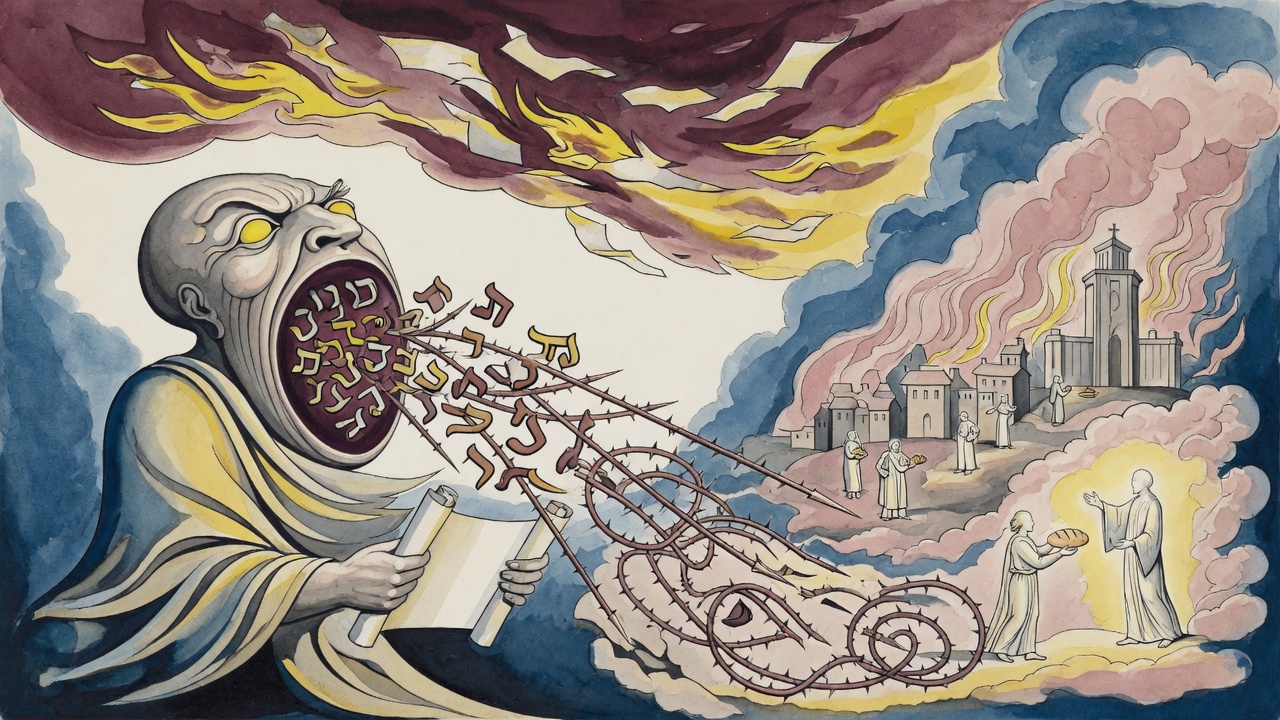
He went out to the gate with a peruta (פרוטה), the smallest coin, and put it in a hand that was waiting. He stopped for a body that had no one to bury it, and he buried it. He sat by a sickbed. The psalm had promised that attending would be repaid on the day of evil. He had enough enemies to test the promise.
The poor brother in the verse was not a decoration on the religious life. He was the religious life, standing in the street with his means failed, needing to live. David had rooms of silver. The scroll told him the silver was the lesser store.
Even when princes sat and spoke against him, he said he had not forsaken the Torah. The heart knows its own bitterness. He asked for a heart sincere in the statutes, and he asked it as a man who had eaten unsacred food in a pot and would not then put sacred food in the same vessel and pretend the two meals were one.
Every Song Spoke for More Than Him
He wrote, "Preserve me, O God, for in You I have taken refuge" (Psalms 16:1). The dedication said the psalm was for the conductor, for the servant of the Lord, and the servant was not a private man only.
Everything he said in his book he said for himself, for all of Israel, and for all times. Night miracles got a night song, the way Israel sang at the sea: "The Lord is my strength and my song" (Exodus 15:2). Day miracles got a day song: "This is the day that the Lord has made" (Psalms 118:24). His mouth was a king's mouth and a nation's mouth at once, and the personal weight did not leave the communal one.
That is why the scholars were precious to him. They kept the songs from shrinking back into one palace. They kept the vacant crown vacant for the next student who had no silver at all.
Joab Held the Curse Over Solomon
At the end of the line, Joab stood where death was already decided. Benaiah had the king's order. Joab sent a message back to Solomon.
"He cannot inflict two punishments on me. If he takes my life, he must lift the curse David laid on me and my descendants for the slaying of Abner. If he will not lift it, he cannot put me to death."
Solomon heard the justice in it. David's own legal mouth, turned around. Execute Joab, and the curse leaves Joab's house and walks into David's. Solomon took the life. The curse moved.
Rehoboam was afflicted in his body. Uzziah suffered leprosy. Asa had to lean on a staff when he walked. Josiah fell by the sword of Pharaoh. Jeconiah lived off charity. The imprecations David had spoken landed on his own posterity instead of Joab's.
The king who said scholars were worth more than gold could not buy his house free of his own word. Torah outlasted the treasury. The curse outlasted the throne. He had said the crown of Torah was the one still open. His descendants learned what else can travel down an open line.
← All myths