God Stopped Babel Because the Builders Valued Bricks Over People
When a brick shattered, the work stopped and the men wept. When a man fell the same distance, they stepped over him and called for the next course.
Table of Contents
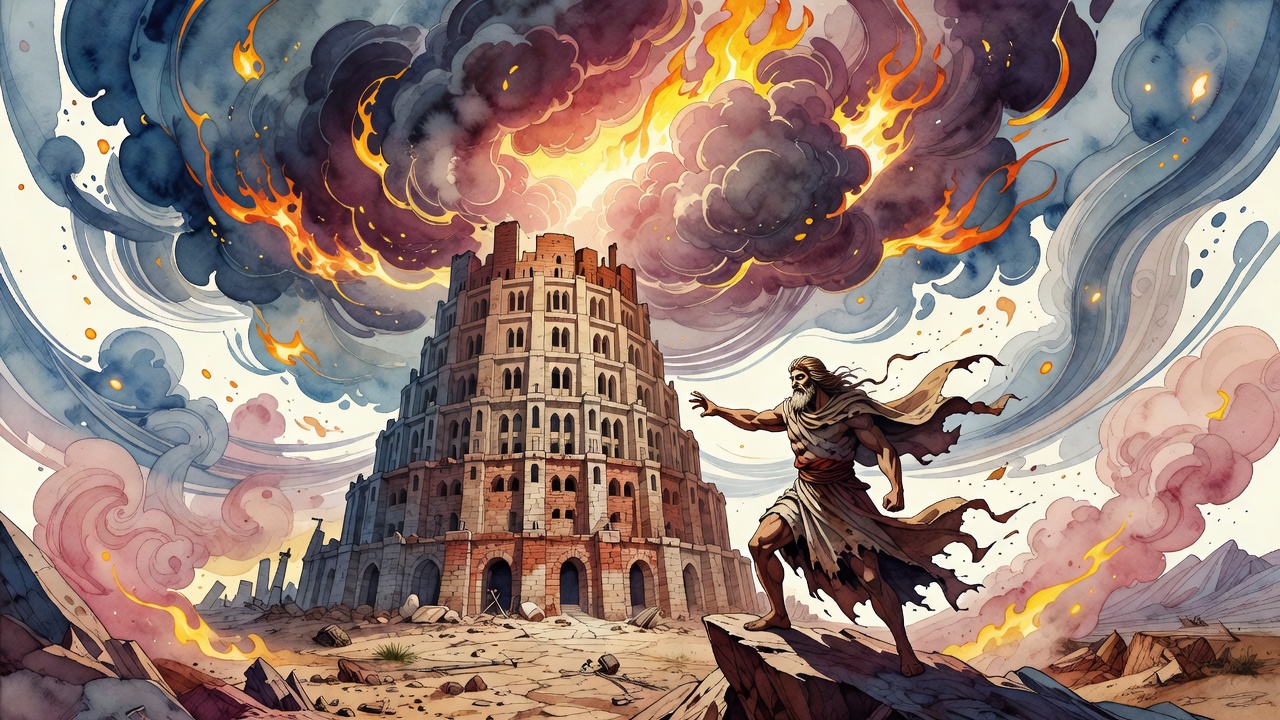
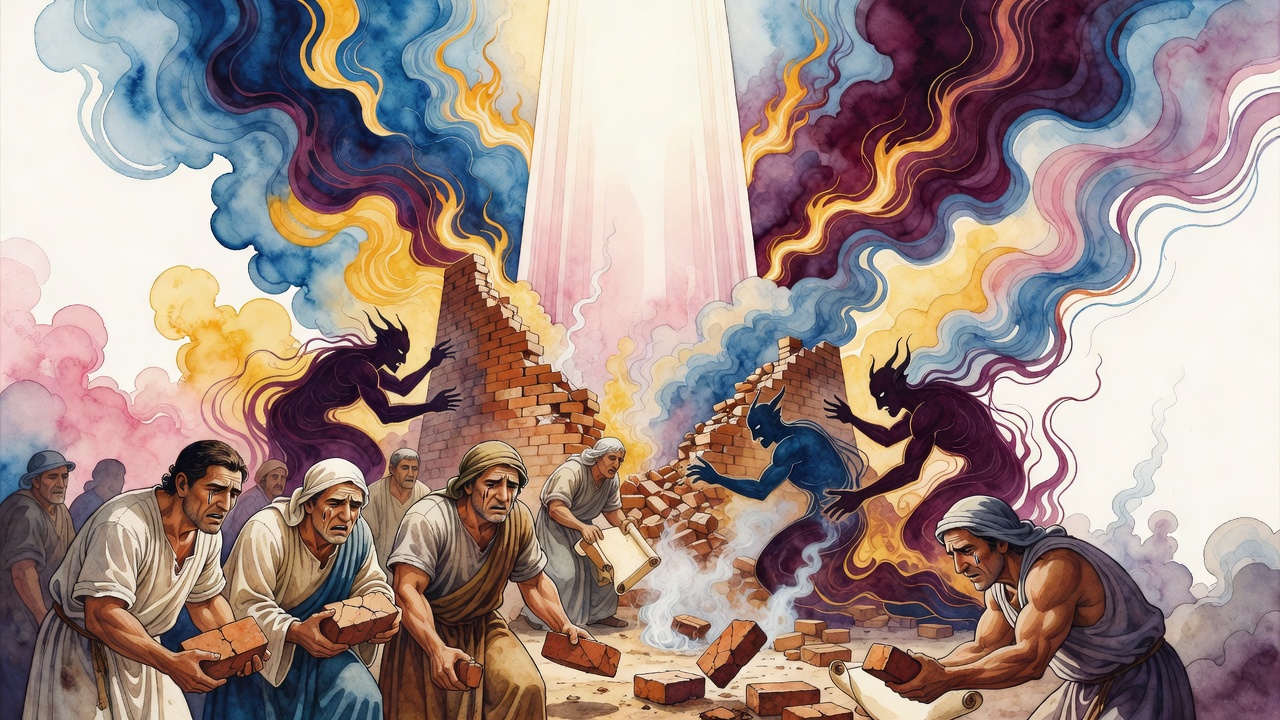
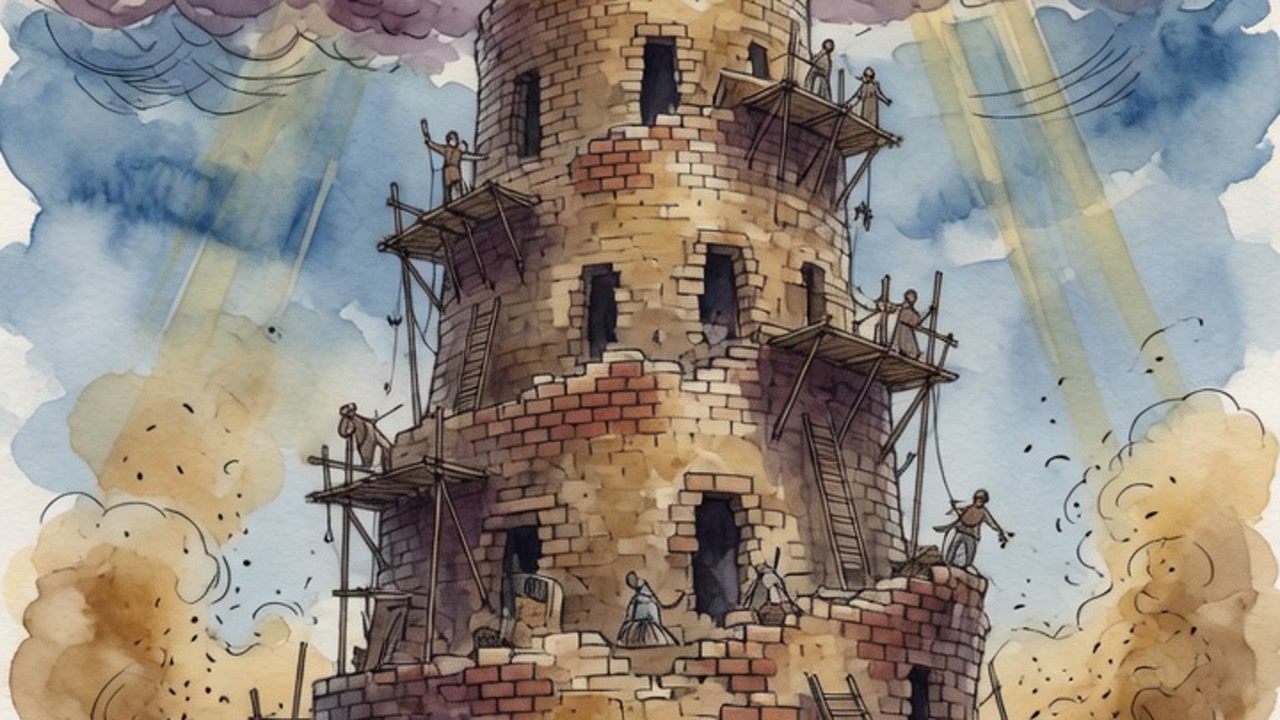
On the great tower of Babel, a brick slipped from a hod and shattered far below. The work stopped. Men wept. That brick had taken a year to carry up.
 Click for full size
A man slipped from the same height. They stepped over what was left of him and called for the next course.
A brick cost a year of labor, but a man could be replaced by morning.
A Year for a Brick
The tower grew past any sane purpose. A man who started up the ramp in spring arrived in another season, gray with dust, the brick still in his arms. Whole crews were born at the base, grew old carrying clay toward a top they would never reach, and were buried in the rubble of their own mortar without the work pausing to notice.
Women molded bricks as they gave birth, then tied the newborn to the body with a sheet and kept molding. No house needs this. No city needs this. Only the thing the builders had become needed it, and it fed on them. That was when the brick turned precious and the bricklayer turned into nothing.
Six Hundred Thousand Under One Mouth
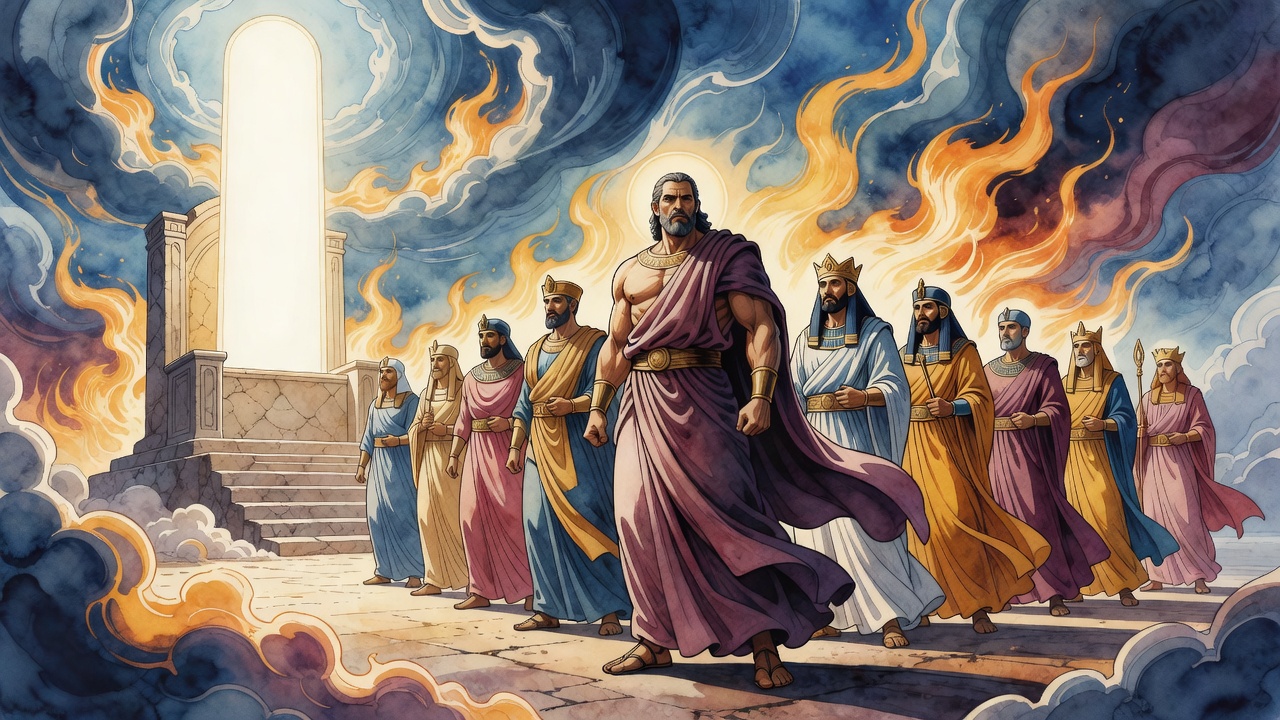
It had begun as unity. One language. One valley. Bricks baked hard as stone. Nimrod raised six hundred thousand of them in the plain of Shinar. Some wanted to climb up and make war on heaven. Some wanted to set their own gods on the top. Some only wanted to build high enough that God could never flood the world again.
The plans differed, but the shape was the same: the whole human race, organized for the first time, and organized against the One who made it. When everyone speaks the same words they can bless each other, but they can also be marched in one direction with no one able to refuse in a language the others would understand.
Arrows Came Down Wet
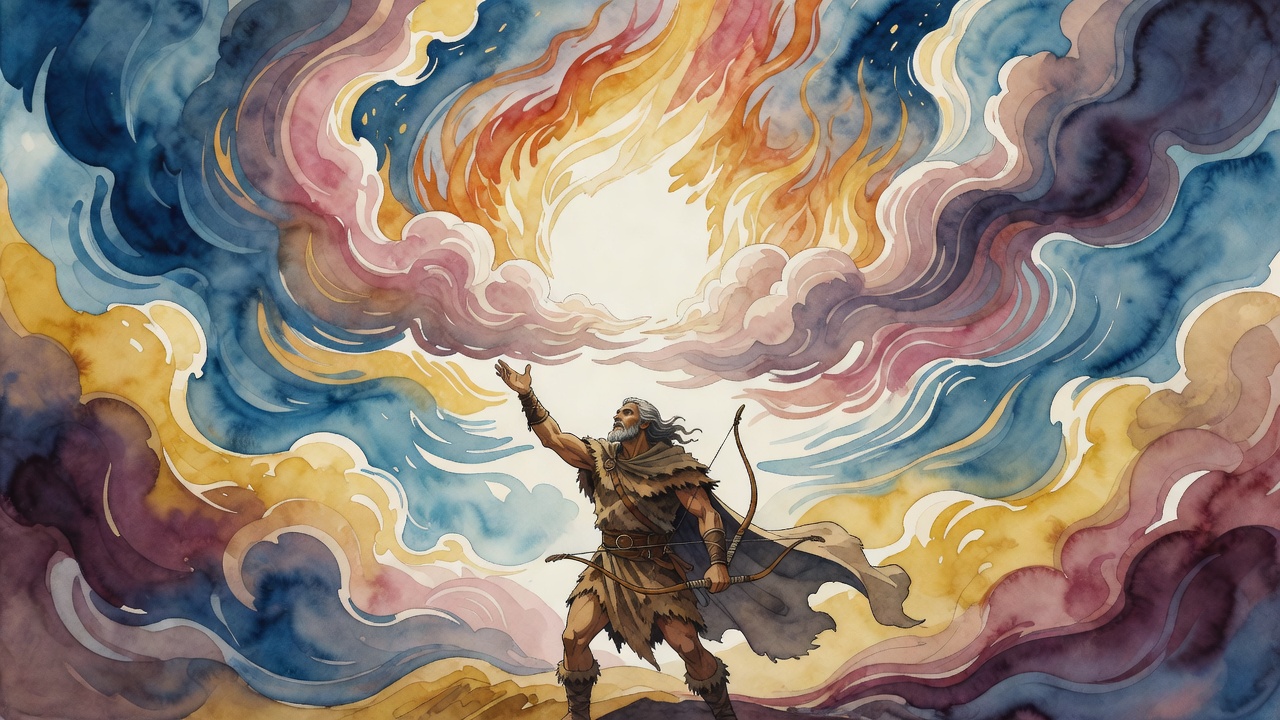
When the top was high enough, archers climbed up and loosed arrows straight into heaven. The arrows fell back to them wet with blood. The builders roared, certain now that they had wounded something up there and the war could be won, and they drove the work harder.
The blood had been sent down to harden them, and it did. They never asked whose it was. The word ran up and down the scaffolding that heaven itself had been hit, and the courses of brick climbed faster. A man who will not stop for a fallen worker will not stop for a mystery either. He will take the stain as proof and keep climbing.
The Idol With a Sword
At the summit they meant to set an image holding a sword, a god of their own making with a blade in its fist, aimed up at the sky. That was the whole project laid bare. They were not reaching toward heaven because they loved it. They were arming a rival to it.
A tower can pass as ambition. An idol with a drawn sword standing over a city cannot. They said it out loud among themselves: we will make us a name, before we are scattered. They already felt the scattering coming. The sword was how they planned to refuse it.
Mortar, Brick, Gibberish
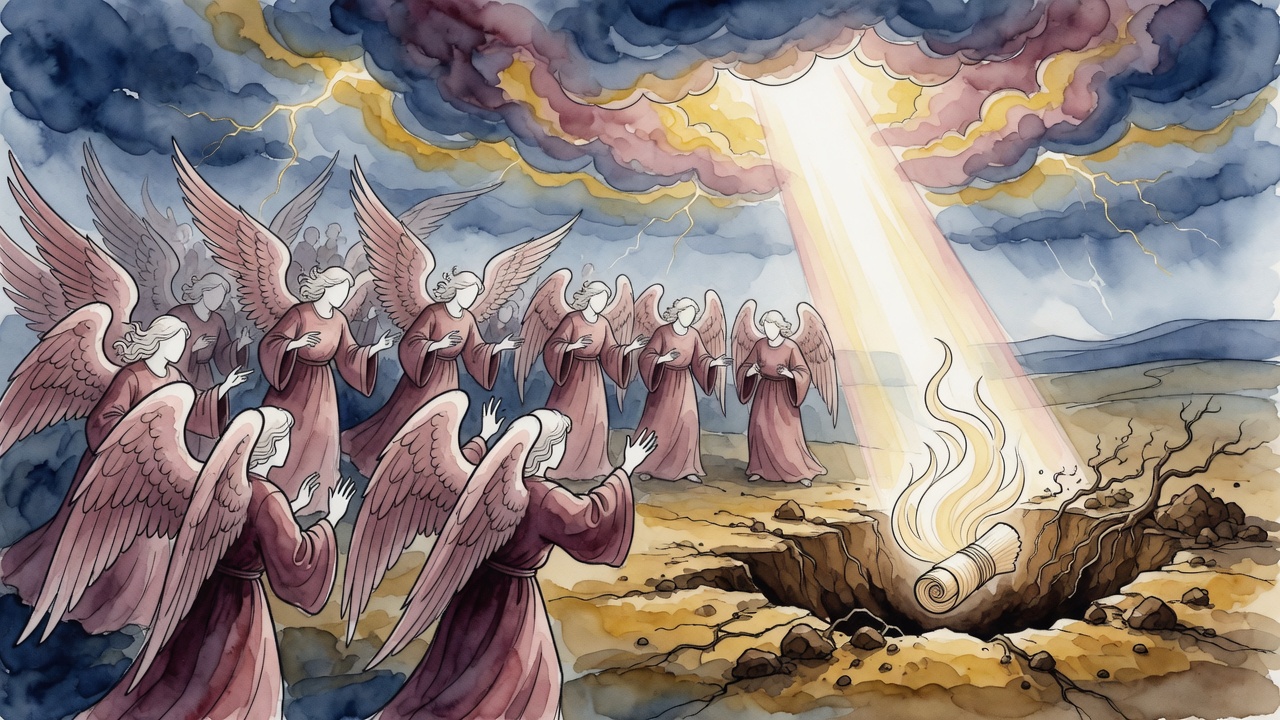
So God came down, and He did not throw a single bolt. He came down with seventy angels, one for each nation that did not yet exist, and into the one mouth of mankind He put seventy languages.
A foreman called for mortar and was handed a brick. He turned to curse the neighbor who handed it to him and heard himself speaking gibberish. The neighbor shouted back in a mouth that had been one mouth an hour ago and was not. Hands froze on the hods. The ramp went quiet in seventy different ways at once.
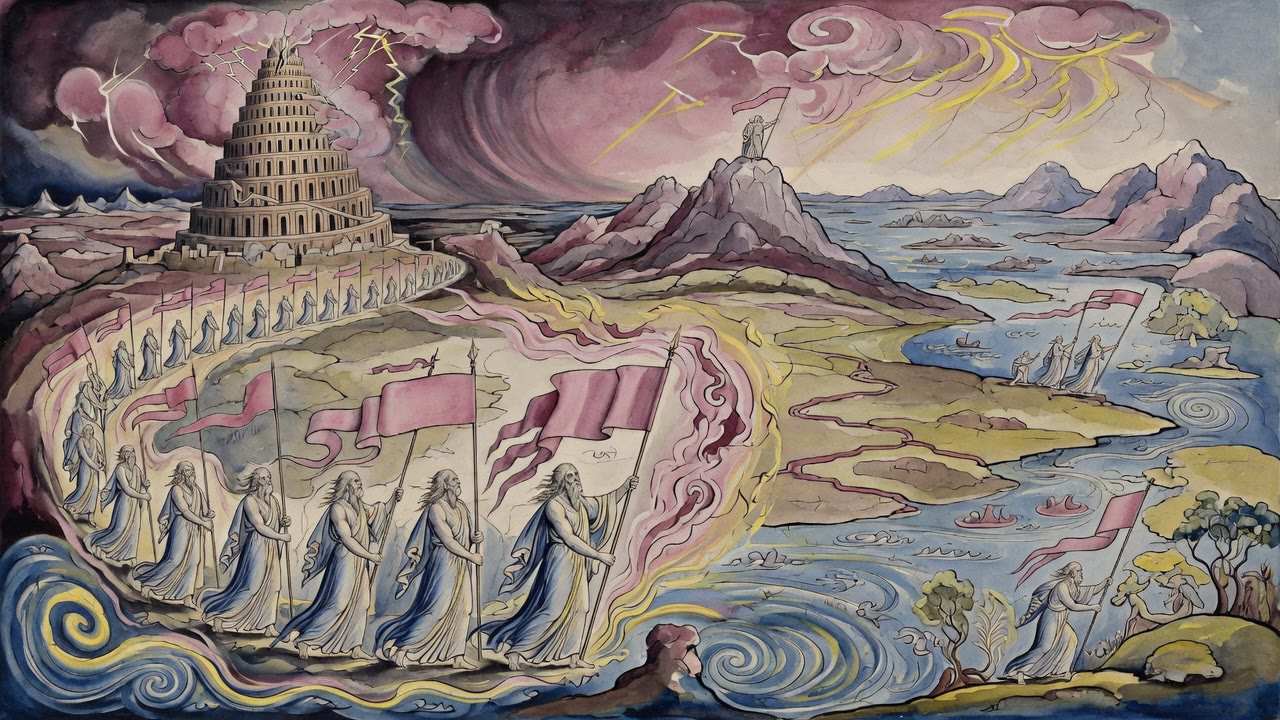
The work stopped, and it could not start again, so they scattered across the earth in tribes that could no longer plot together, and the half-built tower stood empty in the plain. A man who had been unable to refuse a command could refuse it now, because he could no longer hear it.
← All myths