Why Moses Brought the Torah Down for the Tribe of Judah
Moses walked the firmament to seize the Torah. When the angels demanded to know why a mortal deserved it, the answer went back to Judah at the fire.
Table of Contents
 Click for full size
The Cloud That Swallowed Him
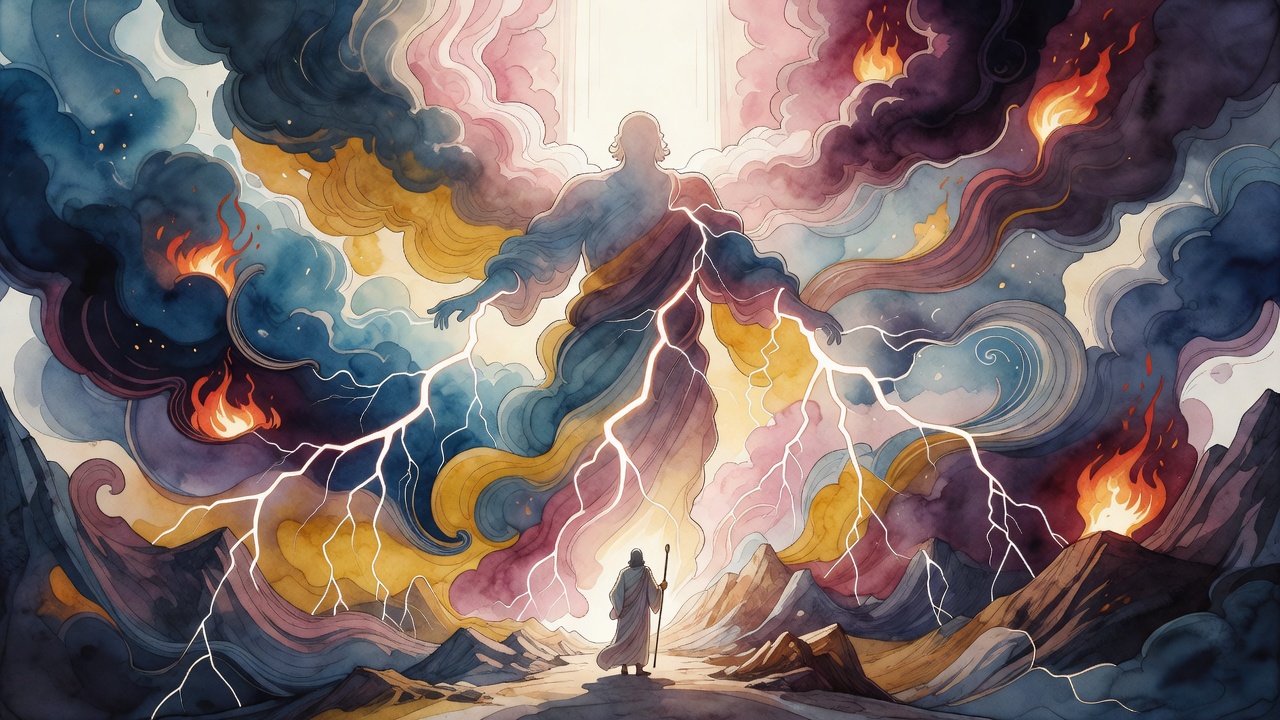
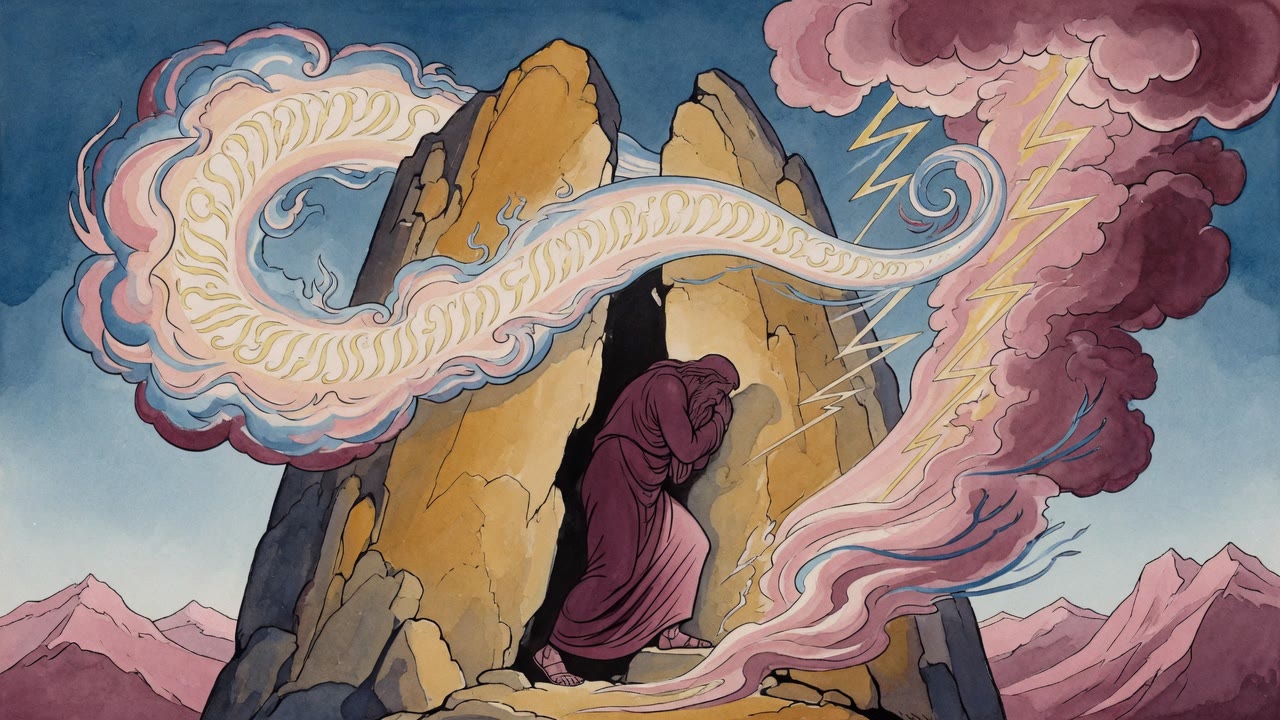
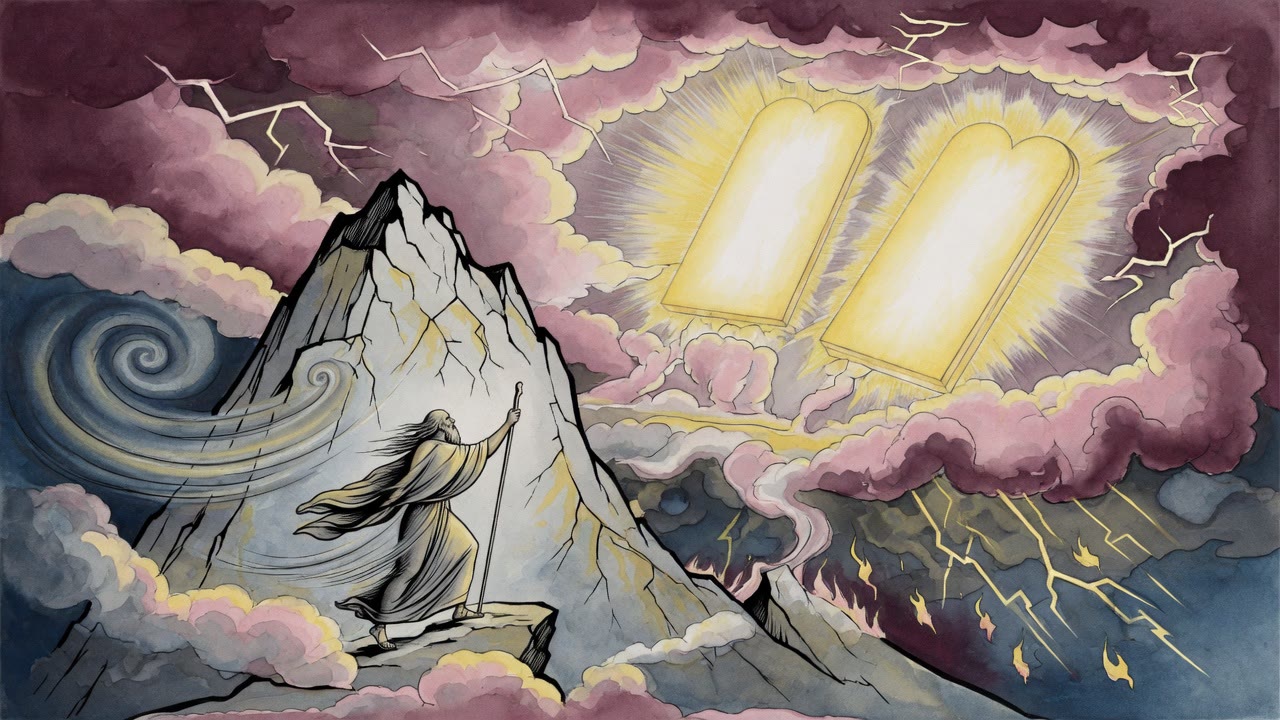
When Moses ascended to receive the Torah, a cloud crouched before him at the edge of the firmament. He did not know whether to ride it or grip it. He stepped toward it and it opened and took him inside, and then he walked across heaven the way a person walks across the earth, solid ground under his feet, the celestial order spread out in every direction, fire and wind and the hosts of heaven going about their assignments.
The first angel he met was Qemuel, commander of twelve thousand angels of destruction who stood guard at heaven's gate. Qemuel asked what a being born of woman was doing in the place of fire. Moses told him to stand aside. Qemuel refused. Moses struck him out of the way and kept moving.
More angels came. Hadarniel, so tall that his voice alone sent sparks flying from Moses's mouth when he first heard it. When Moses held his ground, Hadarniel became his escort, afraid of the prophet who had been sent from the throne itself. Then Sandalfon, who braids crowns from the prayers of Israel and whose height exceeds the other angels by a five-hundred-year journey. Then Rigyon, the river of fire where the angels themselves are remade each morning, rising from the river as new beings to sing and then dissolving again at nightfall.
Moses moved through all of it. He was carrying an assignment. The Torah had existed for two thousand years before the world was made. It was not going to remain in heaven now that Israel had been brought to Sinai.
What Existed Before the World
The Legends of the Jews preserves the teaching that seven things were created before the world itself. The Torah came first, written with black fire on white fire, resting in God's possession. Then repentance, so that the world God was about to make would have a mechanism for return after failure. Then the Garden of Eden. Then Gehinnom (the fiery place of punishment after death). Then the Throne of Glory. Then the site of the Temple. Then the name of the Messiah.
Of these seven, the Torah was the blueprint. Everything else was built from it. Heaven and earth were traced from the Torah's lines. The rivers and mountains and the dimensions of the firmament were proportioned according to what the Torah required. This is why the angels' objection to Moses had such force: they were watching someone try to carry away the document the cosmos was written from.
Their protest was sincere. What is one born of woman doing here? You, who live for seventy or eighty years at best, want to take home what was here before there was a home for it?
What God Told Moses to Answer
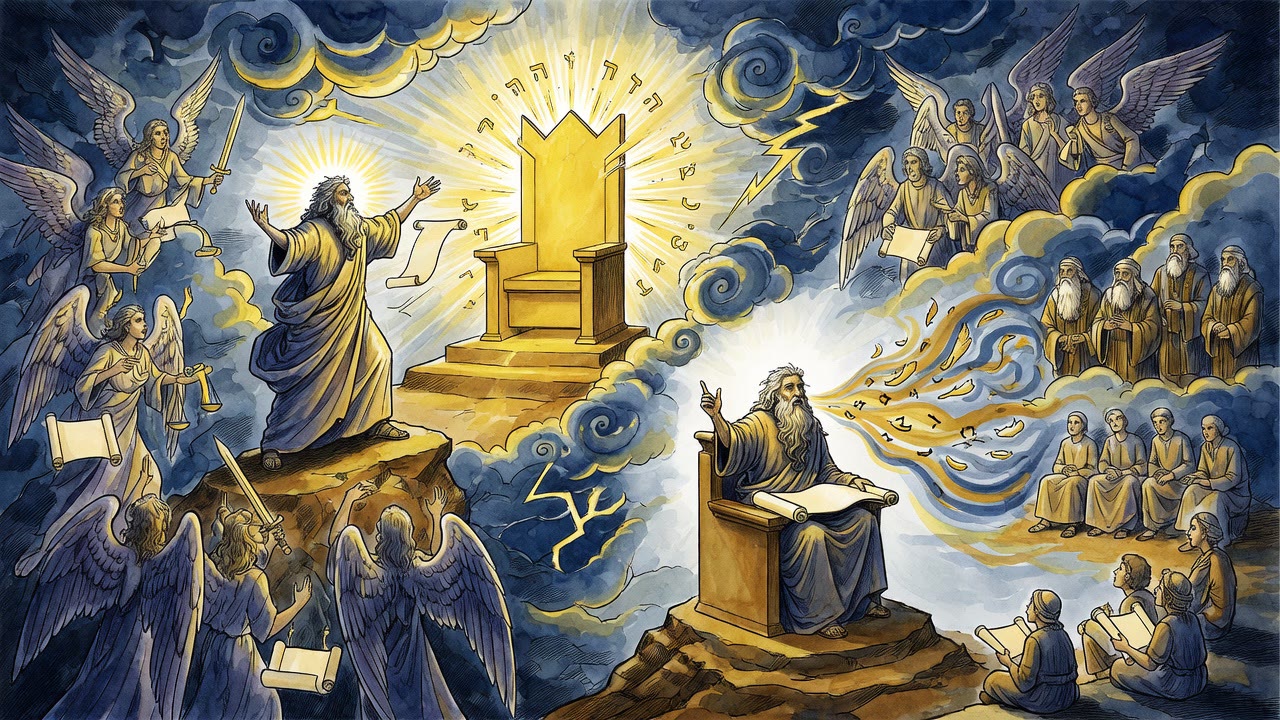
God told Moses to respond to the angels using the Torah itself. Moses asked God's permission and then spoke. He read the commandments one by one and attached each one to a reality the angels did not face. You shall have no other gods before me: did you come out of Egypt? Did you have other gods to tempt you? Honor your father and mother: do you have fathers and mothers? Do not murder. Do not commit adultery. Do not steal: is there envy among you? Is there covetousness?
The angels went quiet. They acknowledged the truth of what Moses was saying. The Torah had been given in response to the human condition, written for beings who had bodies and time and the capacity to fail. It belonged on earth because only on earth were the problems it addressed real. The angels who had been arguing for its retention were beings who had no use for it.
Why Judah's Tribe Received It First
The Chronicles of Jerahmeel records that when the Torah came down with Moses, the destination was not all of Israel simultaneously. It came for the tribe of Judah. The reason traced itself back to Tamar, to the fire, to the moment Judah said she is more righteous than I.
The Bamidbar Rabbah develops this thread. God's name is known in Judah, the Psalmist wrote. Why Judah? Because Judah sanctified God's name at the fire. Because Judah did not deflect when the evidence was in front of him. Because the confession that cracked Judah open was the same kind of honesty that the Torah required of everyone who would live by it.
The tribe of Judah carried the kingship. Jacob's blessing at his deathbed had given them the scepter that would not depart. That scepter was not the authority to rule by force. It was the authority to carry the covenant in public, to take the Torah into the palace and not leave it at the tent flap, to be the people who modeled what it looked like to receive instruction from heaven and act on it in full view of everyone watching. Judah had proven he could do this at Timnah. The Torah was carried down from Sinai for a tribe with that precedent in its founding history.
← All myths