Esther Fought the Sages to Get Her Book into the Tanakh
Haman was already on the gallows. Purim already had its dates. Esther still stood at the study hall with a book they would not take.
Table of Contents
 Click for full size
The Scroll Against Her Ribs
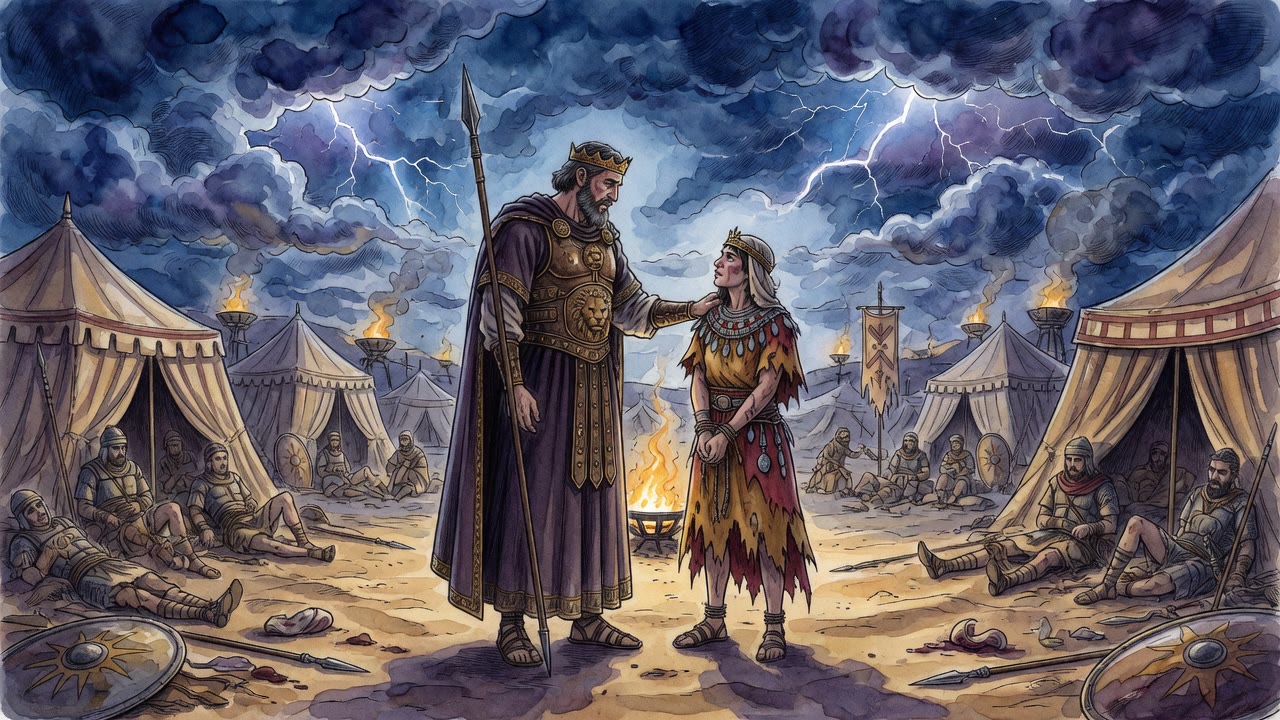
The gallows had already taken Haman. Letters had already gone out to the hundred and twenty-seven provinces, fixing the fourteenth and the fifteenth as days of feast. Mordecai sat in the seat that had been Haman's. The palace was quiet enough to hear a scroll unroll.
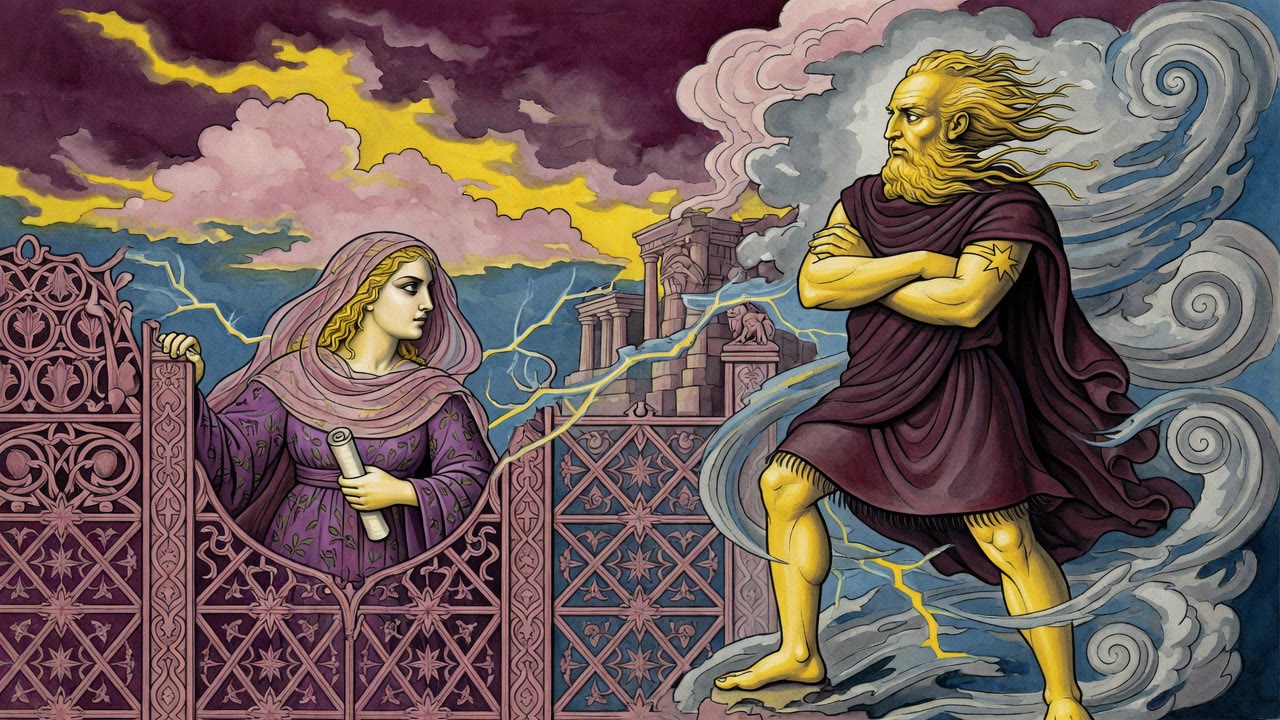
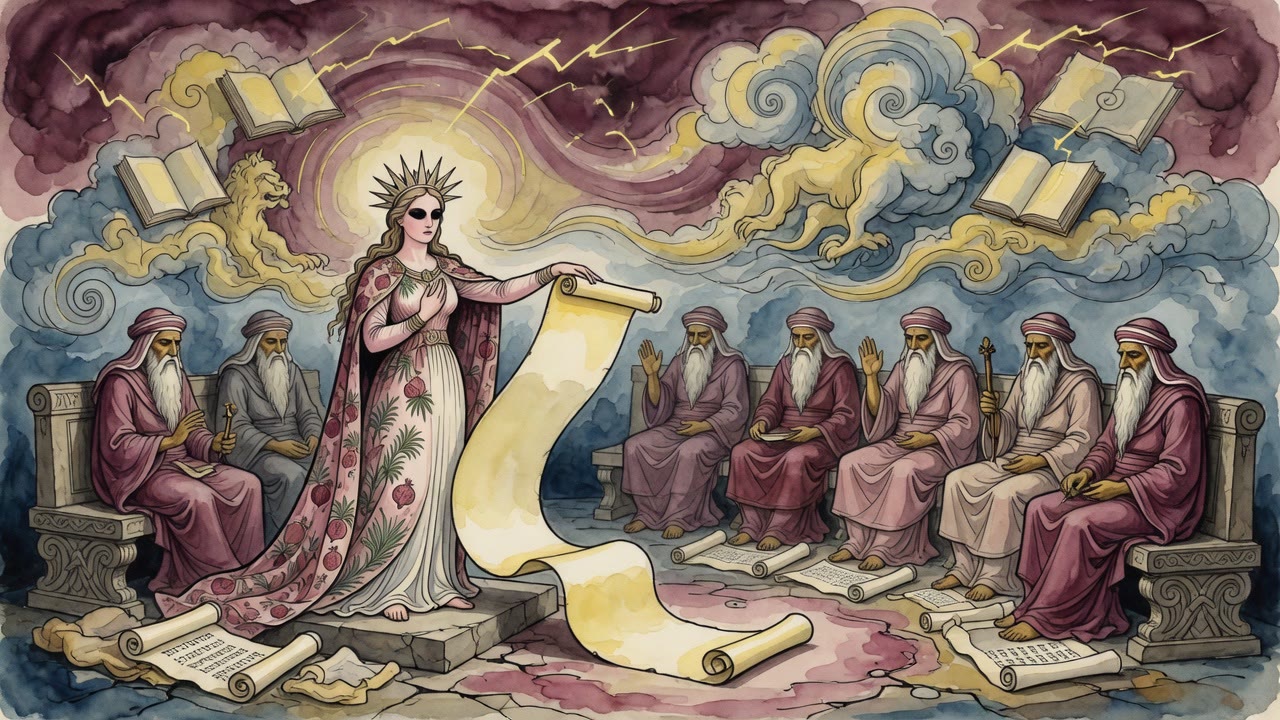
Esther stood at the door of the study hall with that scroll against her ribs.
She did not ask for another feast. She petitioned the sages to add her book inside the Tanakh (תנ״ך), the three-part Hebrew Bible, beside the Torah, the Prophets, and the Writings, so that later mouths would have to read what Persia had tried to do.
The Door Shut Twice
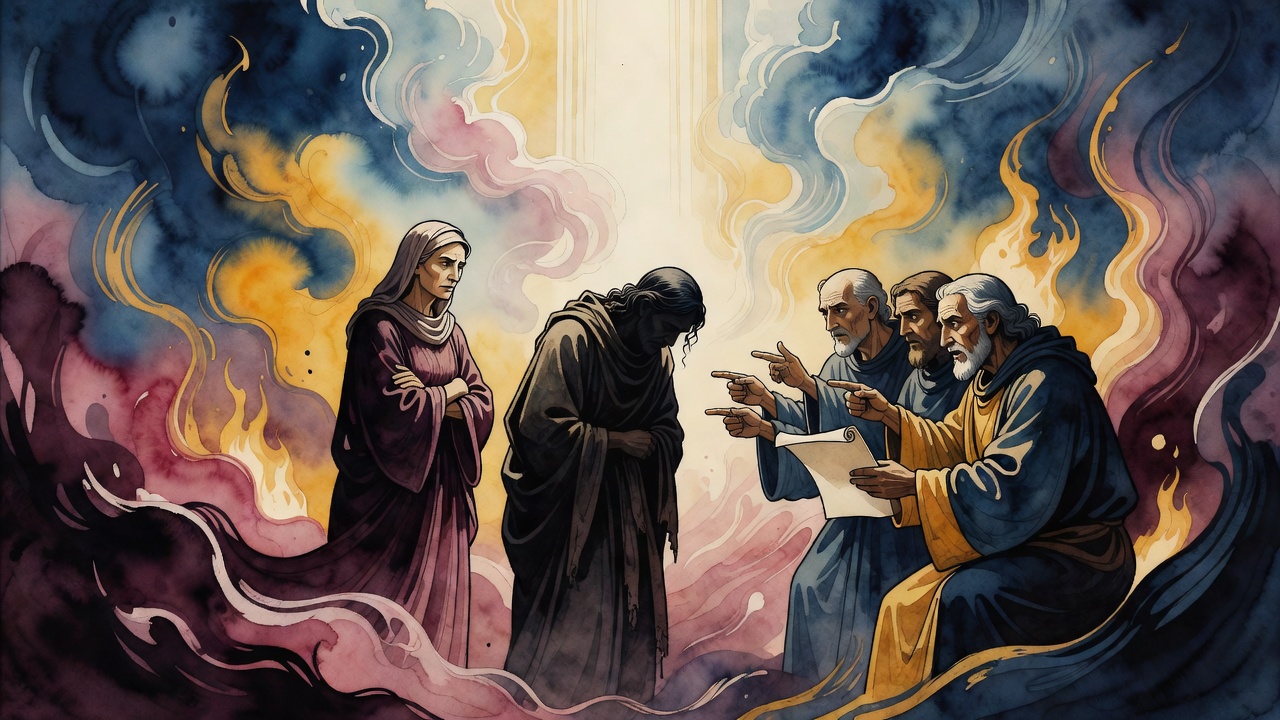
The sages inside knew her face, but they had already yielded on Purim, and adding a book was another kind of yielding. They shrank from touching the triple canon, because if one queen's history could climb onto that shelf, every later rescue would knock. They told her no.
She came back the next day with the same scroll and the same request. They shut the door again, and the latch sounded louder the second time.
She did not shout. She sat in the courtyard until the light went thin, with the parchment warming under her palm, then she knocked a third time with a verse already older than Persia, because she had decided to fight until they let her get the book onto the shelf.
Moses Had Already Ordered the Page
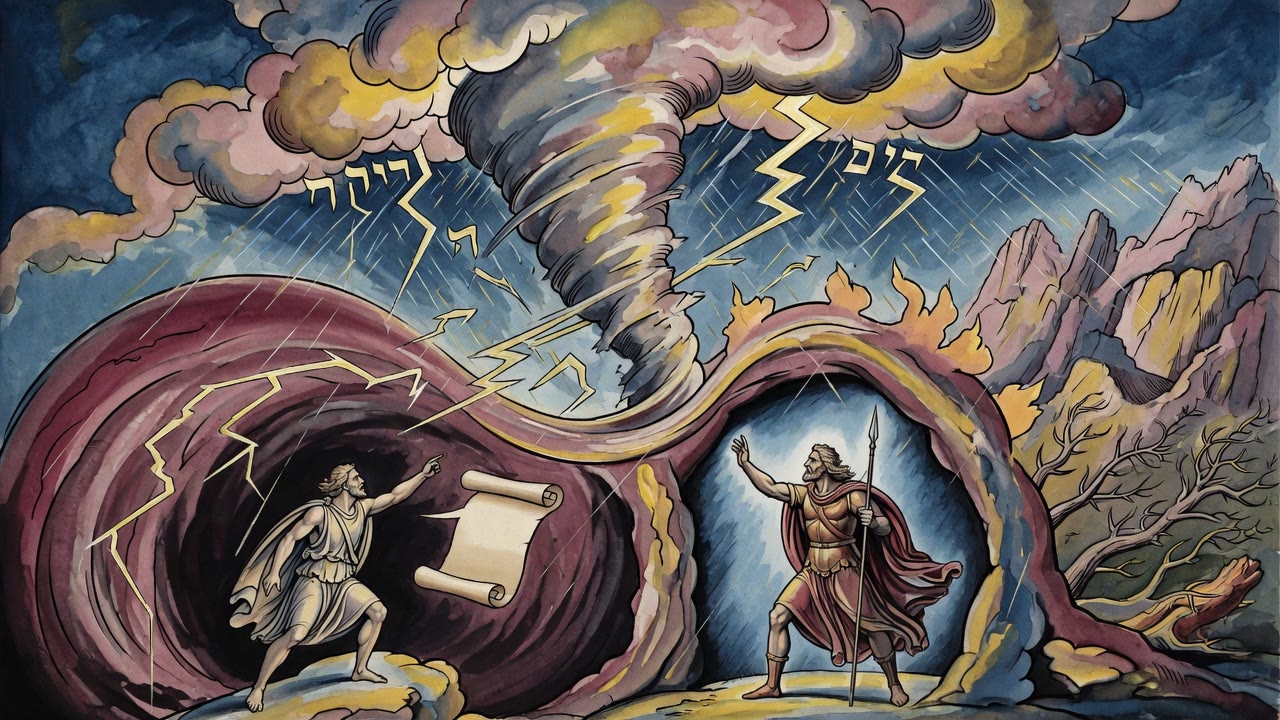
"Write this as a memorial in a book," she said, and she laid (Exodus 17:14) on the table between them. After Rephidim, Moses had spoken those words to Joshua. The war was Amalek's war. Haman was not a Persian accident. He was Agag's line, and Agag was Amalek's, and Amalek was Esau's old heat still walking.
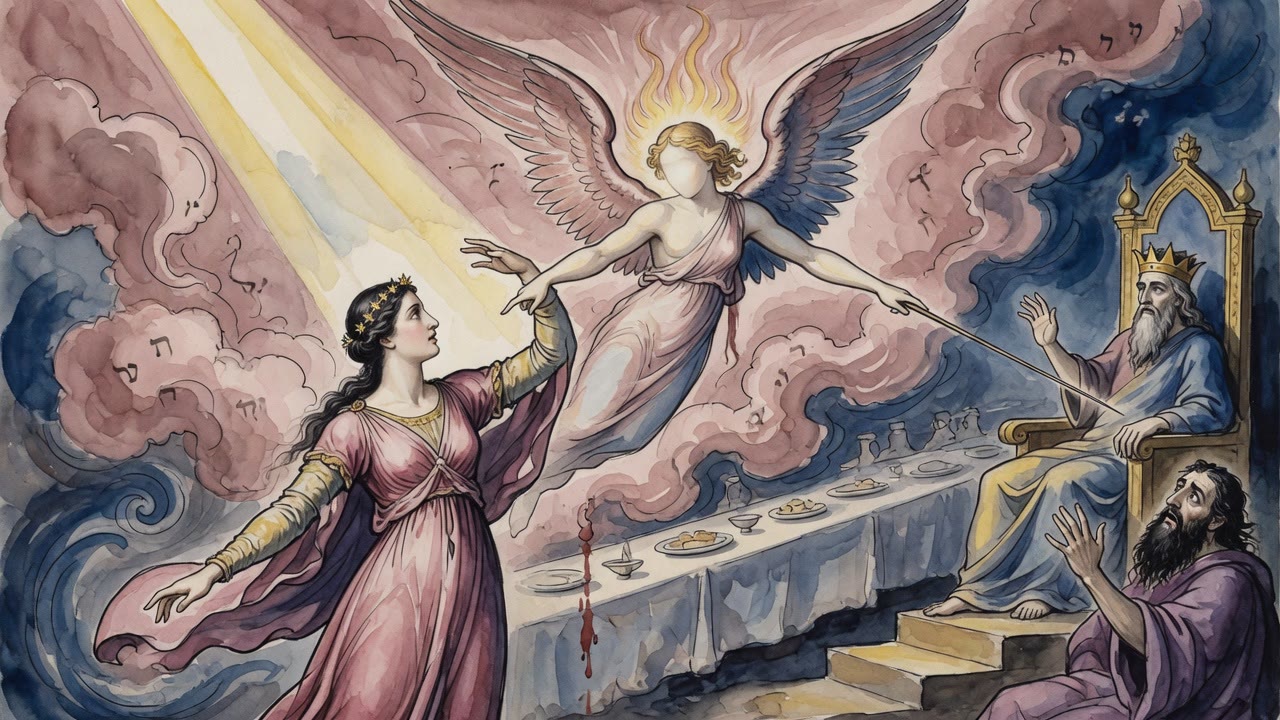
She told them what the women had finished. In the days of Samuel, Agag had muttered that the bitterness of death had already passed him. Samuel answered with a sword, and he asked God not to forget Esau's sin down the generations. Esther's own prayer, with her maidens fasting beside her, had cut the last sons of that house. If Moses was commanded to write the first blow, the last blow could not stay off the page.
Dust moved in the window light. One sage reached for the verse, then pulled his hand back as if the ink might burn. They could refuse a queen, but they could not easily refuse Moses.
The Nations Already Knew
Still they held one fear. If the book entered the canon, the nations would find a permanent record of their ancestors' shame, and Jews lived under those nations' hands. A hidden story can be survived. A holy story can be used against the people who keep it.
Esther did not flinch. "It is already written in the chronicles of Media and Persia," she said. "It has already been read aloud in every province on the feast days you yourselves sent out. You would not be exposing a secret. You would be admitting a public thing."
A dog barked in the courtyard. Someone in the hall laughed once, without joy, because she was right. The nations already knew. The only people still pretending the page was private were the men who guarded the shelf.
Written Below, Sealed Above
They took the book.
They did not take it as ordinary history. A story that names neither God nor miracle, and still turns a gallows into a feast, does not get written by cleverness alone. The ruach hakodesh (רוח הקודש), the holy spirit, had to have sat in the ink. What they resolved below, in that hall, was endorsed above. The Book of Esther went into the Writings and did not come out again.
Purim stayed on the calendar, and the mouths that keep festivals say it will stay even in the world to come, because the warfare Moses was told to remember did not end at Rephidim. It ended, for a time, in a palace, in a queen who would not let them misfile the war.
Esther left the hall without the scroll. It was no longer hers to carry. It belonged on the shelf that had tried to stay closed.
← All myths