Moses and Akiva Were Two Scholars Across Time
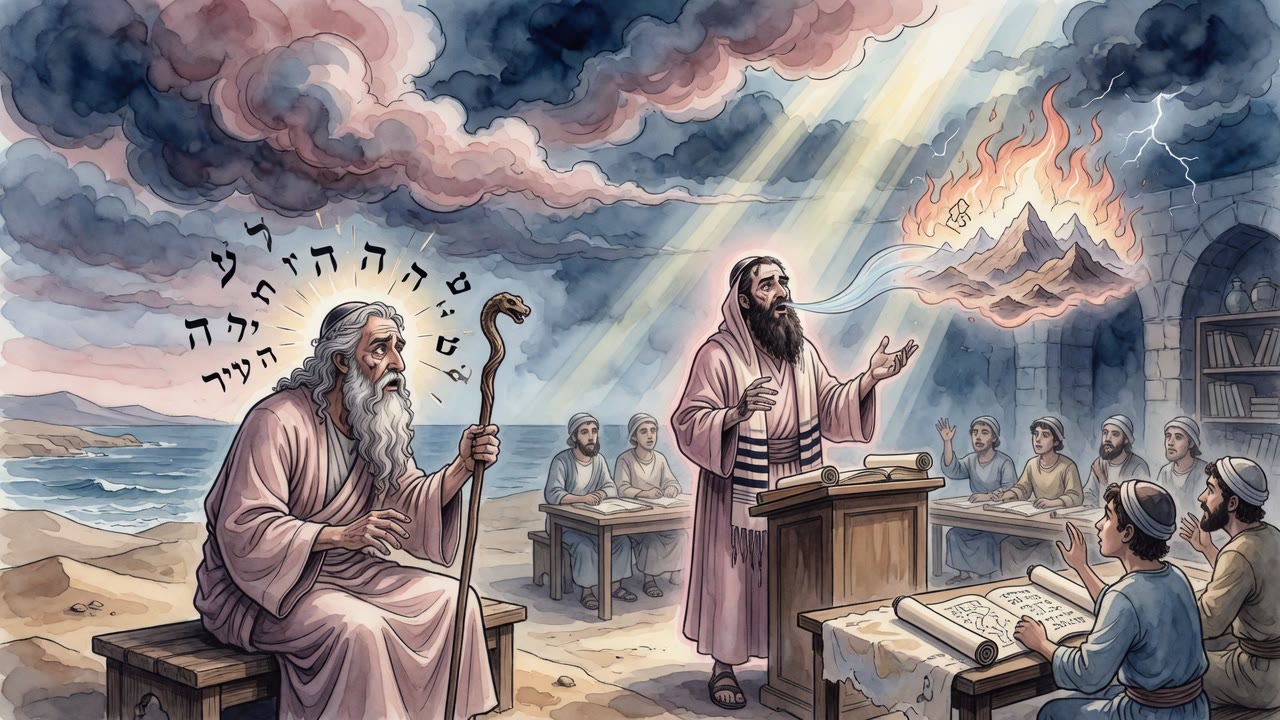
Moses sits in Rabbi Akiva's classroom and cannot follow the lesson. Then a student asks the source of the ruling, and Akiva says: Sinai.
Table of Contents
 Click for full size
Moses in the Back of the Room
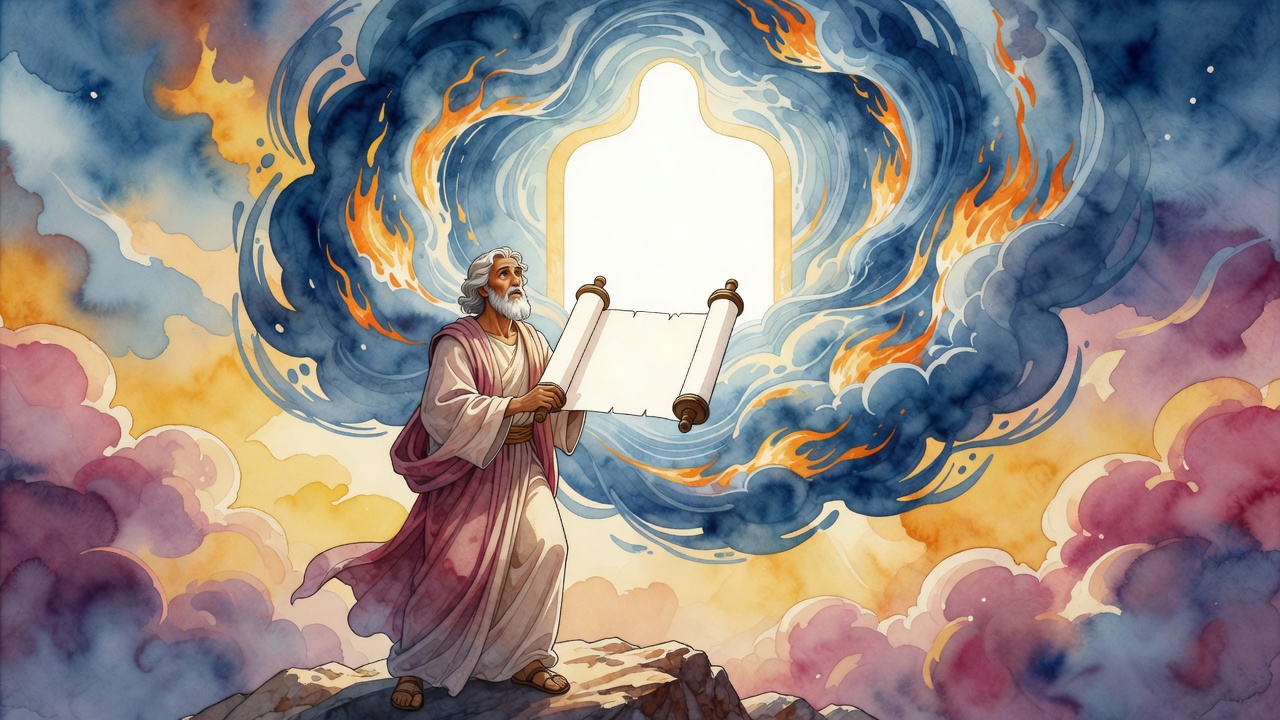
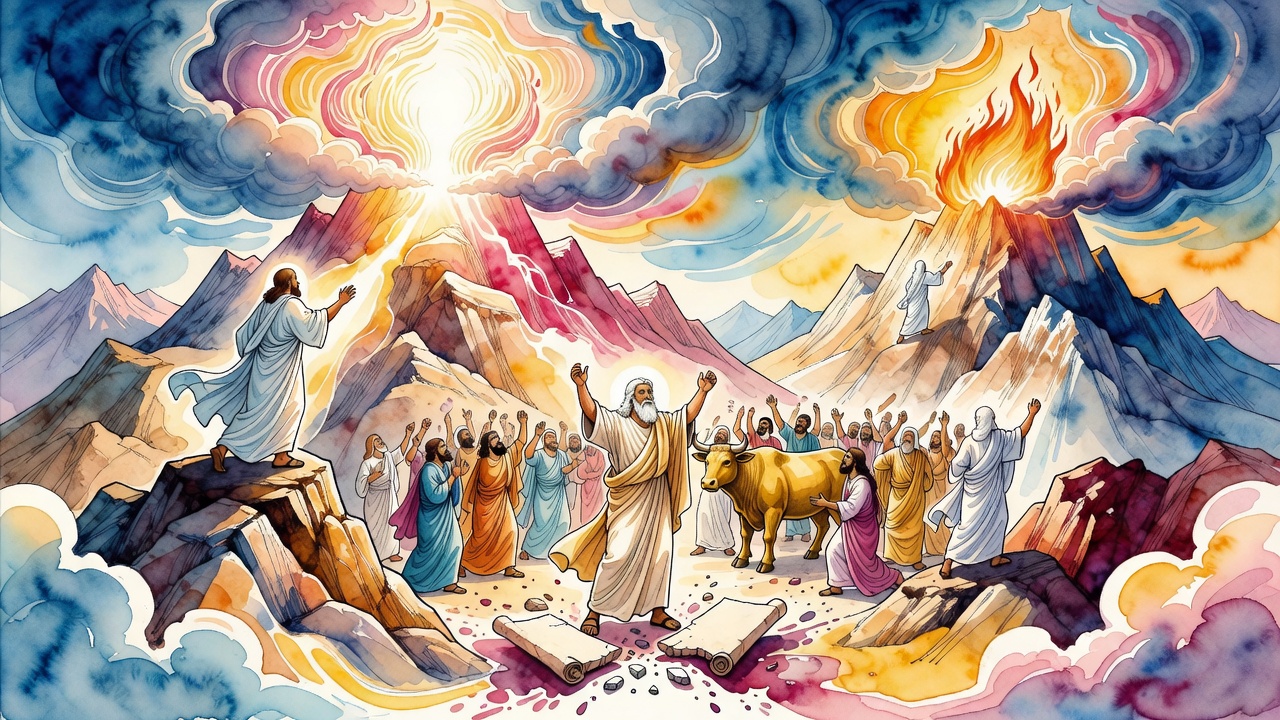
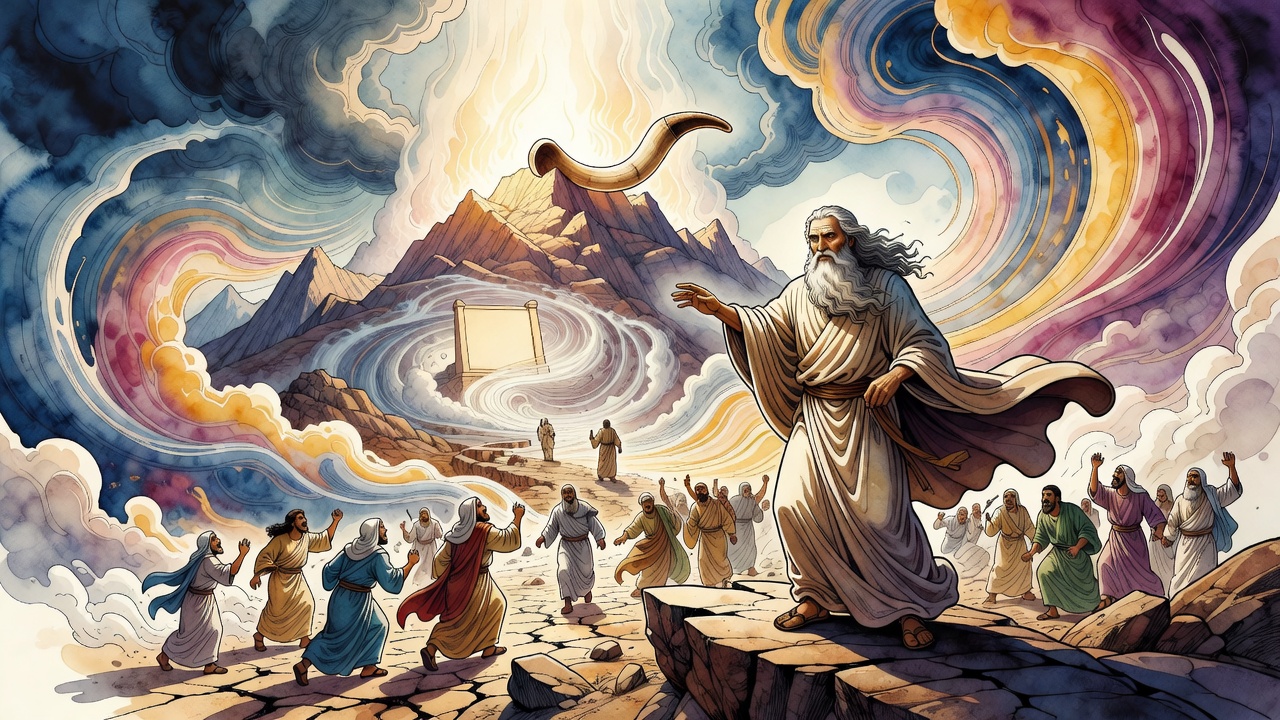
Moses ascended to heaven and found God placing small crowns on the tops of the letters of the Torah. Every letter already carried its full meaning. The crowns were extra. Moses asked what they were for. God told him: a man named Akiva son of Joseph will one day derive from these tiny marks heaps upon heaps of law. Moses asked to see him. God placed Moses in Akiva's academy and seated him at the back, in the eighth row, behind students he had never met.
Akiva was already mid-teaching. Moses heard what Akiva said and grew weak with distress. He could not follow the argument. The man who had received Torah at Sinai, who had heard God speak the law directly, was sitting in a classroom and could not understand what was being derived from the law he had received. The tradition holds this fact without softening it. Moses was lost.
The One Question That Restored Him
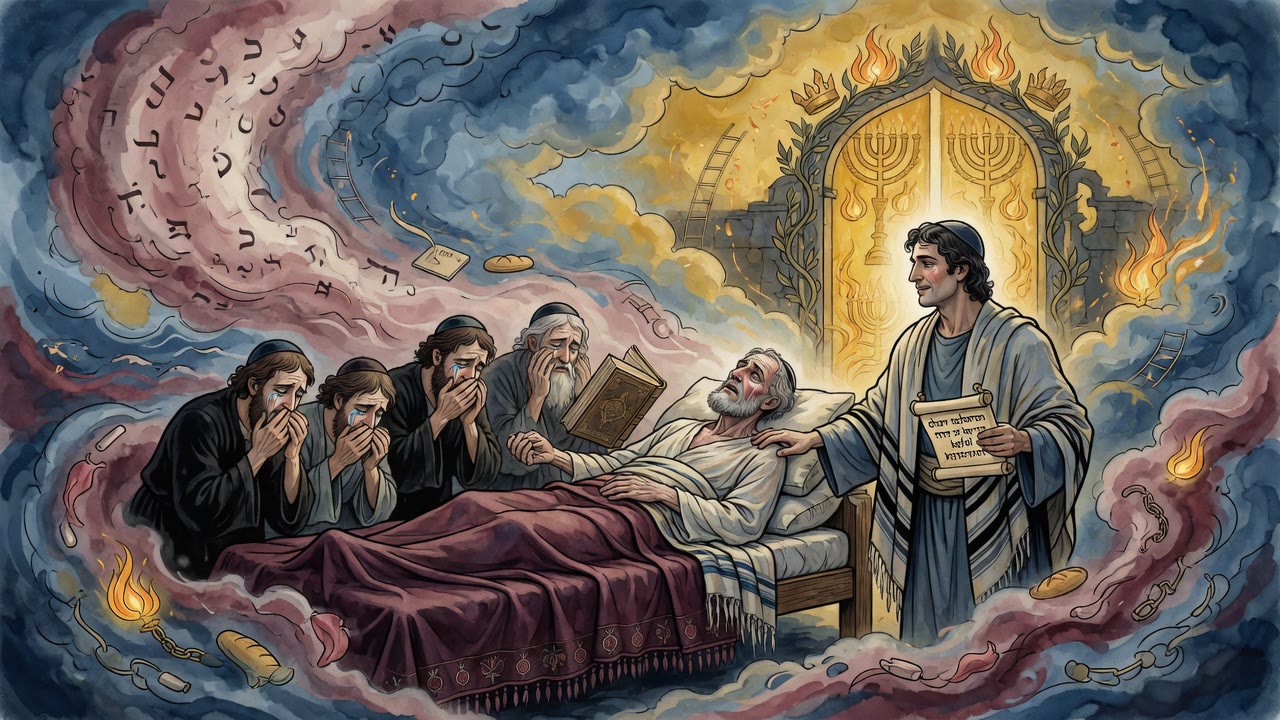
Then a student asked Akiva where this ruling came from. Akiva answered: it is a law given to Moses at Sinai. Moses's distress settled. He had not understood the route by which Akiva arrived at the conclusion. He understood none of the steps. But he heard his own name at the origin. The future had exceeded his comprehension without severing itself from his revelation. Akiva had gone so far beyond Moses that Moses could not follow, and Akiva had done it all in Moses's name.
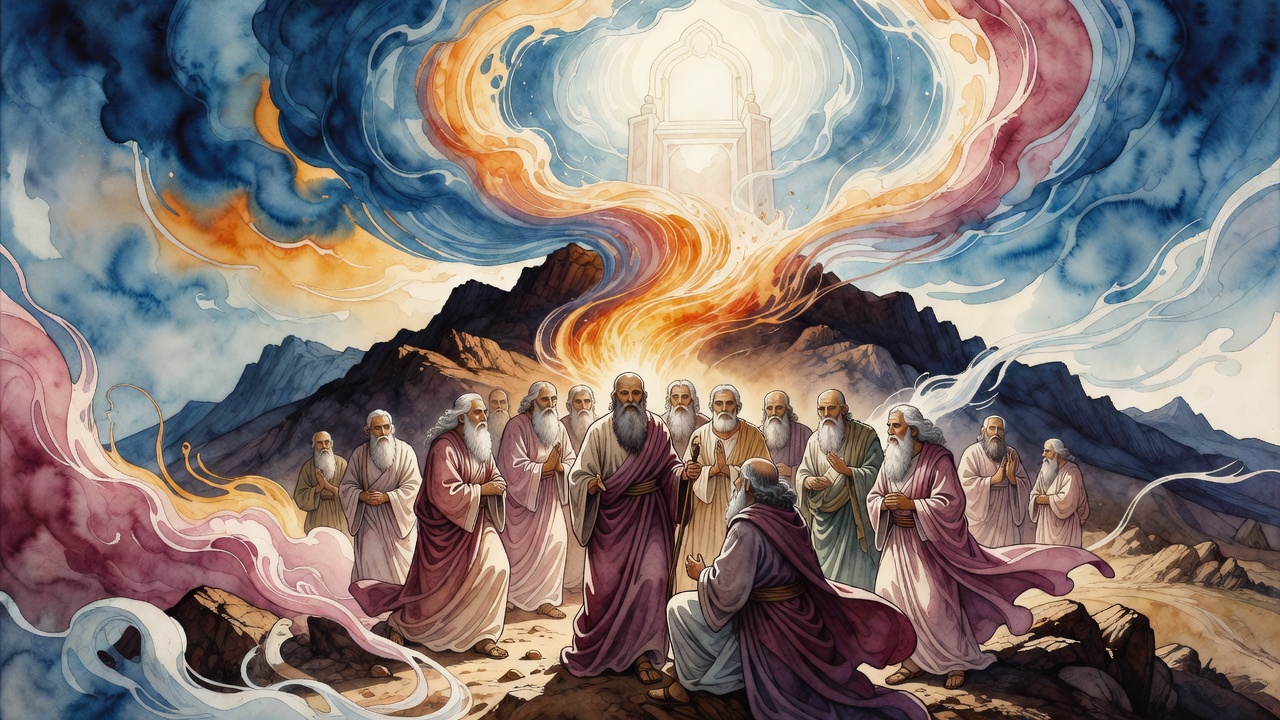
Yalkut Shimoni adds a second scene to this tradition. When God told Moses I will be with your mouth and instruct you, the sages read a doubling: one promise covered speech, the other opened the hidden storehouses of Torah. So God carried Moses behind the curtain that veils the divine presence and showed him the sages of every future generation. Rank after rank of the Sanhedrin (the supreme court of seventy-one sages) in the Chamber of Hewn Stone, turning Torah over in forty-nine ways. Then Moses's eye fell on Akiva building towers of law from the crowns stroked onto letters. Moses drew back, overwhelmed. God comforted him: this one too is from you, this one too was given at Sinai.
Adam Grieved Before Moses Did
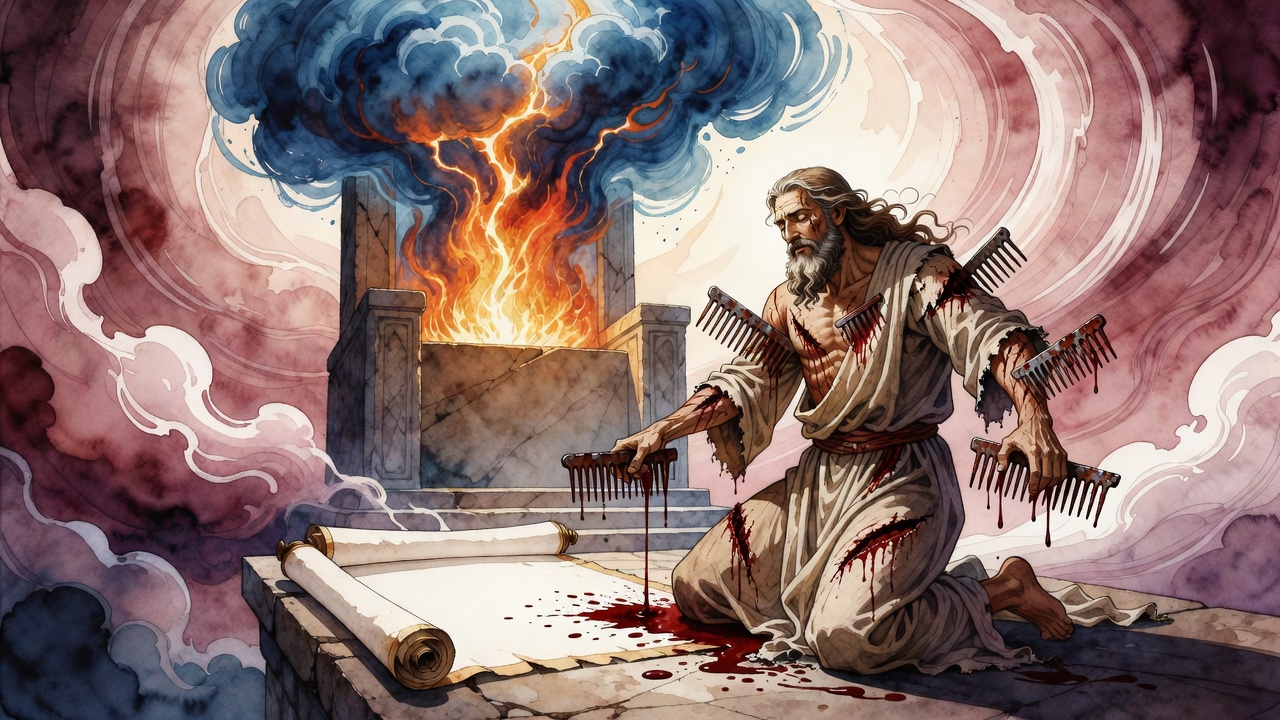
Yalkut Shimoni preserves a tradition attributed to Rav: Adam spoke Aramaic. The proof was a phrase in Psalms whose wording carries an Aramaic flavor. The first human tongue was not the Hebrew of Scripture but the language the Jewish people would carry through Babylon and use in the academies of the exile. Resh Lakish wove this into the vision God gave Adam at creation. When Adam was shown the long parade of generations and their Torah teachers, he watched age after age rise and pass. Then he reached the generation of Akiva, the master who built towers out of letter-crowns. Adam rejoiced in Akiva's Torah and mourned Akiva's death, because Adam saw what was coming: iron combs and a Roman execution while Akiva stretched out the final syllable of the Shema (Hear O Israel).
The grief that Adam felt looking forward was the grief that Moses would have felt looking forward from Sinai, if Moses had been shown Akiva's martyrdom alongside Akiva's brilliance. The tradition does not say Moses saw the death. It says Moses sat in the classroom and could not understand the teaching. Both facts belong to Akiva: the heaps of law and the iron combs. The crowns on the letters produced both.
Sifrei's Death of Rabbi Akiva
Sifrei Bamidbar on the war with Midian records twelve thousand soldiers from twelve tribes going into battle. Rabbi Akiva asks why the Torah needs the phrase and they were handed over, when the twelve thousand could have been stated directly. His answer: to teach that these were just and righteous men who gave of themselves for the cause. The annotation is technical. But the sages who preserved it knew what happened to Rabbi Akiva after he asked questions in texts. He was arrested. He was tortured with iron combs by the Romans. He recited the Shema while dying. He prolonged the word one, echad, for as long as his breath held.
The story of Moses in the classroom ends with comfort. The story of Akiva does not. Moses sat confused in the back row and found his name at the root of the thing that confused him. Akiva stretched the word one until it ran out. Both of them returned, in the end, to the single fact: at Sinai it was given.
← All myths