Sinai Had a Name Before the Burning Bush Changed It
The mountain had a name before Moses climbed it. A thornbush renamed it. A killing cloud settled over it. Then six hundred thousand stood at its base.
Table of Contents
The mountain had a name long before Moses came near it. From the day the heavens and the earth were formed, the place was called Horeb. Not Sinai. That name came later, earned by a bush.
 Click for full size
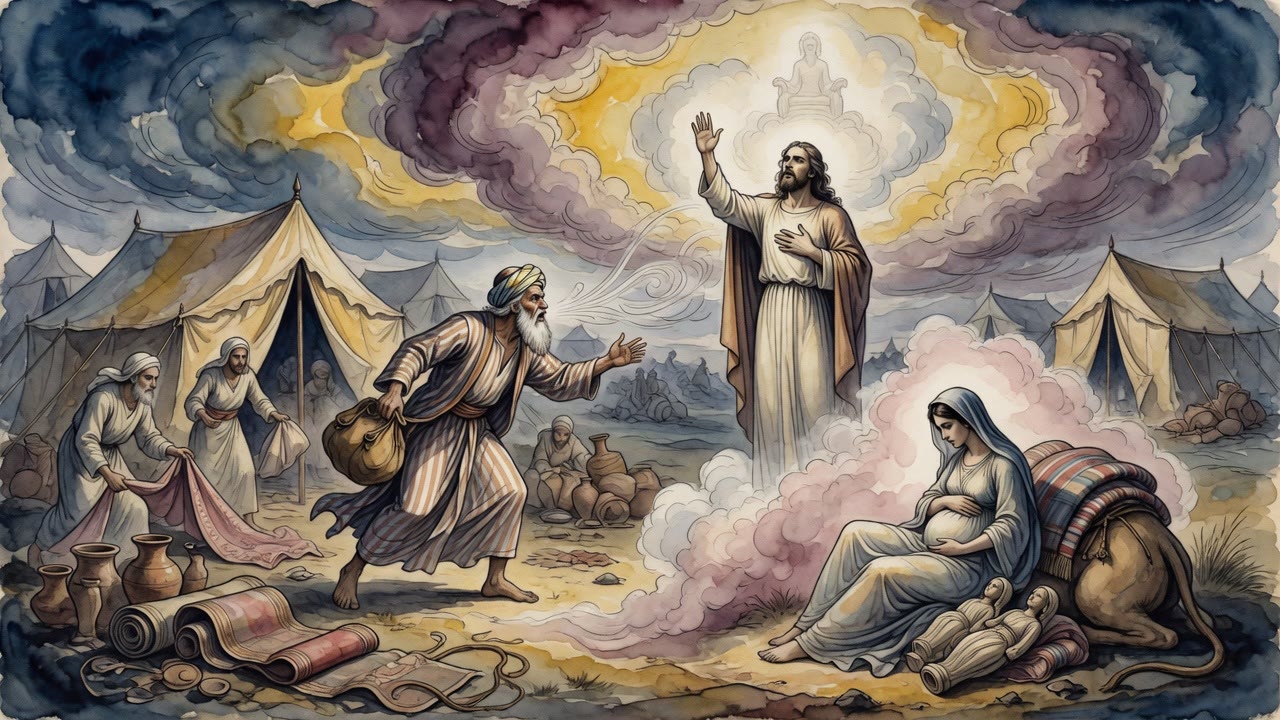
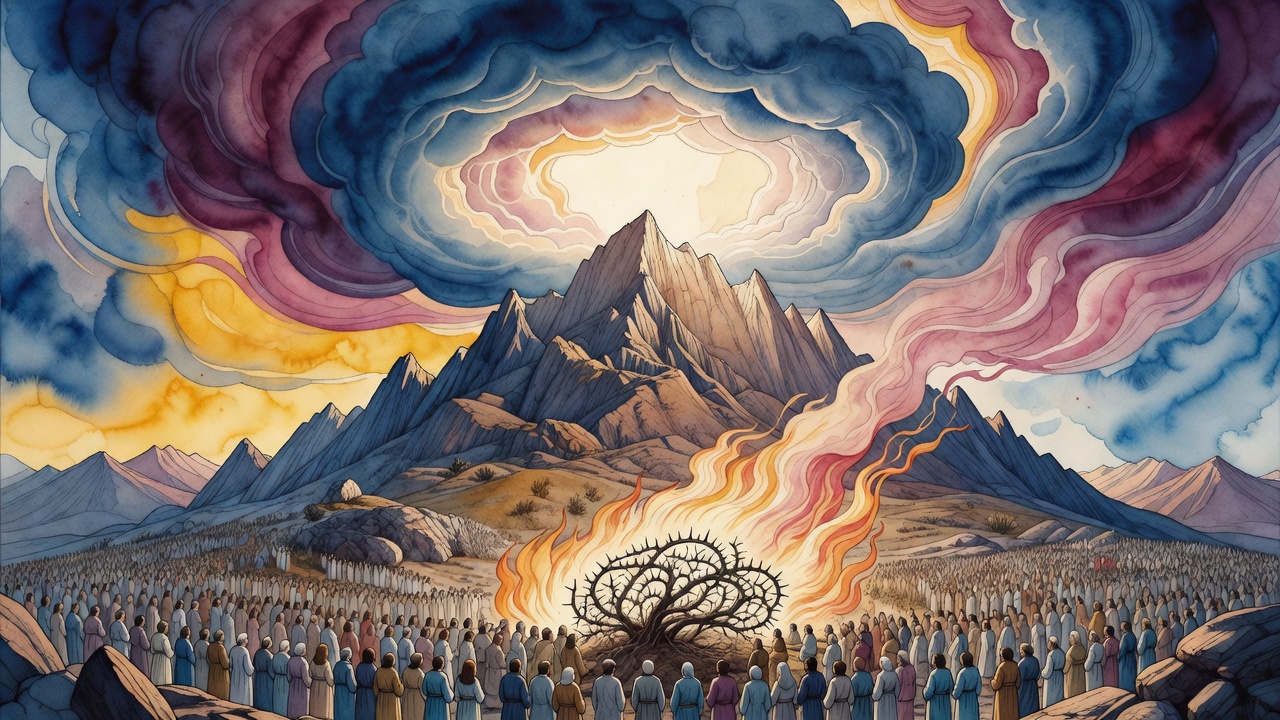
A s'neh (סנה), a thornbush, was burning on the slope. Fire moved through it, and the branches did not char, and the leaves did not curl. Moses turned aside from his flock to look. God called from inside the flame (Exodus 3:4), and everything changed, though the mountain stood as it had always stood. The word for that bush, s'neh, became the name of the place. Sinai. The mountain did not remember the voice or the tablets or the thunder that came later. It remembered the bush.
What the Mountain Was Called
That is a peculiar kind of immortality. Not the covenant. Not the cloud. Not the tablets Moses carried down in his arms. The mountain is named for a thorn-plant that held fire without dying. Horeb became Sinai because a bush burned in a way that was impossible, and a shepherd stopped to look.
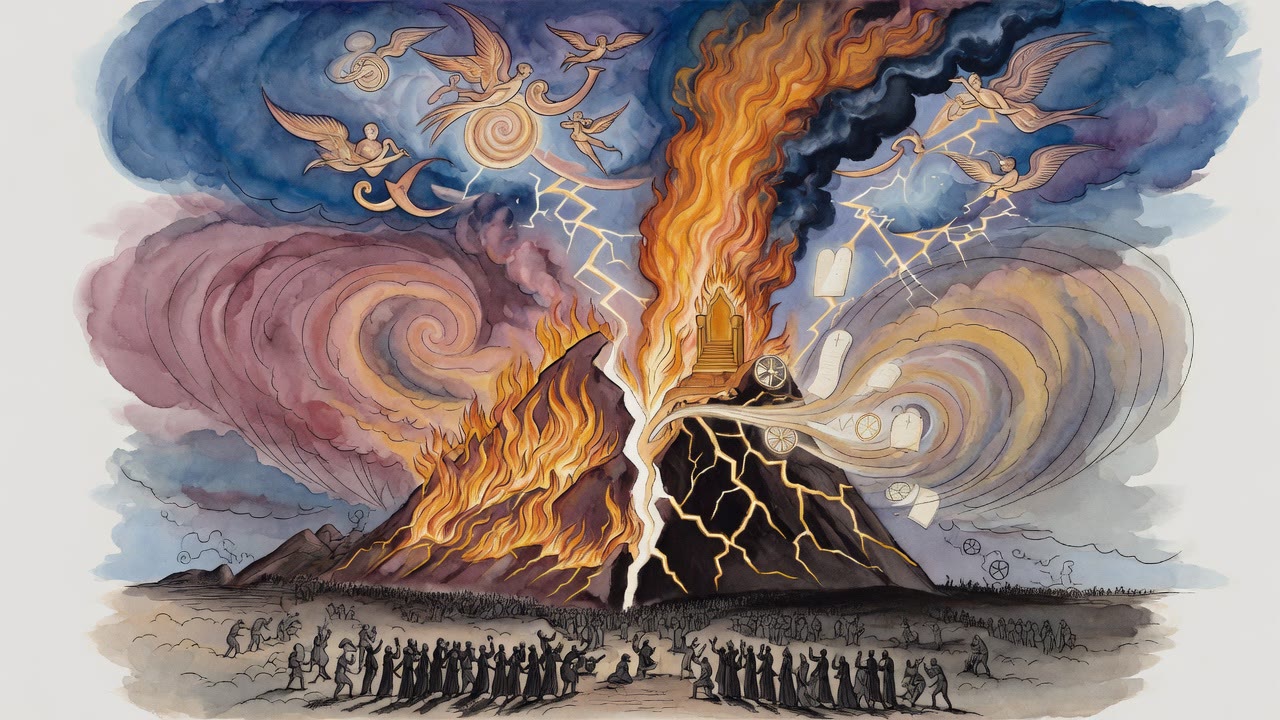
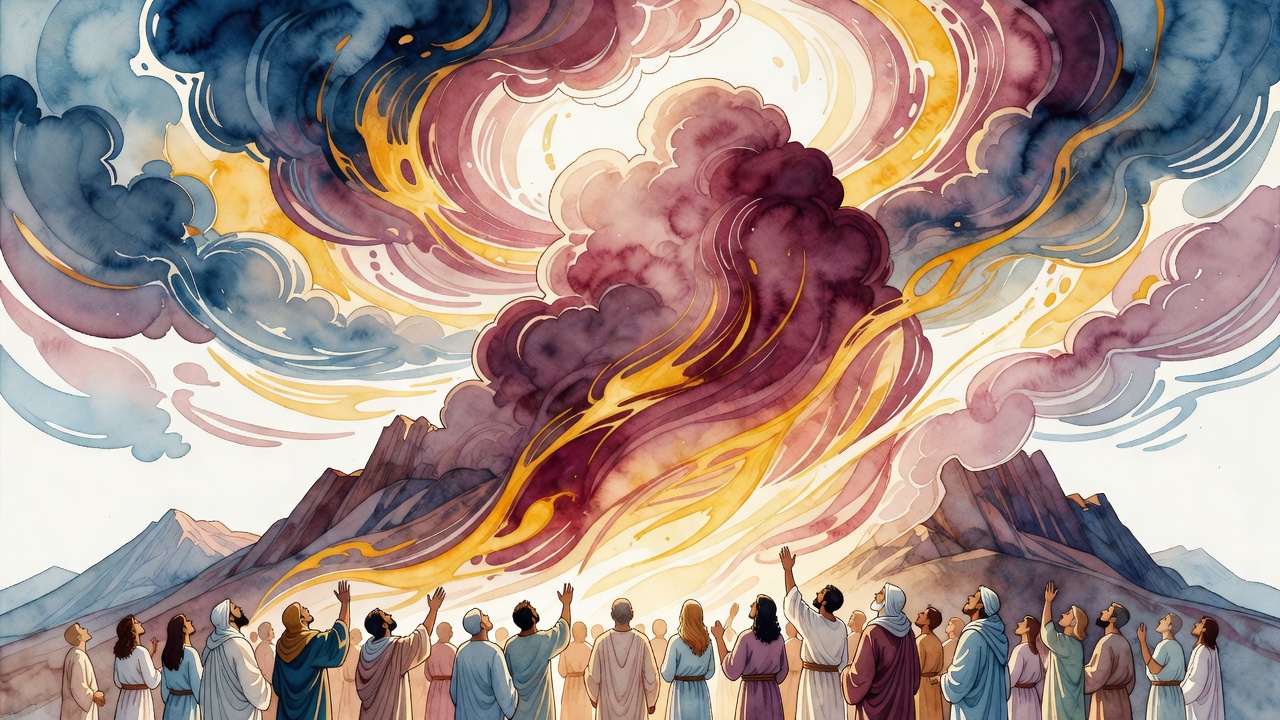
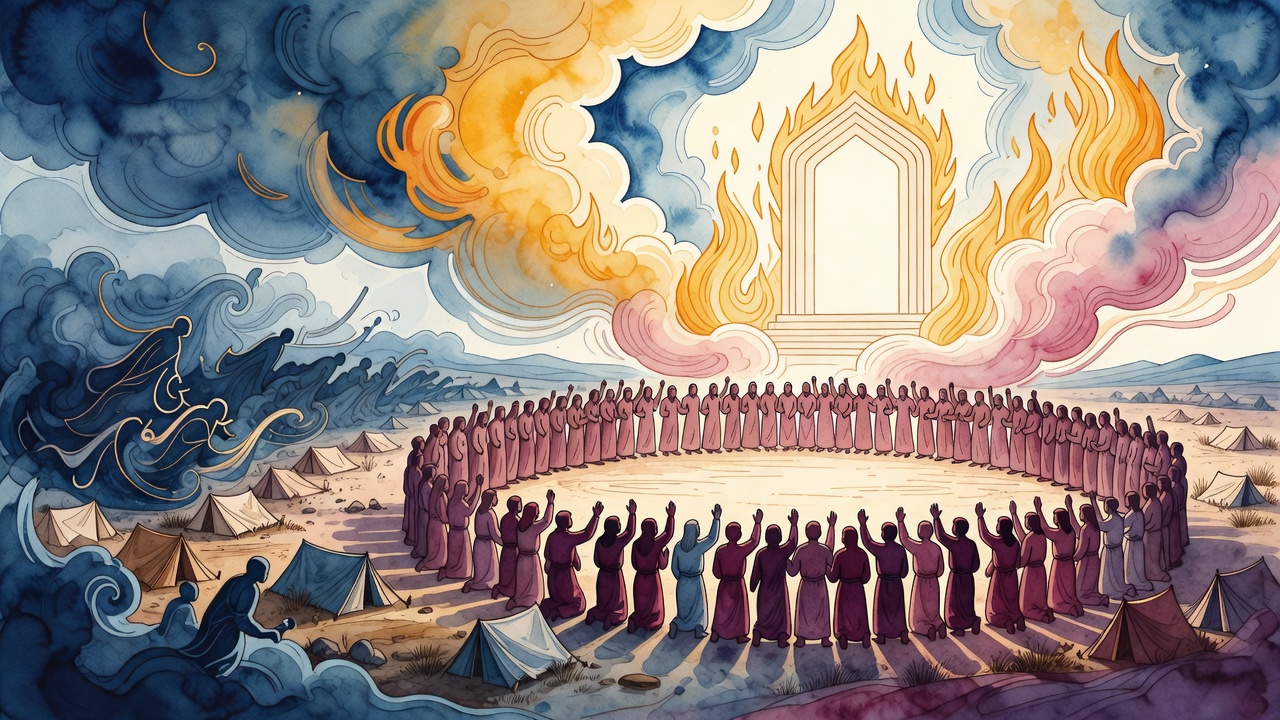
When Moses brought the people to Sinai three months after crossing the sea (Exodus 19:1), the mountain was no longer the place of that private encounter. On the first day of the month of Sivan, a heavy cloud settled over the camp. Not the pillar of cloud they had followed through the desert, familiar by now, almost domestic. This one sat over the mountain like a held breath. Everyone except Moses received the same instruction: do not approach. Do not touch the base. The border between the camp and the mountain was a line that killed.
The Cloud That Settled Over Sivan
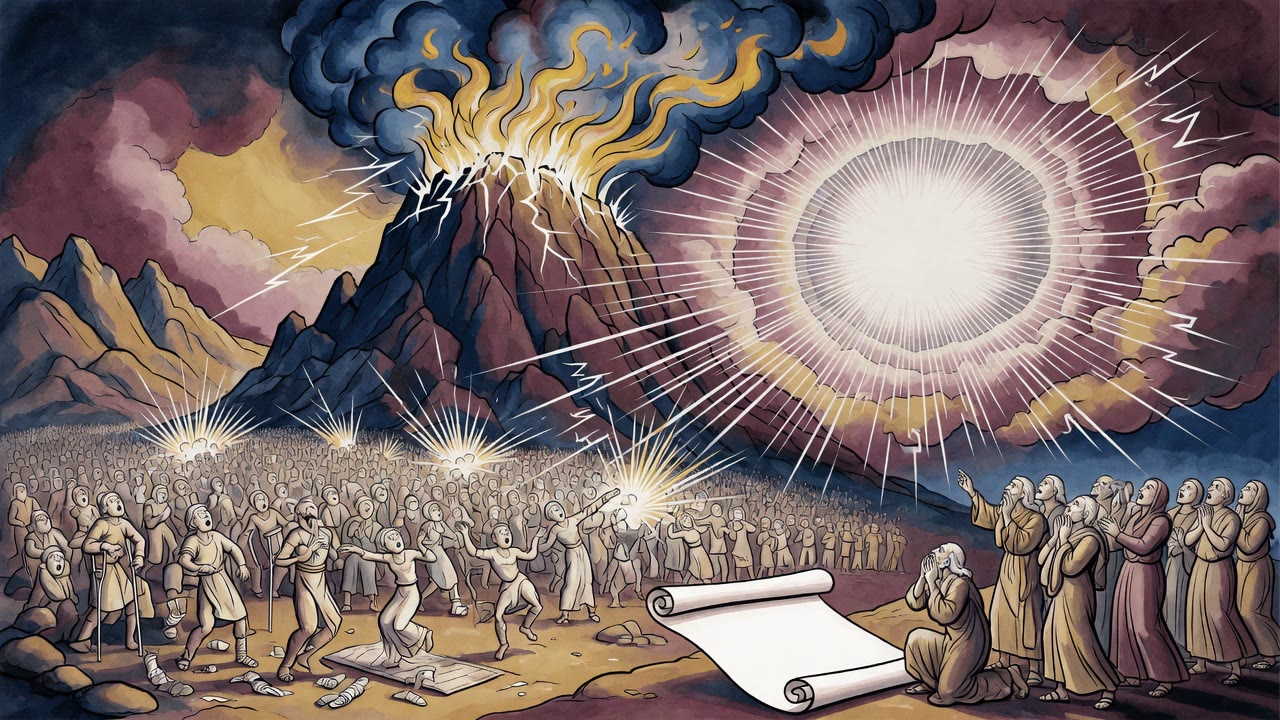
The punishment for crossing was not vague. Anyone who pushed toward the mountain would be struck down by hail or cut apart by fiery arrows. Even the animals were forbidden from grazing at the slope's edge. Six hundred thousand people camped at the foot of a mountain that would kill them if they wandered too close. The thunder and lightning had already begun. The sound of a shofar (a ram's-horn trumpet) was growing louder than any human breath could sustain, and it kept growing.
Moses went up alone. The people watched from below and trembled (Exodus 19:16). They were right to tremble. They were standing at the boundary where heaven pressed against earth, and that border had been made physically dangerous. A sheep that strayed would die. A man who leaned too close would die. What was about to happen was not a lecture. It was a meeting between two things that were not meant to touch, and the mountain was the contact point.
Six Hundred Thousand Standing Whole
Among those six hundred thousand, something was true that would not be true afterward. They arrived whole. When Israel stood at Sinai to receive the Torah, there were no blind, no deaf, no lame among them (Song of Songs 4:7). Every impairment was lifted. The damaged ear heard the voice from the mountain. The clouded eye saw the lightning. The man who had walked with a limp stood straight at the base of Sinai. The people received the Torah at a moment of perfect receptivity, every faculty open, every sense operating.
It did not last. The Golden Calf ended it (Exodus 32:25). After the calf, the impairments returned, and the people became again what they had been before the mountain. But the tradition held onto that image of the gathering. The silver dish brought by the princes, one hundred and thirty shekels, filled with fine flour and oil (Numbers 7:13), was read against the verse from Song of Songs: all of you is beautiful, my love, and there is no blemish in you. The dish was imperfect metal. The flour inside was pure. Both things at once.
The Thornbush Name and the Golden Calf
So the mountain held two stories inside it. The first was the story of the bush, the impossible fire, the shepherd who stopped and heard his name called from the flame. That story gave Sinai its name. The second was the story of the gathering, six hundred thousand people standing whole, the shofar (a ram's horn) going louder than sound has any right to go, the mountain forbidden and burning and present. That story ended with a calf made from earrings, and the wholeness broke.
The mountain kept the name of the bush. Horeb, the older name, still appears in the text, most plainly in Deuteronomy, where Moses recounts the event from the far side of it (Deuteronomy 4:10). He says Horeb, not Sinai. The same mountain. The name shifted depending on what it was being remembered for.
What the Name Carried Afterward
Both names persisted because the mountain held both events: the private encounter and the national one. One man on a slope, turning aside because something was burning and not dying. Then an entire people, pressed against the boundary, forbidden and trembling, hearing sounds that grew beyond the scale of ordinary hearing. The bush gave the place its name, but the gathering is what the name came to mean. Sinai meant the cloud and the shofar and the line you could not cross. The thornbush that started it all had burned out long before anyone remembered to ask what the place used to be called.
← All myths