Amon Burned Every Torah Scroll He Could Find
King Amon hunted down every Torah scroll in Judah and burned them. One scroll survived in the Temple wall. His son Josiah wept when he read it.
Table of Contents
 Click for full size
The Hunt for the Scrolls
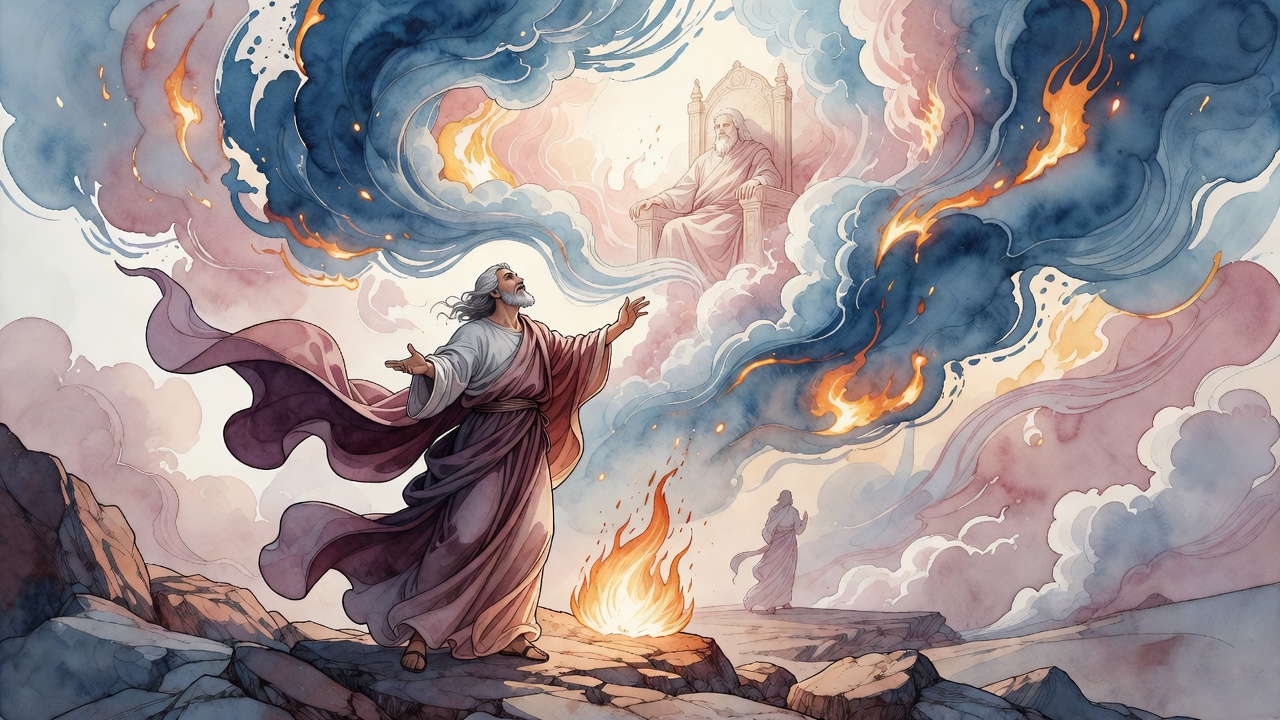
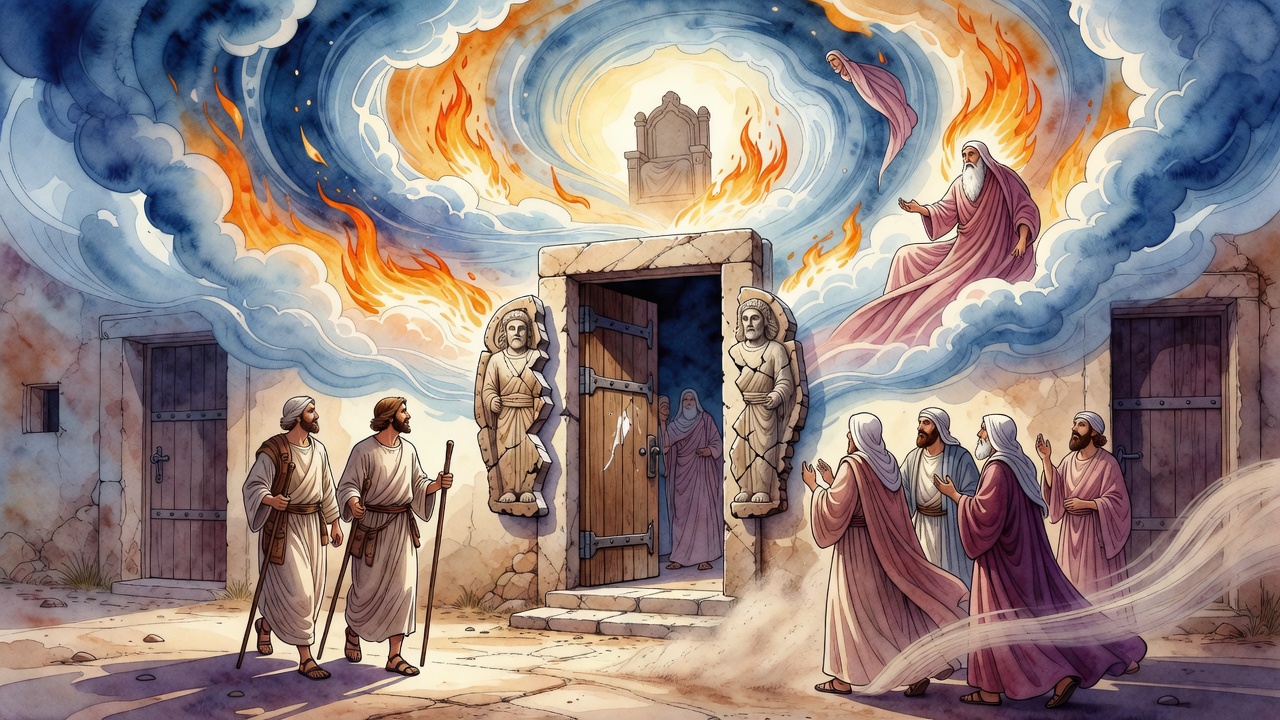
Amon, king of Judah, sent his men through the kingdom with instructions to find every Torah scroll and burn it. This was not a campaign against one sect or one city. It was systematic. Every copy, every teacher's private collection, every fragment preserved in a household since the days when Hezekiah's scribes had multiplied the texts. Find them and burn them.
He understood what he was doing. The scrolls contained laws that condemned him and commandments he had no interest in keeping. His solution was not to change his behavior but to eliminate the document that recorded the standard. If the Torah was gone, what remained was not a kingdom without obligation. It was a kingdom in which the obligation could not be cited against him. The law requires the text, and the text can be burned.
He nearly succeeded. He reigned only two years before his own servants killed him, which tells you something about the kind of court he had built around himself. But in two years, with the single-mindedness of a man who had chosen his priorities with care, he drove the Torah underground.
The Scroll That Survived
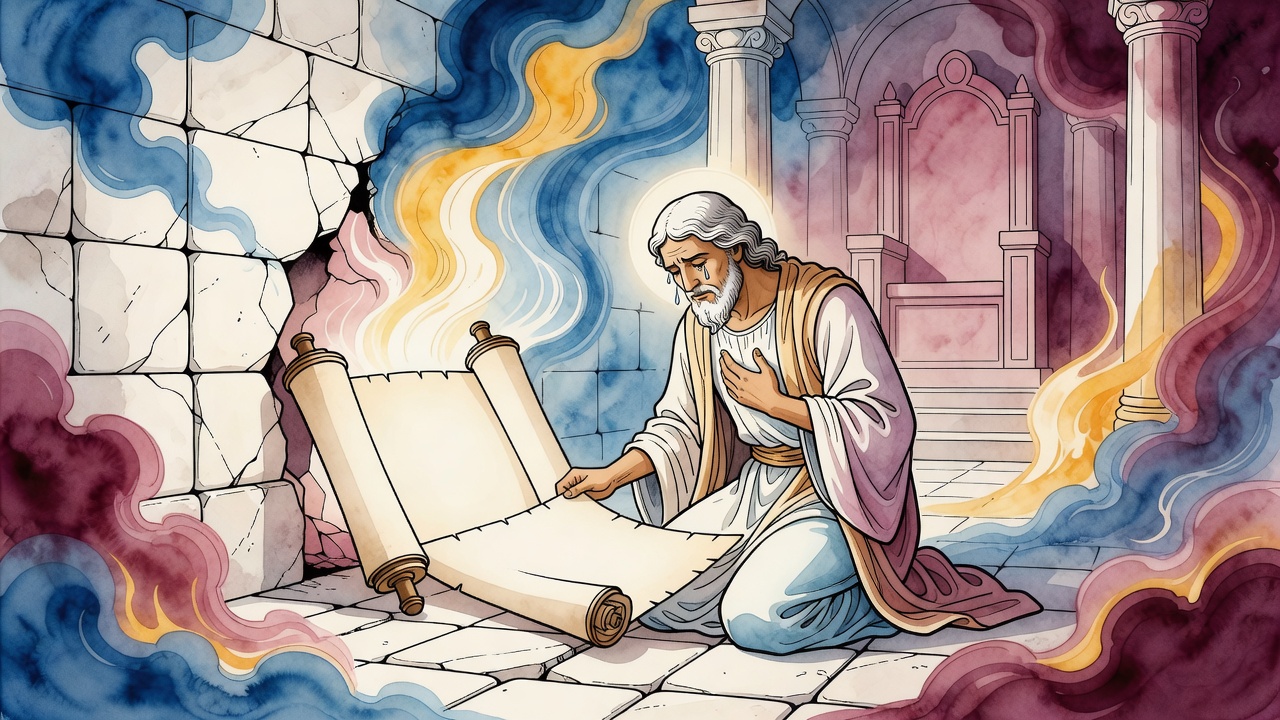
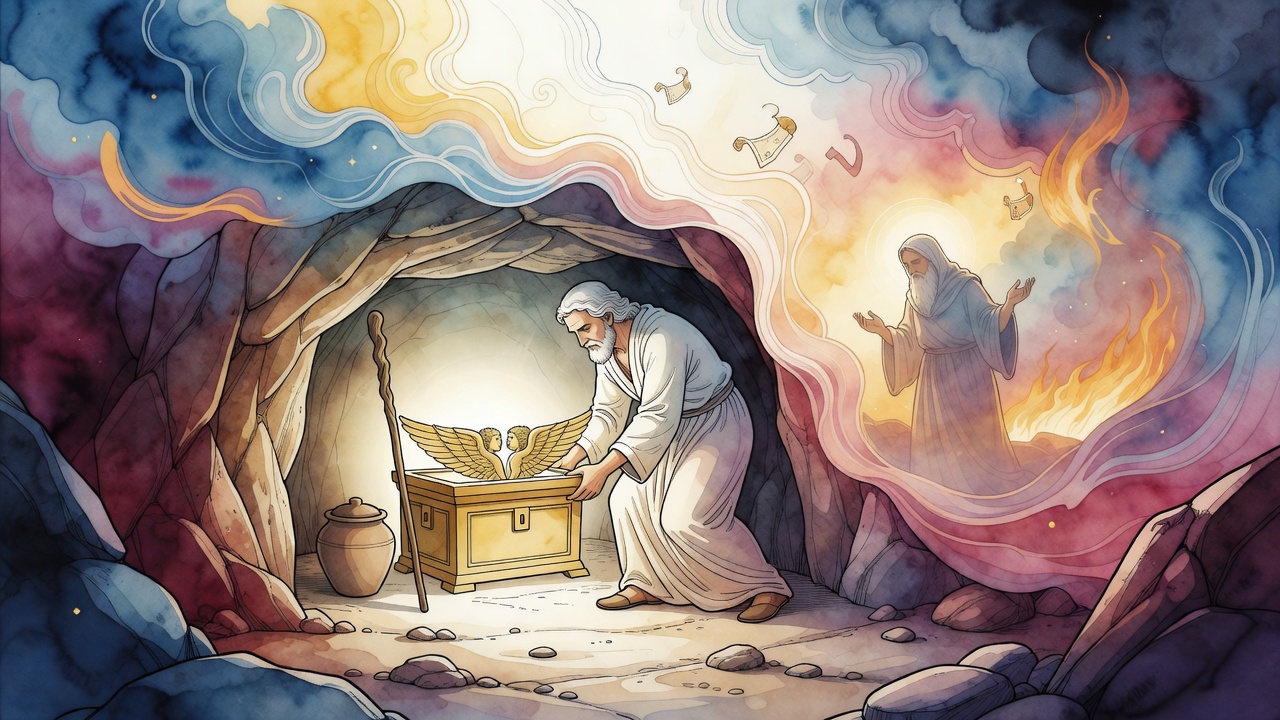
One copy survived. It had been hidden in the Temple, not stored openly on the reading stand but buried or concealed in some wall or chamber that Amon's searchers had not thought to open. The tradition does not record who hid it or when the hiding happened. Someone had moved fast enough, or had known ahead of time, or had simply been lucky enough to find a place the searchers missed. The scroll was there, inside the Temple walls, for decades after Amon died and his son took the throne.
Josiah became king at age eight. He was the son of the man who had tried to destroy the Torah, raised in a court that had spent years treating the sacred texts as contraband. His early reign reflected what he had absorbed. He did not know the Torah, because there was no Torah to know.
The Renovation That Changed Everything
Years into Josiah's reign, he ordered the Temple renovated. The structure had been neglected, its maintenance funds apparently diverted, its walls damaged or in disrepair. He sent his secretary Shaphan to oversee the work and report to him. The workers opened walls and found the scroll.
The high priest Hilkiah brought the book to Shaphan, who brought it to the king. Josiah listened as Shaphan read from it. The curses for covenant violation, the consequences for the kind of faithlessness that had defined Judah for the previous generations, fell out of the text and into the throne room. Josiah heard it and understood immediately what he was hearing: not a history of ancient events but a description of the present condition of his kingdom.
He tore his clothes. Not ceremonially. In grief. The document described what was happening around him and predicted what would follow from it, and there was nothing in the language of the text that suggested the predictions were negotiable.
What He Did After
He sent messengers to the prophetess Huldah, asking her to interpret what he had heard and whether there was any way to avert what the scroll predicted. Huldah confirmed the prediction and offered a narrower mercy: because Josiah had heard the words of the scroll and wept, the disaster would not come during his lifetime. Judah would fall, but not while Josiah was king.
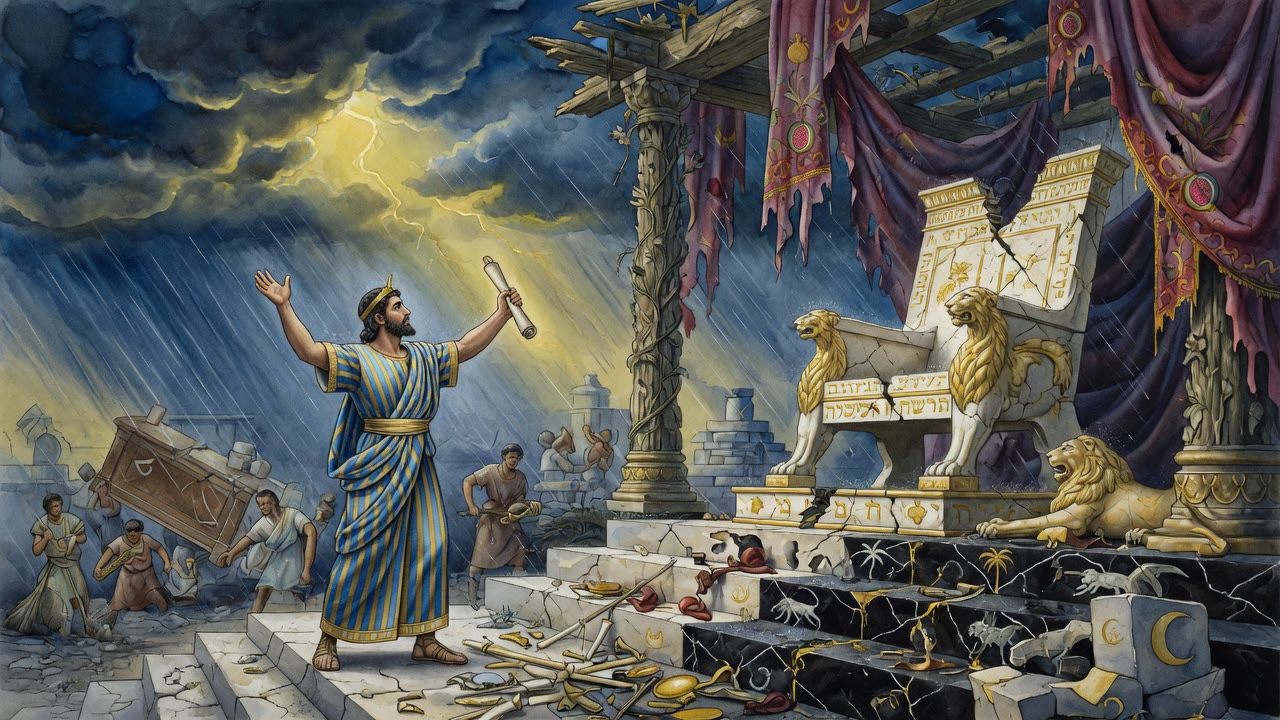
He called the people together and read the scroll to them. He made a covenant with God in front of the entire assembly. He then began the most comprehensive religious reform in Judah's history: destroying every altar that was not in Jerusalem, tearing down the high places, eliminating the Baal shrines and the asherah poles, burning the vessels used in foreign worship, abolishing the practice of passing children through fire. He worked from Jerusalem outward to every corner of the kingdom.
What Amon's Son Preserved
The irony that the tradition cannot let go of is this: the man who had tried to erase the Torah had fathered the man whose discovery of the Torah changed the entire final generation of Judah's kingdom. Amon had burned every copy he could find. The one he missed produced the reform that gave Judah's last righteous king his purpose. The destruction and the survival were connected. What Amon had suppressed came back through the walls of the Temple he had neglected, and it came back in the hands of his own son.
← All myths