Moses Argued With God for Seven Days and Lost the Priesthood
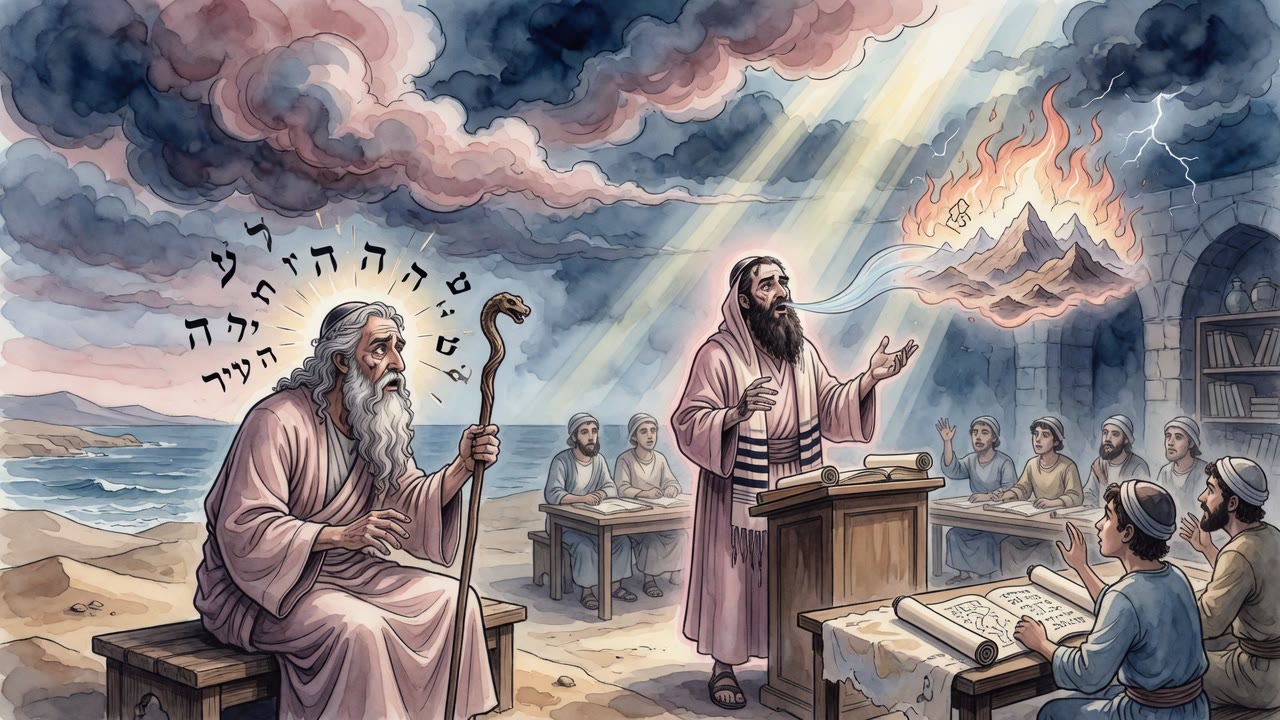
Moses sat eighteen rows back in a study house not yet built. He could not follow the lesson until a student named the law as his.
Table of Contents
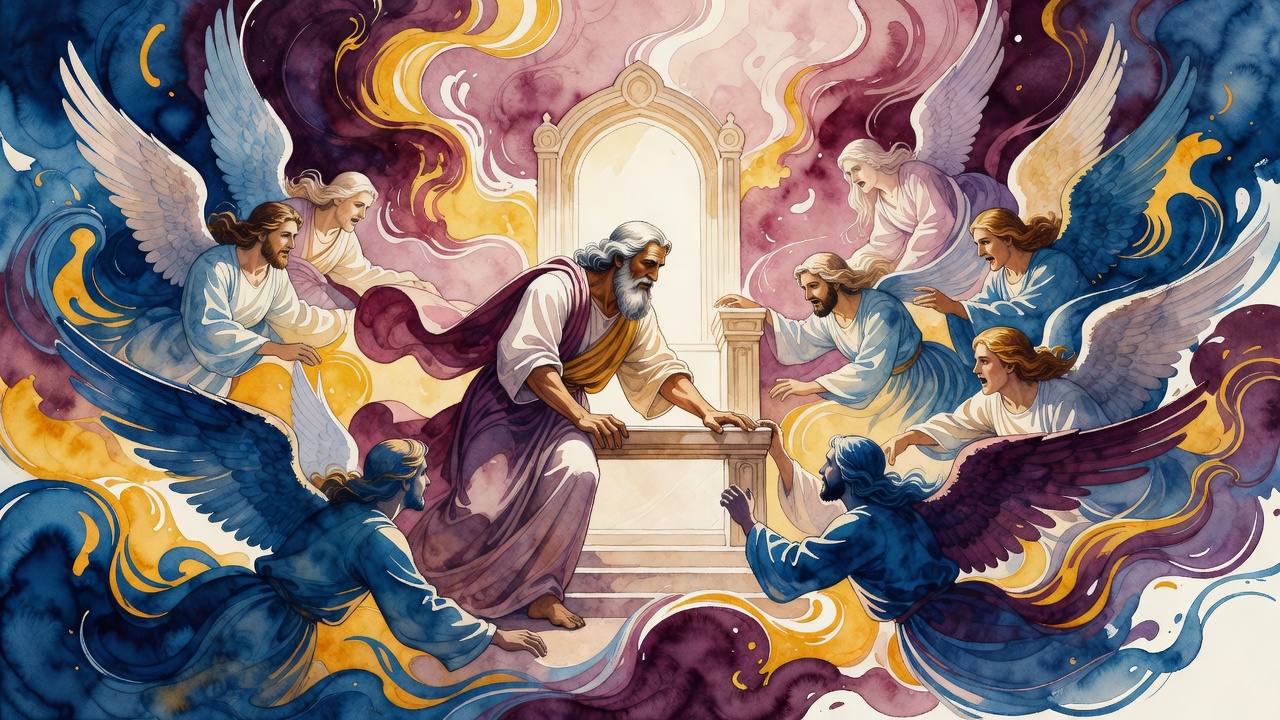
Moses walked into heaven and found God bent over the letters of the Torah, adding little crowns to the tops of them. He stood and watched. He said nothing.
 Click for full size
God asked whether people where he came from bothered to greet each other.
"Should a servant speak first to his Master?"
"You could at least wish Me success in the work."
Crowns on Every Letter
Moses wished Him success. Then he asked what the crowns were for. He was told that a man named Akiva ben Joseph would be born long after him and would pile mountains of law onto every stroke of every one of them.
"Show him to me."
"Go back eighteen rows."
Moses sat down in the eighteenth row of a study house that would not exist for a thousand years. He had asked to see heaven from the inside. This was the inside: a packed room, a teacher he could not follow, and his own Torah moving ahead of him without asking permission.
Eighteen Rows Back
The lecture ran on. Moses listened and could not catch a word of it. He sat there sick with it, the man who had climbed through fire to take this teaching down, now a stranger in the house built on his name.
A student asked Akiva where a certain ruling came from. Akiva answered that it was a law given to Moses at Sinai.
Moses steadied. The room still did not belong to him, but it had remembered his name.
He went back and put it to God directly. "You have a man like that, and You are giving the Torah through me?"
"Be silent. This is what came up in My thought."
"Then show me his reward."
"Go back and look."
This Is Torah, and This Is Its Reward
He looked, and saw Akiva's flesh being weighed out for sale at a meat market.
"This is Torah, and this is its reward?"
"Be silent. This is what came up in My thought."
Moses came down from that silence with a hem already tied to his coat, though he would not feel the knot's full pull until later. He had seen the inside of heaven and been told not to argue with it. He argued anyway, in other rooms, on other days, for seven days at a time.
Seven Days in the White Robe
When the Tabernacle was finished they held seven days of installation, and Moses ran them. He wore a plain white robe. He slaughtered, he sprinkled, he burned the offerings, he blessed the people, seven days of the highest work there was, and the whole time he understood the priesthood to be his.
Nothing came down. No fire, no Presence, no answer from above the Tent while he served.
On the seventh day he was told. It is not yours. It belongs to your brother Aaron.
On the eighth day Aaron went in wearing the breastplate and the gold, and made the offerings his brother had been making all week, and fire came out from before God and took what was on the altar, and every person in that camp saw it and shouted and dropped face down on the ground.
Moses had served. Heaven had waited for Aaron. The white robe came off him the way the argument in heaven had come off him: not because he was finished asking, but because the decree had already been made.
The Hem Tied at the Bush
The knot had been tied years earlier, in a thornbush that burned and was not consumed. For seven days God stood in that bush coaxing a shepherd who kept producing reasons. I am heavy of mouth. I am heavy of tongue. Not yesterday, not the day before, not since You started talking to Your servant. On the seventh he said the thing he meant.
"Send whoever You are going to send."
The bush answered him with something that sounded almost mild. "You say that. As you live, I will tie this one to the hem of your coat."
He went to Egypt. He carried the hem through every plague and every year in the sand. Forty years later, in the first week of Adar, an old man began asking again. He prayed to be let across the river. He prayed the second day and the third. On the seventh he got his answer. You will not cross this Jordan.
He had seen heaven from the inside, worn the white robe, and still been told to be silent. The thing came off him at last on a mountain in Moab, in sight of the water he was not allowed to touch.
← All myths