Moses Struck the Rock and His Own Argument Condemned Him
Water came when he hit the stone. God had told him to speak. At Beth-Peor he counted the prayers that had not opened the land.
Table of Contents
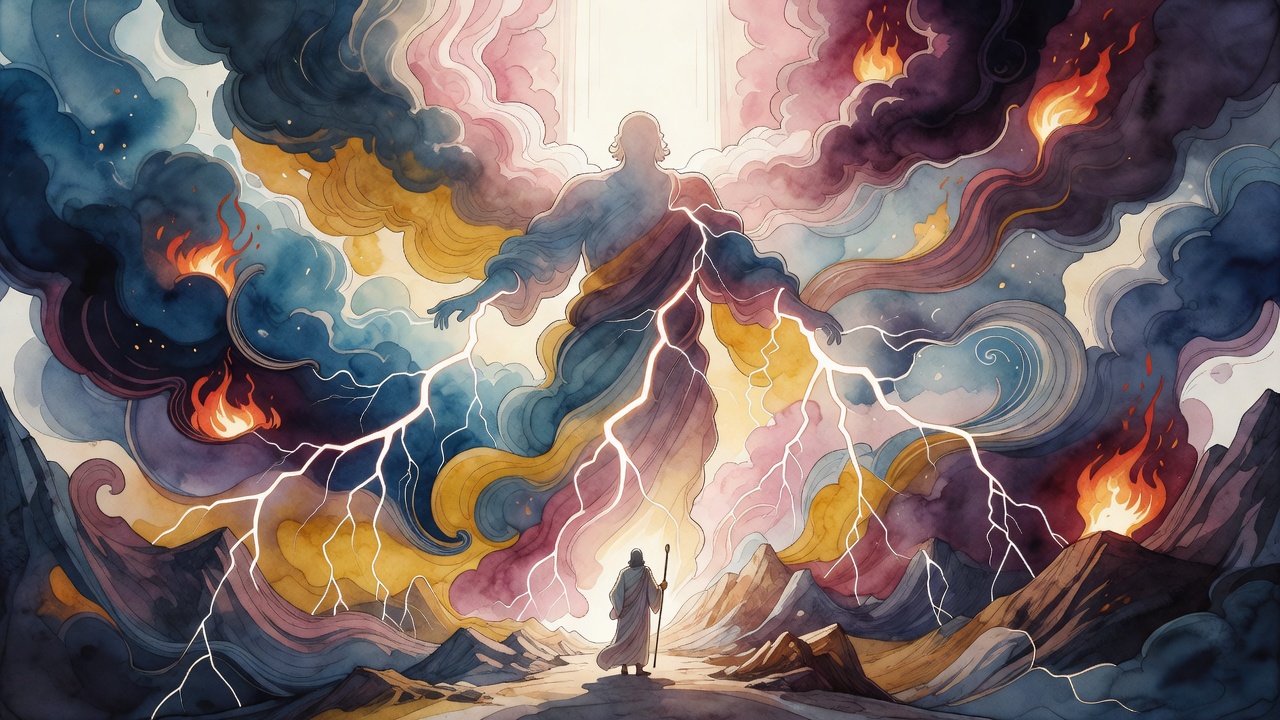
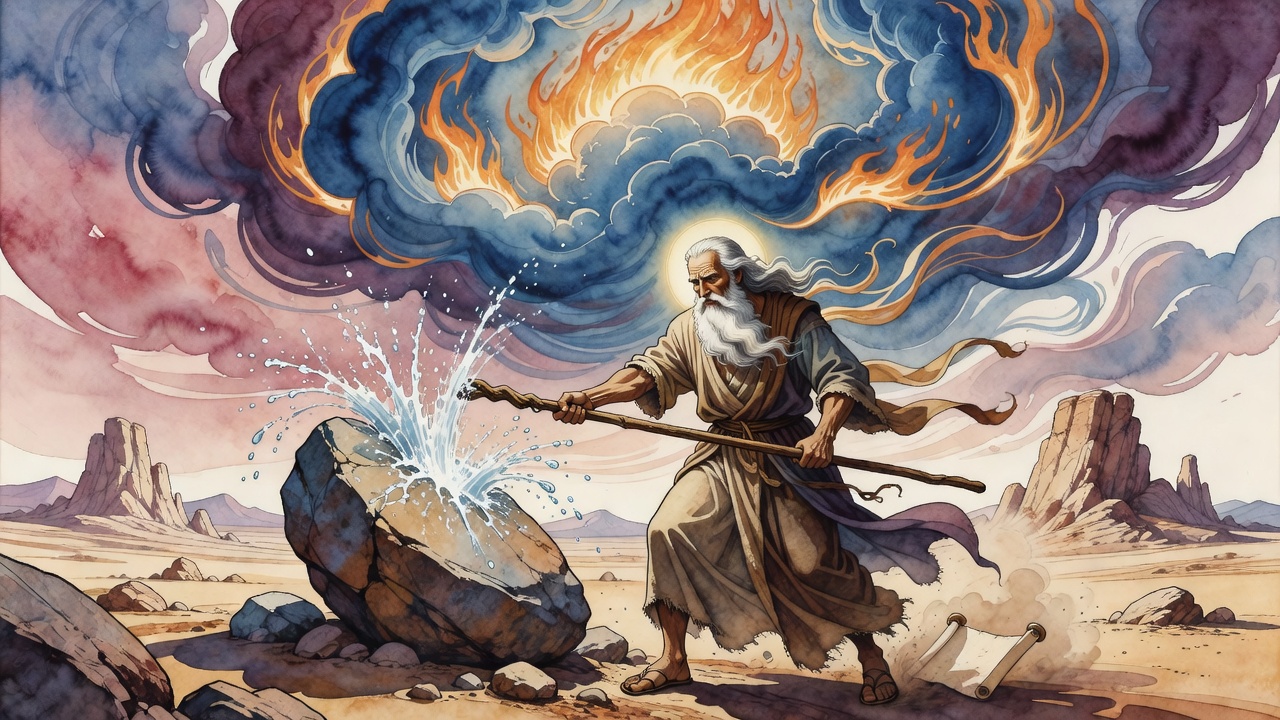
The staff was already up. God had said, "Speak to the rock, and they will drink." Moses had spoken to this nation for forty years. He hit the stone instead.
 Click for full size
Water came anyway. The miracle did not wait for the right gesture. Then the sentence came down as fast as the water. "Because you did not sanctify Me in their sight, you will not bring this assembly into the land."
Thirty Thousand at His Sides
Years before that blow, he had not even been able to look at an angel.
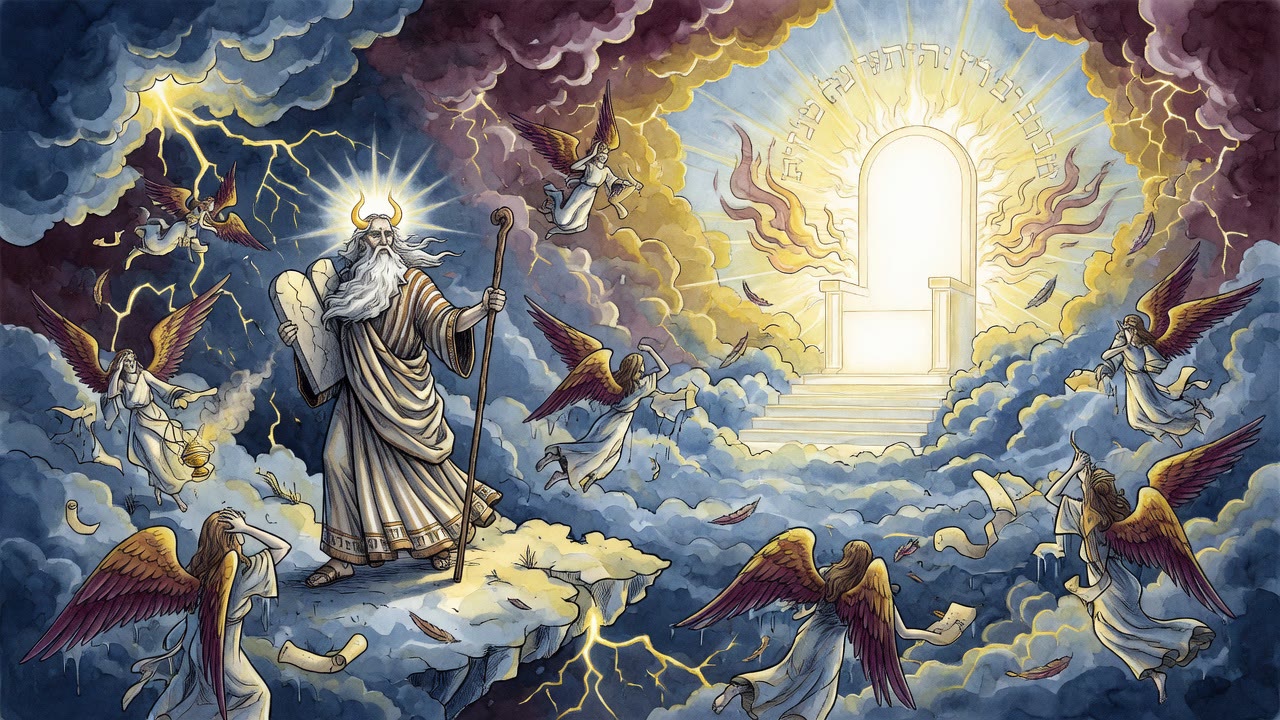
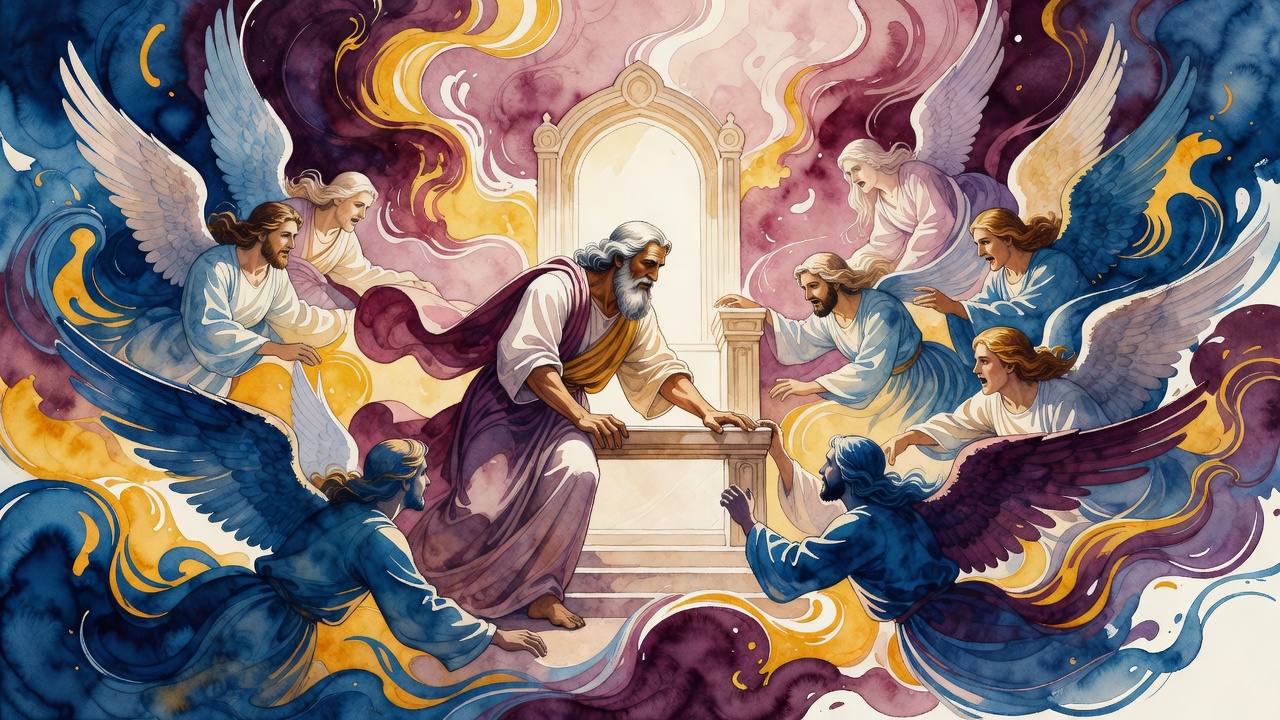
Metatron came to fetch him with music around him and a command in his mouth. God had told the Angel of the Face to take Moses up, and to summon thirty thousand as a guard, fifteen thousand on the right, fifteen thousand on the left.
Moses asked, "Who are you?"
"I am Enoch, son of Jared, your ancestor. God charged me to take you to His throne."
Moses said he was flesh and blood. He could not look on an angel's face. So Metatron changed him. Flesh became torches of fire. Eyes became wheels of the Merkabah (מרכבה), the chariot. Strength became an angel's strength. His tongue became a flame. Then they went up between the two walls of angels.
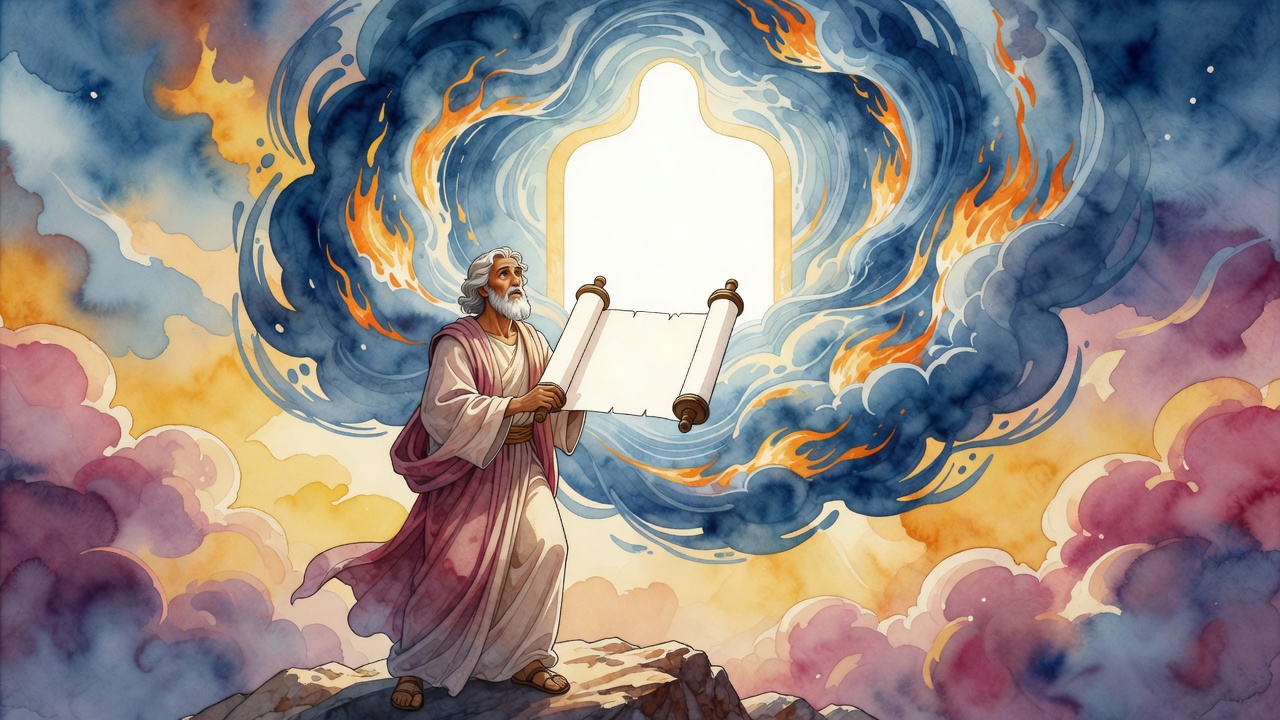
A man born of a woman, walking in the place of fire, still had to argue for the book he had come to take.
What He Told the Court
The heavenly court did not want him there. Moses did not argue that he was worthy. He argued that they were the wrong audience.
"Does the Torah say, Honor your father and your mother? You have no father and no mother. Does it say, You shall not murder? You have no urge to kill. You shall not commit adultery? You have no wife. You shall not covet? You own nothing that coveting can take."
He said it in the place where the Torah had lived before any mountain. The book was written for creatures who could fail it and come back. That was the whole case. The angels let him descend with it.
He had staked the gift on human turning. Repentance was inside the argument. If a person could not miss and return, heaven could have kept the book.
The Rock Did Not Need a Staff
At Kadesh the congregation had no water. They gathered against Moses and Aaron. God told Moses to take the staff, assemble them, and speak to the rock before their eyes (Numbers 20:8).
He had struck a rock once, in the first year, and water had come. The staff was in his hand again. The people were the same people, thirsty, loud, sure he had brought them out to die. He called them rebels. He lifted the staff and struck twice.
Water. Then the ban. One wrong gesture. The man who had told heaven that humans can turn did not turn. He used the old blow when a new word had been ordered.
The rock gave what it was told to give. Moses did not. The land closed.
He Stood Between a Nation and the Fire
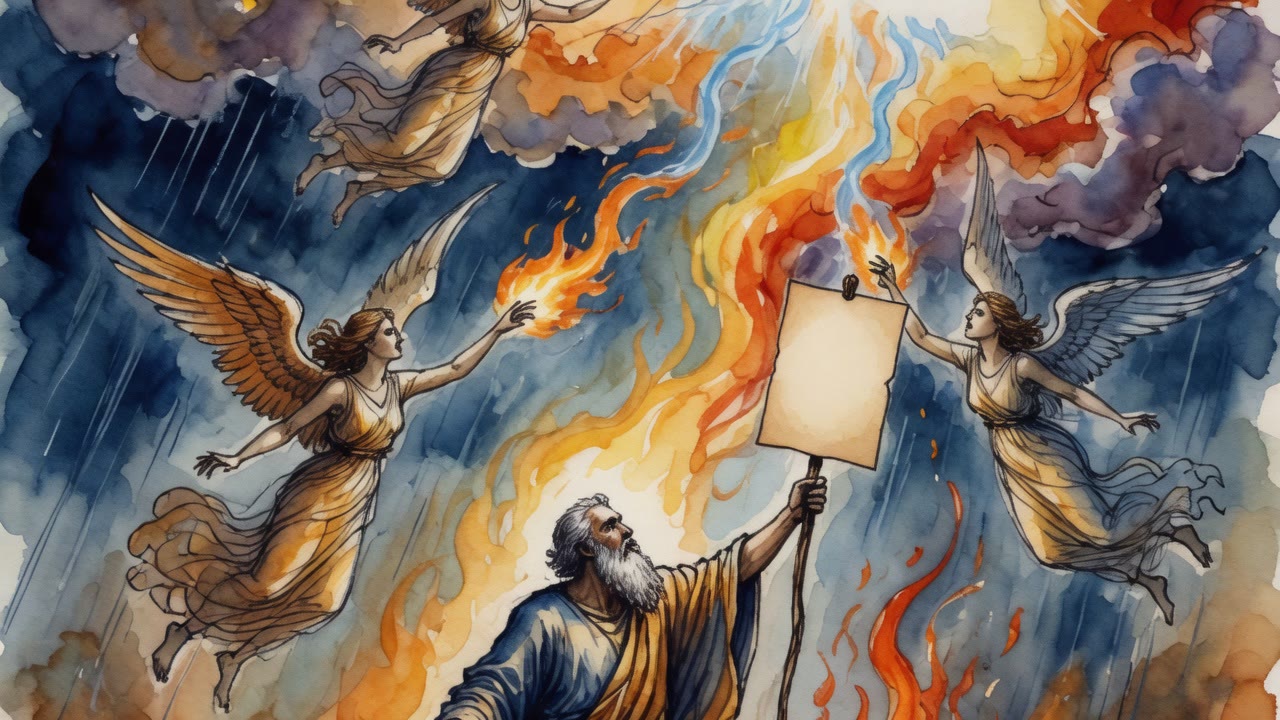
He knew how to turn. After the Golden Calf, God sent angels of destruction. A king's fury arrived as angels of death, and Moses stood in that fury and spoke for Israel until the relationship held. He implored (Exodus 32:11). The nation lived.
The calf was worse than a rock. Gold from earrings in a fire, a people dancing, a break that should have ended them. Moses put himself between the camp and the heat and talked God down. A wise man appeases wrath. That was him, on that day.
The people were forgiven. He kept that fact in his mouth for the rest of the wilderness. It did not make the later blow smaller. It made the later sentence stranger.
The Valley Near Beth-Peor
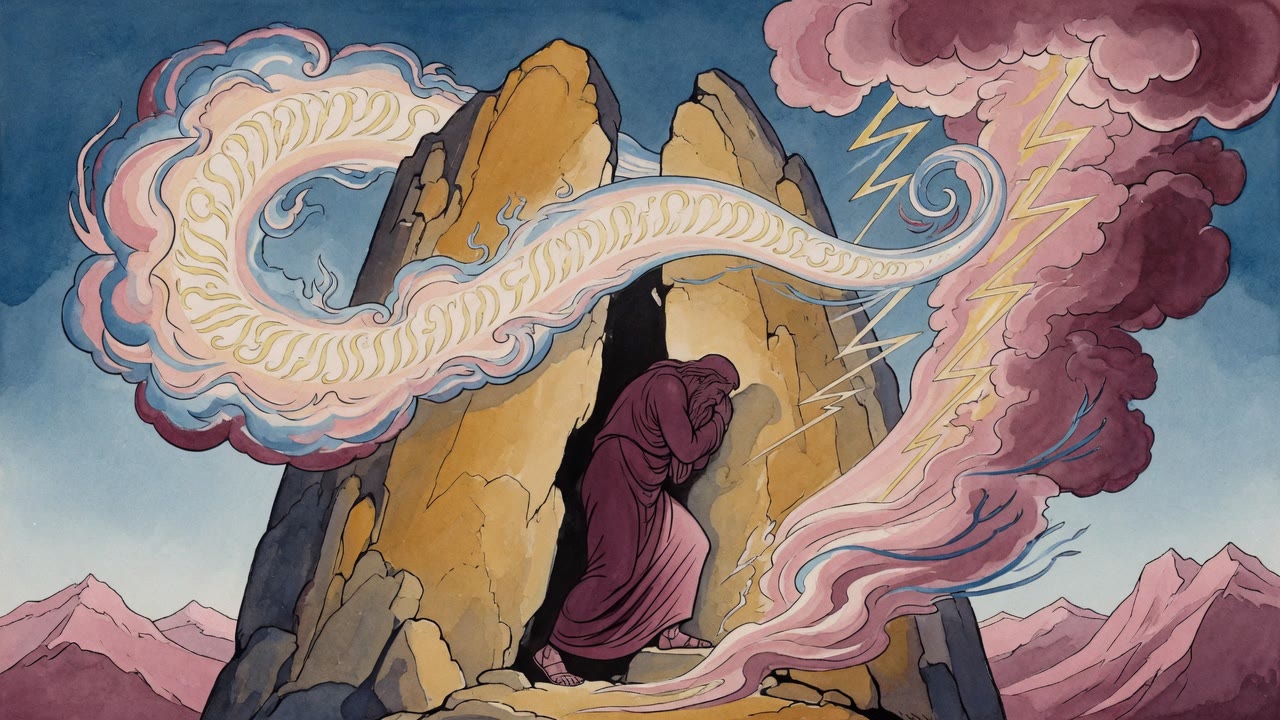
They camped in the valley opposite Beth-Peor (Deuteronomy 3:29). Moses looked at the ridge of the land he would not enter. He said it out loud, the way a man says a sum he has already added a hundred times.
"See which sin I have sinned. How many supplications I uttered. And still it was not forgiven me. And you, how many sins you have sinned, and the Lord has said to you, Repent and I will accept."
He was not confused about the scale. He knew the calf outweighed a blow on stone. He also understood what he had told the angels. The Torah had come down because humans can return. Israel was being asked to return in that same valley. His own return did not open the river and the hills.
The argument had been true. It had not been a shield for the man who made it. The staff was still a staff. The rock had already given water. The land stayed on the other side of the sentence.
← All myths