Sinai Was Chosen Before the Patriarchs Were Born
Before Adam drew breath, God set four places apart. One of them was a mountain in the desert, already holy, already waiting for Moses.
Table of Contents
 Click for full size
Four Places Set Apart Before Creation Was Finished
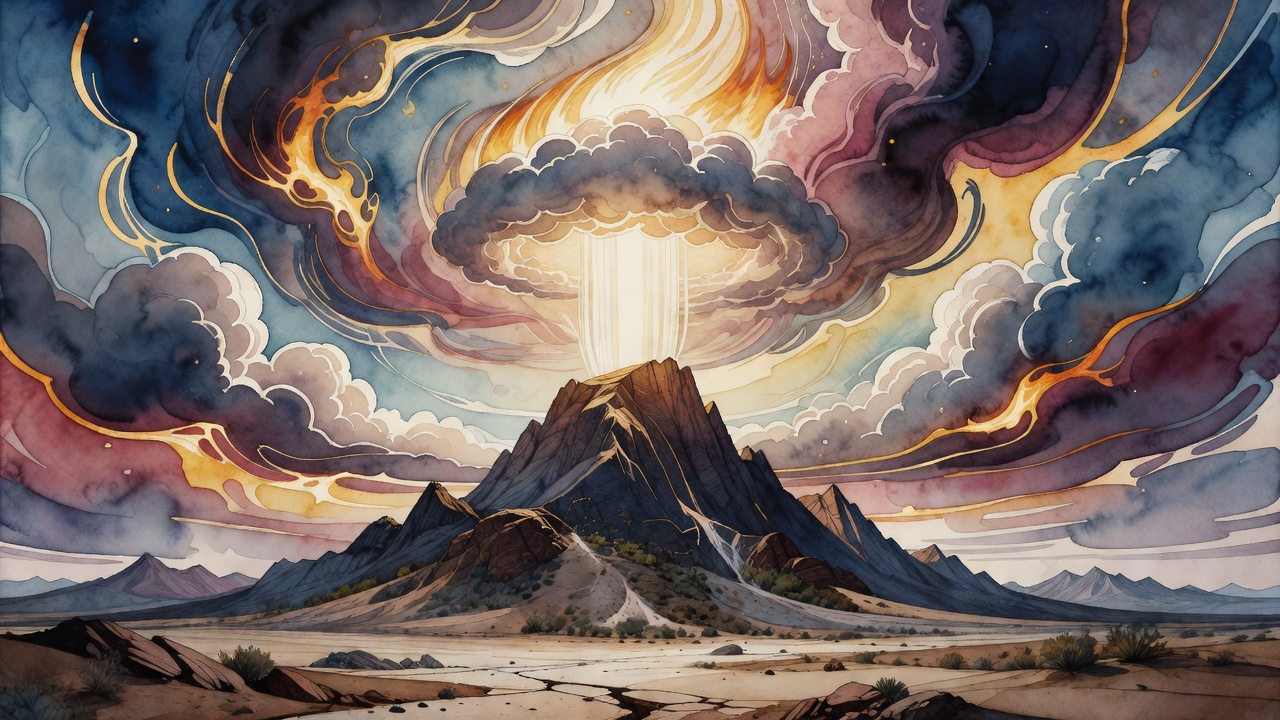
Before Adam existed, before the patriarchs walked the earth, before any human voice had spoken a prayer, God chose four places. Not because of what would happen there. What happened there was chosen because of them. The Garden of Eden. The mountain of the east. Mount Sinai. And Mount Zion, where the Temple would one day stand. Holiness came first. History came after.
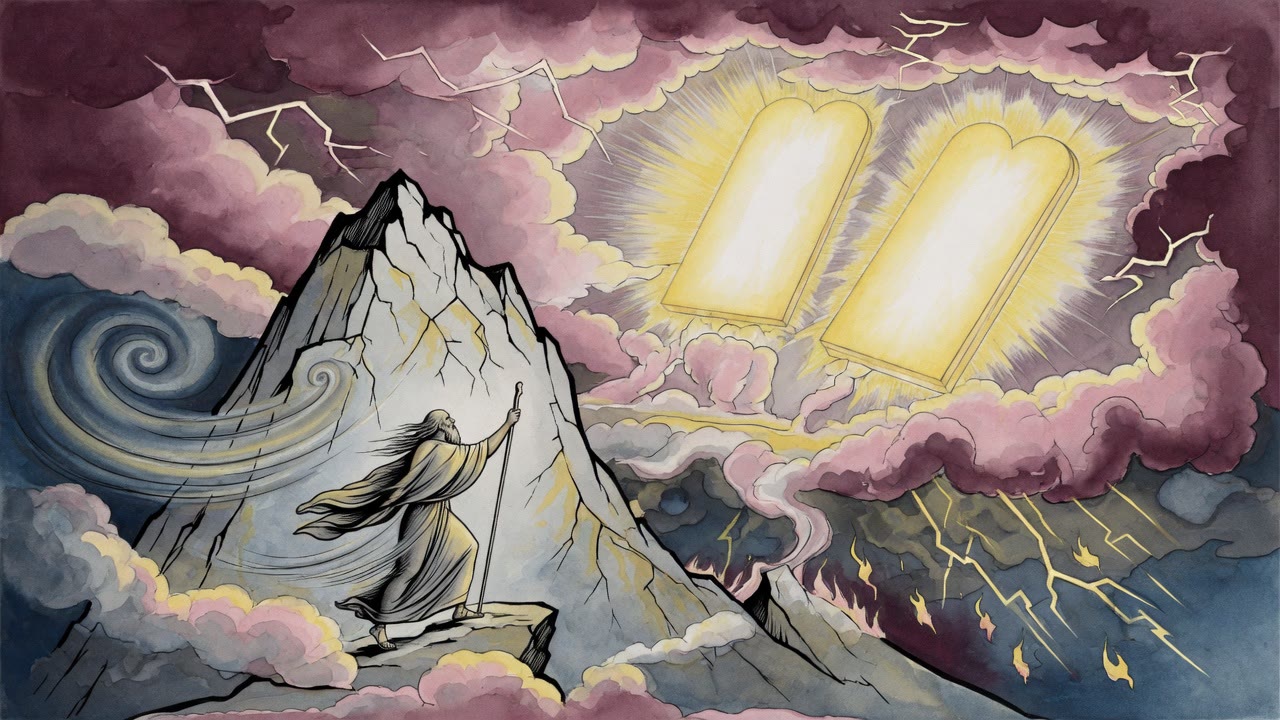
That is the claim the Book of Jubilees preserves, and it overturns the ordinary reading of Sinai entirely. The mountain was not picked because it stood conveniently in a desert no one else wanted. It was not a neutral staging ground for a dramatic scene. It had been consecrated before the wilderness existed, before the desert had sand in it, before there was a people to stand at its foot trembling. When Moses climbed that mountain carrying nothing but awe and fear, he was ascending ground that had been waiting for him since before his name had been thought of.
Moses Receives the Calendar of the Cosmos
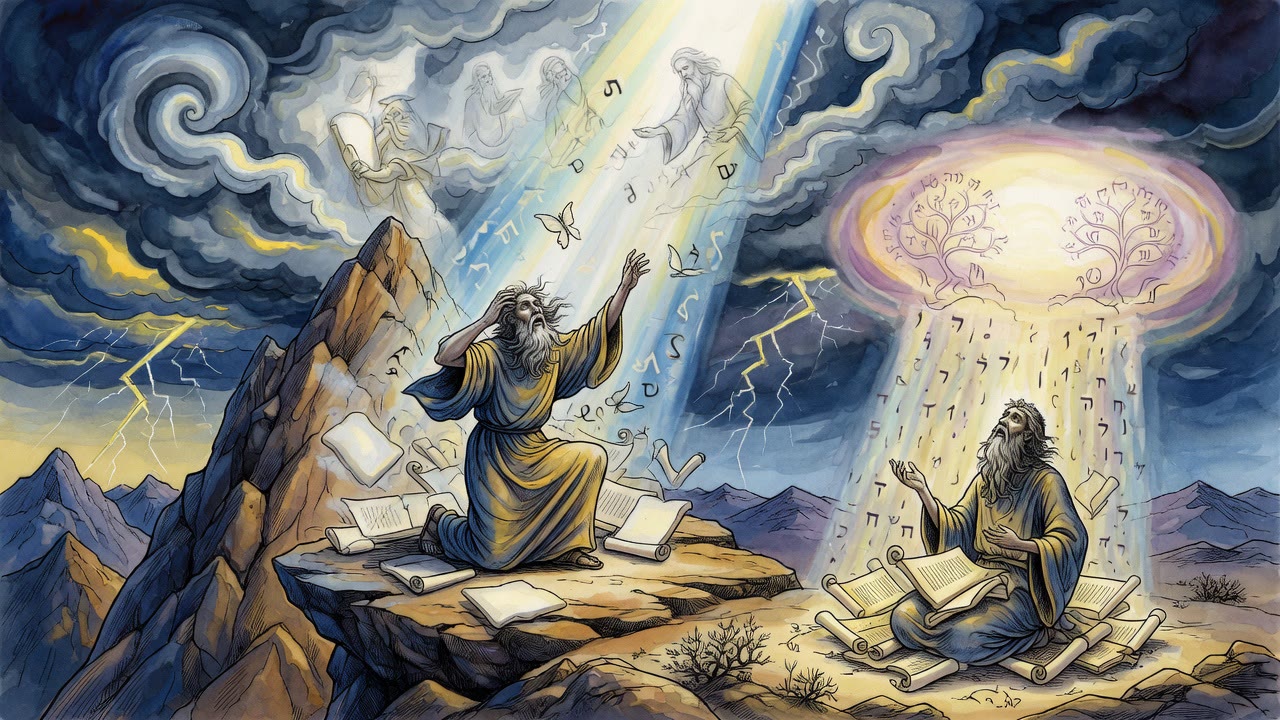
What Moses received there was larger than commandments. The Book of Jubilees insists that on Sinai, God gave Moses the complete architecture of time itself: the division of days and weeks, the cycle of years, the Jubilee periods that govern release and redemption. This is what Jubilees means by calling itself Jubilees. The scroll presents itself not as commentary but as the original record dictated by an angel of the divine presence, the heavenly tablets that preceded the world.
Moses did not invent the calendar. He received it. And the calendar was not a human convenience for organizing harvests and festivals. It was the structure God had woven into creation before the first day. To keep the Sabbath was not to follow a rule. It was to align oneself with the rhythm built into reality from before the beginning.
Jacob and the Patriarchs as Witnesses
The tradition in Jubilees does not stop with Moses. It reaches backward. Jacob and the patriarchs, the text insists, kept the Sabbath before Sinai, not because they had been commanded but because the Sabbath was woven into creation and they were close enough to that original fabric to feel it. Angels observed the Sabbath in heaven. The patriarchs observed it on earth. What Sinai did was not introduce something new but formalize what the cosmos had always required.
This puts Jacob in an unexpected position. He lived centuries before Moses stood on Sinai, and yet Jubilees presents him as already practicing what Sinai would later codify. The Torah was not revealed at Sinai so much as recorded there. Its content had been present from the beginning, living in the structure of time, honored by angels and by the few human beings perceptive enough to recognize what they were standing inside.
What the Mountain Knew That Moses Did Not
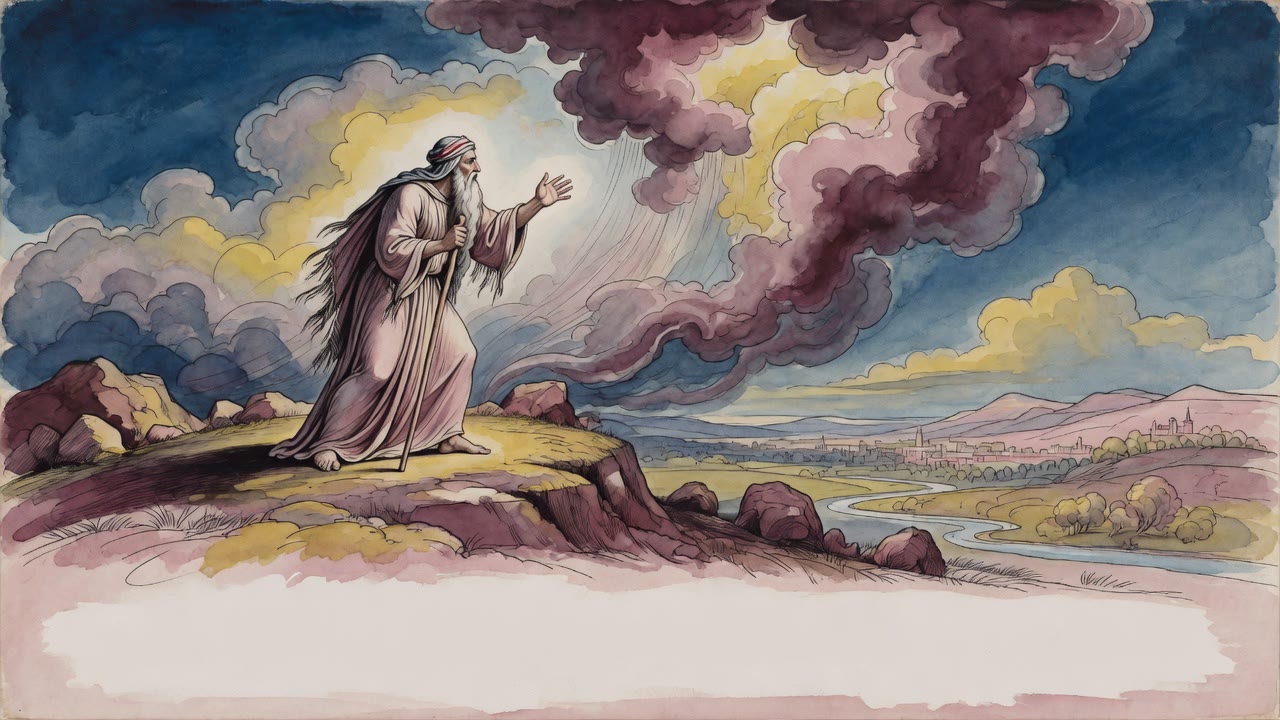
There is something humbling in this picture. Moses climbed Sinai in terror, uncertain of what he would find, uncertain whether he would survive the encounter, uncertain what God would say to him about the people who had just melted their jewelry into a golden animal. He did not know he was ascending consecrated ground. He did not know the mountain had been waiting for him since before Adam. He was just a man climbing in fear.
The mountain knew. The mountain had been designated before the Garden was planted, before the first human was formed from its dust. All the terror Moses felt on that ascent, all the weight of what he was carrying back down on stone tablets, all of it took place inside a frame that had been constructed in the silence before the world began. The holiness was already there. Moses walked into it without knowing it, which may be the only way you can walk into holiness at all.
← All myths